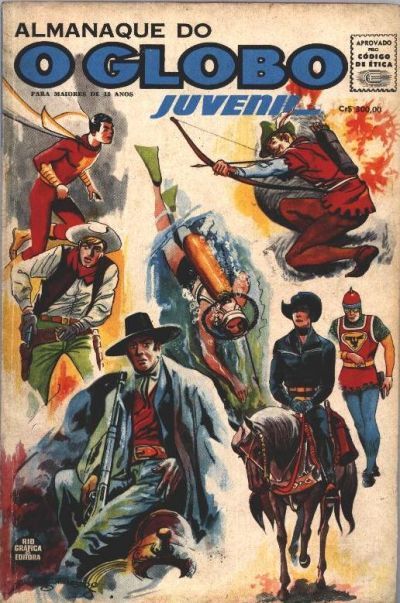


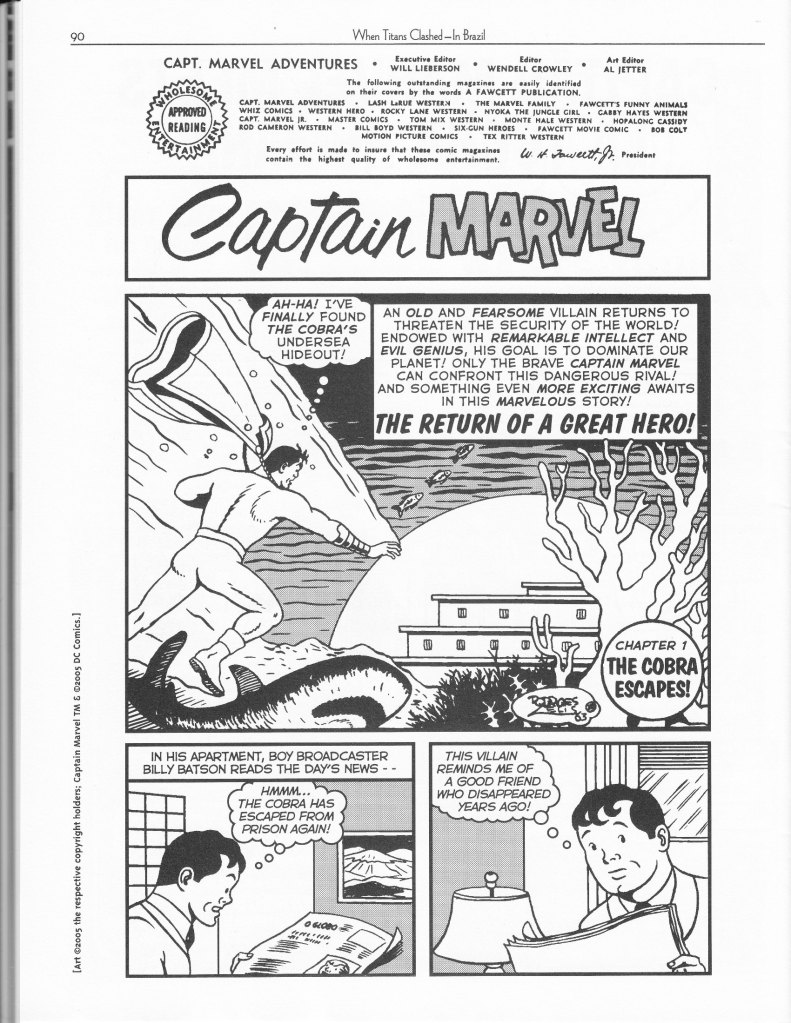
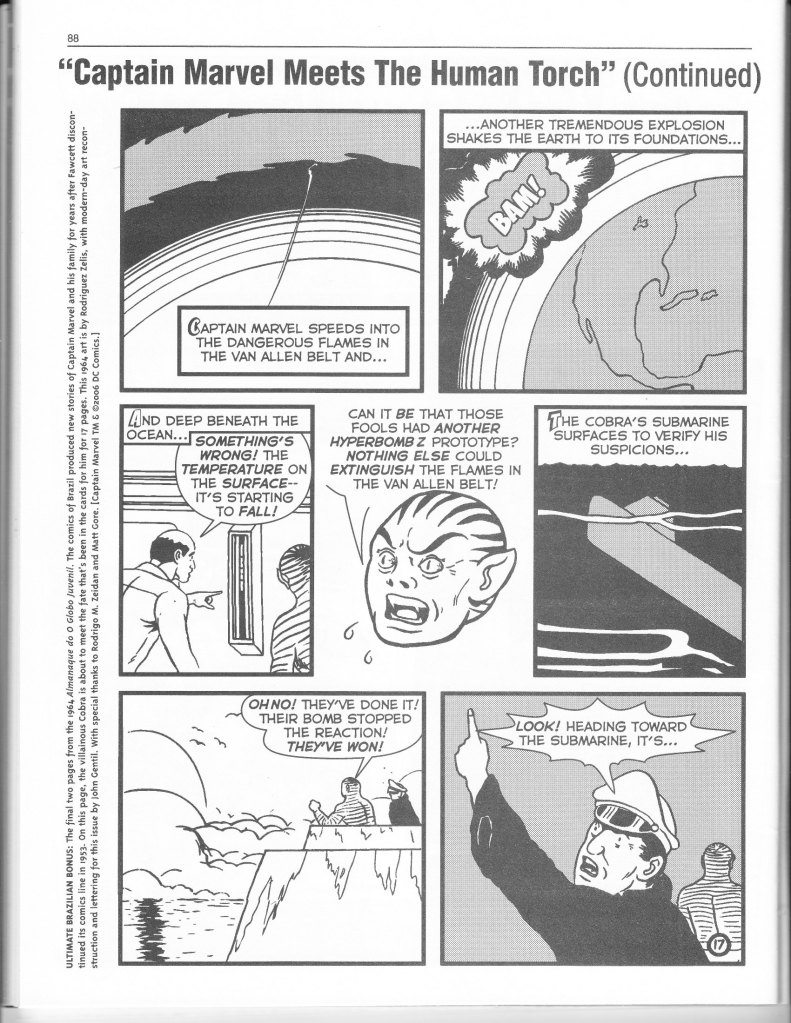
I got asked about this story this week by Marvel editor Wil Moss, who had learned about it for the first time. And while I told him that I hadn’t covered it largely because the story in question had been translated into English and serialized in the pages of TwoMorrows’ magazine ALTER EGO, edited by Roy Thomas, it occurred to me that it wouldn’t be a bad idea to shine a bit more of a spotlight on it. So here is the story about how the original Captain Marvel met and teamed up with the original Human Torch in 1963–despite the fact that both characters came from different publishers and that they’d both been out of circulation in the United States for about a decade at that point.
The story in question ran in the 1963 Annual for O GLOBO JUVENIL (“Kids World”), a Brazilian publication that for years had reprinted translated American comic book stories for its local readership. The company had sourced those reprints from a variety of different publishers, leading to characters from different companies sharing space side-by-side in these Brazilian pages. To the eyes of the Brazilian readers, there wasn’t any separation between them–they were all features born from the same publisher.
The Human Torch’s feature began being translated and reprinted in Brazil starting in 1940, with Captain Marvel and his Marvel Family brethren joining them in 1943. Both characters were popular, but eventually the reprint material ran out once the Human Torch had been cancelled in the United States, and the character disappeared.
On the other hand, Captain Marvel’s adventures continues to be published in Brazil up through 1968–the character was simply too popular for he publisher to drop, even when material to reprint ran out. Much as happened in the United Kingdom, where local creator Mick Anglo reinvented Captain Marvel as Marvelman, giving him a British once-over paint job and thereafter producing new stories, creators in Brazil similarly produced their own bootleg Captain Marvel adventures in the style of the American originals. Nobody in the United States was any the wiser, and the lawsuit that had put Fawcett Publications out of the Captain Marvel business didn’t appear to extend internationally.
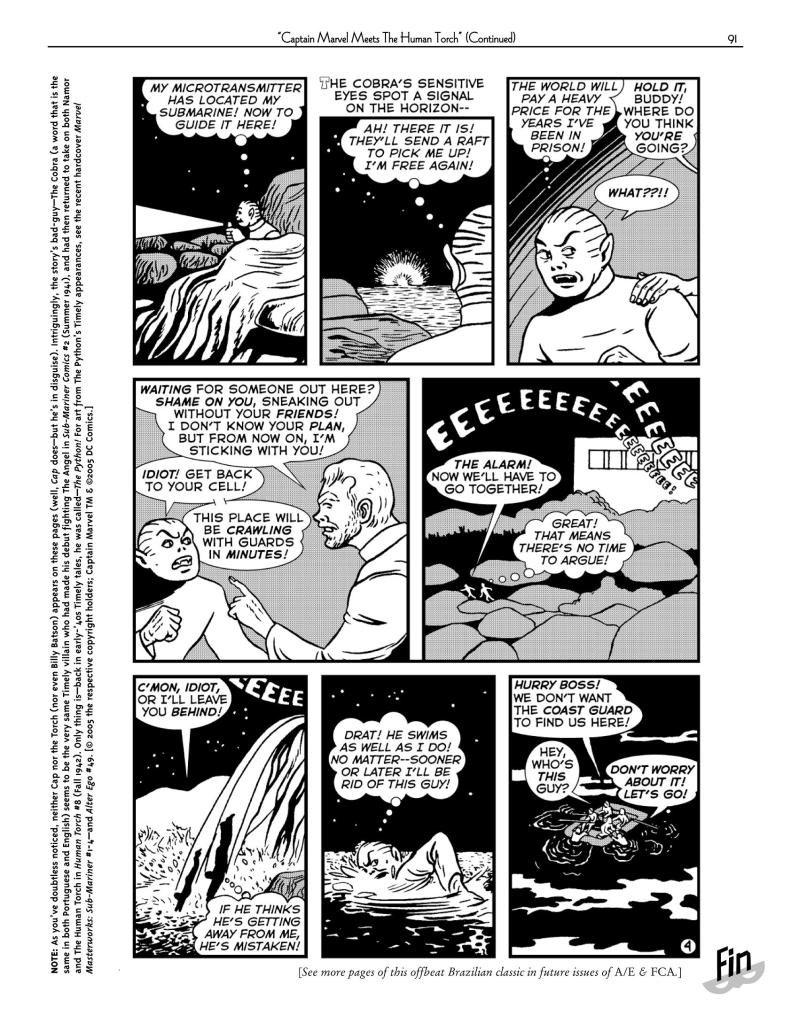
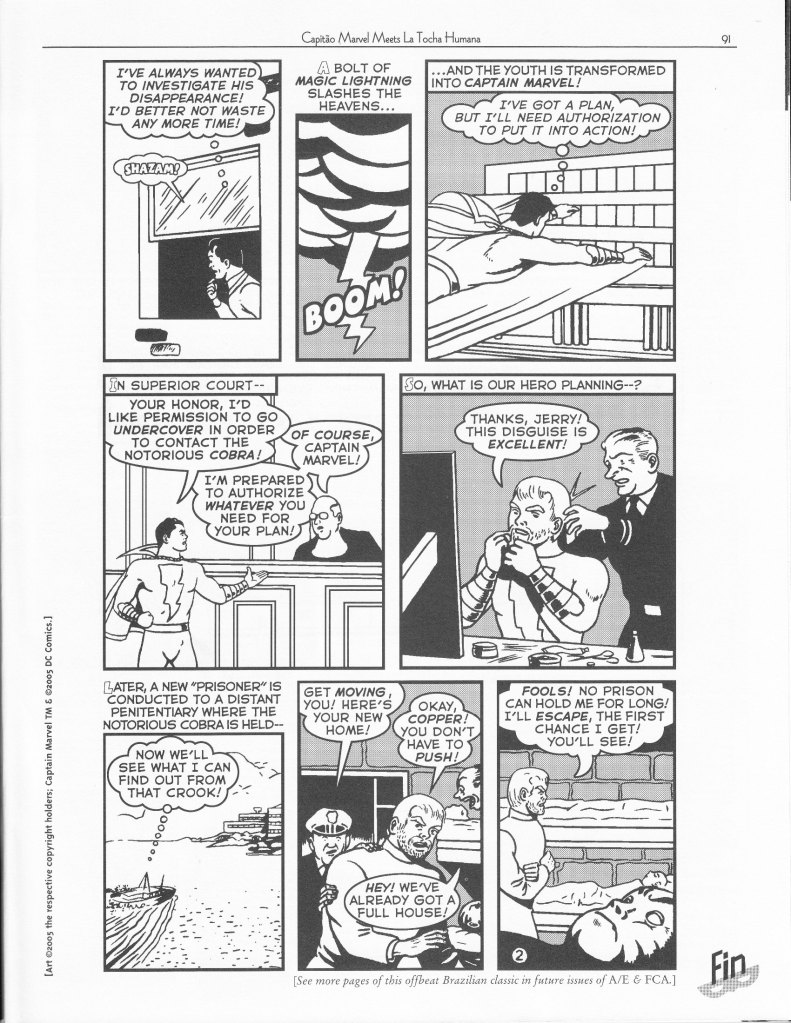
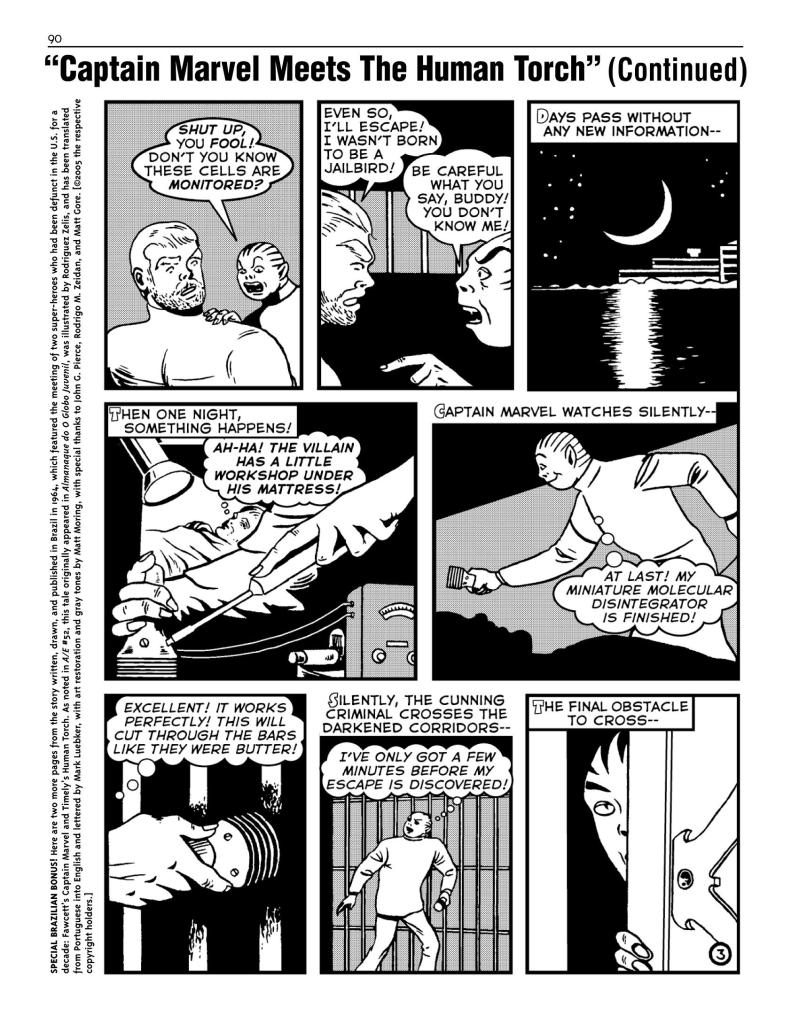
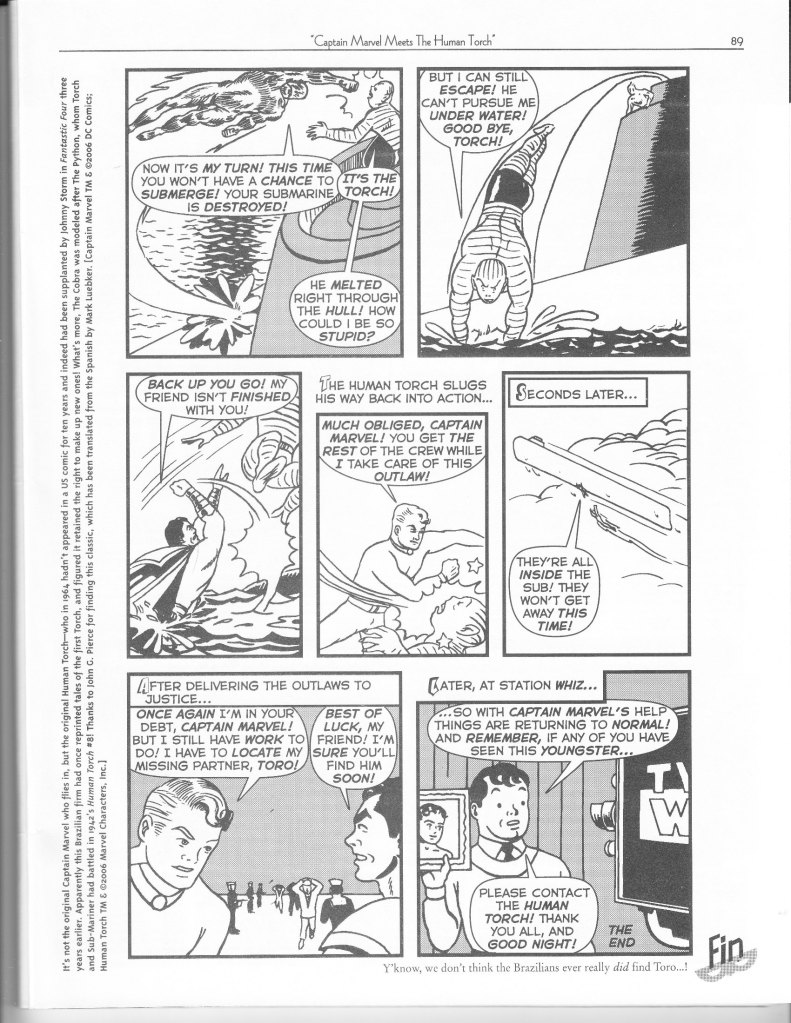
All of which is what led to this historic team-up between Captain Marvel and the original Human Torch. The artist on this tale was Rodriguez Zelis, though its author’s credit has been lost to the pages of history. I should also probably mention that the story was translated by John G. Pierce and was serialized in ALTER EGO #52-60, which is where I’m sourcing these pages. Hopefully, they won’t mind me sharing them with you here. Individual issues of ALTER EGO as well as subscriptions to the magazine can be found here:
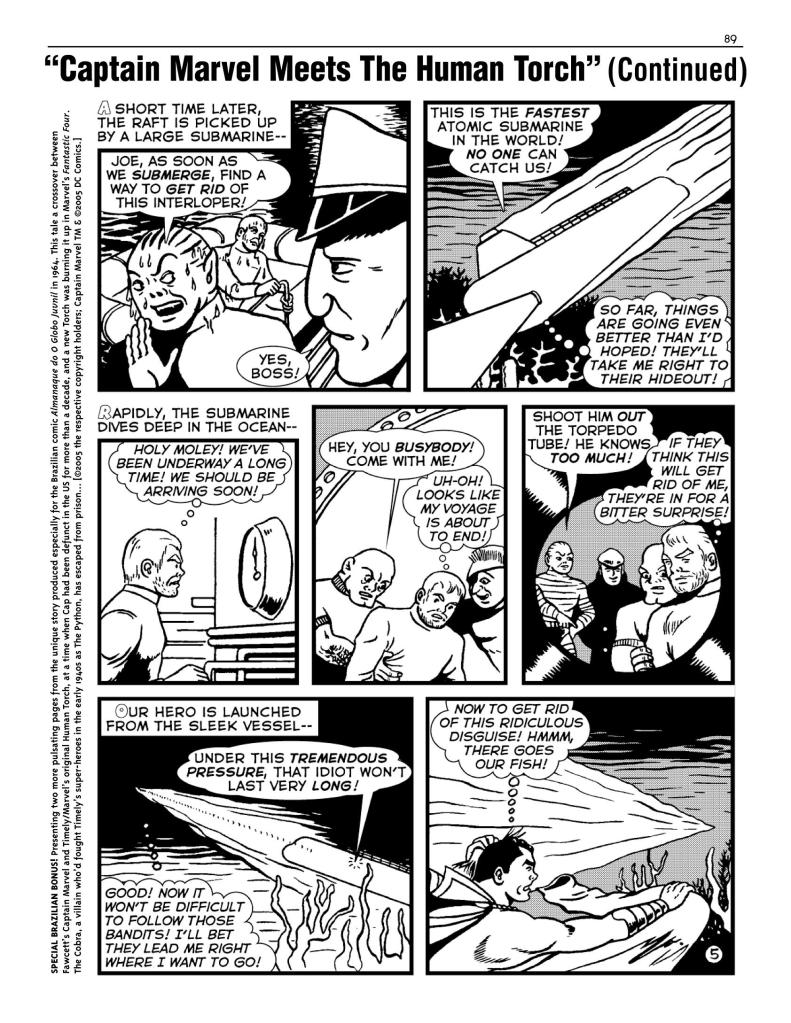
It seems that there was enough nostalgia for the missing Human Torch series that this story in which Captain Marvel sought out the missing hero was commissioned. This was well before team-ups between different super heroes from different strips became commonplace, so it’s a bit of an outlier.
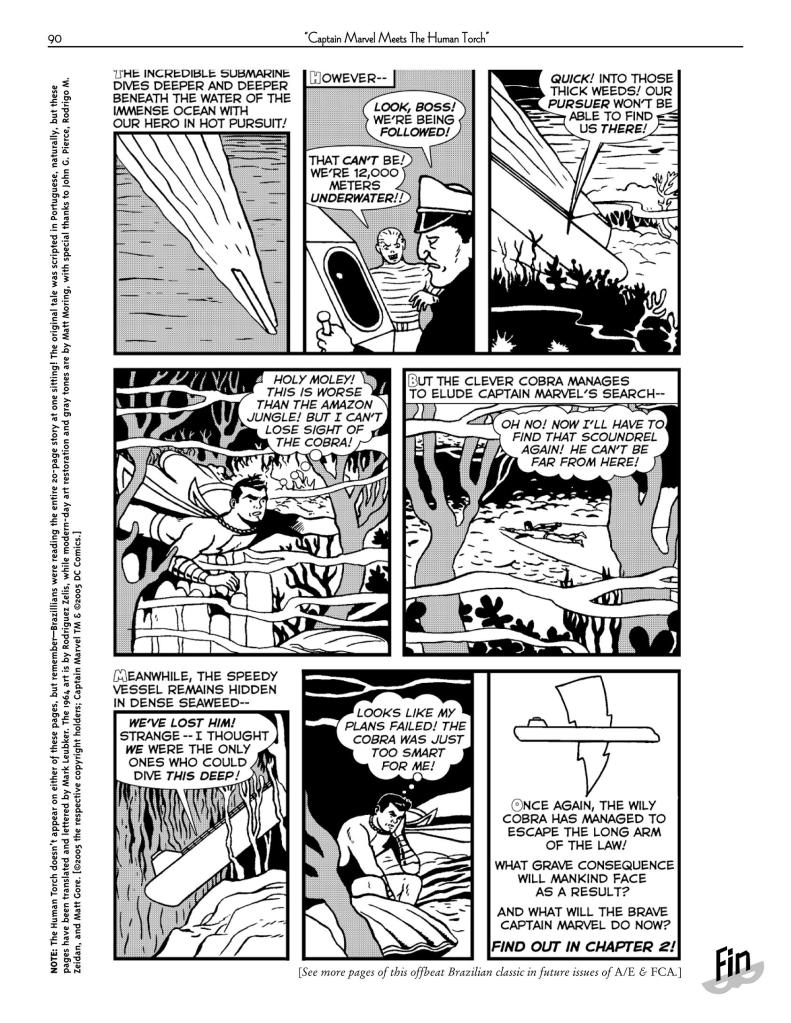
It’s also worth noting that at the time when this story was being produced and released, Marvel had already introduced the new version of the Human Torch, Johnny Storm, in the pages of FANTASTIC FOUR. Indeed, that Torch was at the same moment also headlining a solo series of his own in the pages of STRANGE TALES. But the Marvel characters and their stories wouldn’t be reprinted in the Brazilian marketplace until 1967.
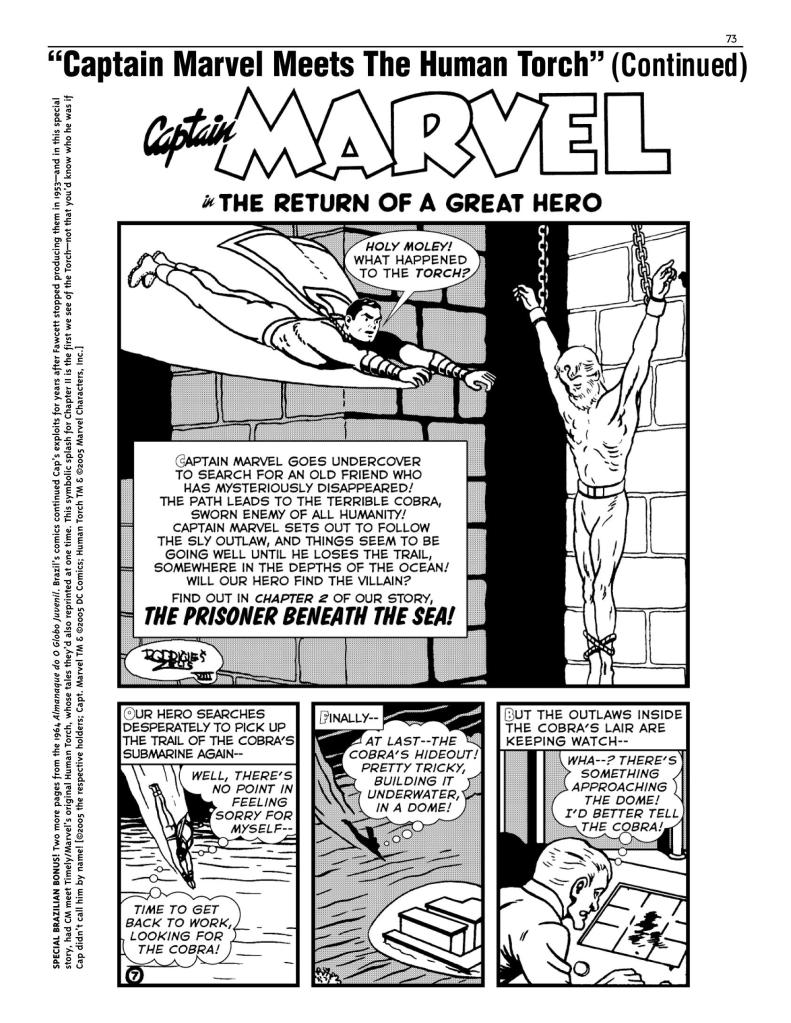
The Cobra, the villain who is responsible for holding the Human Torch captive for years, is treated in this tale as though he’s an old foe of the Torch. But no such character appeared in the Timely stories as far as can be ascertained. So he was either created new for this story or else he’d been featured in an earlier Brazilian-created Human Torch tale at some point in the past.
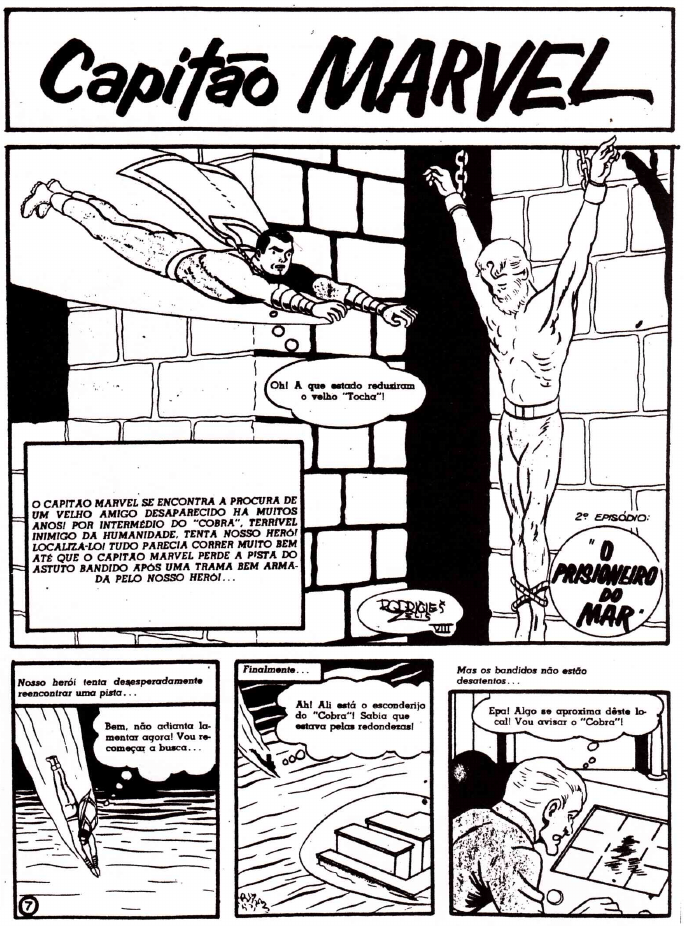
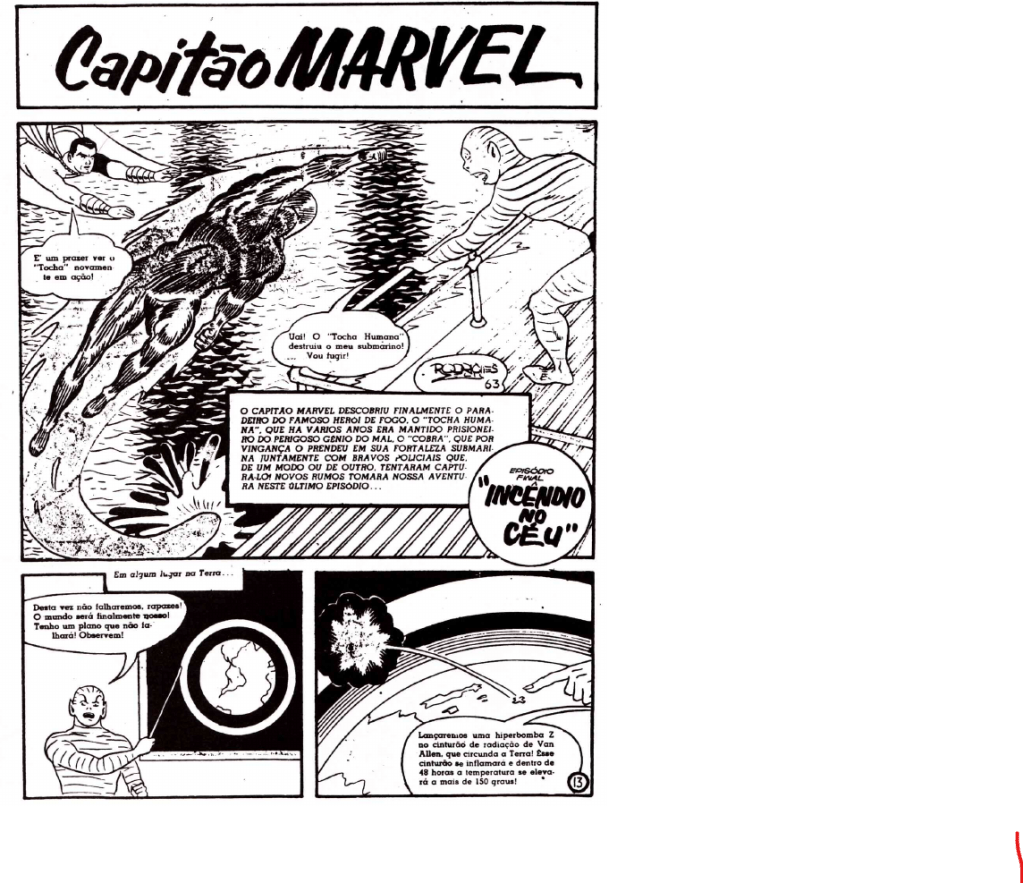
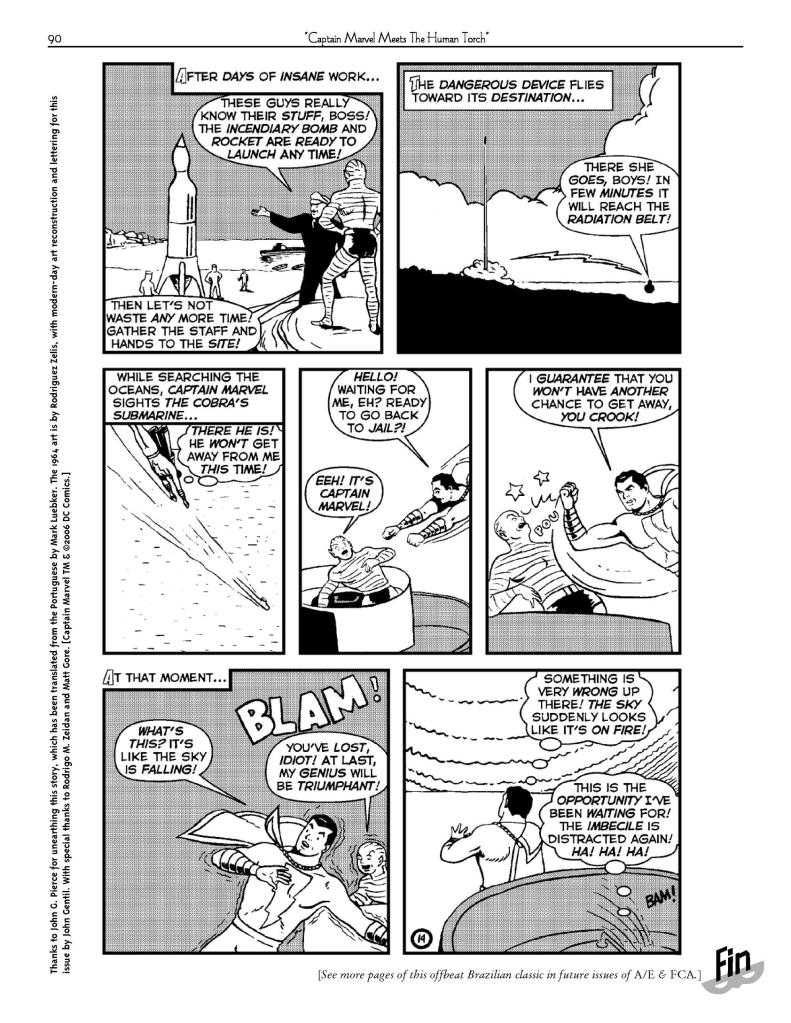
Here’s the unretouched version of this page as it appeared in the original Annual.
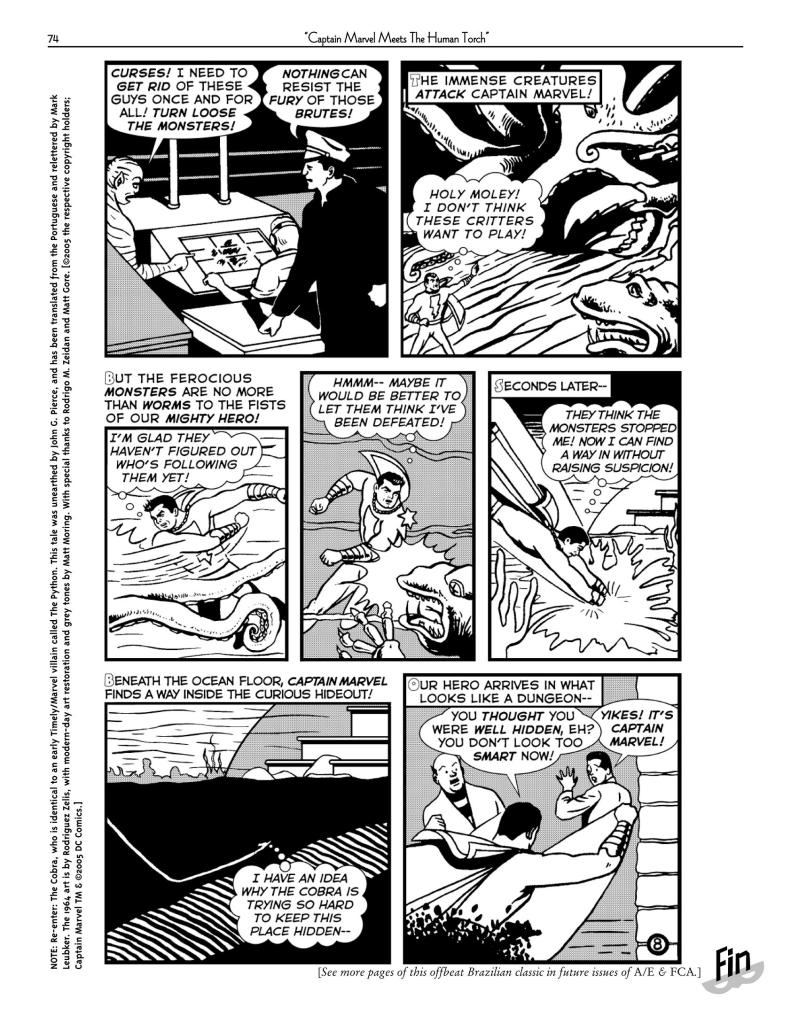
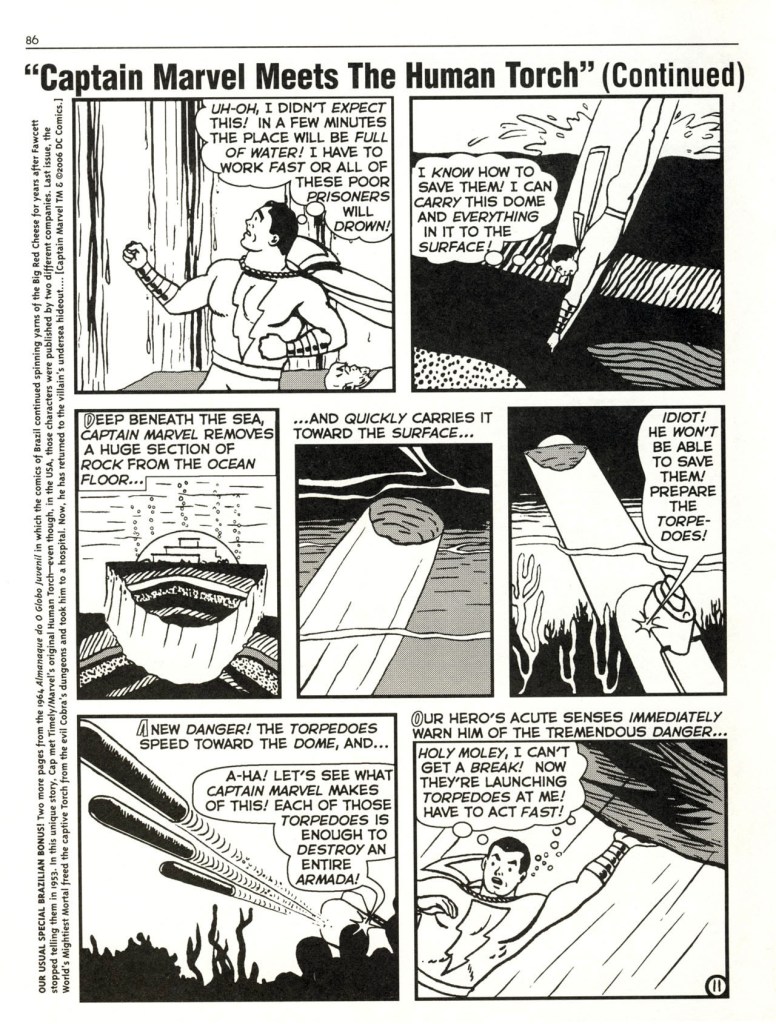
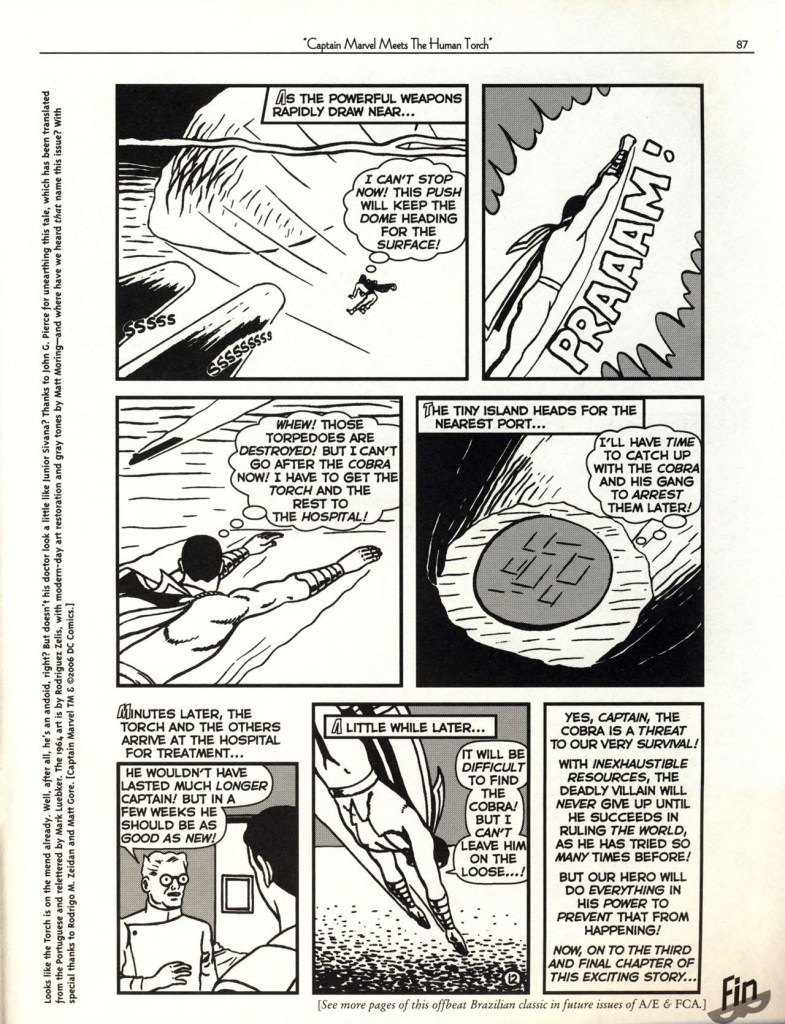
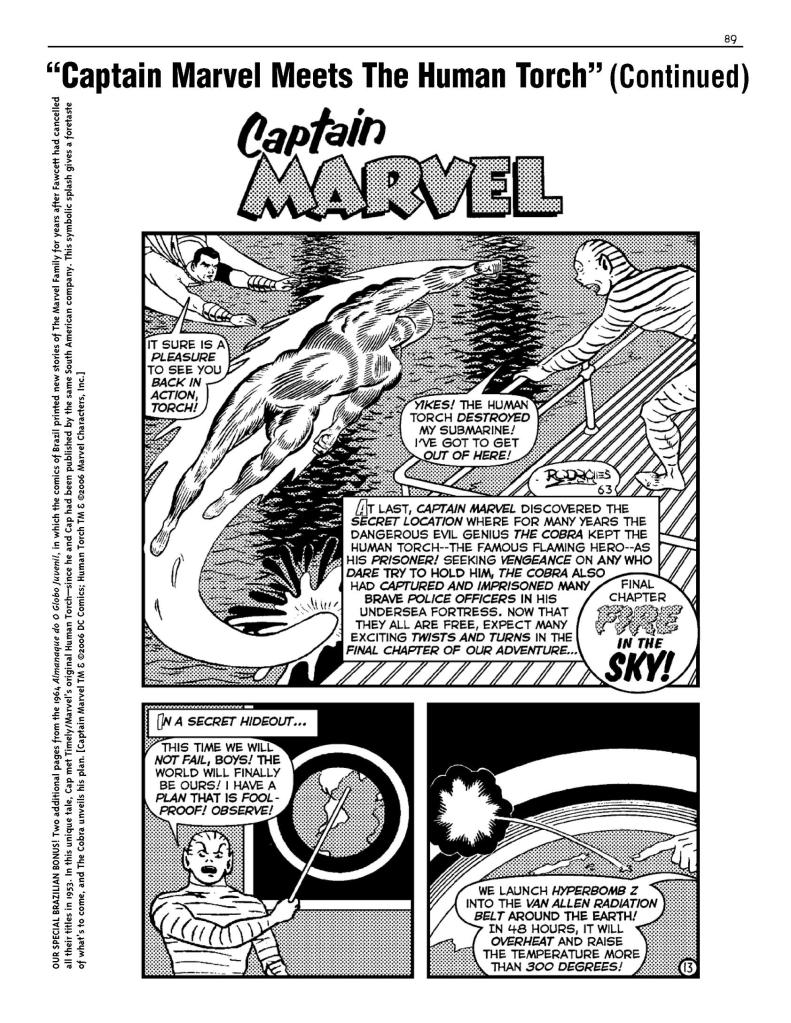
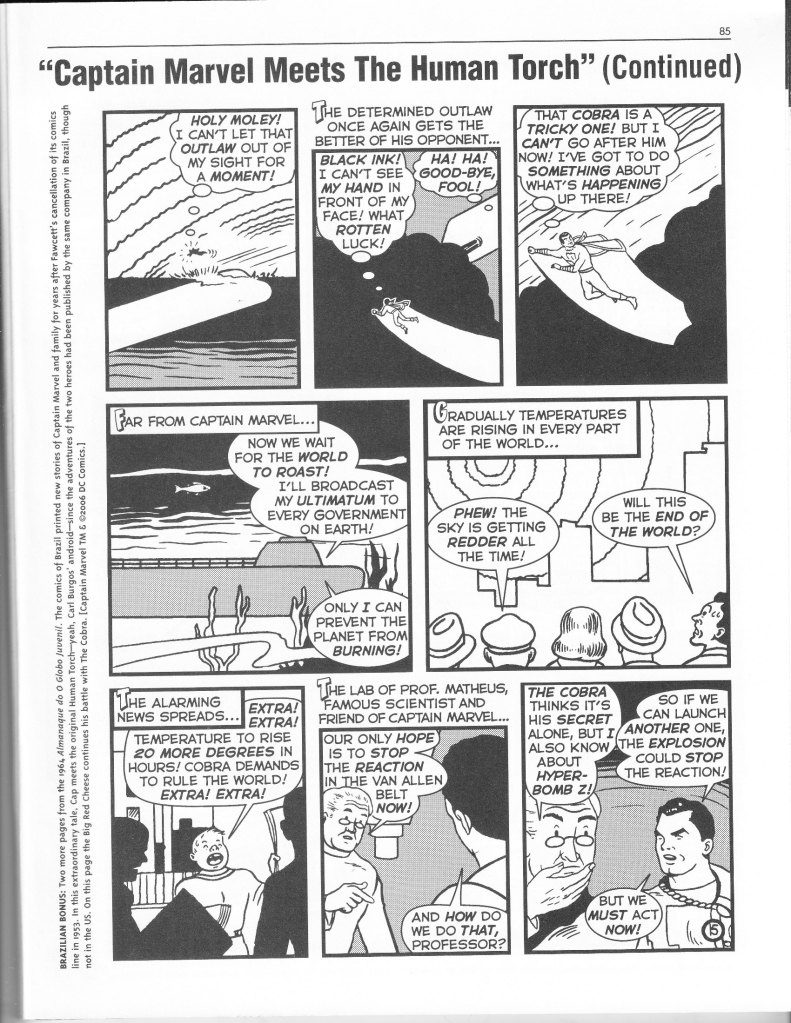
Again, here’s the unretouched version of this page.
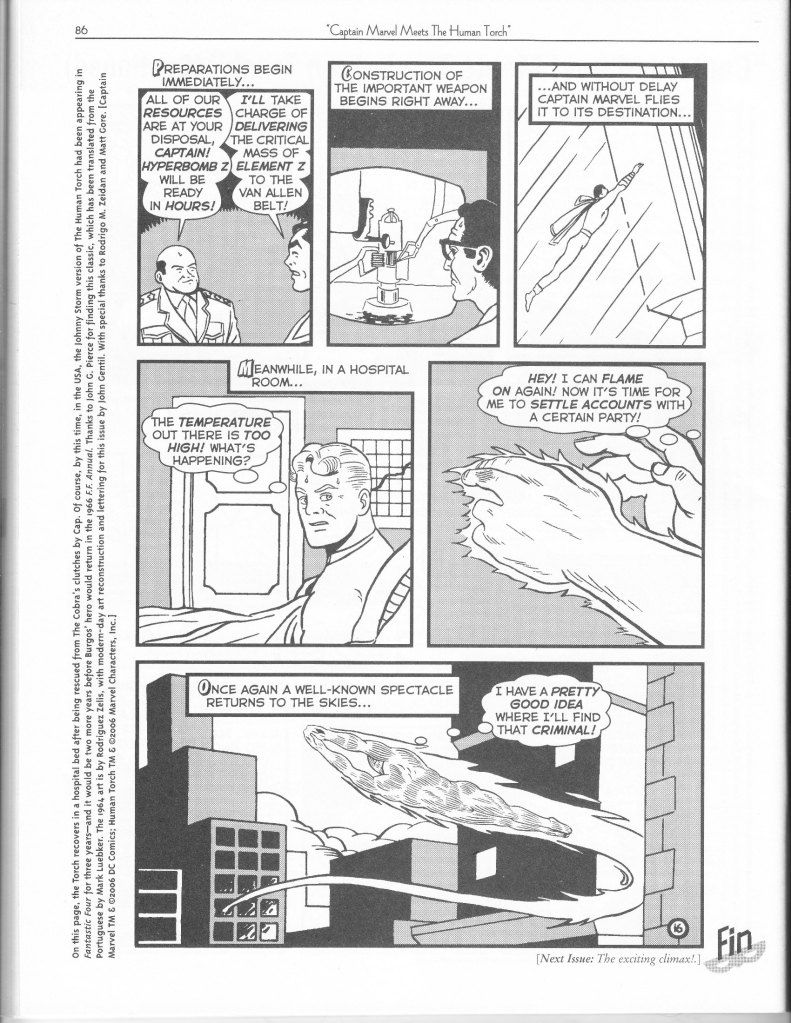
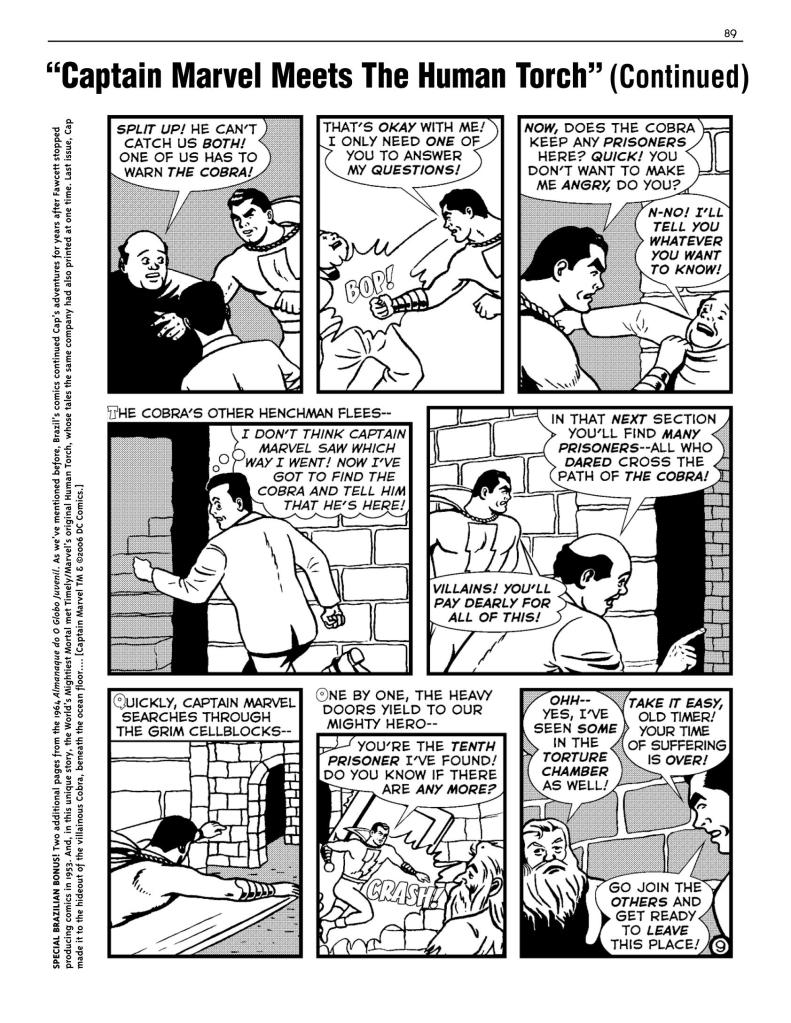
Again, the unretouched version.
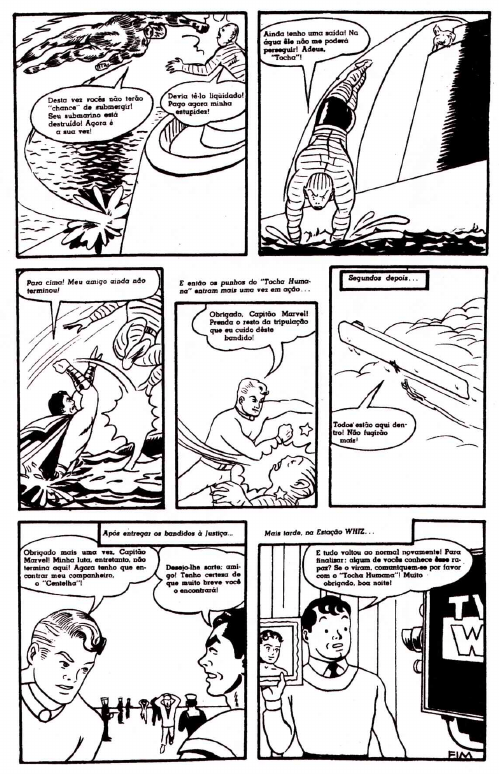
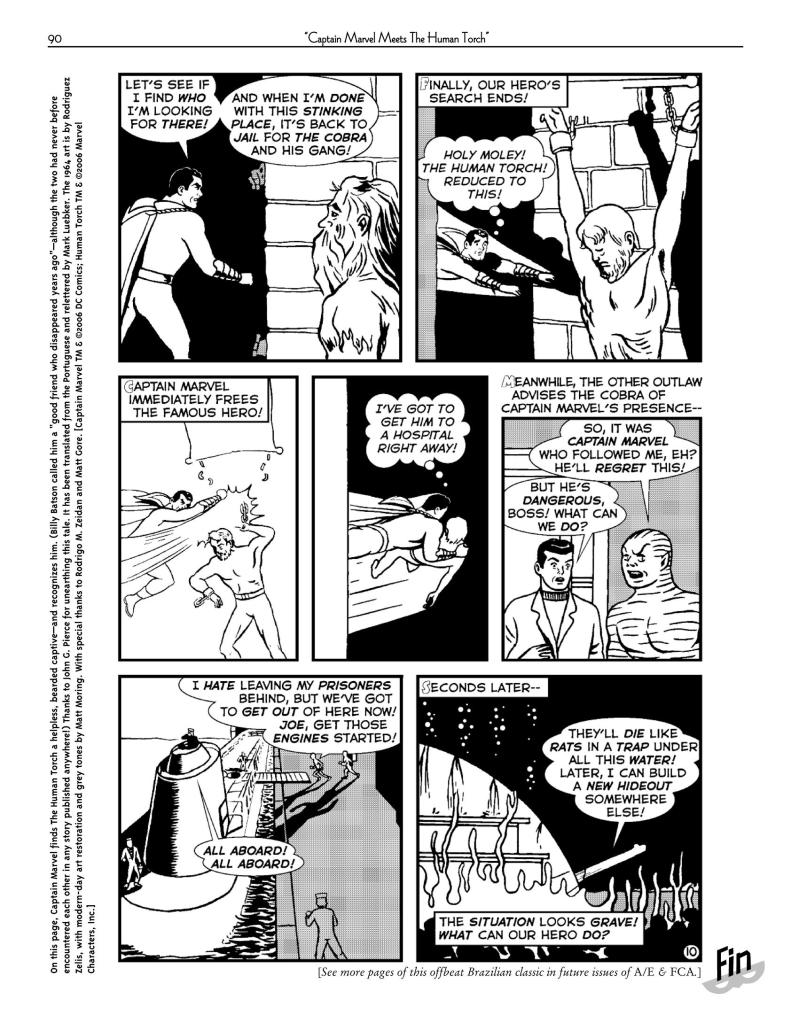
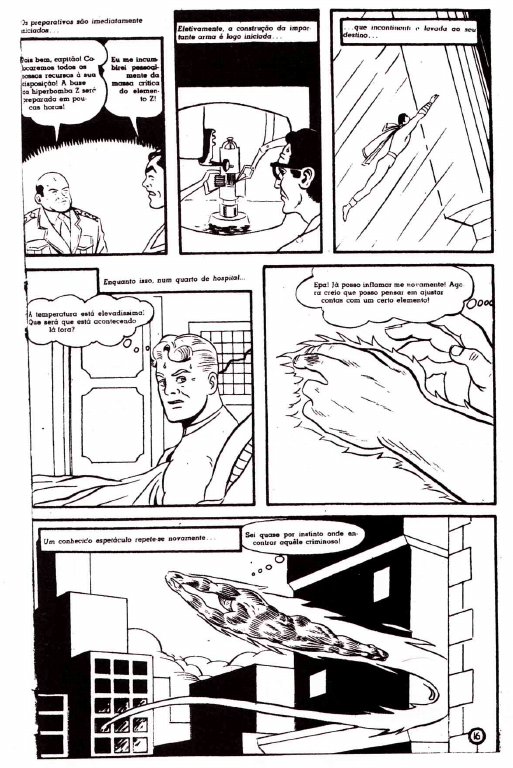
And finally, the unretouched version of this final page. In Brazil, Toro’s name had been changed to Centelha, or “Spark” as Toro means Bull in Portugese.


This is as neat as the other foreign comics that didn’t have Gwen die on time.
LikeLiked by 1 person
The Original Human Torch does have a Timely Comics costumed foe called The Cobra [ Captain America Comics#21 ( December 1942 ) The Torch and Toro spot the kidnapping of the South American Ambassador( yeah I know ), but they are gassed by the perpetrators. With Toro still out and maybe dead, the Torch chases the criminals into the lair of the Cobra to rescue the Ambassador from the clutches of the madman and his gang — comics.org. and see marvel.fandom.com/albri leiricgrie for an image of him in costume ]
LikeLike
Namor had his own Cobra [ Human Torch#14 ( Winter 1943-44 —Message to Moscow ) The Cobra ( or Herr Cobra ) was a bald skull-faced ( but Caucasian-colored ) Nazi with an empty right-eye socket and a long scar over the left side of his face. He was a master of disguise and led a Nazi mission to attack New York via sub with flying torpedoes ( which were intended to be mistaken for aerial bombing ). He was defeated by the Sub-Mariner –Ronald Byrd – marvunapp.com’s masterlist ]– see marvel.fandom.com/Dietmar Stock for his profile and image.
LikeLiked by 1 person
If there is another Marvel-DC Crossover, maybe someone could do an Homage to this story on a Earth that Timely and Fawcett characters share or Marvel could do it now with Miracle Man( David Colton or the real one Michael “Mike” Moran ) rescuing the REAL Original Human Torch ( the non-robot version, one that can be drugged, have kids with humans/mutants ) or during WW2 with Roko the Amazing ( Lon Crag — his Shazam is Menelaos and Ilium is Lon’s magic word ) ( Timely’s Captain Marvel ( Billy Batson ) [ USA Comics#5 ( Summer 1942 ) ] –deep six the Achilles heal weakness and add super-speed. Plus make his shield the same size as Captain America’s. In the panel seen on Jess Nevin’s Encyclopedia of Golden Age Superheroes he says Illium but Jess Nevins writes he says Ilium.
LikeLike
This is pretty wild, but you can see why the publisher had no qualms about it — both characters had been defunct for a long time, and it was unlikely that anyone in America would even notice. You have to wonder if there were similar shenanigans going on with licensed characters in other parts of the world…
LikeLike
Some similar shenanigans:
https://en.wikipedia.org/wiki/3_Dev_Adam
LikeLike
Turkish cinema is notorious for adapting copyrighted characters (e.g. Superman0 without worrying about the law.
LikeLike
Turkish cinema. Great. So many superheroes ripped off from American and Mexican comics and movies. Evil spiderman, Captain America, The Phantom, a mix of Shazam/ Batman/ Superman, Fu Manchu, Copperhead, Santo, all sorts of nonsense but highly enjoyable. Kilink is up there with Diabolik and Kriminal.
LikeLike
The chain mail-wearing character in the bottom right-hand corner of the comic’s cover is Sir Falcon, an Australian comics character of the 1950s. He was one of several locally-created Phantom clones (along with the Phantom Ranger, the Raven and the Panther) who had their own titles here in the Fifties. A few of his adventures have been reprinted in recent years – interesting that he also popped up in Brazil,
LikeLike
A pretty simplistic story that moves along quickly. Which is a good thing, since the story has a number of issues when you stop to think about it. Despite the issues, I do like Captain Marvel going undercover.
I also doubt that Captain Marvel and the original Human Torch had any copyright protection in Brazil at the time this story was published. Or, if they did, the publisher probably held the copyright.
LikeLike
This is one of those stories that I think of as a dancing bear — from the (Russian?) proverb: “The marvel is not that the bear dances well, but that the bear dances at all.”
It’s interesting and fun to know that the story exists, but it’s the existence of the story that’s interesting, not so much the quality of the story itself. Though I do like that Toro reference at the end, which seems to be a hopeful setup for a sequel.
LikeLike
Three things. According to Roy’s notes running vertically alongside these pages, Mark Luebker translated the story from Portugese, not John G. Pierce, who only brought it to Roy’s attention. Secondly, according to his signature on the chapter splashes , the artist spelled his first name “Rodrigues.” Third, Roy says the villain’s name in two previous Timely stories featuring The Angel and then the Torch and Toro was The Python. In Portugese, the word “cobra” is the generic name for any snake, so this may simply be an instance where, with neither pythons or cobras being native to the country, the editors translated the name to one that Brazilian kids would understand.
LikeLiked by 2 people
If you go to marvel.fandom.com and look up Emil Cullen ( Python ) there is a slight resemblance ( Emil has stripes on his body and the ones on his head does point to the Cobra in this story being him. But the Python doesn’t have pointy ears ). The Python can contort his body and stretch his limbs to a limited degree. Python vs. Human Torch, Toro & Sub-Mariner [ The Human Torch#8 ( Summer 1942 ) ]. Python’s first appearance [ Sub-Mariner Comics#2 ( Summer 1941 ) Angel Story ]. The Python’s abilities do remind me of Jack Kirby’s mutant creation Slither.
LikeLiked by 1 person
Again, somehow WordPress has renamed me as “tenacious19abf0fb07.” In the real world, my friends call me Mike Tiefenbacher.
LikeLiked by 2 people
I also had that issue until I changed my display name. You should be able to change your’s in your account settings.
LikeLike
I wonder if the Brazilian publisher was still paying a licensing fee to Fawcett, even if they were producing new material. If so, and if Fawcett thought about it at all, they probably figured they were publishing reprints, and that the settlement with DC didn’t extend outside America, or if it did, it didn’t matter.
LikeLike
Brazil also had a Capitao Marvel title and a Marvel title which reprinted various Marvelman, Young Marvelman and I believe, 1 Marvelman Family story. stories.
Published by Rio Grafica Editora, late ’50’s. The chest roundels were taken out and there are examples of both Kimota and Shazam being used by Young Marvelman.
LikeLiked by 1 person
This story was part of an annual anthology (the last issue, actually), which had started in 1941. This issue came in July, 1964 by Rodrigues Lélis, altho up to a few years ago, it was though that his name was Zélis. Oh, it was produced in 1963 and Lélis signed it as parts VII, VIII and IX, which means that he did 9 Captain Marvel (Shazam) stories. His part VI was in Capitão Marvel Magazine 60, also dated July, 1964. No one knows anything more about him and it seems that there´s only one surviving guy from that time, that worked at the publisher, that could shed more light on it. This is a very sought-after issue around here, in Brazil, and go for some big bucks, just because of this story. The anthology itself has 100 pages, like the DC 100-page editions, and its a mix of newspaper strips, like Davy Jones and Wyatt Earp, both by Al McWilliams, Robin Hood, from the Charlton Comics stable, western heroes, like England´s Bill Kid and Wild Bill Hickok, Australia´s Sir Falcon, defunct-Fawcett´s Lash LaRue and other lesser luminaries.
Copyright-wise this is something that was never thought about here, up till the 1980s. Brazil had ferocius battles in recognizing copyrights across the board, up till then. Publishers just bought the pages and printed them, sometimes many times, while they had the use of the characters. Marvel´s Black Rider had his own title for almost 300 issues here, transforming stories of other chartacters (even from other countries) into him or having tons being produced in house… and he was not the only one. Straight Arrow had almost 200. As comics here had few ads, additional material was necessary. When X-Men 7 to 20 was published here in 1969, a lot of fill-ins was produced locally to complement the comics. Heck, even Steranko´s Nick Fury had some complementary stories done in-house here, two, if I´m not mistaken, quite good, By the way, the X-Men, not so. Millie the Model had hundreds and even Archie´s the Fly had a ton of (bad) ones. This was something that had a long history behind it. Lev Gleason´s Cutie Pie Casey (who?) had only three issues in its american run but at least 60 hereabouts, and pretty good ones too. As mentioned before, this practice of producing additional material locally was commonplace. What sets this crossover aside from the tons of others is that, for the time, it was very well done, continuity-wise ,and presented the original Torch for a new generation. I, myself, remember reading it in 1971 and thought it strange, as I had already been collecting the Fantastic Four for a while. A great strange story among a lot of many strange things for the comic book reader around here. There was a time when Batman was published here by two different publishers (sic) at the same time: the one publishing the comics published him as Batman and the other, publishing the newspaper strips, called him Black Bat, and his secret identity was Bruno Miller, altho Robin was still Dick Grayson in both. Clark Kent was Edu (with no surname) and Lois Lane was Mírian Lane. All due to these two different publishing houses. Lois´s name was ajusted only after Crisis on Infinite Earths (technically) around here. Great , confusing times.
LikeLike
Oh, the story is in black, white with some red spots in most panels. The guys at Alter Ego did a great job, as the Torch was in black and red when faming on.T he same happened here, with the Hulk’s first appearance, where, in a black and white comic, only he was colored, green. Dell´s Dr. Solar had this color combination too and it was great… and crazy. It has to be seen, to be believed.
LikeLike