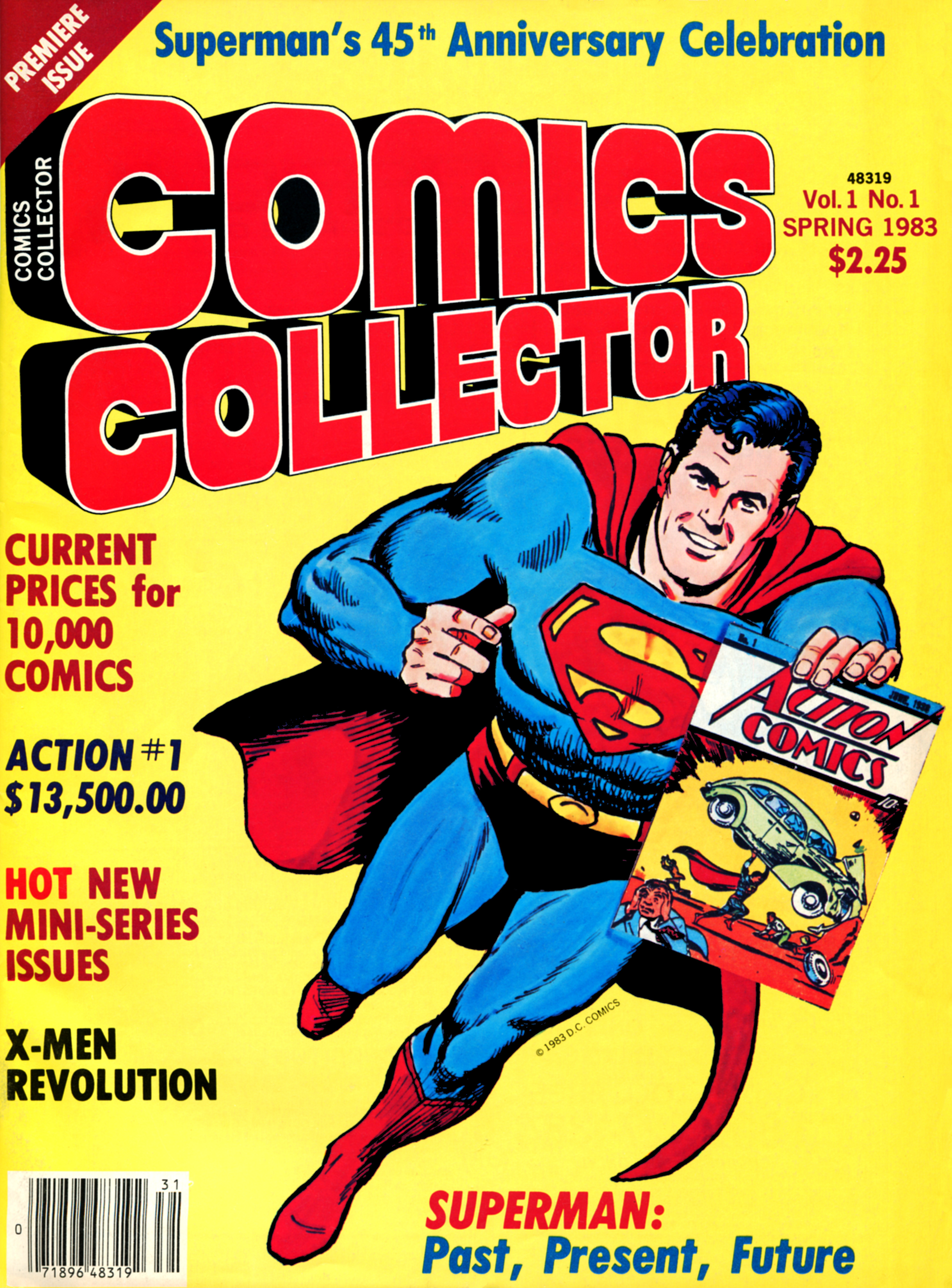


I came across this first issue of COMICS COLLECTOR magazine in a little stationery and newsstand in a mall near to my home in Delaware. The place stocked comic books as well as series paperbacks such as THE EXECUTIONER and THE DESTROYER and the imported DOCTOR WHO line. It became a regular place for me to get new comics following the point where I parted ways with the mail order service from Geppi’s Comic World. Trying to make sure that I had the C.O.D. money on hand when a delivery would arrive (without a regular source of income) was stressful, as was seeing weeks’ worth of new books on the stands and not being able to pick them up while my order was being filled. So after just under a year, I left Geppi’s behind and fended for myself, now knowledgeable about the comic book terrain in my new home state.
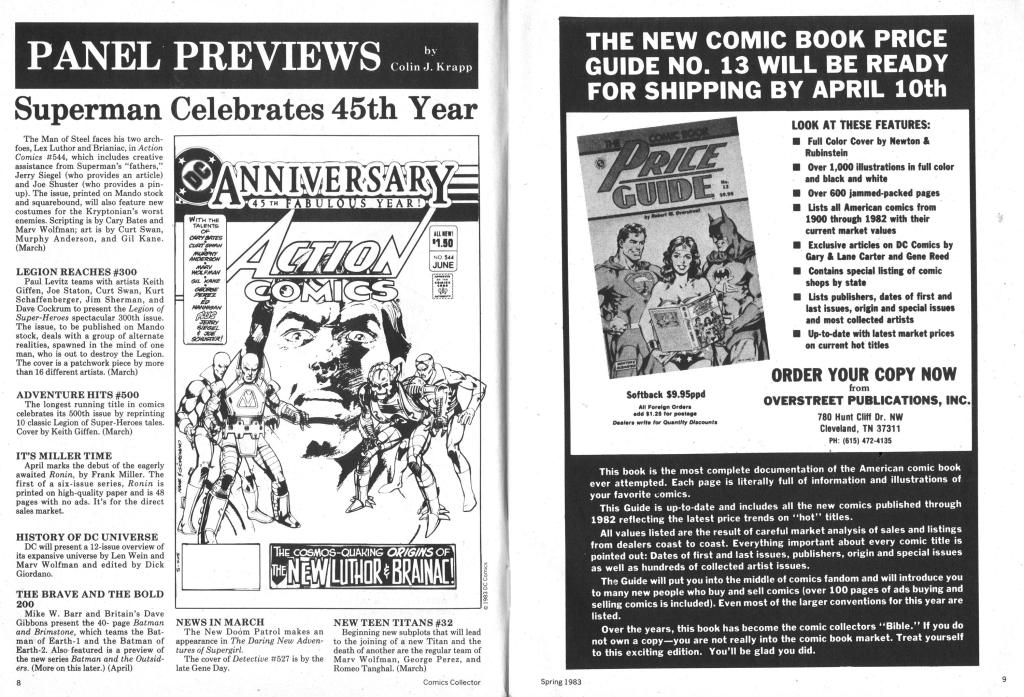
COMICS COLLECTOR was published by Krause Publications, the same firm that for years published the weekly Comic Buyers’ Guide newspaper, which they took over at around this same time. It was an effort to expand back onto the newsstands–Krause wasn’t the only publisher to try this, at this same time, STARLOG was releasing the initial version of COMICS SCENE, a magazine that I really liked. COMICS COLLECTOR lasted for 10 issues, though I only picked up three or four of them. I didn’t find the contents compelling enough or consistent enough in terms of where my interests lay at that particular moment. I was interested in all of the inside information, but that $2.25 cover price was a bit of an impediment at a time when new books were 60 cents.
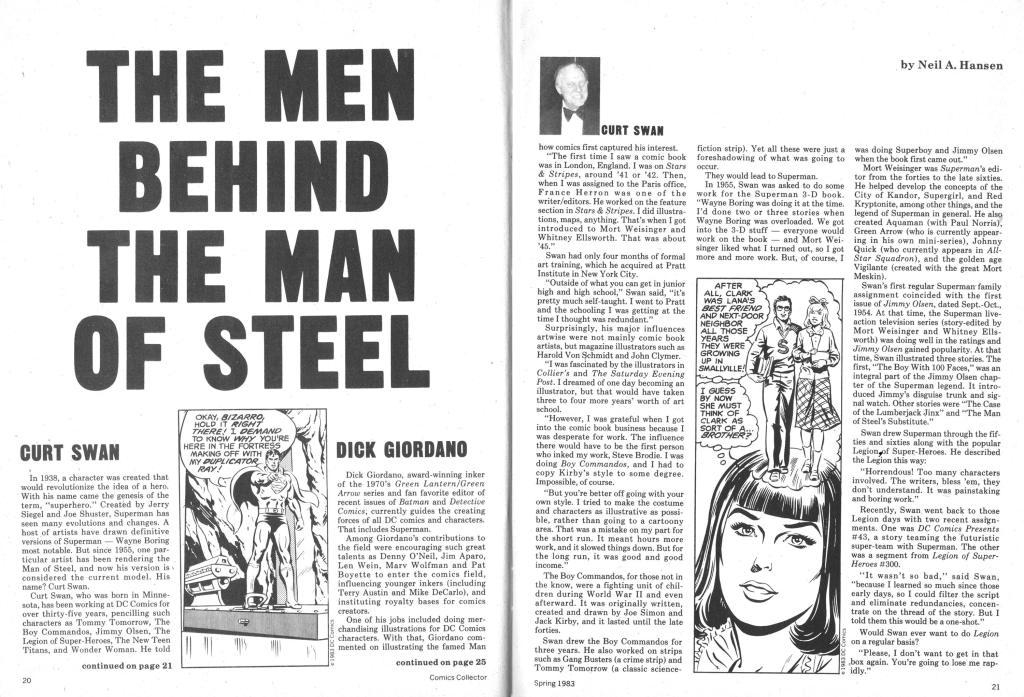
This first issue of COMICS COLLECTOR strikes me today as feeling not dissimilar from an issue of the COMIC BUYERS’ GUIDE in its heyday. Certainly, the design sensibility is similar and a bit primitive. There are a bevy of articles, and they cover a variety of different subjects from in and around the world of comics and related fields. But the production is a bit artwork-light, with big blocks of text taking up the majority of most pages. That wouldn’t have been a problem for me if it was text that I was interested in, but a lot of it concerned things that I either didn’t care about or that I didn’t care about yet. Even this initial piece on Superman’s impending 45th Anniversary was only of limited interest to me, as I’d been forced to cut back on my comic book purchases at around this time and had dropped all of the Superman titles from my buy-list. That said, it’s a nice little period snapshot on Curt Swan and Dick Giordano.
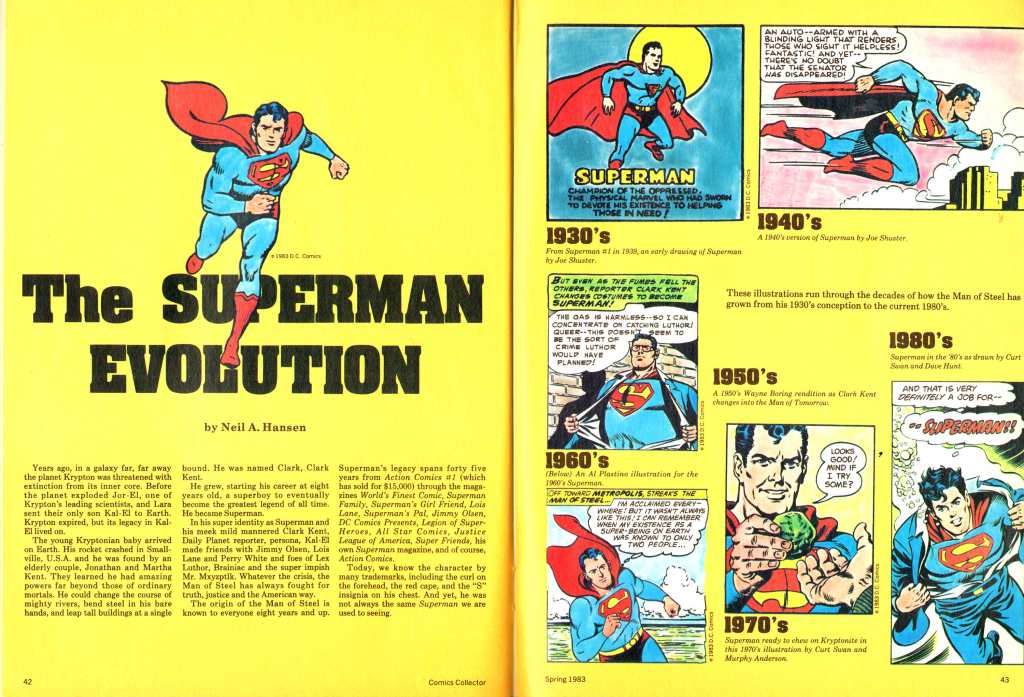
The next article was by Cat Yronwode, and concerned the comic strip studio shared in the late 1930s by Milton Caniff, Noel Sickles, Frank Engli and Alfred Andriola. I wasn’t yet an aficionado of classic comic strips–there wasn’t yet an easy place to read collections of them–so this was wasted on me. This was followed by a review of the recent DEATH OF CAPTAIN MARVEL graphic novel and a news piece concerning the revival of the Archie heroes in MIGHTY CRUSADERS. These are of some interest to me, but neither was particularly informative. Next came the piece you see here, about how the Superman strip had evolved over its 45 years. This was more up my alley, and it included panels culled from older stories that I found intriguing.
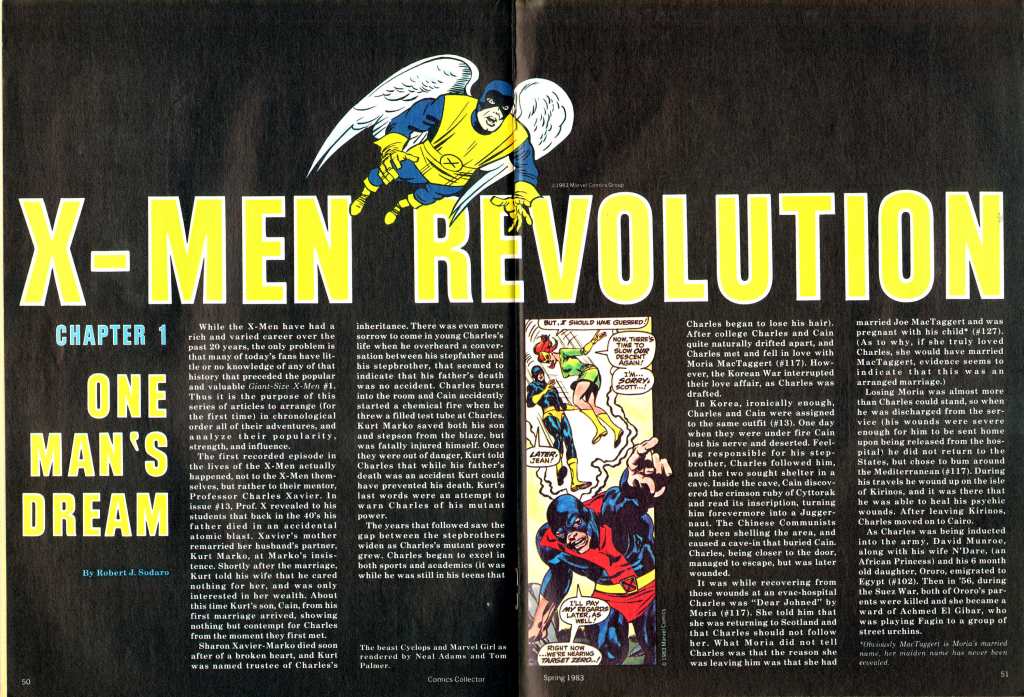
The X-Men were red-hot in 1983 when this issue came out, so it included the first chapter of a multi-part history of the group and its cast of characters. This was followed by an article on assorted non-comic book Superman collectibles that had been released over the decades, the visuals for which showed mostly only the newest and latest stuff, which I’m sure was a practical matter. Then came an article about the English publication of the European Kelly Green graphic albums by Leonard Starr and Stan Drake. A pretty strip, but at the time published in volumes too costly to be worth it to me with my limited resources.
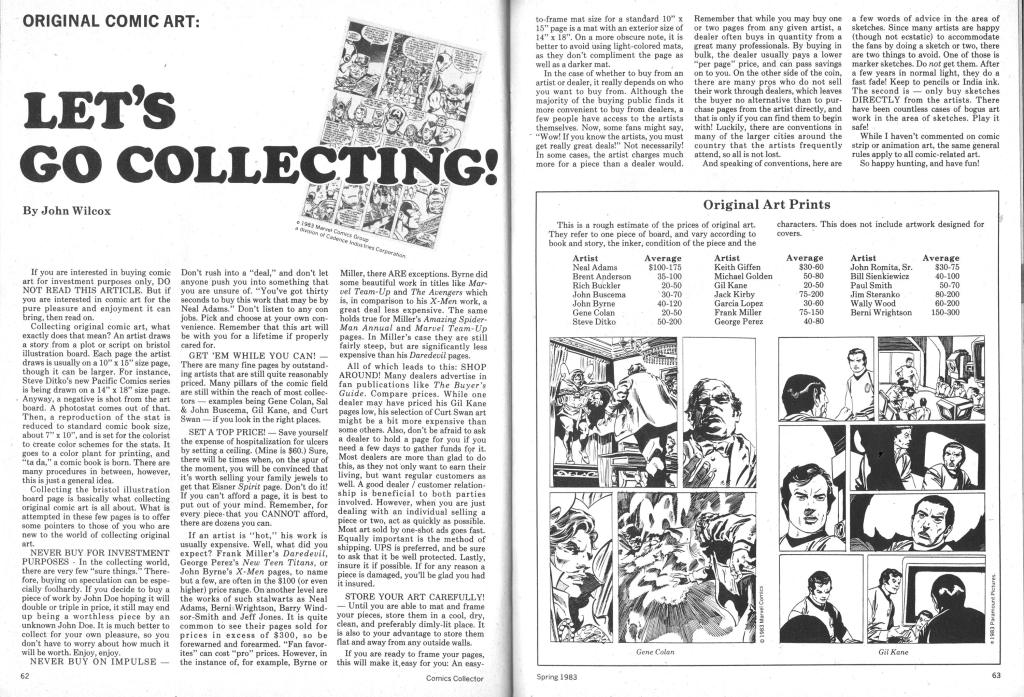
The back half of the magazine begins to segue more into features concerning the collecting of comic books more than their contents. This article about collecting original artwork is a good example of the fare. That price list is pretty amazing to look back at–today, you could likely add a few zeroes to any of those quoted numbers. This was followed by a piece concerning worthwhile titles from a reading point of view that collectors might be able to find in their shop’s local quarter bin. This was followed by a piece about the John Carbonaro revival of THUNDER Agents conjecturing whether the strip could make it in the 1980s. (Spoiler: it could not.)
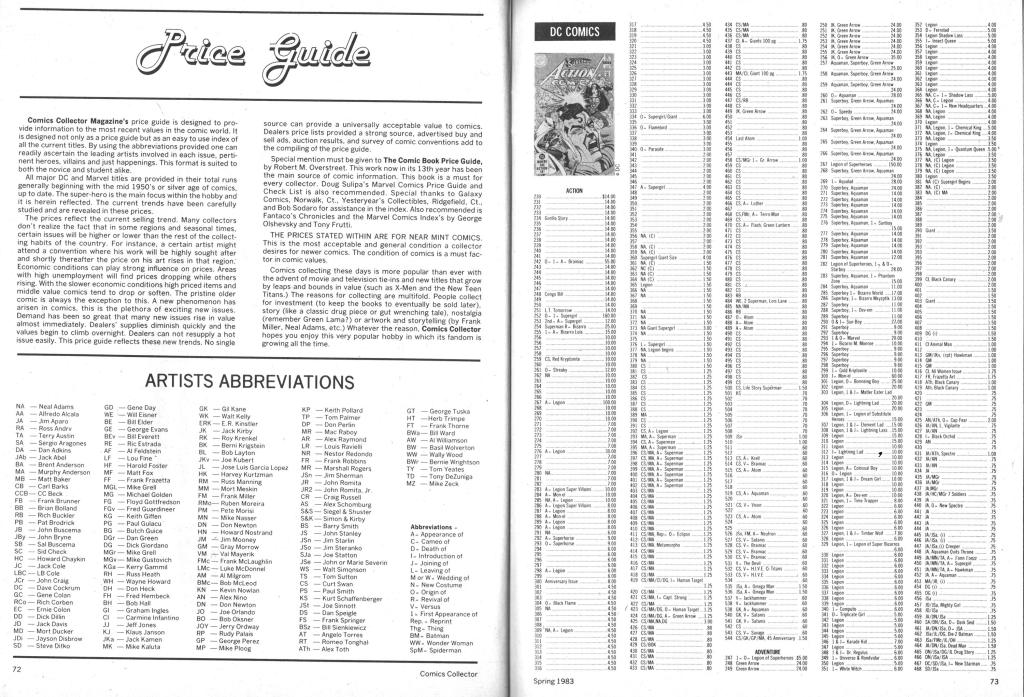
But the most notable thing in COMICS COLLECTOR magazine was its price guide, which filled the back pages and served as something of a forerunner to WIZARD’s later similar feature. This was the first time that I’d seen a price guide like this in a magazine, though it was common for other collectible fields. I was familiar with the Overstreet Price Guide by this point, and had even bought an edition or two before realizing that it was of limited use to me. (I just liked to look at the vintage covers.) This guide can’t cover the prices for everything, far from it, so it tends to focus on the most recent and most noteworthy titles, typically ones that were still running at the time of publication.
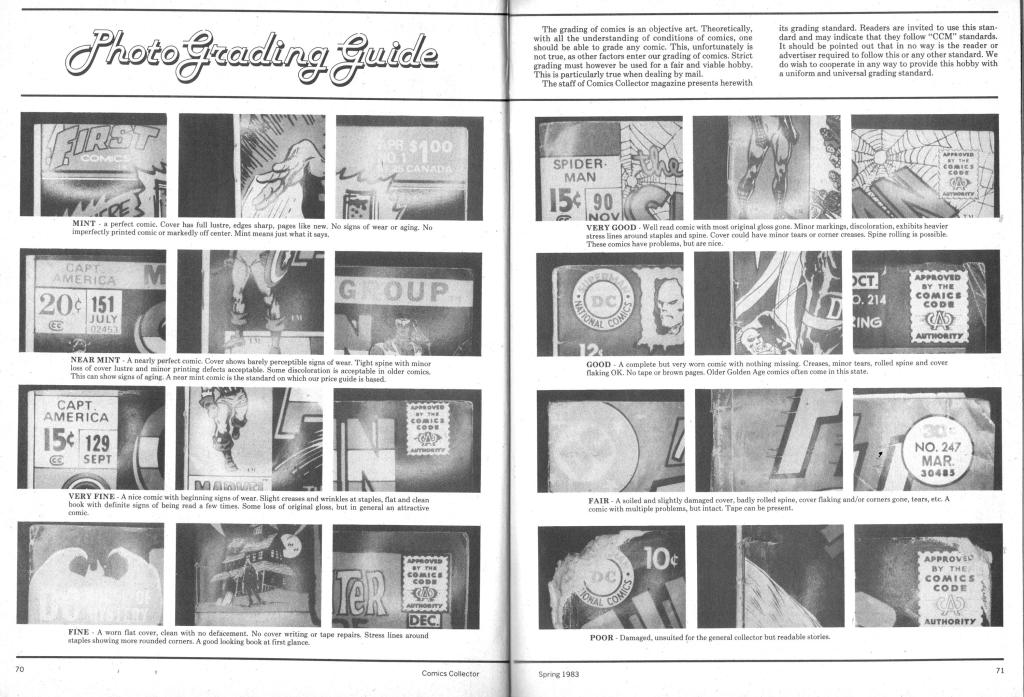
The feature also included this visual guide to grading the condition of one’s comics, which got repeated each issue. I’m not quite sure that these evaluations would hold up today in the modern back issue market, but this was the best we had in 1983. There was also a page that listed upcoming comic book conventions (which were more like selling shows in these days) and a Classified Ads section that clearly was using material that had been submitted to CBG (or else where would these ads have all come from in this inaugural edition?)

