

It’s a well-known story at this point, but just to recap the basics: in 1938, after years of attempting to sell the strip that they’d come up with to any prospective buyer, writer Jerry Siegel and artist Joe Shuster agreed to sign away all of the rights to their four-color wunderkind Superman for the sum of $130.00–that is, for ten dollars a page for the initial 13-page feature. Almost immediately, Siegel in particular had seller’s remorse, and this feeling only grew as he saw his creation find enormous success not only in comic books but across every related medium that then existed–newspaper comic strips, radio programs, animated cartoons, live action serials and a bevy of merchandising. Superman made its owners incredibly wealthy men–but those owners were no longer Jerry Siegel nor Joe Shuster.
Which isn’t to say that Siegel and Shuster received nothing for their efforts. By the metrics of the time, they were highly paid for their efforts in creating Superman stories–Siegel more than Shuster, as Joe’s half of the take had to be split with all of the assistants and ghost artists that were required to keep the series going. But this almost didn’t matter, especially since the owners of Detective Comics Inc. made it clear on multiple occasions that the pair could be replaced on the strip at will, and that their livelihoods depended upon not rocking the boat too much. It drove Siegel absolutely crazy to see the amounts of money that the publishers were raking in, knowing that it was his idea and his execution of same that made it all possible. He pushed incessantly to be paid better, at certain points getting concessions. But nothing that ever approached the total value of what Superman was worth.
Two important things happened during the time when Jerry Siegel served in the military during World War II. The first was that, unbeknownst to him, DC decided to go ahead with an idea that he’s pitched to them about a younger version of his popular character, Superboy. Siegel had written and submitted Superboy scripts on at least two prior occasions but was turned down each time. So discovering that DC had decided to go ahead with the strip without his involvement made Siegel justifiably feel as though he’d been once again ripped off. If Jerry was angry before, at this point he was out of his mind.
The second thing that happened during the war is that Siegel came into contact with Albert Zugsmith, a film producer, director and writer who was also a lawyer. As Siegel poured out his troubles to Zugsmith, the lawyer told him that he had a case, and that he should sue DC to recapture ownership of both Superman and Superboy. The original ten-year employment contract that Siegel and Shuster had signed in 1938 was nearing its end, and there was no guarantee that DC’s owners would renew it, so Siegel was looking at a period of uncertainty. He also felt burned by DC over Superboy, so he listened to Zugsmith, recruited Joe Shuster to the effort, and together they filed suit against DC, then National Comics, over ownership of their famous character.
Ultimately, the lawsuit didn’t go Siegel and Shuster’s way. The courts did find that DC has misappropriated Superboy and ordered the publisher to pay damages. But in the matter of Superman, it was clear that Siegel and Shuster had signed away all of their rights, and so they didn’t have a leg to stand on. They got a token settlement amount, but nothing near to what the character was worth.
What’s more, as soon as they filed suit against DC, the publisher fired the both of them, turning more concretely to the many ghosts who had been producing Superman stories all throughout the war years to keep the series going. Siegel and Shuster were out, and their byline was dropped from the feature. For years thereafter, they became non-persons up at DC, especially when the history of Superman was recounted. It wouldn’t be until the 1970s with the impending release of SUPERMAN THE MOVIE that Siegel and Shuster would get a measure of justice, as well as having their created by credit restored.
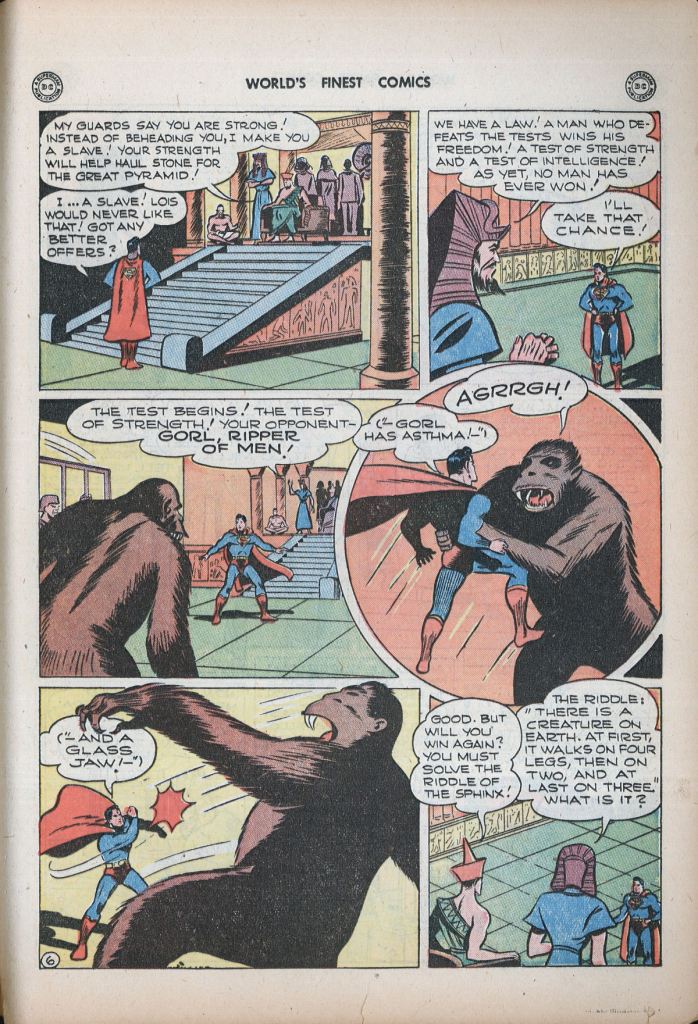
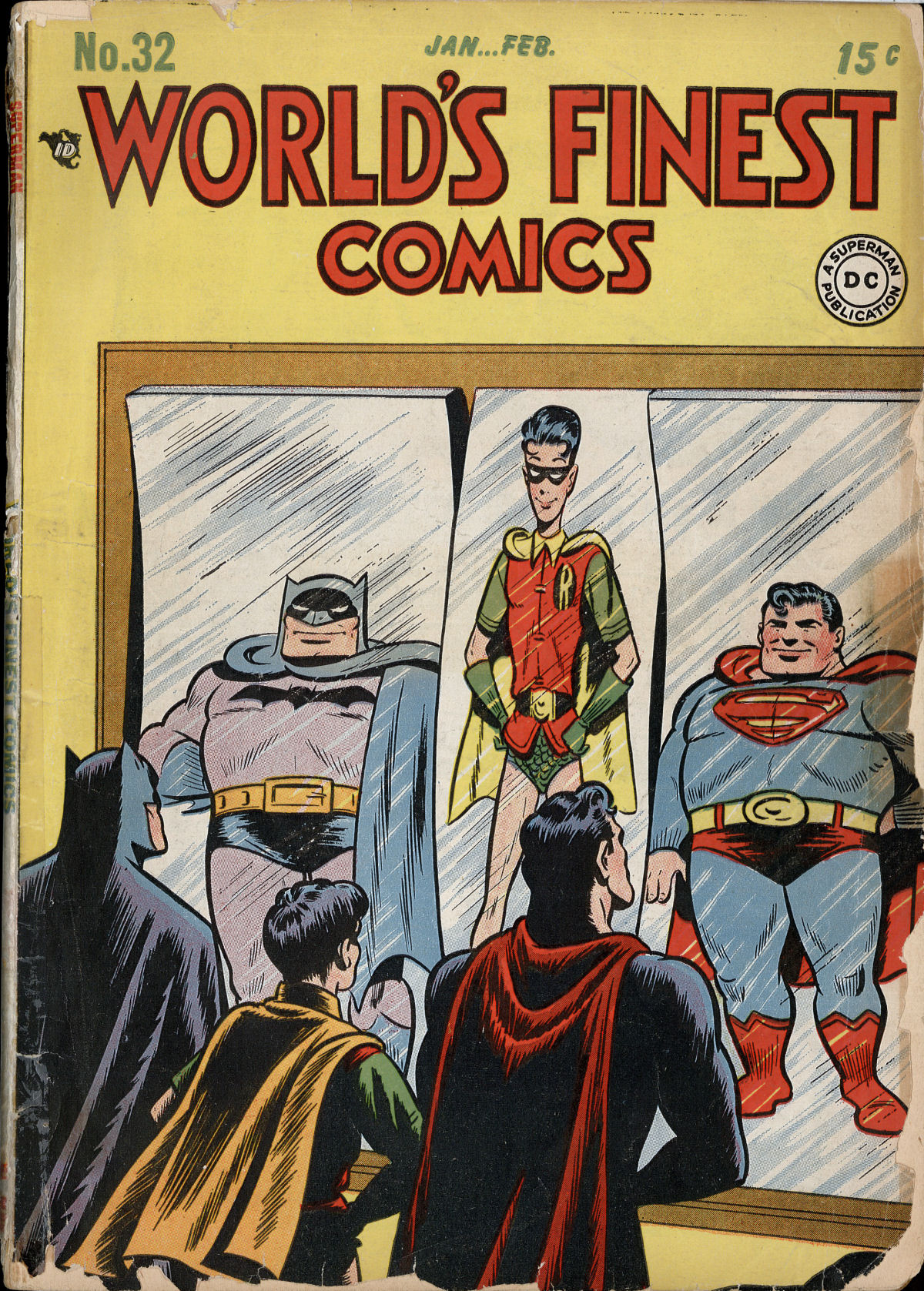
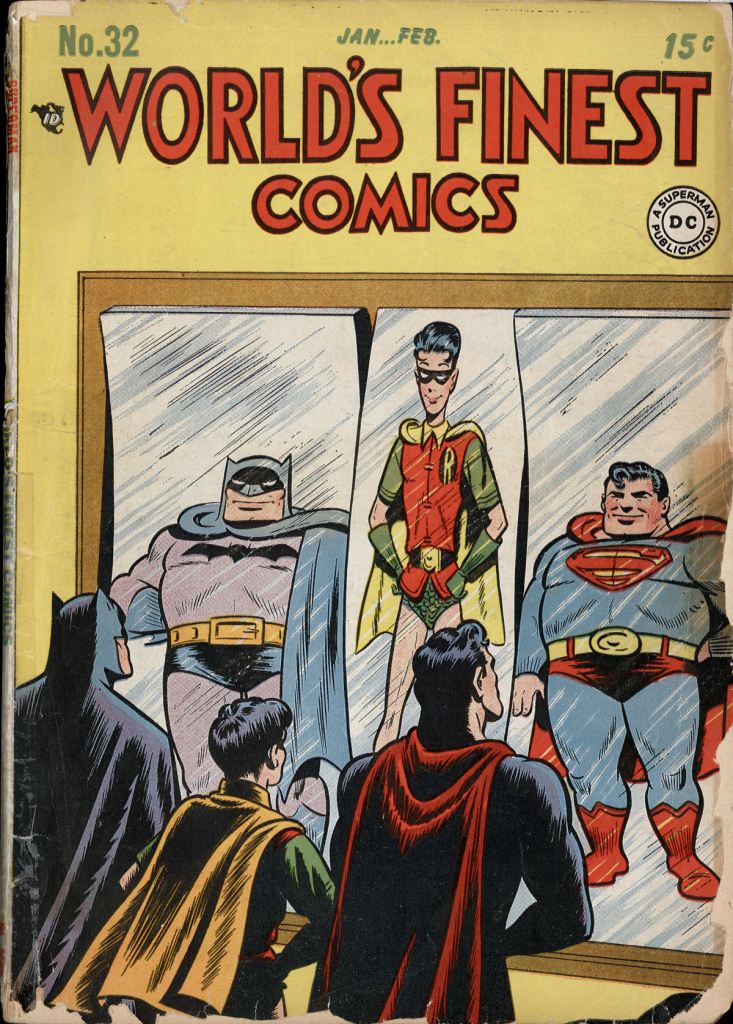
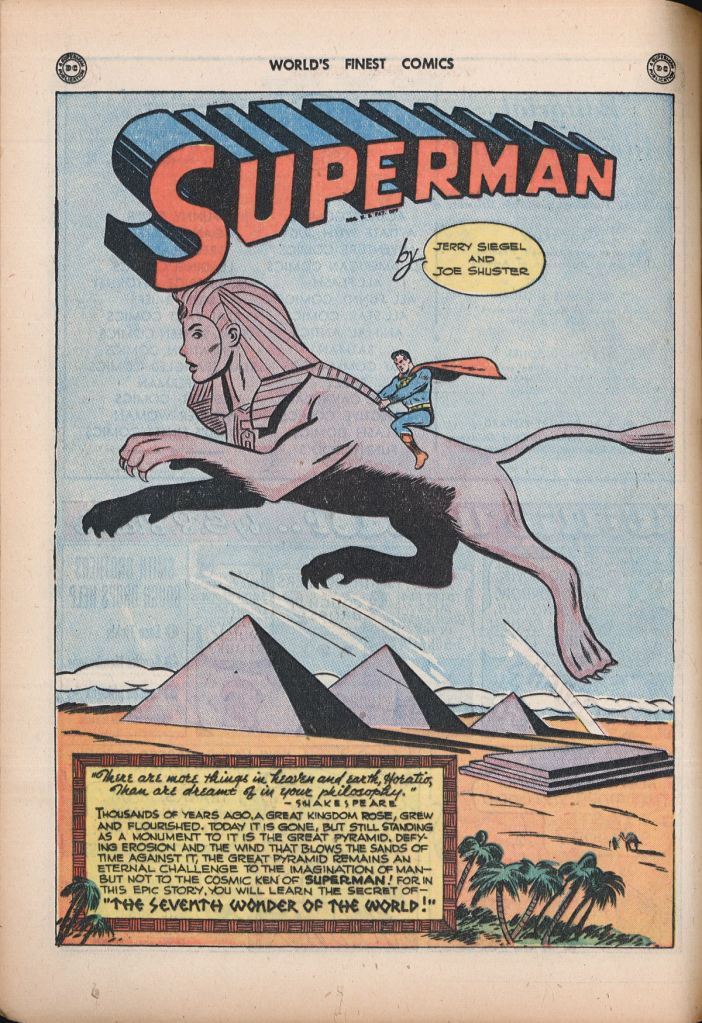
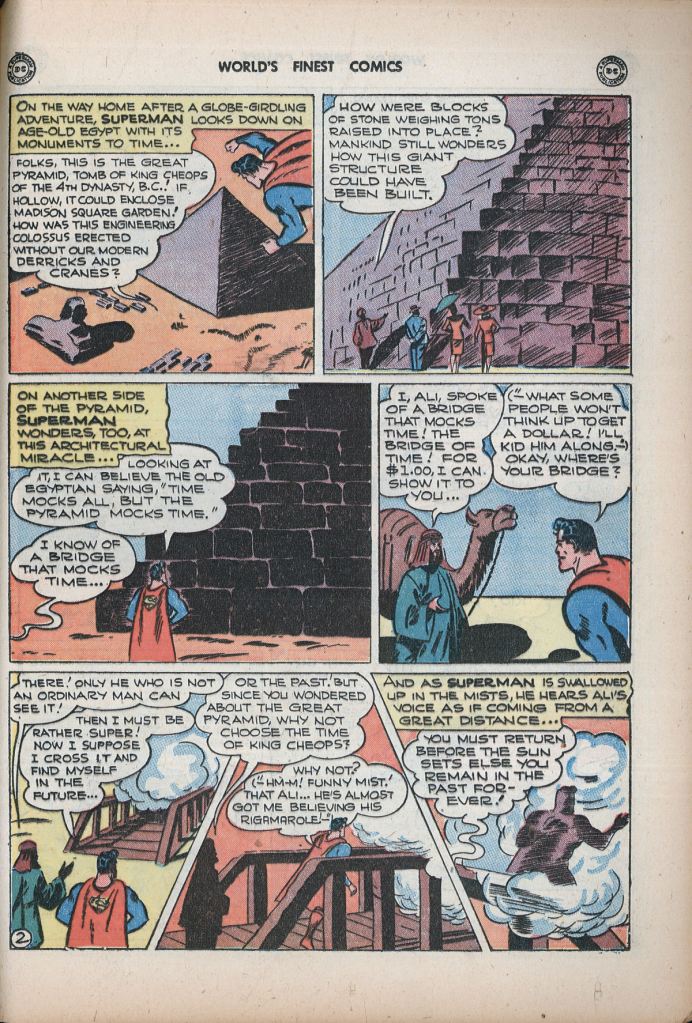
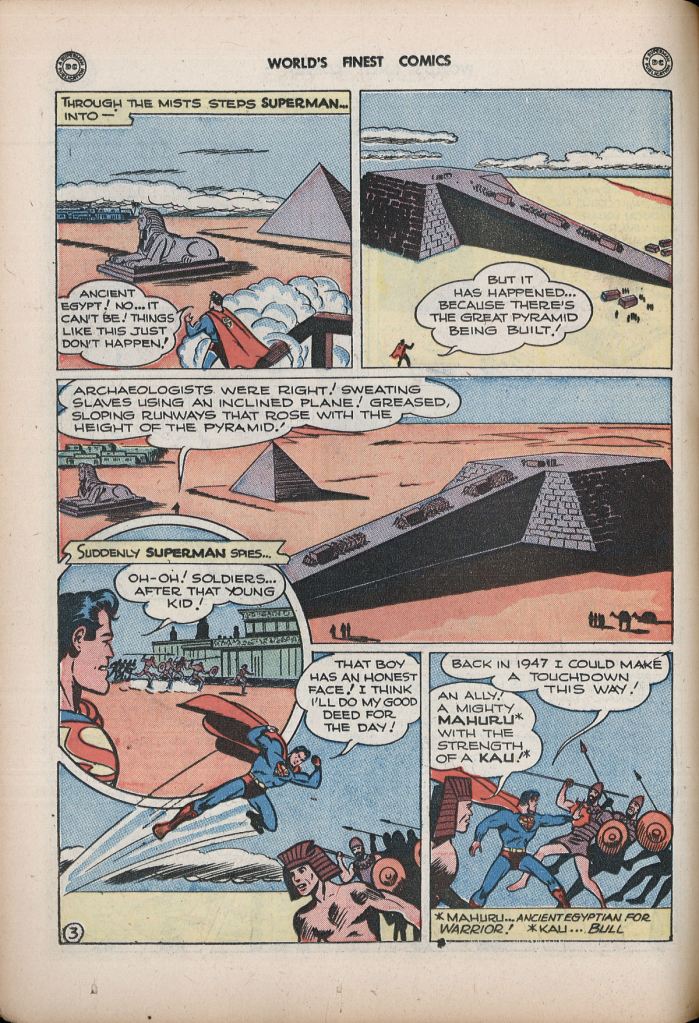
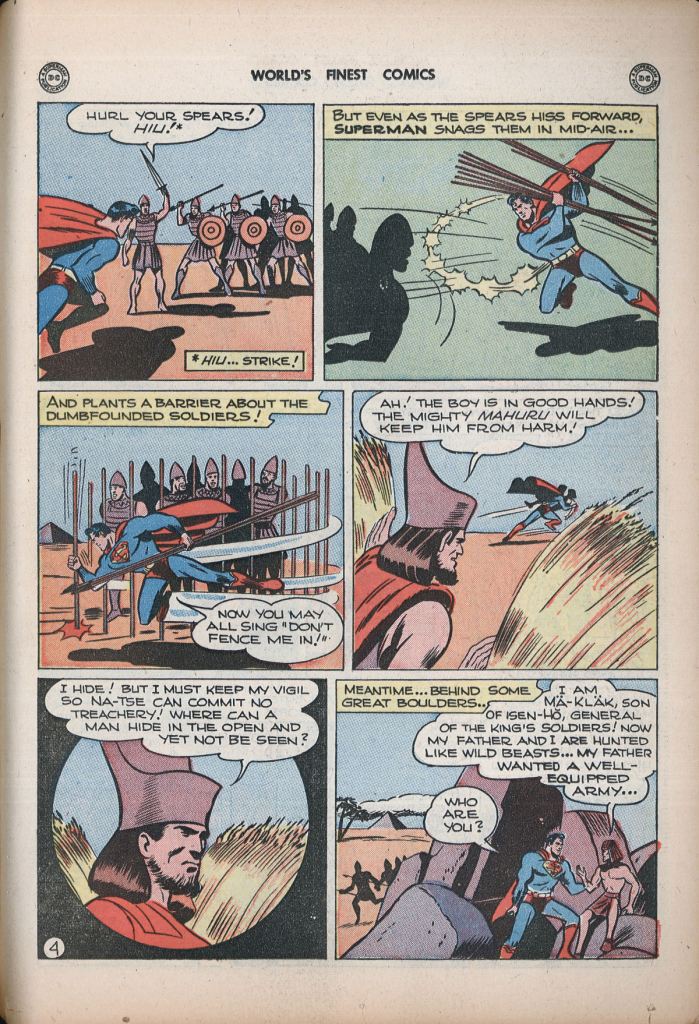
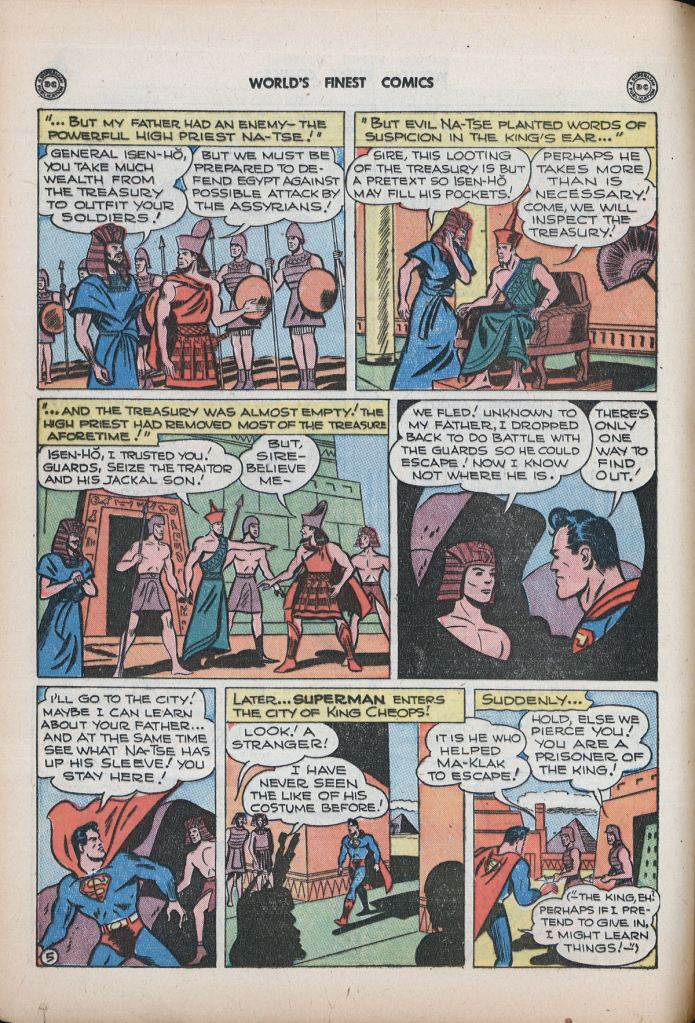
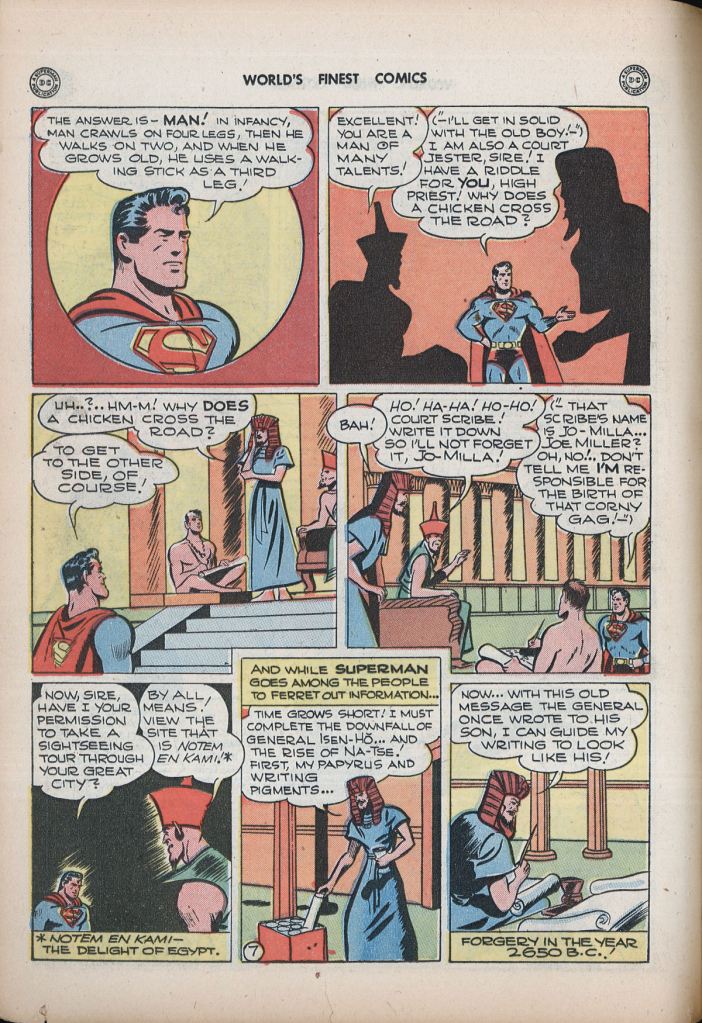
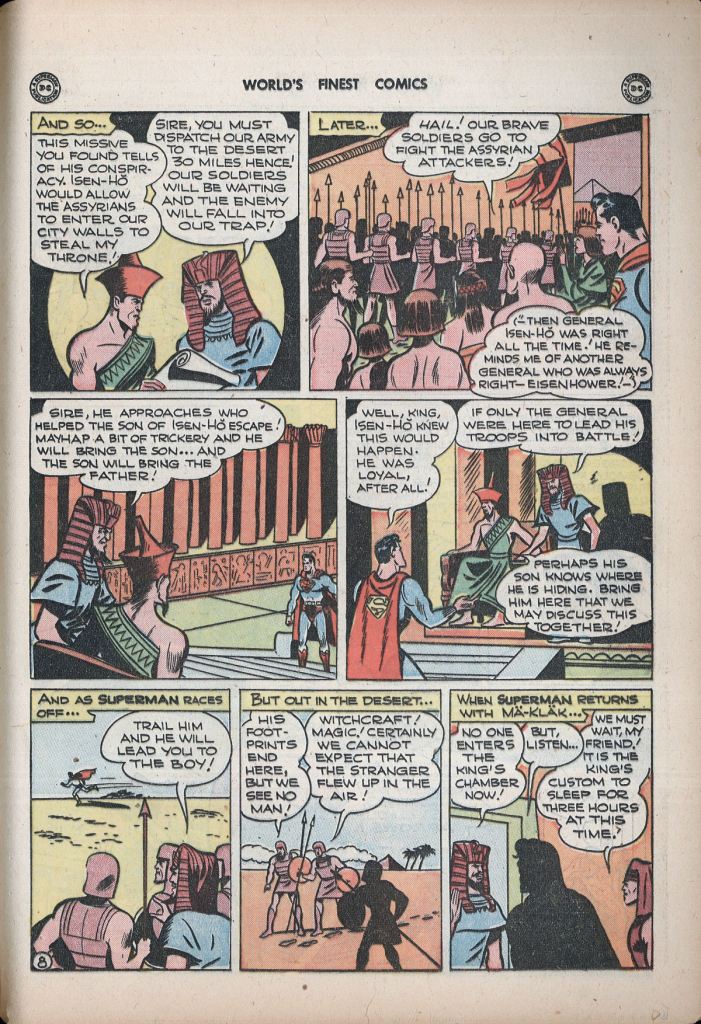
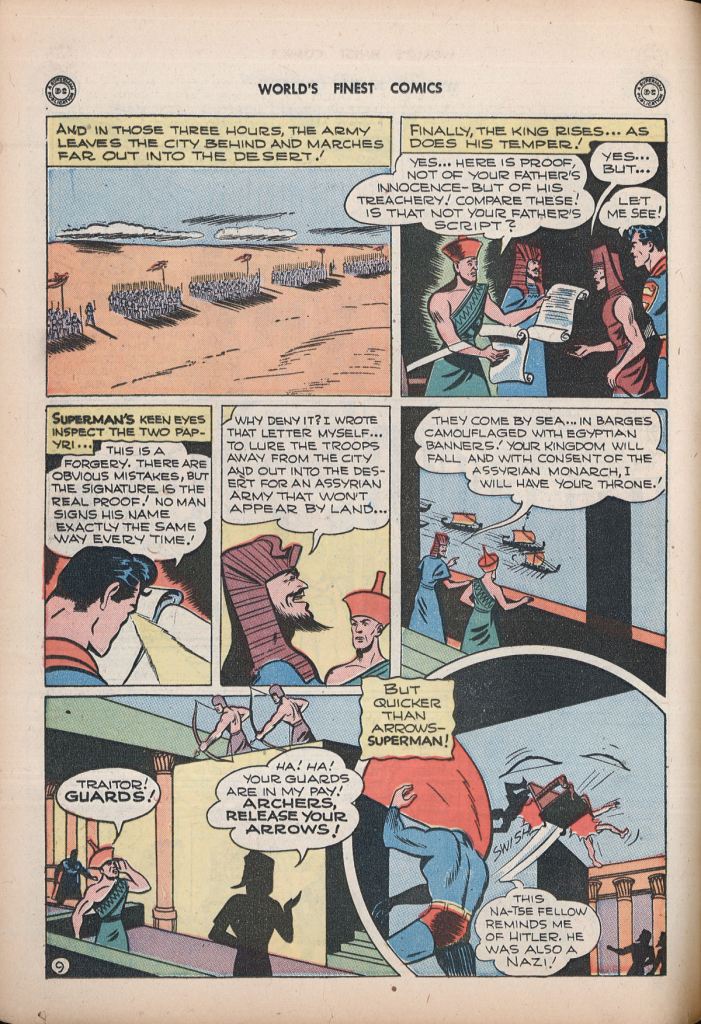
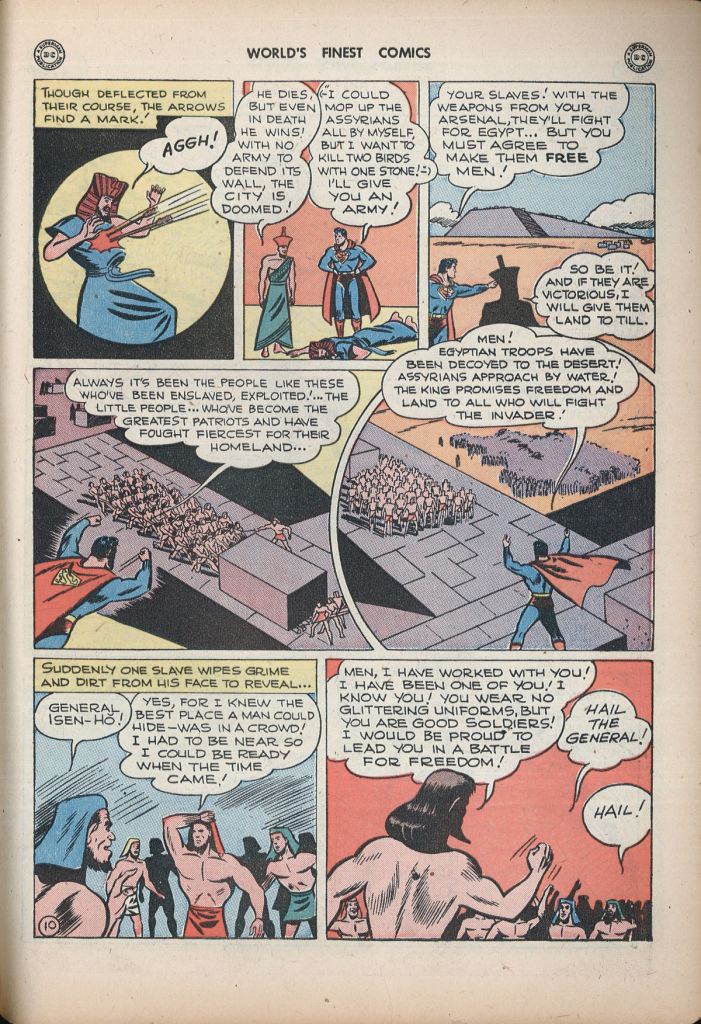
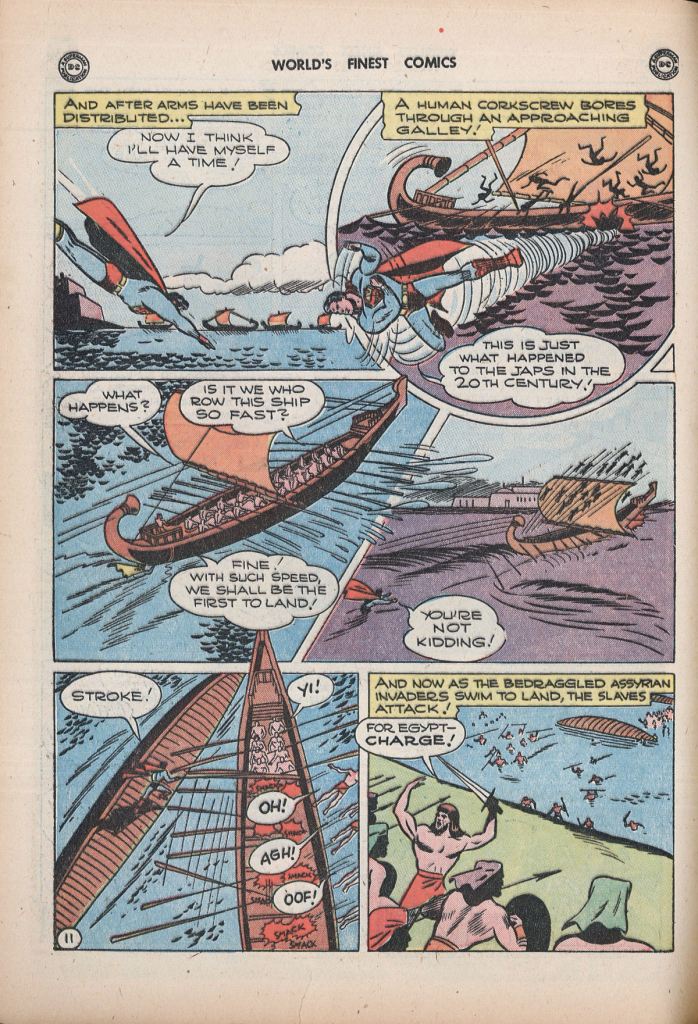
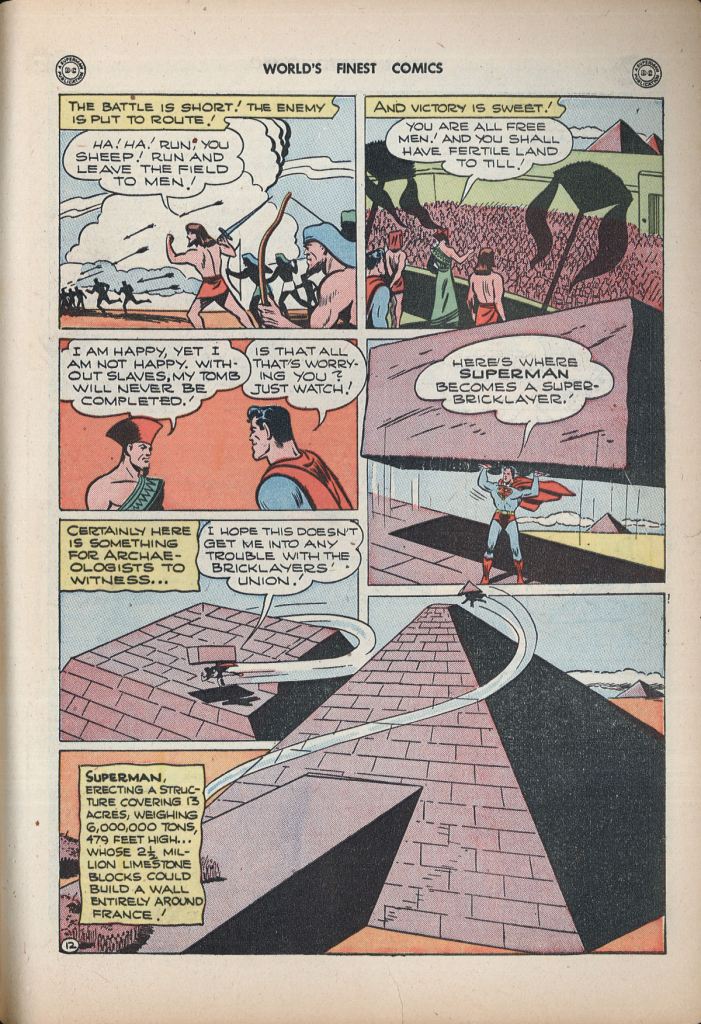
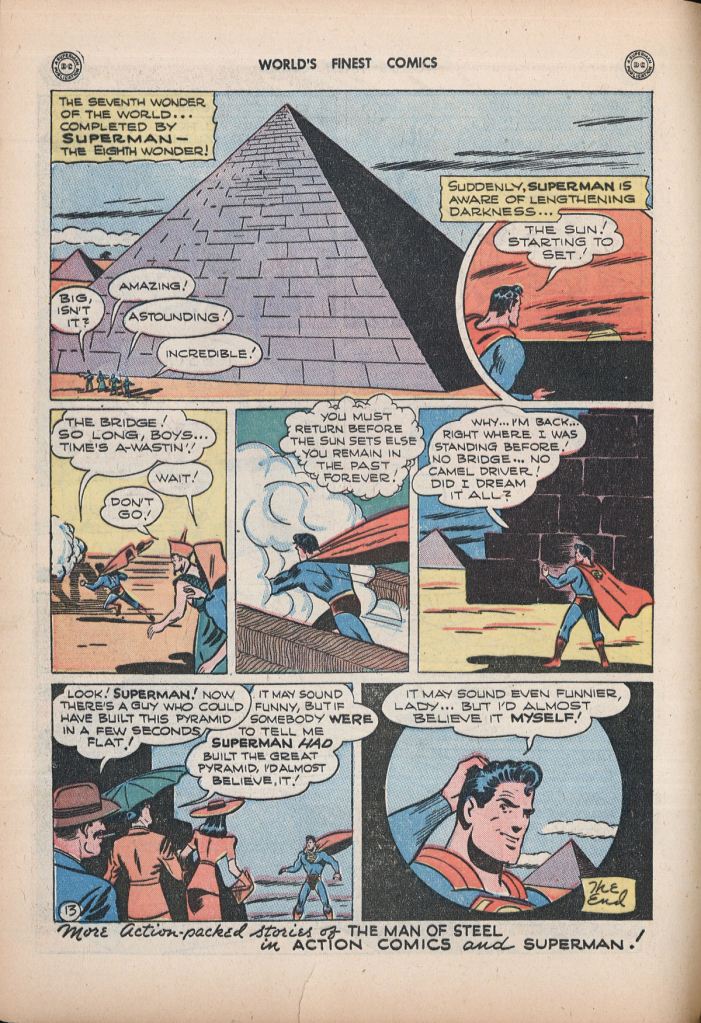
The final Golden Age story of Superman by Jerry Siegel to see print was this one from WORLD’S FINEST COMICS #32. While it carried the Siegel & Shuster byline, the artwork is believed to be the work of penciler Ira Yarbrough and inker Stan Kaye. And it’s a pretty dumb story, all things told. I can’t imagine that Siegel had any idea when he wrote and submitted it that it would be the final Superman story he’d be responsible for in those early days.
But that wasn’t all for Siegel on Superman. Years later, which his family destitute, Siegel’s wife Joanne prevailed upon DC’s ownership to let her husband write for them once again. He returned in 1959 and continued to pen Superman family stories anonymously until 1966, at which point he launched another legal campaign to regain the rights to his character, at which point DC threw him out again.


If anyone is interested in a more detailed – and thoroughly engaging – account of Jerry Siegel and Joe Schuster’s sad ordeal with DC, I heartily recommend William Bernhardt’s “The Superman Wars.” I thought I had a decent background on their situation, but the author’s remarkable research uncovered aspects that I’d never considered .
LikeLiked by 1 person
Thanks for the recommendation, Rick. I recently saw the book and I’ve been considering buying it. I just went ahead and ordered it.
LikeLike