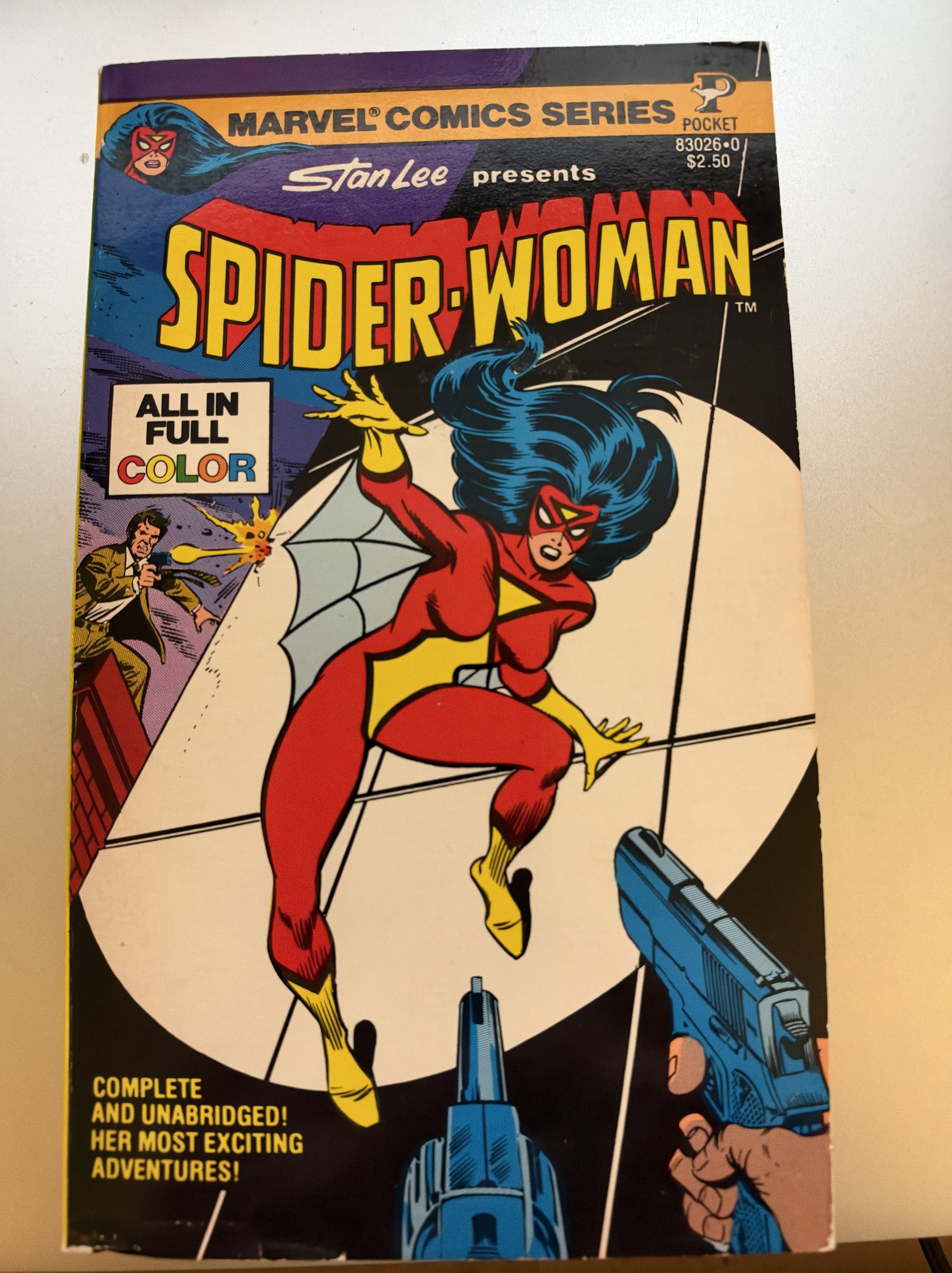


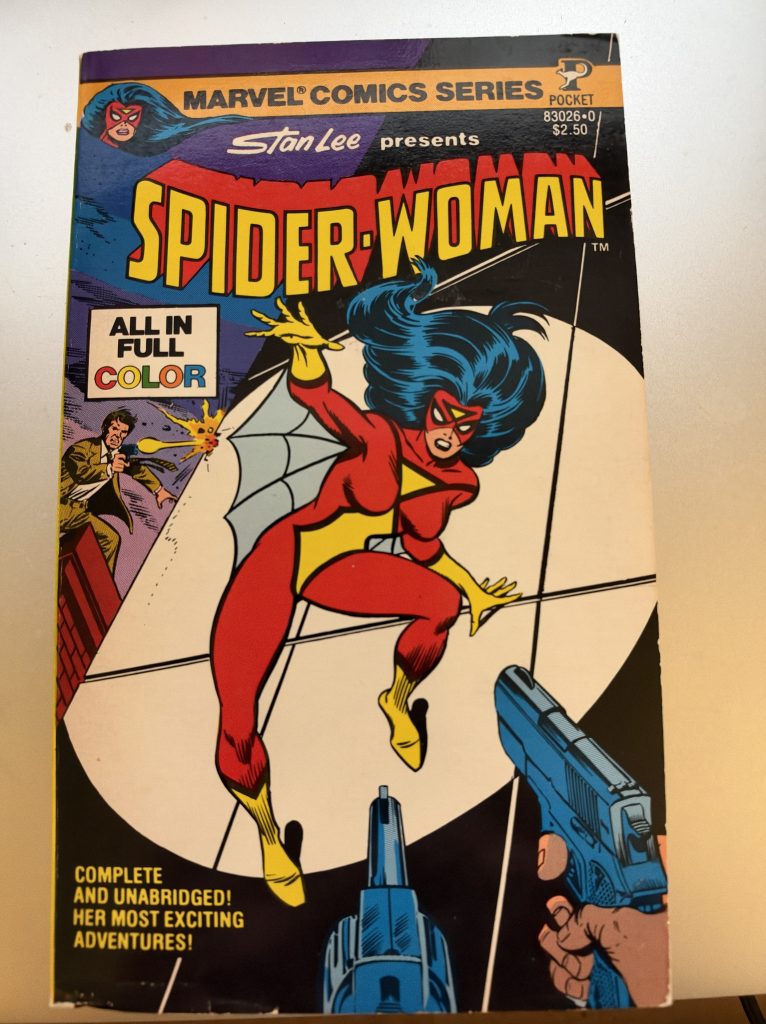
In the late 1970s, there likely wasn’t a format for comic books that I loved more than the Pocket Books series of early Marvel reprints. Getting chronological collections of the earliest Marvel stories was a godsend to me, something that I never quite thought I’d get to experience, and so I pursued them avidly. But that said, I was also a young boy, and as prone to being concerned about not coming off as weak or wimpy or girlish, as that was social suicide, or at least the prevailing wisdom of the recess yards of the time would have you believe. So I was always a little bit skittish about buying comics that featured female leads in those early days. They seemed to be to have bene made with girls in mind, and so weren’t respectable for a red-blooded kid like myself to be seen with. The irony, of course, is that I would have been besmirched past a certain age upon being seen with any comic book–but these are the weights that our psyches carry. Point being, while I had read one issue of SPIDER-WOMAN that I’d gotten in a 3-Bag, the character held little appeal for me. I don’t think I ever saw this Pocket Books collection on sale anywhere, which helps to explain why I didn’t buy it–but I likely would have thought twice in any case. However, it turned out that my buddy David Steckel did come across it and pick it up–and so I wound up borrowing it from him at some point.
SPIDER-WOMAN was a bit of an accidental success on the part of Marvel. The character came about in response to a potential legal challenge: at a certain point, Marvel heard through the grapevine that animation studio Filmation was developing a block of super hero programming, and that one of the characters intended to be included in it was to be called Spider Woman. Seeing a threat to the company’s Spider-Man trademark, and another outfit trading upon the popularity of that property, Marvel simultaneously filed a legal injunction and set about rushing out a hastily-devised Spider-Woman of its own, in order to secure the trademark. This Spider-Woman was created in a one-off story written by Archie Goodwin and illustrated by Sal Buscema and it appeared in MARVEL SPOTLIGHT #32. In it, the titular character learns by the end of the adventure that she isn’t human at all, but rather an actual spider hyper-evolved into personhood by the High Evolutionary. It was intended as a throwaway story, and it did what it was designed to do–protect Marvel’s rights. (Filmation’s character was renamed Web Woman and appeared as part of the TARZAN AND THE SUPER 7 series.)
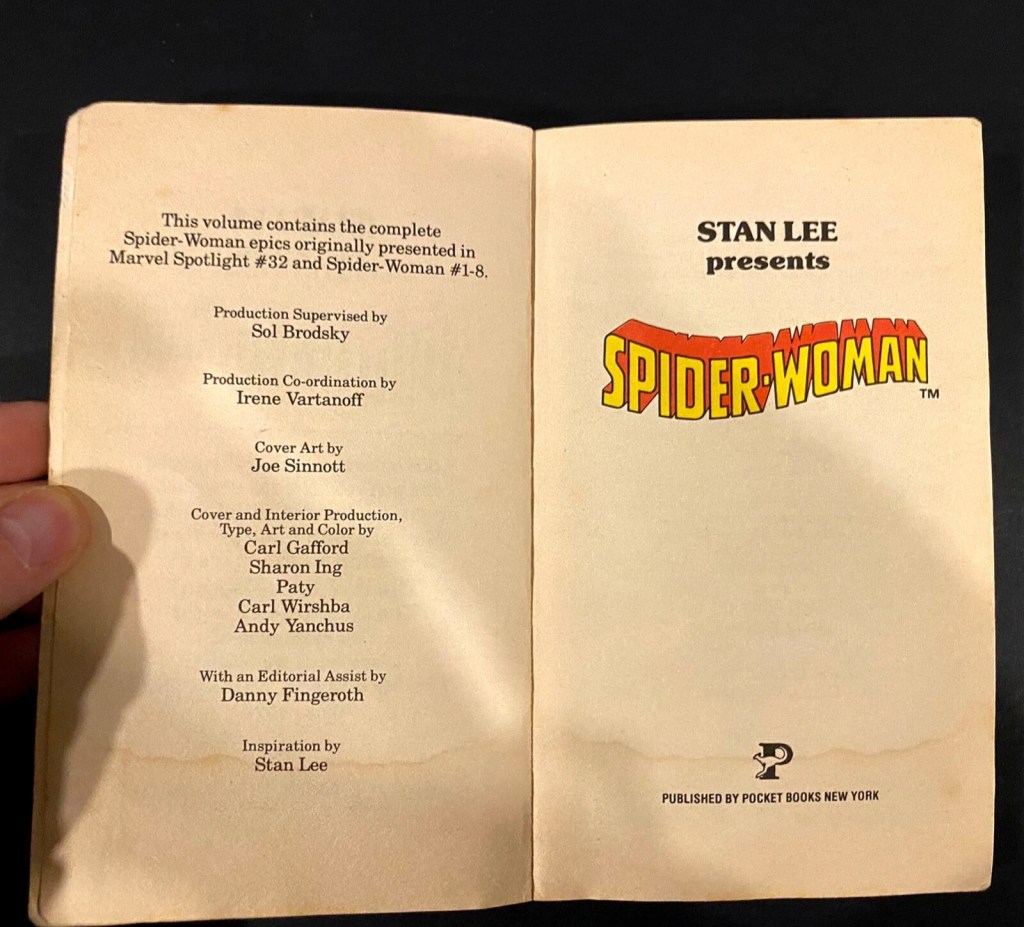
But an interesting and not-entirely-unexpected thing happened: that issue of MARVEL SPOTLIGHT sold gangbusters. Whether it was fan interest or speculators taking a position on what looked to be a spin-off of the popular web-slinger, it didn’t matter; Spider-Woman was a hit! So now, the challenge became to bring the character back and to rework her into something that could sustain an ongoing series; nobody felt that a spider turned into a woman would be a compelling lead character. (Funnily enough, the initial Spider-Woman story was close enough to the original origin that had been considered for Wolverine of the X-Men–that he was likewise a hyper-evolved actual wolverine–that the idea was discarded, thus changing the course of comic book history.) The task of revitalizing Spider-Woman fell to writer Marv Wolfman, who promptly began to feature her in several issues of MARVEL TWO-IN-ONE, a title that he’d been writing, to both capitalize on the audience interest and to prime the pump for her transformation.
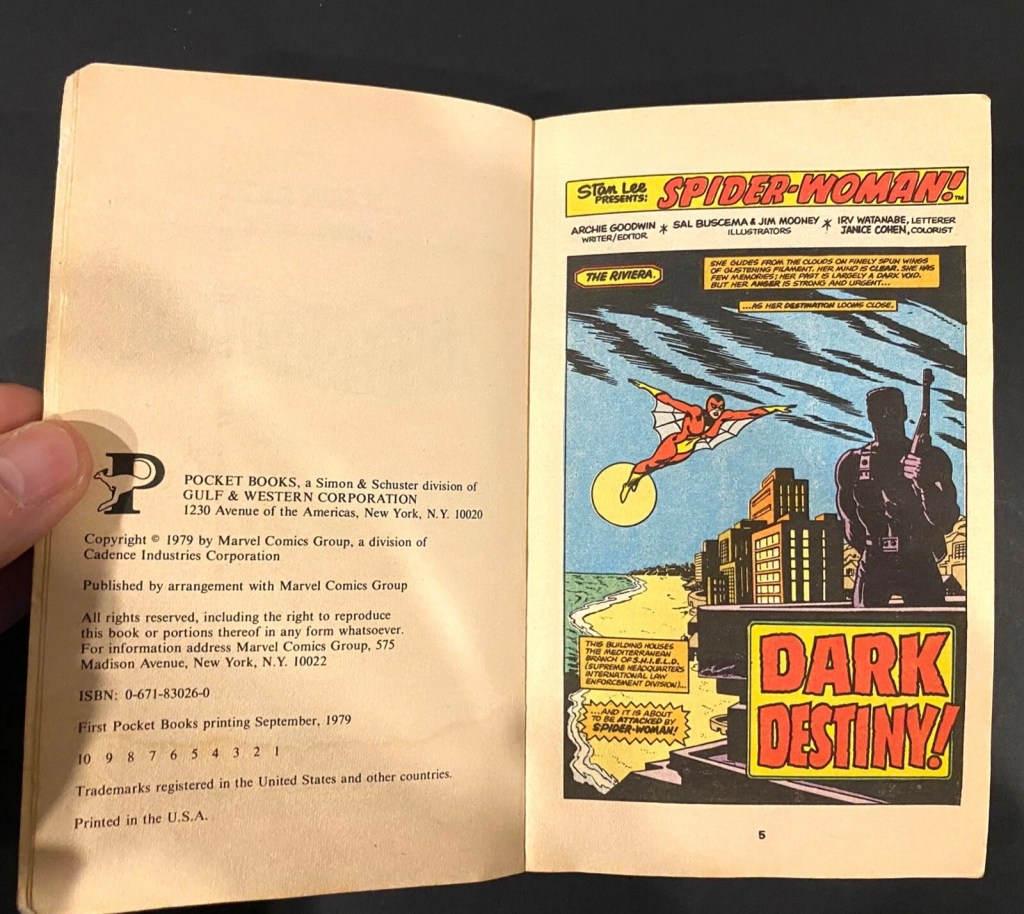
Upon launching Spider-Woman in her own series, Marv was joined by artist Carmine Infantino, who had previously been DC’s top executive before being ousted in a reorganization Carmine was forced to go back to being a freelance artist, but his kinetic, angular style was a bit out of step with what the marketplace was looking for at the time. Carmine never had difficulty finding work–there were too many writers and editors who had been fans of his earlier stuff. But he inevitably wound up with assignments that other artists didn’t especially want, and I suspect SPIDER-WOMAN was one of these. Marv and Carmine made some minor adjustments to the character’s costume, primarily letting her hair show through the top of her mask, and adjusted her backstory. Now, she was Jessica Drew, the daughter of an associate of the High Evolutionary’s who was stricken by an illness that was only cured through an injection of spider-blood. This wound up giving her spiderlike powers–similar to Spider-Man’s, but not quite exactly the same. It was clear that both Goodwin and Wolfman took great pains to separate Spider-Woman from the company’s headliner.
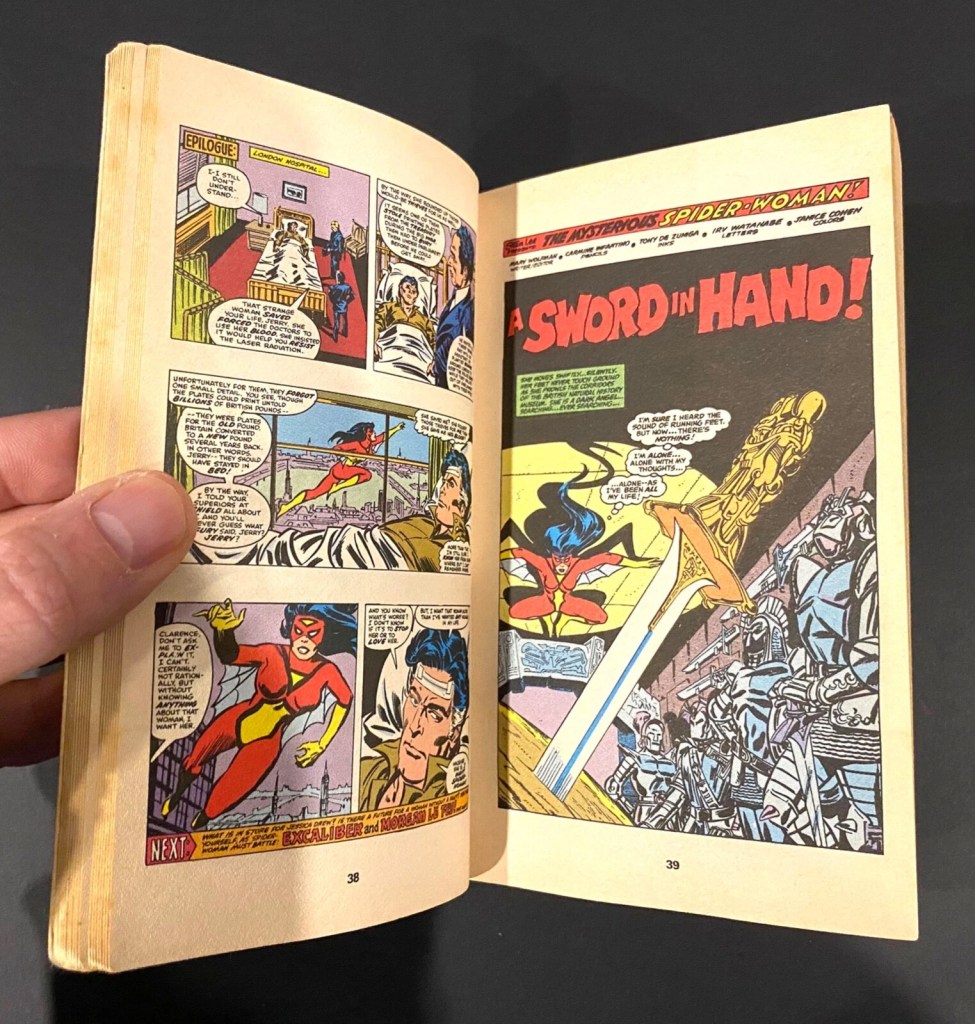
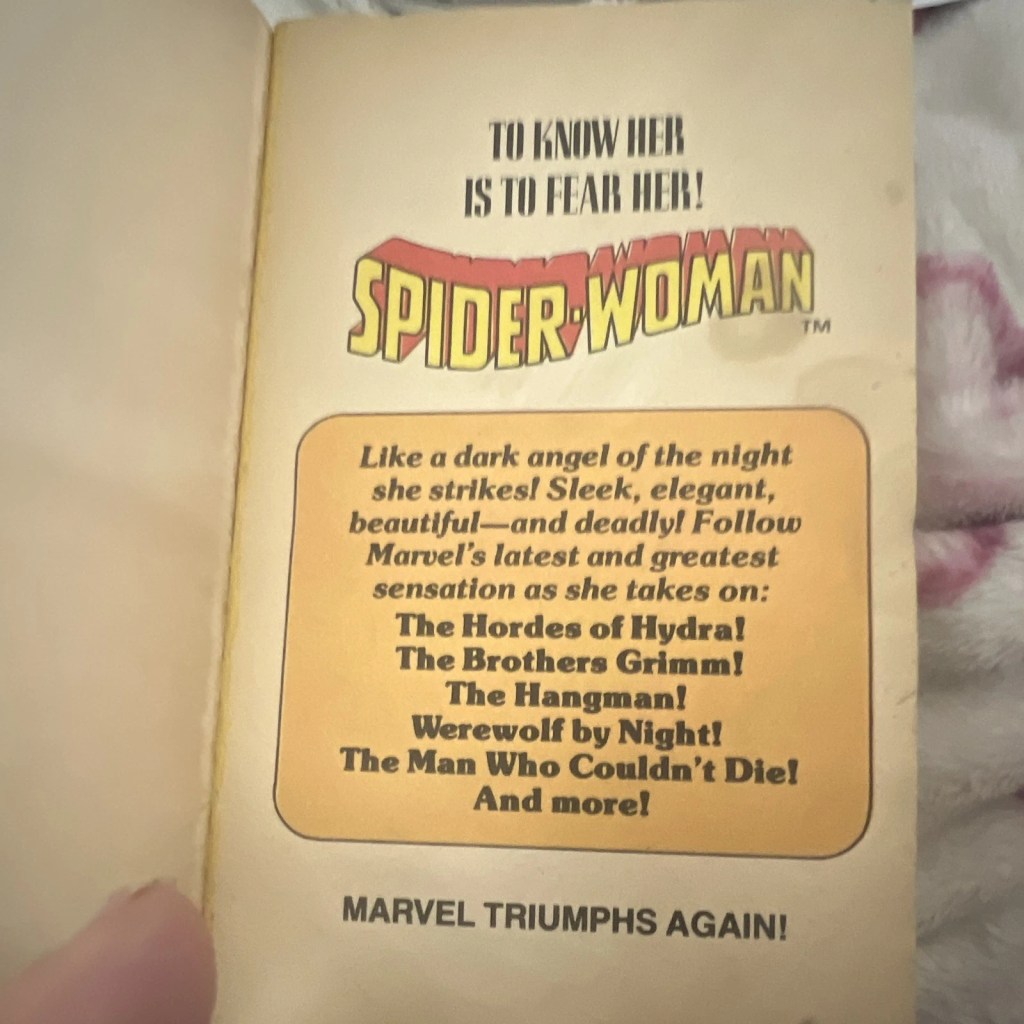
SPIDER-WOMAN was a bit of a weird strip. It leaned more into mysticism and the supernatural than one might expect. There was an attempt to make Jessica Drew something different from Peter Parker, as summed up by the tag line: To Know Her Is To Fear Her. Which sounded good, but wasn’t really true in practice. In these early issues, Marv pitted his new superstar against Morgan Le Fey, the Brothers Grimm, the Hangman (a villain from the WEREWOLF BY NIGHT series) and an immortal man who longed for death. It was all much closer in tone to Marv’s work on TOMB OF DRACULA than the free-wheeling heroics of Spider-Man. Consequently, it never really won me over. I read this volume on loan from Steckel, but didn’t start reading the SPIDER-WOMAN series for several more years, not until Chris Claremont came on to write it and the X-Men guest-starred.
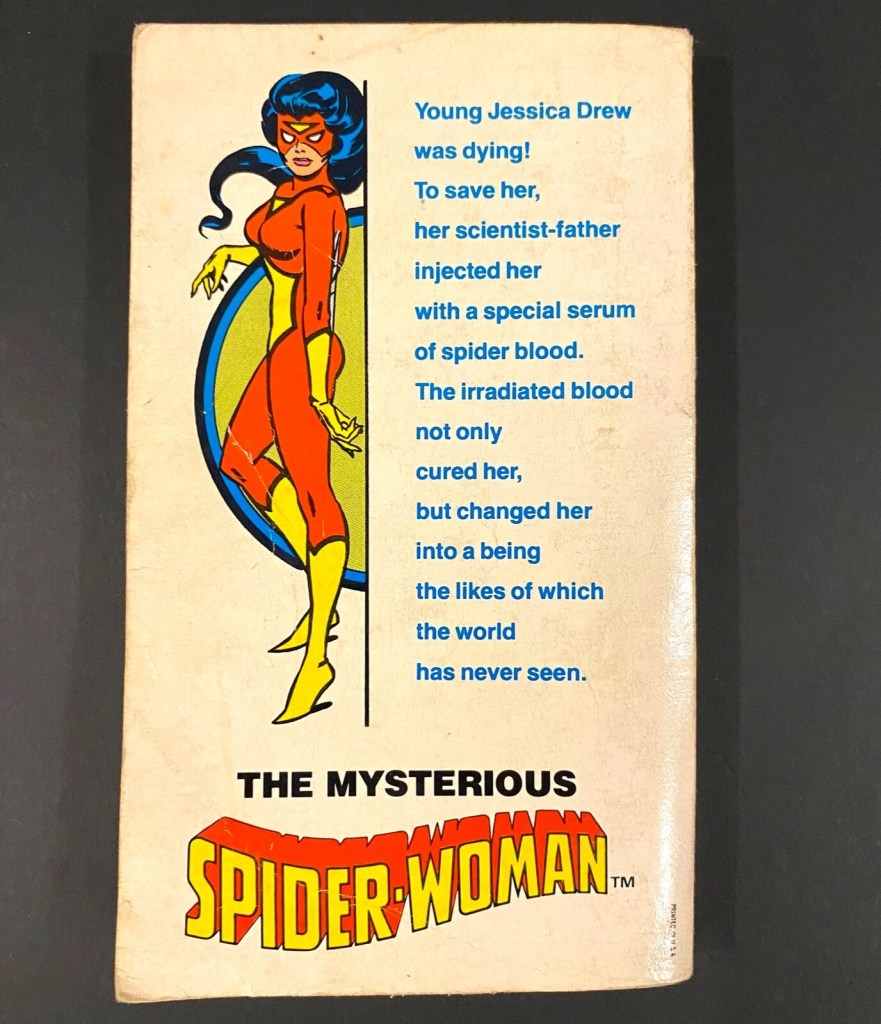
But Spider-Woman became an immediate success even outside of the pages of comic books. By 1979 she was starring in a weekly animated series on Saturday mornings on ABC produced by DePatie-Freleng (who immediately afterwards would be acquired by Marvel’s parent company and transformed into Marvel Comics Animation). The show threw out most of Marv’s set-up for the character. There, Jessica Drew worked as the editor for Justice Magazine (thus taking a bit from Gerry Conway’s set-up for Carol Danvers in MS MARVEL) along with her nephew Billy and photographer Jeff Hunt. Her powers were still chalked up to a serum given to her by her scientist father to save her life. And in at least one episode, Spider-Man guest-starred, his first animated appearance since his 1967 series had ended.


Never seen this style before. All the comic paperbacks I’ve seen from this era have the panels arranged separately on the page.
LikeLike
“he inevitably wound up with assignments that other artists didn’t especially want, and I suspect SPIDER-WOMAN was one of these” Given Infantino has said how much he enjoyed backup strips like Detective Chimp and Elongated Man, that may have suited him fine.
I didn’t know that first issue had been a hit but I really enjoyed the bizarre tone Wolfman brought to the character, and the later oddball approach by Gruenwald. Claremont’s run was … generically Claremont and didn’t fit her at all.
LikeLike