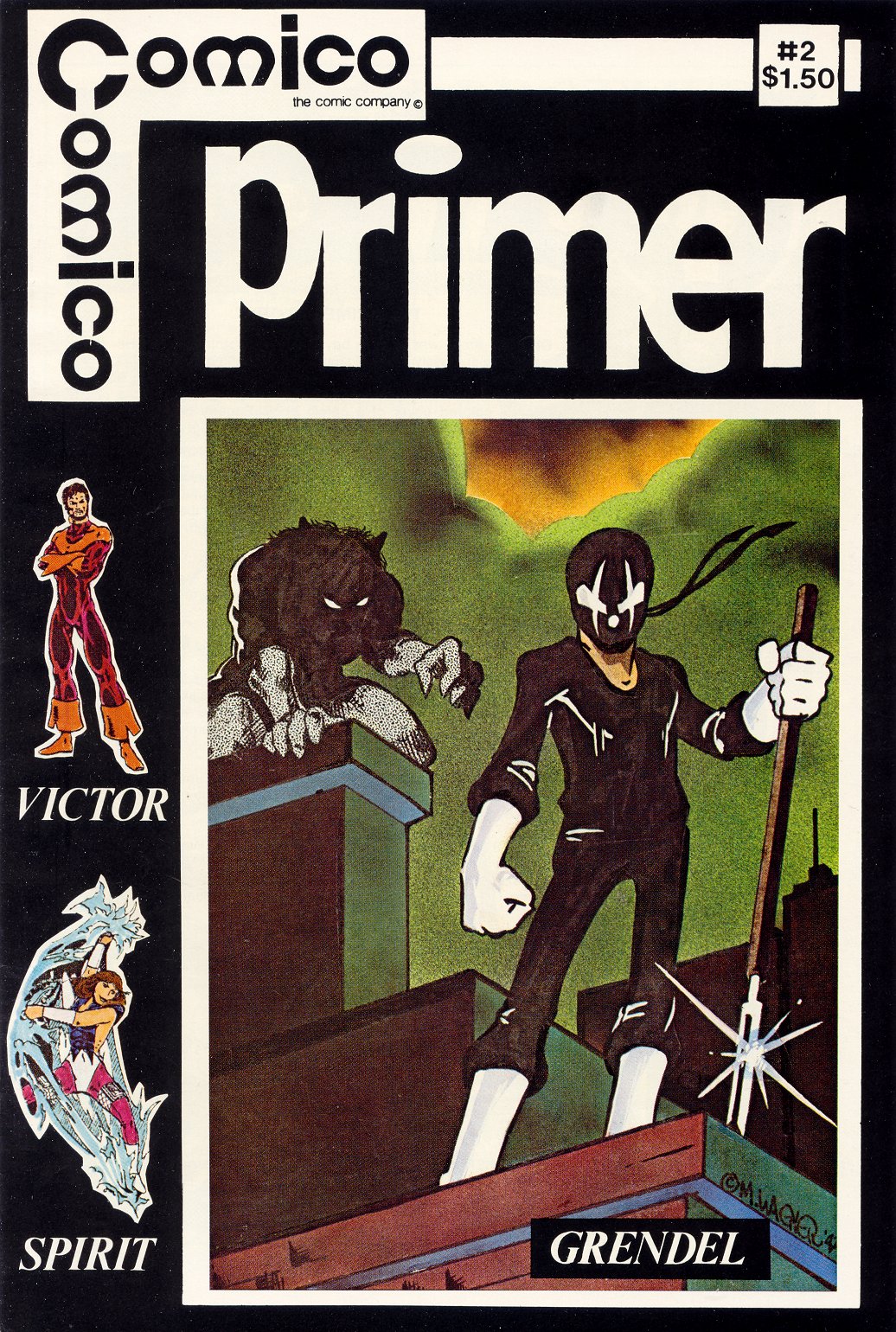


Comico was another of the new entrants into the field of comic book publishing once it had been proven that the Direct Sales marketplace was capable of supporting such publishing activities. The company was started by a group of art students who all went to school together in the Philadelphia area, and it proved to have some legs to it–especially after most of the founders stopped producing material themselves and instead putting out material produced by other more capable cartoonists. But the firm’s most long-lasting contribution to the field made its debut in the second issue of their SHOWCASE-like preview title COMIC PRESENTS. This was Matt Wagner’s GRENDEL, a character that is still being published to this day. GRENDEL was a hit pretty much from the jump, and the feature immediately graduated to its own series following this one-off story. It was the first book Comico published that hadn’t been created by one of the company’s founders.
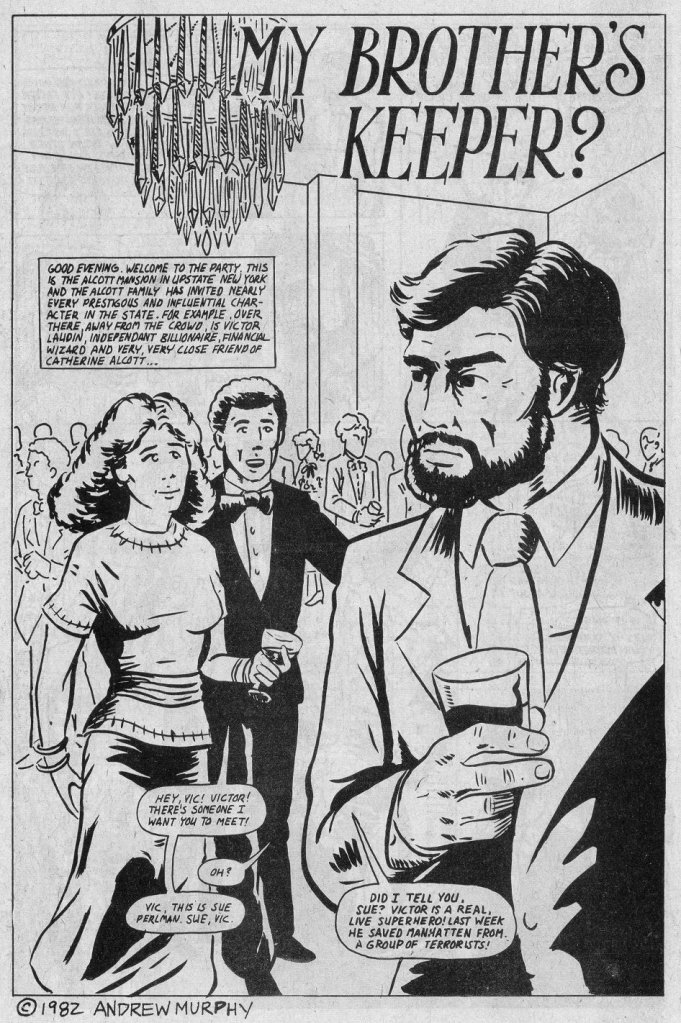
But GRENDEL was the last story in this issue. Set up in the lead-off spot was VICTOR, by creator Andrew Murphy. The strip concerned Victor Laudin, an independently wealthy young entrepreneur who was actually a human/alien hybrid, gifted with the ability to start fires with his mind. VICTOR was clearly a strip that Comic had some hopes for, and it ran in throughout the rest of the run of COMICO PRIMER, though it never graduated to a series of its own. The production values here are a bit crude–Murphy’s work shows potential and a basic command of the craft of storytelling. But his artwork is unpolished, rough, his draftsmanship weak. He got better over time, and in later years produced a series called OZ SQUAD that reimagined the characters from the Wizard of Oz as, essentially, cops.
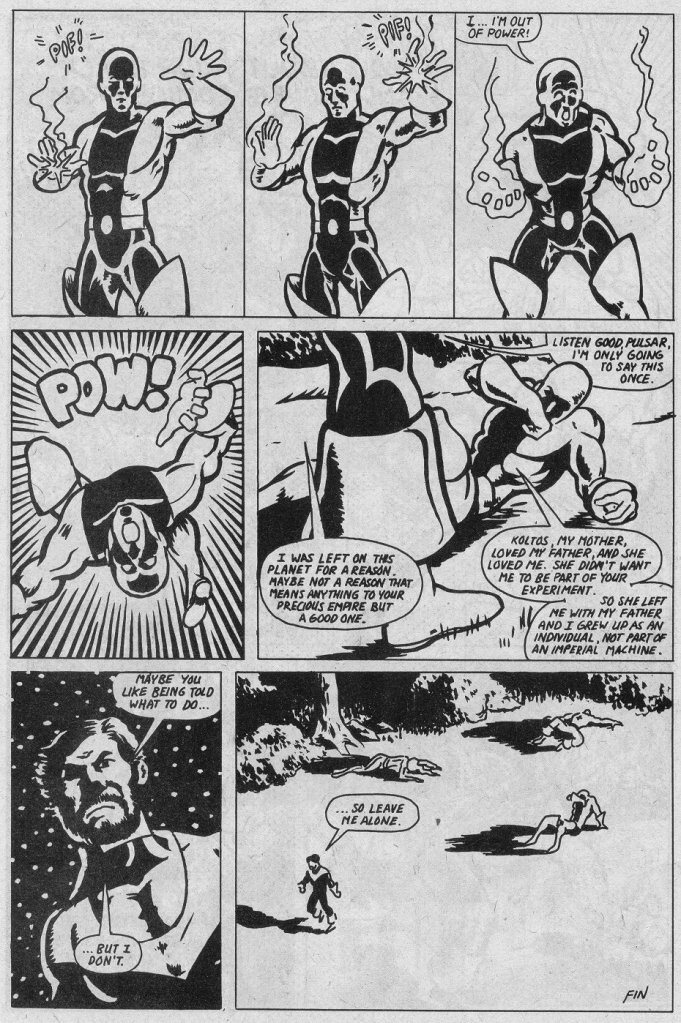
The story in this opening chapter is pretty basic, but it introduces the premise well. Victor is attending a party thrown by his girlfriend Catherine Alcott when he’s attacked by Pulsar, Dreamweaver and Nepenthes, three other hybrids of the alien Kiron race who want Victor to join them in pushing forward with the objectives of their alien empire. Of the four of them, only Victor grew up on Earth, and his presence on this world is seen by the Kiron as polluting its gene pool. Victor, though, claims to be his own man, and he proceeds to beat the heck out of the other three in order to get them to leave him alone. And that’s it. There are hints that this might be able to grow into something–the artwork isn’t really any cruder than Wagner’s on this first GRENDEL story–but it neve quite happens in the short run of the strip.
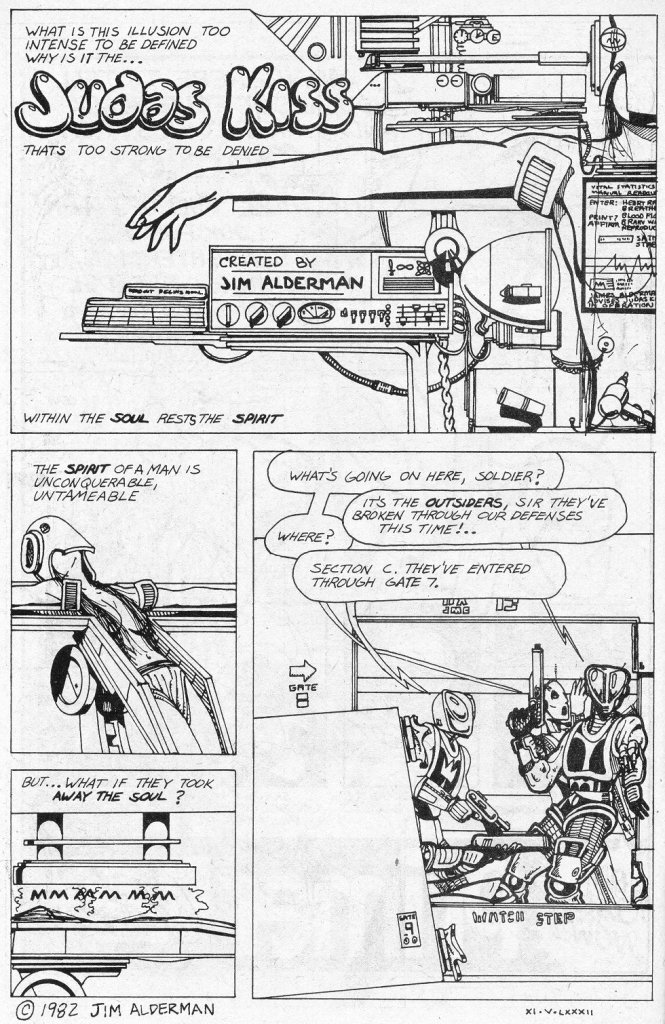
The middle strip, Judas Kiss by Jim Alderman, isn’t a series premise at all, but rather a science fiction one-off story. As far as I can tell, it’s the only thing that Alderman did in the field. I presume he was somebody that the founders knew from their art school days. It tries really hard to be deep and meaningful, it’s clear that Alderman is being influenced by the sort of fare that Heavy Metal was featuring. But his skills as both a writer and an artist aren’t at the level of his ambition. It’s an interesting piece, but not polished enough to be of professional quality.
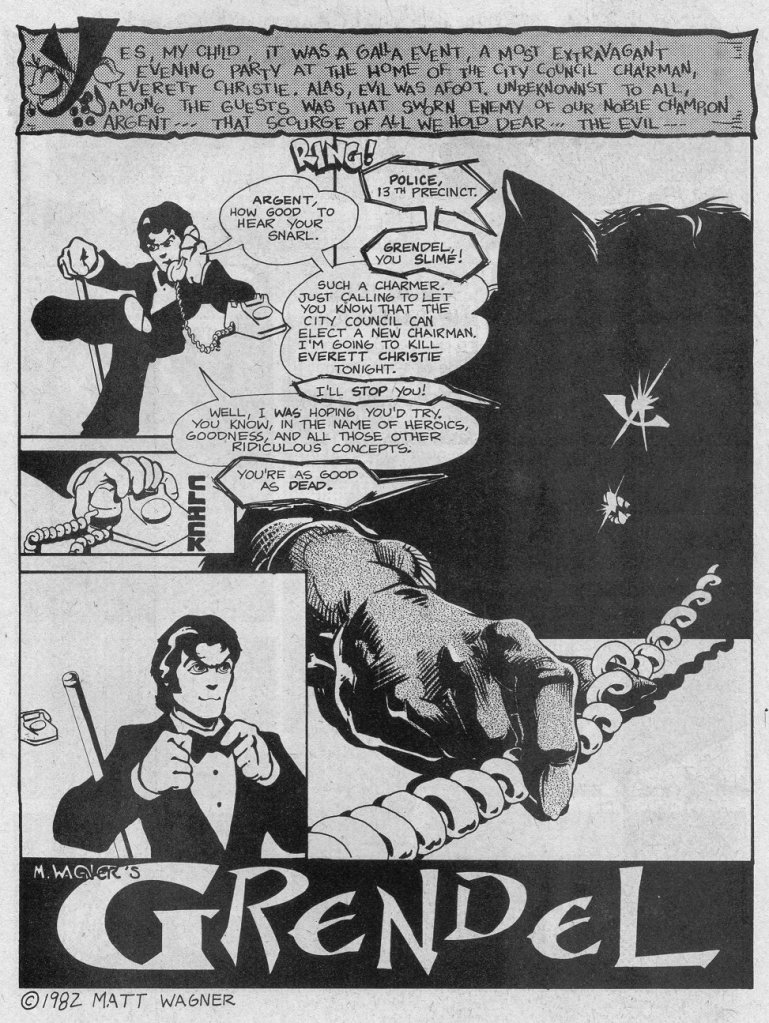
In the back pages, we eventually get to the real winner in this issue: the first GRENDEL story by Matt Wagner, a creator who would have a long and fruitful career in the field. His work here is crude and still developing, but there are already hints of the intelligence and skill and flare that he’ll bring to his stories in the coming years. The whole idea behind this early incarnation of GRENDEL is to flip the script on typical hero and villain tropes. The lead character, Grendel, is a criminal, a thief, killer and gang lord. But he’s also cultured and handsome and refined. Whereas his eternal nemesis, Argent, the wolf, is monstrous and feral and murderous, and anything but civilized. In this manner, Wagner creates tension in the usual comic book heroic idea in which the good guys look good and the bad guys look bad.
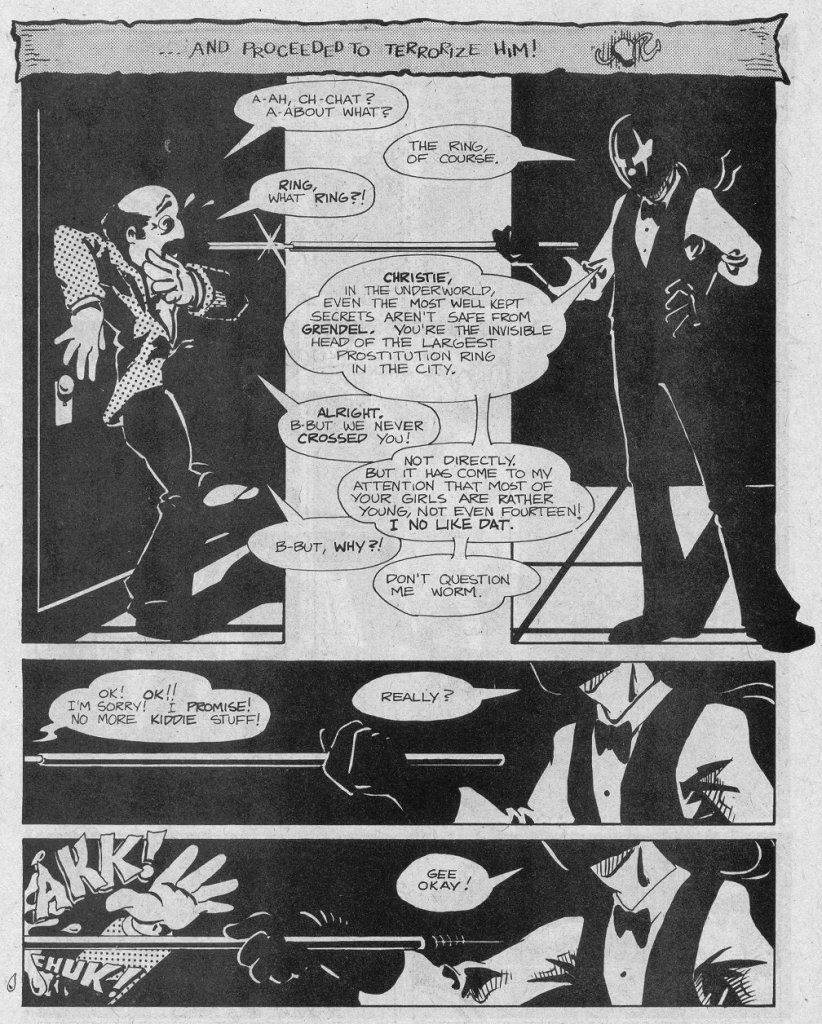
As with VICTOR, the story is relatively basic, taking up a mere ten pages. It opens with Grendel calling his opposite number Argent and warning him in advance about what he plans to do next. He’s intent on killing city Councilman Everett Christie, who secretly also runs the largest prostitution ring in the city. Christie, though, has been turning out underage girls, and that crosses a line for Grendel. So he infiltrates Christie’s party, confronts the man and coldly stabs him to death. He also makes off with Christie’s secret business ledgers, which will allow him to take over Christie’s entire operation.
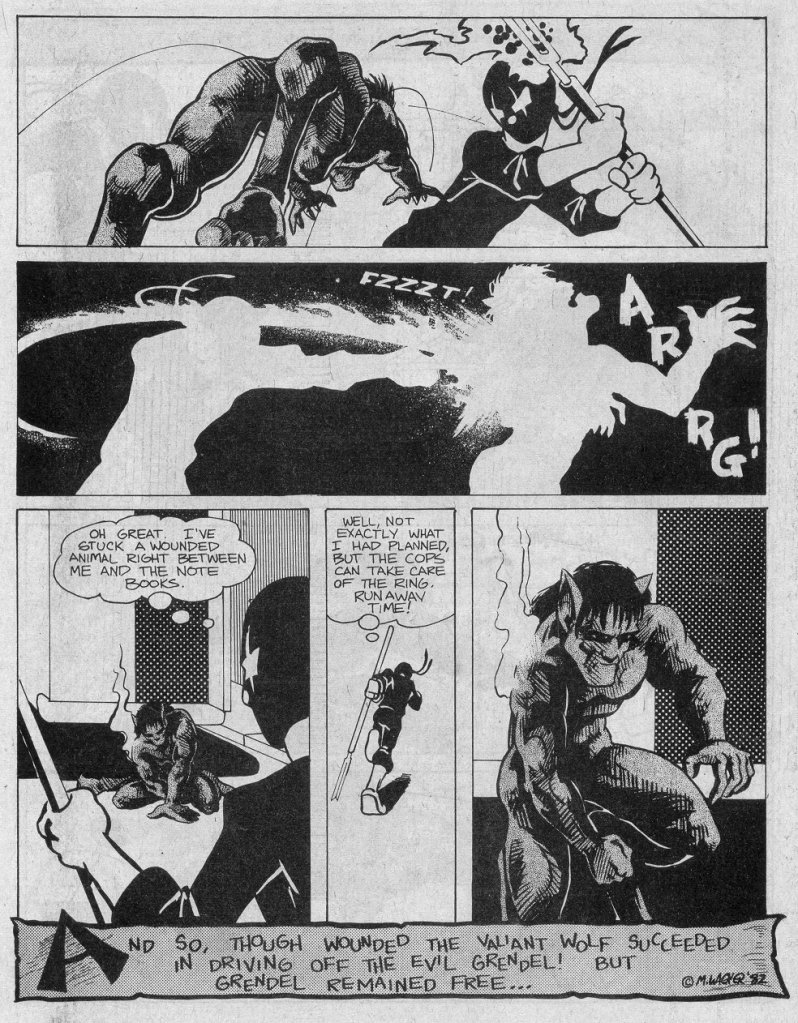
But before Grendel and his men can make their getaway, Argent appears, just as Grendel had wanted. Argent swiftly and brutally tears his way through Grendel’s gang, killing them all, then turns his attention to its masked leader. Grendel and Argent engage in combat, a deadly dance where neither one is able to get the upper hand. Grendel eventually wounds Argent with his electrified forks, but that puts the beast between the crime-lord and Christie’s journals, and he decides that at this point retreat is the bet option, leaving it to Argent and the police to dismantle the rest of Christie’s operation. It isn’t a polished debut–Wagner cheats on background here absolutely as much as he thinks he can get away with, which is a lot–but the ideas have merit and the art style is fun if unpolished. And Wagner would grow progressively better and better as the months went on.

