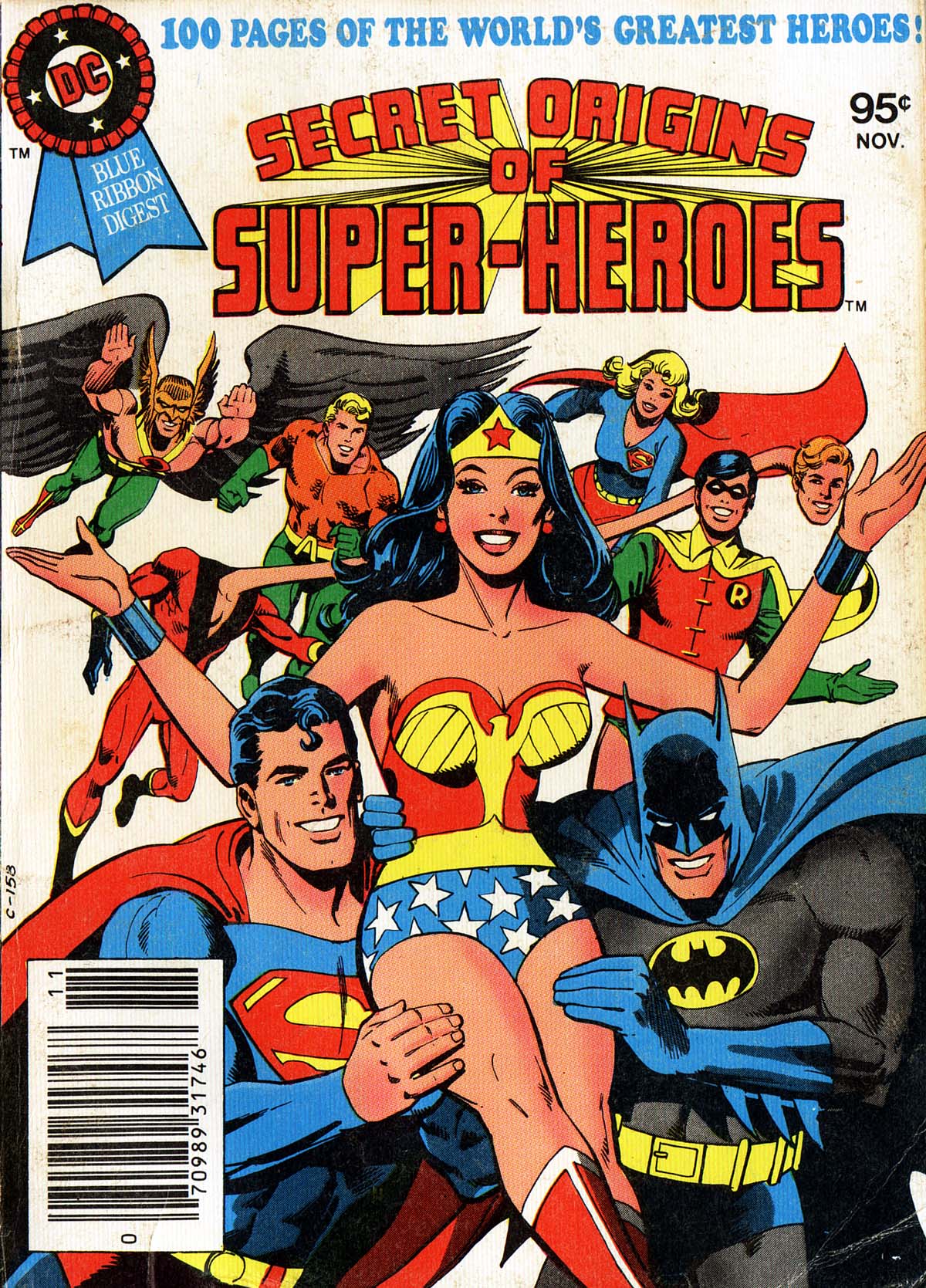


My new Stationery Store source for new comic books proved itself to be valuable even beyond the typical swath of new releases. It also wound up carrying the relatively few remaining Treasury Editions that came out after this point, as well as the new format that DC was expanding into and testing out: digests. The digest format had been initiated by Tom DeFalco at Archie and proved to be a reliable money-maker for that firm, so it was only a matter of time before the super hero publishers followed suit. DC went at this space harder than Marvel did, and their line boasted two Digests a month for several years. I had missed the first couple, but I was on hand for this SECRET ORIGINS OF SUPER-HEROES release. While the books were relatively tiny (and the stories were reformatted somewhat to make them more readable at this size) they were like a quasi-replacement for my beloved 100-Page Super-Spectaculars of years gone by, each one filled with classic vintage reprints from the past. Like those books, this release was assembled by editor E. Nelson Bridwell, whose encyclopedic memory for stories of the past was invaluable when it came to assembling collections.
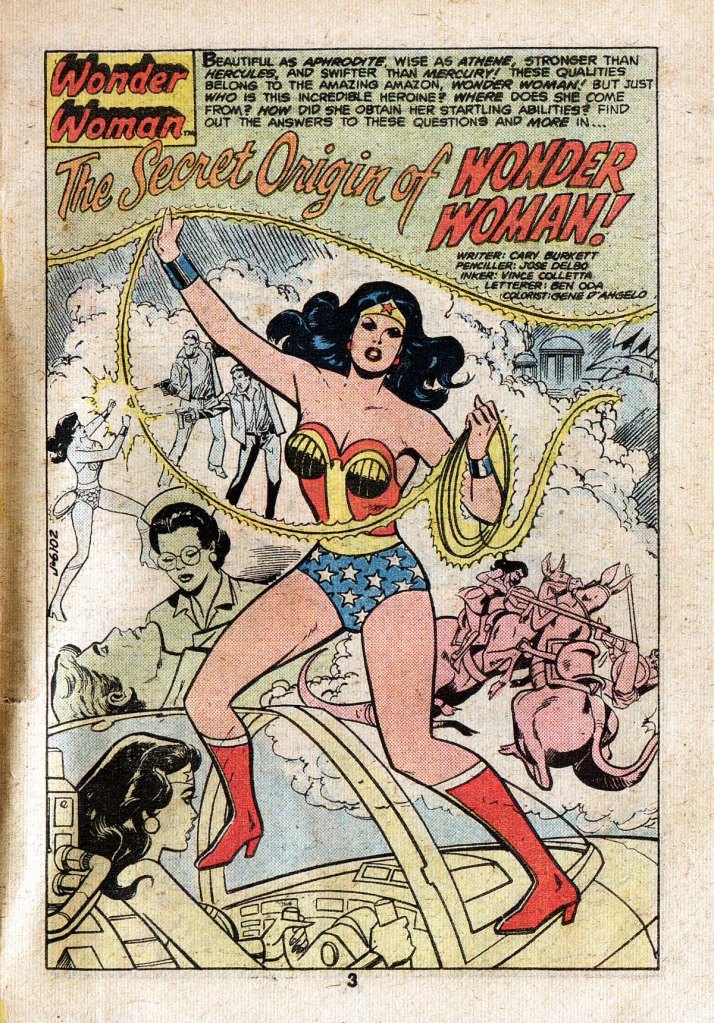
Either as a come-on to prospective buyers or because they didn’t have a contemporary origin story for Wonder Woman that could be readily pulled, this volume opens up with ten new pages by Cary Burkett, Jose Delbo and Vince Colletta giving a rundown of the Amazing Amazon’s history. It was entirely serviceable, the sort of material that had been appearing in Wonder Woman’s regular series for some time. One got the impression that creators weren’t especially hungry to be working on the strip at this point, and it showed in the material. The new piece was followed by two pages cribbed from an earlier story by Robert Kanigher and Ross Andru that detailed the specific powers bestowed upon Wonder Woman by the Gods.
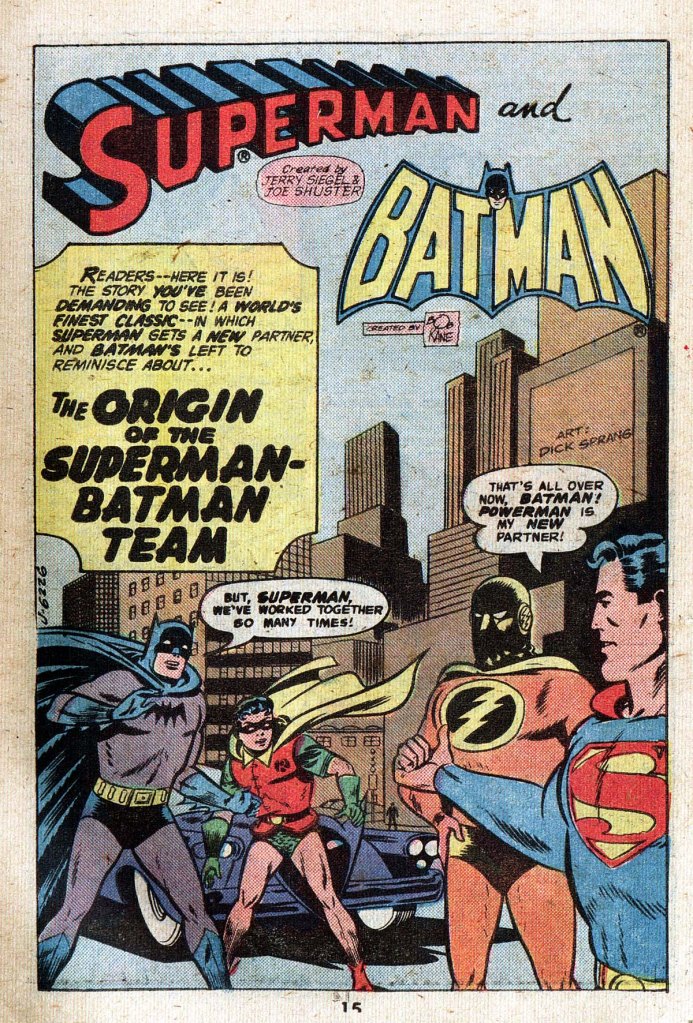
The next story in this edition was one that I’d already read when it had been reprinted in an issue of WORLD’S FINEST COMICS in the mid-1970s. It featured the origin of the Superman/Batman team and was produced by Edmond Hamilton and Dick Sprang. In the present-set wrap-around story, Superman severs his relationship with Batman and Robin in favor of a new partner, Powerman. This causes the Dynamic Duo to think back on how they first came to work with the Man of Steel, all the while still working to assist him in the present. Powerman, of course, turns out to be a robot–Superman hadn’t wanted to endanger Batman and Robin as he pursued his deadliest enemy, Luthor.
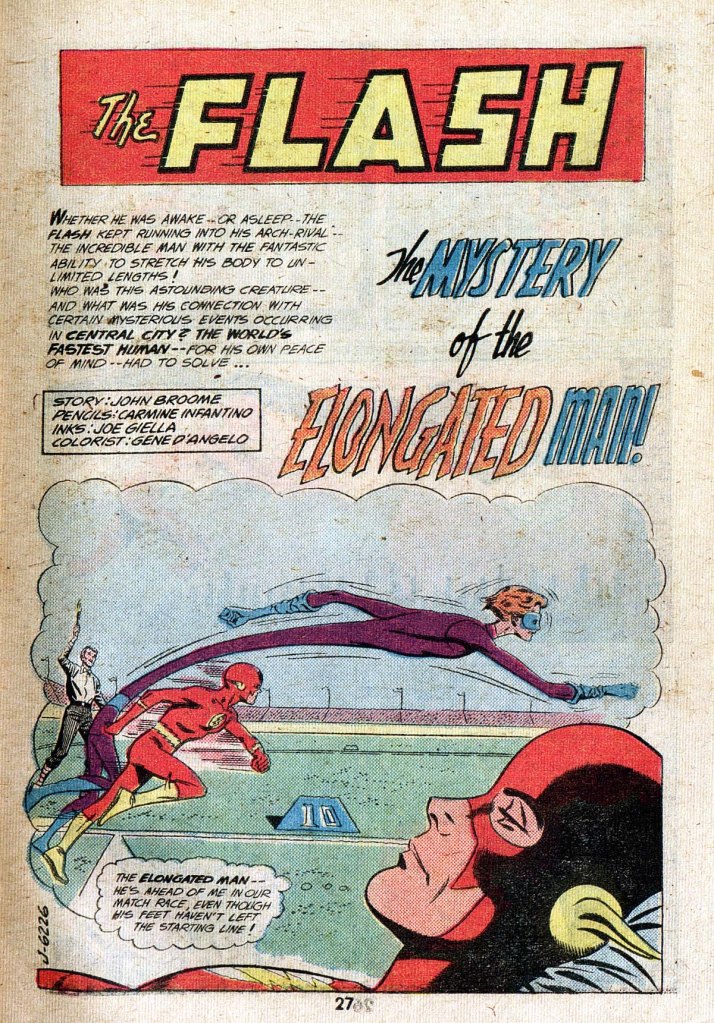
Next up was the story that made my purchasing this digest an absolute lock: the origin story and first appearance of the Elongated Man, by John Broome and Carmine Infantino. The Elongated Man had initially been devised as a villain, a new addition to the Flash’s expanding Rogue’s Gallery. But writer Broome decided to take the character in a different direction, initially making him seem like a criminal before swerving to reveal that he was as true-blue as the Scarlet Speedster himself. By the end of the tale, the two heroes have formed a warm friendship that would become a recurring feature in the early strip.
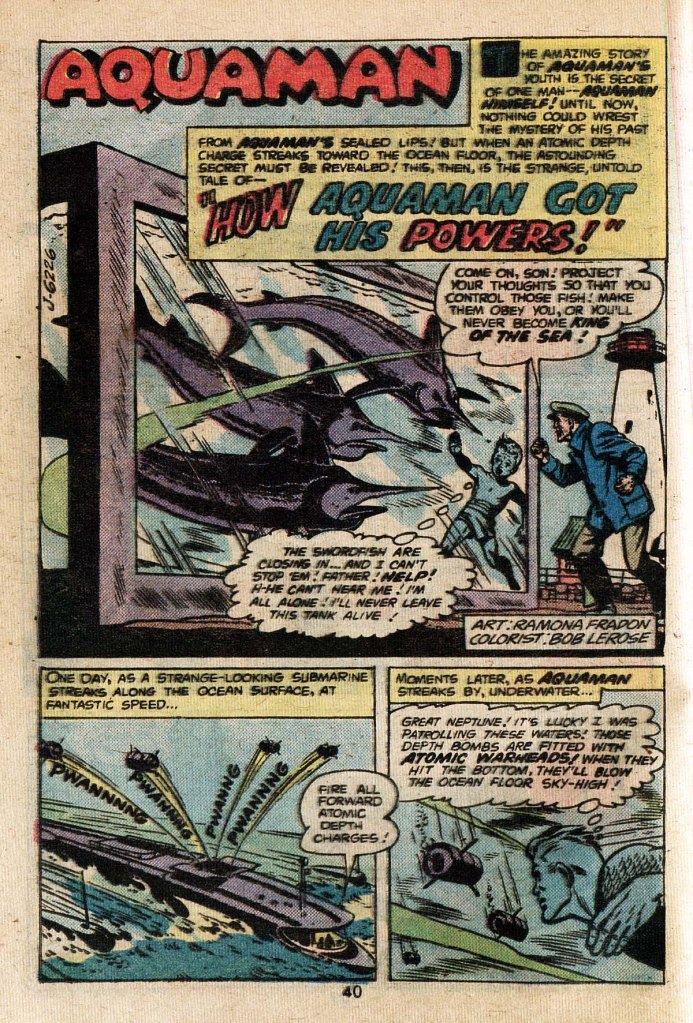
Next up was a short Aquaman piece by Robert Bernstein and Ramona Fradon that revealed Aquaman’s backstory, as he attempts to prevent a modern day submarine from conducting atomic tests in a particular area of the ocean. The reason, of course, is that this just happens to be the area above where Atlantis, the birthplace of Aquaman’s mother, is situated, a secret that the deep-sea hero shares with the submarine commander in order to convince him to take his military maneuvers elsewhere.
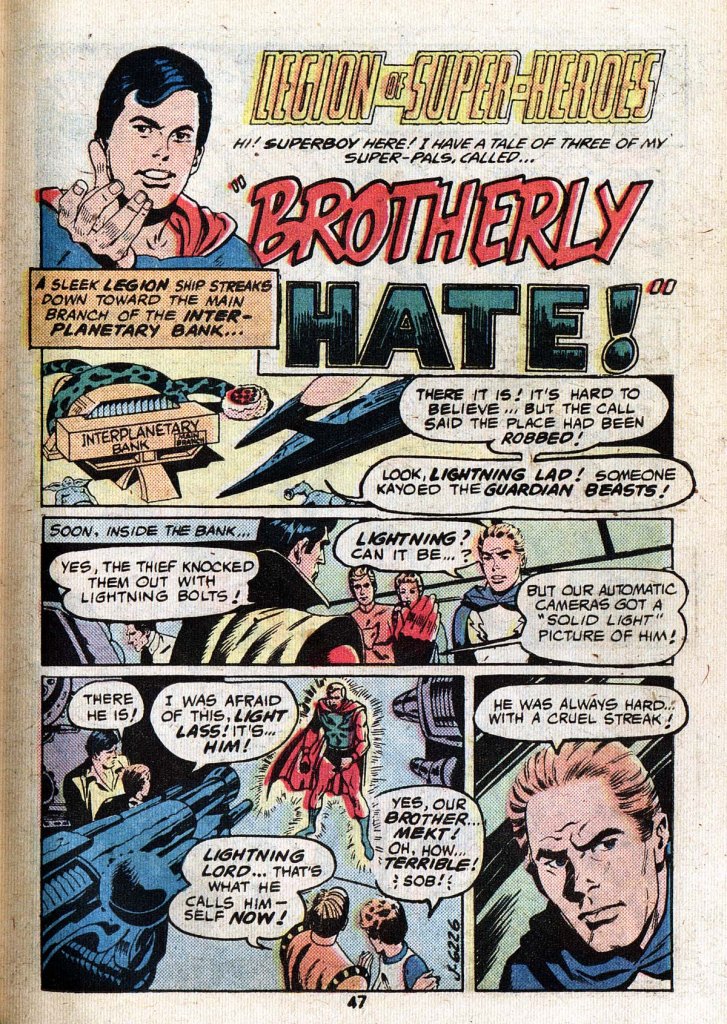
Editor Bridwell wasn’t above including his own work in this volume, and given that he was the writer who first established the origin of the futuristic Legion of Super-Heroes, that makes sense. The story here wasn’t that initial revelation but rather a later tale in which Bridwell and artist George Tuska pitted Lightning Lad against his evil brother Lightning Lord, while recapping the Legion’s beginnings along the way. Lightning Lad’s sister Light Lass and her boyfriend Timber Wolf also take part in this short adventure.
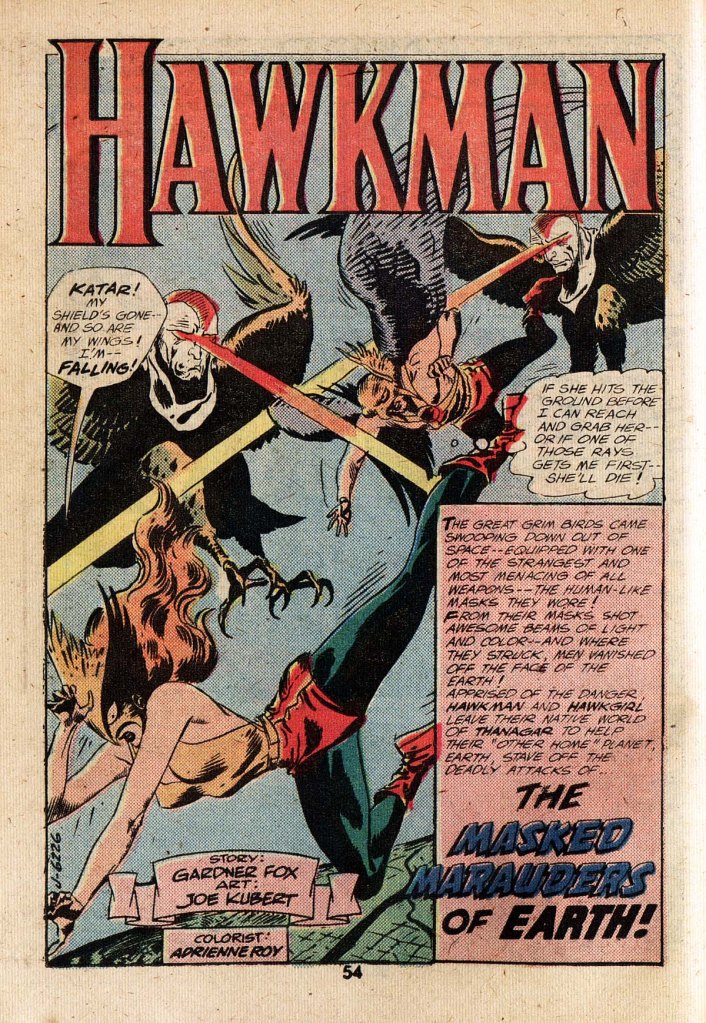
A longer piece followed, a tale of Hawkman and Hawkgirl by Gardner Fox and Joe Kubert. The Kubert version of Hawkman hadn’t gained enough traction back in the 1960s to graduate to its own series–that only happened after artist Murphy Anderson took over the series. But the Kubert material was well-regarded by older fans, and looking at this story even in its reduced form, it’s easy to see why. This tale isn’t about how the Hawks first came to Earth but rather how the authorities on their homeworld of Thanagar first started using artificial wings and flight gear to combat the threat of strange masked Manhawks.
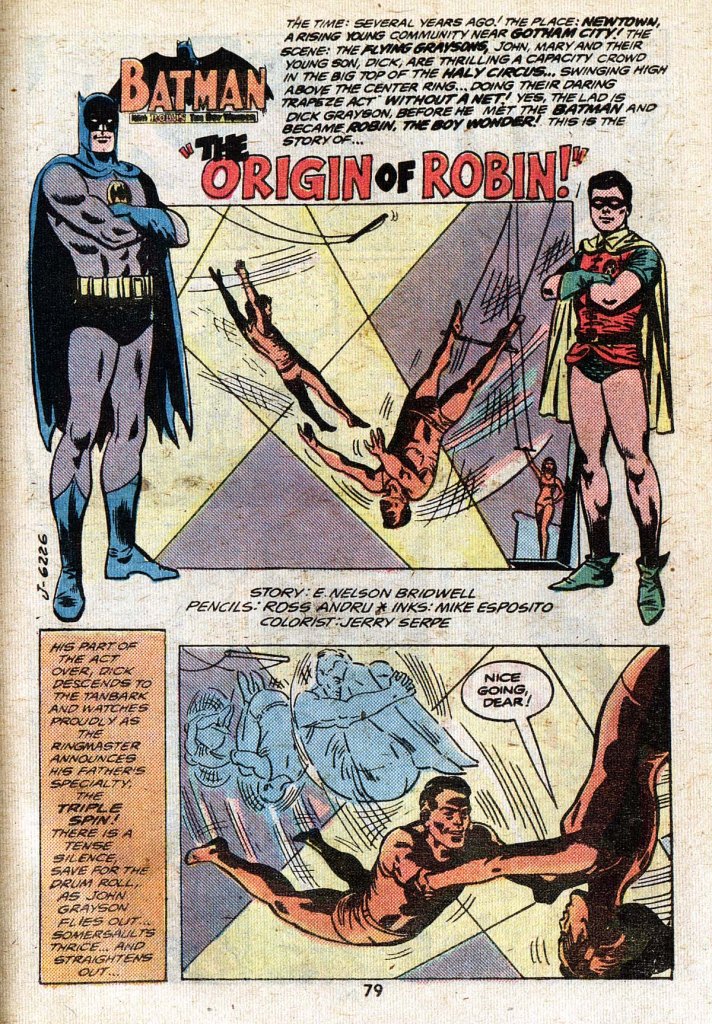
Nelson also wrote the next story, an updated (and Comics Code-approvable) retelling of the origin of Robin the Boy Wonder, illustrated by Ross Andru. It’s a perfectly fine tale, but as it’s a representation of the 1960s version of the character, it lacks the somber flavor and strong shadowplay of the original on which it was based.
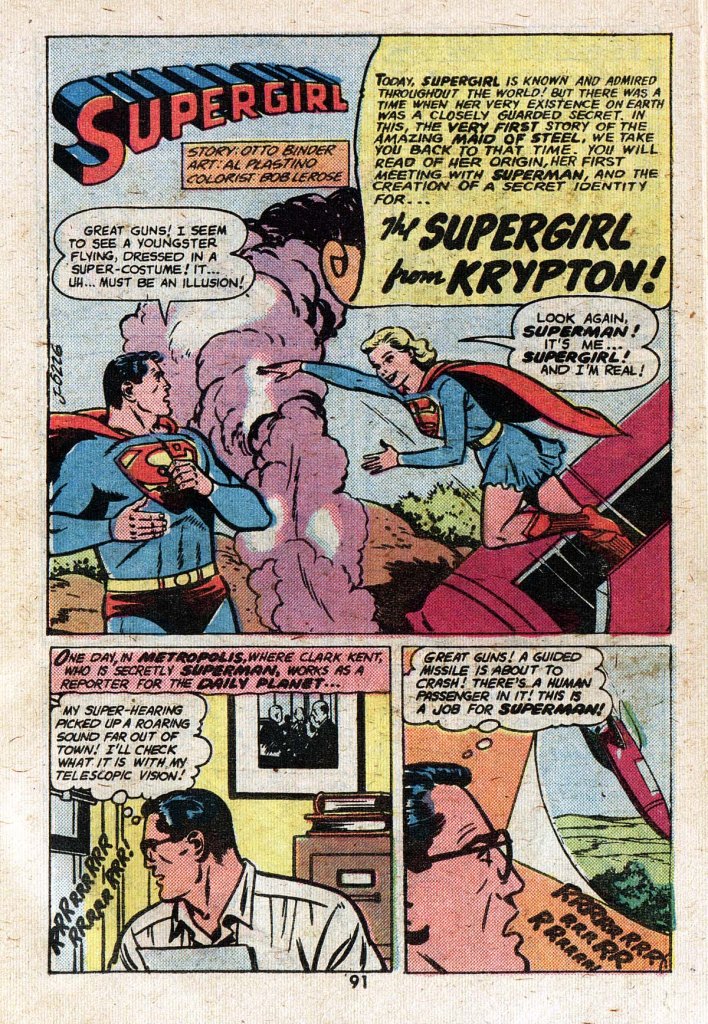
And the final story in this digest was the inaugural adventure of Supergirl, kicking off her long-running back-up series in ACTION COMICS. Otto Binder and Al Plastino joined forces to introduce Kara Zor-El to the world. This is one of those wonderful Mort Weisinger-era stories in which incredible, implausible things just happen one after another, and the reader is left with no choice but to simply accept and go along with it all. By the end, the once-Last Survivor of Krypton has been joined by his heretofore-unknown cousin from Argo City, which itself has been wiped out, causing her to be sent to Earth to join Superman. The Man of Steel wastes no time in pawning her off at an orphanage and securing a promise from her that she won’t use her super-powers publicly until he gives the all-clear sign. All of which seems a bit narcissistic and cruel when viewed through a modern lens. But it left Supergirl in a position where she could have her own adventures without impacting on the Superman strip too greatly.

