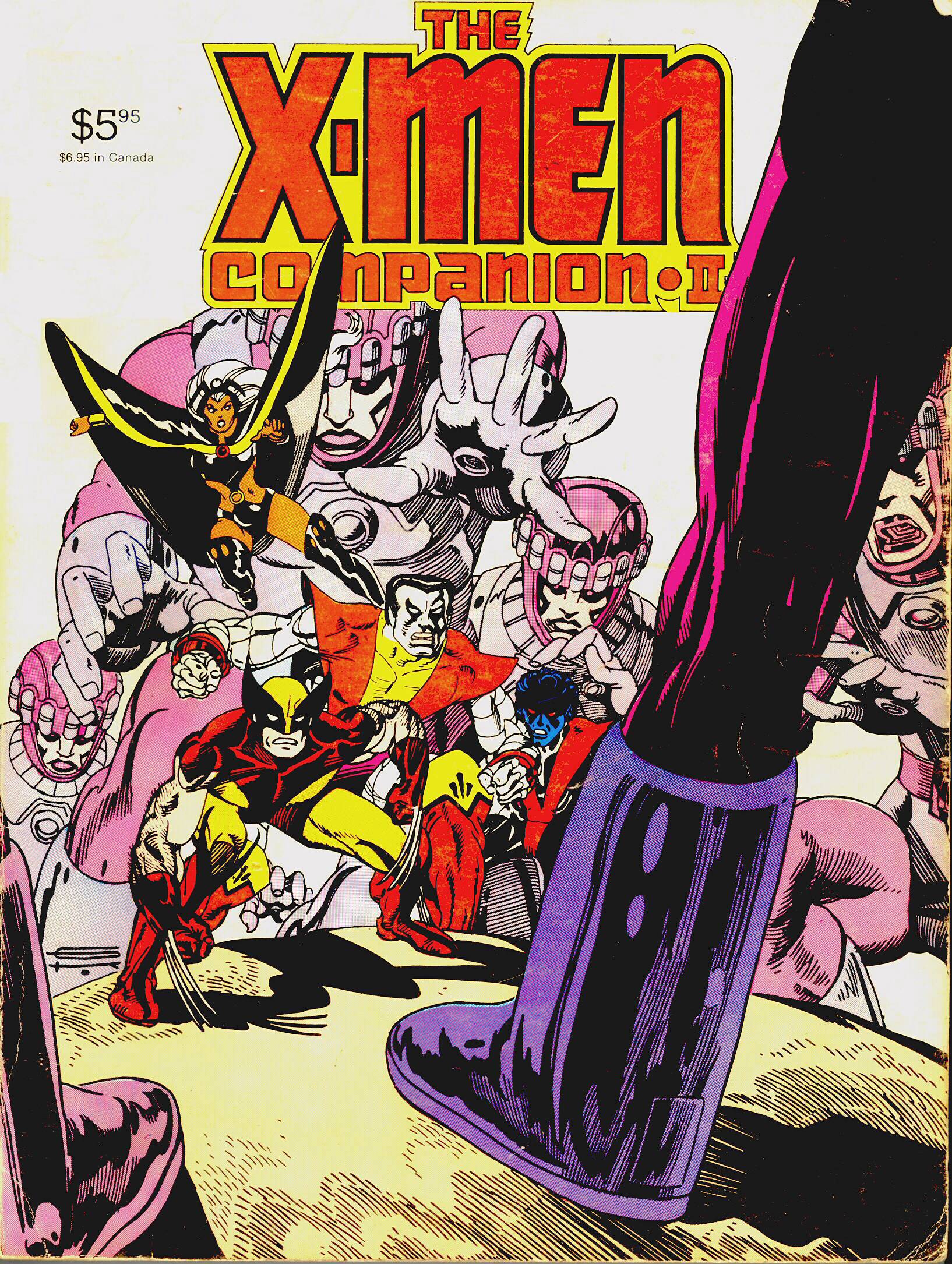


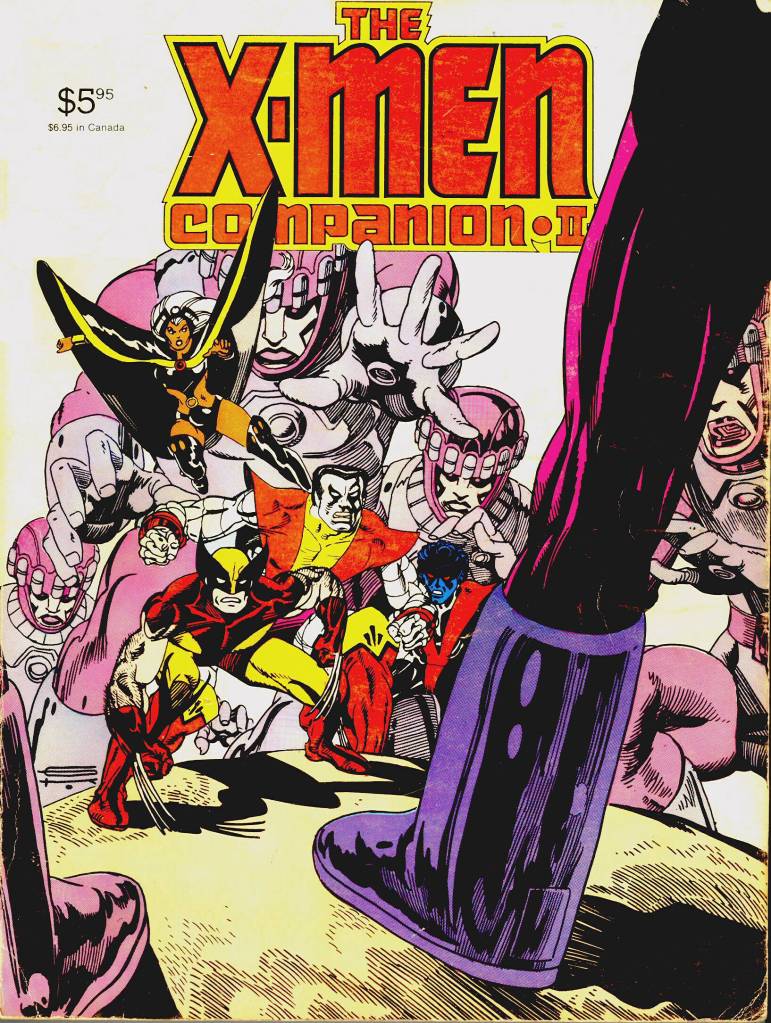
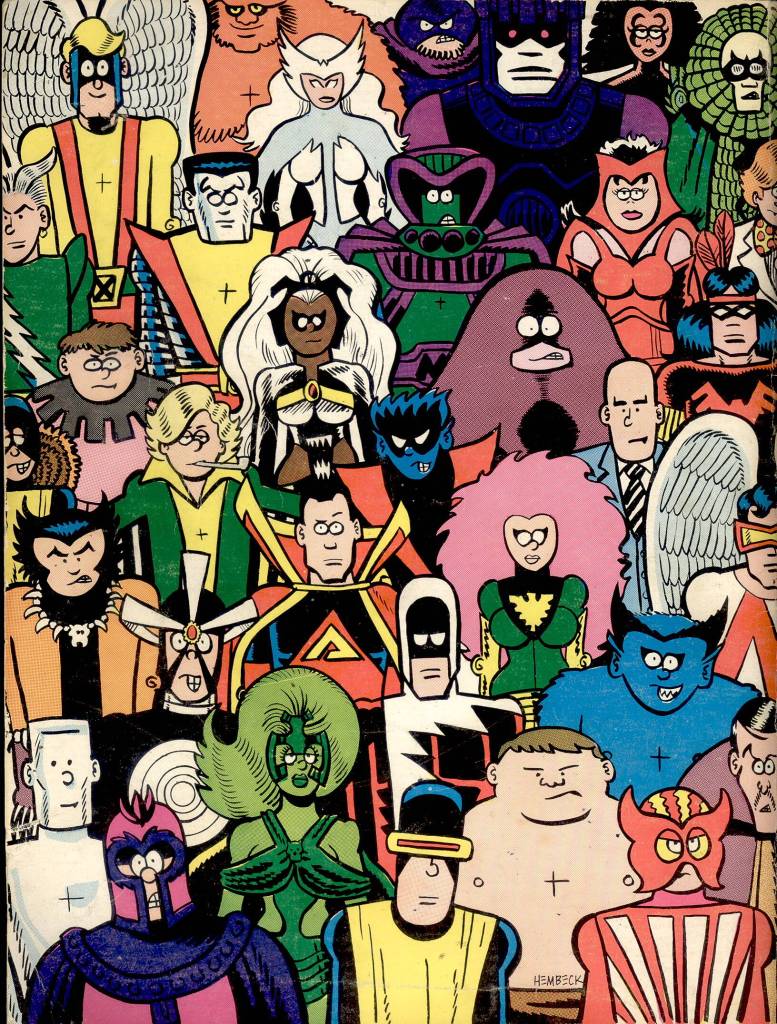
In my memory, the second volume of the two-book X-MEN COMPANION series that was released by Fantagraphics, the publishers of the Comics Journal, took forever to arrive. But looking back, while the second book was late, it was only by a few months–time goes by slower when you’re younger. Anyway, the big difference in what had been solicited and what arrived was in the cover art. Neal Adams was supposed to be doing the cover, but he never delivered it–possibly due to the breakdown in negotiations between himself and Marvel that saw him step away from the project that would eventually become the X-MEN: GOD LOVES, MAN KILLS graphic novel. Either way, Fantagraphics publisher Gary Groth was forced to call upon his good friend Gil Kane to provide an acceptable alternative cover, while the back cover was provided by fan cartoonist Fred Hembeck.
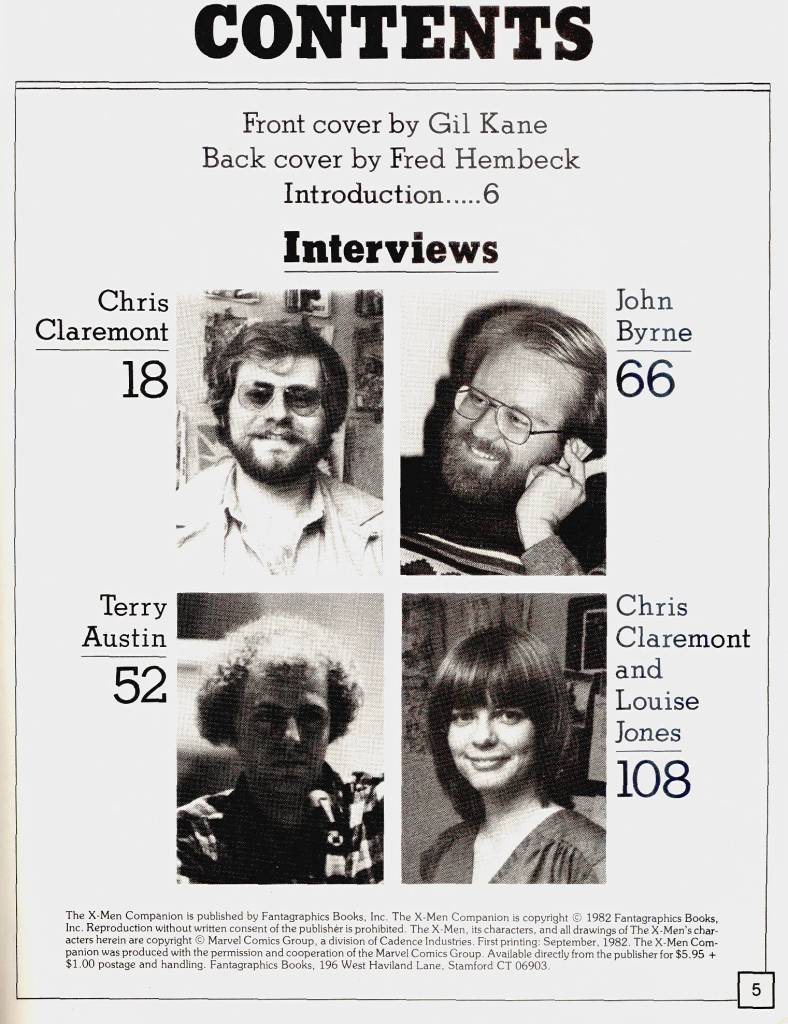
Like the first volume in this series, this second edition contained expansive interviews with most of the key talent involved with the All-New, All-Different X-Men since its launch and in particular those who worked on the uber-popular Dark Phoenix saga, which had made the series a critical carling in the emerging direct sales marketplace of comic book specialty stores. The interviews and editorial material were provided by comics historian Peter Sanderson, who had developed a good working relationship with much of the involved talent. Accordingly, they trusted him and were frank and open with him in a way they might have been with some other interviewer.
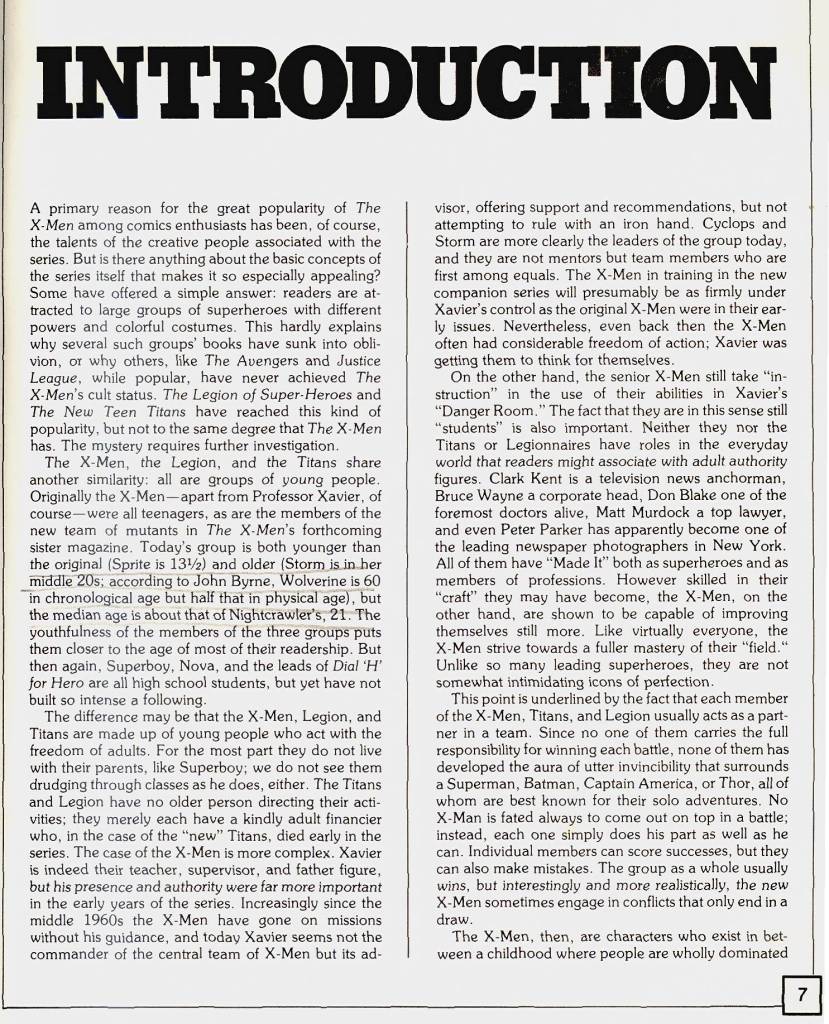
The other big attraction to these volumes was that Peter and Fantagraphics were given access to a huge portion of Marvel’s reproduction materials as well as behind-the-scenes elements provided by the creators themselves. So to somebody like myself, who had been a regular reader of X-MEN since 1978 or so, this was a chance to see weird and disjointed pages and images from throughout the history of the series. In particular, this was where I first got any real sense of the issues of X-MEN that Neal Adams had illustrated, which were then legendary enough and pricey enough as back issues that it seemed unlikely that I’d ever get to read them all. Shows what I knew.
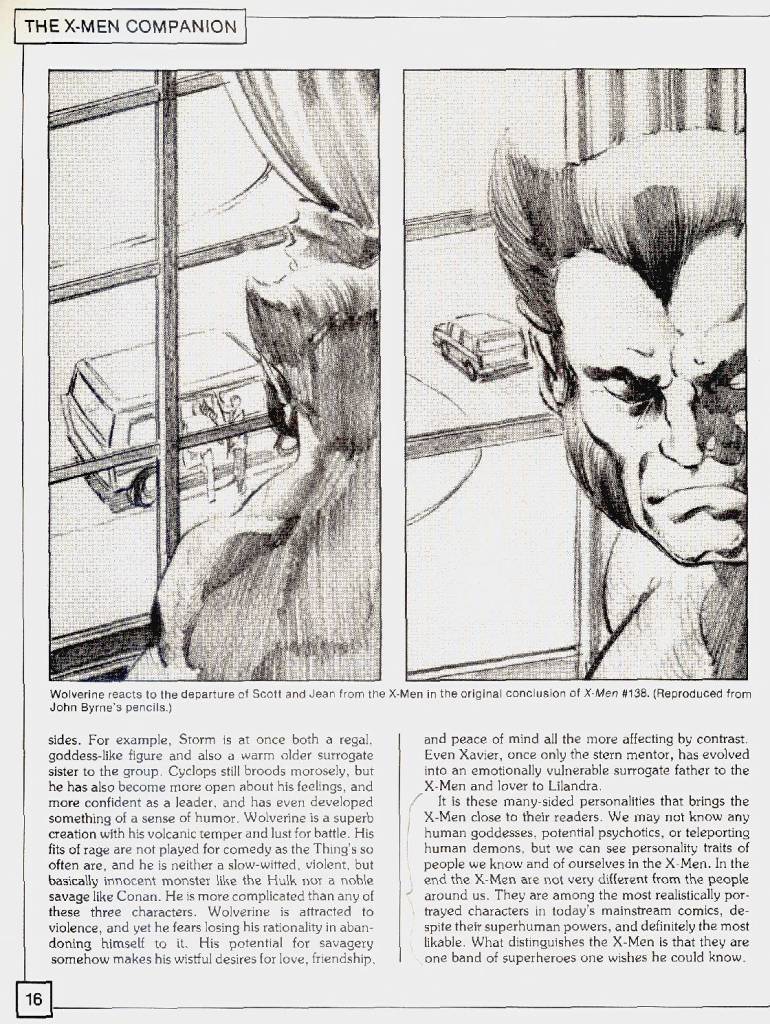
Sprinkled in along the way were a number of penciled panels and pages from the aborted original ending to the Dark Phoenix Saga, which had been changed at close to the last minute at the behest of editor in chief Jim Shooter, who couldn’t cotton to the idea of Jean Grey having committed genocide and getting to walk away pretty much Scot free. You can argue with Shooter’s position–and certainly some fans and even the creators themselves did at the time–but there’s no question that the alternate ending, in which the Phoenix was killed off, was the thing that grabbed the hearts and minds of the audience, and made the storyline a blockbuster.
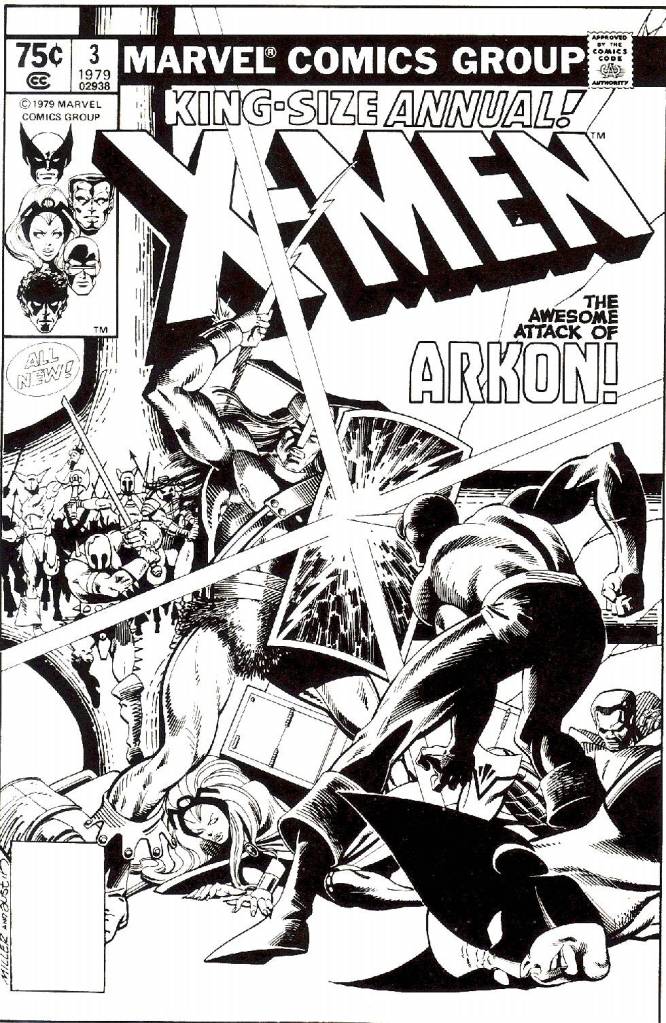
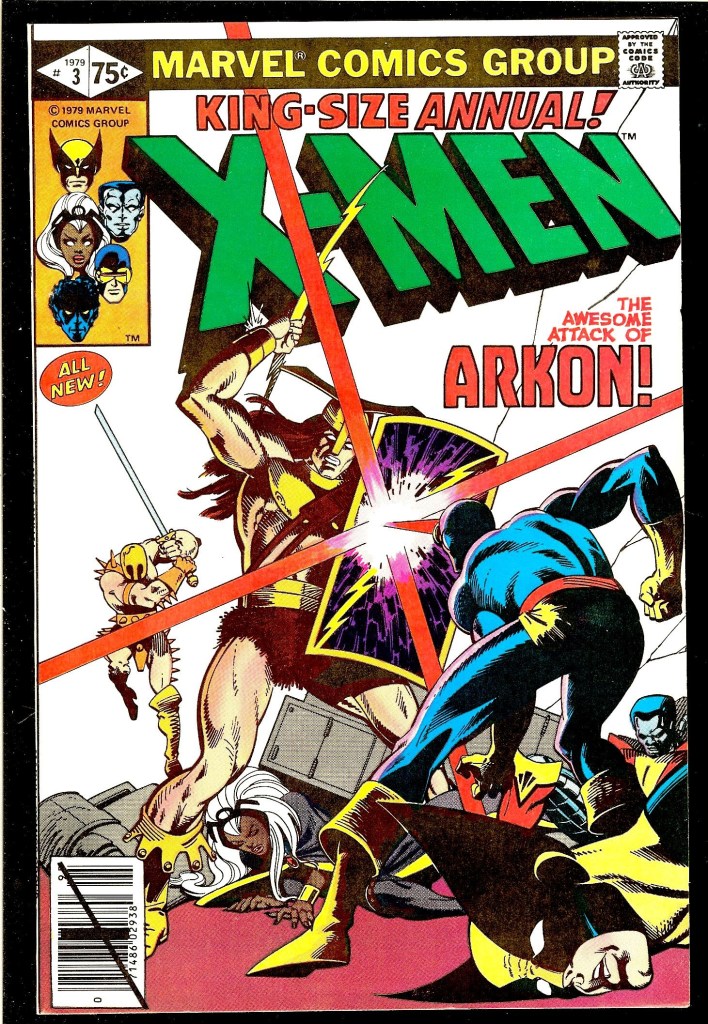
So this volume included extensive interviews with Chris Claremont, John Byrne and Terry Austin about their work on the series. As somebody who was growing progressively more interested in entering the field, interviews such as these were invaluable to me in terms of understanding just how the comic book stories that I loved so much were put together. The final section had been intended as something of a preview interview, putting the spotlight onto a bunch of then-upcoming projects, such as the NEW MUTANTS launch, the X-MEN/NEW TEEN TITANS crossover book, and Paul Smith’s arrival as the new UNCANNY X-MEN penciler after having debuted in MARVEL FANFARE. Unfortunately, by the time this volume came out, all of those events had already transpired. But that piece was still of value given the insights into the development of all of these projects that it revealed. (The Annual cover above, for example, had printed with a color cold missing, meaning that most of the soldiers and the warp-gate that they were coming through weren’t on the finished cover, a printing accident.)
These two volumes, now long out of print, serve as some of the most crucial sources in terms of unwinding just how the New X-Men came to be–especially since the interviews involved had been conducted very shortly after the events that were talked about, meaning that events were still fresh in everyone’s minds.
I read these books to death, over and over, attempting to glean every last ounce of information out of them about how the world of comic books worked.


I was able to purchase both volumes within about six months of one another, allowing me access to a world I’d never imagined. Like Tom, I re-read those books multiple times, savoring the insights and opinions of each creator. These interviews not only presented a view into the world of comics, but to me, they also made each writer and artist that much more real with certain aspects of their personalities coming across through Peter Sanderson’s questions. I can’t help but recall this particular volume as taking up some lonely, dateless Saturday nights as a college grad starting a new job and living on my own for the first time.
LikeLiked by 1 person
To my eye that Annual #3 cover is better off without the warp gate and throng of soldiers… which I think would have mightily detracted from Cyclops’ beam bouncing off Arkon’s shield in X formation as the primary focus of the cover. All of the extra-white negative space looks classy and intentional. I’m not sure I believe it was a printing error since it sure looks more like a Frank Miller joint without the extra stuff in the background.
LikeLiked by 1 person
But then why is there just one onrushing sword-bearing soldier in the background? If we’re going Frank Miller with extra whitespace, wouldn’t we leave him out too? He really only makes sense as the point man of that background horde.
LikeLike
Good point. The single sword guy does make more sense as a point man for the horde, but alone he activates the space and looks better aesthetically than the whole magilla behind him. Other than Arkon… no other warriors showed up to fight the X-men in NYC so it’s inaccurate story-wise either way.
LikeLike
Many years ago, both Chris Claremont and George Pérez attended a local convention. I asked them both to sign my copy of X-Men Annual #3. I joked to George, “It was very nice of Frank Miller to leave all that empty space for your autographs!” George replied: “Oh, but he didn’t. Frank had penciled a whole army of warriors but they got left off due to a printing error.”
LikeLike