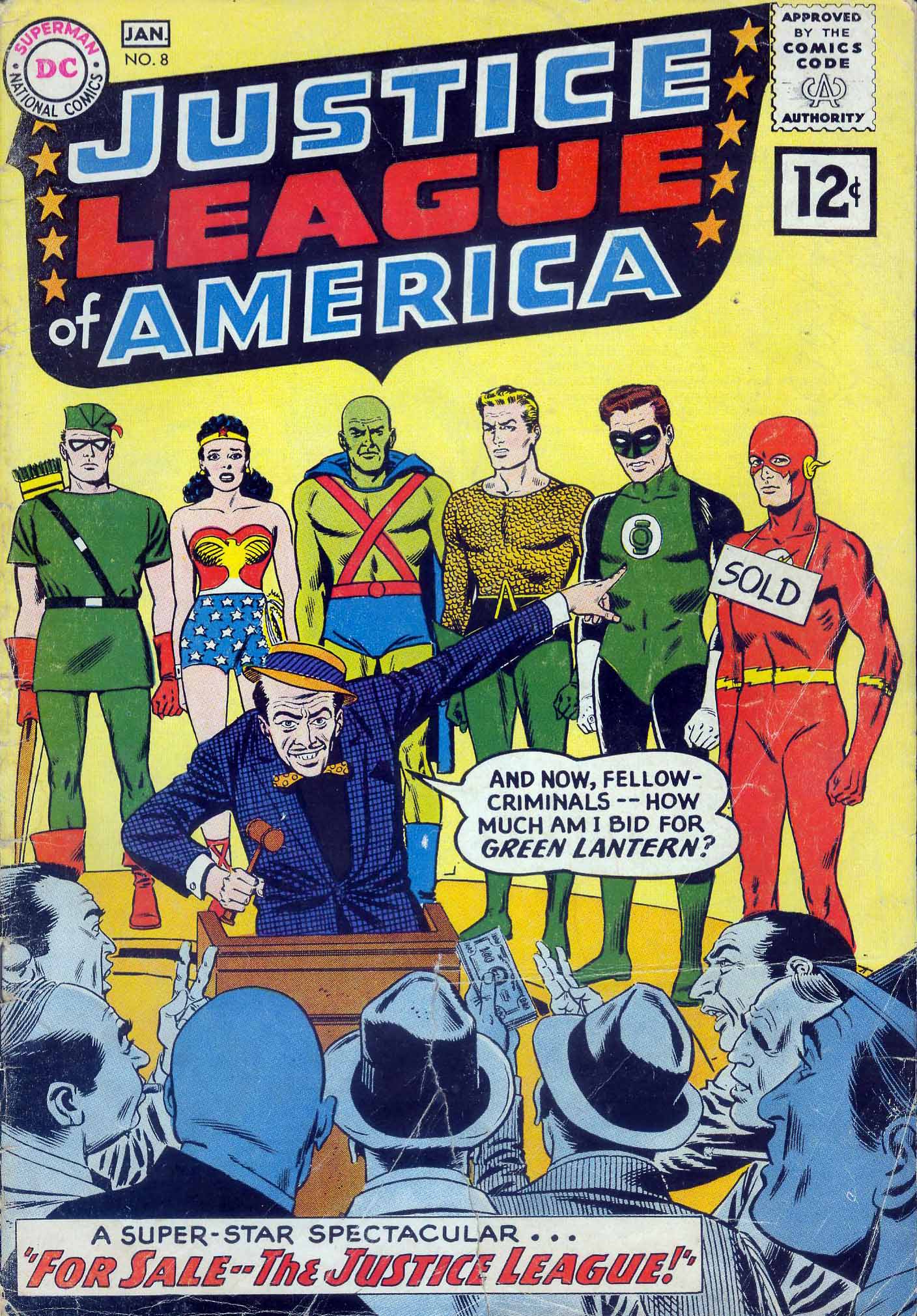


It was at this point that I graduated from sixth grade and from grade school entirely. This was considered a bit of a momentous occasion, and so I wound up getting gifts from many of my relatives–gifts that mostly amounted to cash. I wound up with over $100.00 in my pocket, more money than I had ever had before. And that meant that I was eager to spend some of it on new comic books. In particular, I decided to make a trip to Ed’s Coins & Stamps in the Sun-Vet Mall. This Mall was a huge distance away from my home, but now that it was summer, I had entire days open to me. I can remember consulting a map to work out a viable back street route to get me there–this would be by far the longest bike trip that I had taken, and I didn’t tell my parents about it ahead of time in case they might have warned me off of it. It also drove me to some dangerous behavior–on the way back, a bit turned around, I wound up riding for several miles on a freeway that was meant to be closed off to bicycles, an incredibly dangerous thing to do that I was too oblivious to truly take seriously. But nothing happened, and so I made the round trip and came back with a stack of vintage comic books for my troubles, including this one.
If i remember correctly, I paid $3.00 for my copy of JUSTICE LEAGUE OF AMERICA #8. The reason for this value was that the front cover had been torn in two horizontally, though both halves were still attached to the book. I was amazed to find such an early issue at such an affordable price, so the damage didn’t matter that much to me–I just wanted to read the thing. And to possess it–this issue was released in 1962, right at the beginning of the Marvel Age of Comics, and I was attracted to it as much by its age as its contents. But I knew that I had liked most of the early JLA stories that I had read in 100-Page Super-Spectaculars and Treasury Editions, so my guess was that I’d like this one was well. And I did.
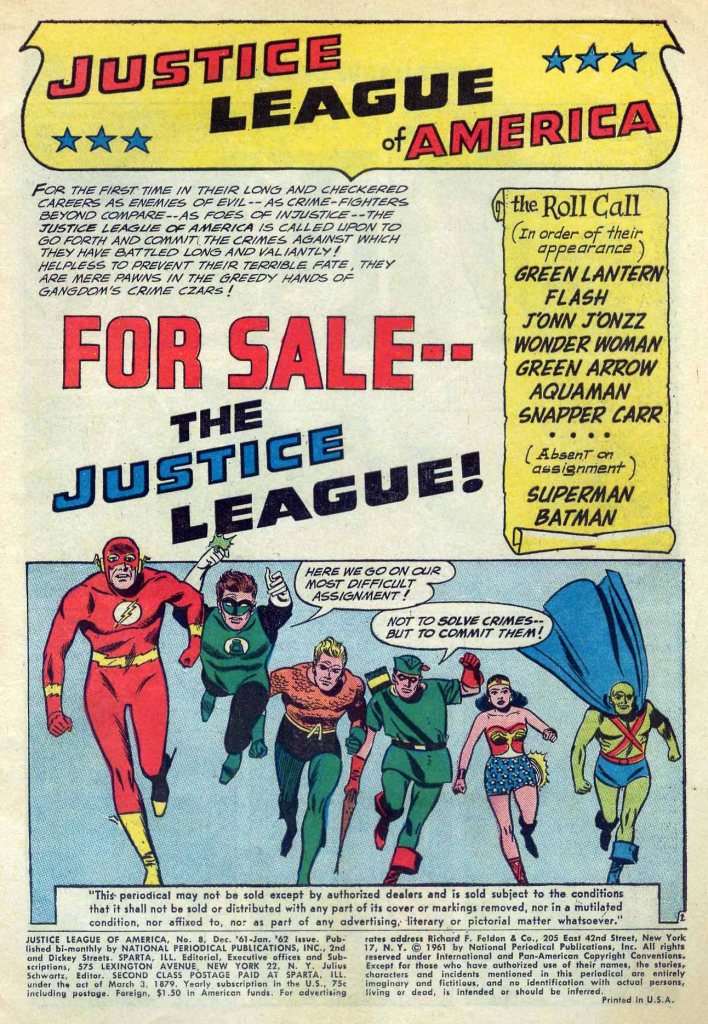
JUSTICE LEAGUE OF AMERICA was a fan favorite comic book at the time this issue came out–despite the divisive art style of penciler Mike Sekowsky. I have a real love of Sekowsky’s work in this period, but it’s hard to argue that his grasp on human anatomy was sometimes a bit expressionistic. And his work did suffer in later years when the size of the original art board was reduced. But here, in 1962, his work had the same inviting, open feeling to it that I associated with the super hero comics put together by editor Julie Schwartz. Gardner Fox was the writer, and his stories were almost entirely plot-centric, with little in the way of in-depth characterization. It’s been said that Fox’s Justice League could all be in a room behind closed doors, and if you read word balloons coming from the door, they might have been spoken by anybody in the cast. That’s a pretty accurate assessment. Fox’s stories, though, were always imaginative and colorful, and in JLA they fielded a small army of super heroes–so I loved them.
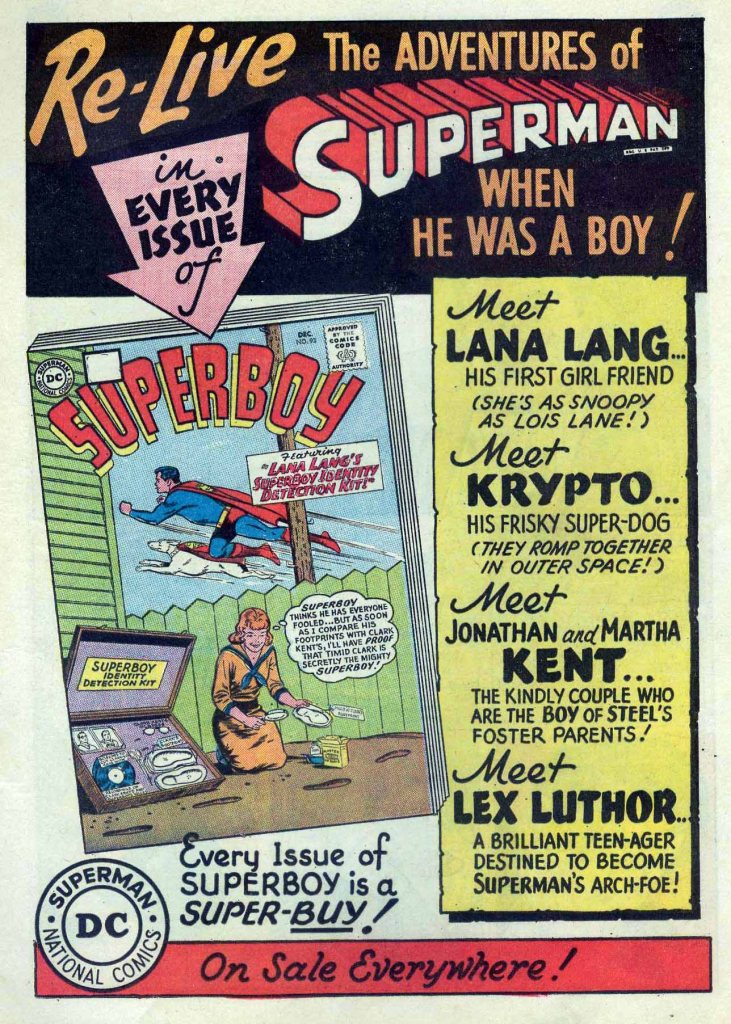
A quick break here for a full page ad for the latest issue of SUPERBOY. This ad is noteworthy for a simple reason; the cover of the book in the ad isn’t carrying a cover price, but rather a blank white box where the price would typically go. This is because DC had recently raised its cover price for the first time in the company’s history, from 10 cents to 12 cents. The ad had apparently been prepared showcasing a cover with a 10 cent price on it, so the editors had that stripped out of the ad at the printer. The issue as published retailed for the standard 12 cent price.
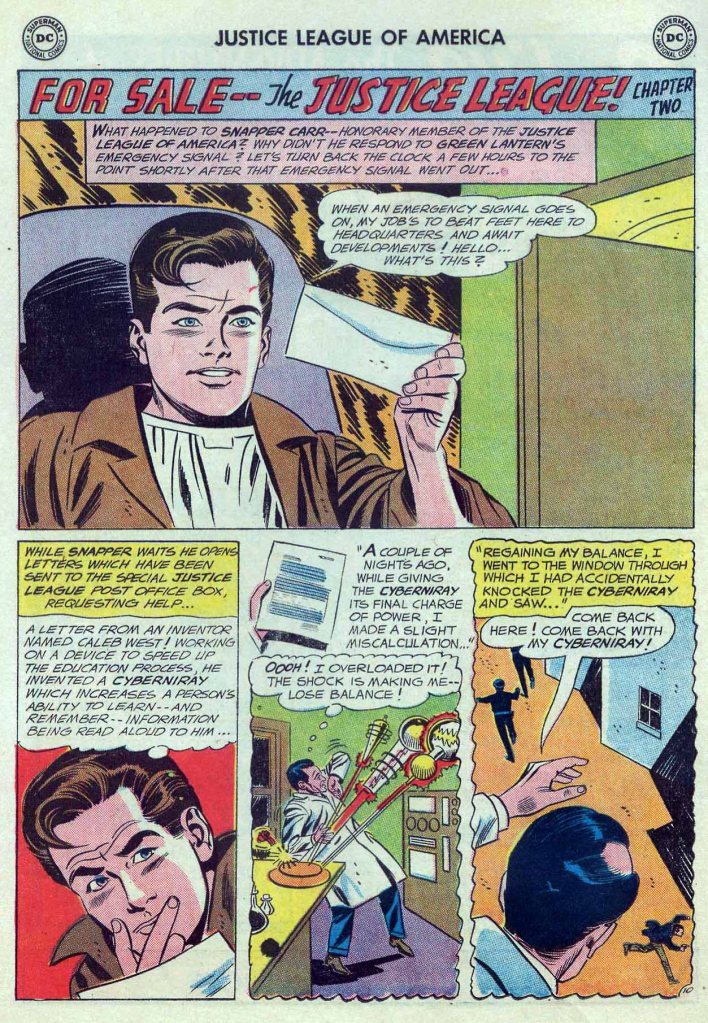
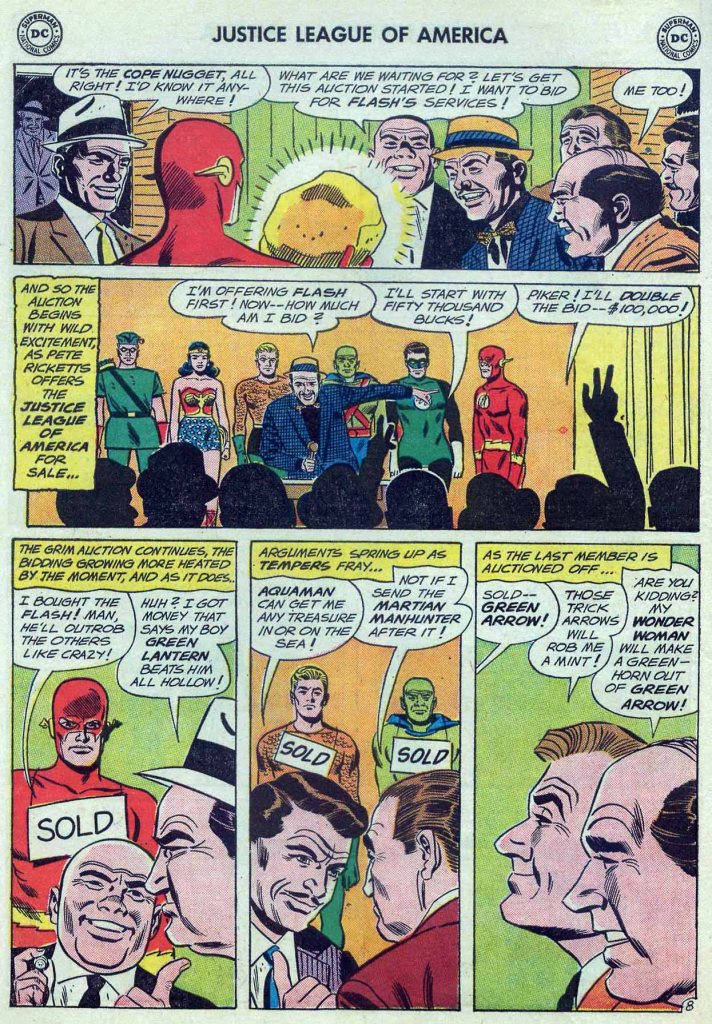
The story in this issue doesn’t feature any colorful villains. And most of the action concerns the members of the Justice League battling one another. But let me back up. The issue opens with criminal Pete Ricketts attempting to elude pursuing police officers. Pete tripped over an odd flashlight-like device, discovering that if he shines it on anyone ,they are compelled to obey his commands. He uses the thing to elude his pursuers, then intends to use it to make himself rich. As a criminal, he does this by using the ray to ensnare Green Lantern at a public P.R. appearance, and then using GL to summon the other members of the Justice League, whom he similarly dominates. Ricketts turns the comatose heroes over to the mob, selling them for a million dollars. But rather than killing the super heroes, Ricketts then offers the mob bosses a chance to bid for their services as criminal operators, making himself another $600,000 as he auctions off the League to the highest bidder.
But the mob leaders are competitive, and so they arrange to send their ensorcelled super heroes after the same loot, challenging them to fight for it so as to prove which mob boss got the best deal. Meanwhile, in the JLA secret sanctuary, honorary member Snapper Carr is reading the JLA mail while waiting for an update from Green Lantern. He finds a letter from a scientist who had invented a Cyberniray as a way to increase learning ability. But he realized that his device could also be used to dominate the will of others. And the dopey scientist accidentally dropped it out of a window to the ground below, which is where Pete Ricketts picked it up. Snapper determines that he’d better alert his fellow members to this problem, and so he sets out to locate them, using anti-gravity disks that Doctor Destiny had used to help impersonate Green Lantern in a prior adventure.
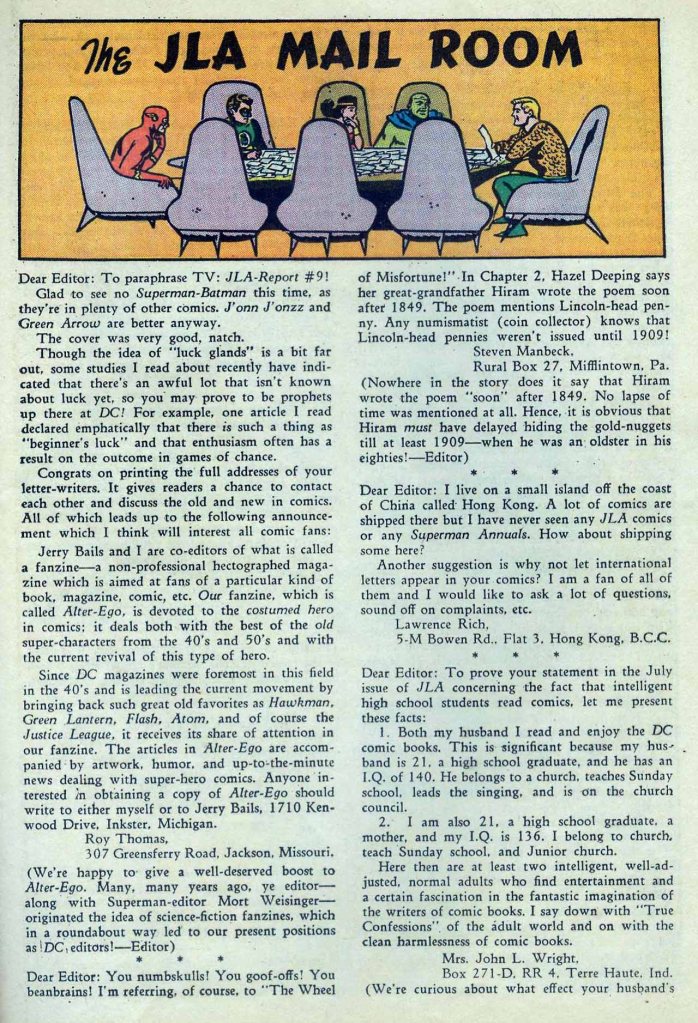
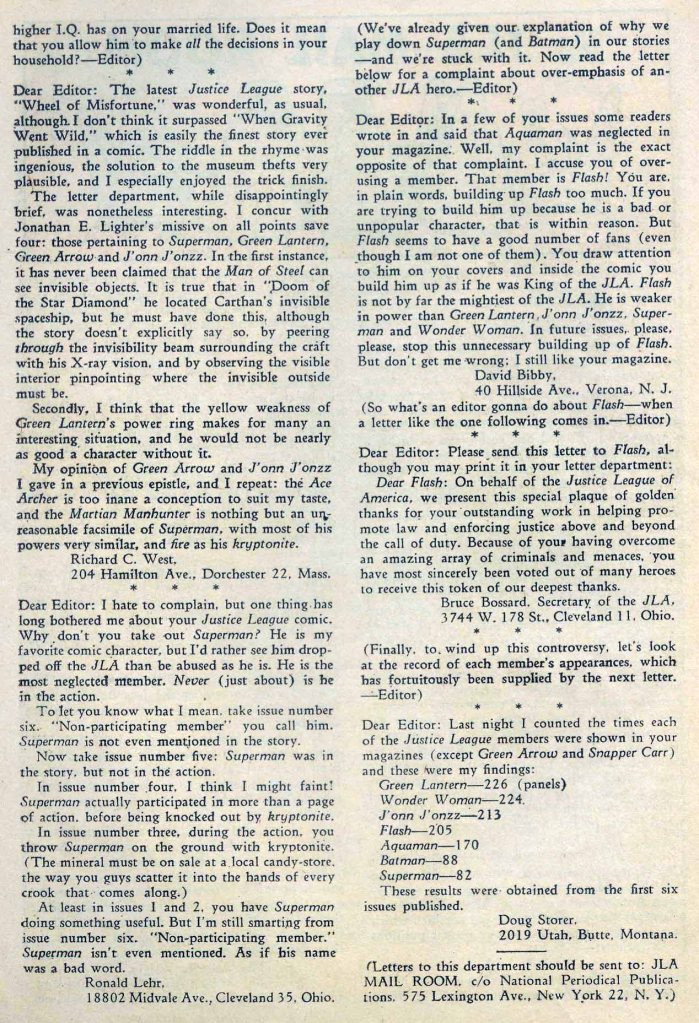
We get the JLA MAIL ROOM letters page at this point in the comic, which includes a letter written by future Marvel writer and editor Roy Thomas. At this time, Roy was simply a schoolteacher and a fan of old comic books, and as his communication indicates, he had joined forces with Dr. Jerry Bails to produce a fanzine, ALTER EGO, dedicated primarily to costumed heroes. This letter plus the fanzine, which is something that editor Schwartz had offered to do for the pair, having come up from the world of science fiction fanzines himself. Today, Roy is still editing the new iteration of ALTER EGO, which is about to release its 200th issue and which can be ordered here: https://twomorrows.com/index.php?main_page=index&cPath=98_55
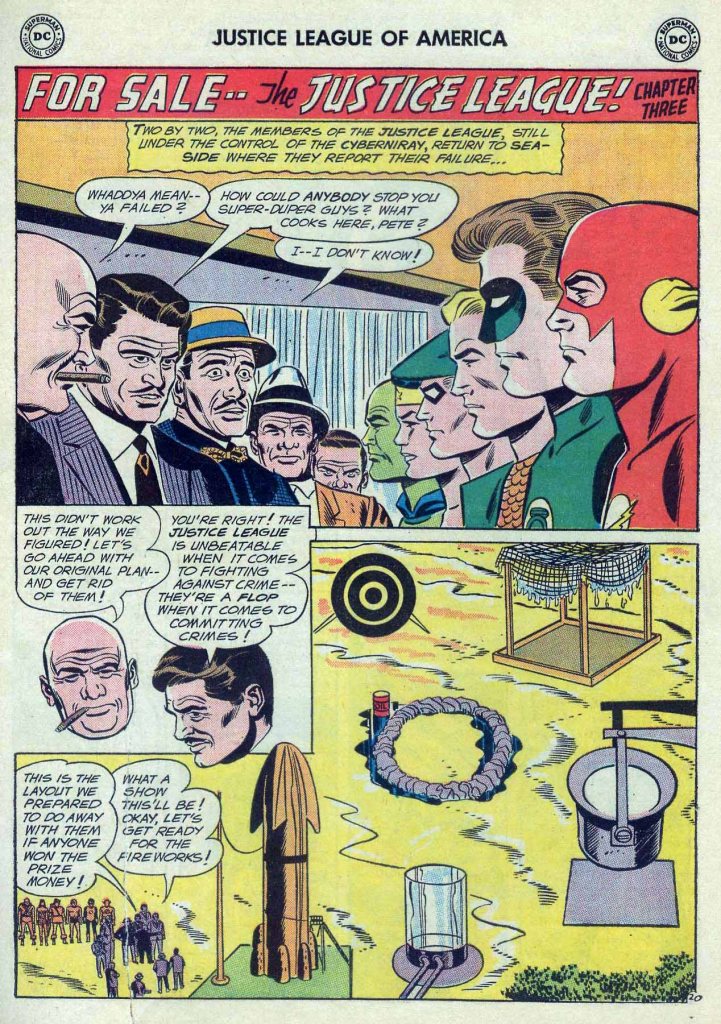
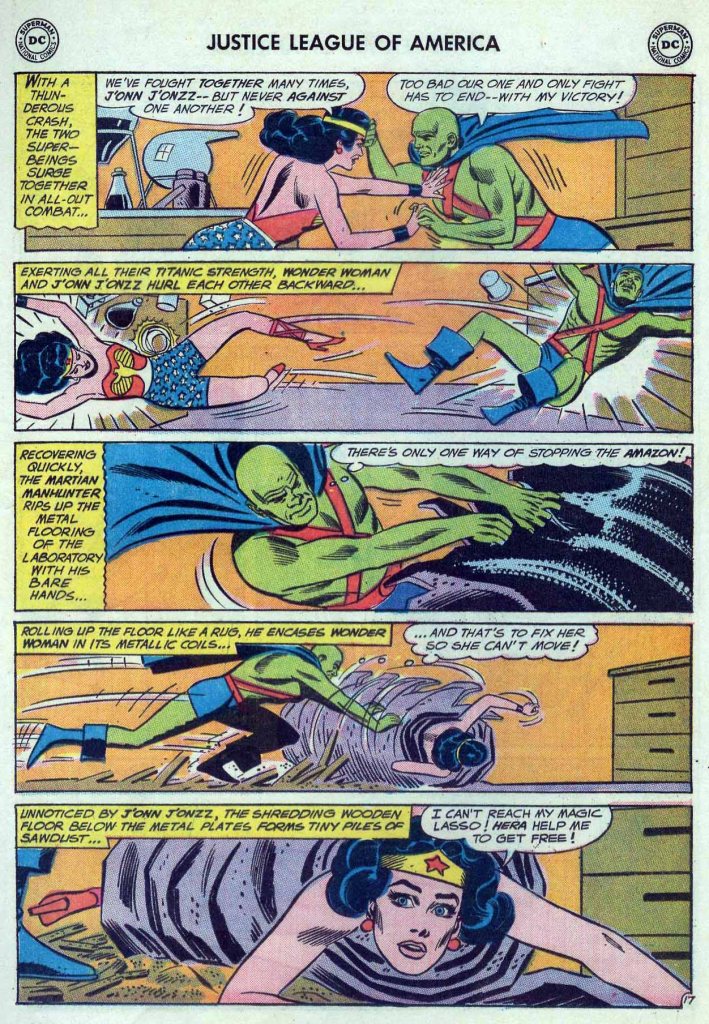
The action follows across the world as pairs of Justice League members battle one another for their individual criminal prizes; the Flash and Green Lantern contend for the Napoleonic Jewels, Aquaman and Green Arow compete over who will heist a gambling ship, and the Martian Manhunter and Wonder Woman battle it out over a million dollars’ worth of pure radium. In each instance, the fought-over loot disappears while the heroes are duking it out, forcing all six Leaguers to return to their criminal masters and report failure. At this point, figuring that the League is useless as criminals, the mob bosses figure that they ought to simply do away with them. But there isn’t anything simple about their methodology. Rather than just shooting the helpless heroes, they instead put them all in individually-tailored death traps. As usual, DC’s criminal element is too clever for its own good.
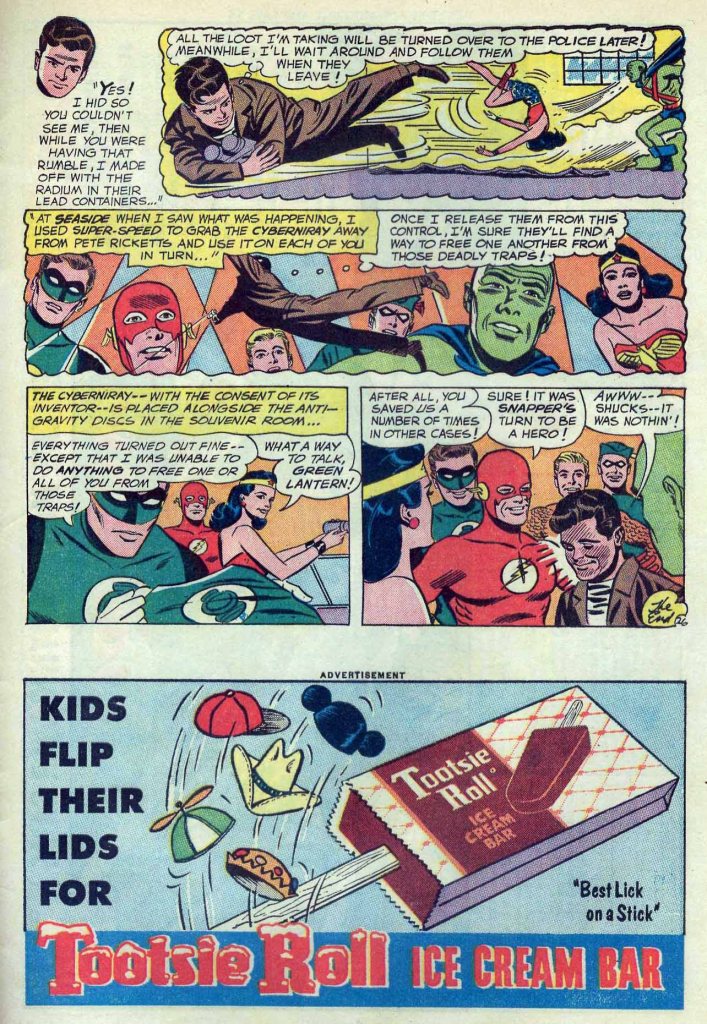
As the heroes meet their fate, each one in turn finds themself freed from the influence of the Cyberniray. And while they can’t escape their own doom traps, they are able to help rescue their fellow members in an array of round robin teamwork. Thus liberated, the restored League cleans up on Pete Ricketts and the mob bosses, learning that their actual savior was Snapper Carr. Snapper had followed them to their various heists, hiding their targeted loot before they could make off with it. He was also able to snatch the Cyberniray away from Pete Ricketts and use it to restore each Leaguer’s free will. So Snapper is the hero of the day–and poor Green Lantern feels like a heel because he was the only one among their number who didn’t get to rescue one of his fellow members.


I actually think Sekowsky’s work improved when the page size decreased, both because his layouts became bolder and imaginative, and because he got to work with inkers more suited to his style, like Giordano, Giacoia even Roussos.
LikeLiked by 1 person
I may quickly be proven wrong, but I’m not certain there’s anyone that Dick Giordano’s inks didn’t benefit. And that’s not a slight to Sekowsky.
LikeLike
Dick was an excellent inker, but I think he was very well suited to Sekowsky’s graphic approach; slashing lines and bold shapes. It also helped that Dick loved inking Sekowsky, and it shows.
LikeLiked by 1 person
I did not know that, but it also makes sense. For what it’s worth, I first encountered Mike Sekowsky’s art on Super-Villain Team Up #1 which didn’t stand out to me in any negative way. It wasn’t until I came across some JLA reprints that I encountered what we’re all discussing today. It adds weight to your argument that his art did improve with the smaller page size.
LikeLike
I really liked Sekowsky;’s work on Strange Adventures and Mystery in Space around this time. Those really kind of fit his style. I think you could also see his aptitude for this work on his Manhunter 2070 in the last few issues of Showcase ,
For that matter, I liked his work on “Adventures on Other Worlds” (the title used for Adam Strange’s Showcase tryout) right before JLA launched.
Sekowsky had come a long way as an artist dealing with science fiction stories from his time doing The Human Torch in the late 1940s.
I guess artists get better at doing what there is a demand for.
Does anyone know why Sekowsky’s stint as a DC editor ended? He was doing some interesting things with the Metal Men, Wonder Woman, Supergirl and his own stuff like Manhunter 2070 and Jason’s Quest . . . .
LikeLike
I don’t know precisely why Sekowsky’s editorial tenure ended, but he was having trouble meeting deadlines, as you can see with the reprints and fill-ins in his runs, and that couldn’t have helped.
LikeLike
Sekowsky is very much “my” JLA penciler, to the point I’ll never be an objective judge of his style.
LikeLike
His work just says “comics!” to me and was always convincingly rendered. The lack of detail and economy of line is part of it’s charm… and there are a number of panels in this story where you can really tell he knew what he was doing. I love those last two tiny panels.
LikeLike
Thanks.
It seems like many of the artists that ,Carmine Infantino made editors lett, although Joe Orlando and Joe Kubert had success.
LikeLike
I know Snapper Carr is not most people’s favorite, but Gardner Fox seems to really like him. Or at least, he felt obligated to justify his presence, because Snap seems to save the day an awful lot of the time.
They’re contrived as all get-out, but I do love those classic “JLAers save each other from death-traps” scenes.
LikeLiked by 1 person
What a delightful “Saturday Morning” adventure! Loved those wild DC covers that all but demanded you plunk down the necessary coinage – although I was way too young to have actually been able to do that.
As for Mike Sekowsky’s art, seeing it as a kid for the first time, I finally saw a superheroes drawn in a way that I didn’t want to grow up to resemble. However, in time since then, I’ve found an appreciation for his style on these early JLA’s in much the same manner as I liked Frank Robbins on The Invaders years later.
Fun as this issue was, I also couldn’t help immediately thinking of what was going on with the Fantastic Four at that same time. We weren’t anywhere near the Galactus Trilogy or Inhumans or Black Panther. But with the likes of the Sub-Mariner, Dr. Doom, Red Ghost and so on appearing, there was certainly a contrast between both series, presenting readers at that time with some intriguing options.
Y’know, substitute the Wonder Twins or Wendy, Marvin and Wonder Dog for Snapper Carr and we may have a missing episode of the Superfriends.
LikeLike
Even in the early days of 60’s Marvel there was stuff going on that was just rougher and grayer all around than DC’s stalwart “good citizens.” Only 4 issues in on The Fantastic Four an amnesiac Sub-Mariner is rescued from the Bowery, but is he grateful? Nope! He wages war as payback for the destruction of his home, but he’ll call if all off if Sue goes with him… or he won’t call it off if she’s into it. Batman obviously comes from a city with crime but there’s probably not a place with sad, broken folks with holes in their shoes…. not at the time of this story anyway.
LikeLiked by 1 person
You hit the nail on the head. None of this is to disparage the fun of JLA stories such as this one. But yes, Marvel, was indeed unveiling a curtain to stories with a greater edge than what had existed before. It would have been fascinating to have been a comic book reader at that time.
LikeLike
In t985’s COMIC BOOK HEROES, Jones and Jacobs had a great line that goes like, “in 1962, if you read an issue of FLASH after having read a SUPERMAN, it was like going from one neighborhood to another. But when you opened a FANTASTIC FOUR issue, it was like entering a new world.”
LikeLike
An issue of that foundational fanzine produced by Schwartz and Weisinger can be found here:
https://fanac.org/fanzines/Time_Traveller/Time_Traveller02-Glasser_Schwartz_Weisinger-1932-02_US.pdf
LikeLike
This brings back memories of reading this same story in an 80 Page Giant circa 1967! Thanks for the memory!
LikeLike
I picked up Men of Mystery Comics#22 ( 2000 ) which reprinted a Captain Flash ( Mike Sekowsky story ), Manhunter ( Quality ), Crimebuster, Don Winslow, Espionage starring Black X and the Human Bomb stories, which is where I first saw Mike Sekowsky’s work. Mike Sekowsky in Justice League of America#14 ( September 1962 ) was the first one to draw Hector Hammond in his mutated form. I’m alright with Mike Sekowsky’s art. One more thing, Wonder Woman in this story is lucky it is the 1960s and not the Jessica Jones era, or those guys wouldn’t be asking her to steal things.
LikeLike
Sekowsky (more than contemporaries like Kirby, Ditko and even Infantino) kept an eye on changing fashions. It was especially noticeable in his mid-1960s Tower stuff . . . ..
LikeLike