

Occasionally, a comic book story will appear that, while it’s telling an engaging and emotionally-compelling tale, will have as its main focus some manner of experimentation with the very format of communicating comic book stories to the audience. These bits of formal experimentation were typically very memorable for the way in which the story was delivered, as in the case of the Keif Llama story we’ve looked at here before:
Others, though, took advantage of their innovative structure to deliver an experience that couldn’t have been arrived at in any other fashion. Here, then, are Five Mainstream Stories That Played With The Format of Comics:
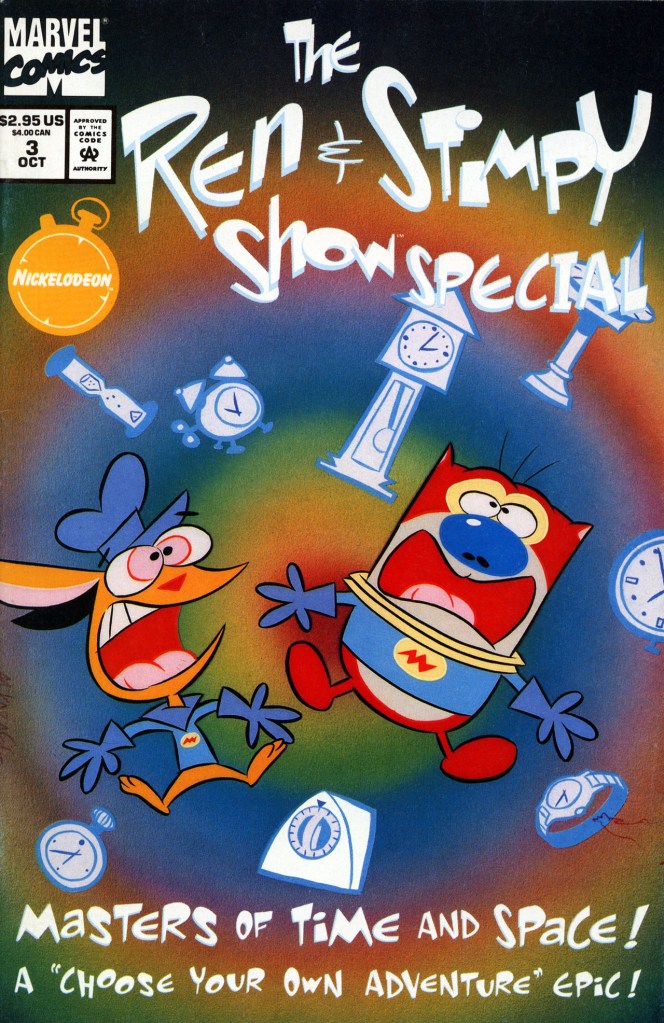
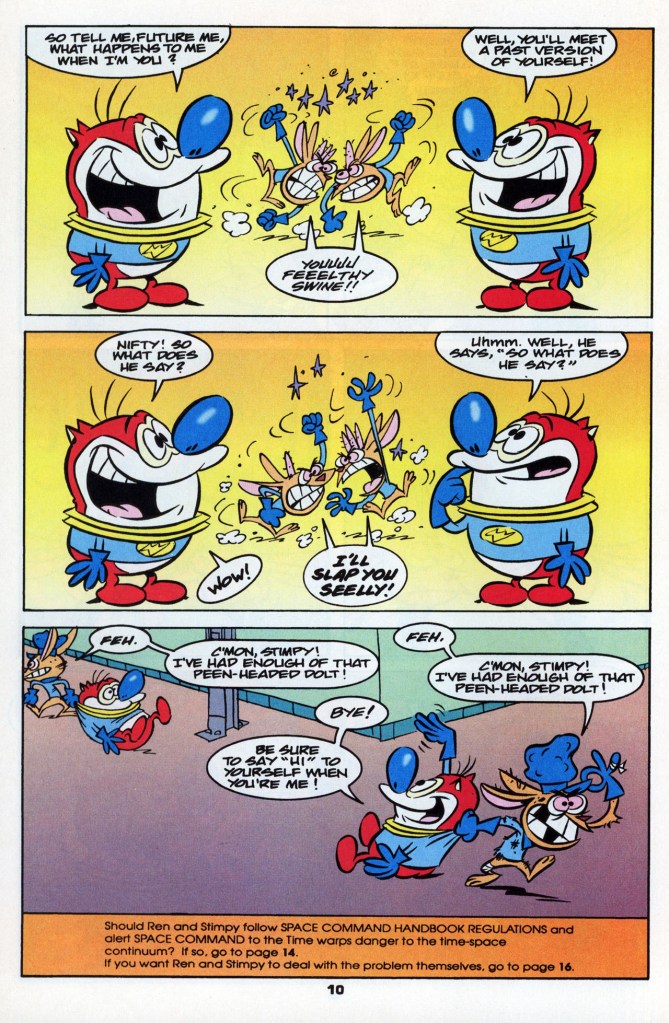
THE REN & STIMPY SHOW SPECIAL #3: This very fun special by writer Dan Slott and artist Mike Kazaleh is done in the style of the popular Choose Your Own Adventure kids books in which the reader is given a series of branching choices to make and controls the outcome of the story depending on which paths they choose to follow. But rather than just a simple emulation of what had been done with this format elsewhere, this story is a bit more clever than that, as different branching pathways feed back into the story itself in interesting ways, taking full advantage of the “timey-wimey” nature of its premise. At the same time, it’s very funny, channeling the humor of the licensed property perfectly. It also includes two pages that cannot be reached by playing fair; in order to experience those moments, you need to “cheat” and read through the book linearly, front-to-back. It’s an even more remarkable achievement given that this was a licensed property and thus at the mercy of the licensors for approval at every step.
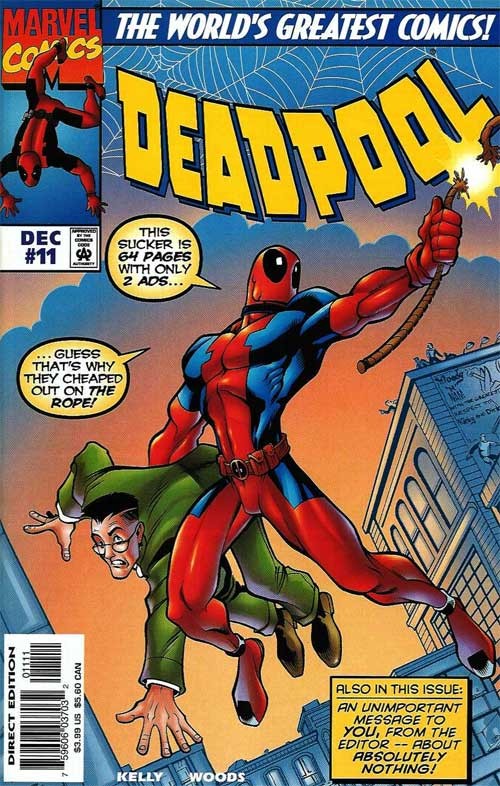
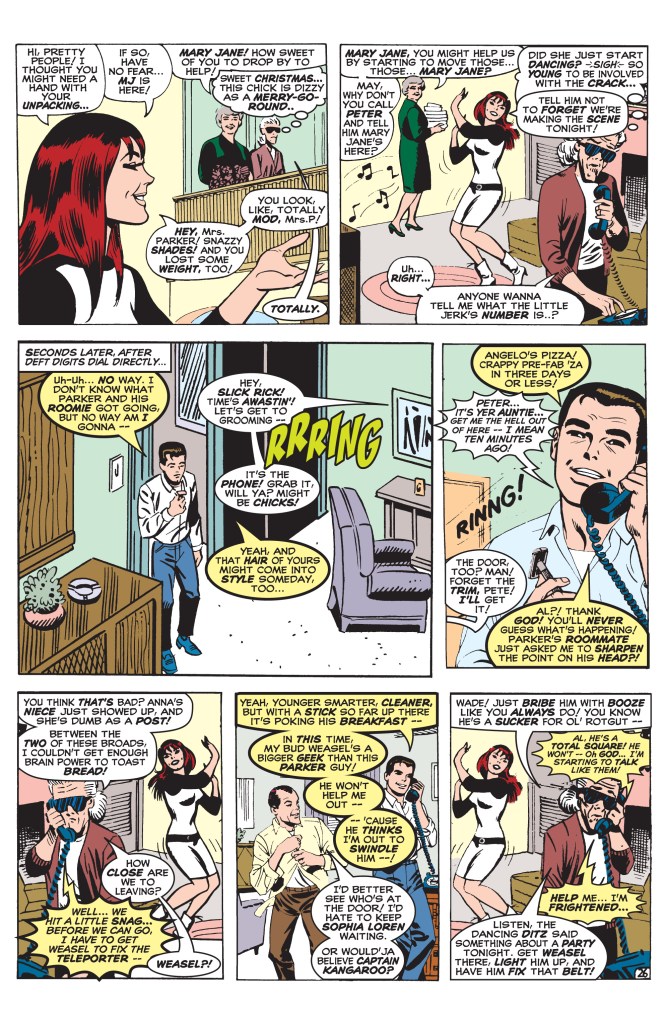
DEADPOOL #11: Referred to internally under the codename “Project Gump” by writer Joe Kelly and editor Matt Idelson, this issue of Deadpool sees the Merc With A Mouth and his roommate Blind Al sent back in time to the 1960s, where they interact with the pages of a vintage issue of AMAZING SPIDER-MAN. Along with artists Al Milgrom and Joe Sinnott, they produce both new pages and panels that approximate the style of vintage John Romita while also drawing the characters into moments from the original story, adjusting the dialogue appropriately and commenting meta-fashion on the faux-hip styles of the period. Pete Woods and Nathan Massengill produce the material set in the present. As an added bonus, the issue also includes an unexpurgated reprint of the AMAZING SPIDER-MAN #47 story as it initially saw print. It’s a super-fun story that meets it expansive ambitions, and it’s very funny as well.
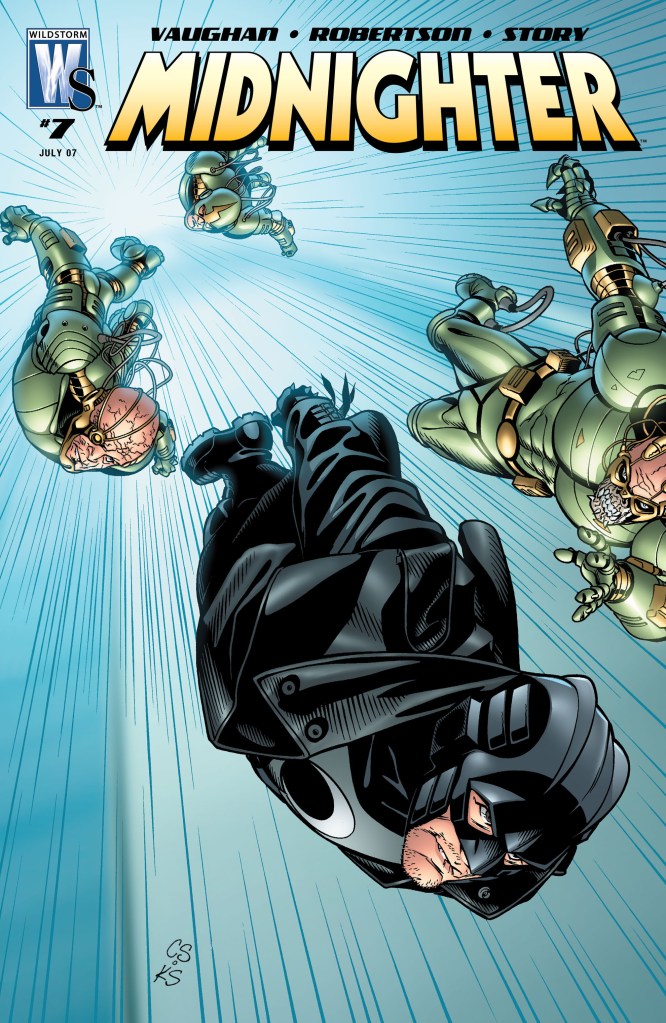
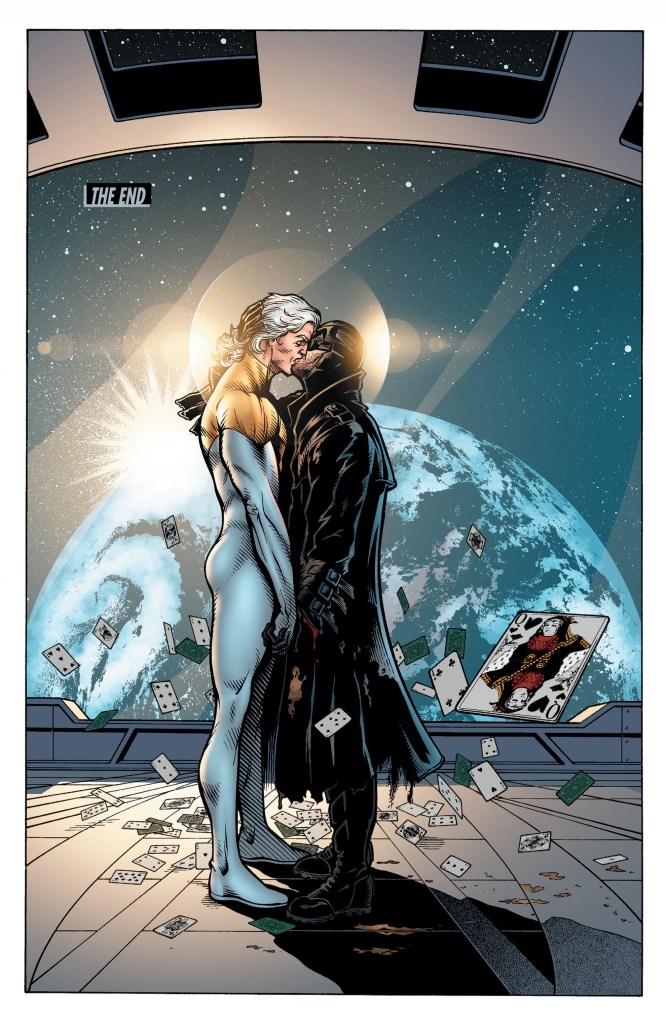
MIDNIGHTER #7: Writer Brian K. Vaughan jumps into this series for a singular one-off adventure, illustrated by Darick Robertson and Karl Story. The gimmick here is that the entire adventure is told in reverse order, MEMENTO-style. So we open on THE END and work our way backwards through events, page-by-page, as we watch Midnighter go through his paces, destroying a secret cabal that intends to turn the vast majority of the world’s supply of crude oil into water, thus causing World War II and making the supply of oil they’ve secreted away insanely valuable. The beauty of the construction here is that the story can also be read back-to-front in its proper chronological order and it all makes sense. But like one of those anti-aspirational poems that becomes aspirational if you read it backwards, the experience of witnessing this story in backwards order allows for interesting reading surprises along the way, even though the outcome is already pre-ordained.
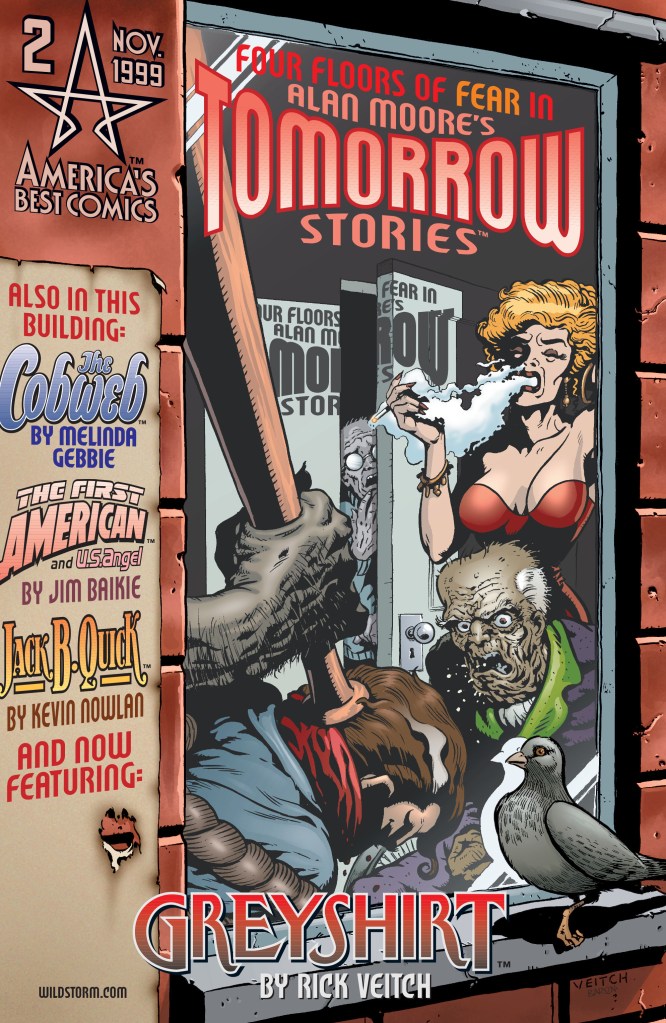
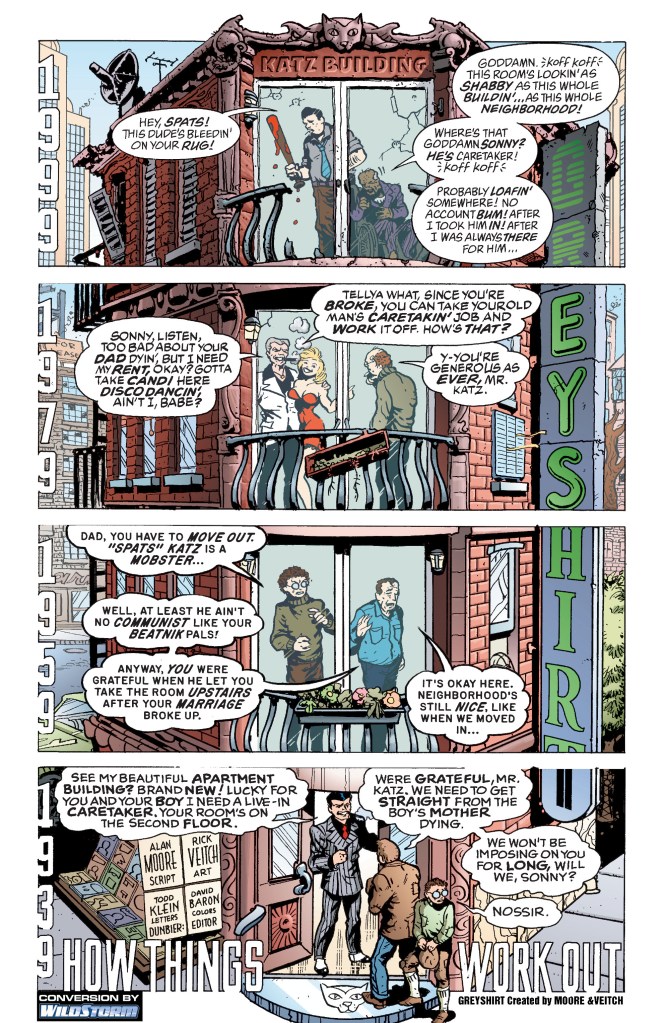
TOMORROW STORIES #2: The America’s Best Comics line was a laboratory for creator Alan Moore to do pretty much whatever he wanted to in, and what he most wanted to do was to channel some of the great imaginative comic series of the past while exploring what they did more deeply. One of the regular features in TOMORROW STORIES was Greyshirt, Moore and artist Rick Veitch’s pastiche of Will Eisner’s The Spirit. Back in the 1940s, Eisner had produced a story about different events at different times happening on the different floors of a house, but here Moore goes him one better by formalizing the process and evoking even the flavor of the comics of the different time periods that he’s using on the four floors of the building as this story plays itself out across 8 pages. In each instance, Veitch matches the framing of the panels across the different eras, and Moore allows the information that the reader gleans in each timeframe to accumulate, allowing them to make deductions and suppositions about the story at play in real time. And as in the case of a Spirit story, Greyshirt himself is barely in it.
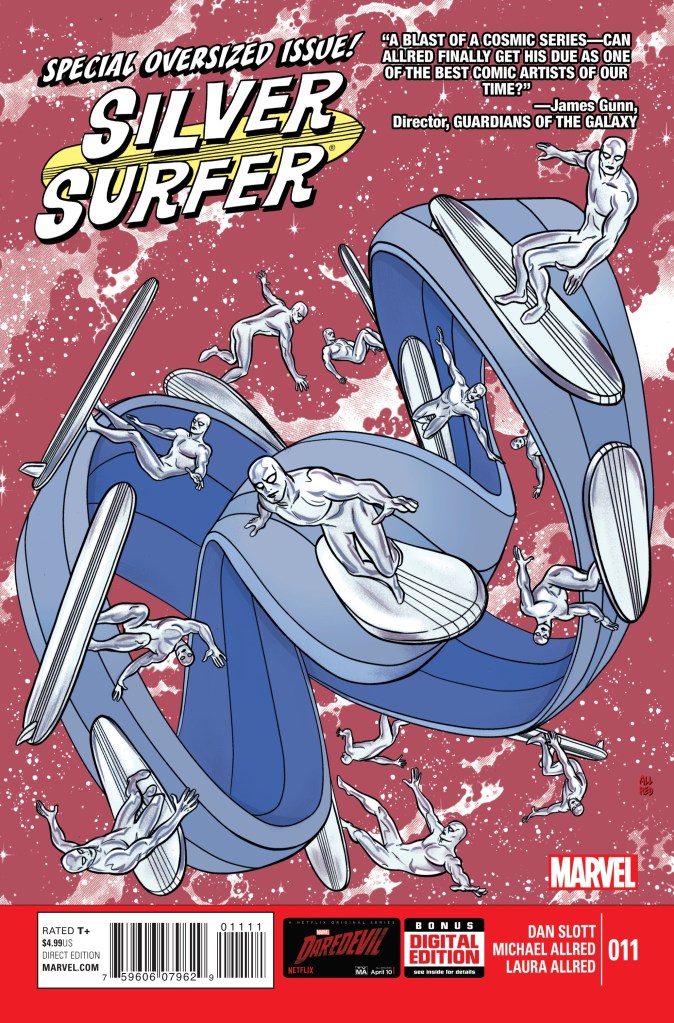
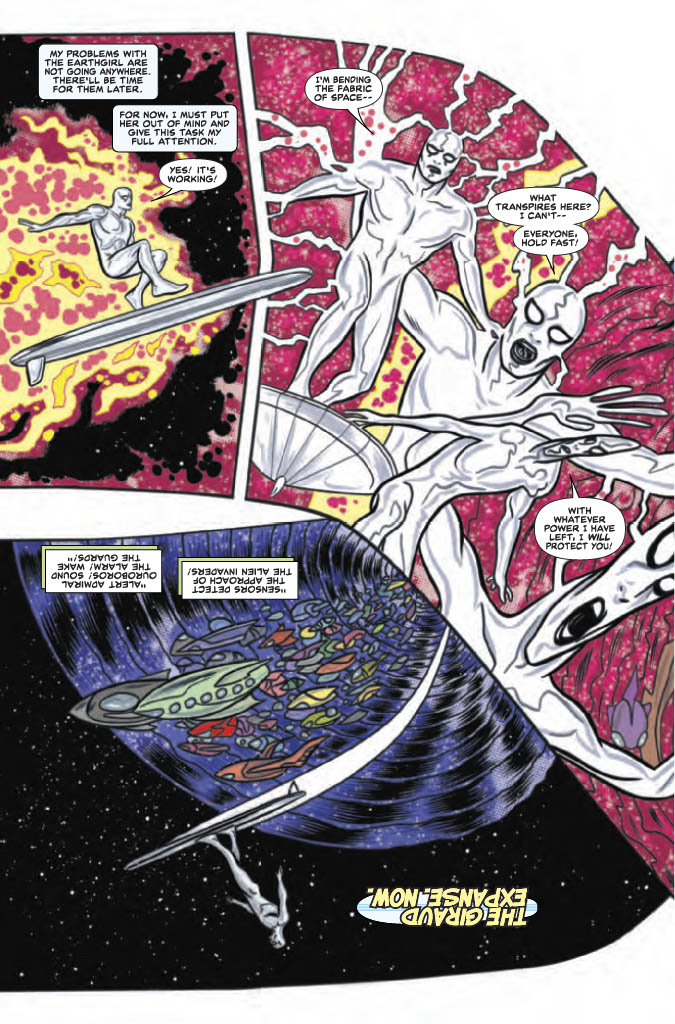
SILVER SURFER #11: I wrote about this Eisner Award-winning issue extensively in the past:
But to summarize: creators Dan Slott and Mike Allred tell the story of the Surfer and the convoy of aliens that he is shepherding across the galaxy getting caught in a time loop and living the same days over and over again. We see these events from the point of view of four different characters and the entire issue is laid out like a moebius loop across the entire story. Eventually, once the reader deciphers the hidden clues, they can take the Surfer and his charges to safety by folding over the last page of the loop Mad Fold-In style, revealing a new pathway that allows the characters to break the cycle (and which also uncovers a secret about just what caused their predicament in the first place.) It’s a remarkably well-realized piece of work.


“The beauty of the construction here is that the story can also be read back-to-front in its proper chronological order and it all makes sense.” I’ve found the same is true of the Stern/Byrne Lost Generation series. It came out 12-1 but I’ve already it 1-12 and that works too.
LikeLiked by 1 person
Moore may have set up the milieu of Greyshirt, but wasn’t the series all Veitch? It even has his name as sole credit on the cover. I remember it was rather niftily done.
LikeLike
Veitch later did the Greyshirt: Indigo Sunset mini-series solo, but the shorts in Tomorrow Stories were all written by Moore.
LikeLike
That Greyshirt story holds a heavy debt to Chris Ware. Similarly, there’s another Tomorrow Story strip that’s heavily inspired by Kurtzman’s Bringing Up Father parody from an issue of Mad
LikeLike