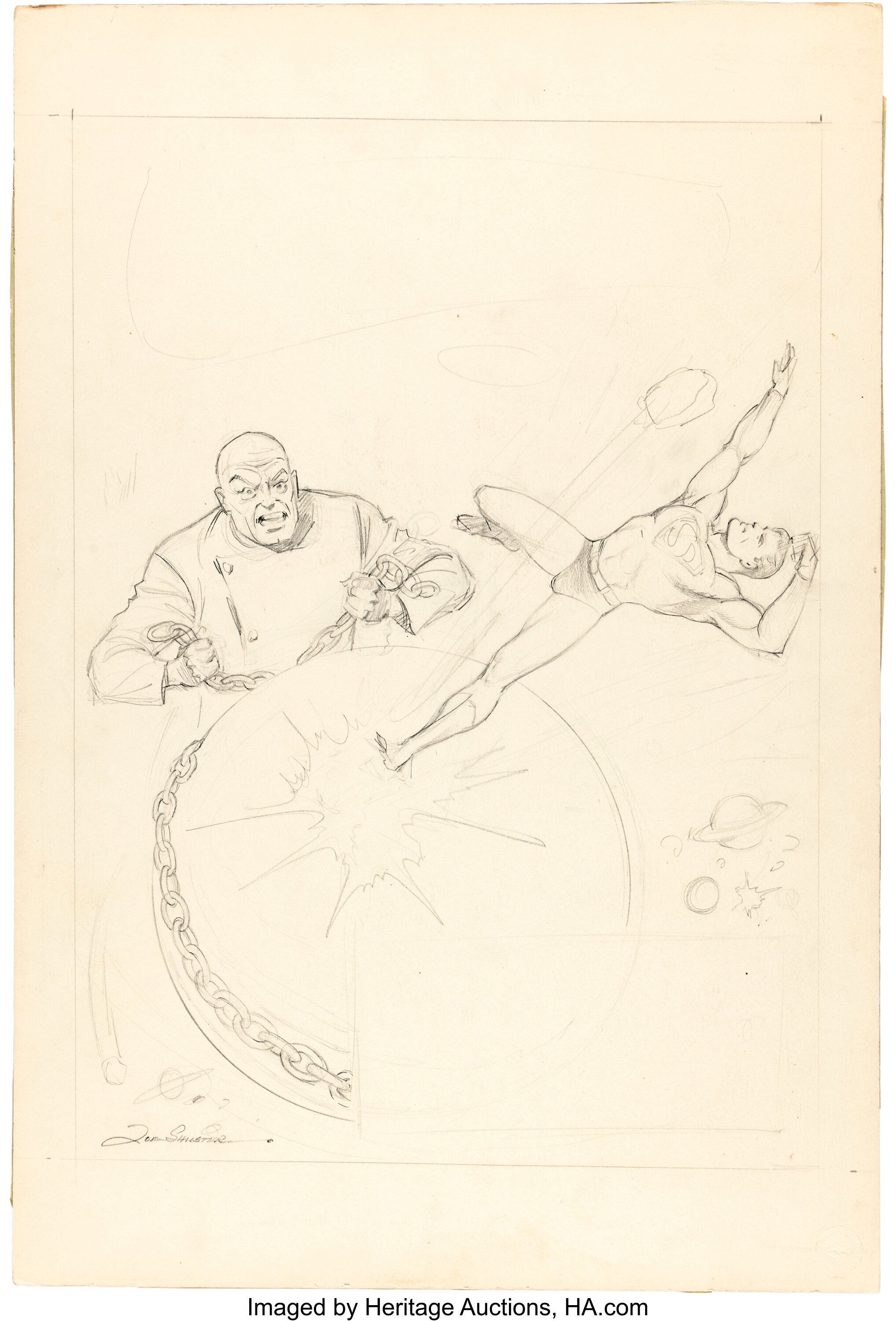


You never know what’s going to turn up, even so many decades after the fact. Over at the Heritage Auction site, they have a variety of offerings on display for an upcoming auction dedicated to original comic book artwork.
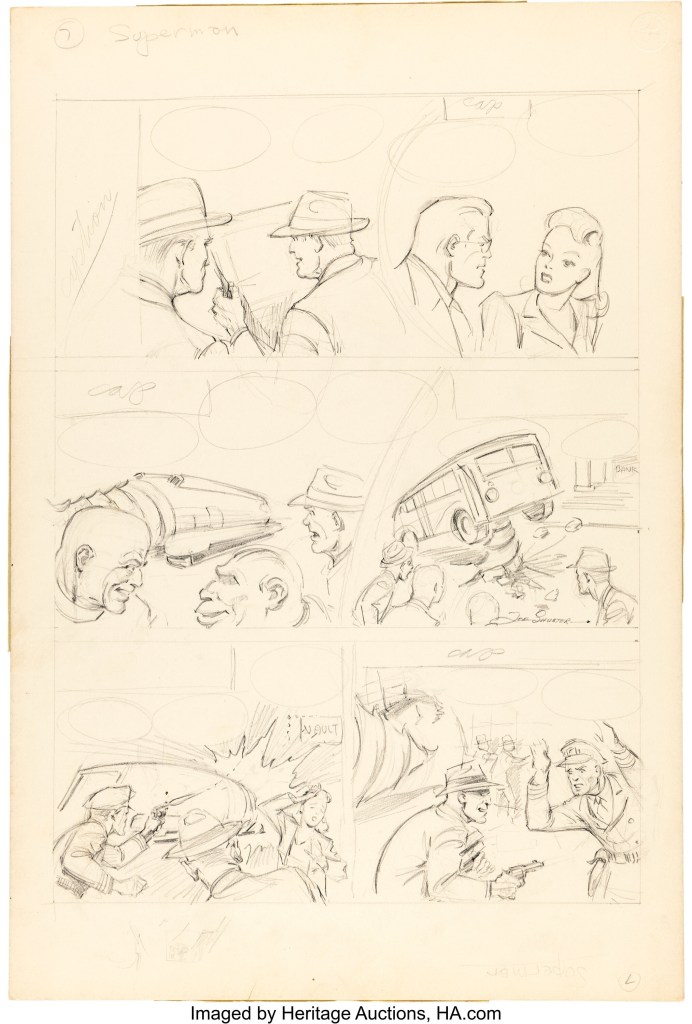
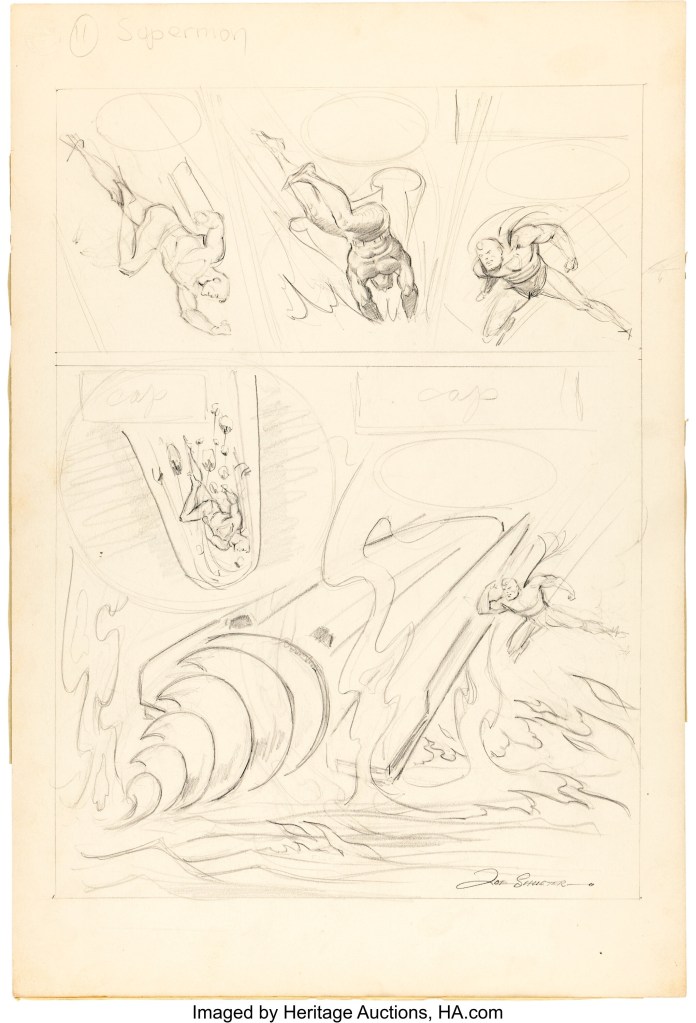
And among the many treasures that can be seen there are the unused pencils for a Superman story drawn by the character’s co-creator, Joe Shuster.
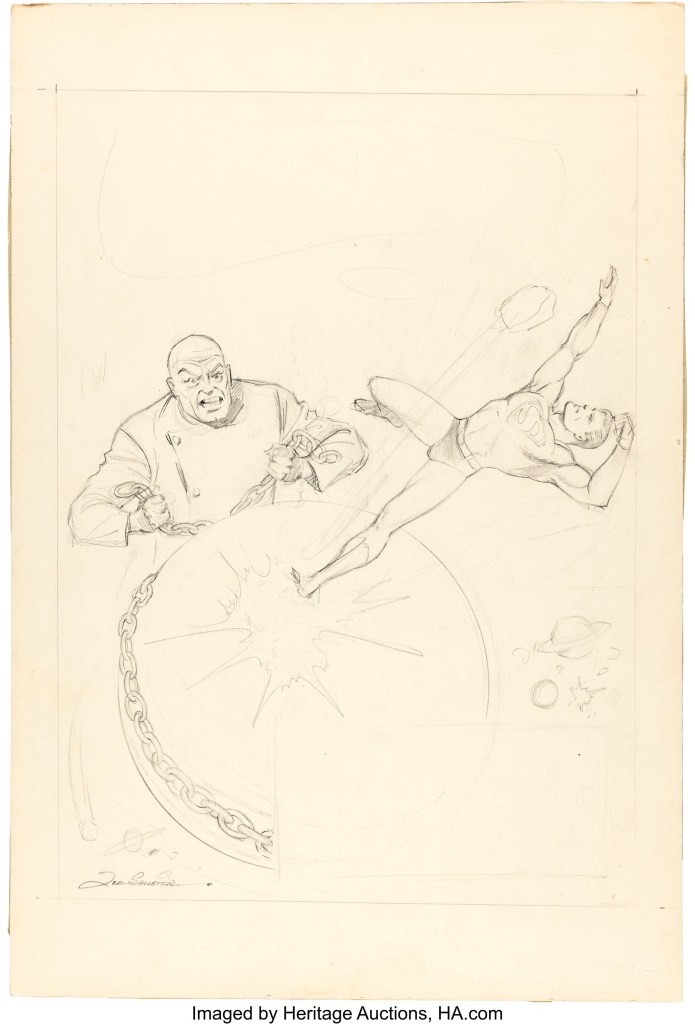

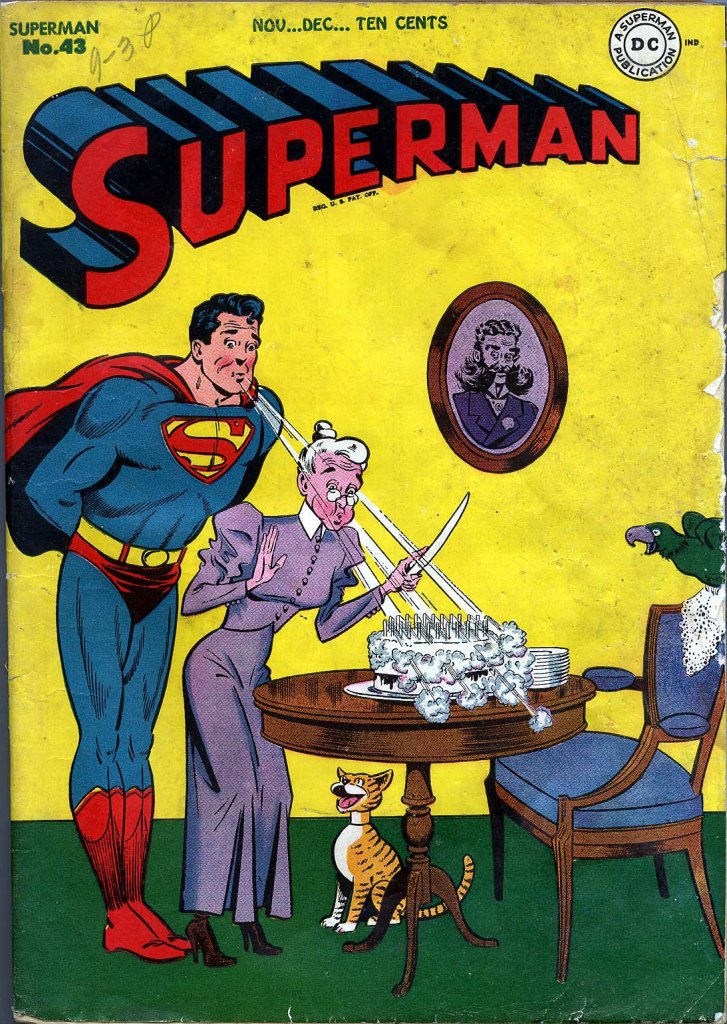
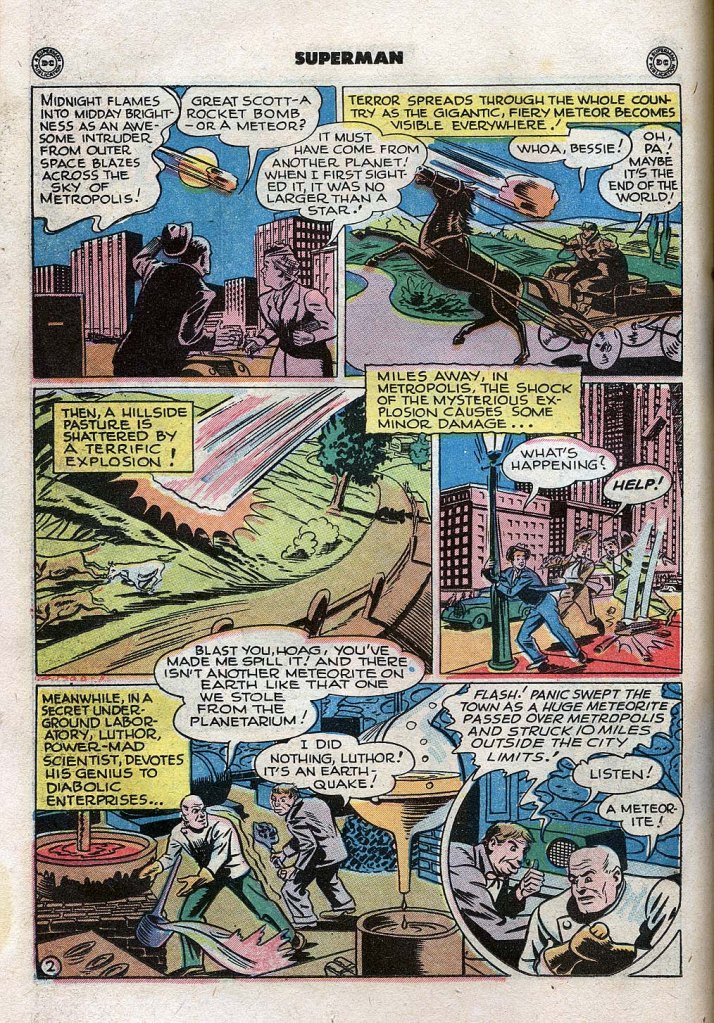
The finished story saw print in 1946 in the pages of SUPERMAN #43. The script had been written by Don Cameron, and the finished artwork that made it into print was illustrated by John Sikela, one of the regular artists on the feature, possibly inked here by George Roussos. Now, why Sikela was called upon to completely re-pencil an entire finished story is totally unknown at this point. But DC editors Whit Ellsworth and Mort Weisinger together with bosses Harry Donenfeld and Jack Liebowitz had been complaining steadily about the quality of Shuster’s artwork for many years; possibly as a hedge to keep him and his partner writer Jerry Siegel from demanding more money. Whatever the reason, it means that we’ve now got a chance to see exactly what Shuster was capable of by 1946 when this story was drawn.
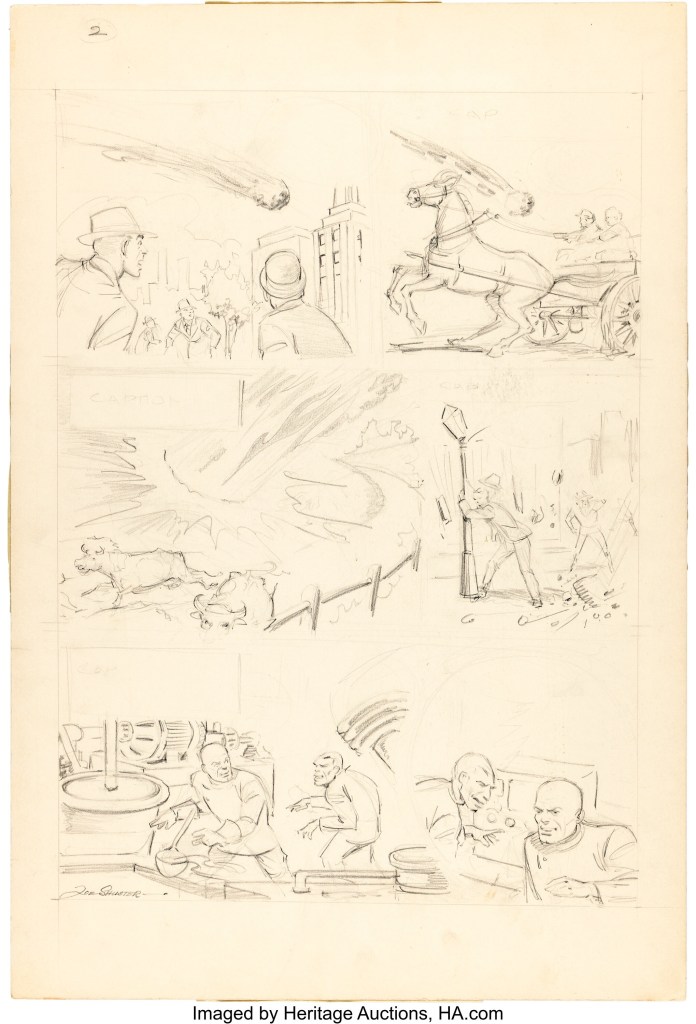
As has been reported many places over the years, Joe Shuster started having problems with his eyesight almost immediately after the sale of Superman, and his drawing ability steadily diminished over time. Between this malady and the tremendous amount of Superman material that was being called for, Shuster wound up establishing an art studio of assistants to help him with production on the strip. At certain points, it wasn’t uncommon for Shuster to only draw the heads of Superman himself in a given story and hand over the rest of the work to a series of assistants in the manner of a syndicated comic strip artist. There wasn’t anything nefarious about this arrangement, most of the big cartoonists of the time did the same to one extent or another.
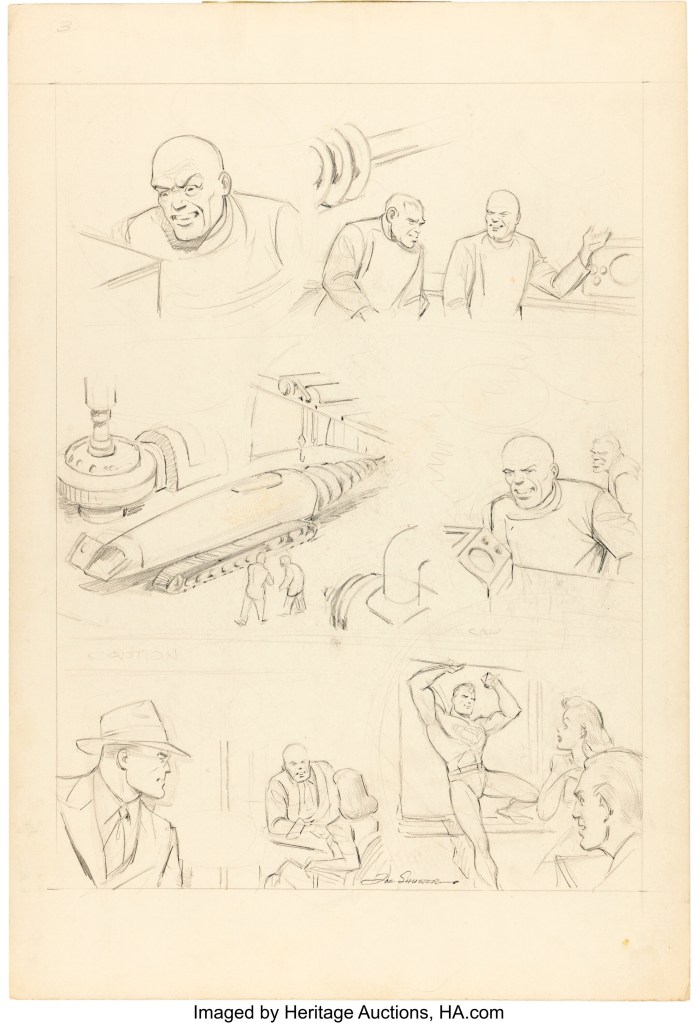

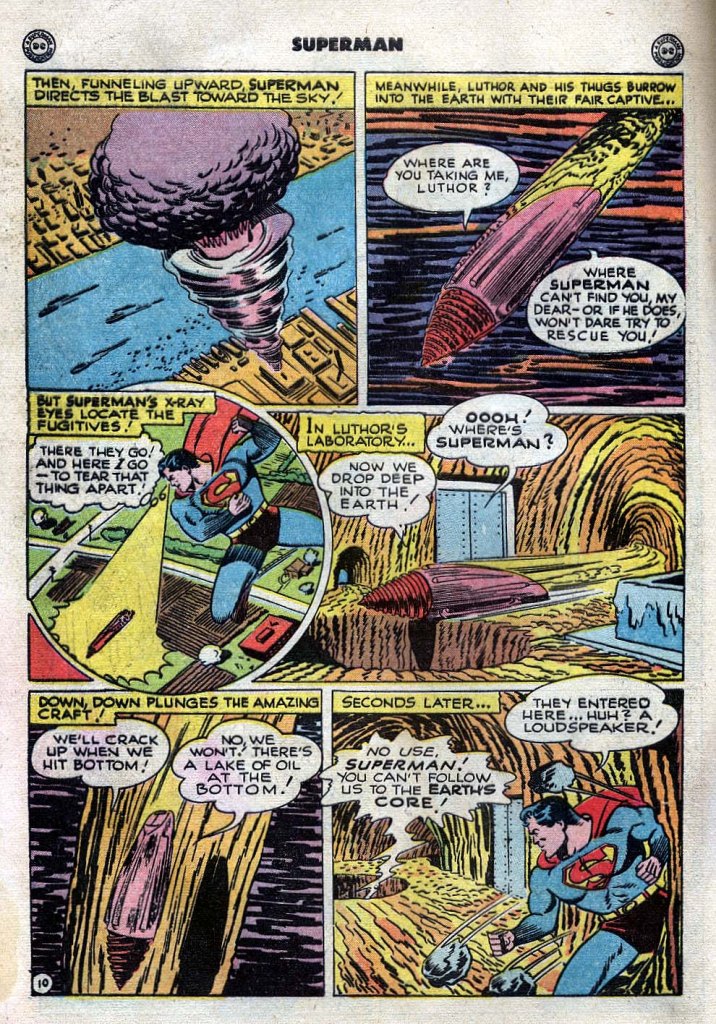
Looking at these penciled pages next to the completed and published job, there doesn’t seem to be a whole lot of problem with them. The version that Sikela delivered uses many of the same basic shots, indicating that the script was precise in what it was asking for. The drawing on Shuster’s pages is also perfectly fine, if perhaps stinting on some background details. Possibly, the idea was for an assistant to fill in those details during the inking process.
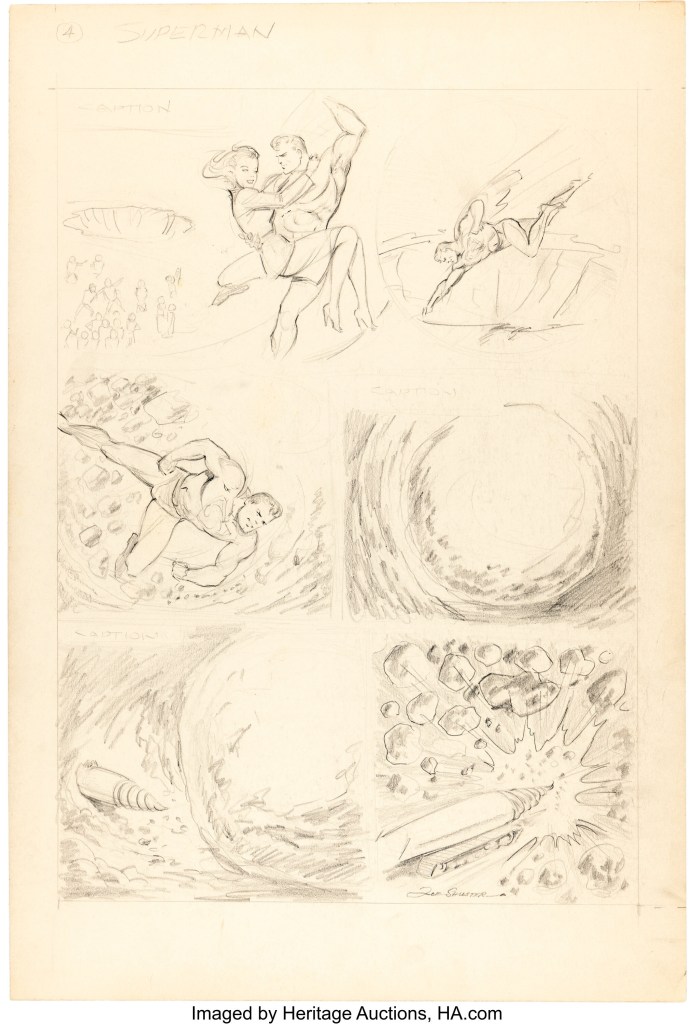

And it has to be said that Shuster’s Superman still has some good dynamism to him, even if there’s a tendency (in both artists’ work) for him to hit stock poses. I would argue that Shuster’s version of Panel 2 here is a lot more kinetic than the printed version, for example.
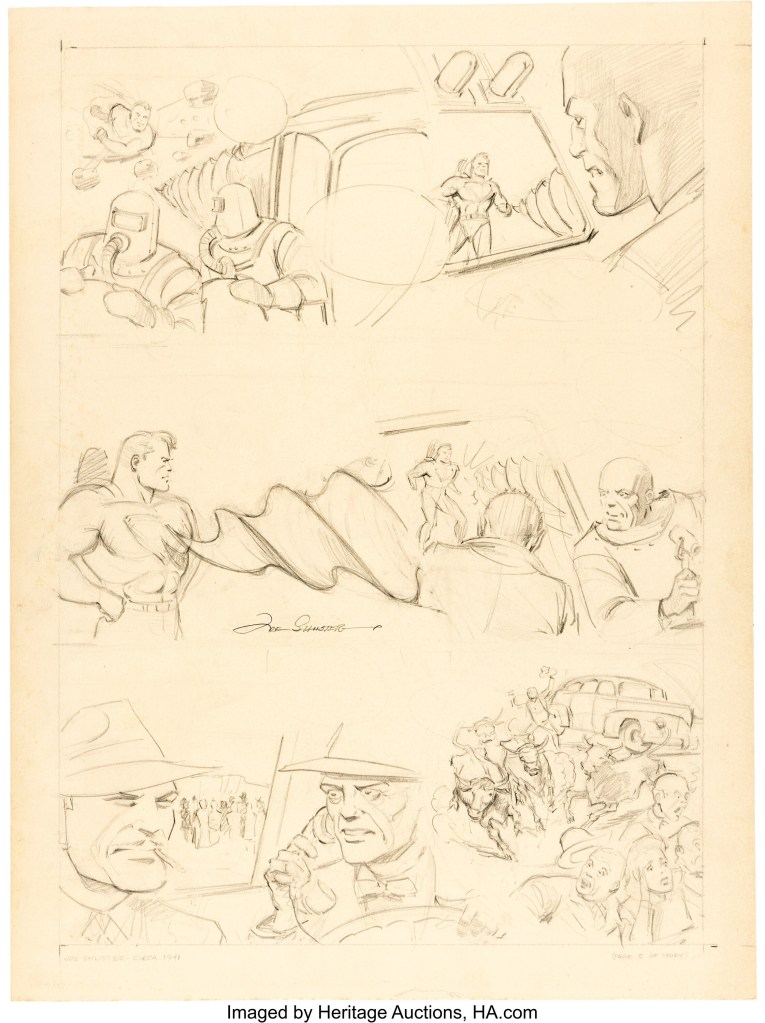
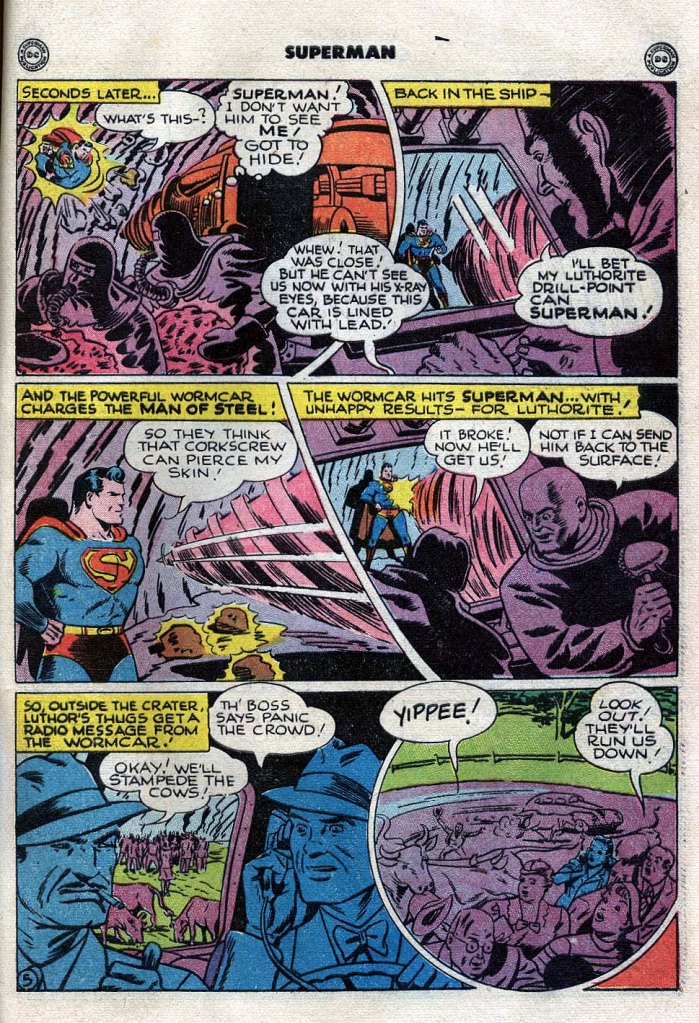
And at least to my eye, I find Shuster’s version of Luthor’s wormcar to be a lot more delightful. While Panel 3 here in Shuster’s version doesn’t have as much motion as the printed take, it does have a lot of charm in the manner in which that drill-nose is depicted. Looking at how close the two depictions are, I wonder if Sikela hadn’t been given Shuster’s story to use as a guide in redoing the pages, either by Joe or by the National Comics editors.
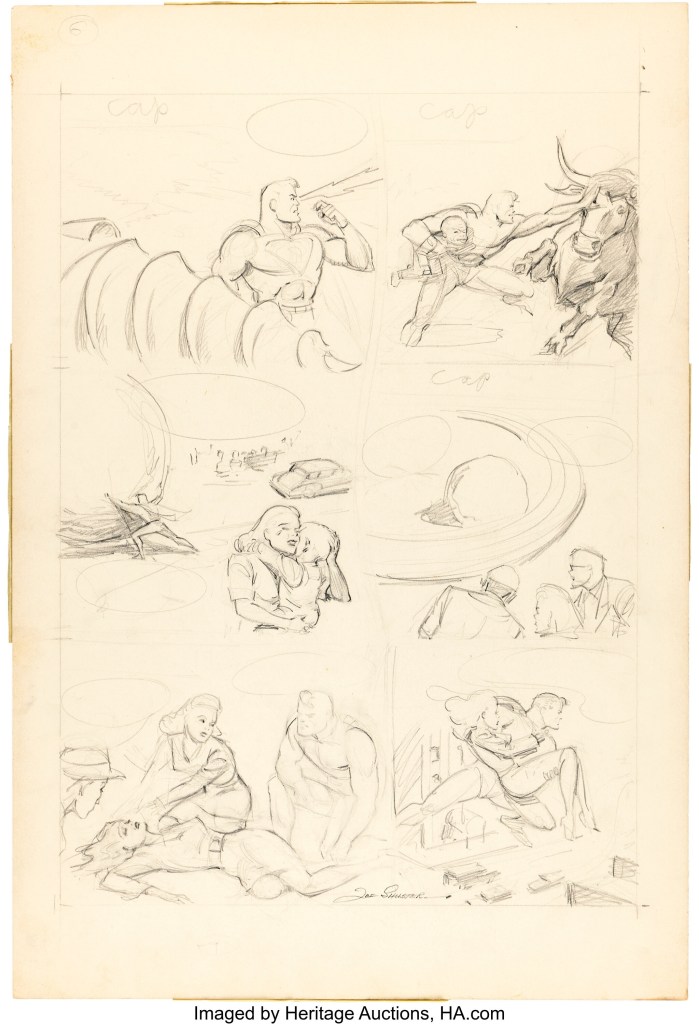
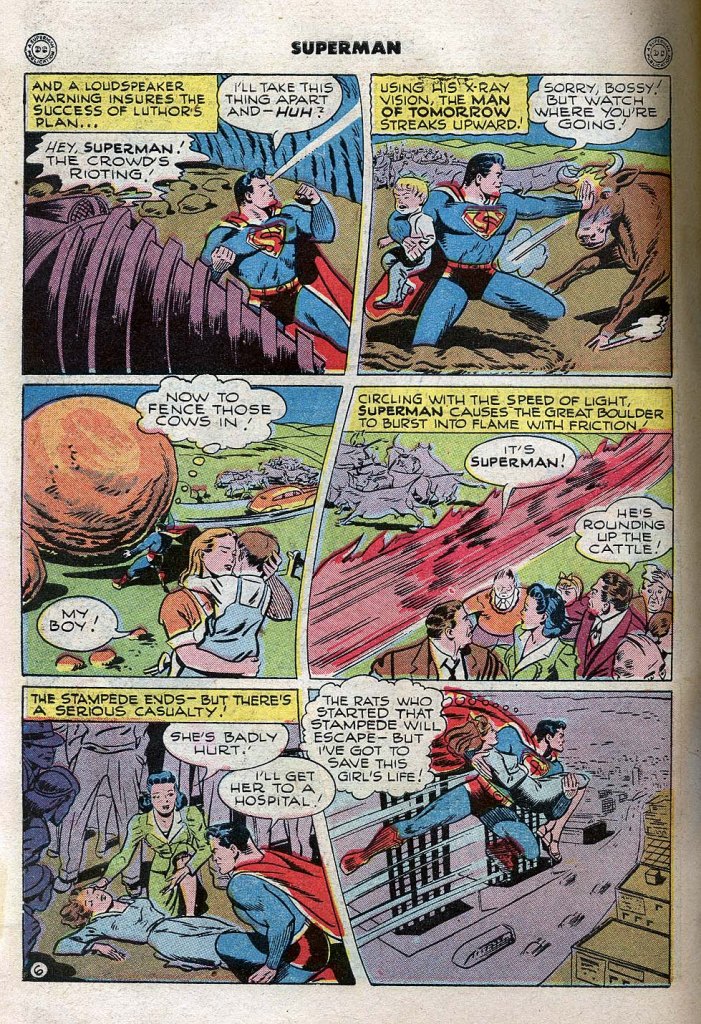
This page is a little bit rough on Shuster’s part, but it’s got a bit more liveliness to it. Most of his panels have more pop to them, in particular Panel 2

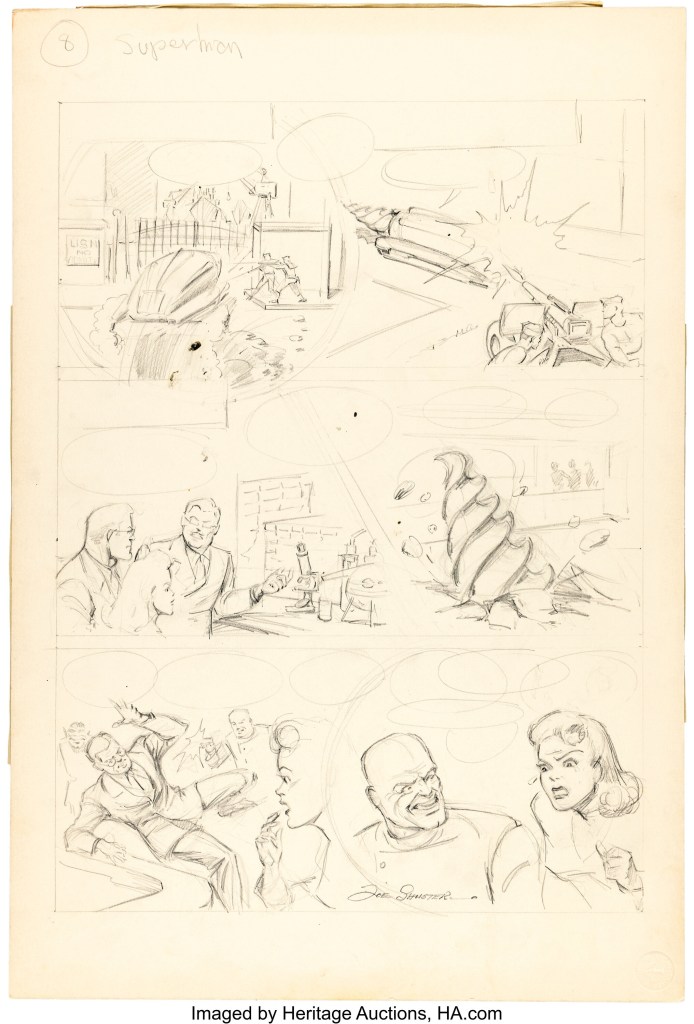

Luthor had a distinctive look by 1946, but it isn’t the look that we’d later come to associate with the criminal scientist. He somehow often comes across as a tad undernourished in these pages, and even a bit generic. I will say that I think Shuster’s version of Lois Lane is a lot more specific and animated as well. She feels like more alive than in Sikela’s version.
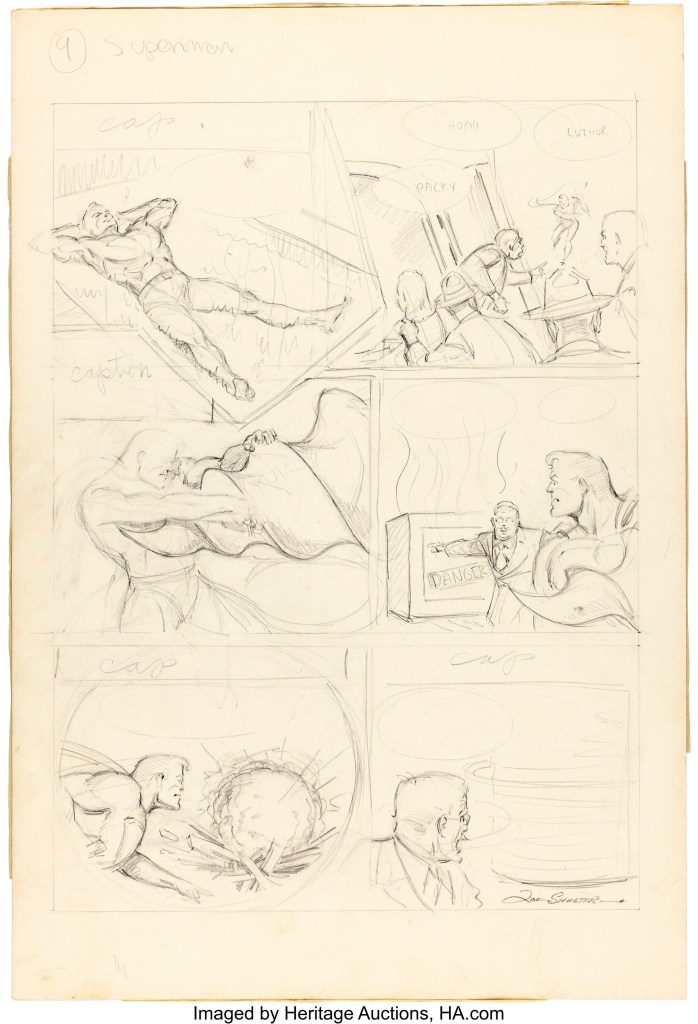
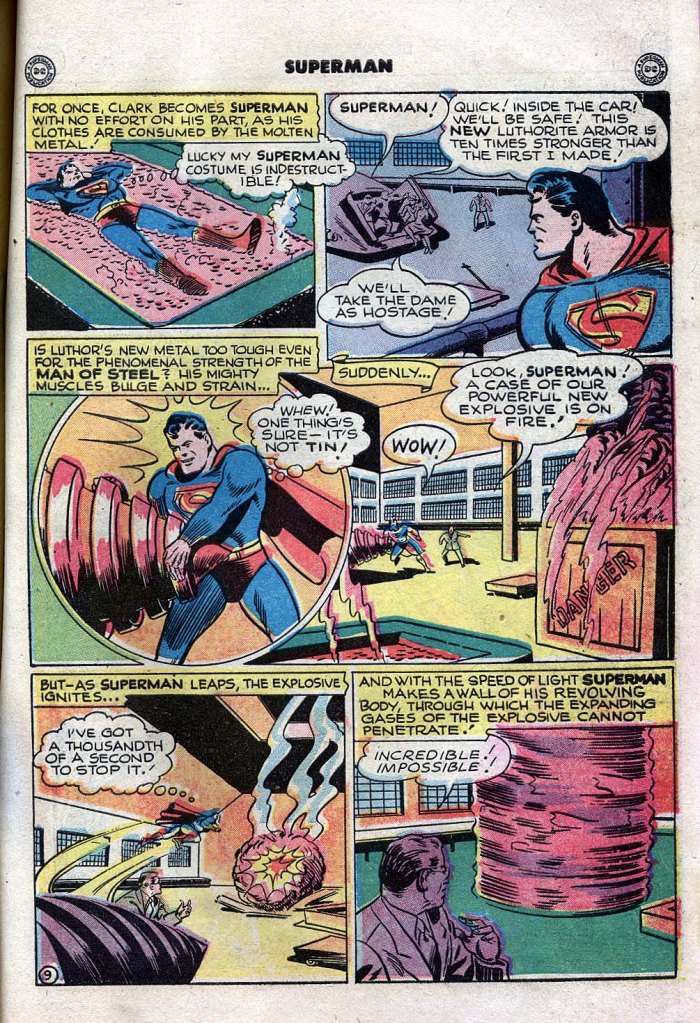
And just look at how much more relaxed and naturalistic Shuster’s Superman looks in Panel 1 here, and how much more energetic he is in Panel 3.
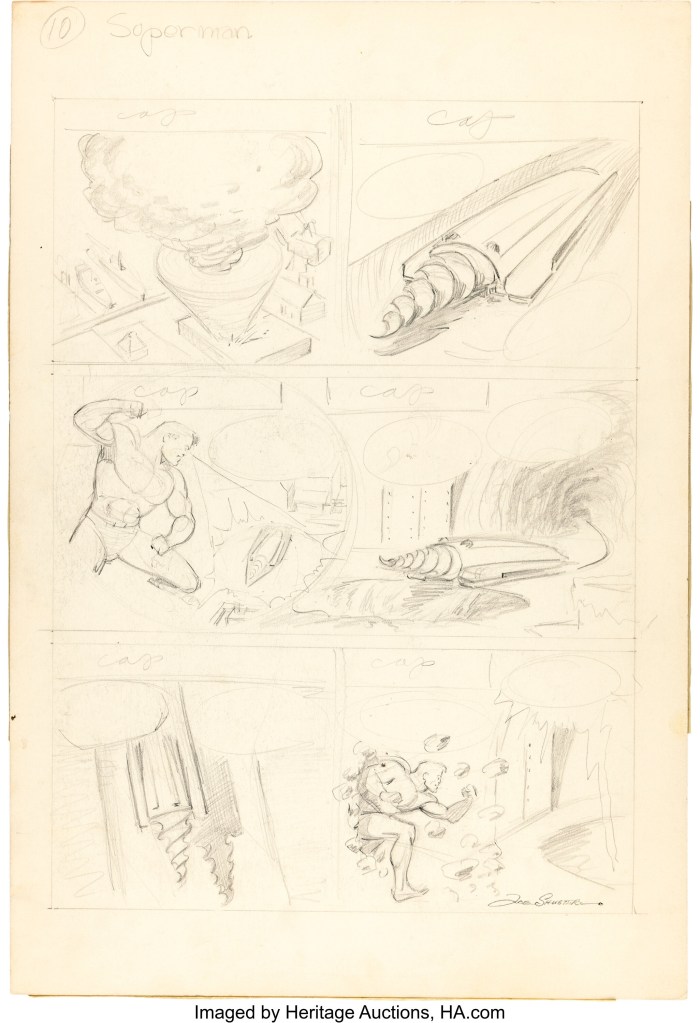
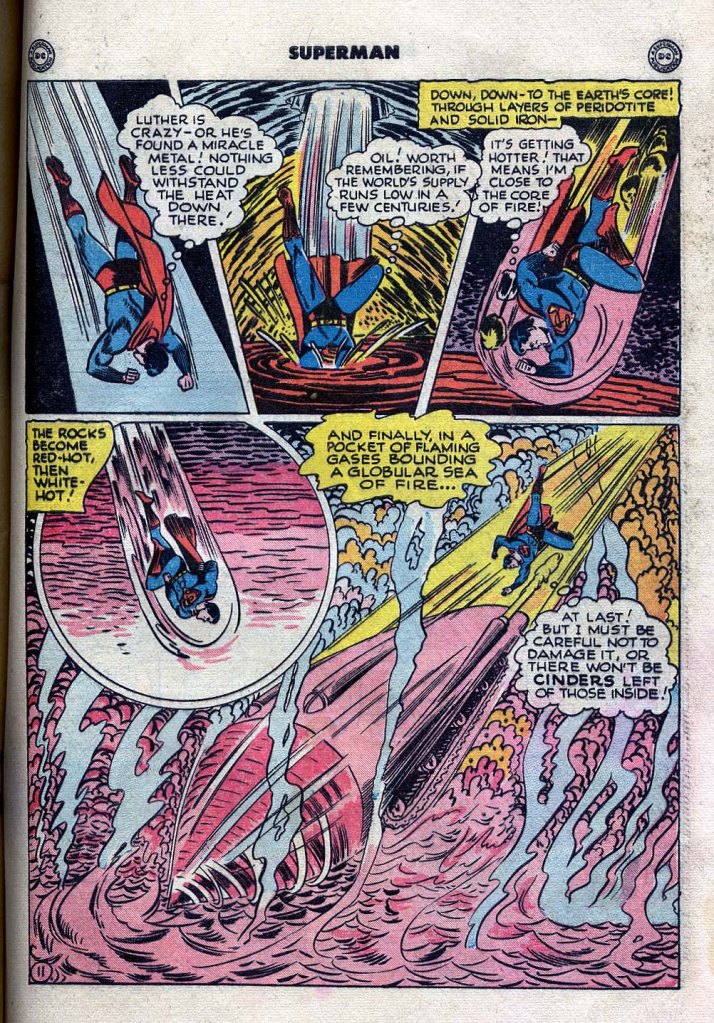
And what a great Superman figure in panel 1 here by Shuster! Panel 2 is a bit awkward, but so is Sikela’s version, so I wonder how much of that might come down to the art direction for this image.
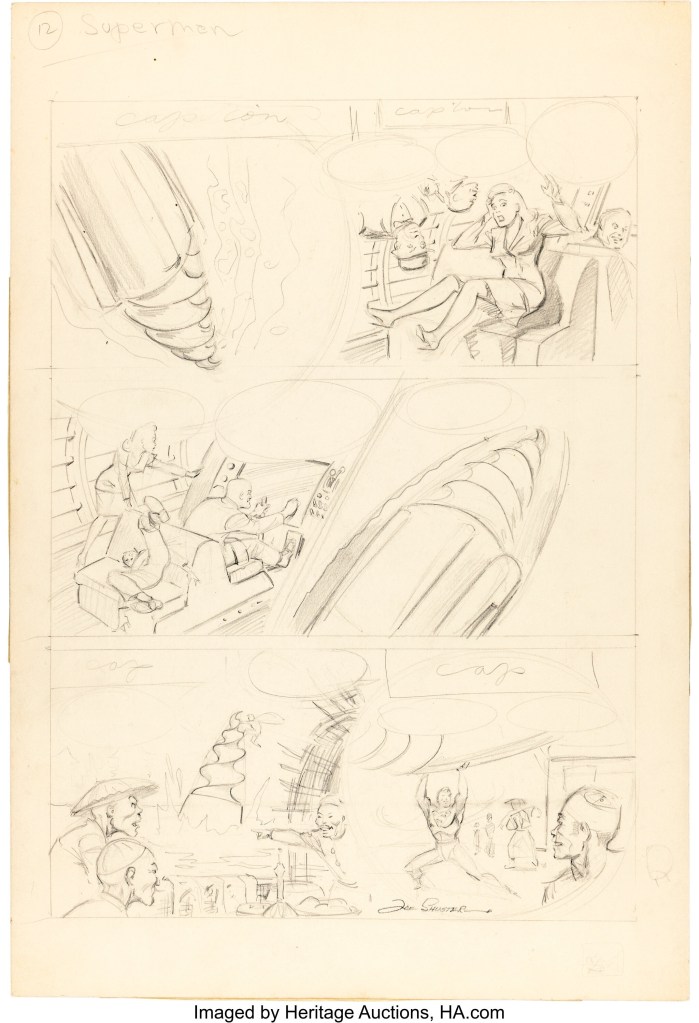
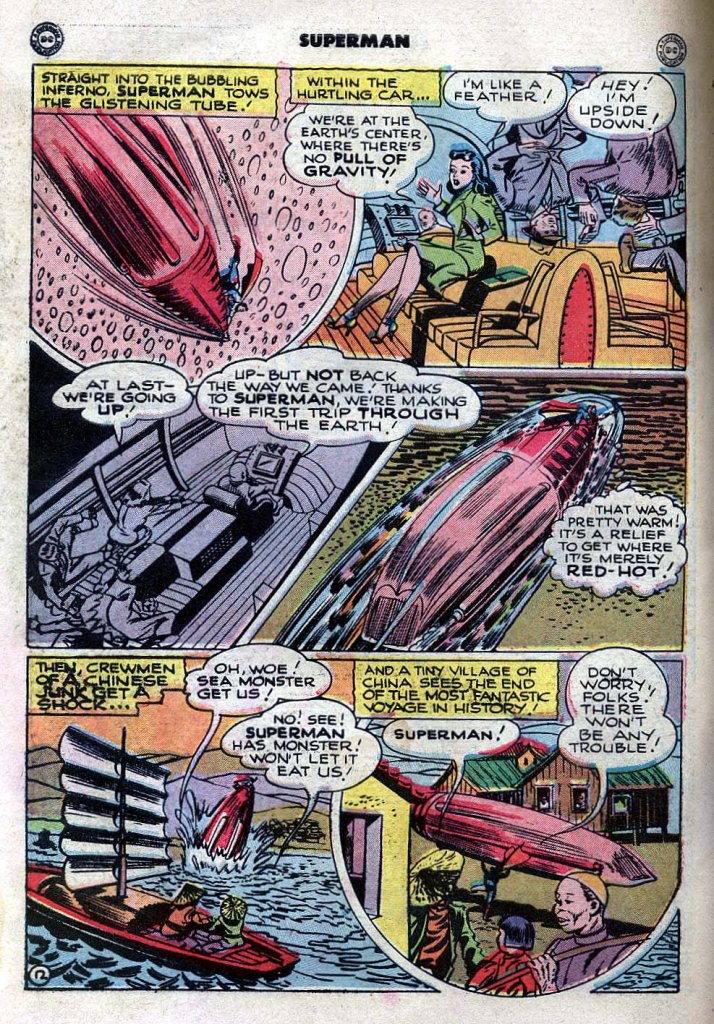
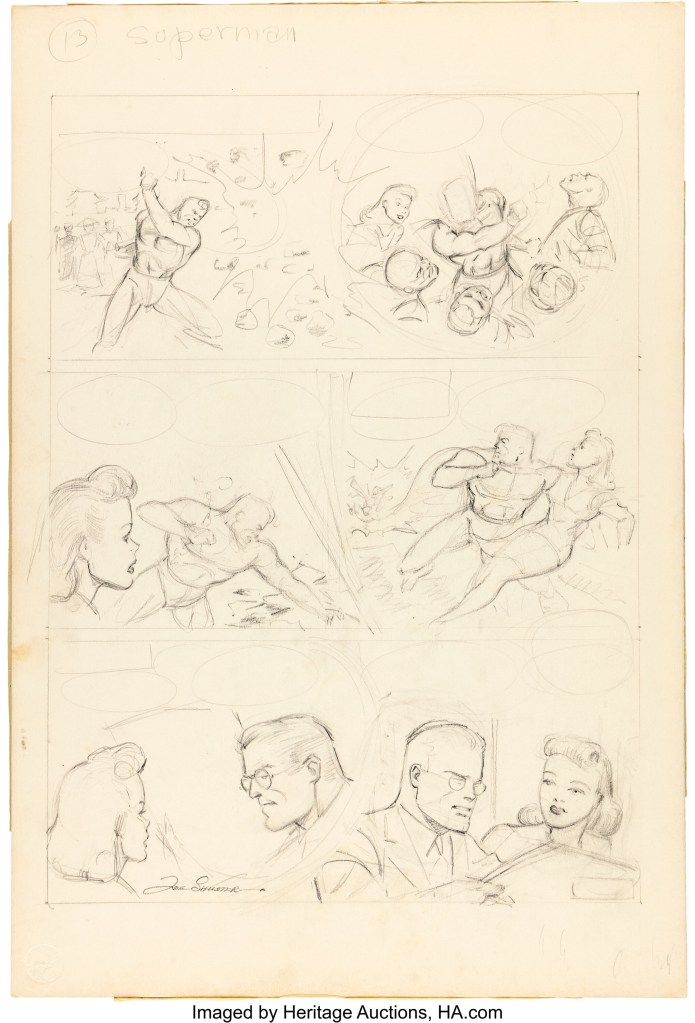
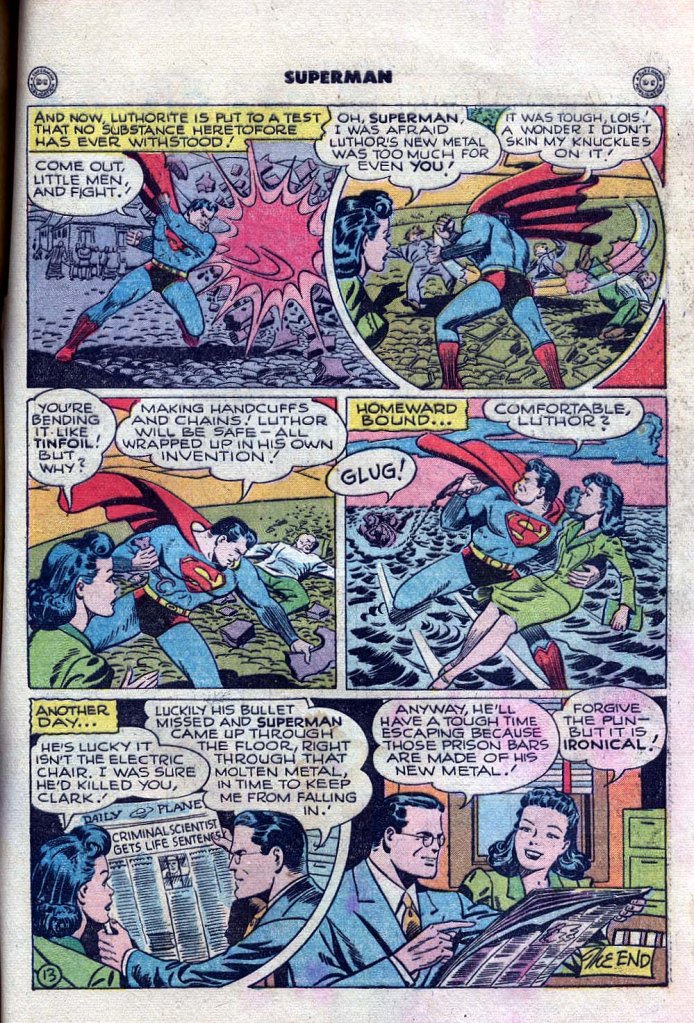
If nothing else, these unused pencils prove pretty definitively that Shuster’s work hadn’t lost a step. I can’t speak to how long these pages may have taken him, nor how hard he may have had to work to produce them. But he was clearly still able to tell a story with some zip and charm.
 The Tom Brevoort Experience
Two Joe Shuster references in one day! First came with “Attack of the 50-Year Old Comic Books” (All-Star Comics #62 (Sept.-Oct., 1976) | Attack of the 50 Year Old Comic Books) and now an entire review of his superb art. While I always appreciated Shuster’s work, I shamefully confess to having minimal knowledge of his experiences. However, thanks to William Bernhardt’s outstanding “The Superman Wars,” I have a far greater appreciation for the challenges both he and Jerry Siegel experienced in their lives. I also encourage anyone with even the vaguest of interest in their remarkable story to check it out.
LikeLiked by 1 person
This looks very much like Sikela was working from Shuster’s pencils — not directly finishing them, but drawing his version of what Shuster drew. A lot of the changes look like adjustments to keep the action clear while leaving room for the lettering.
LikeLiked by 2 people
Decades later a different Superman villain ( The third Mole ) [ Action Comics#535 ( September 1982 — first appearance in Action Comics#525 ) ] would used his Digger ( mole machine ) to rob buildings ( Federal Reserve in that issue ).
LikeLiked by 1 person
Shuster & Sikela’s Wormcar drill-nose looks the part, unlike Timely Comics’ Rockman’s Digger Car’s nose which if it wasn’t for the fact that Rockman’s people have super-hearing looks like it might operate like Virgil ( massive train-like drill that uses lasers and high-frequency sound to bore through the Earth’s layers ) in the 2003 film The Core. Perhaps Timely Comics Digger Car creates vibrations like the mutant Avalanche ( one of the things he could do was cause small inorganic objects to be shattered or crumble into dust — maybe that is how Timely Comics Digger Car tunnels ).
LikeLike
Boy, if I didn’t have a zillion other things on my plate at the moment, I’d love to try inking/finishing some of those Shuster pages, just as an exercise. They are terrific!
LikeLiked by 1 person
Where can we see your art work? I’m interested is seeing what you’ve done. Drawing, too?
LikeLike
Thanks for asking, Tim. 🙂 Hopefully, our host won’t object to a quick plug.
My webcomic, “Lady Spectra & Sparky” can be seen here:
https://ladyspectra.thecomicseries.com/
LikeLiked by 1 person
Several examples of Shuster choosing more dynamic positions for his characters throughout these pages. Lois tilting her head. Superman’s arm raised higher when “wrestling” with the spiral drill. Joe still “had it”, giving us a version by the 1st ever and 1st definitive Superman artist.
Two George Roussos references in one day; here and his colors on the Dr. Strange story drawn by Gene Colan and inked by Dan Green.
LikeLike
George Roussos’s inks here, & his colors on the Dr. Strange story posted the same day.
LikeLike
To me, Shuster’s pages look far better!! I don’t want to speculate on why someone thought they had to be re-done, whether it was petty office politics or something else, but they are wonderfully detailed and the layouts are dynamic. With the right inker, those pages rival comic art of today, in my opinion.
LikeLike