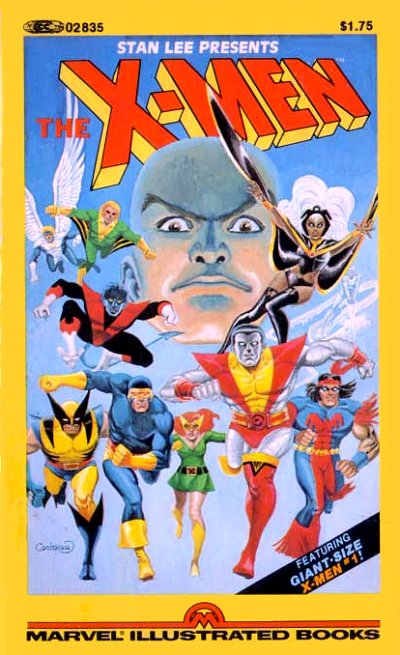


By 1982, Marvel had been making inroads into establishing itself as a children’s book publisher as much as a periodical comic book publisher. This was apparently Marvel president Jim Galton’s plan for where the future of the organization should lie. He had no idea how the emerging Direct Sales marketplace was going to explode, nor how improved editorial content would result in a strong upturn in Marvel’s comic book sales on the newsstand. So he spent a bunch of effort in this area, creating an assortment of coloring and activity books featuring Marvel characters as well as assorted collections in both the Trade Paperback and Paperback-sized formats. I wasn’t really a big fan of the latter, as unlike the earlier Paperbacks released through Tempo which maintained the structure of the original pages, these new books chopped the panels apart so as to make them larger and easier to read on the smaller pages. I’d always hated that approach, and so for the most part I avoided this line. But the one exception I made was this X-MEN MARVEL ILLUSTRATED Paperback. And the reason was that it reprinted GIANT-SIZE X-MEN #1, the first appearance of the All-New, All-Different X-Men.

By 1982, GIANT-SIZE X-MEN #1 was already commanding some pretty extraordinary prices for the time, as much as $25.00 on the back issue market. Obviously, that doesn’t sound like all that much in retrospect, but at the time it was an absolute fortune for me to contemplate spending on any one comic book. At the same time, I was hungry to read the first All-New X-Men story as I had become a huge fan of the series. As had pretty much everybody else, especially in the wake of the Dark Phoenix Saga which had melted minds and broken hearts. X-MEN was already the book that every fan paid attention to, a position it would hold throughout the 1980s and beyond.
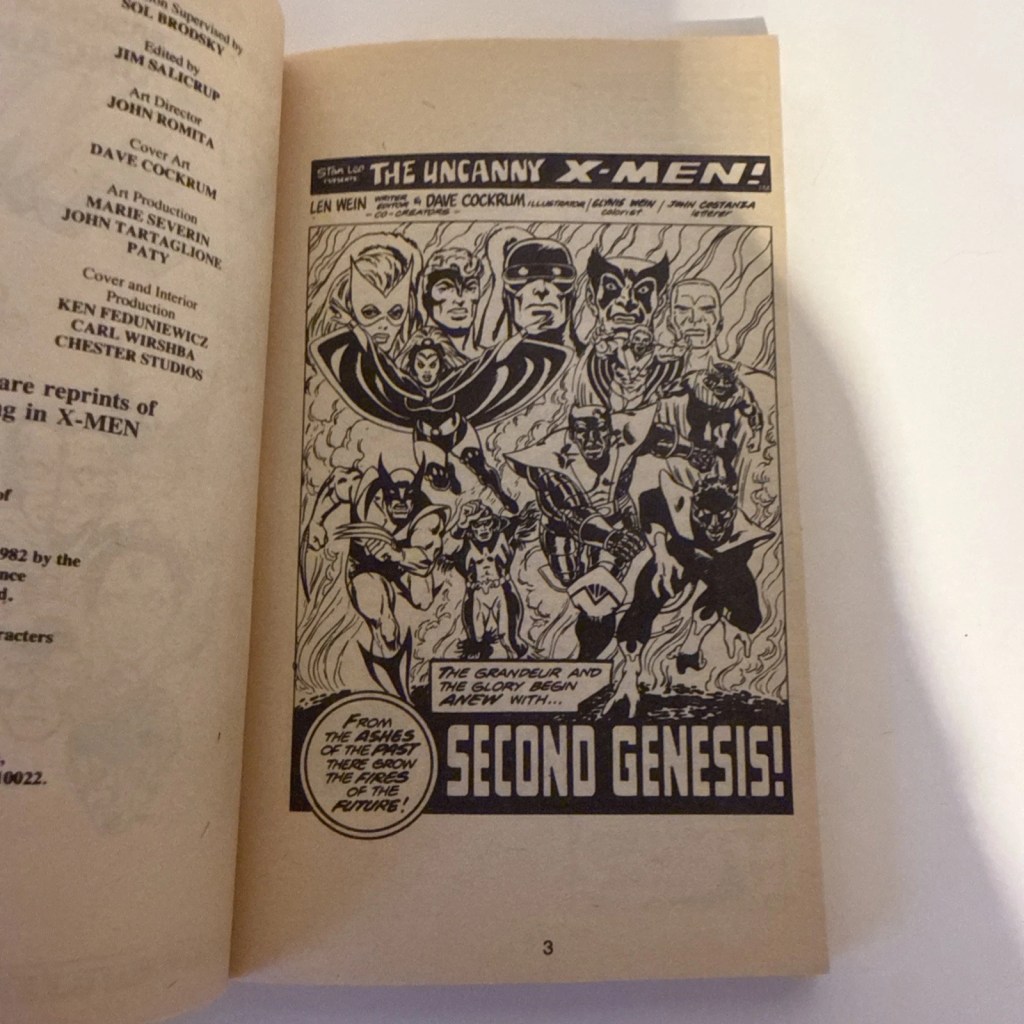
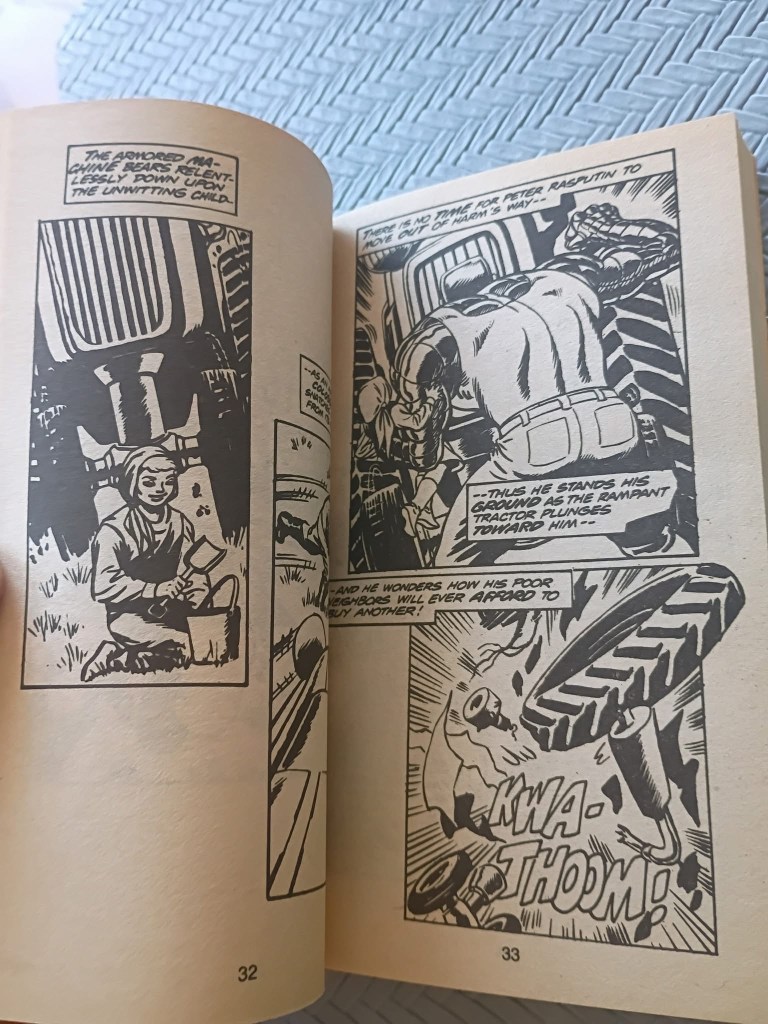
Behind a new painted cover by original artist Dave Cockrum, that first X-Men revival story was edited down to put only a panel or two on a page. By itself, it filled about 2/3 of the book. And it really wasn’t the best way to experience this story for the first time. (About 18 months or so later, Marvel would release X-MEN SPECIAL EDITION #1 in the Direct Sales market which would reprint this GIANT-SIZE X-MEN #1 story in its original format, so I and others could consume it in a much more aesthetically-pleasing format.) But that was still to come at the point where I dropped my buck-twenty-five for this slim volume.
Especially considering its somewhat convoluted birthing process, the story is pretty good, introducing the world to Storm, Colossus, Nightcrawler and Thunderbird while bringing back Wolverine, Banshee and Sunfire, all of whom had appeared in other stories before this. According to wrier Len Wein in his interview in the first X-MEN CHRONICLES volume, the original idea for this story was that the entire mission was going to be revealed at the end to be a test, a kind of entrance exam. And the original notion was that the new characters would all pass and the older guys would wash out. But that all seemed very contrived, so not only did Wein and Cockrum eventually discard the test conceit, but they also opted to keep most of the players they’d drafted into the tale in order to fail as members of the ongoing crew. Only Sunfire chose to take his leave once the events of this story reached their conclusion.

Also of note: Thunderbird, the short-lived Native American X-Man, was created to fail as well. Realizing that it didn’t make much sense for only the old timers to not make the grade, Wein and Cockrum decided to include one newbie who didn’t measure up as well. And once the conceit of the test fell by the wayside, they found themselves laden with a character that they hadn’t really cooked anything much up for apart from a cool costume. Rather than investing the effort into trying to turn Thunderbird into something, the team instead chose to have him perish in the group’s next mission, a shock value demise that was intended to raise the stakes for the series. It certainly did so for the relatively scant number of readers who were following the book at that point.
As things turned out, Wein followed Thunderbird out the door, handing the reins of the new title to newcomer Chris Claremont, who had been buzzing about and offering suggestions all the while. Chris wound up dialoguing the two-parter in which Thunderbird met his end, then began plotting the series from that point forward. Together with Cockrum, who was one of the most exciting character designers of the period, the two created a series that flew underneath the radar while pushing the drama and the emotion for their new cast of characters. It was easily the most progressive mainstream Marvel comic of its era, and it only got better and better as time went on.
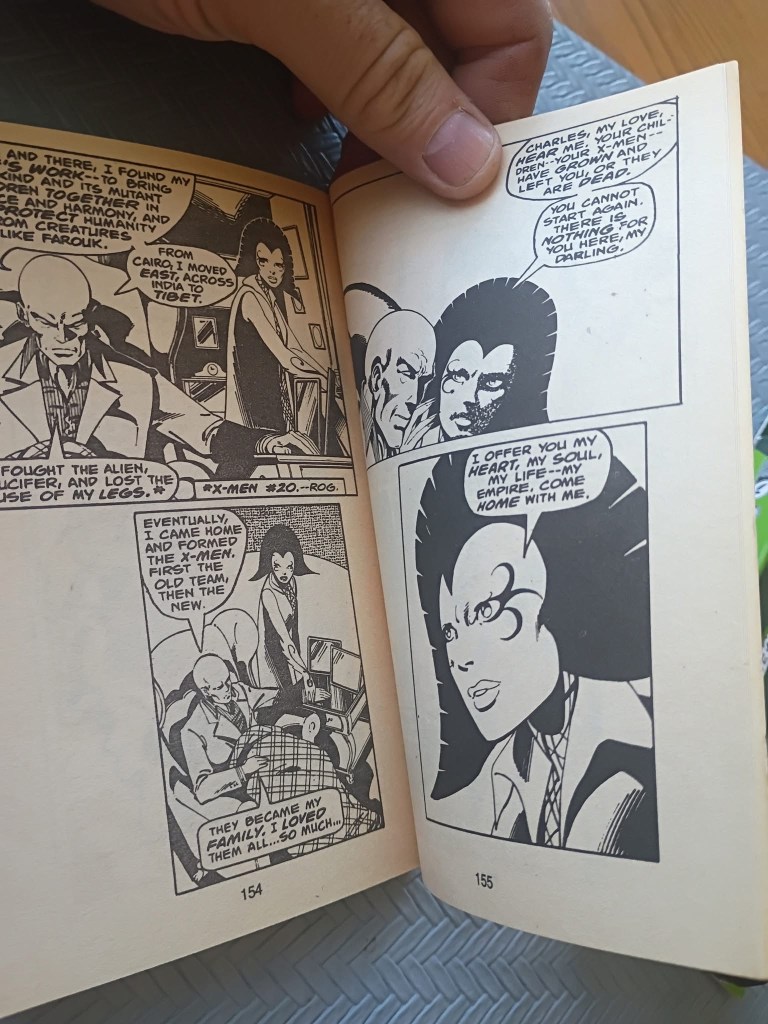
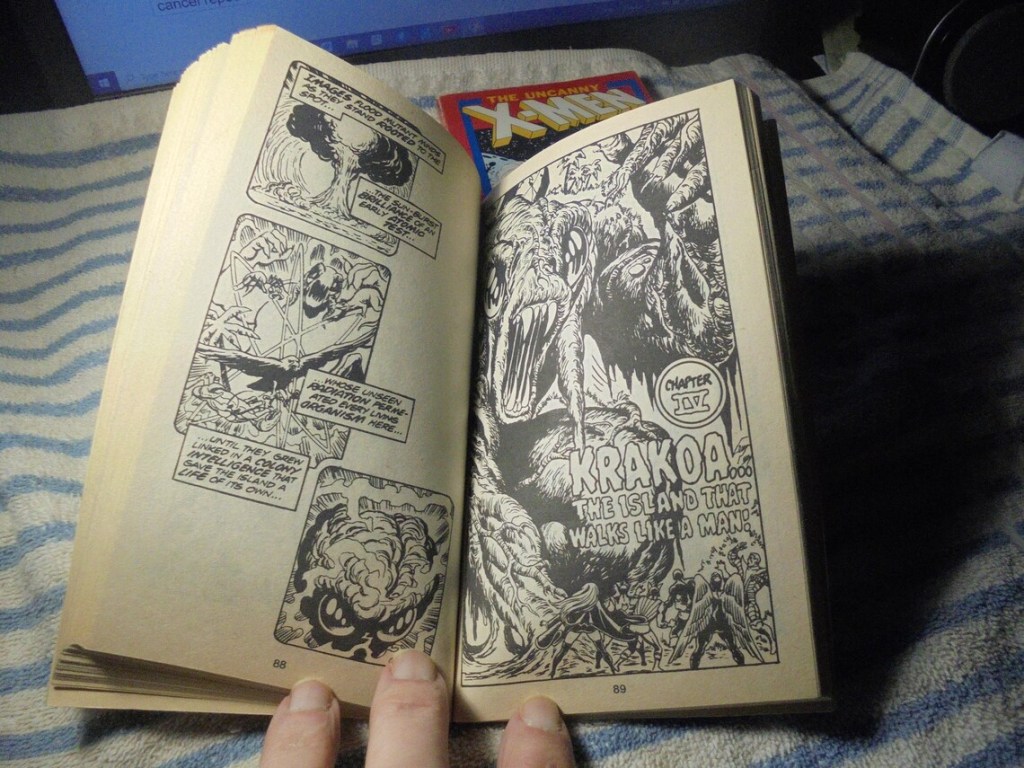
The back third of this book featured a reprint of UNCANNY X-MEN #117 by Claremont and Cockrum’s successor as artist John Byrne. It was a good little one-off focusing on an event from earlier in Professor X’s lifetime, his first encounter with a malevolent mutant out in the world. But as I’d bought and read UNCANNY X-MEN #117 when it first saw print, it was little more than empty calories to me (though the artwork by Byrne and expert inker Terry Austin did look great in black and white, despite the hatchet job.)

 The Tom Brevoort Experience
I wonder how well this sold? Certainly filled the gap Tom and probably others had from not reading this story before when originally published.
I liked that they placed fewer panels on a page, rather than making the images and lettering too small.
Black & while also gives a daily comic strip feel to the pages. .
LikeLiked by 1 person
I never saw this paperback before this review, but in 1982, I was quick to snag up a copy of that Special Edition that reprinted GSX1 – even though I already had that landmark issue in my collection. Knowing it’s value, I was nervous about even looking at it. As a result, the Special Edition was much easier on my nerves. What stood out for me in Tom’s review was how much this series had evolved from that inaugural issue to #117. With a span of 24 issues and minimal changes in the cast, we had the introduction of the Shiar, two appearances by a far more appealing and formidable Magneto, Juggernaut, Mesmero, the Imperial Guard, Guardian, Firelord, the Sentinels and a certain cast member who’s powers experienced a rather significant upgrade. Add to that, going from excellent art from Dave Cockrum to outstanding art from John Byrne and Terry Austin, it’s a small wonder this series became a top seller.
Then also looking at where the series was in 1982, we were coming to end of Dave Cockrum’s second run – one that wasn’t quite as impressive to me as his first – and welcoming the absolutely stunning art of Paul Smith.
Definitely a fun look back!
LikeLike
Looking back, there were obviously ambitions for the Marvel Illustrated Book line. Marvel even went to the trouble of getting premium racking for the books in newsstand outlets. DC tried to compete by licensing their material to Tor Books to be published in a similar format. But it was apparently a big flop. I don’t believe any of the books saw a second printing, and the line only lasted about a year-and-a-half. The first one published was the DRAGONSLAYER movie adaptation, and the final one was a DAREDEVIL collection that was entirely pre-Frank Miller material.
I gather Jim Shooter hated the line, most likely because he saw it as an incursion on his turf. (The books were put together by the Special Projects division, which was run by Sol Brodsky.) I always wondered if SPECIAL EDITION X-MEN #1 was the final stake in its heart. A couple of corrections: the X-MEN book and SPECIAL EDITION #1 were published about eight months apart, not 18, and SPECIAL EDITION #1 was also distributed to newsstand accounts. SPECIAL EDITION #1 was the superior product. It was in color, the pages weren’t cut up, and the page count was filled out with a new X-Men story by Chris Claremont and Dave Cockrum–all for only an additional 25 cents in price. I have little doubt it sold much better. It would also not surprise me to find out that Shooter pointed to the two publications’ relative sales performance to make the argument that he should be in charge of all comics publications, and Brodsky should stick to the coloring books. I emphasize I don’t know if Shooter ever did this, but that was how things worked out.
Oh, one other correction. I believe copies of GIANT-SIZE X-MEN #1 were selling for about $60 on the collectors’ market in the early 1980s, not $25. Your larger point obviously still holds, though.
LikeLiked by 1 person
I don’t remember seeing these around at all, but it’s possible I just ignored them at the time. Looking them up, most of them were either stuff I’d already read, or wouldn’t have been interested in (movie adaptations). I probably would’ve grabbed that Wally Wood Daredevil volume if I’d seen it, though.
LikeLiked by 1 person
The premium racking may have been in select markets. I divided my time back then between the Detroit metro area and Sarasota, Florida. I don’t remember anything in Detroit metro. But it was certainly going on in Sarasota.
LikeLike
Hi Tom, (or indeed anyone with an opinion)
What are your feelings on B/W reprints of material originally in colour? I didn’t feel it truly represented Dave Cockrum’s eork here, whereas Byrne/Austin look even better.
I feel very and surprisingly enthused about the Essential reprints of BWS on Conan and Buscema on Wolverine. While again, the lack of colour stripped the incredible work by Ditko on Dr Strange of some of its grandeur.
LikeLike