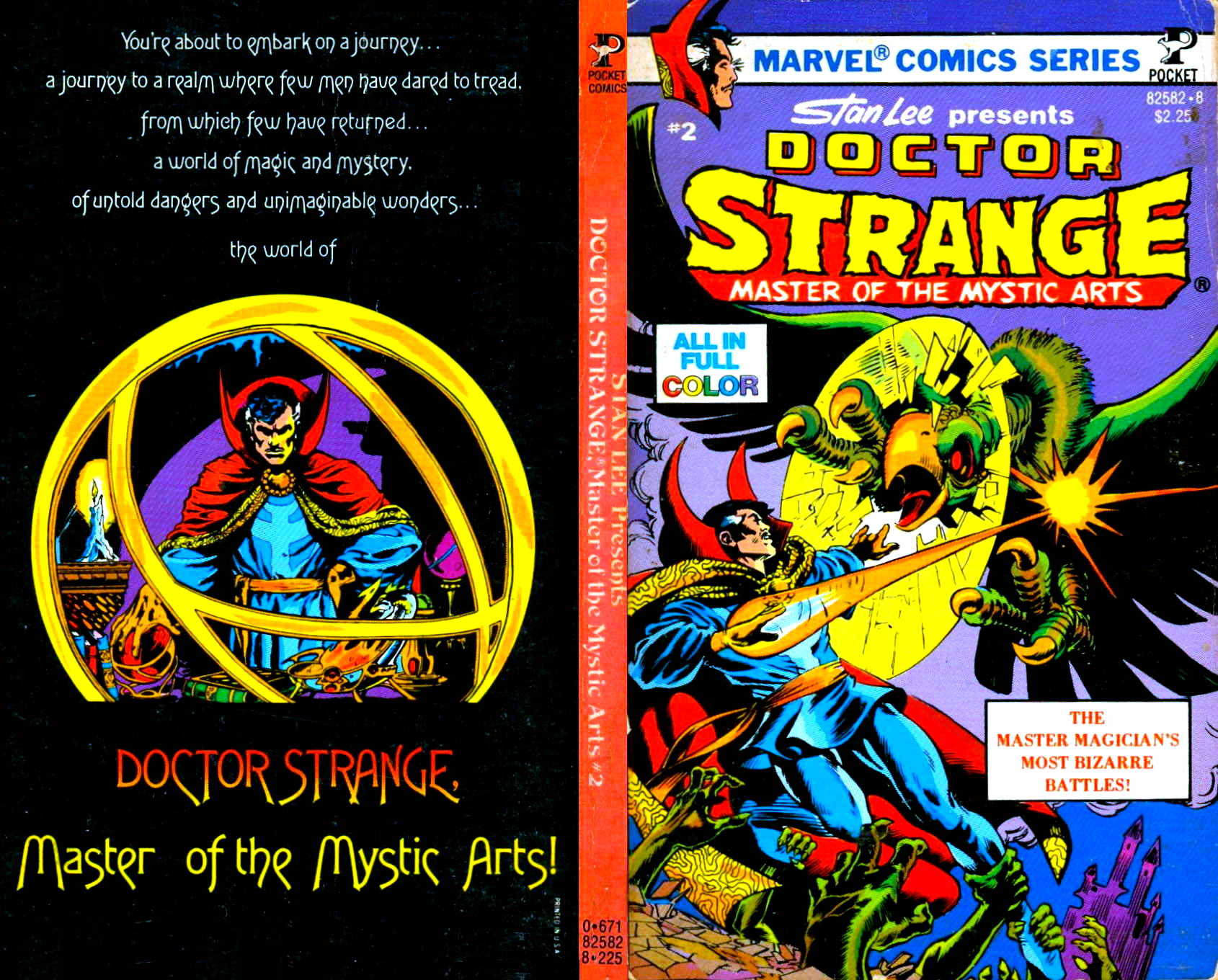


I was very surprised to come across this second volume of Doctor Strange adventures in the Pocket Books line of paperback reprints in a local bookstore. These releases had seemed to have been tied to the appearances of the Marvel characters on television, and while the initial Doctor Strange volume had been released to capitalize on the Doctor Strange TV Movie starring Peter Hooten, that film hadn’t led to any manner of follow-up, not even a sequel as in the case of the Reb Brown Captain America TV film. My only supposition is that either the first Doctor Strange paperback had sold surprisingly well, or else somebody on staff at Pocket Books was a fan either of the character or his co-creator Steve Ditko. Either way, this latest book appeared and I snapped it up.
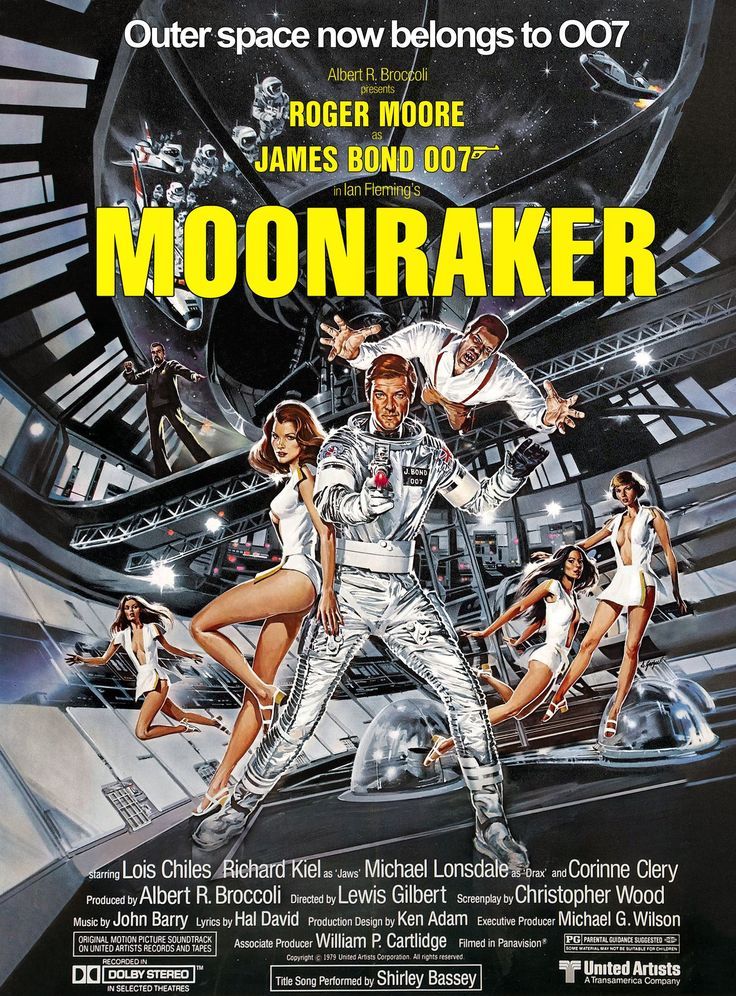
But before we get into that, a brief digression. For it was at around this same time, possibly the very same Saturday on which I picked up this volume, that I saw my first James Bond film, the underwhelming MOONRAKER. I had heard people talk about James Bond before but didn’t really get the appeal. And having sat through this film, I must confess that I still didn’t. If I remember rightly, my family saw it at a drive-in theater, one that we frequented semi-regularly. That was a thing that people did in the 1970s, and it’s both a wonderful and a terrible way to encounter a movie, depending on the specific picture in question. For MOONRAKER, after more overtly fantastical films such as STAR WARS, SUPERMAN THE MOVIE and STAR TREK: THE MOTION PICTURE, I found it to be a bit dull. It wasn’t really about space stuff at all, despite the fact that it had been marketed that way in an attempt to grab the STAR WARS-hungry audience. And I’ve never really like Roger Moore’s smarmy, somewhat grotesque hammy portrayal of Bond–possibly because of the impression this movie made on me. So swing and a miss on that score, I was once again out of step with popular culture on the appeal of 007.
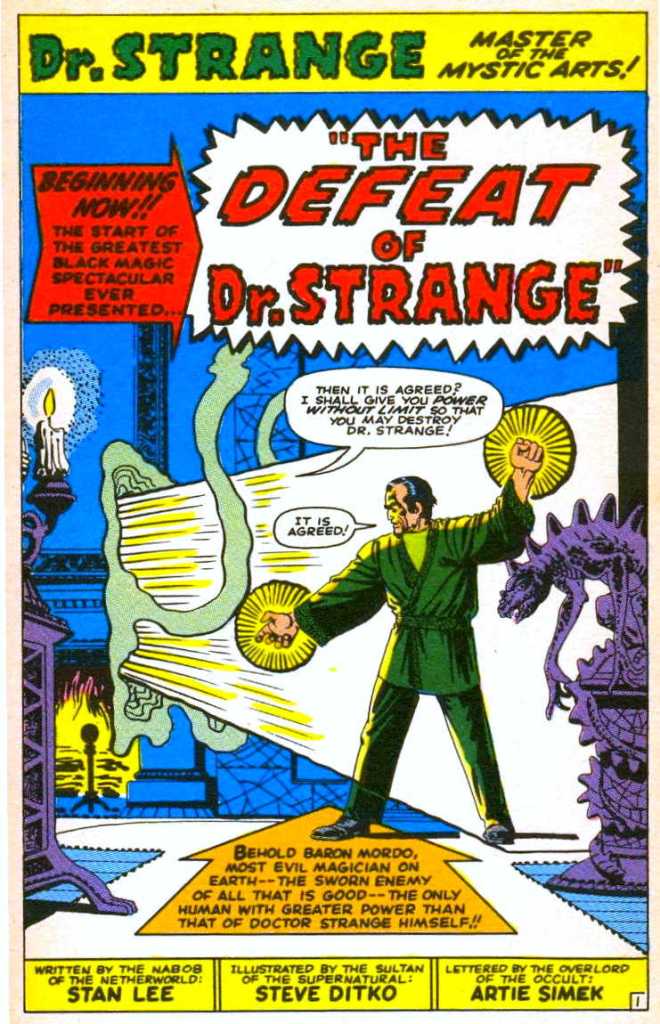
But back to the actual subject of today’s post. This small volume collected almost all of the back half of Steve Ditko’s time working on the character, a storyline that was serialized for over a year in the pages of STRANGE TALES. It’s kind of a shame that this volume stops just two stories from the end of Ditko’s era, leaving the ending slightly up in the air. But I understand the limitations of page counts–I ran into the same situation years later when putting together the first Doctor Strange MARVEL MASTERWORKS edition and similarly couldn’t quite get all of the Ditko era into it. (Eventually, Marvel did release an Omnibus edition that collected it all, a pretty terrific volume all around and one of the defining works of the early Marvel era.)
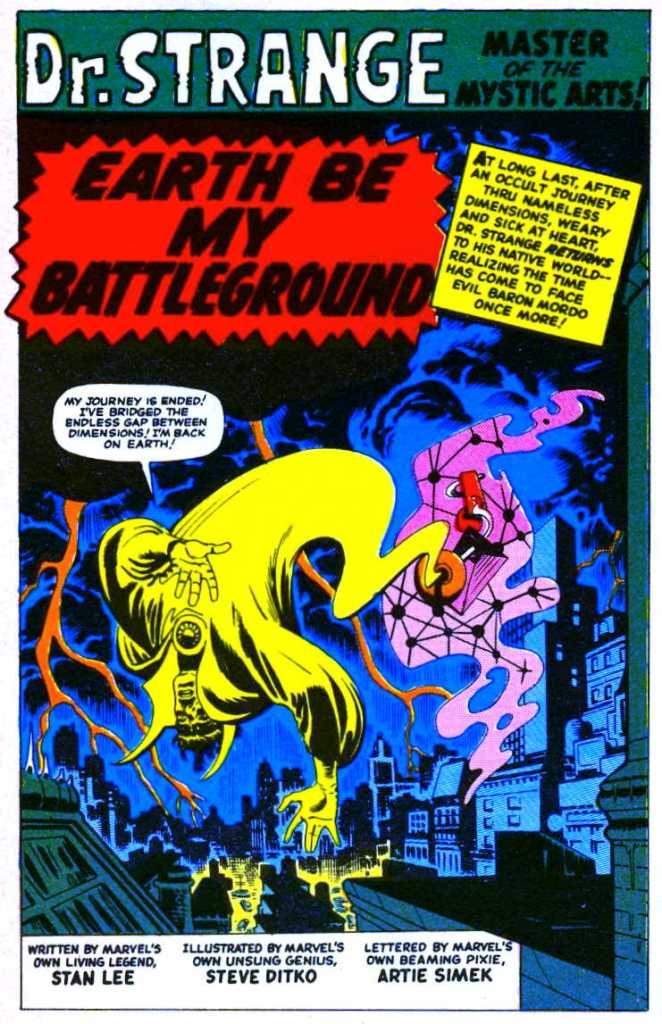
I had read a couple of these stories previously, mostly in the pages of MARVEL’S GREATEST COMICS before it became a normal-sized magazine. But having the entire saga in order made a huge difference to the reading experience. I was never a huge fan of Doctor Strange, his mystical powers felt like too much of a get-out-of-jail-free card to me in any given circumstance, and the contemporaneous comics starring the character in the 1970s tended to be heavily influenced by New Age meditations and focused on the Rising and Advancing of the Spirit. I wasn’t looking to have my spirit advanced, I wanted some cool entertainment with a heroic protagonist. As such, Ditko’s Doctor Strange resonated with me a whole lot more. Not only was his artwork unique and fascinating, but his version of the character was firmly grounded in the real world. Plus he was simply a Master of the Mystic Arts rather than the Sorcerer Supreme–the first implying that there might be somebody else out there who was better, stronger than he was, the latter very much not doing that.
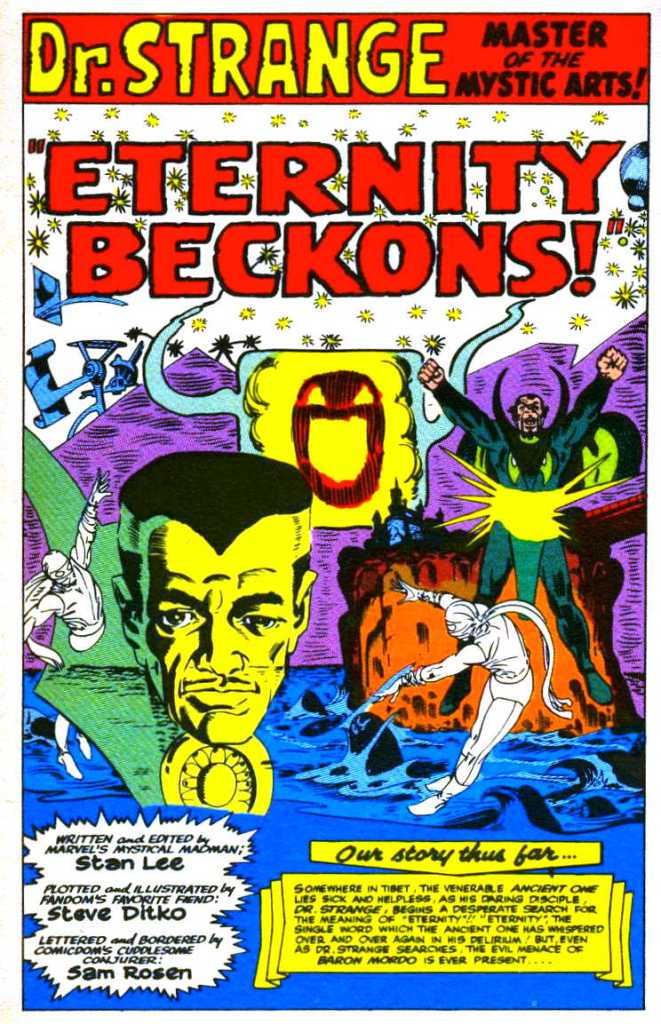
The storyline in this volume starts off simply enough: a hidden mystic benefactor increases the strength of Strange’s rival and moral enemy Baron Mordo to the point where he’s just plain mightier than Strange himself, forcing the sorcerer to go on the run across the world, keeping one step ahead of Mordo’s wraithlike operatives. Eventually, Mordo catches up with Strange, and the only way Doc can get away is by hurling himself into another mystic dimension. At this point, though, he’s doped out who is pulling Mordo’s strings: Dormammu, the ruler of the Dark Dimension who has a grudge against Strange for foiling his annexation of the Earth and its realm. After a brief adventure in that other dimension, Strange is able to make his way back to Earth and seek out his striken master, the Ancient One. The Ancient One is able to mutter to Strange that the only way to best Dormammu is to seek out Eternity, whatever the hell Eternity is. So Strange begins a quest to locate Eternity, doggedly pursued by Mordo and his minions all the way.
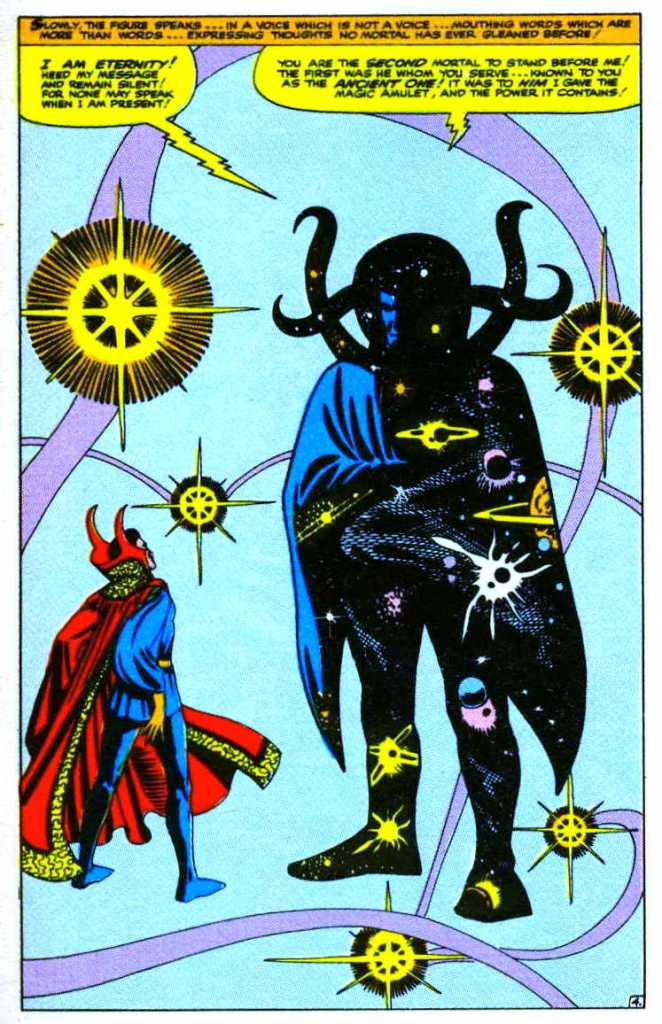
After a number of false starts and blind alleys, Strange reckons that he’s got no choice but to attempt a mystic mind-meld with his mentor the Ancient One to draw the secret of Eternity from him. In doing so, he’s forces to contend with his teacher’s mystic defenses, but he’s able to run that gauntlet and learn that he already possesses the way to Eternity through the mystic amulet that he’s been bequeathed. Expanding it to the side of a person, it opens to become a doorway into the realm of Eternity. Steve Ditko outdoes himself in his depiction of the weirdness of this non-terrestrial expanse. And finally, Strange comes face-to-face with Eternity, a mysterious mystical being of almost unlimited power. But despite Strange’s dire need, Eternity refuses to share any of his power with the sorcerer, telling strange that he already possesses all that he needs to defeat his foes. Sent away empty-handed, Strange returns to the material world, only to discover that Baron Mordo has caught up with him and the Ancient One in the meantime. So it’s right into a showdown. Ditko deliberately crafted the plotting of this storyline as a running serial with strong cliffhangers to keep the audience coming back for more.
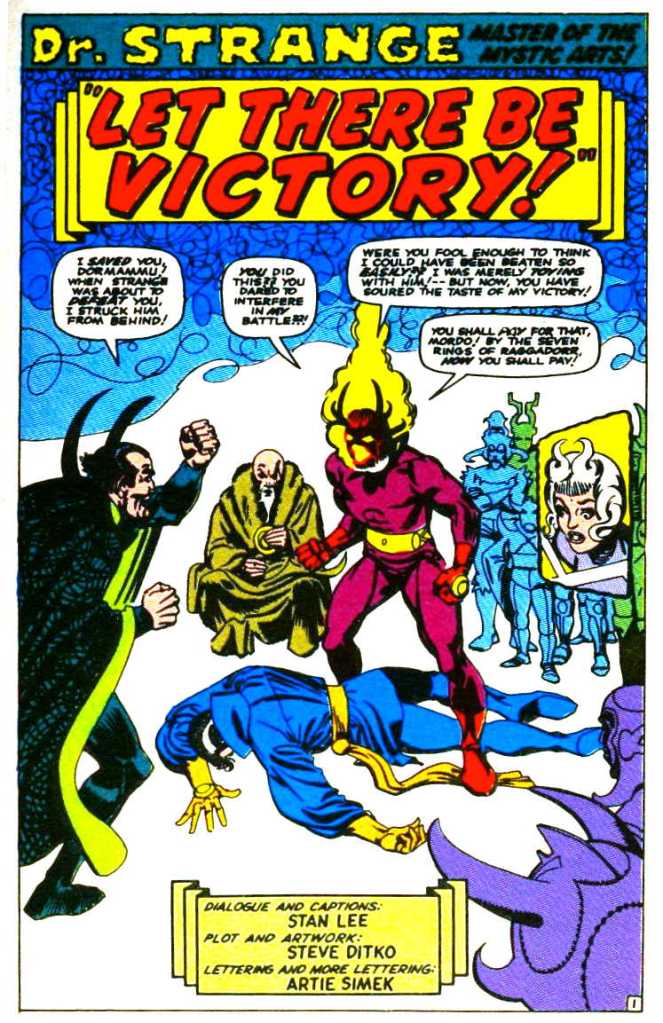
But even outpowered and outgunned, Strange is still a master sorcerer, and he’s able to parry Mordo’s every attempt to destroy him, much to the frustration of Mordo’s benefactor Dormammu. Eventually, the flame-headed despot can take no more, and he draws both Mordo and Strange into his own Dark Dimension, intending to finish his foe off personally. Strange and Dormammu fight a duel before the assembled peoples of the Dark Dimension, using not any mystic powers but rather twin sets of magical pincers, so that they are more evenly matched. Once again here, Strange is able to hold his own until bystander Mordo sees his chance and strikes Strange down with a mystic bold. This pisses Dormammu off, soiling his triumph, and he hurls Mordo into a realm of torments. Strange is still ale to continue to contest, however, and in the end he bests Dormammu with superior skill, exacting from him a pledge never again to attack the Earth or its people. So Strange has finally won. But in an act of petty revenge, Dormammu exiles the Dark Dimension girl who had been helping Strange (who will eventually be named Clea) across the mystic cosmos. So locating and rescuing her becomes Strange’s new long-term mission.
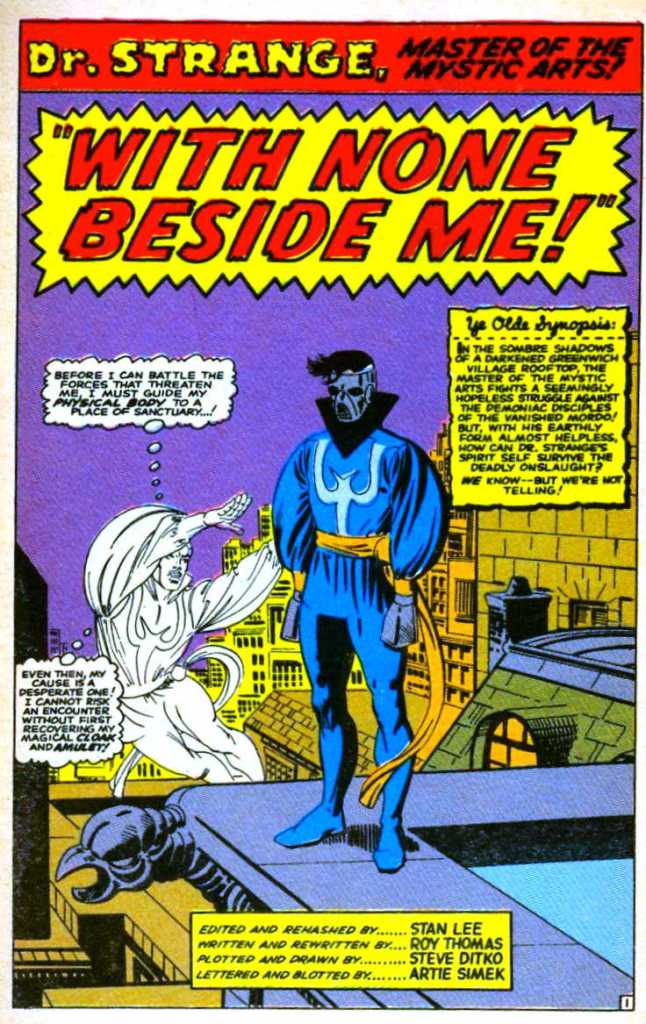
Events power down in the narrative a little bit at this point, though the final stories in this volume are still all fun and gripping. Returning at last to his Sanctum, Strange is jumped by a trio of Mordo’s mystic minions, including the Demon from an earlier story. With his hands and face sealed and bereft of his Cloak of Levitation and his mighty amulet, Strange needs to find a way to escape and turn the tables on his captors. He’s able to use his astral form to peer around as his surroundings, getting momentary glimpses of his surroundings that enable him to stay one step ahead of his enemies. Strange’s foes, meanwhile, are desperate to learn the secrets of his amulet, and he’s able to turn it against them and thus reverse the tables on them. After the more cosmic events of the earlier stories, this more grounded little three-parter is most welcome. This is also the place in the narrative where Stan Lee stops scripting over Ditko’s plots, instead turning over the dialoguing of the series to Roy Thomas, a hint perhaps at the discord that had been building between Lee and Ditko and which would soon cause the latter to quit Marvel.
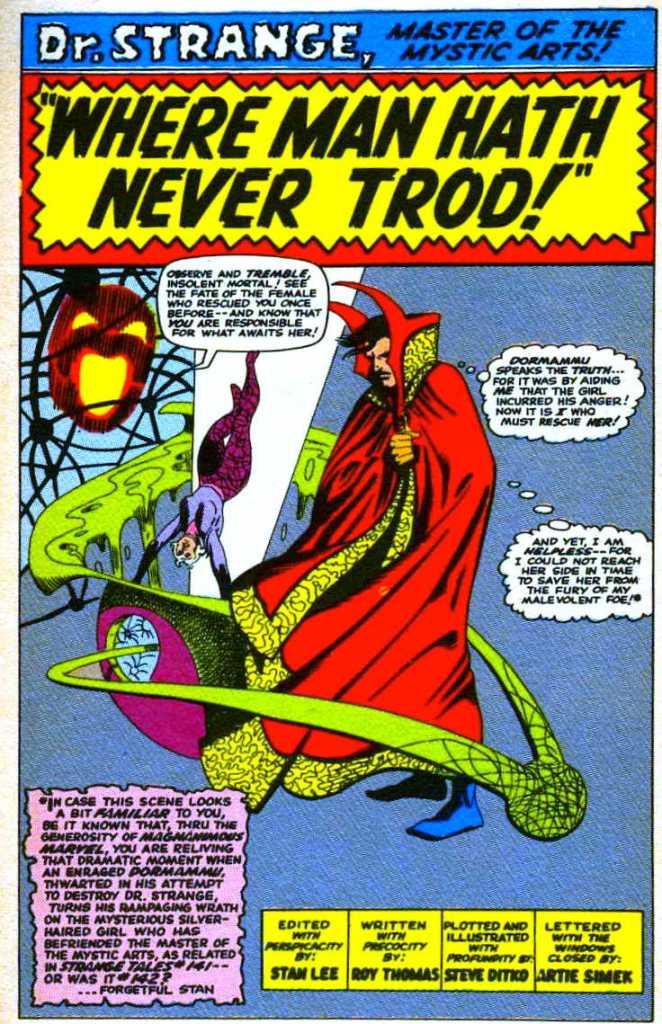
The final story in this volume is a bit of a trifle, involving Strange’s attempts to locate the lost Clea, which bring him into conflict with another interdimensional despot, Tazza. It’s a minor tale, so the volume closes with a bit of a thud, especially since the running plotlines haven’t all been wrapped up. It would literally be decades before I’d get to read those final two Steve Ditko-penned stories and see how it all came out. This frustrated me for some time, as I really liked the stories in this volume. This was all happening right at the point when Marvel’s storytelling was becoming more expansive overall, both in terms of establishing ongoing soap opera-style subplots and in expanding the scope of the narrative of many of its stories to a more cosmic level. This was good stuff, and even with the artwork reduced down to tiny paperback book size, it still packed a punch.


Really enjoyed reading your thoughts on this, Tom.
In fact, it made me think that if you ever wanted to expand ehat you do here, it would be fascinating to read your thoughts on comic runs/stories worth reading. From the best known and most influential stuff, like Ditko’s Strange, through smaller scale stuff like ‘Nothing Can Stop the Juggernaut. ‘ Or oddities like Elektra: Assassin or Meltdowns.
Or if you didn’t want to comment on Marvel I would live to hear your thoughts and recommendations on such disparate publications as Starman, Usagi, Y: The Last Man, All-Star Superman, or Bone.
Just a thought!
LikeLike
Bad mouth Bond? One look at my profile pic should tell you I am indeed a fan of 007 and cannot allow that those remarks to go unanswered. Actually, our host isn’t far off. As much as I am a huge James Bond fan, Moonraker is one of my least favorites. I consider the silliest of the decades long franchise, veering way off into absolute fantasy with the sci-fi tropes as well as Roger Moore enjoying some romantic interlude every 15 minutes. Roger Moore’s Bond movies became much more grounded – and as a result, more enjoyable – starting with 1981’s “For Your Eyes Only.”
As for my second favorite Marvel character (behind Iron Man), this digest does indeed seem a great deal of fun courtesy of Steve Ditko’s bizarre and surreal portrayals of all those magical dimensions and mystic mischief makers. Yes, I know I spoke less than flattering of Ditko with last weeks’ Machine Man review. But his art in these issues were both spot on for the subject matter and occurred at a time when that style fit like a sorcerer’s glove.
When I think of the Stephen Strange that I prefer most – edging over Roger Stern’s – is the MCU depiction from Benedict Cumberbatch. For me, he hits the right note with the arrogance of a gifted and brilliant surgeon who – like a good doctor – searches among the tools at hand to find a resolution to the challenge he’s facing. Cumberbatch balances that necessary groundedness with an ability to deal with the incredible unknown that he has to face.
And Tom, I hope your happy. I now have Sheena Easton’s “For Your Eyes Only” stuck in my head.
LikeLike
I didn’t like the art or types of stories in it but I wouldn’t have bought it under circumstances unless it had held one story I hadn’t read rather than being nothing what had appealed to me in previous reprint titles. I just never cottoned to sizes to far off from regular comic book size. Whether itw as the size of a coaster or a placemat, I didn’t buy it.
LikeLike
I’m with you on Roger Moore as James Bond and I never noticed any great difference between how Daniel Craig played James Bond than Pierce Brosnan’s James Bond ( I’m talking his character/personality. I didn’t hate Timothy Dalton. It has been awhile since I have seen both actor’s movies, so I can’t remember if Daniel’s was more butt kicking than Pierce’s — but I do know when it comes to butt kicking Superspies, I’m team Ethan Hunt ( Tom Cruise — Mission: Impossible films ). Never got any of Marvel’s pocket books, but I do have Strange Tales#185 ( May 1976 ) which reprints ST#134 ( Earth Be My Battleground ) & 135 ( Eternity Beckons ). Plus Doctor Strange Classics Starring Doctor Strange#1-4 ( March-June 1984 –reprinting ST#130-141 –recoloured )
LikeLike
For the record the reprints were just called Doctor Strange Classics ( 1-4 ), I was looking at what comics.org had written and forgot to check the covers of the issues.
LikeLike
Surprised that Moonraker was your first Bond movie as it seems like the other movies were all over TV like a rash before this. Perhaps you mean on the big screen.
LikeLike