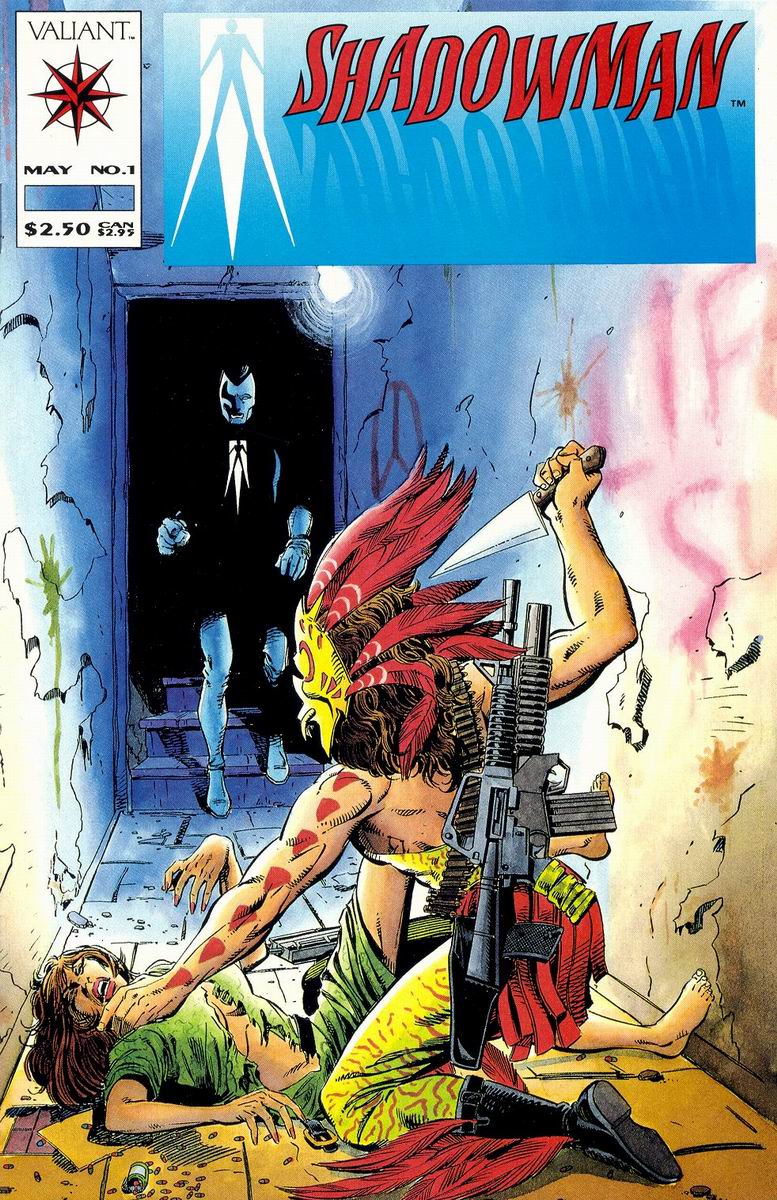


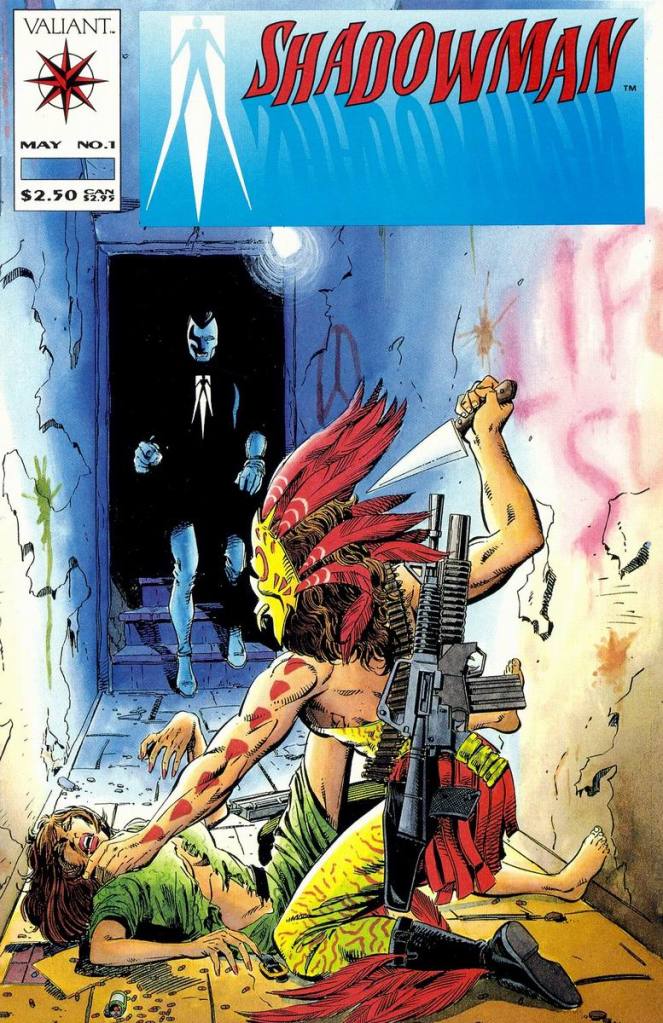
The next new character and series that Valiant introduced to its growing line of interconnected super hero titles was SHADOWMAN. As they’d started to do previously, the creators seeded lead character Jack Boniface into the background of another earlier title–in this case, X-O MANOWAR #4. In doing so, they gave readers a bit of an Easter egg to hunt down once Boniface had become Shadowman and created some additional back issue demand for another random issue of one of their series. In this fashion, Valiant created the impression that any issue of any of their books might include some development that would become noteworthy and valuable in the future. it was an effective marketing strategy.
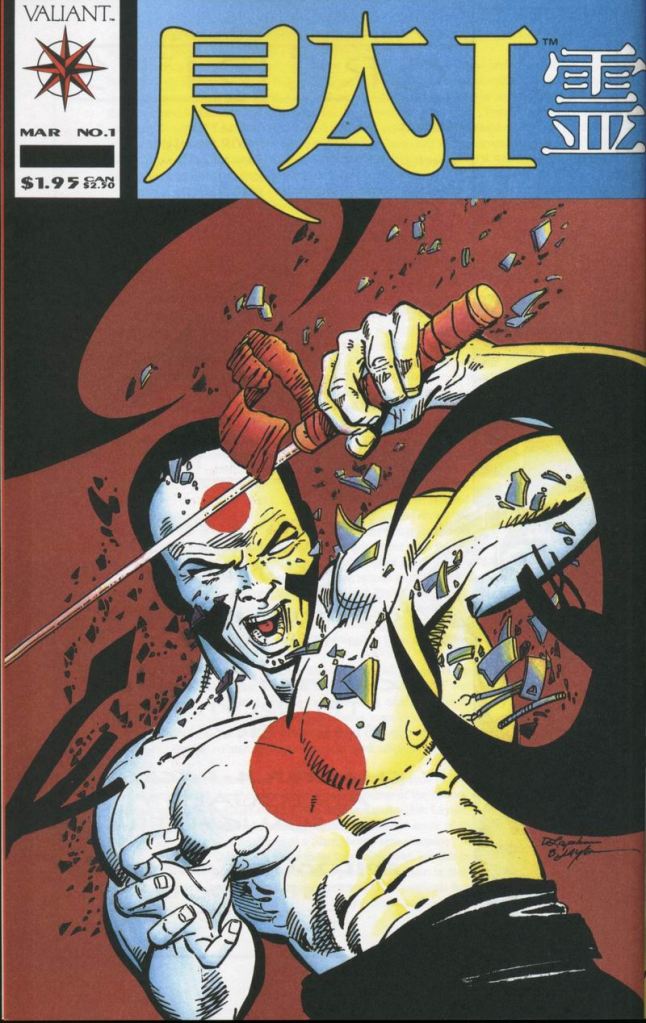
But just to go off on a tangent for a second first: shortly before SHADOWMAN #1, Valiant had spun off RAI into his own self-titled series, graduating him from being a back-pages feature in MAGNUS, ROBOT FIGHTER. RAI #1 was the work of writer David Micheline and artist Joe St. Pierre. As I mentioned in depth in the earlier piece on Rai’s first split-book appearance in MAGNUS, this series was one of the swift failures of the Valiant launch period, and it ran its course in eight issues. However, Valiant wasn’t done with the character or the concept, and in the aftermath of their UNITY crossover, they continued the book as more of a team-series under the clunky title RAI AND THE FUTURE FORCE, beginning with #9.
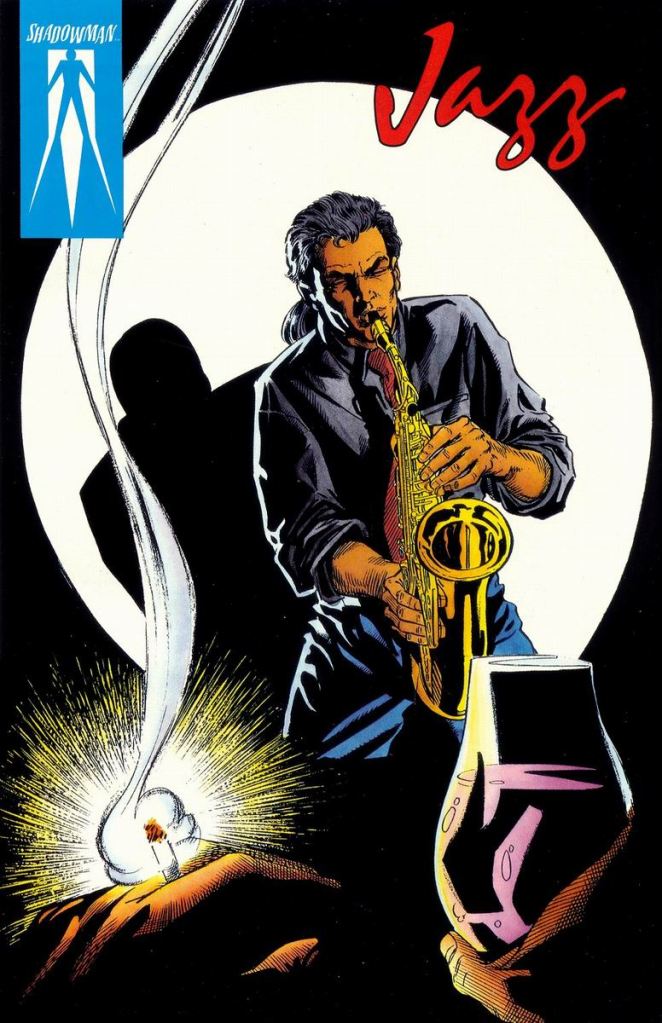
But back to SHADOWMAN. The character existed on the more supernatural side of the spectrum occupied by players such as Doctor Strange. But unlike Strange, Shadowman’s mysticism was grounded in a specific culture, that of New Orleans voodoo. As such, the character played as a bit of a “creature of the night” figure in the manner of Batman rather than as a sorcerer or wizard-hero. As Valiant EIC Jim Shooter was attempting to ground their new effort a little bit more in the realm of plausible real-world science, this makes a certain amount of sense. There was also a concerted effort to tie Jack Boniface’s origin into the growing mythology of the Valiant universe, which made it a bit more science fiction-oriented, at least at the beginning.
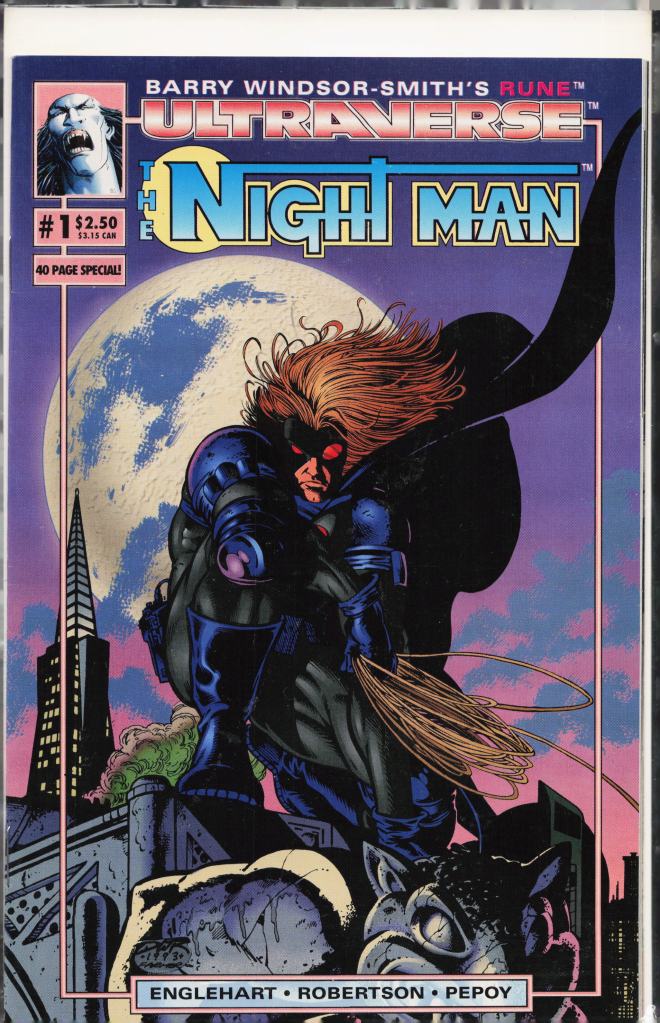
SHADOWMAN #1 was co-written by Jim Shooter and Steve Englehart, who collaborated on the character’s conception. This collaboration, however, turned out to be unproductive; Shooter and Englehart couldn’t entirely agree on how to approach the new character. Consequently, Englehart took his leave of the project after his involvement in this first issue. Some time later, he would recycle his ideas for the series into a new (though similar) character for the Malibu Ultraverse launch, NIGHT MAN. Both versions of the character would prove to be successful, with future iterations of Shadowman becoming a popular video game and Night Man headlining a syndicated live action super hero television series.
The artwork for the first issue of SHADOWMAN was produced by David Lapham, Shooter’s young discovery who was concurrently toiling away on HARBINGER. Lapham would remain with the series for five issues before turning it over to others. inker Joe Rubinstein was enlisted on this first issue to provide a fully realized finish.
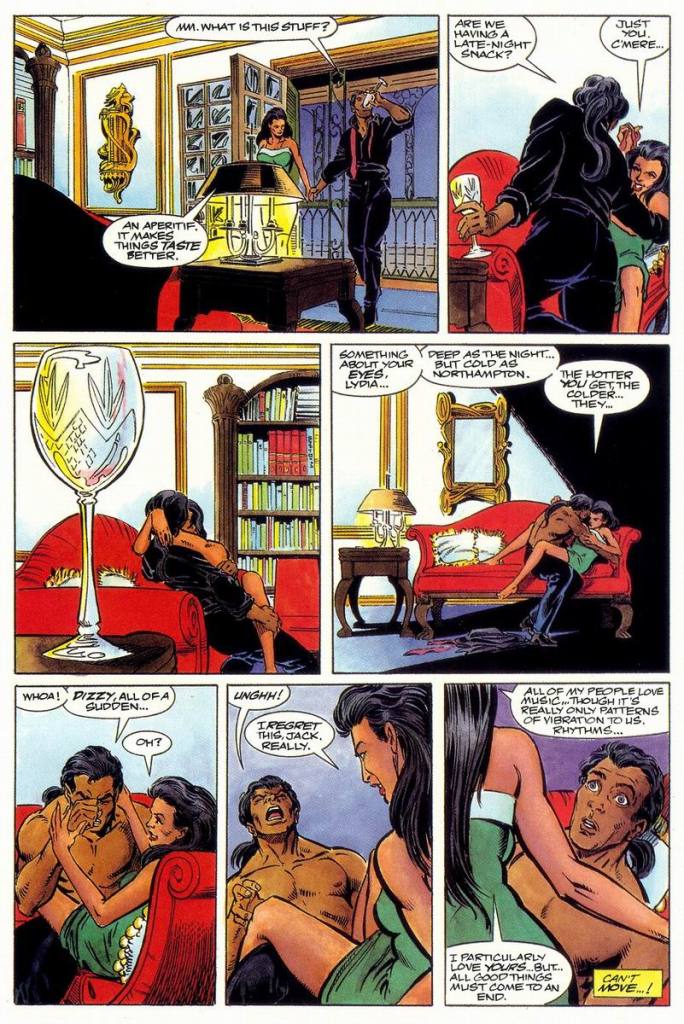
Plot-wise, the issue feels more like Englehart’s work than Shooter’s. It’s got a different sort of pace than the other Valiant launches of the time. Whereas the copy feels more of a piece with Shooter’s writing style. It opens with saxophonist Jack Boniface playing a set in a New Orleans jazz club. There, he catches the eye of a striking young woman who has been coming to his performances for the past few days. Jack approaches the woman after his set and agrees to go home with her. Unfortunately for Jack, this woman is Lydia, one of the Spider-Aliens who’d been a recurring fixture in X-O MANOWAR and elsewhere in the line. She’s interested in Jack carnally, but as a meal rather than a lover, and she slips him a soporific so that she can enjoy devouring him like a black widow spider.
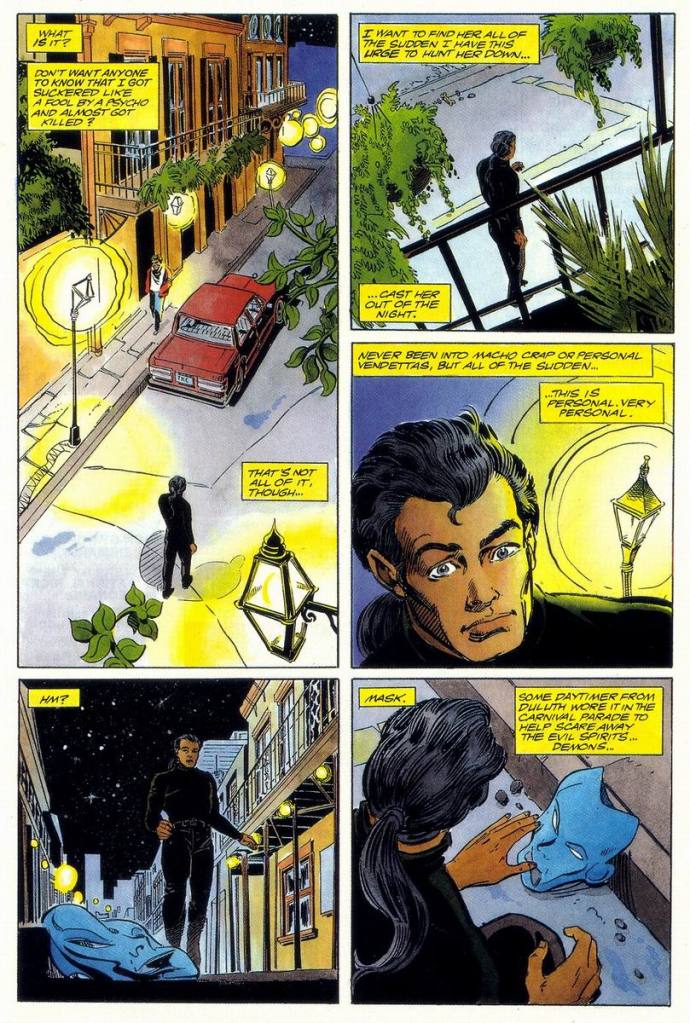
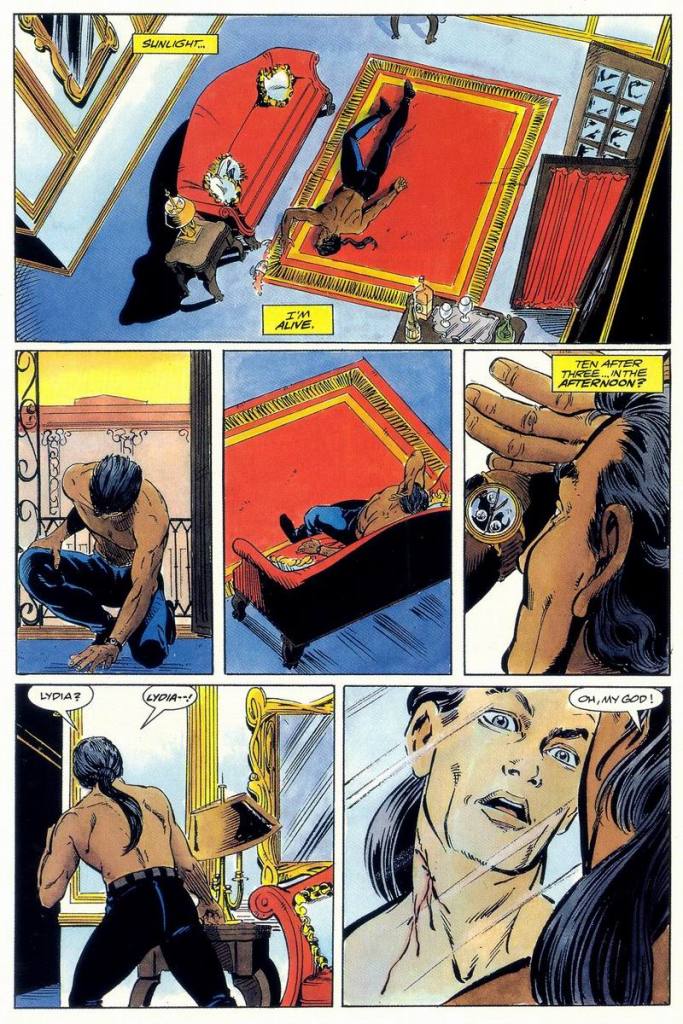
But before Lydia can make a meal out of Jack (though not before she takes a vampiric bite out of him) Lydia is scared off by something transpiring outside of her apartment, and vanishes. This too is a tie-in to that X-O MANOWAR story, though not one that is especially clearly explained in this book. Anyway, the next morning, Jack comes around, shocked to find himself still alive and sporting vampiric puncture wounds on his neck. He’s also drawn to check out Lydia’s apartment, the basement of which is an abattoir of dead and half-eaten human remains. Jack beats a hasty retreat, but for some reason, he doesn’t contact the authorities. Rather, he’s driven by some compulsion to track down Lydia himself. Cruising the streets the next evening, he comes across a discarded Marti Gras mask and on impulse decides to wear it.
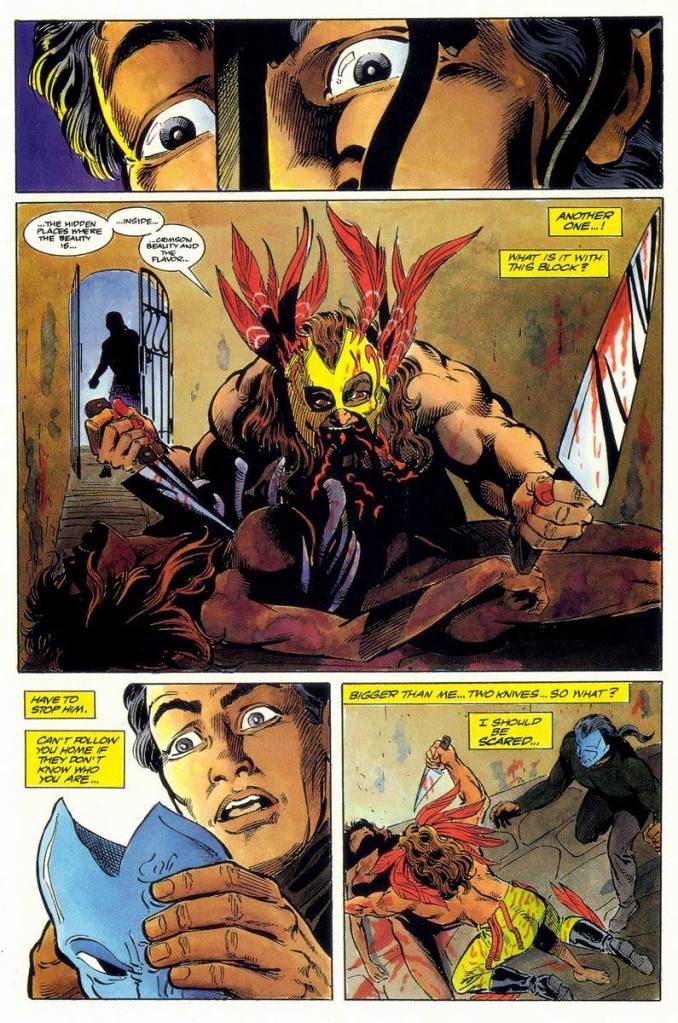
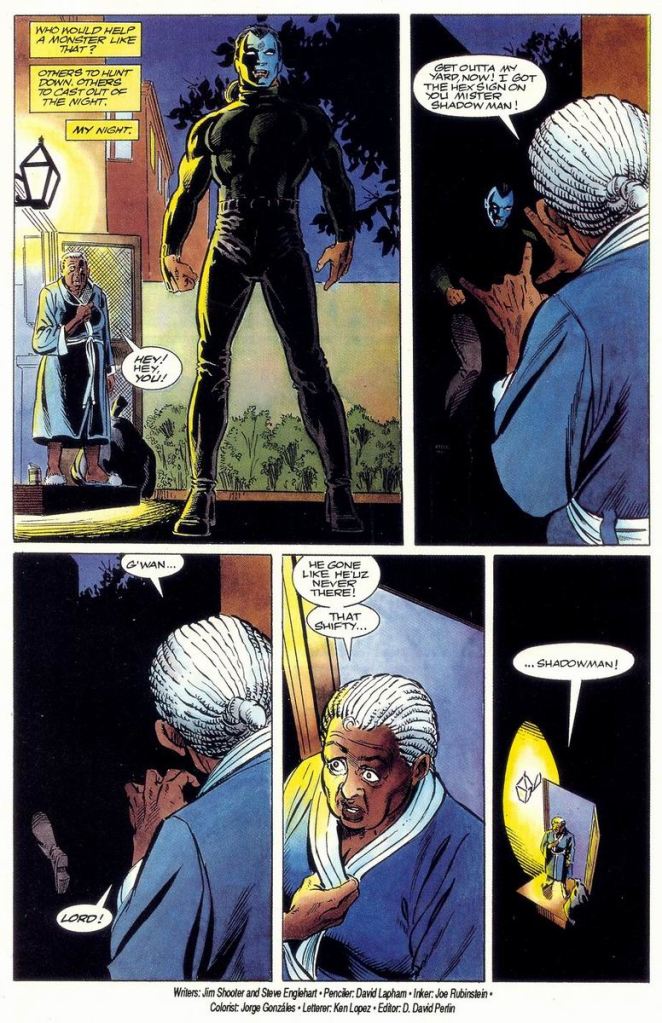
Approaching Lydia’s apartment, jack’s attention is drawn to a nearby alleyway, where a knife-wielding assailant in old world garb is chowing down on some hapless bystander. Jack winds up interceding, discovering that he’s quite a bit stronger and faster than he used to me. Eventually, the would-be killer runs, and Jack’s pursuit is cut off by a shotgun blast from some still-unseen confederate. As he stands there in the darkness, one of the residents of a nearby building who had been awakened by the ruckus calls him a Shadowman and tells him to get lost. With that, Jack fades away back into the night, and the issue wraps up. It’s a relatively perfunctory opening chapter, one that’s maybe less than it should be given how it was clearly caught between the inconsistent creative impulses of its two writers.
Moving forward, SHADOWMAN would begin to steep itself more and more in voodoo mythology, in particular after the UNITY crossover when Jim Shooter left the company and writer Bob Hall took over writing the series. He stayed with it for a long run, making it one of the most consistent titles in the line. Eventually, the original SHADOWMAN run petered out after 43 issues, but the character was revived again and again throughout assorted Acclaim revivals–though in those instances, the titular Shadowman was typically not Jack Boniface but some other newcomer character.


I never got around to reading any of the early issues of Shadowman, but I did pick up several of the ones written & drawn by Bob Hall, and I enjoyed those. He was working in a style that was looser & more distinctive than the 1980s superhero work that he had previously done, and I liked it quite a bit.
LikeLiked by 2 people
Curious to see those Bob Hall issues of “Shadowman”, now. Bob drew my favorite version of Wonder Man, in his 1980’s sleeveless dark blue outfit. It debuted in the “West Coast Avengers” 4-issue miniseries written by Roger Stern, drawn by Bob, & inked by Brett Breeding. Then again around “Avengers” # 254, I think with inks/finishes by Joe Rubinstein. Then again in the “graphic novel”, “Emperor Doom”.
I saw Bob write & draw some Batman stuff for DC in the 1990’s. I’ll admit I was disappointed in his stylistic departure from his earlier Marvel work. I know he’s an accomplished playwright. I just didn’t take to his looser work on My atman. Though his “Emperor Doom” work was looser than his previous Marvel jobs. And I really liked it, especially the cover.
LikeLiked by 1 person
Yes, you’re right, it looks like Bob Hall’s looser style made its debut in the Emperor Doon graphic novel, which was released in 1987. I thought he did good work on that one. He also inked his own pencils on that book.
LikeLiked by 1 person
@Ben Herman
Keith Williams gets an “Inking Assist” in the credits list. No colorist is listed, so maybe Bob colored the book. He’s credited as “Artist”.
LikeLike
Yes, the Night Man resemblance is noticeable. However I’m automatically suspicious of voodoo-based superheroes — as Len Wein objected before taking on Brother Voodoo, it’s a religion that doesn’t adapt well to superhero combat. Though it appears my library might have some accessible through its ebook service …
LikeLiked by 1 person
I recall loving Shadowman issues #1 & 2 then loathing the title after Unity.
LikeLiked by 1 person
I take it that the Spider-Aliens are shape-changers? Cause there is no way creatures that big with that many limbs fit into a human disguise suit. Last weekend I wondered if the Spider-Aliens ate other beings( mostly sentient beings ).
LikeLiked by 1 person
Or maybe they disguise themselves like Doctor Who’s Slitheen? You never know. Comics aren’t a great medium to show what side effects suits like the Slitheen wore cause.
LikeLiked by 1 person
Or maybe like the alien creature in The Man Trap ( first episode of Star Trek – September 8, 1966 — wikipedia.org ): 3 men ( Kirk, McCoy & Darnell ) sees Nancy Crater differently ( McCoy as she was when he first met her ( young ), Kirk as she should look accounting for her age, and Darnell as an attractive blonde woman whom he met on a pleasure planet.
LikeLiked by 1 person
Within the last year or so I read the first issue of NIGHTMAN and thought it was an overplotted mess. SHADOWMAN from this description sounds cleaner, even if it had to meld voodoo with alien vampires.
LikeLike
This was another one where I picked it up due to Englehart, and didn’t stick with it thereafter. I wasn’t wild about the origin, but I liked the result, or at least the potential of it.
But apparently, what Jim liked in it wasn’t what I did
LikeLike
Was it this that briefly spawned a TV s roes?
LikeLike
. . . Series.
LikeLike
.. . . series?
LikeLike
Nope, that was the later NGHTMAN.
LikeLike
Steve said on his website: “I co-created SHADOWMAN with artist David Lapham, later famous for Stray Bullets. We took full advantage of Jim Shooter’s promise that I could write SHADOWMAN my way if I wrote X-O MANOWAR his way. But once he read the first issue, Jim couldn’t stand the deviation from his style. He apologized profusely and sincerely, even telling me to tell people he’d been unable to follow through – but he just couldn’t be happy with a voice so different from his own.”
LikeLiked by 1 person