

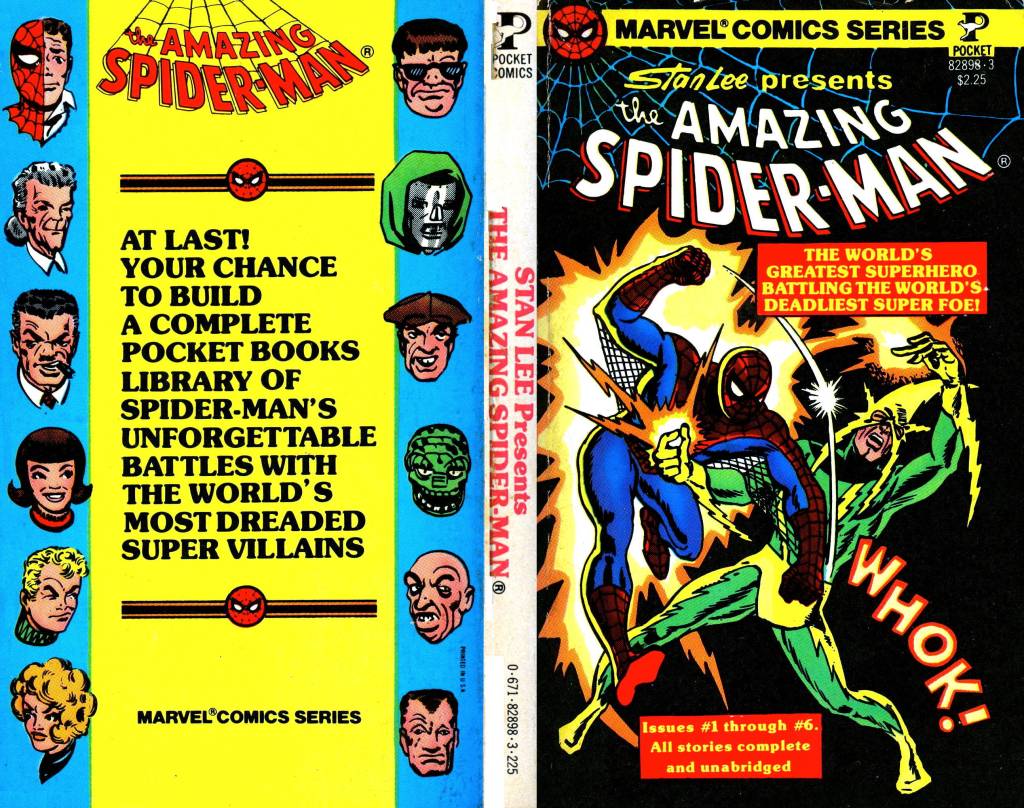
So at around this point, I finally got my hands on a copy of the first volume of the MARVEL POCKET BOOKS paperback collections of early AMAZING SPIDER-MAN stories. Some months earlier, I had bought a copy of Volume 2 and loved it, but the first volume was by that point simply no place to be found in my area.
So I believe that it got ordered from the Superhero Merchandise mail order catalog–or Heroes World as the chain eventually became known. And it must have been either a birthday gift or else an item that I ordered with birthday gift money–that $2.25 plus shipping costs would have been tough for me to have come up with without cutting into my weekly comic book purchases.
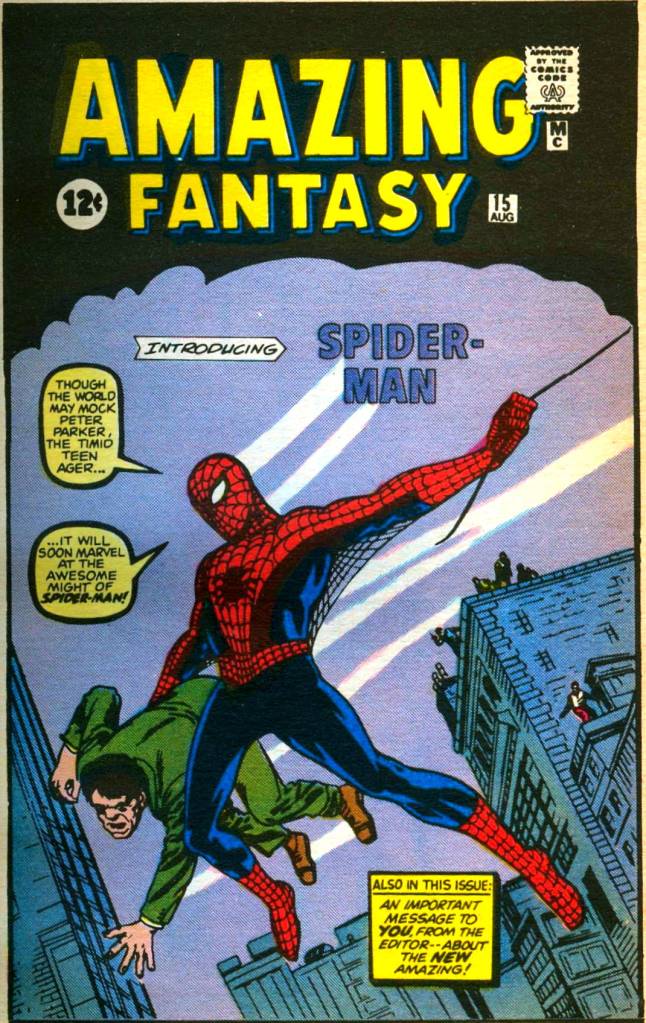
Back in 1979 when I bought this volume, there really weren’t a lot of good ways of being able to read older comic book stories apart from hunting down the back issues. There were regular reprint series, but their content was often haphazard, and by 1979 they were beginning to die on the vine. And there were few book collections about comic books. Each one that existed became a treasured tome, a repository of ancient and forbidden knowledge that otherwise was impossible to possess. These Pocket Books paperbacks reprinted in full the contents of around six issues of the title they were covering–seven in the case of this one, which included the introductory Spider-Man story from AMAZING FANTASY #15–with the pages reproduced intact, rather than having the panels cut up and arranged as often happened with comics in the paperback format. The lettering could indeed be tough to decipher for older eyes, but as a newly-minted 12-year-old, I was fine, and this was my preferred format for many years.
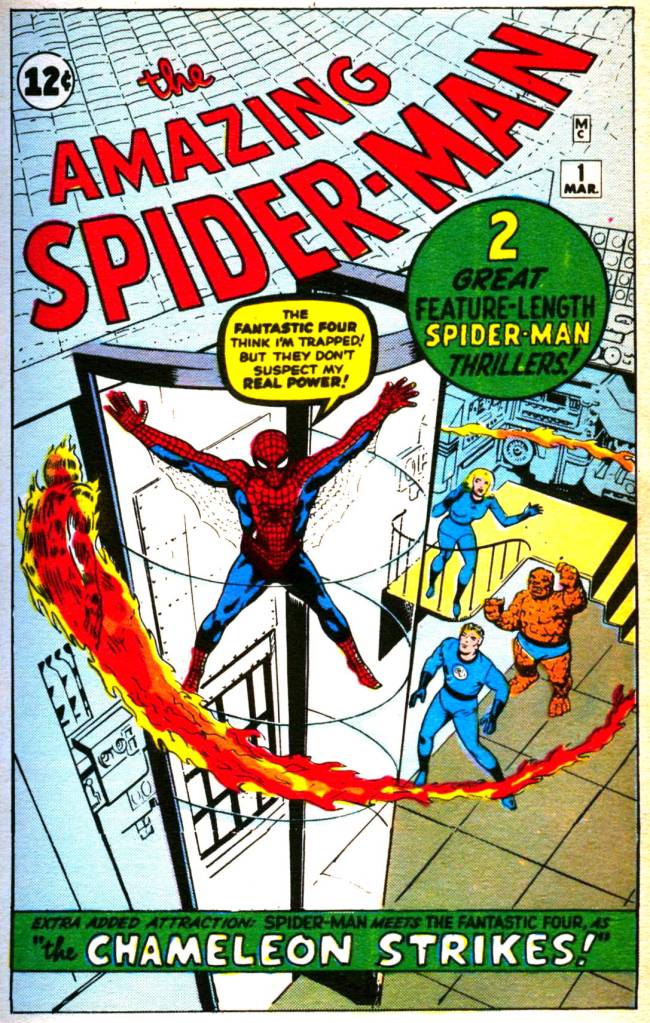
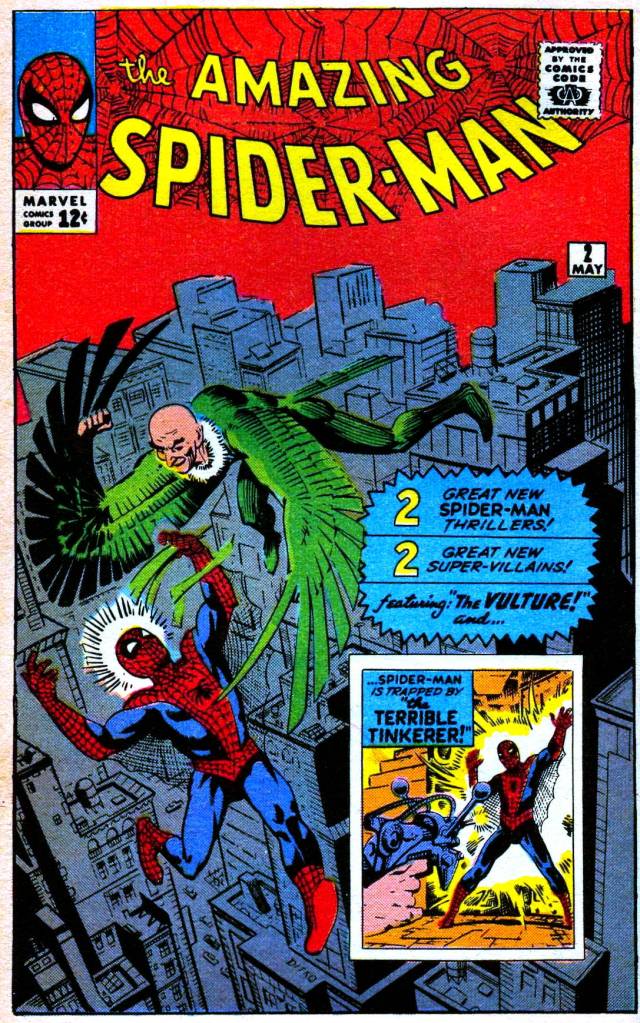
This little paperback contained AMAZING SPIDER-MAN #1-6 (as well as the AMAZING FANTASY #15 story as I’ve already mentioned) by Stan Lee and Steve Ditko. These were transformative comic books when they first came out, utterly unlike anything else that was being published. For all that I enjoy the Stan Lee/Jack Kirby run of FANTASTIC FOUR more personally, it’s difficult to argue that the Lee/Ditko AMAZING SPIDER-MAN run was the finest and most revolutionary series published during the early Marvel days. But that all said, I’m king of glad in retrospect that I wound up reading the second volume in this series first. That book was the first time that I really connected with Spider-Man as a character and felt his appeal. But these even earlier stories are far more haphazard, with occasional bad choices or weird changes of direction. It took Lee and Ditko five or six issues to really get their arms around what made this series work, so as a reading experience, these early issues are a little bit herky-jerky, for all that they’re also quite a fun deconstruction of the whole super hero mythos.
Spider-Man was and is the ultimate expression of adolescence in super hero comic books. The fact that the lead character was secretly only a teenager, and that he regularly made bad decisions and suffered crushing defeats, and that his superhuman powers gave him no great amount of joy made the character far more relatable and human than anybody else whose adventures were being published at the time. As I’ve said before, the earliest Spider-Man stories read almost like a parody of typical super hero adventures as they were codified by 1962, using the premise, “What would really happen if such characters existed in the real world?” Every place that a typical super hero strip breaks left, Spider-Man breaks right. So on that level, there was a layer of subversion built into the series. Over time, that subversion became the norm, as even characters and series that were well-established by the time that AMAZING SPIDER-MAN began coming out eventually attempted to incorporate some version of the approach that it continues to evidence.

The first two issues of AMAZING SPIDER-MAN contained two stories each before the series eventually adopted an issue-long format. The reason for this was simple; despite the legend that had been propagated in the years following the character’s awesome success, Spider-Man’s debut strip wasn’t simply thrown into the final issue of an already-cancelled series. Rather, Spider-Man was intended to be the new cover feature of AMAZING FANTASY, and Lee and Ditko had already completed a story for AMAZING FANTASY #16 and were in the process of crafting one for #17 when publisher Martin Goodman cancelled AMAZING FANTASY. Those stories were intended to occupy only the first portion of their issues, leaving another ten pages for a pair of one-off fantasy stories of the type that AMAZING FANTASY had been delivering regularly. So when Spider-Man was revived and spun off into his own title, new stories needed to be created to fill those 10-page slots. Consequently, the development of the strip is even more haphazard than usual, as the order the stories were created in isn’t truly the order in which they ran.
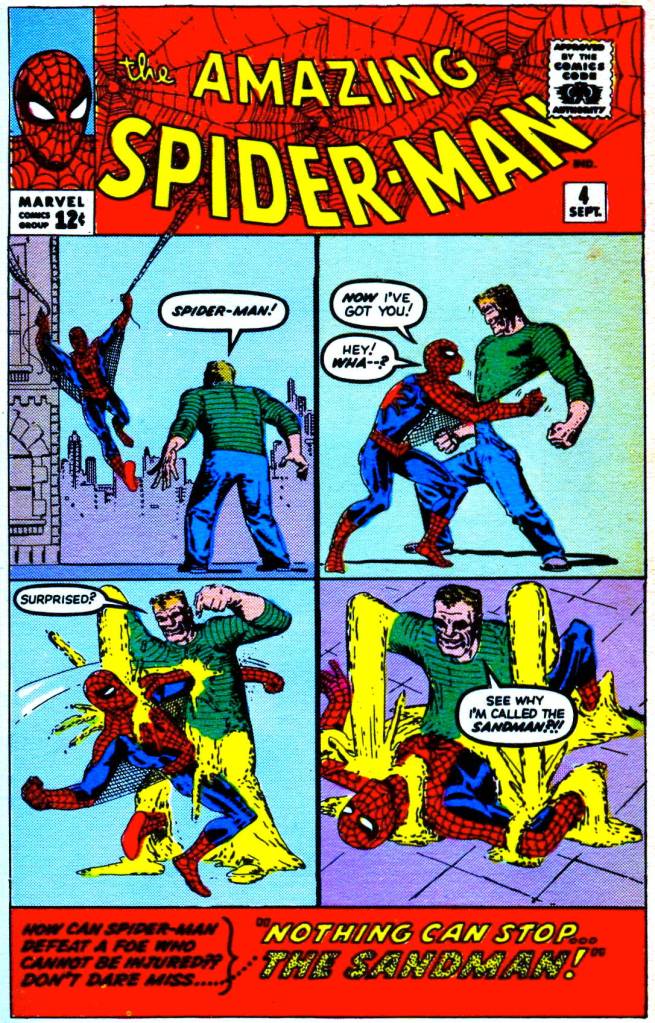
Many of the action-adventure conflicts in the first couple of Spider-Man stories feel uncharacteristic of the character, even if the Peter Parker conflicts within those stories are still in the proper neighborhood. As Steve Ditko took more and more command of the plotting of the strip, he focused the series on being relatively grounded in an urban setting–more Batman than Superman, if that makes sense. So Spidey’s early exploits saving a space capsule in distress, battling a face-changing Communist spy and taking on some weird aliens who are infiltrating America through gimmicked consumer electronics all fit poorly into the milieu that would eventually be worked out. Once the book-length stories begin starting with issue #3, the series has found its footing, and thereafter Spider-Man mainly contends with terrestrial super-villains who are committing crimes and vying for control of the underworld and other such relatively-grounded activities.
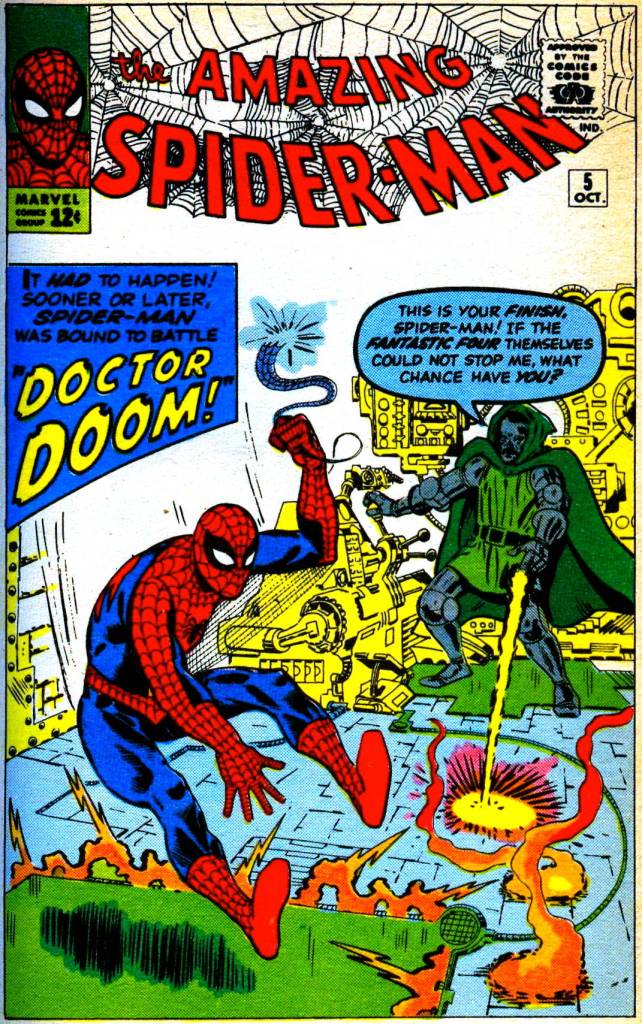
The artwork of Steve Ditko also began to flourish across these early Spidey stories. Ditko had only ever done one super hero strip, Charlton’s Captain Atom, before embarking on Spider-Man. And he seemed initially ill-at-ease trying to deliver the sort of bombastic action that was favored by editor Stan Lee–action that was the hallmark of Marvel’s juggernaut creator, Jack Kirby. Ditko’s forte, at least initially, was in creating characters and vistas that were off-kilter and eerie and weird. He didn’t lack for dramatics, but his were more evocative, more intellectual and emotion-based rather than adrenaline-charged. It took him a little while to find his rhythm depicting super hero battle sequences, but once he found his groove, he became a master at them.
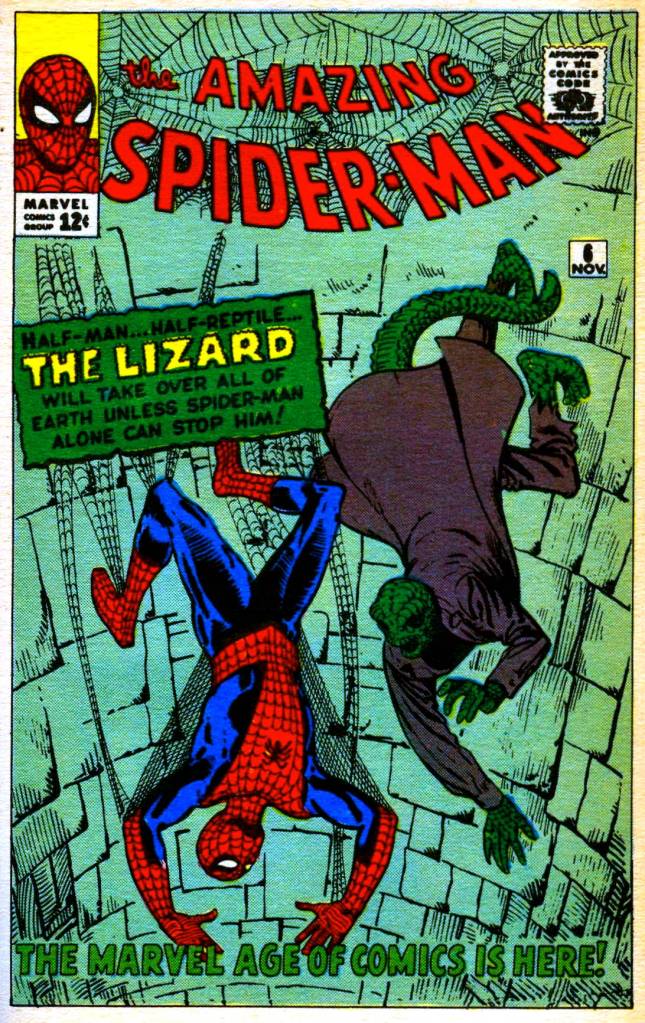
So I dug the stories in this volume–though not quite as much as I had the second volume and issues #7-13. If I’d read this volume first, I’m not certain that I would have connected with Spider-Man in the way that I did, and it might have taken me far longer to have become a real fan of the web-slinger’s exploits. Having already made that leap, though, i could appreciate these early efforts for what they were: tentative first steps on the road to the realization of the greatest comic book super hero of the era.
 The Tom Brevoort Experience
To bad in The Amazing Spider-Man#1 he never went to the Baxter Building to ask Reed to be his lab assistant. Who if you had super-powers and a spider sense to warn you of trouble ( villains or experiment about to go bad ) wouldn’t want to learn from Dr. Reed Richards? It was Ron Frenz’s work on The Amazing Spider-Man that made me love Steve Ditko’s Spider-Man & Doctor Strange work.
LikeLiked by 2 people
The Amazing Spider-Man#5: Flash Thompson decides to impersonate his hero Spider-Man and gets captured by Doctor Doom and decades earlier Spud Sickles also decides to impersonate a hero he idolizes ( Secret Stamp ) and gets captured by a group of Nazi spies who have been ordered by Hitler to kill the Secret Stamp [ Captain America Comics#15 ( June 1942 ) Secret Stamp ( Roddy Colt ) story – Jerry Dash ( news reporter ), Mary Sickles, Mr. Corbey vs. Grandma/Grandmaw, Butch & unnamed spy ].
LikeLiked by 1 person
Comics.org has a ? mark on whether Stan Lee wrote that Secret Stamp story in CAC#15 that mirrors Flash Thompson in The Amazing Spider-Man#5.
LikeLike
The Amazing Spider-Man#4: The Sandman ( Flint Marko ) has this in common with Johnny Storm ( Human Torch ), both their names and powers come from earlier characters — Sandman ( alien ) [ Journey into Mystery#70 ( July 1961 ) 1st story — Steve Bronson ( former U.S. Marine ), Bobby Bronson ( son & hero of the story ) & Anne Bronson ( Steve’s wife ) – see profile at marvunapp.com ] & Human Torch ( Jim Hammond ) [ Marvel Comics#1 ( October 1939 ) ]. I like the alien Sandman and he would make a great Blue Marvel foe ( No African Americans or any Non-Caucasian Americans seen in those Pre-FF 1960s stories but there are Americans seen from behind, at a distance and with no colour that could be identified as Adam Brashear or other characters of colour ).
LikeLiked by 1 person
I bought Spider-man vol.1-3, Captain America, Hulk, FF, and Doc Strange Pocket Books all at the same department store when they first came out. I remember being pretty pumped.
I still have the Spiderman set and FF… don’t know why I got rid of the rest.
I would buy Spider-man’s regular comic off and on, and I liked the character well enough, but he was never a must-read for me… but I love the Ditko run. I think Spider-man’s first 38 issues are a much smoother read then any other Marvel book of the same era. It pretty much hits the ground running and builds in a pretty organic fashion. By contrast… the first ten issues of any other Marvel series (FF, Hulk, Thor, Ironman, Antman) get jiggered and retooled to fix and/or alter either the visual look of the characters or the story focus and relationships.
LikeLiked by 1 person
The Spider-Man and Dr. Strange Pocket Books were what really turned me into a Steve Ditko fan. He and Kirby were both pushing boundaries, but in completely different directions. I can only imagine what it must’ve been like to be reading these wild, off-beat comics back when they first came out.
LikeLiked by 1 person
I half remember getting some of these at the time. Didn’t they also do Conan, where the panels were rearranged, or am thinking of something else?
LikeLiked by 1 person
You remember rightly. You can see listings for them at https://www.comics.org/issue/359994/#1545911
LikeLike
Thanks! I see that the Conan books were published by Ace Books, not Pocket Books, which would explain the different format.
LikeLike
Ace Books was publishing the Conan novels at the time, so I’m guessing there might have been some legal reason for them to put these out instead of Pocket Books, which was a subsidiary of Simon& Shuster, who were publishing all the other Marvel books at the time.
LikeLike
I wore out my copies of the Spider-Man and FF pocket books. It was so hard to find reprints of early Marvels, let alone the original comics, back then.
LikeLiked by 1 person
I got those Pocketbook collections from the Navy Exchange where I also got my comics from 1974 through 1981 (initially at Treasure Island Naval Station in San Francisco, then at Lemoore Naval Air Station). Spider-Man had already become my favorite comics character by the time I was 6 years old in 1968 and I recall wearing a Spider-Man costume for Halloween that year. And I’m sure I got into the comics before I ever saw the cartoon, which started airing in the U.S. a few months after my family had moved to Japan in April 1967. However, I have no memory of what the earliest Spider-Man stories I read were and many of the comics I got before 1972 were tossed out by my dad during our many moves. At any rate, by the time those Pocketbook editions became available, I’d already read the origin story in Origins of Marvel Comics, which I got for Christmas in 1974. But circa 1977 or ’78, I hadn’t read any other Ditko era stories. Previously, I’d thought Ditko’s art looked weird, mainly based on some of the short horror/suspense stories of his I’d seen in various reprints. But particularly through reading those PB collections, I came to realize what a master of the comics medium he was. Can’t say I noticed any strong distinction between the first volume and the 2nd, although overall, IMO, Amazing Spider-Man started off as at least equal to the Fantastic Four as the best comics being published in that period but Ditko & Lee continually improved on the series, at least up through issue #33, arguably one of the best comics ever. Of course, Kirby & Lee also continually got better on the Fantastic Four, and as a kid in the late ’60s/early ’70s, I actually ranked the FF as my favorite comic mag even over Spider-Man, even if Kirby was in coasting mode before he left and his successors, Romita and Buscema, while top tier artists, still paled in comparison to Kirby at his peak on the mag. On the other hand, in my estimation, I fully agree with your assessment, Tom, that peak era Ditko Spider-Man out shown even Kirby’s best FF tales I also loved Ditko’s Dr. Strange and Kirby’s classic run on Thor.
I still have those little paperback editions, although the last time I tried re-reading them, a few years ago, my eyesight had deteriorated enough that even with my glasses I could no longer make out the tiny print without a magnifying glass! At least bigger reprint editions are now available. But those miniature reprints were a convenient and economical way to get versions of those original stories that made Spider-Man and the Fantastic Four legends in the first place.
LikeLiked by 1 person
Early Spidey really went hard on the eye-liner! 😉
LikeLike