

When I did the initial wave of these 5 Best write-ups concerning the best comic books of each year, I confined myself to just the years when I was a fan and a reader, 1973-1989. I didn’t think that it was proper for me to go beyond that, as I was a participant in the field and so would have biases. Nor did I think I should go backwards, to before I had been a reader myself. But several years later, I find myself thinking, “Well, what would it hurt?” And so I’ve worked out my selections for a few more years outside of that earlier window. Here then are my picks for the Five Best Comic Books of 1972.
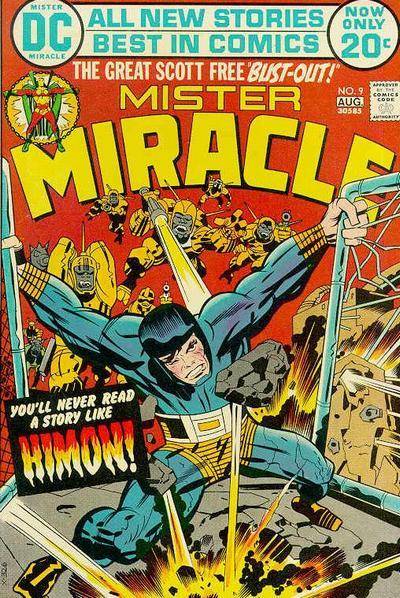
Most people center on NEW GODS #7, “The Pact”, as being the best story creator Jack Kirby ever did, and it is a great tale. But for my money, “Himon” in MISTER MIRACLE #9 is its equal–if not a hair better. Having seeded his hero’s backstory in previous issues, here Kirby goes full-throttle with a play on Oliver Twist that brings together several key revelations about his Fourth World opus and just how Mister Miracle fits into it. It’s myth-making on a massive scale, but it never loses its humanity–the dark fate that befalls Auralie on Apokolips is hauntingly tragic.
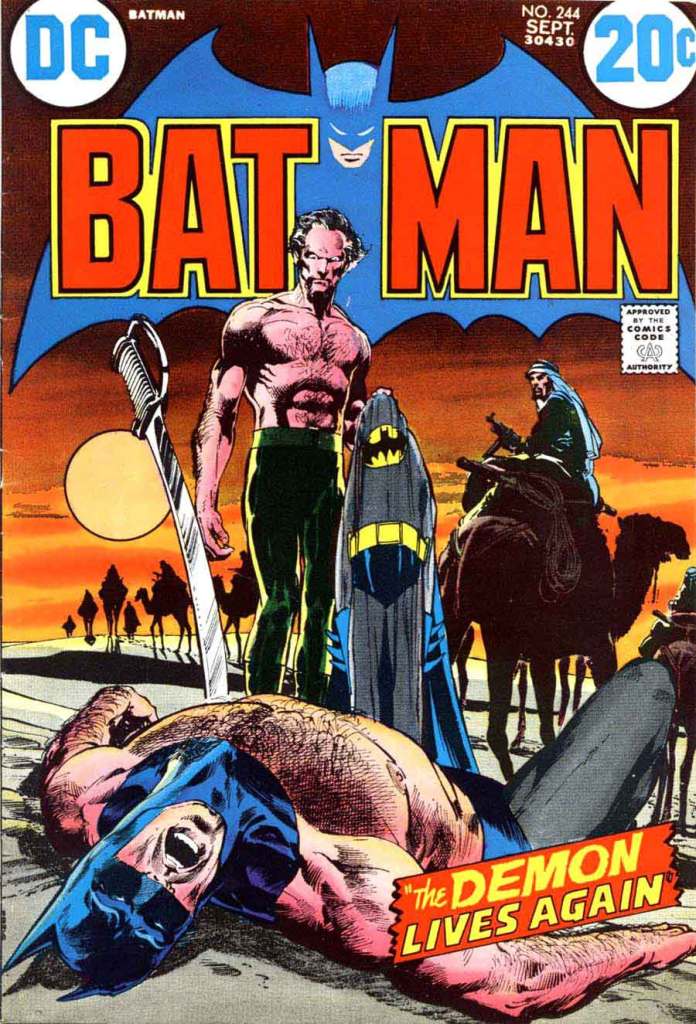
The climactic chapter to Denny O’Neil and Neal Adams’ off-and-on-again sage of Ra’s Al Ghul, the “Demon’s Head”, which had played out in BATMAN for a year or so. This issue reveals Ra’s trump card: the Lazarus Pit, that cauldron of mystical fluids that can bring him back from the dead and restore his life and vitality. The Masked Manhunter pursues his quarry halfway around the world, fighting a memorable sword duel with Ra’s in the desert before being felled by fortune. Saved through the intervention of Ra’s daughter Talia, the moment when Ra’s is confronted by his implacable foe again is completely memorable: “Are you man or fiend from hell?”
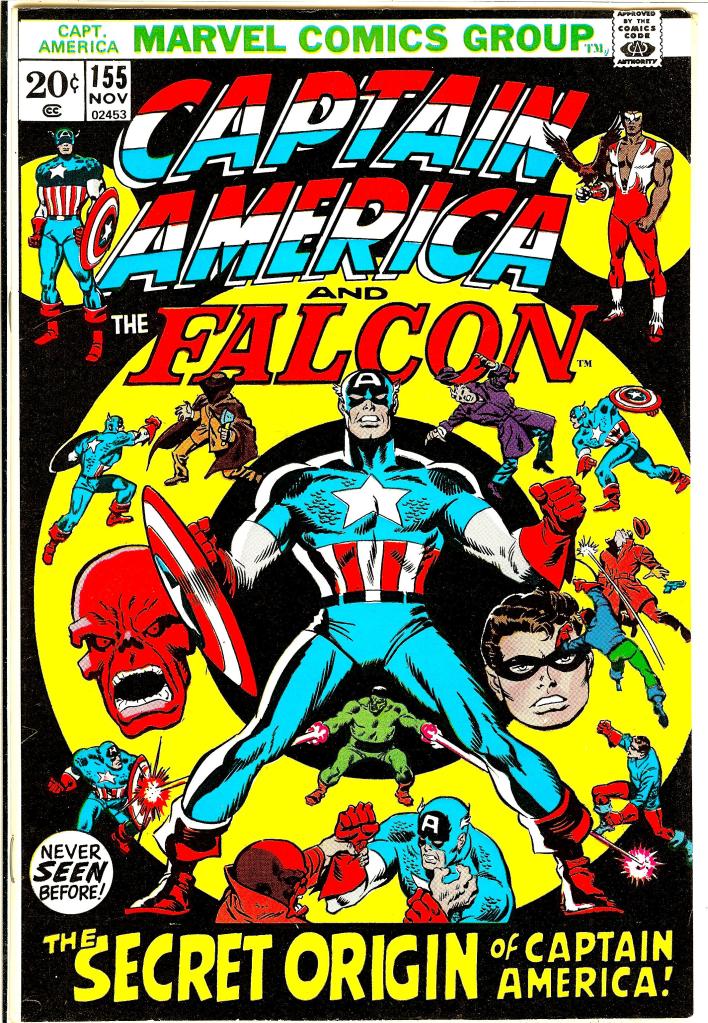
This entire four-part saga was mind-blowing and suddenly made CAPTAIN AMERICA a must-read comic again, but it was the third chapter that turned over its cards that was the most memorable. New writer Steve Englehart and artist Sal Buscema transform a simply continuity exercise–who was that in those Captain America stories that Atlas published in the 1950s–and use it to illuminate character wonderfully. In this adventure, Steve Rogers and Sam Wilson are confronted by the Cap and Bucky of the 1950s, bigoted right-wingers who were inspired to take up the mantle after re-creating the Super-Soldier formula, and who have lain in suspended animation since that time. The story defines Captain America for a more turbulent era as not a “My country right-or-wrong” patriot but as the champion of the underlying ideals the nation was founded upon. Englehart would develop this theme further all through his legendary run.
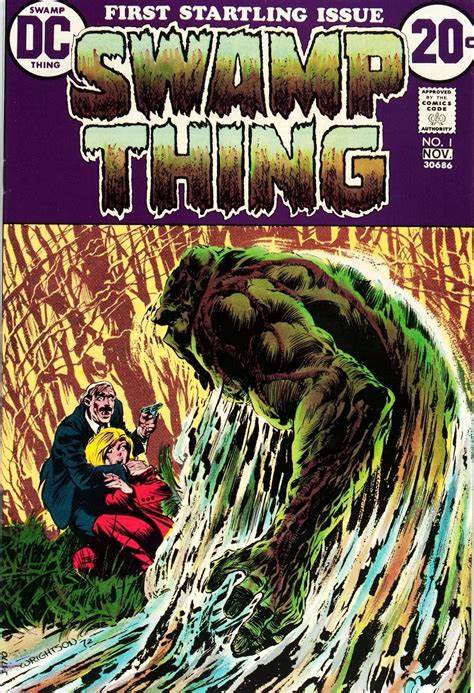
Developed out of a one-off mystery tale that had sold extremely well, SWAMP THING was a revelation when it hit the stands in 1972. On the surface, it was a monster hero book in the mold of INCREDIBLE HULK, but writer Len Wein brought a melodic lyricism to the bog-monsters adventures, and artist Bernie Wrightson drew the creepiest and most textured pages since the EC Comics of the 1950s. It was a beautiful synthesis of super hero and mystery/suspense comic, and it paved the way for an entire line of books some twenty years later. Above all, it was just a beautiful, oft-reprinted series.
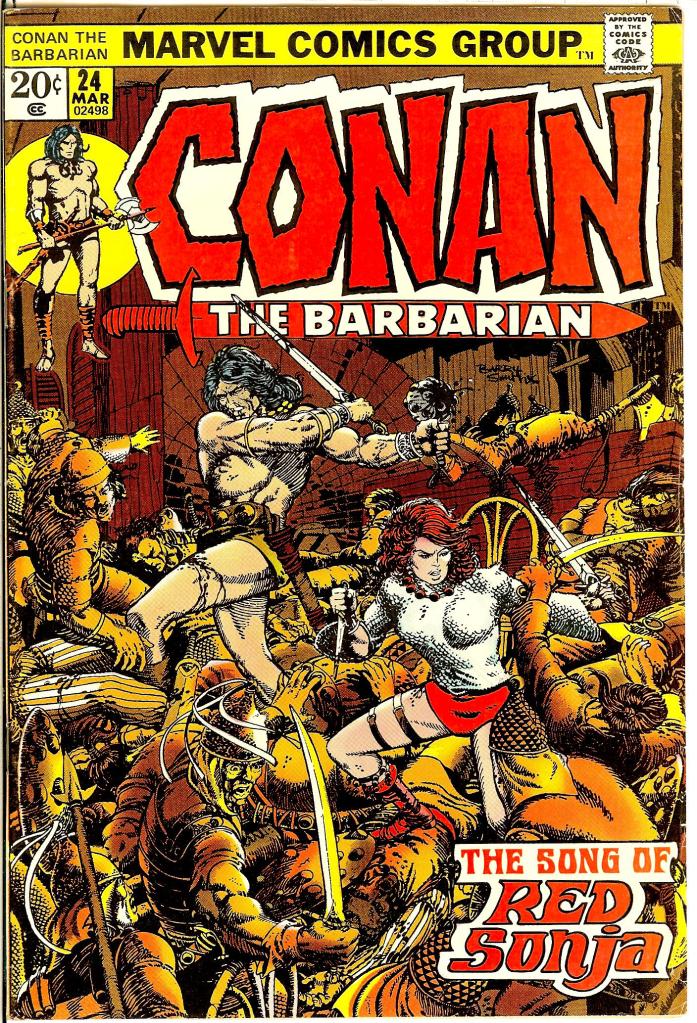
Celebrated as a watershed even as it was still coming out, Barry Windsor-Smith’s era as the artist on CONAN THE BARBARIAN reached its finish with this award-winning issue. Combining writer Roy Thomas’ sensitive adaptations and expansions on the work of the character’s literary creator Robert E. Howard with detailed and sensitive artwork that grew more and more accomplished with each passing issue, it was no secret that the series was at the forefront of comic book storytelling at the time. In this final issue before Smith would permanently surrender the artistic reins to John Buscema, who would approach it differently, he and Roy further develop Red Sonja, a character freely adapted and modified from an obscure Howard heroine, turning her into something unique and special . She’d become so popular with readers that she gained her own series, and eventually her own film.
 The Tom Brevoort Experience
Man, you nailed this list. That Batman is my favorite comic ever, and that Captain America story is my top CA storyline. Swamp Thing blew me away. All of these are total gems.
LikeLiked by 1 person
Hard to argue with any of these choices — every one a timeless classic! I don’t think I read any of these issues when they were new. I was following Batman and Captain America at the time, but missed those particular issues (the vagaries of newsstand distribution, plus my limited allowance…)
LikeLiked by 1 person
5 great covers, too. Kirby seemed to be changing his art.
That Batnan looks like the end of many an aspiring artist ‘s education. I’ve seen that style poorly imitated countless times. And I see the face of either Marvel’s Pluto or Dr. Druid in Ra’s’s torso. The corners of the pecs are the eyes. The horizontal line of the abdomen is the moth. The outline of the sternum is the goatee me. The shading of the shoulders are clumps of hair on the side of the head.
Classic Cap, too. Romita, Sr.?
BWS grew in leaps & bounds on “Conan”.
Wein & Wrightson. 2 more legends.
LikeLike
The Cap cover is Sal Buscema with John Verpoorten.
LikeLiked by 1 person
Thanks!
LikeLike
“Most people center on NEW GODS #7, “The Pact”, as being the best story creator Jack Kirby ever did, and it is a great tale. But for my money, “Himon” in MISTER MIRACLE #9 is its equal–if not a hair better.”
Also, NEW GODS 7 is dated March 1972, but it actually came out in December 1971. Though if we’re going by cover dates, I’d want to put NEW GODS 6, “The Glory Boat,” into contention.
[And of course, it’s not 1972 by any stretch, but if we’re talking Kirby’s best, “Mother Delilah,” from BOYS’ RANCH 3, deserves a place at the table…]
At the other end of 1972, WEIRD WAR TALES 10 (dated January ’73 but on sale in November ’72) had the delightful “Who is Haunting the Haunted Chateau?” by Sheldon Mayer and Alex Toth…
LikeLiked by 3 people
I’ll also add that that year’s run of SUPERBOY, largely by Leo Dorfman, Bob Brown and Murphy Anderson, while it’s unlikely to show up on anyone’s best of the year list, is a favorite of mine. An improvement, I thought, on the Robbins/Brown/Wood run, mainly because someone got Brown to stop trying to do DC’s idea of what Marvel comics looked like — awkward panel shapes and choppy storytelling — and settle back down to clearly told, charming drawing. Plus, it was the year Dave Cockrum arrived on the Legion feature. Comfort reading at its finest.
LikeLiked by 3 people
Cockrum on Legion changed everything for me. That short run was so amazing to look at that it ignited a love for the Legion that nothing has ever been able to extinguish. Bad stories, bad art, bad reboots. Doesn’t matter. Long live the Legion!
LikeLiked by 3 people
Books that came out in 1971 are eligible in 1971, so those two New Gods issues aren’t applicable to this list. But “The Death Wish of Terrible Turpin” almost made the cut. I just think “Himon” is better and hate to stack against any one book or creator too heavily. I don’t know what I would have cut in favor of it.
And year, “Mother Delilah” is a shoe-in if we ever do 1951 or thereabouts.
LikeLiked by 3 people
No notes.
LikeLike
The Saga of Ra’s Al Ghul#1 to 4 ( January-April 1988 ) is where I first read Batman#244 ( September 1972 ). I like Ra’s Al Ghul the non-Asian Dr. Fu Manchu and if Marvel editors/writers looked up the Wufang Shangdi [ https://en.wikipedia.org/wiki/Wufang_Shangdi ] and revealed that Yellow Claw was the last surviving member of a group that patterned themselves after the Wufang Shangdi ( Five Regions, Highest Deities or Highest Deities of the Five Regions ) or Wudi ( Five Deities or as a book that was in my city’s library called them the Five Emperors ) or Wushen( Five Gods ) — Black Deity ( Heidi, Black Emperor – the North ), White Deity ( Baidi, White Emperor — the West ), Green Deity ( Cangdi, Green Emperor –the East ), Red Deity ( Chidi, Red Emperor –the South ) & in the center the Yellow Deity ( Huangdi ( Yellow Emperor or Yellow Deity –the Center ) and as long as you don’t colour Yellow Claw’s skin yellow you can use him as easily as you use Characters that have brown skin that you call Black. Cause I like YELLOW CLAW too ( A hell of a lot more than the Mandarin ). FYI, I know a dragon ate Yellow Claw, but the Alas Age has a number of stories with Duplication Machines that I copied on to a USB drive ( among other Atlas Age & Timely Comics stories ) that in a yet to be written Atlas Age era story Yellow Claw could have gotten his hands on.
LikeLiked by 1 person
First, HIMON is a really cool character. When I got to see Jack Kirby’s Mister Miracle stories a couple years ago I was surprised to see that Big Barda wasn’t the only one of Female Furies to be good. Had it been me, I would have left Jack’s characters the way he intended and just recruited those other unnamed New Gods of Apokolips to be my own evil Female Furies ( possibly under a different group name ). I know when DC did those millennium reprints that on the last page of New Gods there were unnamed New Gods of Apokolips seen.
LikeLiked by 1 person
Good choices (whether or not they’re the best choices — I’ve no desire to go back and look at the year and debate with myself). Swamp Thing #1 , in particular, blew me away.
“Himon” is effective showing the brutality of Apokolips life. I enjoy the closing scene with Darkseid insisting he gets some credit for making Scott the man he is.
LikeLiked by 2 people
After about 1970 (maybe 1960), it gets harder to pick best stories rather than best arcs.. The 4 issue Ra;s-al-Ghul arc is really one story as is the “Cap of the ;50s arc.
It is even more true of things lie the New Gods or the Kree/Skrull War or Adam’s Deadman run in Strange Adventures or even the firs several issues of The Flash (essentially a Grodd miniseries) or the first several Green Lanterns (a Qward miniseries),
New Gods is an interesting issue, since, Mister Miracle #9 is mor or less the continuation of New Gods # 7.
LikeLike
Nice choices! I’ll have to go take a look at your previous BC posts
LikeLiked by 1 person
I’ve been struck that Himon seems to get short shrift in any continuation of the Fourth World stories, after seeing what a major role he had in the original. (Darkseid shows up all over the place…)
LikeLike
Do I remember correctly, but didn’t Englehart & Rodgers make Himon sort of Highfather’s Chief of Staff/Grand Vizier?
Conway did not use Himon in his New Gods continuation and Gerber brought Mister Miracle back to Earth and changed to focus to inspiring people to embrace hope and choice as opposed to “Anti-life” and the rest of what Darkseid embraced.
Thus was Himon lost to continuity.
LikeLike