

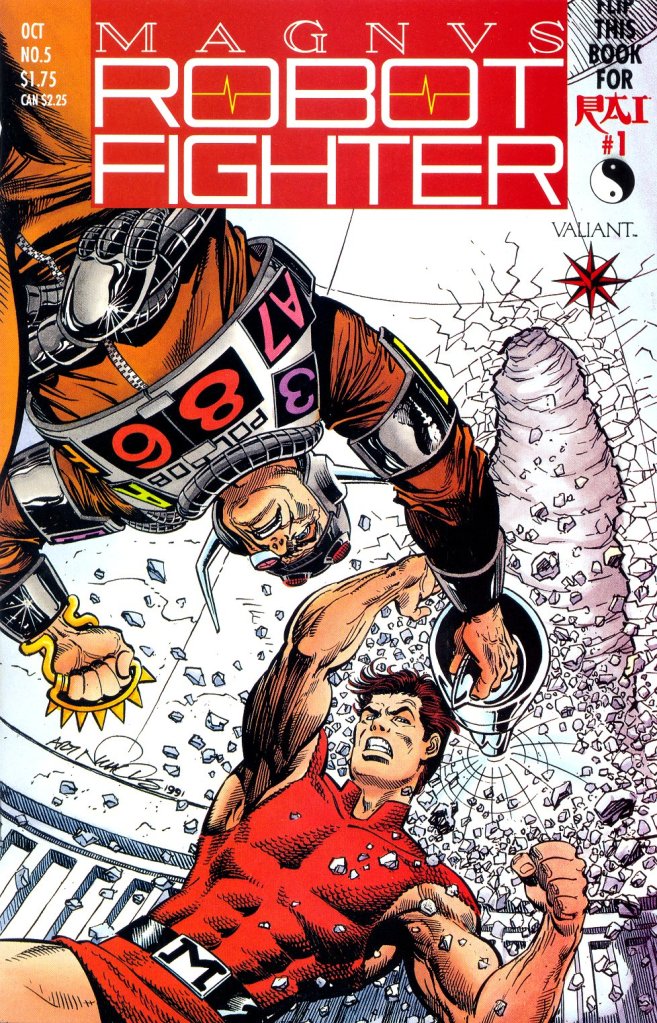
The first original super hero character to debut from the growing Valiant line of titles was introduced as a flip-book feature in the fifth issue of MAGNIUS, ROBOT FIGHTER. And with good reason, as this new champion would exist in the same future time frame and milieu as that robot-smashing hero. This was Rai (pronounced Ray), the champion of the Japan of the 41st century. The strip would run as a flip book feature through issue #8 before being spun off into its own separate title.
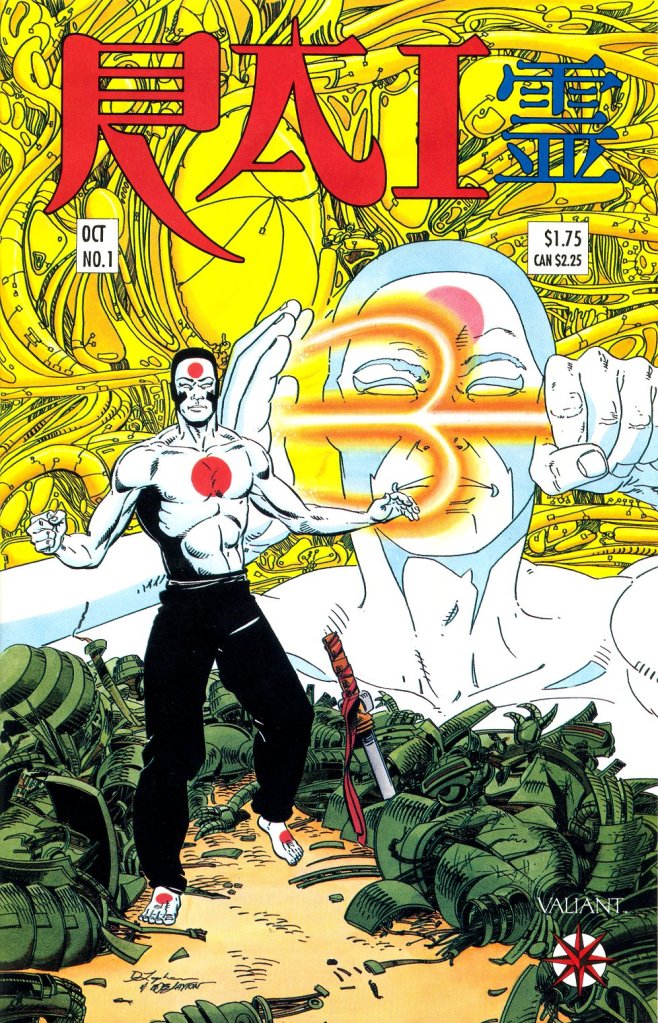
Rai was the creation of Jim Shooter, who both wrote and illustrated the initial story. In order to help conceal the fact that the organization was operating with a dearth of penciling talent, Shooter chose to credit his artwork with the pseudonym Paul Creddick, which was the name of his brother-in-law. The strip was inked by Bob Layton, a strong finisher who made up for any shortcomings in Shooter’s style with a strong, slick finish. The art is relatively basic, with lots of large areas left open for color, but it evidences the sort of straight-ahead storytelling that Shooter preferred and which he attempted to instill in the entire Valiant art staff.
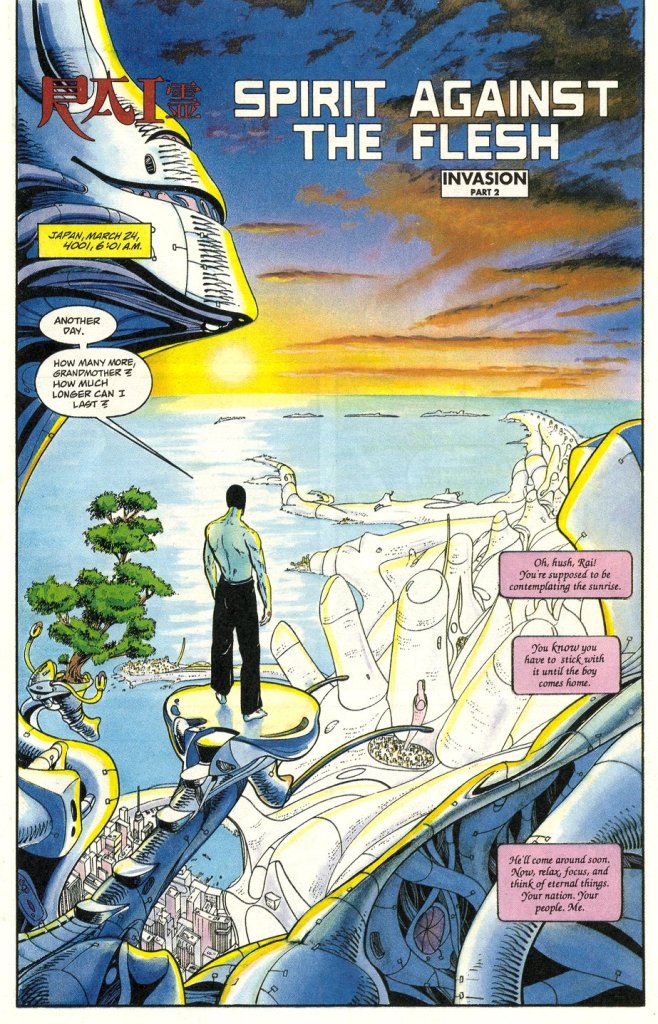
As mentioned, the story takes place in Japan in 4001, a time in which the entire island nation had become a single massive technological entity–in effect a huge robot. The operating system that maintained all facets of life within the islands was called Grandmother, and it was responsible for selecting and empowering a line of champions who defender it and its inhabitants from any threats from within or without–like a human antibody. As the story opens, the latest such defender, Rentaro, having grown old, is ready to pass on his powers and his responsibilities to his successor and son, Tohru.
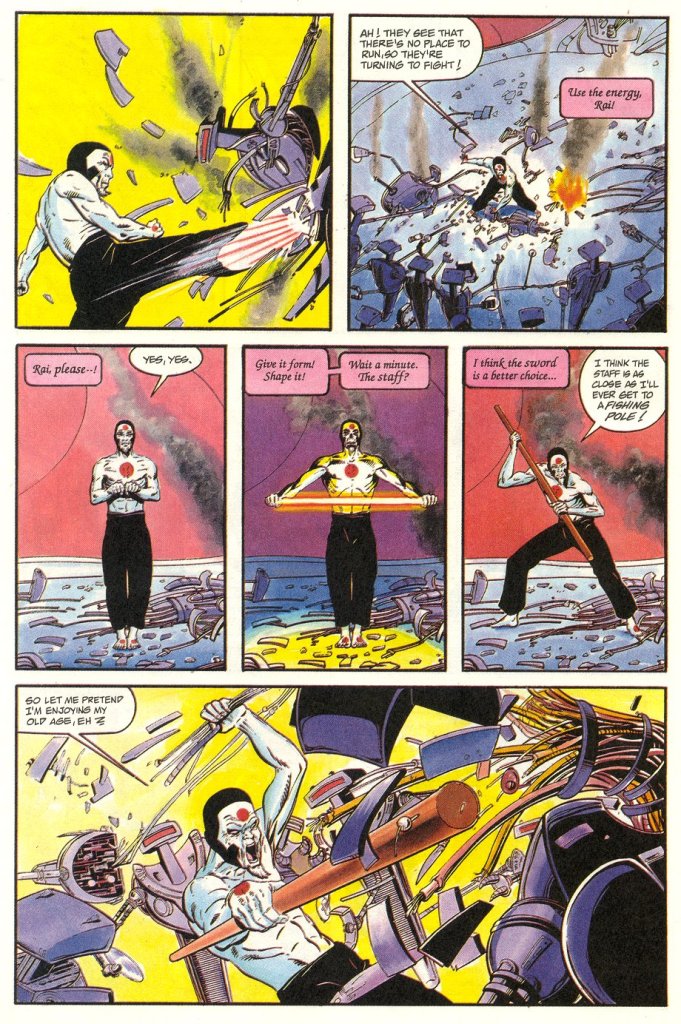
But before we can get to that, a crisis calls for the services of Rai, and we’re given a crash course in his abilities. In addition to being strong and fast and a master martial artist, Rai can form weapons out of the energy that empowers him. But Rentaro has grown old enough that he can’t quite manage to manifest a sword any longer and so much make do with a simple staff. But this is enough to permit Rai to rout an attack from an Anti-Granny rebel faction and the Vi-Robs it has manifested. But the effort of doing so leaves Rentaro both physically and emotionally drained.
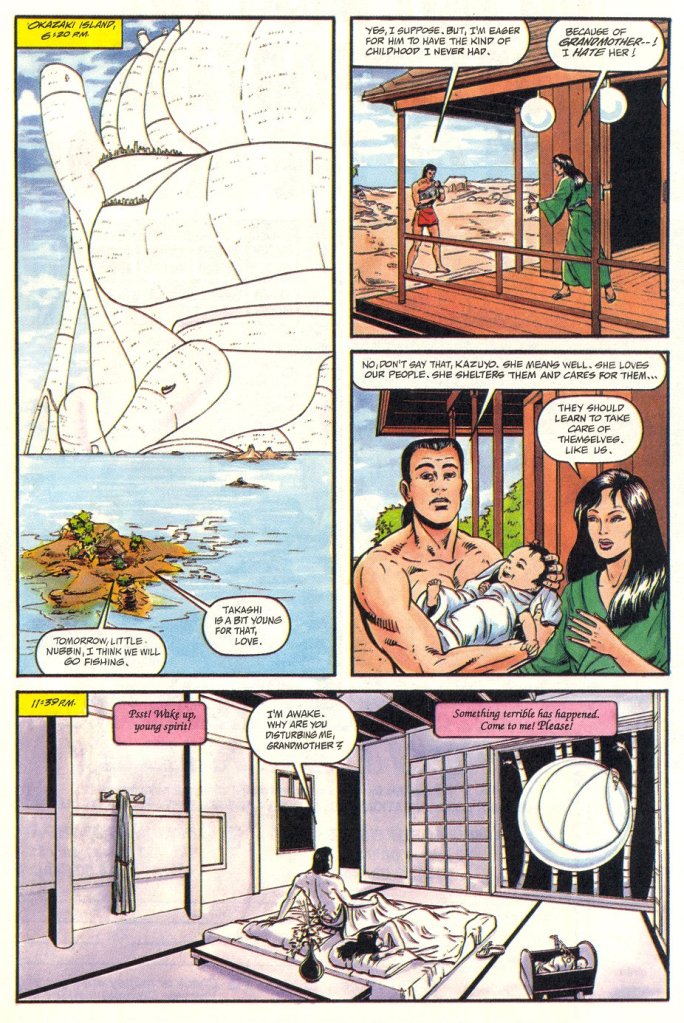
Meanwhile, we cut to the nearby small island of Okazaki, which exists outside of the robotic encasement that envelopes the rest of Japan. Here, we meet Tohru, the son of rai who is destined to be the next in line, as well as his wife Kazuyo and his child Takashi. They live a simple life eschewing the technology of this future world that has made most of the citizenry complacent and pampered. Kazuyo doesn’t want her husband to take up the mantle of Rai, and she certainly doesn’t want it passing on to Takashi in the future, so Tohru is caught between his familial responsibilities and his hereditary ones. That evening, Tohru is visited by a robotic envoy of Grandmother who tells him that he must accompany it to the mainland.
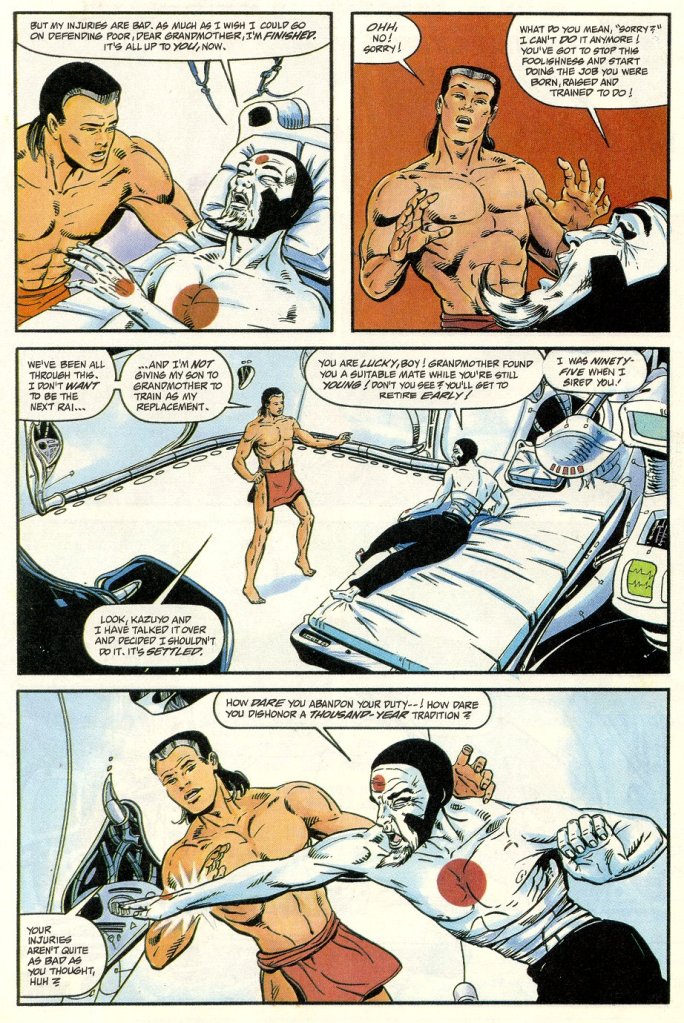
Conveyed to his father’s citadel at the heart of the structure, Tohru discovers that his father had been injured in this latest attack and wants him to take over in the role of Rai immediately. Despite having been trained for the position all his life, Tohru is reluctant to take on his father’s burden, and like his wife, he doesn’t want to give his son over for the same training and eventual fate. The two men argue, and Grandmother reveals that the real reason she needs Tohru to take over as her protector is that Magnus had joined forces with an Anti-Granny coalition and is coming to destroy her. In order to face him and defeat him, a fresh young Rai will be needed. With little alternative left to him, Tohru accepts the mantle.
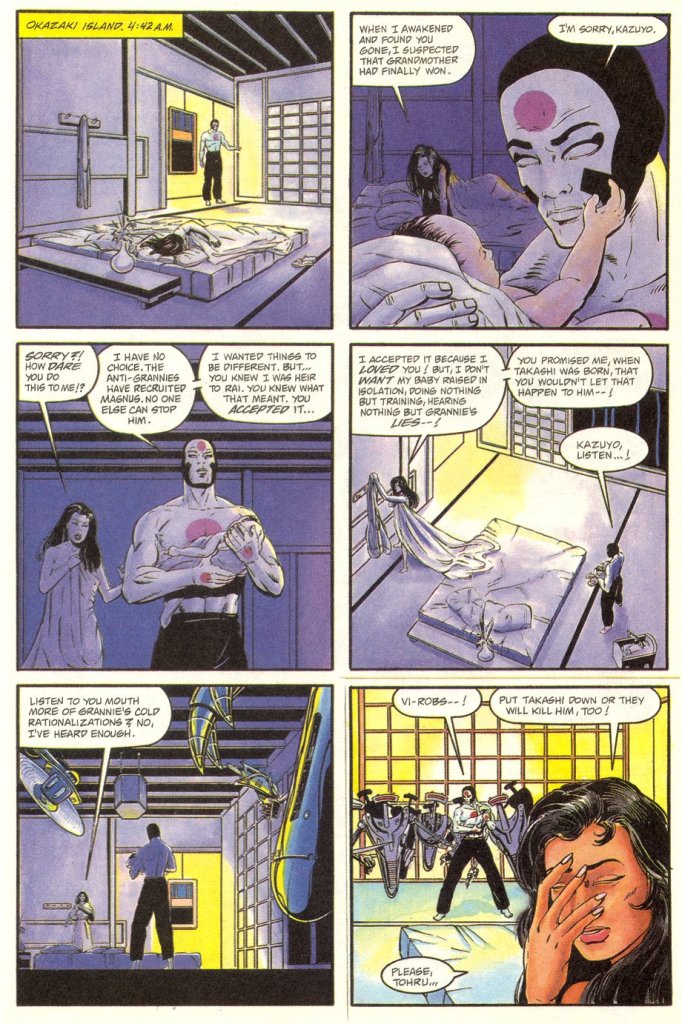
As might be expected, when Tohru, now Rai, returns hime, Kazuyo is upset by this development. She lays into hm, reminding him of his promise never to join with Grandmother and never to give their child over for training. But Rai is committed to this course of action now and nothing will sway him. It turns out, though, that Kazuyo is sympathetic to the Anti-Grannies’ cause and she has her transformed husband attacked by more vicious Vi-Robs, giving him the opportunity to show off what he can do in his new form. As the chapter ends, the new Rai hands his son Takashi over to Grandmother to raise while he readies himself for the upcoming conflict with Magnus, his relationship with Kazuyo sundered. and the initial tale ends with Tohru standing where his father stood at the story’s beginning, looking out across the land that he is now responsible for protecting and readying himself for Magnus’ arrival.
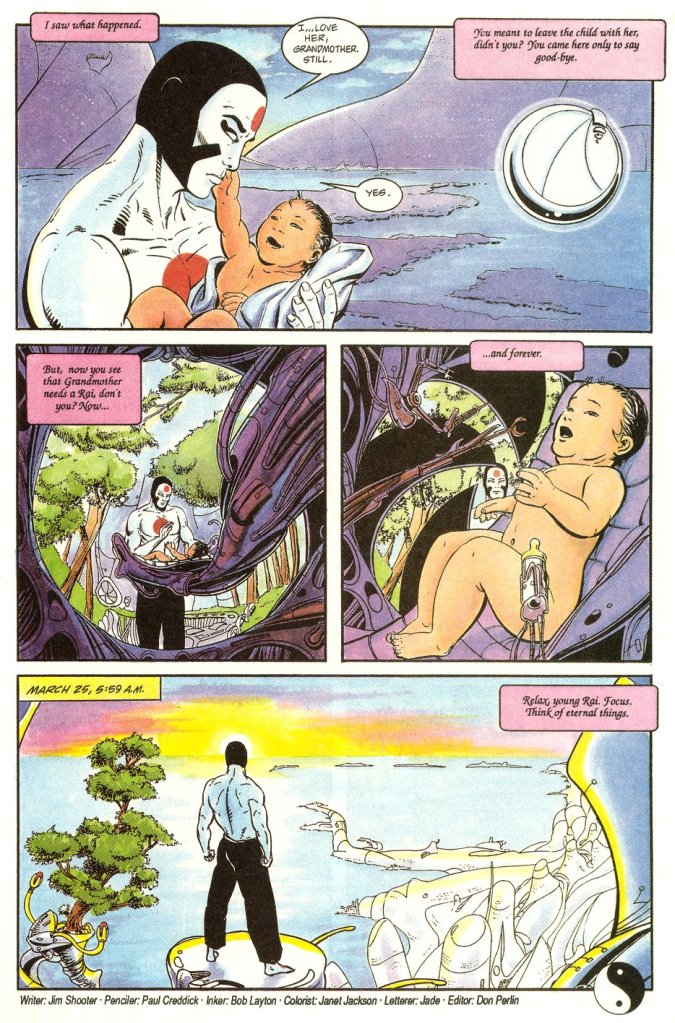
Rai had something of a rough road throughout its publishing history. While Valiant felt bullish enough about the character to spin him off into his own series following the four flip-book installments, that solo series didn’t perform well and was cancelled in only eight issues. The character perished during the UNITY crossover that united all of the Valiant characters across time, and was succeeded in the role by a new Rai, this one a Harbinger. At this point the title was resurrected with a new concept as RAI AND THE FUTURE FORCE, a team book using characters from across the future of the Valiant universe including Magnus and the future iteration of the Eternal Warrior. A connection had been created between the line of Rai and the activities of a modern day hero, Bloodshot, whose own powers came from nanites within his bloodstream. It was revealed that these selfsame nanites had been passed down from generation to generation as the empowering factor for all of the Rais.
 The Tom Brevoort Experience
The architecture in Japan year 4001 is sure something.
LikeLike
Shooter does a much better job than I expected to see. He makes his edicts for art look better than most who tried to follow them Poor Rai lost his son, his wife, and eventually his life? This makes me not regret not following Valiant more than I already have.
LikeLike
Never knew Shooter had penciled this. Guessing Layton did some real heavy lifting inking here, compared to the only other Shooter penciling job I’ve seen in Super-Villain Team-Up #9
LikeLike
I’ve never read RAI, but having the character have the Rising Sun (ok, let’s say it’s the flag of Japan) on the character’s feet is just so…. unknowledgeable about Japanese culture. (The foot can be dirty, so one washes it to protects it from getting dirty or other things dirty.) Maybe there’s an explanation why the red dots need to be on the feet too. I get it: it’s his character design, but it’s not a great one. Sunfire (from X-Men) similarly wore the imperial Japanese flag on his chest for the longest time — impossible for me to believe. /academicrantoff
LikeLike