

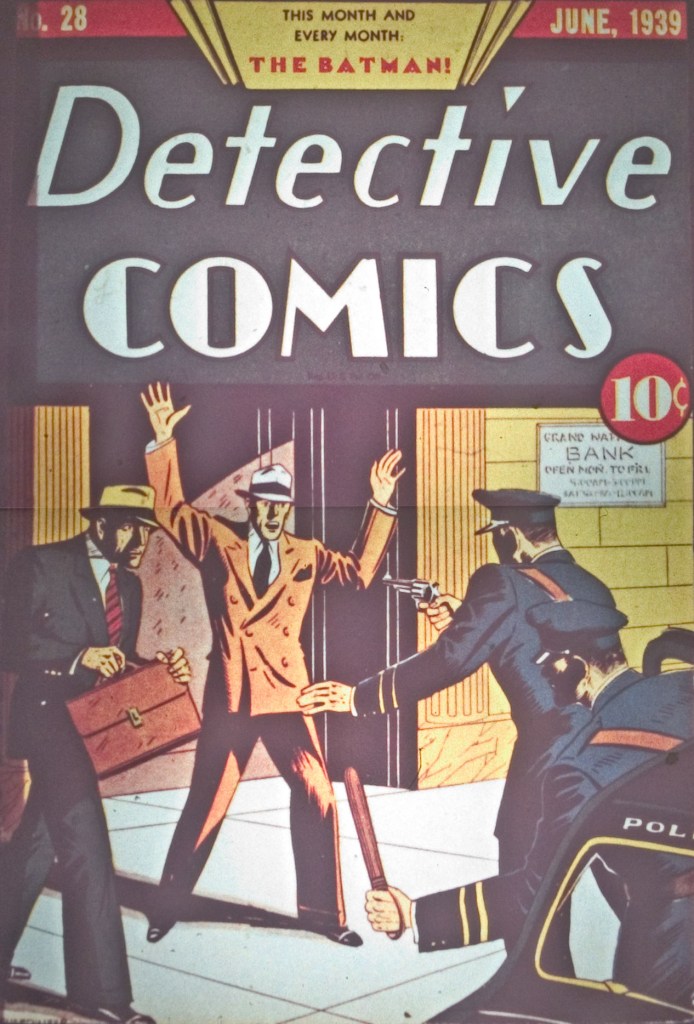
Batman was created in direct response to the overwhelming success of Superman, and he represented the second major super hero to be created, and the polar opposite of the Man of Steel. While the two characters seemed like they shared a tailor, their attributes were in direct contrast to one another. Superman was godlike and all-powerful, whereas Batman was human and vulnerable, simply trained in fighting and criminal detection. They represented the anthology series they headlined, ACTION COMICS vs DETECTIVE COMICS. As with Superman, it took the publishers a couple of issues to realize that showcasing their popular character on every cover was a good idea, so Batman is absent from the cover to DETECTIVE COMICS #28 apart from a text blurb at the top.
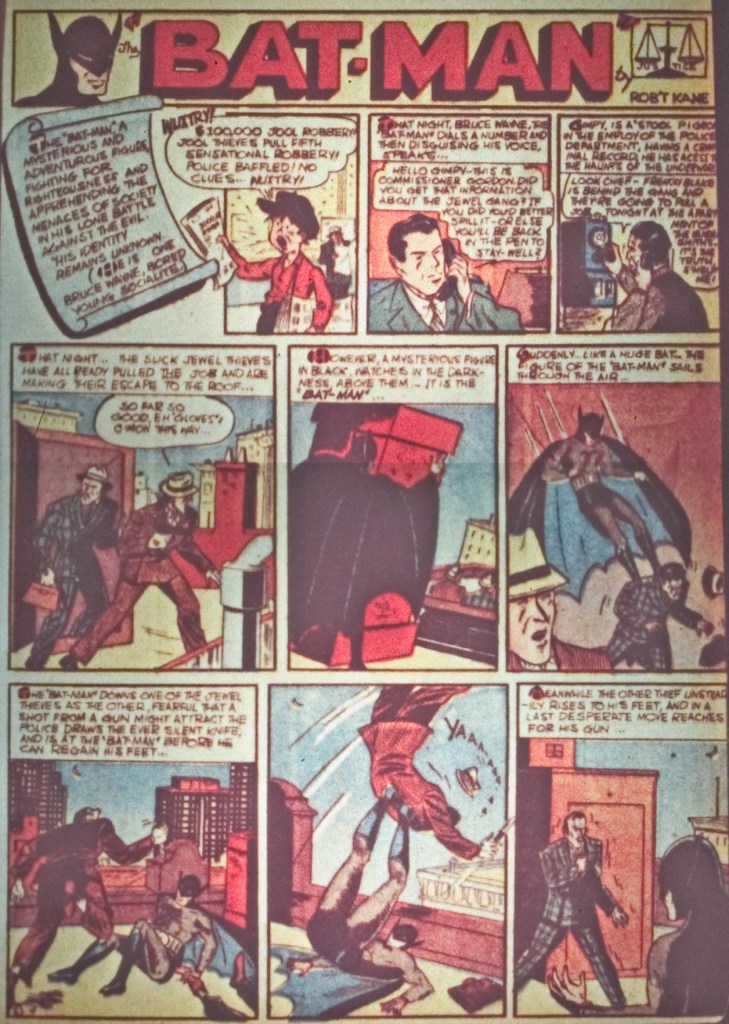
This second Batman adventure, like all of them, was credited only to Bob Kane (here, Rob’t Kane) and it’s likely that he did most of the drawing on it, swiping and cribbing from other adventure strips. Shortly, Kane would begin to hire assistants and ghosts who would handle the bulk of the labor on the strip, but that this early juncture, that hadn’t happened yet, so Kane was on his own. Scripting was handled anonymously by Bill Finger, who was instrumental in coming up with many of the elements that we associate with the character.
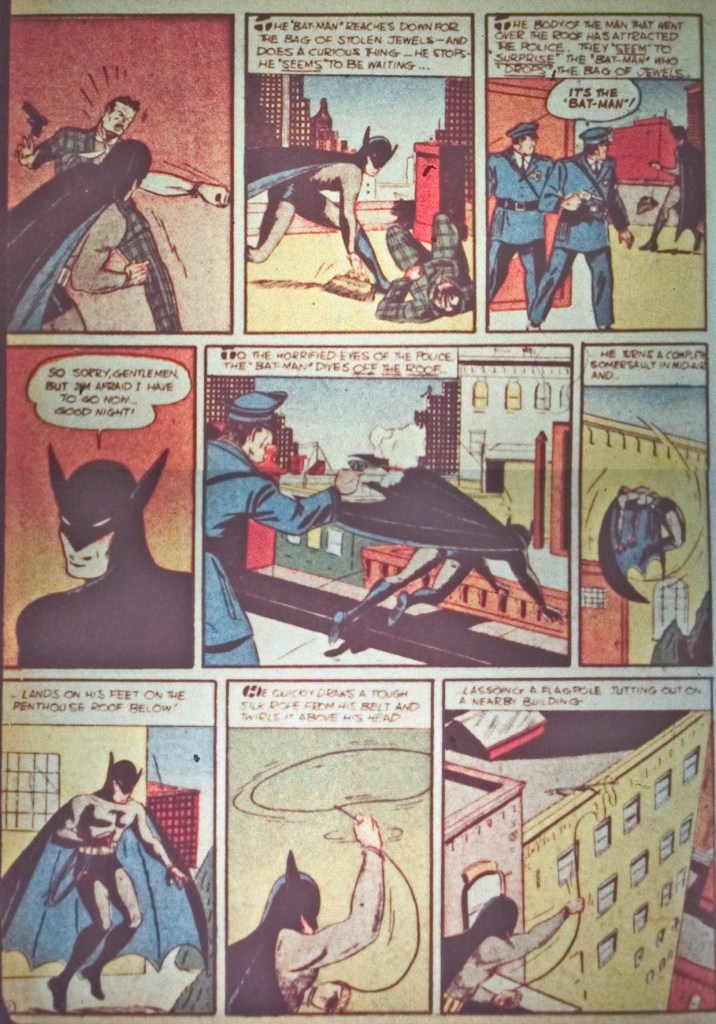
There really isn’t a whole lot to this second story that stands out. It could have been any of a number of other similar features that filled the pages of DETECTIVE COMICS. But the visual appeal of the character did give him a quality that set him apart from the likes of Slam Bradley and Speed Saunders and his other pagemates.
 The Tom Brevoort Experience
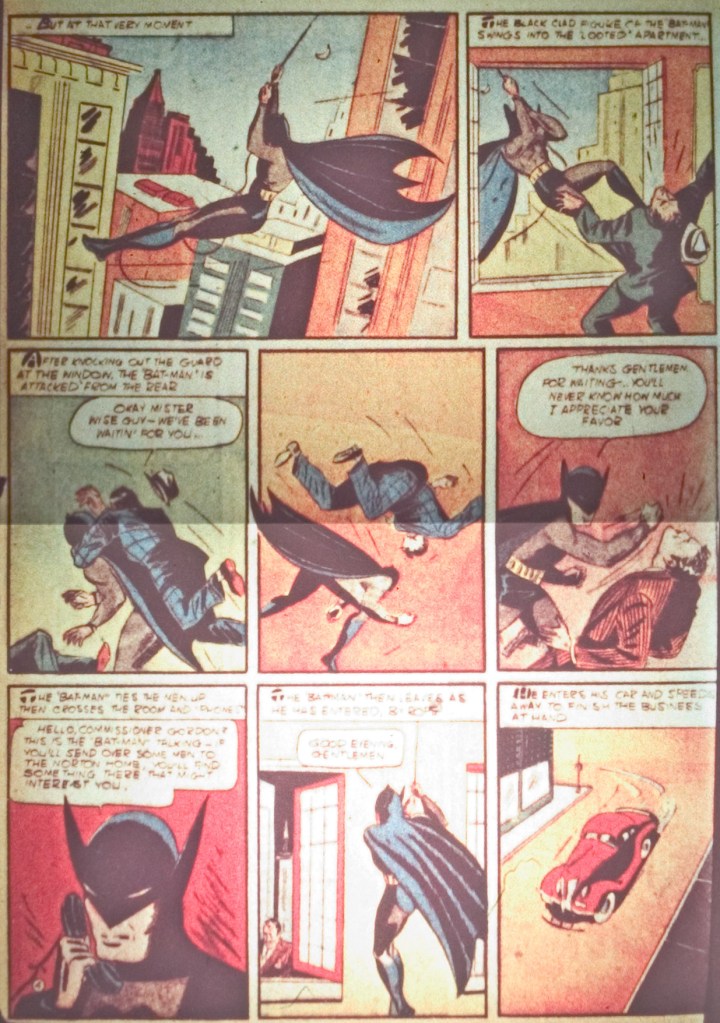
Well The Bat-Man definitely killed that thief with the knife when he kick flipped him of the roof ( first page bottom second panel ). At least at the beginning of his comic book crime fighting career he didn’t have problems taking a life.
LikeLike
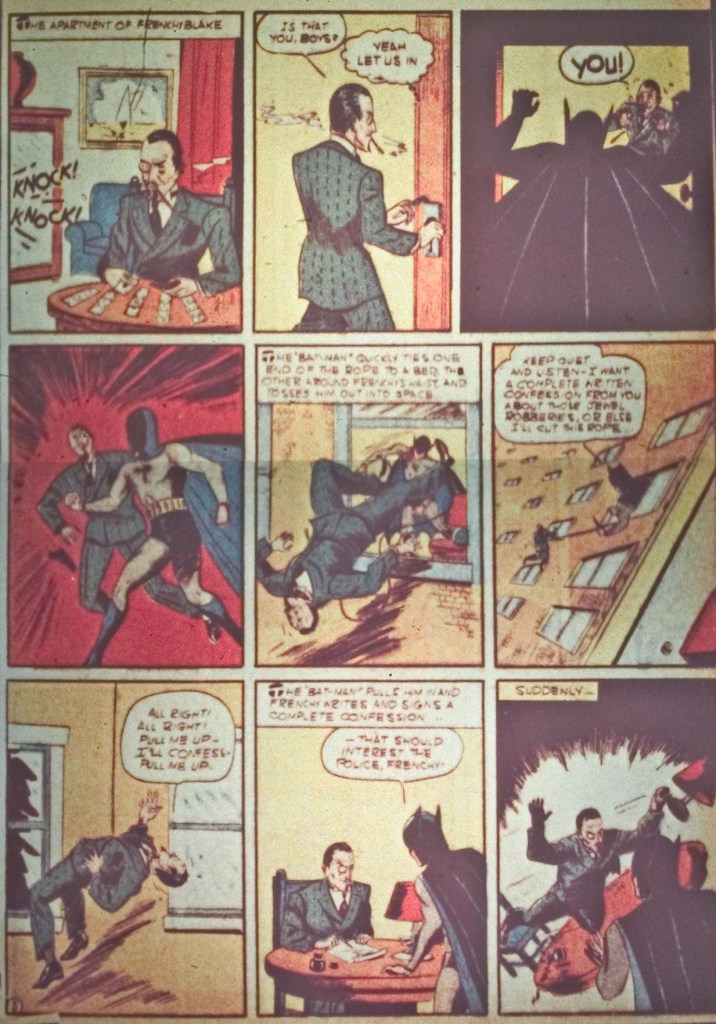
I have to give the devil his due and compliment the panel on the upper right-hand corner of page 5 where we only see the Batman’s figure from behind while the horrified bad guy screams out “You!”
LikeLiked by 1 person
I think even Alex Toth must’ve paid attention to that panel. Maybe great minds think alike, but I think this set the tone for many artists to come. I’ve seen this emulated, even if it wasn’t directly. But it’s influence continues to this day, and is such a huge part of who Batman is.
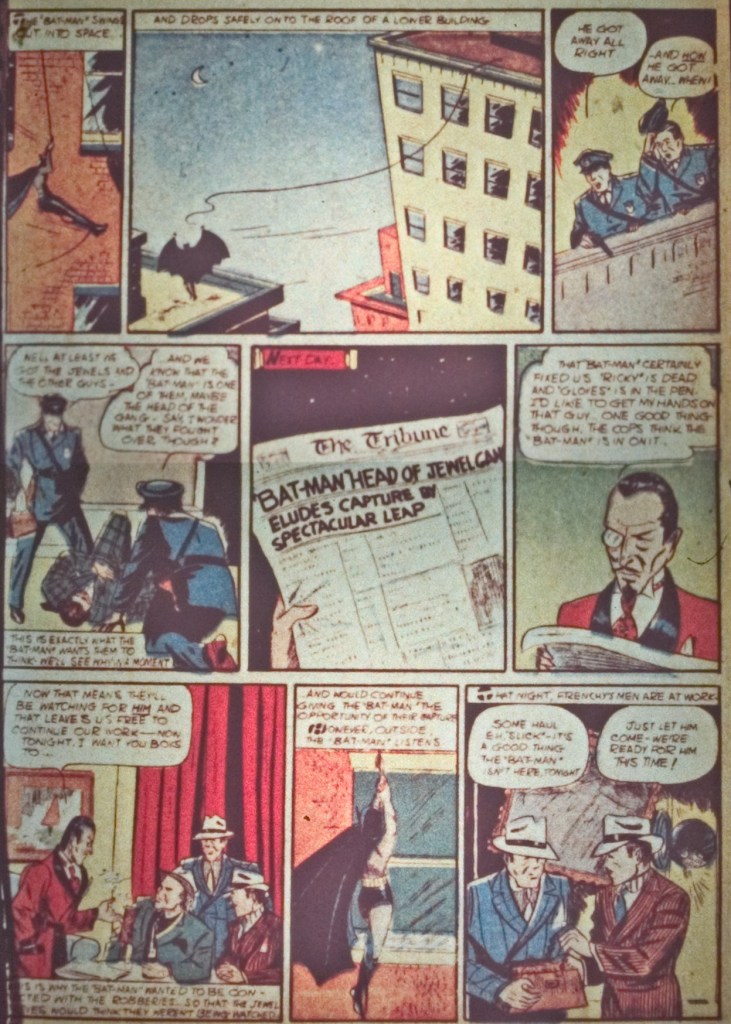
Same for the 4th page, top left panel, Bats swinging against the cityscape. Looks ancient today, but the image resonates through the ages.
LikeLike
“Superman was godlike and all-powerful.” He wasn’t all-powerful. He wasn’t even initially as powerful as he’d become. The longer he was around, the ridiculously more powerful they made him, trying to “one-up” themselves, when really they were pushing him into being less interesting. To the point where they tried to scale his power levels back, from maybe 1971 for a few years. Then again in 1986, after they had jumped off the scales again.
I’m OK with the small “g” godlike abilities. Most superheroes seem influenced by ancient mythological characters. The strength, the speed, flight, magic tools or weapons. Shape changing. Invisibility. Mind-reading. Etc., etc.
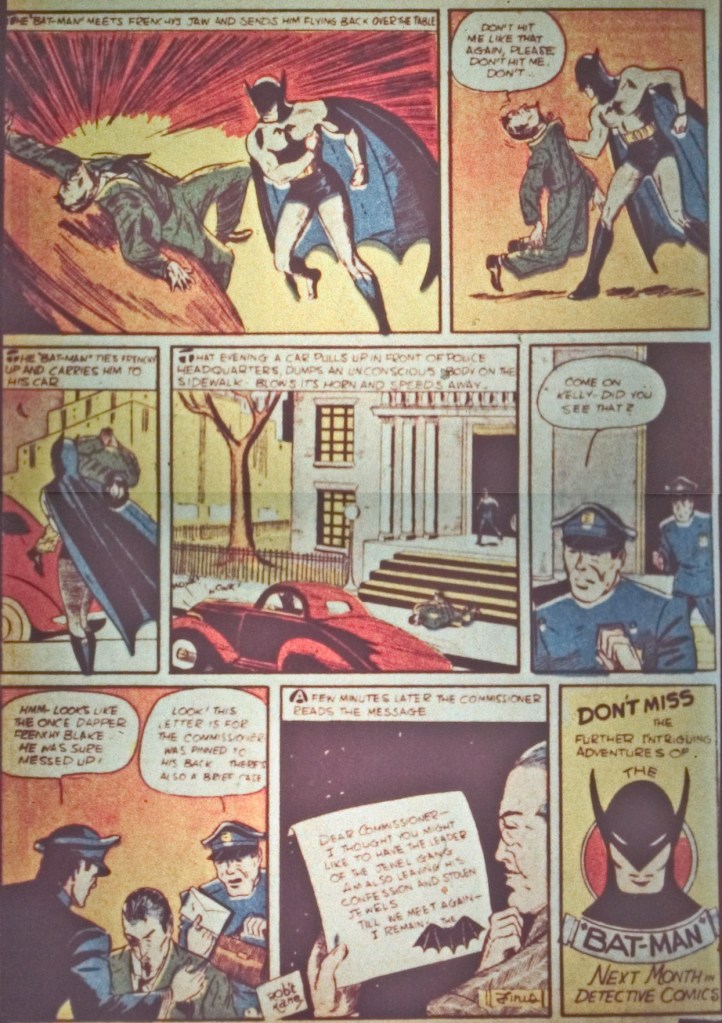
So much is established in this 2nd Batman tale, thematically and visually. It’s still easily recognizable today, even if crudely, but inventively rendered. Setting the tone that echoes 90 years later, and inspired some, many, of the best stories in comicbooks.
The 4th page, top left panel, Bats swinging against the cityscape. Looks ancient today, but the image resonates through the ages. Iconographic.
Same for the 5th page, top right panel. Starkly dramatic. I think even Alex Toth must’ve paid attention to that. Maybe great minds think alike, but I think this set the tone for many artists to come. I’ve seen this emulated, even if it wasn’t directly. But its influence continues to this day, and is such a huge part of who Batman is.
Great stuff.
LikeLike
It is great stuff! Kane was more artistically limited than Joe Shuster in a lot of ways but he got a lot of the atmospheric beats right.
The relative crudity of many early super-hero comics isn’t always a negative….at least not to my eyes. In Kane’s case it adds to the sense of luridness.
LikeLike