

So here’s the sort of mental exercise that I undertake on days when I’m trying to ignore the larger world. I just recently celebrated my 35th Anniversary of being hired to work in Editorial at Marvel. Over the course of those 35 years, I’ve had the pleasure of working on a huge variety of projects. I like to think that most of them have at least some redeeming quality to them, even the stinkers. But what were the best ones?
Mind you, this is going to be a very subjective list, about my own tastes and preferences as much as anything else. In compiling this list, I was forced to cut a bunch of additionally worthy projects that weren’t quite Top-15 Material. Which made me feel good, honestly, like I’ve been accomplishing something over these past 35 years. (It would have been truly tragic if I didn’t have to cut entries and was struggling to come up with fifteen!) So here are my selections for the Fifteen Best Projects That I Edited:
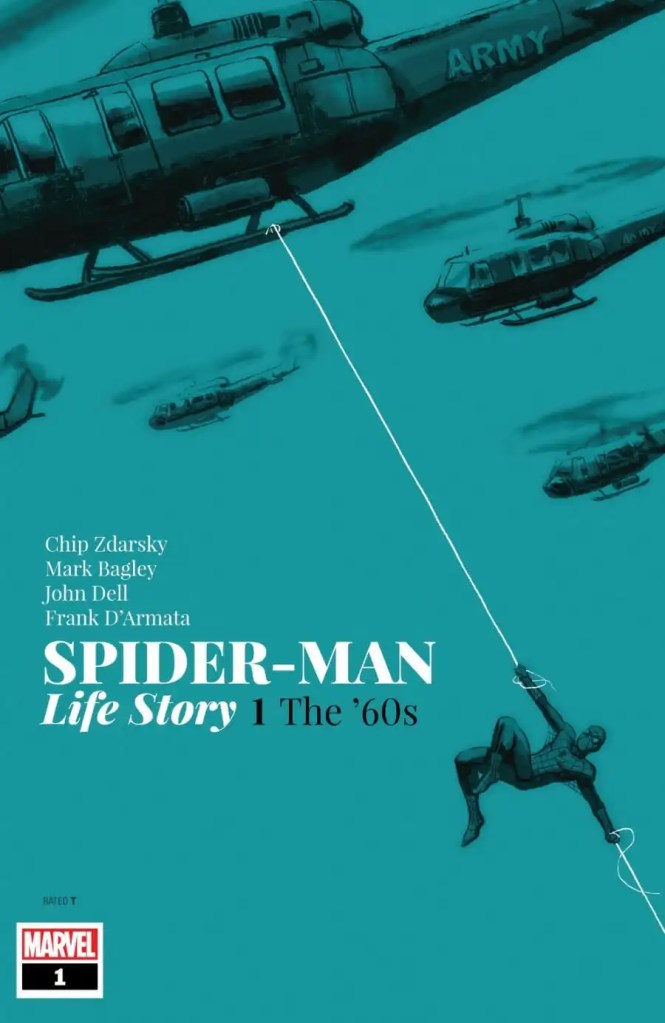
15) SPIDER-MAN: LIFE STORY: This book had a very simple concept behind it and a long gestation period. I’d been struggling to do a project that put the Marvel characters into a real passage of time setting for two decades, since first tossing the idea around with Roger Stern years earlier. But it wasn’t until editor Darren Shan suggested that the project focus on only a single character that I was able to crack it. Chip Zdarsky took that concept and made it his own, a grand celebration of Spider-Man’s entire history, one with a fitting and satisfying conclusion at the end. And having Mark Bagley draw it, an artist who is to this generation what John Romita was to the previous one, was just he cherry on top.
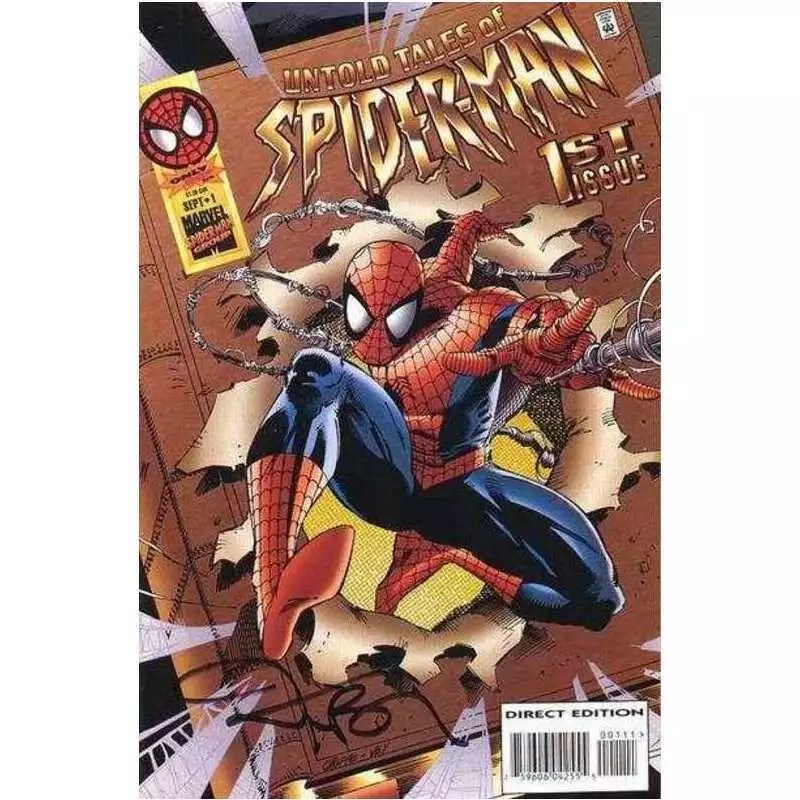
14) UNTOLD TALES OF SPIDER-MAN: This was the project that really put me on the map editorially and started to make people take notice of me. Designed to be a more affordable alternative to the main Spider-Man line, this series outlasted its own initiative and the other similar books created at that time and had a sustained run. Writer Kurt Busiek and artist Pat Olliffe told brand new done-in-one stories of the Web-Slinger’s early days, set around the events of the earliest issues of AMAZING SPIDER-MAN from the 1960s. At a time when the main Spidey titles were in the midst of the long-running Clone Saga, this was seen as a refreshing return-to-form for the character, the 7UP in a world of Cola Wars. It also kicked off a long and fruitful partnership between Kurt and myself.
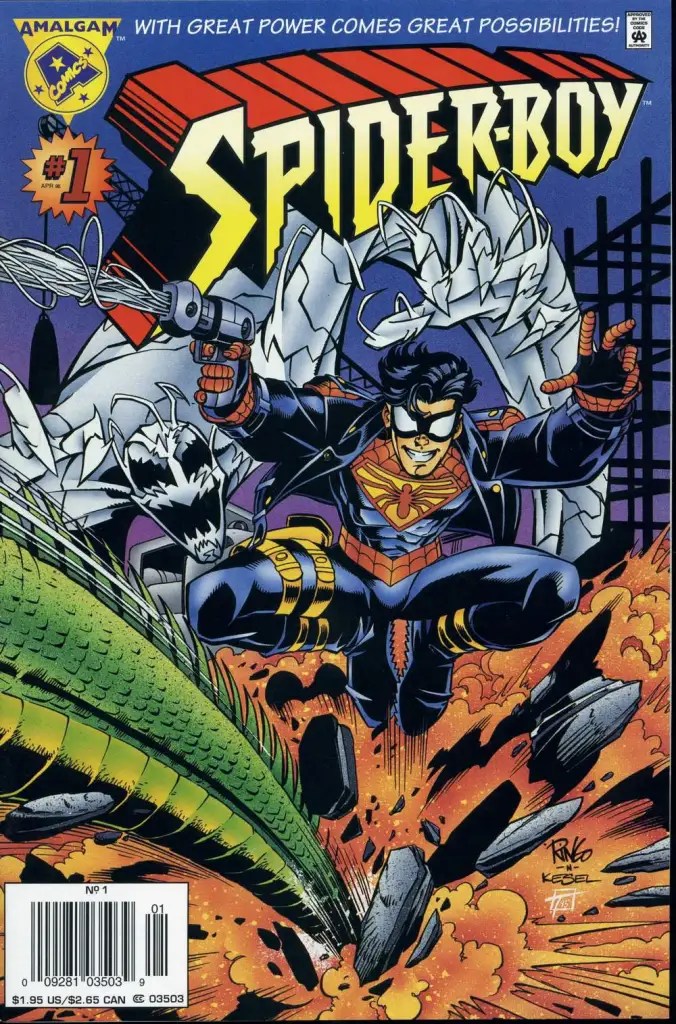
13) SPIDER-BOY #1: Released as part of the surprise Amalgam line of comic books that mashed up Marvel and DC properties into new things, SPIDER-BOY #1 was the first genuinely great comic book issue that I ever put out. Mostly that’s due to the efforts of the creative team, Karl Kesel and Mike Wieringo. Karl in particular had the best handle on what to do with the Amalgam concept, realizing that it wasn’t so much about telling a super hero adventure as it was the novelty of being able to combine the Marvel and DC properties in interesting ways. So this book was full of Amalgam Easter Eggs that worked as components within the story but which were also pretty clever on their own. The book was unpretentious fun, and is generally considered the best of the first wave of Amalgam books along with Mark Waid and Dave Gibbons’ SUPER-SOLDIER.
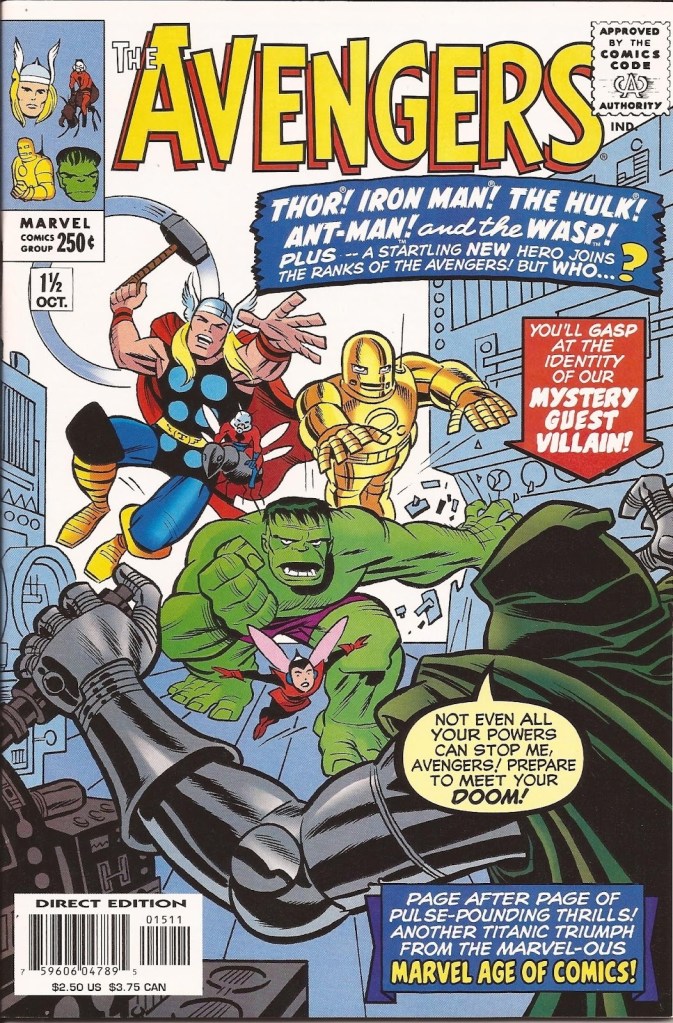
12) AVENGERS #1 1/2: Mostly forgotten today, but a joy of a one-shot to work on. And it all came together almost by accident, when Assistant Editor Gregg Schigiel reached out to artist Bruce Timm about doing an emergency variant cover for AVENGERS FOREVER that wound up not being needed. That impulse grew into this delightful one-off set between the events of AVENGERS #1 and #2 and crafted so as to feel like it could have been released in 1963 (AVENGERS was a bimonthly title at that time.) It’s period evocation of the era is on point, it’s wonderfully cartooned by Timm, capturing the excitement of the early, rough Jack Kirby of the time (though Timm considered his efforts a failure in this regard) and with the scripting of Roger Stern making it sit well within the Marvel history of the time. Biggest problem with it, unfortunately, is that we didn’t make it clear to readers what it was and many thought it was a reprint book of some kind.
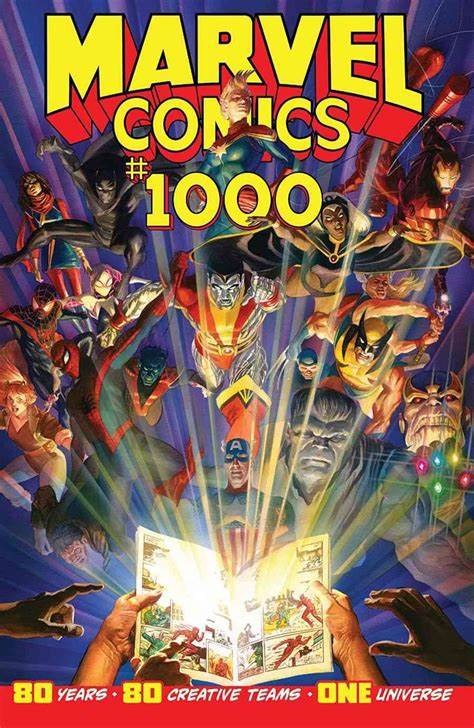
11) MARVEL COMICS #1000: By far the most complex and ambitious single issue that I’ve ever worked on, this anniversary one-shot celebrating Marvel’s 80th year as a comic book publisher crafted a single sprawling experience out of eighty one-page stories by a wide variety of the most well-regarded creators in the history of the firm. If nothing else, it’s the only book in history that allowed STAR WARS, CONAN and MIRACLEMAN to exist side-by-side with the assorted Marvel heroes. Writer Al Ewing was the iron man who helped put this all together and who created a story thread that could run throughout the issue and across eighty years of time to deliver a satisfying reading experience.
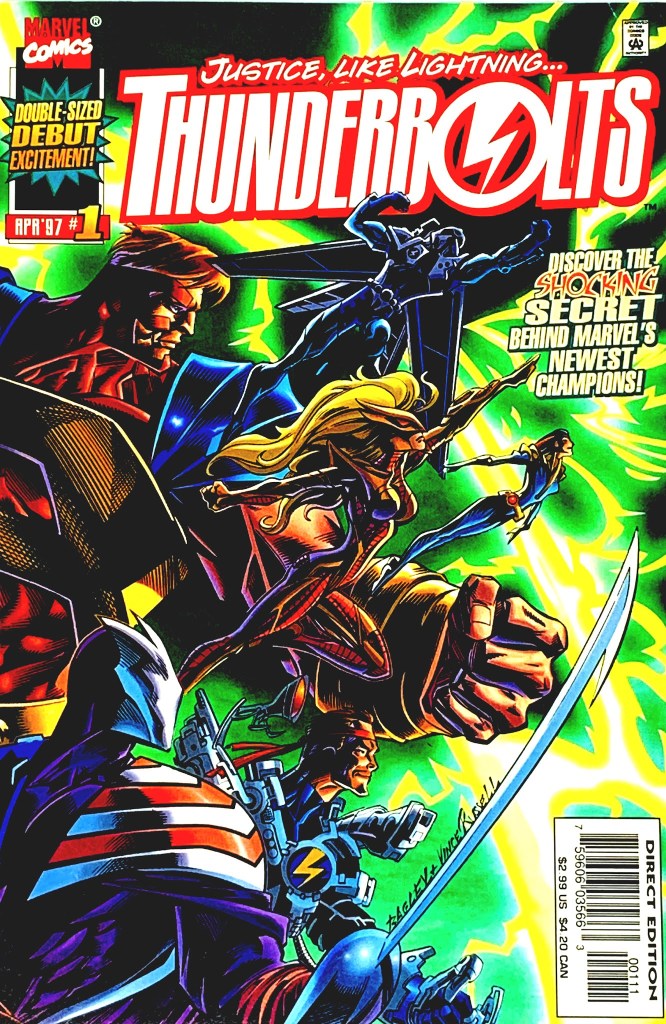
10) THUNDERBOLTS: Still widely regarded today as having the best last-page twist in the history of Marvel, this series defied the odds by running for 175+ issues, reinventing itself as necessary along the way and surviving momentary cancellations and bad creative decisions. It would be difficult to pull this launch off today (and it was super-hard back when we did it) maintaining the secret that this new team of heroes was actually the Masters of Evil in disguise. Kurt Busiek and Mark Bagley were the original creative team, and they produced 33 issues and some Annuals and Specials together before the book passed into other hands. It remains somewhat surreal to see the advance advertising for a film based on a name that Kurt and I decided upon over the phone not all that long ago.
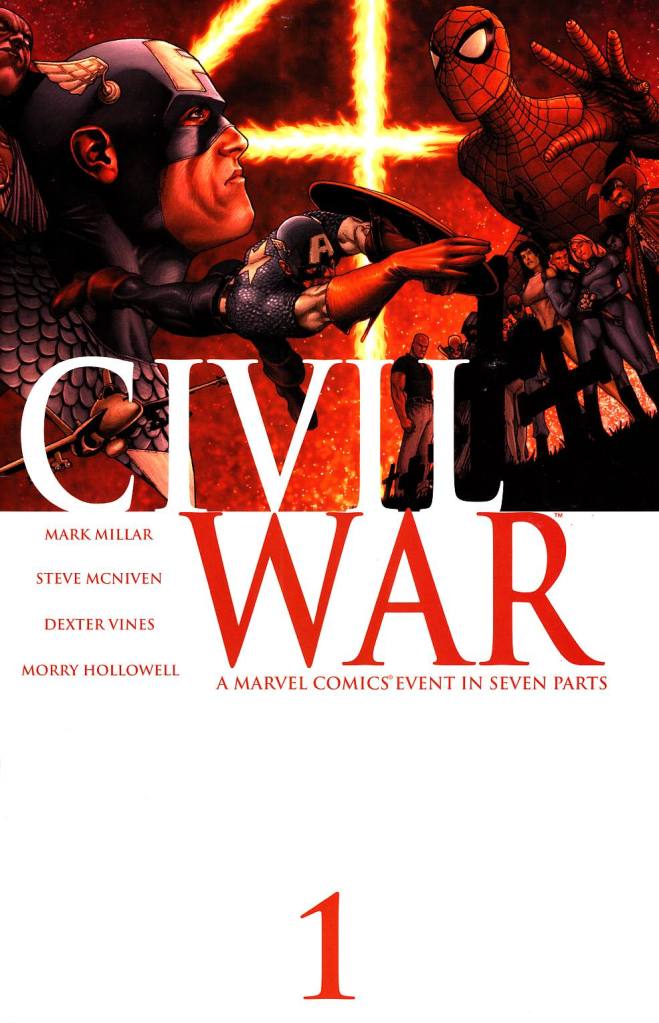
9) CIVIL WAR: There hadn’t been before and it seems unlikely that there’ll ever be again a crossover series that was so plugged into the cultural zeitgeist of its moment as CIVIL WAR. Writer Mark Millar had gotten plenty of mileage out of mining the psyche of the post-9/11 landscape, but this story, which saw the heroes of the Marvel Universe divided philosophically between freedom and security, was truly of its time. The artwork was executed with precision by Steve McNiven, and the story’s events dominoed throughout the publishing line. The big one, of course, being the public unmasking of Spider-Man. Fans either loved it or hated it, sometimes both at the same time, but nobody who was reading comics in 2006 wasn’t following it. The well-designed covers and design aesthetic made it stand apart as something special as well.
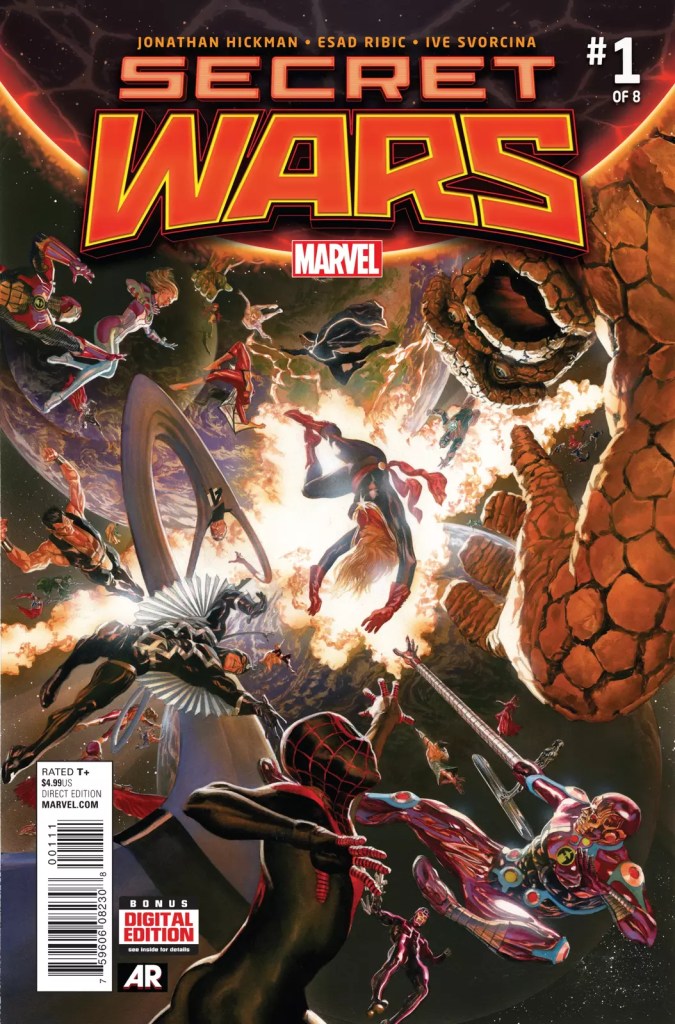
8) SECRET WARS: Named after the first major Marvel line-wide crossover series, SECRET WARS was the culmination to half a decade’s worth of storytelling on the part of author Jonathan Hickman, who played the long game and whose ambition was infinite. A series that incorporated all other Marvel Events stories as components of itself, this book did what such projects have always threatened to but seldom accomplished in reality: it reset the circumstances of the fictitious Marvel Universe (and brought the younger Ultimate Universe to an end.) Literally every book in the line reflected this new reality in which everything that we’d known before was gone and only fragments of the past and alternate worlds remained. Artist Esad Ribic gave this all the gravitas it needed, comfortable depicting both the quietest and most sensitive moment as well as the loudest and most bombastic.
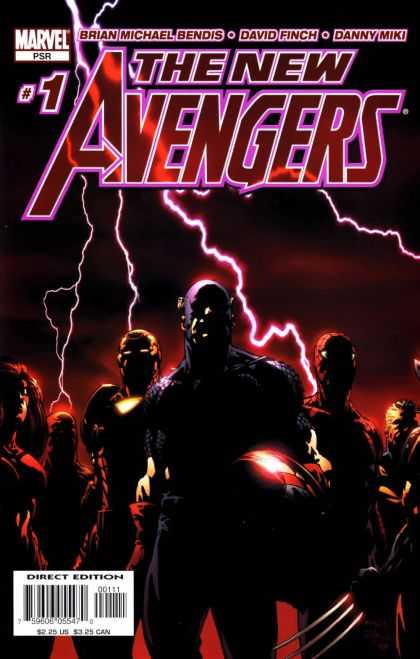
7) NEW AVENGERS: A seminal run that reimagined the Avengers and put the series back on top as the principle title in the Marvel publishing line, Brian Michael Bendis carried out an eight-plus year stint as the driving author of the series, joined at first by artist David Finch (who was thereafter followed by a powerhouse creative line-up for years.) Bendis made the book a must-read by balancing huge revelations with truly Earth-shaking ramifications against smaller and more personal moments that illuminated character. He also overhauled the membership of the team, inducting not merely the ultra-popular Spider-Man and Wolverine but also such mainstays as Luke Cage, Spider-Woman, The Sentry, Iron Fist and Doctor Strange. While divisive for some fans, the energy and drive of this run made it the keystone book of this entire era.
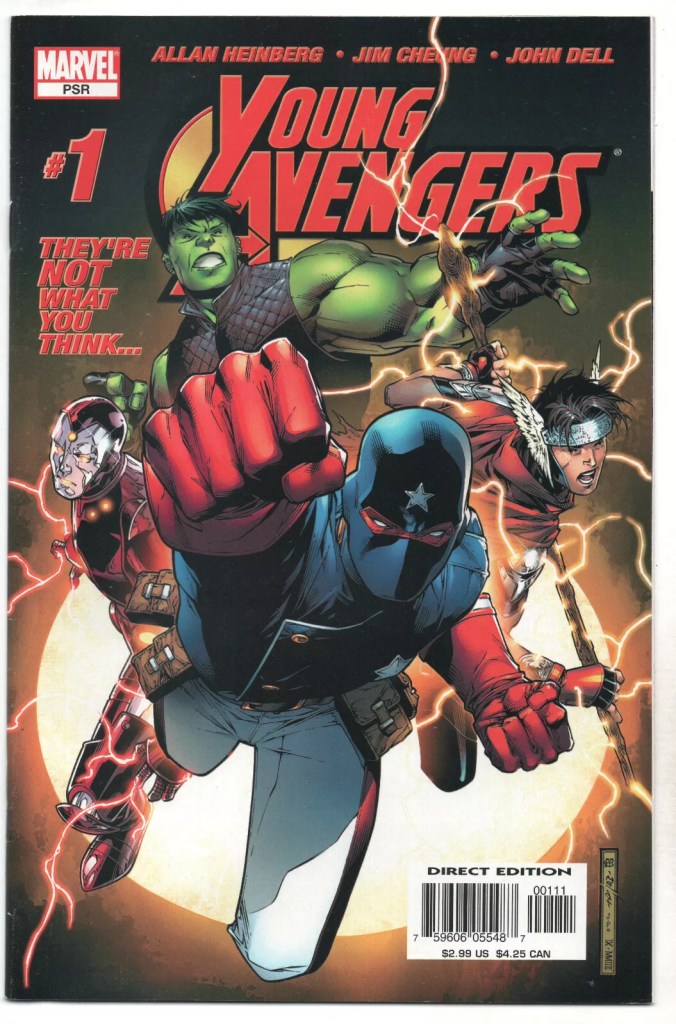
6) YOUNG AVENGERS: A concept that was scoffed at both within Marvel and without, YOUNG AVENGERS proved the merits of its concept thanks to the strong character-based writing of Allan Heinberg and the meticulous rendering of artist Jim Cheung. For a series to become this popular with completely new characters is something of a unicorn. channeling his love for DC’s Legion of Super-Heroes and New Teen Titans, Heinberg envisioned an entire group of new young Marvel heroes cut in the mold of their older role models, but not in the ways that one might expect. It was like the best contemporary young adult television series mixed with a Marvel comic, and it was satisfying on every level. It was also permitted to be a bit more progressive and forward-thinking in its depiction of same-sex relationships at a time when that was still a relatively rare thing to see.
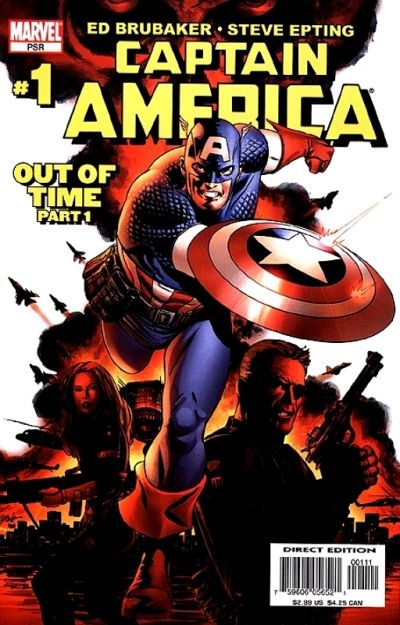
#5) CAPTAIN AMERICA: A brilliant repositioning of the Star-Spangled Avenger by writer Ed Brubaker and artist Steve Epting and Michael Lark, among others, this series crystalized the version of Captain America that would be reflected across all other media. Brubaker gave the book the feel of a modern day political thriller while maintaining all of the hallmarks of the character and his world that had previously been established. The choice to resurrect the long-dead Bucky Barnes as the Winter Soldier, while a risky proposition at the time, paid off handsomely, with the character becoming popular enough to assume the title role after Steve Rogers was killed during the CIVIL WAR crossover. Still the benchmark than all other contemporary takes on the character are measured against.
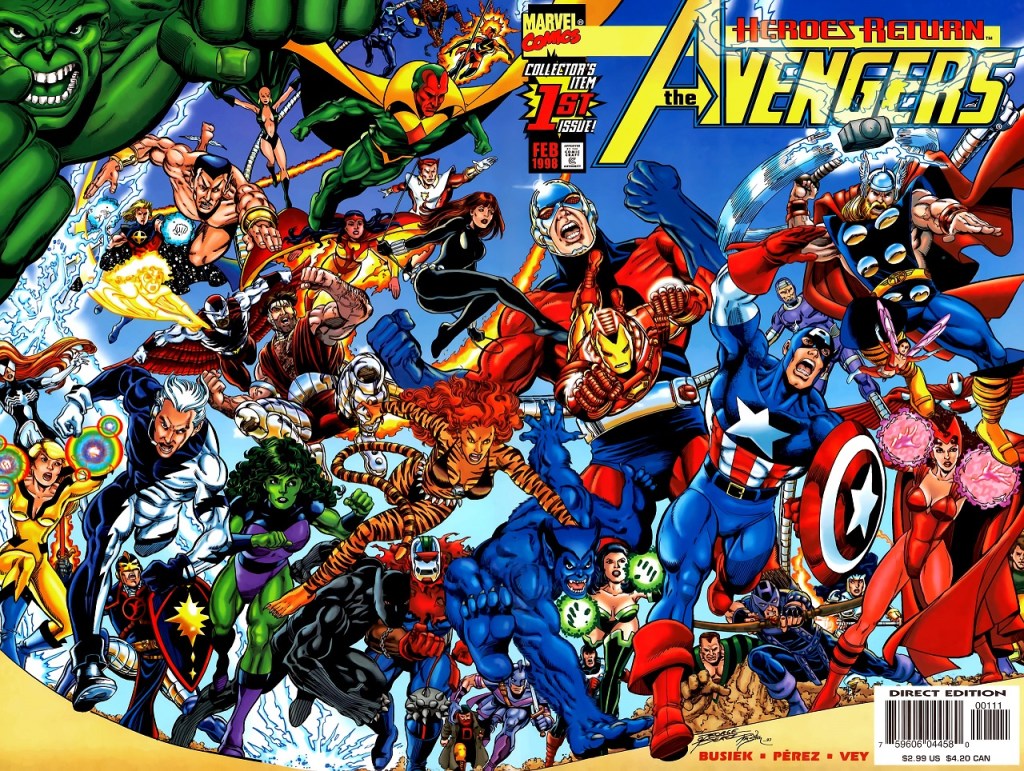
#4) AVENGERS: Earth’s Mightiest Heroes were facing an uphill challenge in 1997. Having been integrated back into the Marvel Universe after the year-long Heroes Reborn experiment had run its course, it now fell to Marvel editorial to prove that they could make the book perform as well as it did under the hands to which it had been outsourced. World-class artist George Perez was at the height of his powers and came back with something to prove, and writer Kurt Busiek’s moment had arrived, a point in time that would appreciate his ability to build on the history of what had come before and make it palatable and of interest to a contemporary audience. AVENGERS was the biggest success story of the Heroes Return initiative and set the stage for me to edit the series for an unbreakable 26 year tenure.
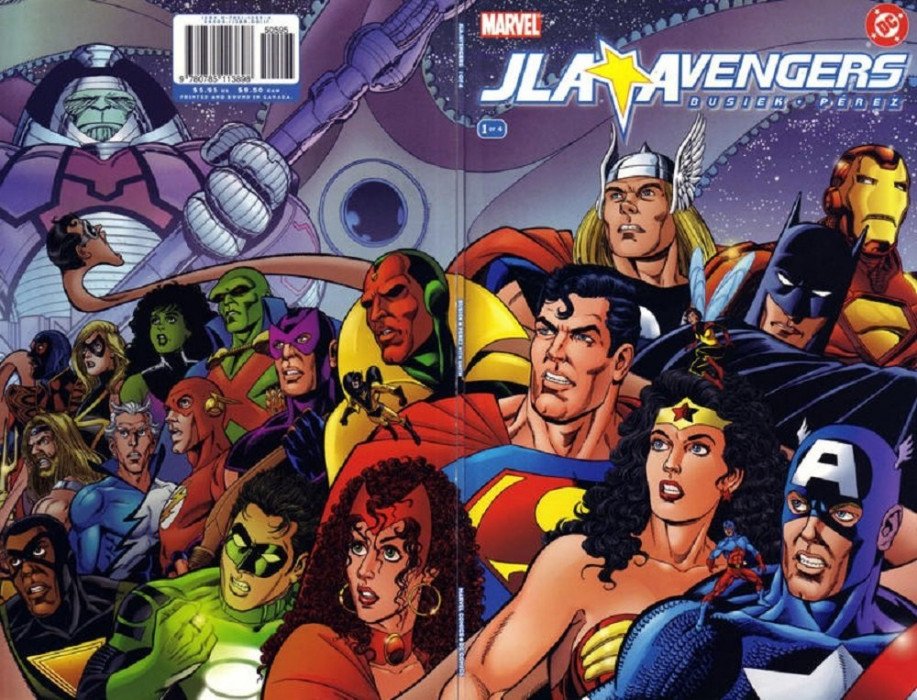
#3) JLA/AVENGERS: It gets broken in the back half a bit after decisions that had been made were questioned and undone, but as a celebration of the kid-cool power of the crossover event, there isn’t another project in existence that can touch it. For 200 pages, artist George Perez is in his element and giving the work his all, combining not only the heroes of the Avengers and the Justice League of America but the entirety of their universes and worldviews. Writer Kurt Busiek finds novel and clever ways in which to both showcase the similarities and differences between the characters as well as the ethos which drives their adventures. It isn’t perfect–what ever is?–but it’s the ultimate crossover project ever done.
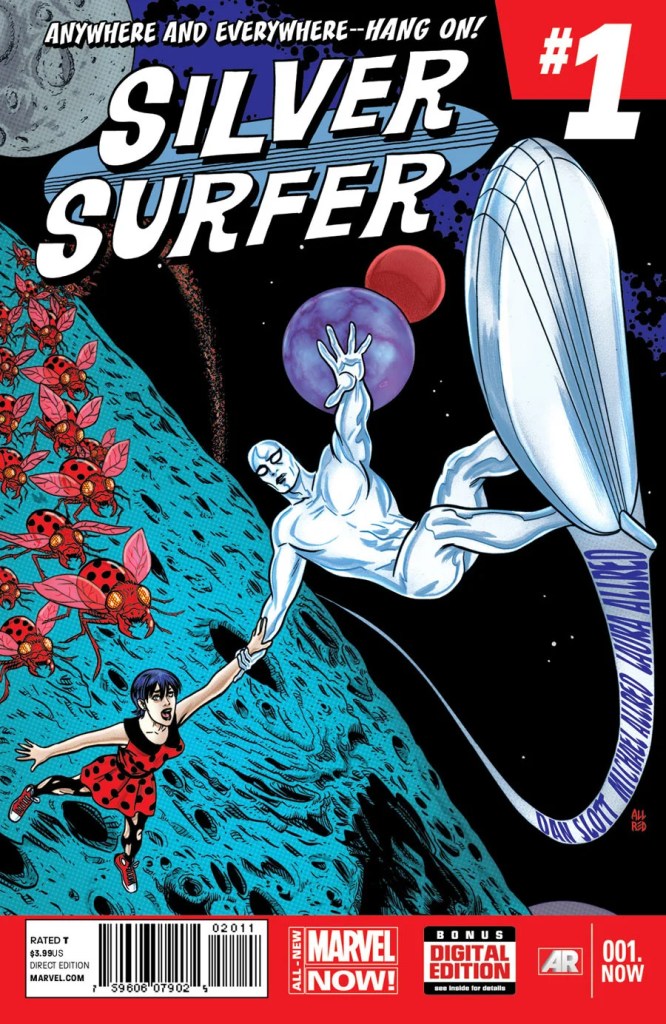
#2) SILVER SURFER: While some naysayers dismissed this series as nothing more than DOCTOR WHO fan fiction, the Dan Slott and Mike Allred SILVER SURFER had a secret objective at its core; it wasn’t a cosmic action/adventure series at all, but rather one dedicated to telling an extended relationship story between the star-crossed Norrin Radd and Earthwoman Dawn Greenwood. Accordingly, imagination and emotion were given ascendence over pyrotechnics and life-or-death struggle, consequently making the challenges posed by each situation that much more compelling and easy to invest in to the reader. This series also sticks the landing, wrapping up Norrin and Dawn’s story perfectly while leaving the door open for the Surfer to continue to move forward with his space-faring adventures. An utterly satisfying series, especially when consumed in collected form.
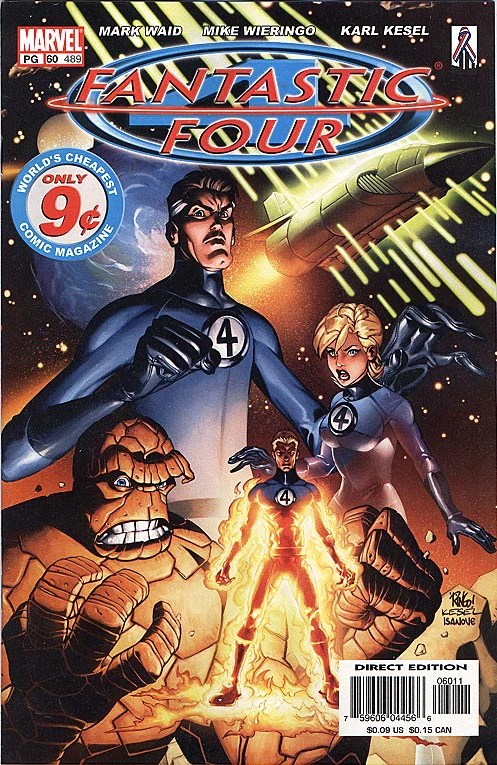
1) FANTASTIC FOUR: Even after all this time, the Mark Waid and Mike Wieringo run on FANTASTIC FOUR remains my very favorite project of everything that I’ve worked on. An important series to me growing up, it was important to me that I do right by the book when I eventually got to edit it. I could not have assembled a better creative team than Mark and Mike, both in terms of hewing to the spirit of the series up to that point and their ability to push the characters in new directions and find new things to say about them. Most crucially, they made readers care about the Fantastic Four again, which for a series that was sometimes seen as a relic of a bygone day, was no small feat. Beset by internal problems, the last third of this era was something of a last-second reprieve and each issue was like getting an extra little gift–one that we tried to share with the readership.
 The Tom Brevoort Experience
can you elaborate/have you elaborated elsewhere on what changes to JLA/Avengers made it fall apart in the back half?
LikeLiked by 1 person
Congrats on the anniversary and the solid body of work Tom B. I can count on one hand the number of folks I know who have worked someplace for 35 years! I enjoyed a lot of these titles over the years. I’m unfamiliar with a few of them and will check them out.
Could you please elaborate on the following? “#3) JLA/AVENGERS: It gets broken in the back half a bit after decisions that had been made were questioned and undone”
LikeLiked by 3 people
A very impressive list, there!
Honored to be on it so many times!
LikeLiked by 2 people
I hope the list starts a treasure hunt for that AVENGERS 1.5 issue.
And though it wasn’t called out, because it was part of a run, but that UNTOLD TALES OF SPIDER-MAN ANNUAL (with Kurt Busiek and Mike Allred) was an all-time great comic!
LikeLiked by 2 people
Something I’ve always wondered about: Was Heroes Reborn always meant to only be a year or did Marvel opt out early?
LikeLike
That’s a strong list. Civil War is the only book that didn’t connect with me, but like Tom wrote I definitely paid attention to the series. Avengers 1 1/2 is probably my favorite though. I even read it to my son when he was small!
LikeLiked by 2 people
I loved Avengers 1 1/2. Also Spider-Boy, though Dr. Strangefate has the best twist of those first Amalgams (I think Iron Lantern may be my very favorite for Busiek not only mashing GL and IM well but getting the breathless feel of Silver Age Marvel down pat).
LikeLiked by 1 person
Yeah Avengers#1 1/2 was enjoyable and I like the Amalgam books ( missed Lobo the Duck — either I was to late to the comic book shop or it never came ) — Challengers of the Fantastic was my favourite and like what was done with Spider-Boy ( I referenced that scene at Project Cadmus with Marvel & DC scientists as an example of what was missing in The Marvels Project at Project: Rebirth ). Loved JLA/Avengers, Avengers, Thunderbolts ( even if I started a number of issues late, but not a fan of a Zemo once again getting credit for killing a Timely Comics hero ( Citizen V — Timely’s answer to the Scarlet Pimpernel & “Pimpernel” Smith ( 1941 film released in the US as Mister V ) ) and Captain America ( Had problems with the older WW2 version of Bucky which the Avengers: The Children’s Crusade#1 ( September 2010 ) mentioned was 14 years old which matches up with Toro begin restored to his Timely Comics age in Marvel Mystery Comics 70th Anniversary Special#1 — since modern Marvel had zero problems with the much young Power Pack kids or the 13 year old member of Japan’s Big Hero 6 ).
LikeLike
big fan of a lot of those books, so thanks to Tom and the associated creators for all the entertainment.
LikeLiked by 2 people
That’s a great list, but I’d like to add two books. I was never as moved by an FF story as Hickman’s Death of the Torch story, and I was never so happy as when you snuck in his return unexpectedly in Fantastic Four #600. I’ve been reading the FF pretty much every month since #200, and those stories are some of the best Marvel comics I’ve ever read.
LikeLiked by 1 person