

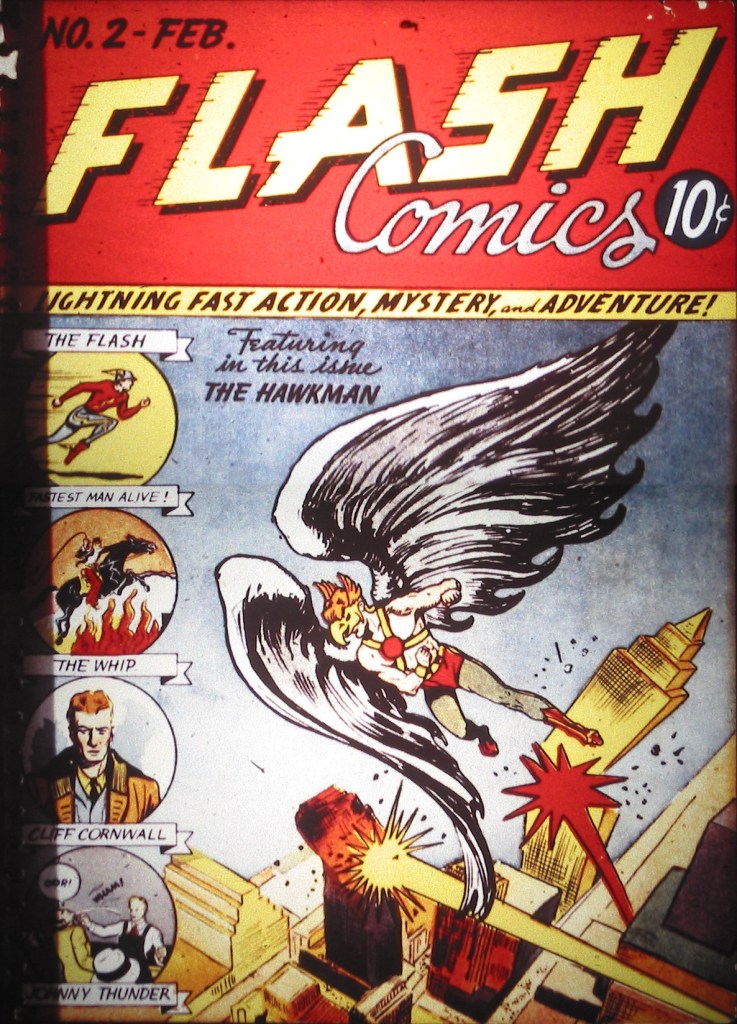
So we begin this feature with my favorite comic book super hero, the Scarlet Speedster known as the Flash. Introduced in FLASH COMICS #1 in late 1939, by the second issue Jay Garrick had been relegated to a small cameo image on the left side, the primary cover area given over to the almost-as-popular Hawkman. The Flash wouldn’t take the main cover spot back until issue #6, by which point it had rotated through most of the recurring features for the anthology title. Even then, going forward it would alternate between the Flash and Hawkman.
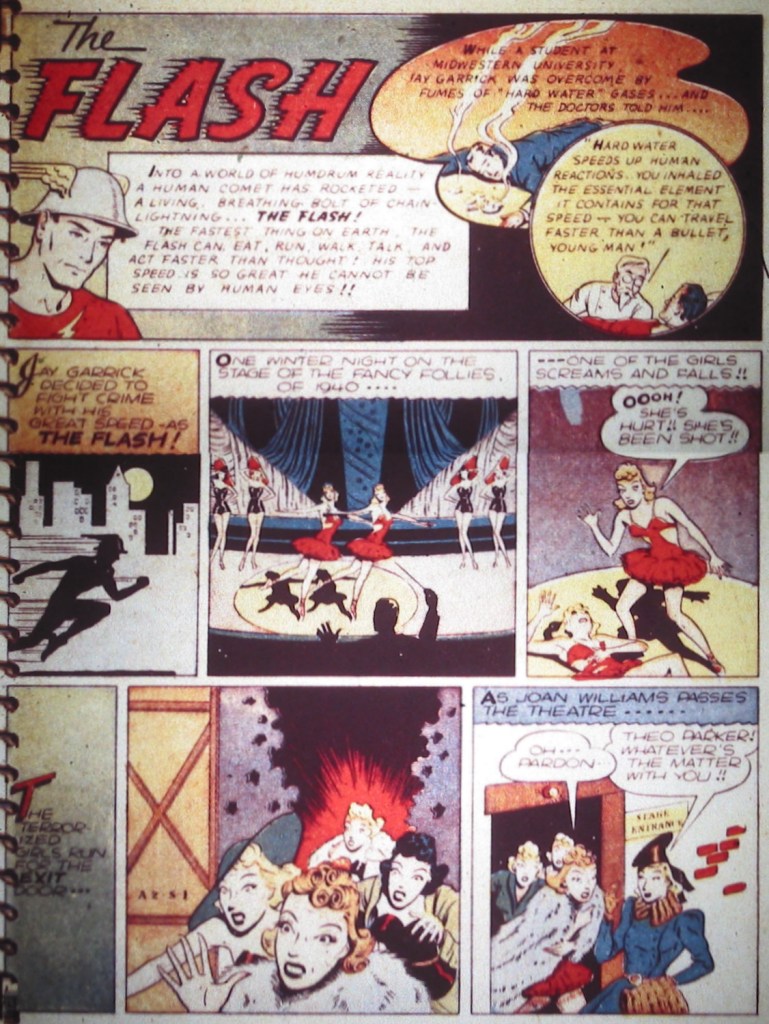
The Flash was the creation of writer Gardner F. Fox and artist Harry Lampert, both of whom worked on this second story together as well. Despite helping to originate the character, this was the last Flash story that Lampert would draw.
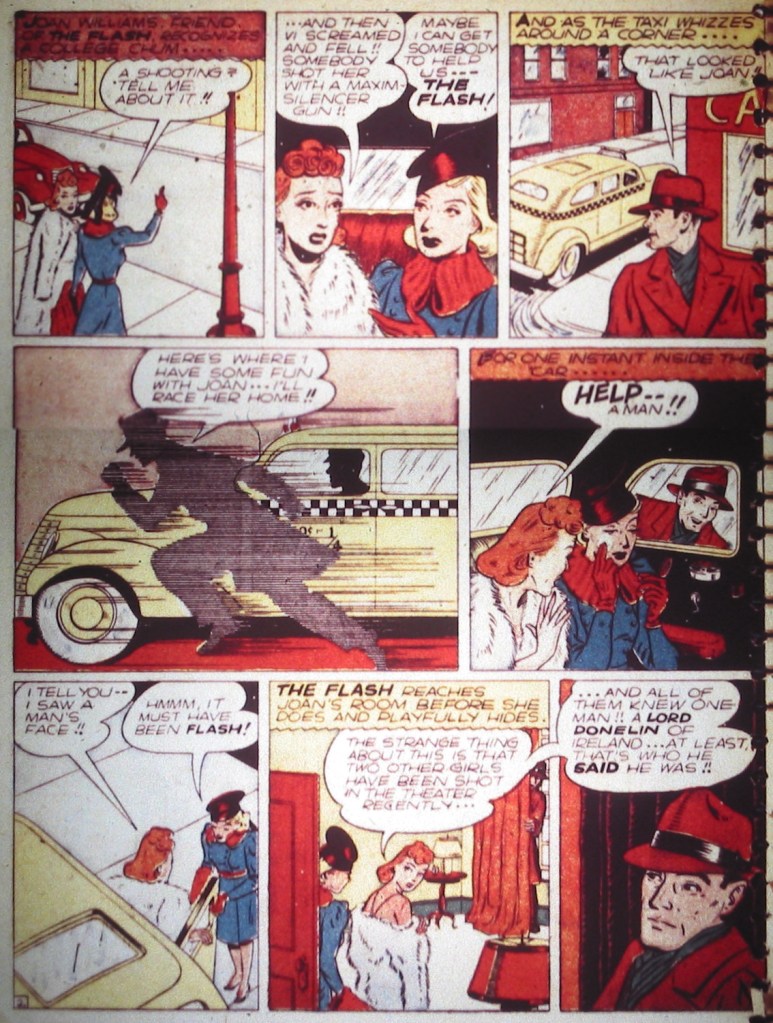
By the third issue of FLASH COMICS, Lampert, who specialized more in drawing comedic features than adventure stuff, was replaced on the feature by Everett E. Hibbard. Hibbard would work on the character on and off almost until the end of the series, and would come to define the look of Jay Garrick in general.
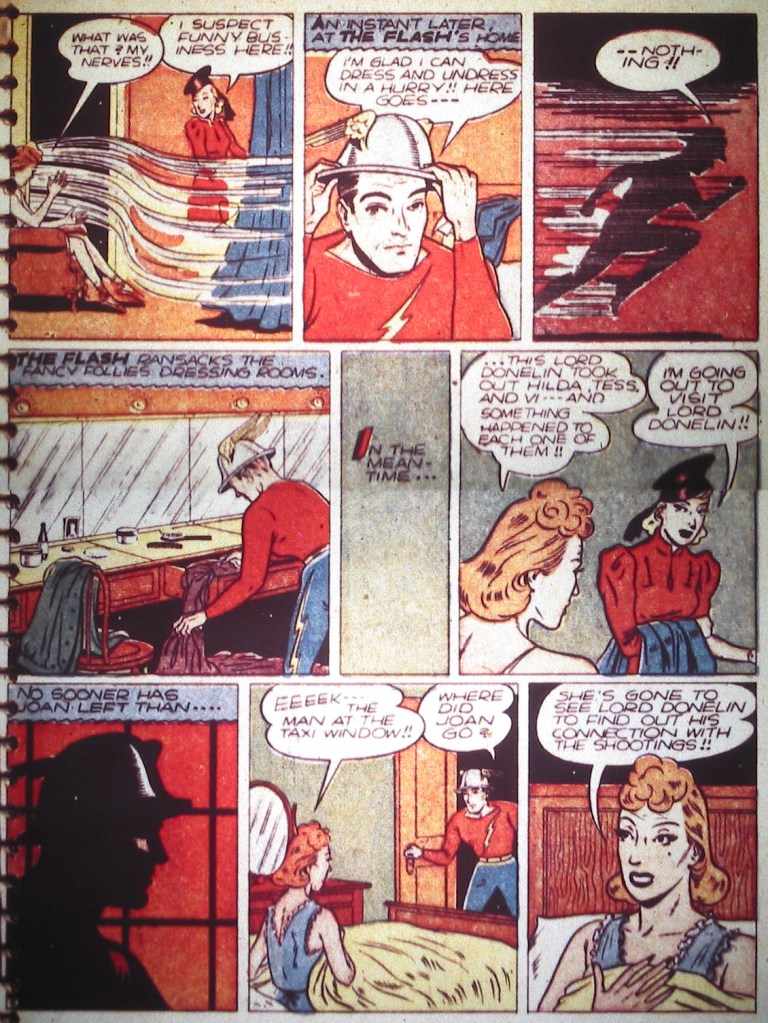
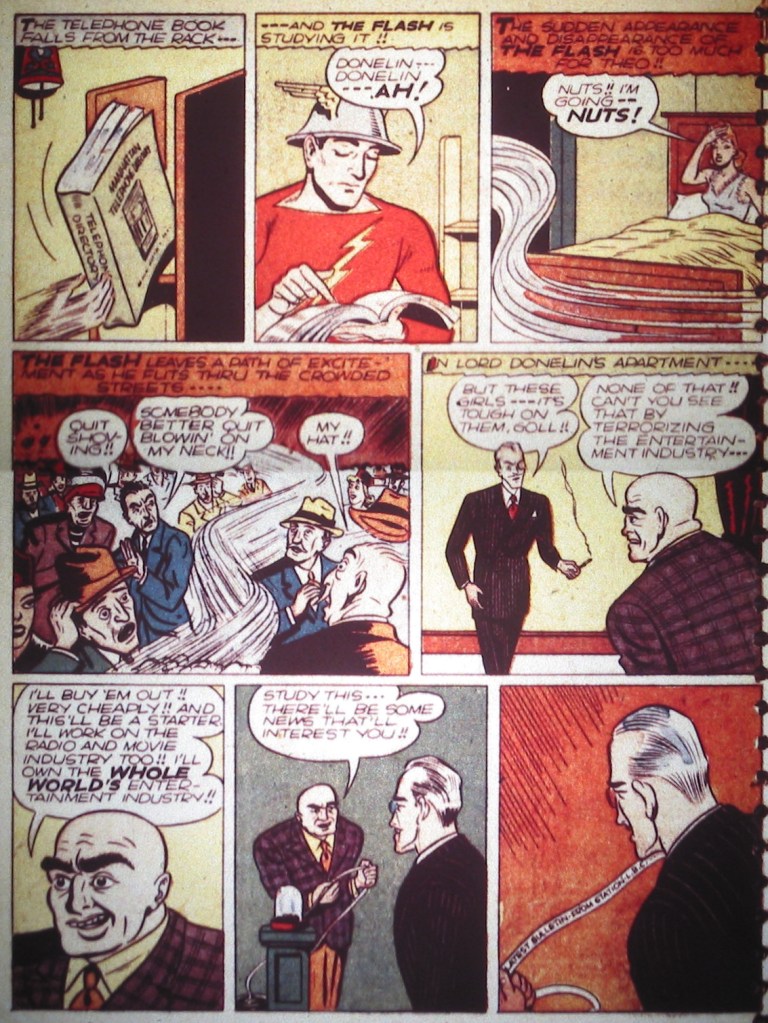
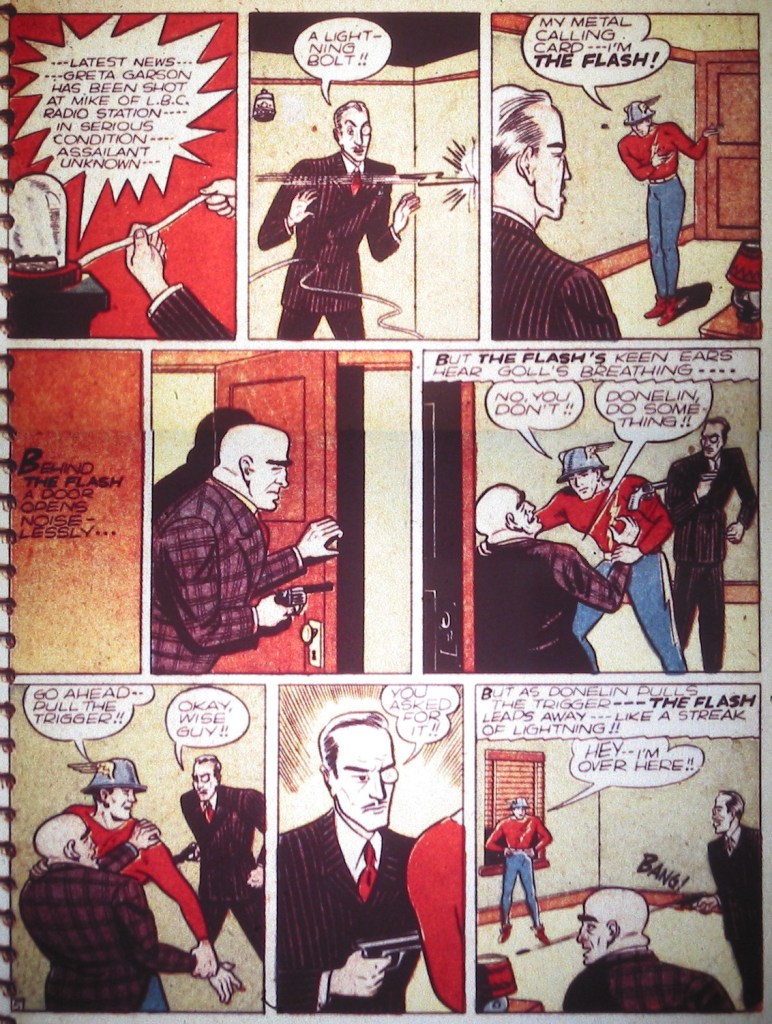
This bit about the Flash hurling solid metal lightning bolts as a calling card was pretty clearly intended to become a signature thing. But the character never did it again after this second story.
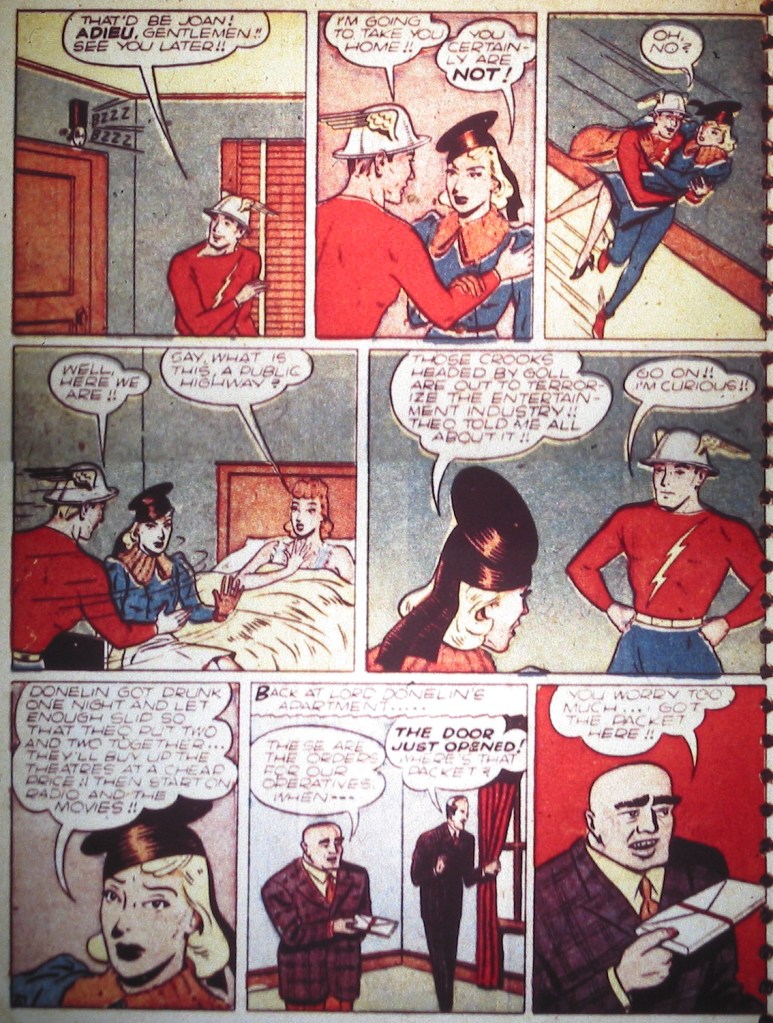
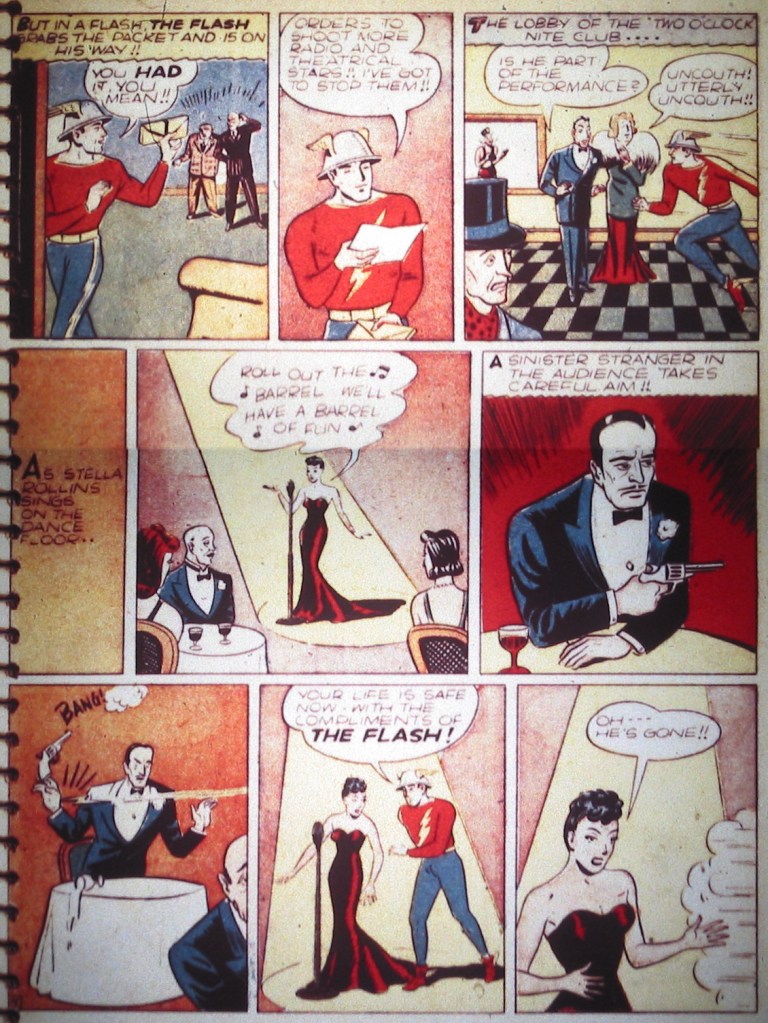
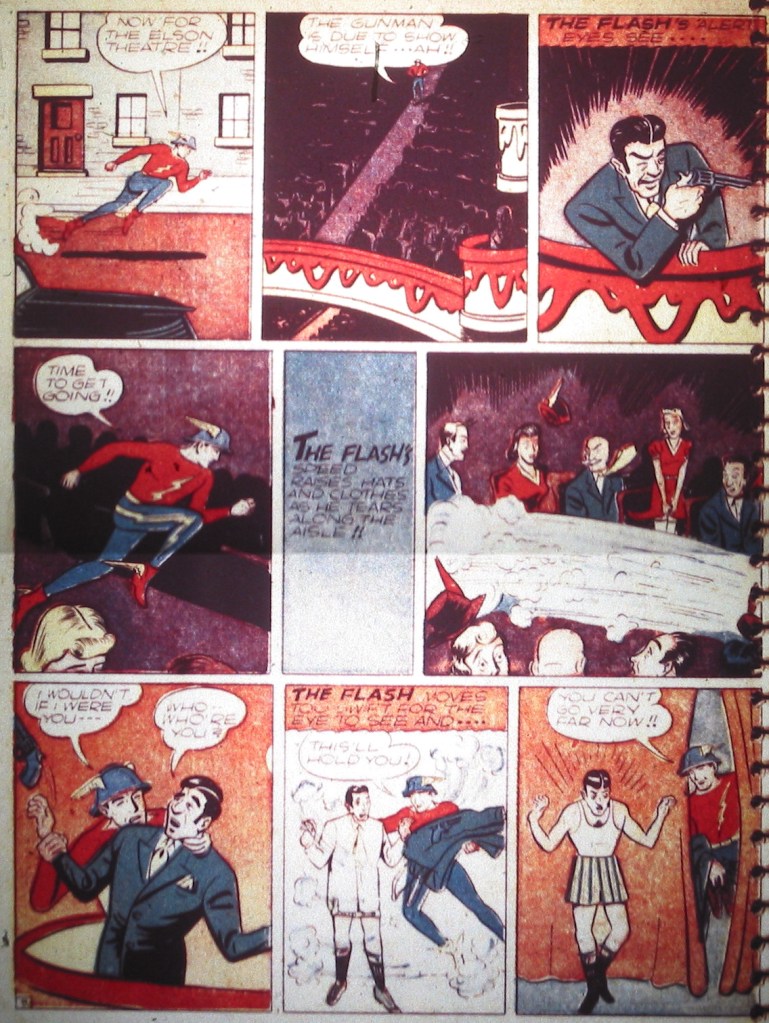
The fun in these early stories revolves around just how swift the Flash is. There isn’t really anything akin to suspense, as nothing can really lay a finger on him. Accordingly, Jay Garrick tends to confound and humiliate his enemies rather than simply bludgeoning them into submission. In a way, this is very similar to the early Superman, who was similarly an unstoppable force in his earliest stories.
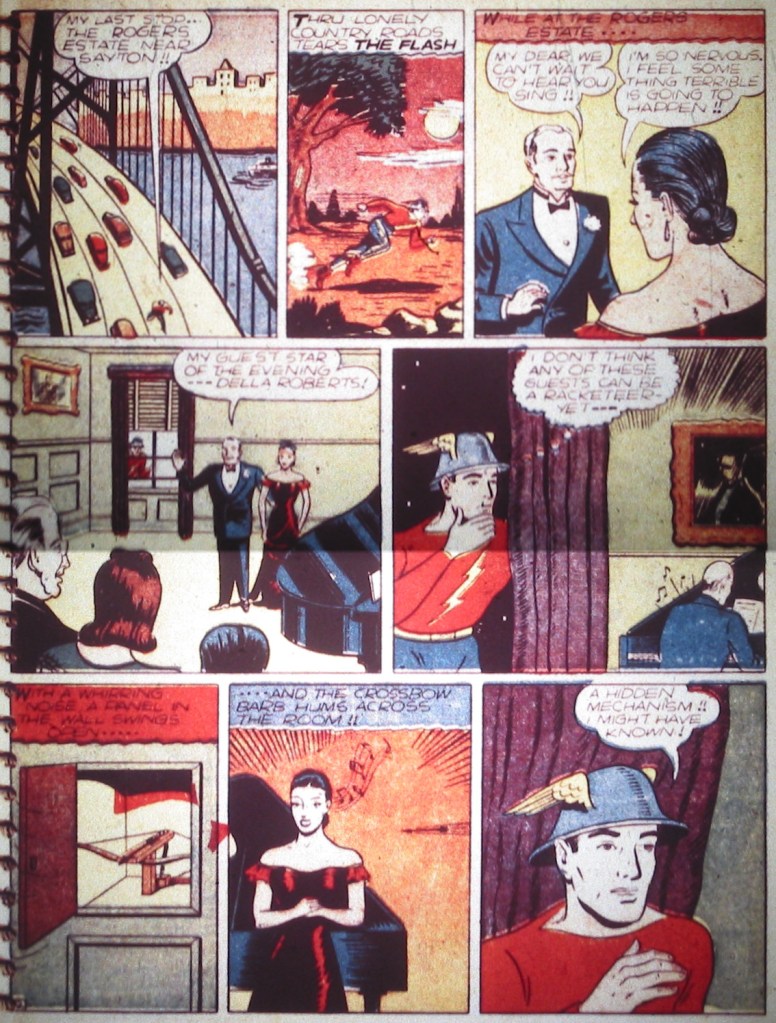
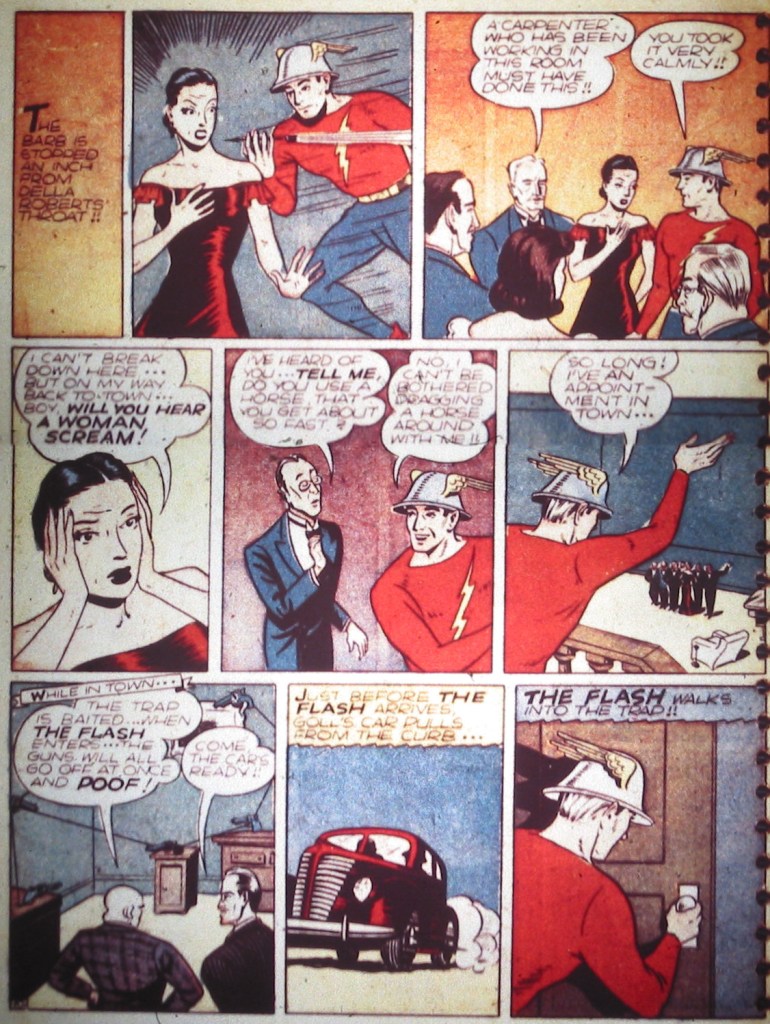
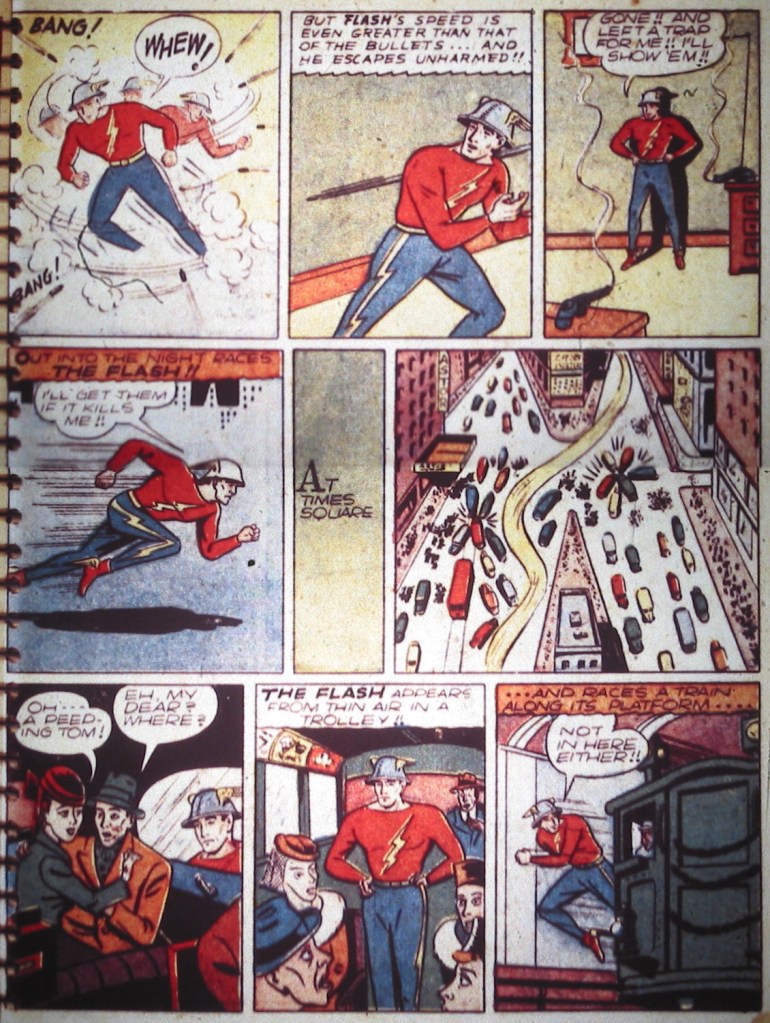
The lightning bolt design down the sides of Jay’s pants comes and goes in this story. Before long, it was dispensed with entirely.
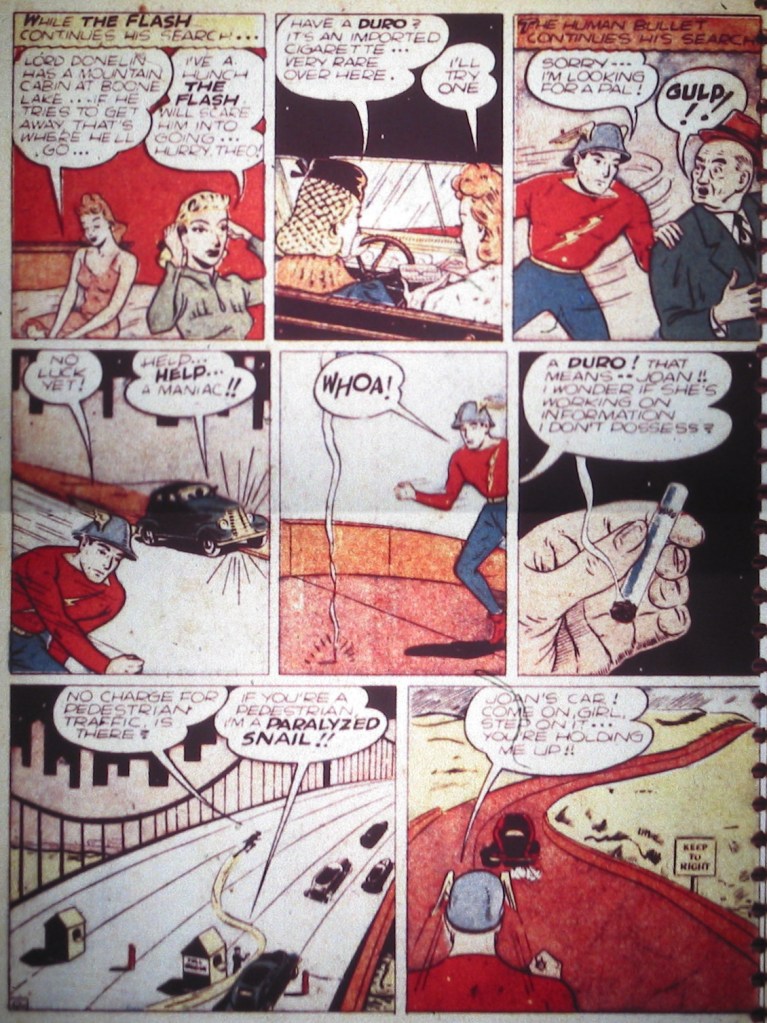
Shades of 1940: The Flash recognizes Joan Williams by her brand of imported cigarettes.
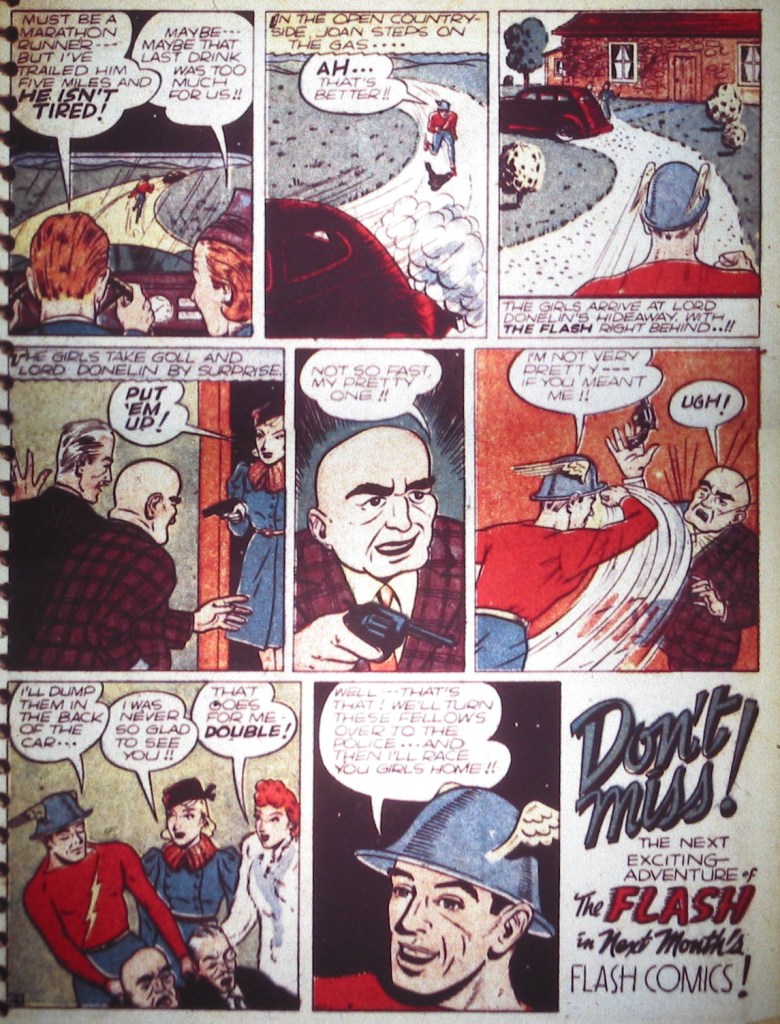
That last panel looks like it was done by incoming new Flash artist Everett E. Hibbard, who may have been called upon to punch up this installment a bit before taking over duties for the strip.
 The Tom Brevoort Experience
Never seen this before. (& I absolutely hate comics on fiche, Just looks washed-out wrong.) Find it interesting that the Flash exploits his powers early on by superspeeding into & ransasking women’s dressing rooms. Don’t think that bit’d make it through DC editorial today…
LikeLiked by 1 person
Always thought it was funny that Flash debuted in an anthology comic called “Flash Comics” — so when he proved to be popular enough to headline his own solo book, they had to come up with something else to call it. I guess “All-Flash Comics” was a reasonably descriptive name, but it does make me think of “All-Bran”…
LikeLike
Back when I was a punk high-schooler, too “smart” for overpowered DC heroes, I would;d scoff at the Flash’s dumb writers, saying that any Flash battle with Captain Cold (or whoever) should go:
“My gun! It’s gone!”
“I-I’m naked!”
“I’m in jail!”
It’s nice to see that Gardner Fox explored that scenario (or very close to it) in the second FLASH story…
LikeLiked by 2 people
My version to a friend of mine is the battle would be over in 1 page ( revised now to 1 panel ).
LikeLike
In Flash Comics#1 ( January 1940 ) the Flash goes from The Faultless Four ( Sieur Satan ( death – All-Star Squadron Annual#3 ( September 1984 ) next appearance ), Serge Orloff ( surgeon -death ), Duriel ( death ) & Smythe ( death ) –a group of brilliant but deadly scientists after the Atomic Bombarder ) to Lord Donelin & Goll. I have the Millennium Reprint of Flash Comics#1. In this issue as in Flash Comics#1 the hero The Whip is also called El Castigo ( The Punishment – in Spanish, El Latigo is The Whip in Spanish ) for some strange reason and not the Spanish word for Whip.
LikeLike
Another notable bit of 1940 culture – Joan carries a gun and is comfortable with it, even brandishes it at criminals, and this is treated in the story as completely matter-of-fact. You can see the pulp roots here.
One nice thing about this story is that Jay seems to really enjoy his powers. For example, briefly appearing next to a moving car is the sort of mild prank that seems very human, something that someone might really do.
LikeLike
Of course, Flash got his powers in the first place because he stopped for a cigarette in the middle of his experiment. The early superheroes often smoked pipes, maybe to show they were mature and trustworthy, but Jay and Joan are clearly the young, fashionable, fun-loving type of hero!
LikeLike
If Jay used his super-speed this effectively throughout the Golden Age he wouldn’t have needed a Justice Society.
LikeLiked by 1 person