


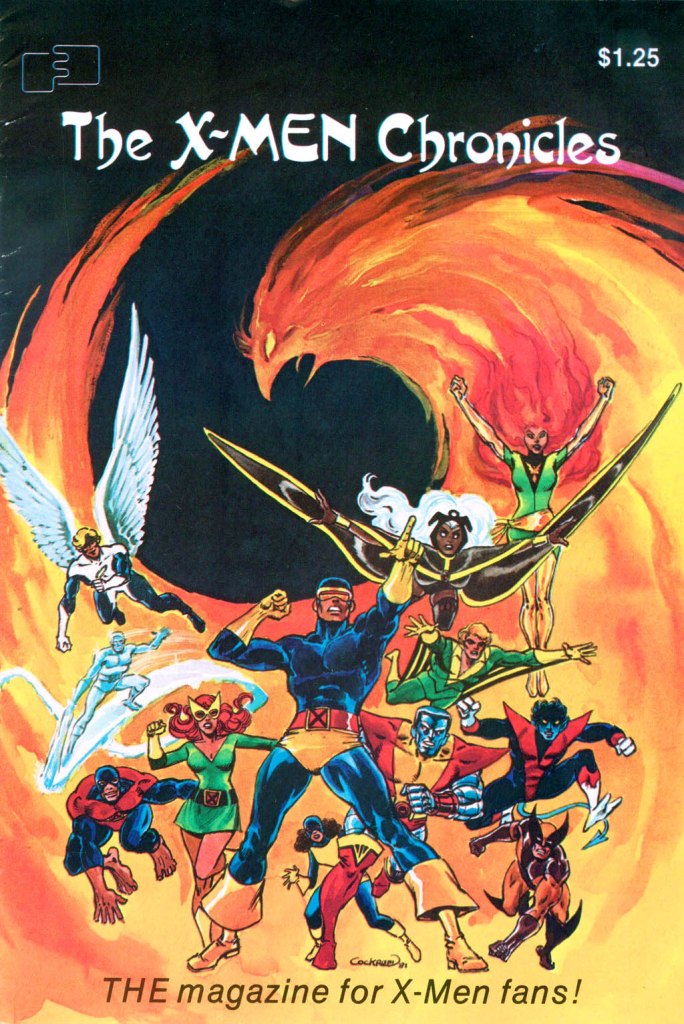
THE X-MEN CHRONICLES #1 was a fanzine published in 1981 by FantaCo, a small publisher situated in Albany, New York that was an adjunct to a notable comic shop. It was produced with the approval of Marvel, who went on to do a short-lived licensing agreement with the company, allowing them to do a number of other similar publications. This all came to a premature end after the second in the series, the FANTASTIC FOUR CHRONICLES, ran an interview with series creator Jack Kirby who had some unflattering things to say about Marvel. Upset, EIC Jim Shooter pulled their license. But for a brief window, these comic book-sized magazines were a handy source of historic information, interviews and fan opinions about the key Marvel titles of the day.
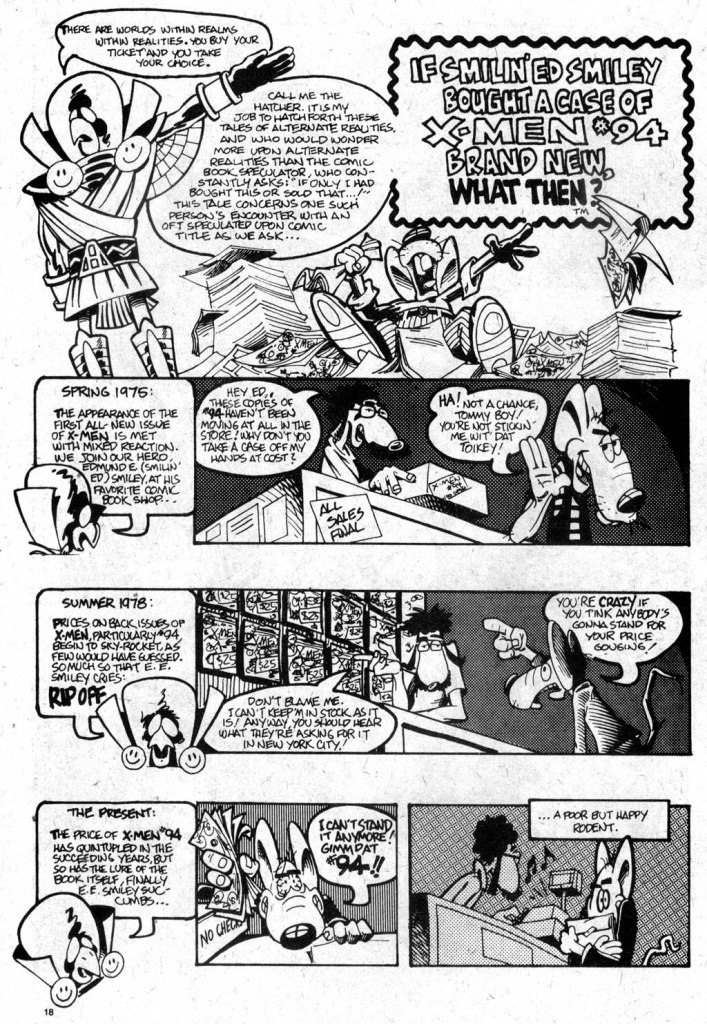
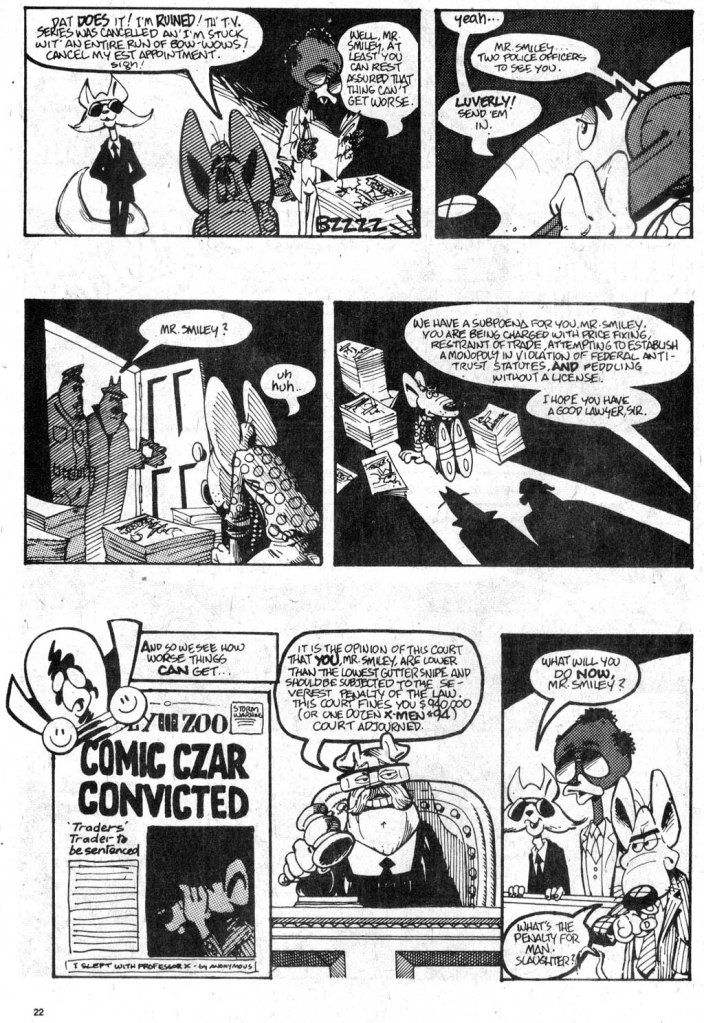
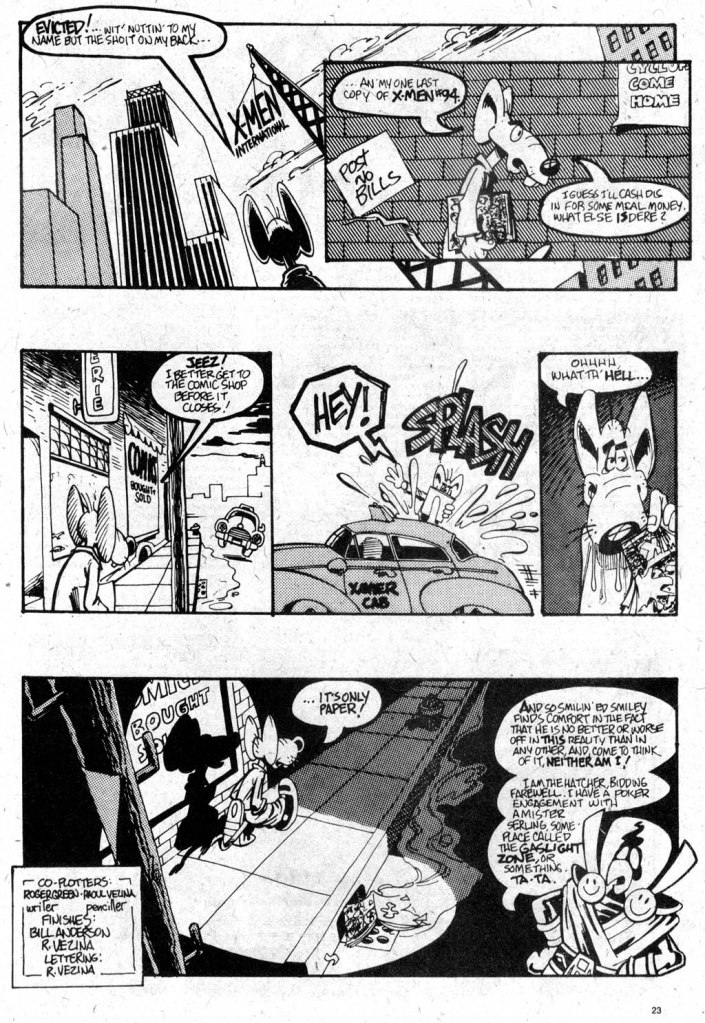
In addition to the Chronicles series, FantaCo also published a handful of other projects. They became Fred Hembeck’s publisher of both the collections of his Buyer’s Guide strip and other new works, they put together a great anthology one-shot called GATES OF EDEN, and they published the work of cartoonist Raoul Vezina and his signature character, Smilin’ Ed Smiley, an anthropomorphic rat. In a bit of either cross-promotion or else having a resource on hand who would work cheap, the fanzine editors asked Vezina to do a Smilin’ Ed strip as a part of the X-MEN CHRONICLES. The subject matter was something that any reader of the time could relate to.
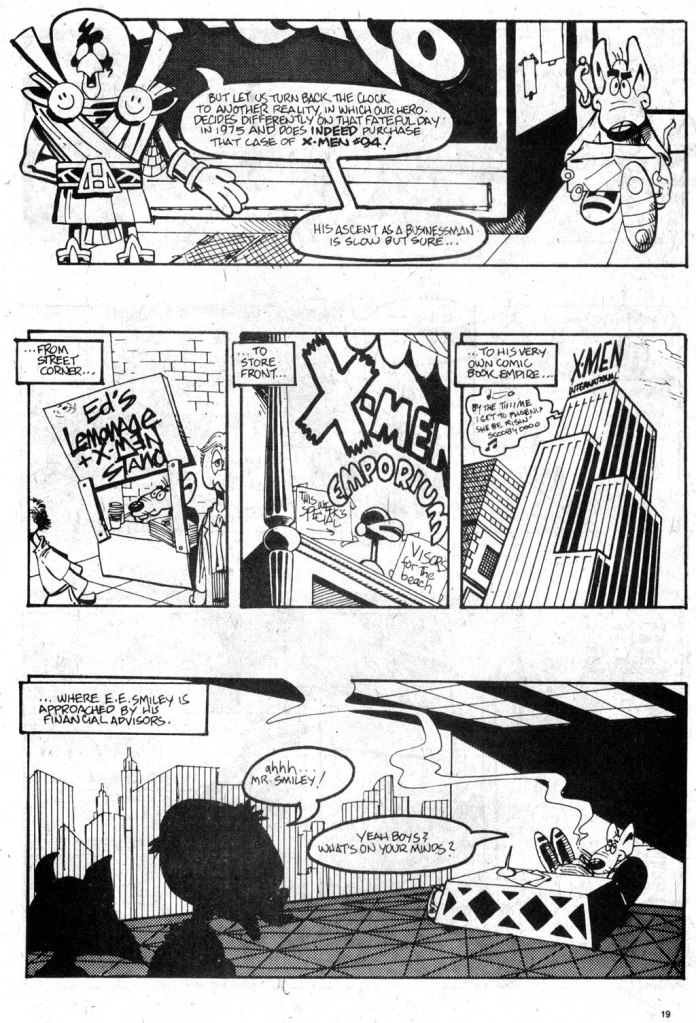
Because X-MEN had been a reprint series for so many years, when the first issue to feature the All-New, All-Different X-Men came out, it was ordered and stocked at the level of a reprint, both in mainstream outlets and in nascent comic book shops. As the book began to take over in popularity and fans began to seek out the earlier issues, the scarcity of the early issues caused prices to skyrocket. X-MEN #94 was the priciest of the lot, typically retailing for $25.00 or more at that point, an unthinkable price for a back issue of such recent vintage. By comparison, GIANT-SIZE X-MEN #1, in which the New X-Men had made their first appearance, could usually be had for $20.00.

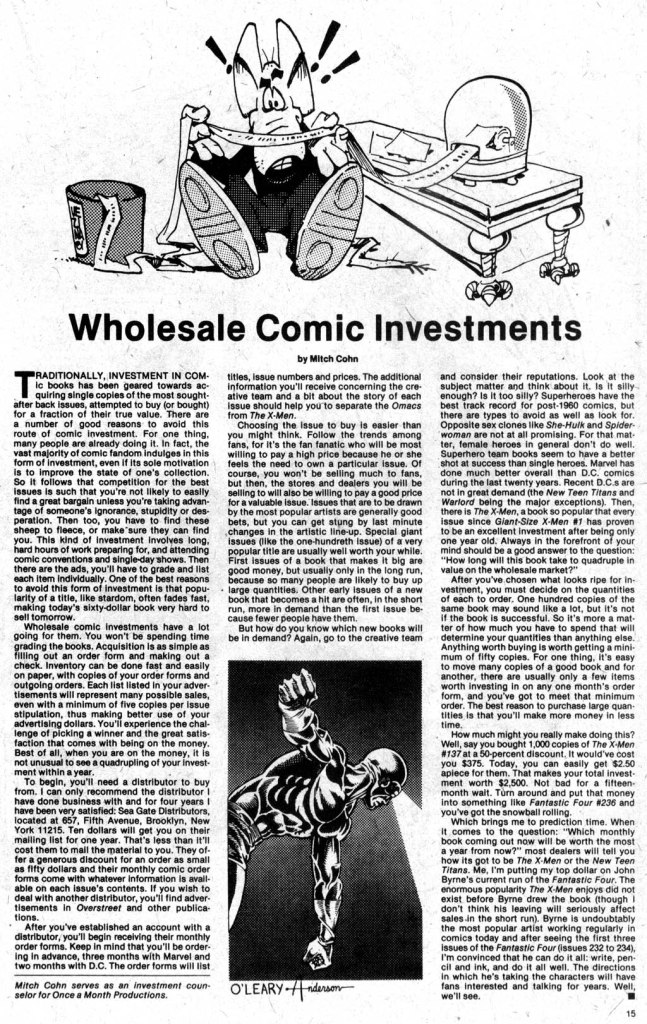
So Vezina’s story plays on this fact by telling a fanciful What If-style tale in which Smilin’ Ed purchased a case of X-MEN #94 new, and parlayed them into a massive financial empire. of course, Ed gets his inevitable comeuppance when he shifts his resources into another sure-to-be-red-hot current launch issue that fails to gain any traction. X-MEN CHRONICLES elsewhere ran a one-page article on investing in back issues for profit that spotlights X-MEN #94 and NEW TEEN TITANS #1 as the hot commodities, and recommends that people pour their profits from the uptick of those titles into John Byrne’s FANTASTIC FOUR launch. While that’s still a notable run, anybody who might have followed that advice in 1981 lost their investment, as those early Byrne FF issues are still plentiful and relatively affordable today.
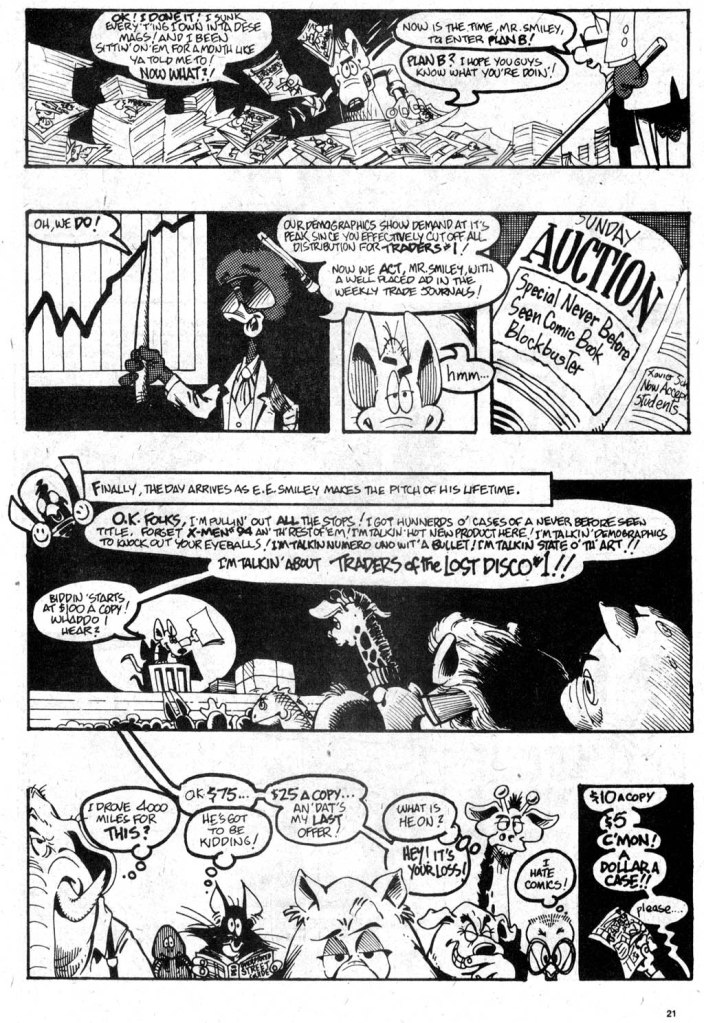
Regrettably, cartoonist Raoul Vezina passed away just a couple of years later in 1983 at the too-young age of 35.
 The Tom Brevoort Experience
“Upset, EIC Jim Shooter pulled their license. ”
Yes, Jim Shooter was so emotional in response to Marvel being dissed that he reacted this way. Are there accounts of him throwing ketchup at his office walls? I’ve no doubt Marvel president James Galton and Marvel publisher Michael Hobson would have been in favor of maintaining Fantaco’s license in spite of the situation in question.
And how would you, EIC Tom Brevoort, have acted differently? Would your superiors in the current Marvel be all hunky-dory with continuing a similar license in the face of the provocation in question?
Or maybe Jim Shooter wasn’t being emotional. He had a reasonable response to conduct by a licensee that any business in a similar position would have had. The condition that if we grant you a license, we are not to be dissed would seem to be a business commonplace. The common saying, however vulgar, is don’t shit where you eat.
LikeLiked by 1 person
You seem to be inferring some condemnation in those seven words, RS, rather than a simple statement of fact—which is all they were.
LikeLiked by 2 people
Characterizing decisions as emotional is a long-storied tactic in discrediting them. Women get confronted with it a lot more than men do, but it’s a put-down regardless of gender.
LikeLike
One wonders if it was Shooter or the higher ups that pulled the license. Not sure of how Marvel was constructed in those days but seems like a decision above his paygrade.
LikeLike
Roger Owen Green gives this account. It appears from Shooter’s demeanor that it is accurate to use the word “upset”:
March 26: Mitch called Jim Shooter, who told Mitch in no uncertain terms (“What the f*** were you guys thinking about?”) that they at Marvel were unhappy with the Chronicles series, that there can be no licensing in the future, and that we’d “better be careful” in the future… No [more] Chronicles would be disastrous because another loan was contingent on publishing them… Tom called a patent attorney.
Oddly, a couple months later, there WAS further conversation with Mike Hobson about licensing, but nothing ever came to fruition, and the Avengers and Spider-Man Chronicles came out license-free, with no hassle from Marvel. We DID have another legal tussle, however, but that’s for another day.
LikeLike
I always wondered why they stopped so quickly. I remember buying both when they came out. It’s good to hear why the plug was pulled.
LikeLike
Not sure I ever saw the FF one but I remember the X-Men one and especially the Avengers one. Just about wore out my copy of that!
LikeLike
Gates of Eden was great.
Forgot all about it, lost in a fire.
A trip to eBay beckons.
Thanks
LikeLike
I loved this magazing. Not only read it voraciously, I coloured in the black and white drawings (I was 9, and clearly fuzzy on the “collecting as investment” message). From memory I recall, besides the X-Men #94 humor piece, a checklist giving details of every X-Men issue up to that point (a manageable 150 issues) and a great article reviewing Claremont’s New X-Men story arc since their inception. In hindsight it’s interesting that the reviewer seemed much less enthusiastic about the stories after Byrne took over from Cockrum, which was not, and probably still isn’t, conventional wisdom, what with the Byrne/Claremont years generally regarded as the best of the best. There was also an article comparing the X-Men and Teen Titans that introduced me to the latter group and definitely primed me to check out the crossover between the two teams a year later. And I believe an interesting Jim Shooter interview with ideas including why it’s a mistake to have Wolverine kill and how the Legion of Super-Heroes is more of a DC parallel to X-Men than the Titans (in Shooter’s opinion, maybe he was biased since he wrote LoSH). All in all, great memories. Thanks for the post!
LikeLike