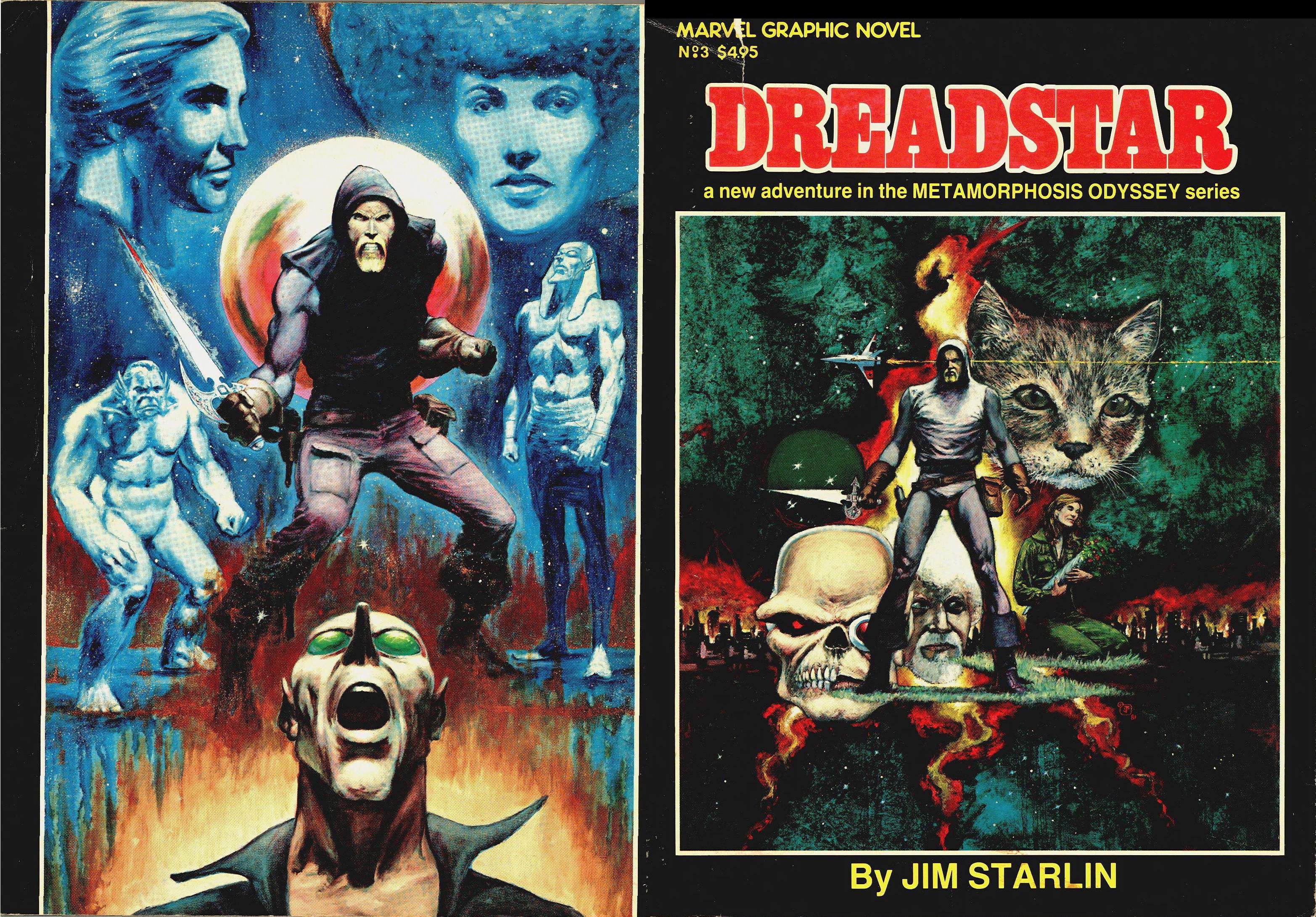


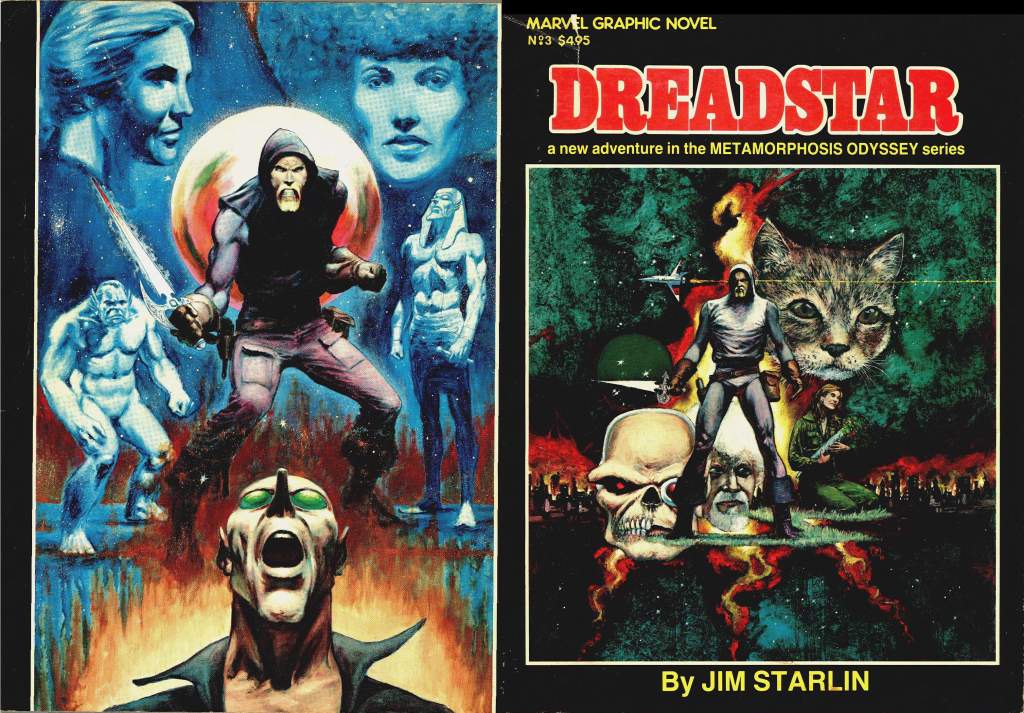
I have to admit that, during the period when it was first being serialized in the pages of EPIC ILLUSTRATED magazine, I was really knocked out by Jim Starlin’s running science fiction serial Metamorphosis Odyssey. No doubt in part due to the fact that I had yet to read a significant amount of science fiction at that point, Starlin’s epic seemed sophisticated and complex and adult to me–and not simply because many of the female characters ran around topless (a fact that, to be honest, made me feel a bit uneasy, as though it was something that I shouldn’t be reading.) So once it wrapped, I followed Starlin over to Eclipse’s release of THE PRICE, which was set within the same continuum, and I was ready for the third MARVEL GRAPHIC NOVEL (despite its hefty cover price) which would continue the adventures of Vanth Dreadstar after the events of that earlier story.
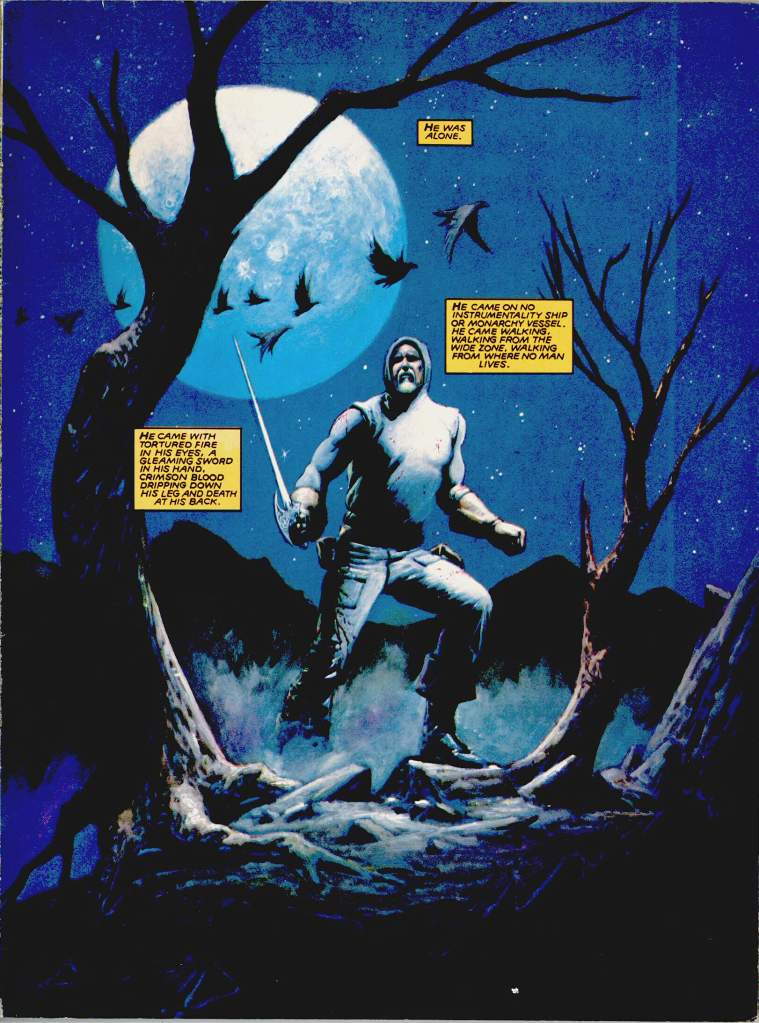
In retrospect, and with the hindsight of years, Dreadstar looks more to me like what it always was; a nicely produced action-adventure space opera strip. Super heroes without costumes and with a veneer of more adult sensibilities. Starlin has already proven adept at such fiction in his WARLOCK series for Marvel, and Dreadstar was cut from similar cloth. Either way, I can remember being profoundly disappointed when the DREADSTAR ongoing title that sprang out of this graphic novel was a simple pen-and-ink linework affair, rather than being fully painted as the preceding three adventures had been. That was enough to get me to drop it after a single issue, despite the fact that there were those in my crowd who swore by it. But I was nothing if not reactionary in my comic book opinions, like many a younger fan, and DREADSTAR as just another regular old comic book wasn’t what I wanted from it.
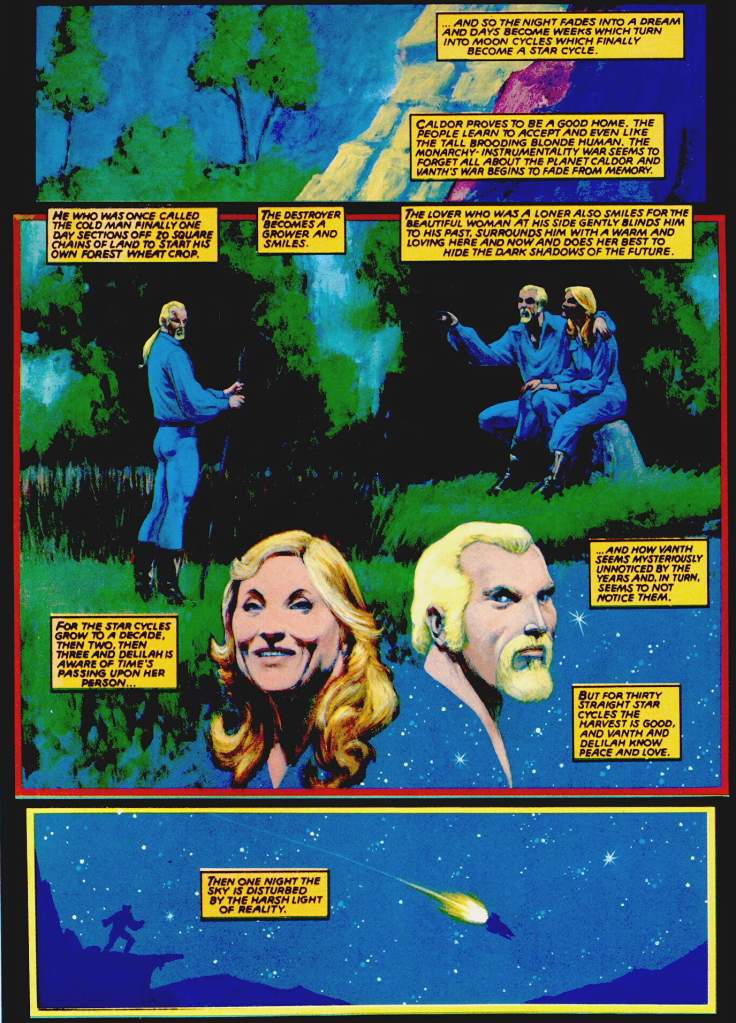
That all said, MARVEL GRAPHIC NOVEL #3 was a pretty good piece of work, and singular in its vision as Starlin both wrote and painted it. It seemed a relatively personal story as well, as it’s difficult to look at the depictions of Vanth Dreadstar and Delilah in this book and not see the visages of Jim Starlin and his then-wife staring back at you. Starlin likely used them as the visual models for the characters, but the resemblance goes a bit deeper than that. The story was typical of its type, about an old warrior who tries to give up his life of killing and war and live peacefully with a new family, only to be drawn back against his will into conflict.
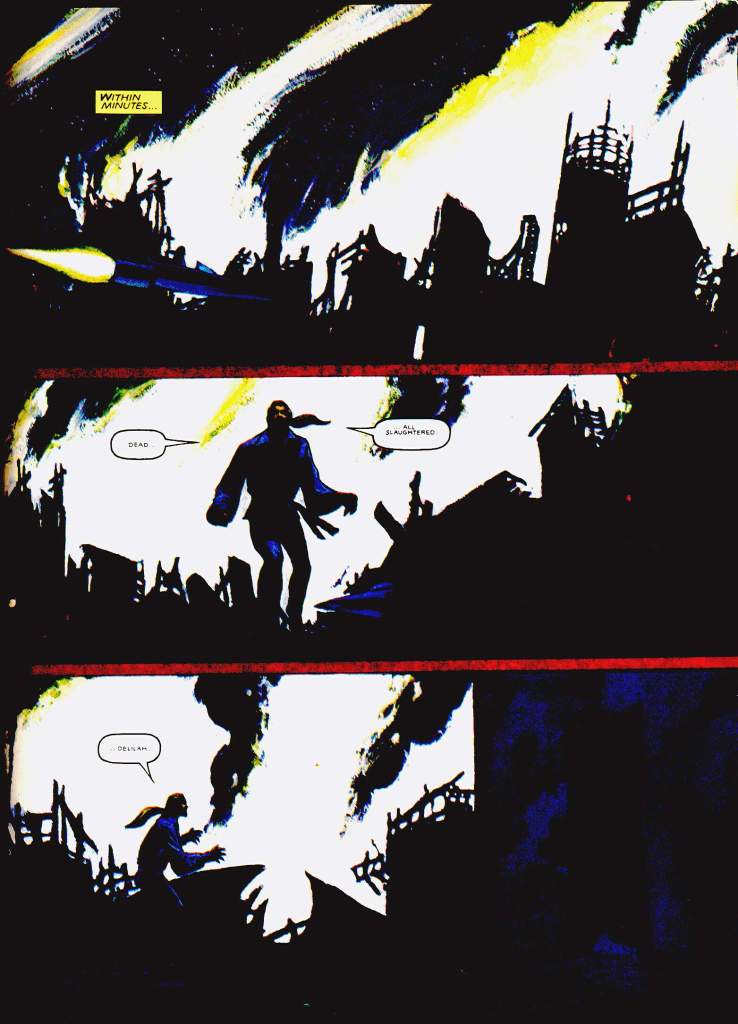
The story picks up in the aftermath of Metamorphosis Odyssey, in which Dreadstar and his companions had destroyed the Milky Way Galaxy in order to save it. Having committed planetary genocide, Dreadstar chooses to put down the star-spawned sword that had made him into something more than a man. He thereafter collapses from his wounds, but is found by a trio of The People, anthropomorphized humanoid cats, who bring him into their conclave and take him to Delilah, who works to heal his wounds. Vanth’s enhanced constitution allows him to heal from his injuries, and he winds up settling down with Delilah and becoming a simple farmer–shades of Thanos’ journey to come! In time, he befriends another outsider, the warlock Syzygy Darklock, who had been the central character in THE PRICE. Darklock tries to tell Dreadstar that as much as he might will it otherwise, the universe isn’t done needing his skills in battle.
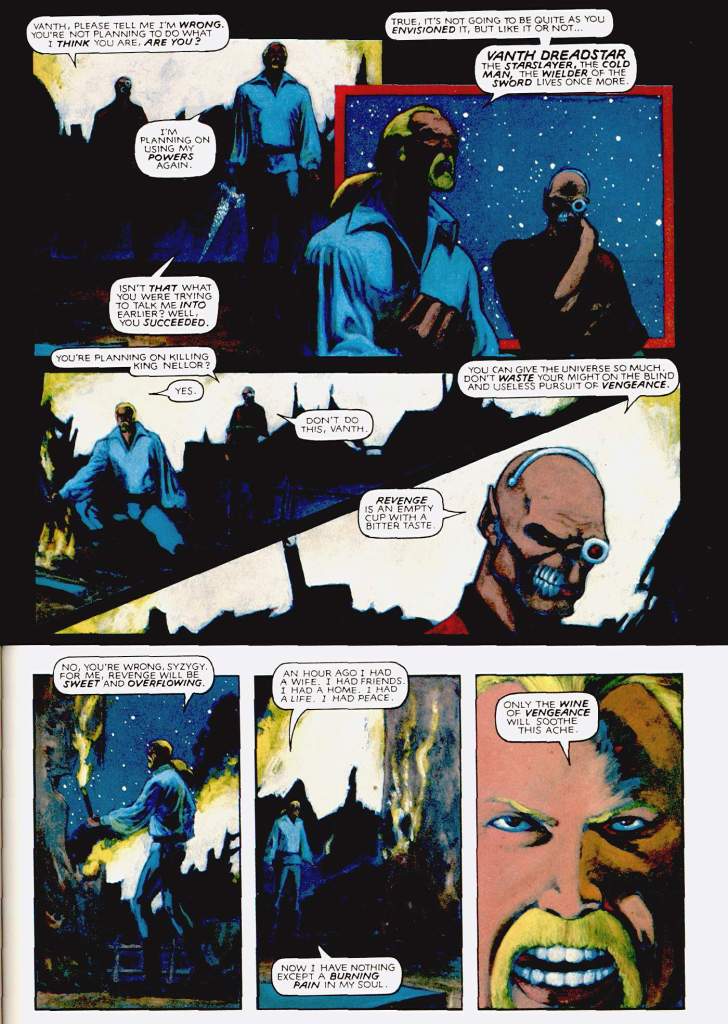
But of course, things cannot remain the way they are. And so, one evening while Dreadstar is visiting with Darklock, and the warlock is attempting once again to convince Vanth to pick up his sword and help to straighten out the conflict between the two great powers in this galaxy, the Monarchy and the Instrumentality, a task force from the Imperial Navy attacks and wipes out the encampment where Dreadstar lives. They’re acting in intelligence reports gathered decades earlier that indicated that the People might one day grow into a threat to the Monarchy. Arriving too late to prevent the slaughter of his wife and his friend, Dreadstar is consumed by a need for vengeance and picks up his sword once again. He intends to kill the King whose officers committed this atrocity, but in order to be able to get close enough to do the deed, Dreadstar enlists in the Imperial Navy himself.
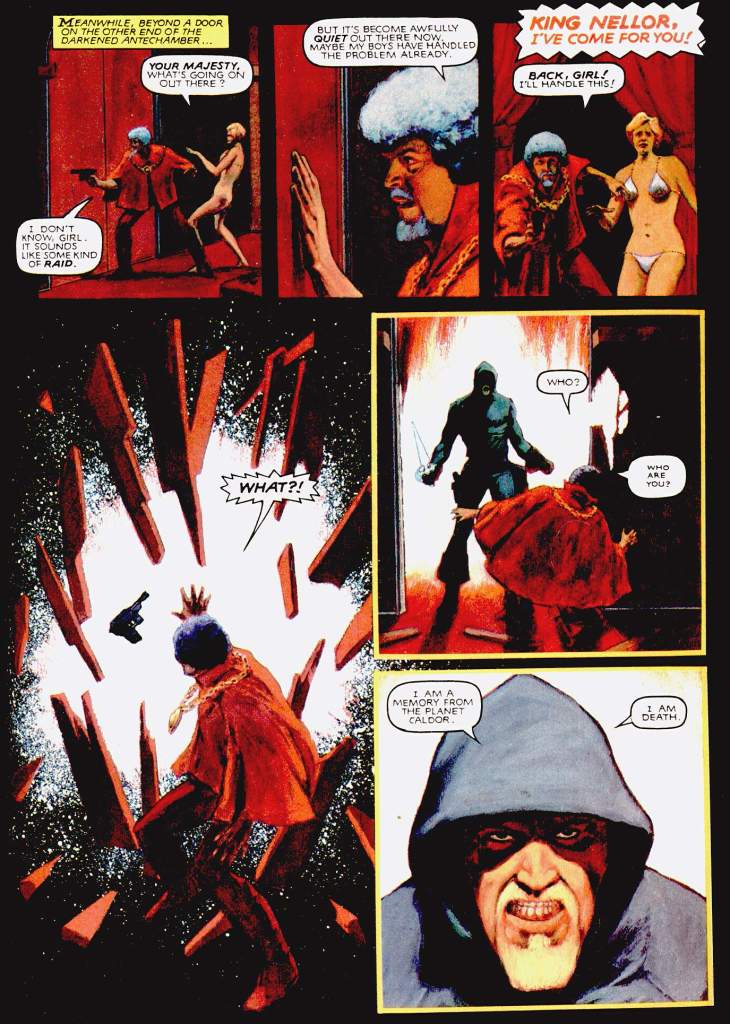
Given his considerable prowess, Dreadstar works his way up in the Marine ranks swiftly, eventually gaining promotion to the rank of Captain. In this role, he’s able to see firsthand the pain and suffering that the ongoing war between the Monarchy and the Instrumentality is causing, and he resolves to put an end to it. But not before he’s had his revenge. In his new role, he’s able to order the squadron that wiped out his friends and family into a fatal charge that wipes them out to the last man. Then, after being posted to the Royal Palace as a military liaison with the crown, he’s able to penetrate King Nellor’s defenses effortlessly and butcher the man. Dreadstar then appears before the crown prince, who is in no way ready to take up the throne, and tells the man that he will be pulling the strings from the shadows, protecting the prince and permitting him to rule as a figurehead while they take action to stop the ongoing war.
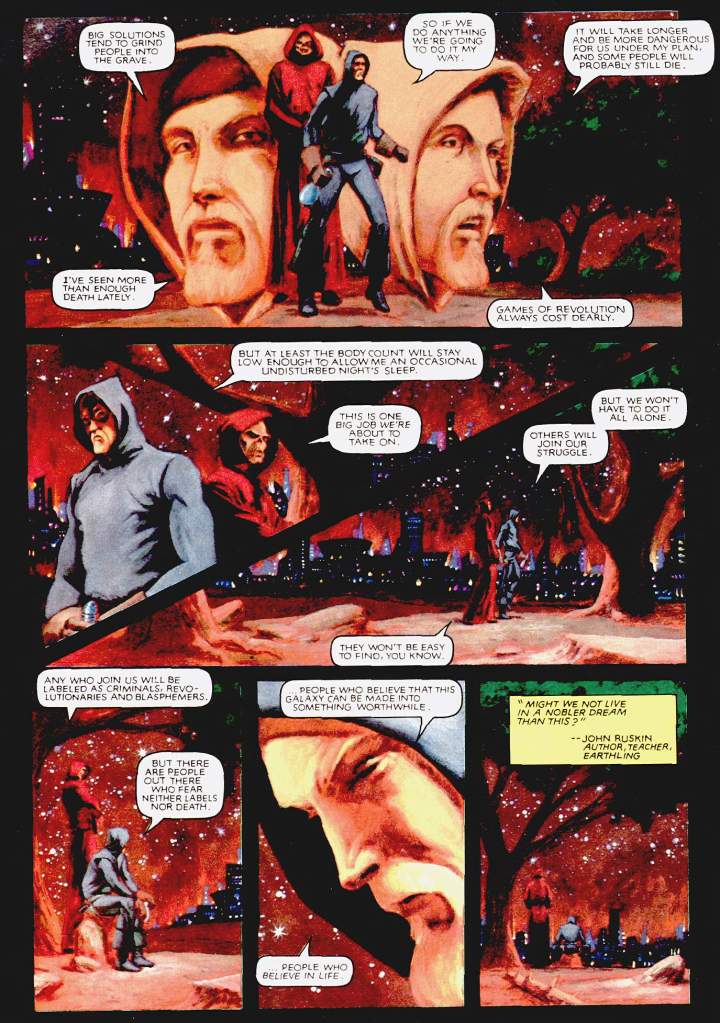
With this matter accomplished, Dreadstar goes to meet Darklock at a seedy small-time bar. The two discuss the fact that bringing the Instrumentality into line will be no small feat, even for them,. Having been misled by his former ally the wizard Aknaton, Dreadstar is skeptical about Darklock’s plans and the cost in human lives they will entail. He resolves to go about things in his own way, even if that means greater personal risk for himself. And so the stage is set for the new ongoing series that will be birthed out of this release, the first in what would become the Epic Comics line of creator-owned released published by Marvel. Looking back at the book today, it’s perfectly fine, but just a bit thin, and not nearly as insightful or affecting as I recall it being back in the day. Starlin’s painting is also a bit crude, which gives the project a definite texture but which leeches some of the life out of it. He seems very much at the mercy of his reference on these pages, and it’s often easy to tell who he’s using as a model for each of his characters. This was also early enough on in my experience with Starlin’s works (and early enough in Starlin’s own career trajectory) that themes that he’d return to again and again seem fresher here than they would later on down the line.


I really enjoyed those early chapters of Dreadstar’s saga. I stuck with the ongoing Epic comic for a while, but gradually lost interest. At some point, Starlin started to inject more humor into the series, which just felt wrong. And once he decided to put Vanth in a skintight superhero suit, I decided I was out.
LikeLike
I thought the first 12 issues were pretty good. I personally found the costume change and writing the sword out of the series more a trope for what went wrong than the actual problem. I think Starlin begins with a tight plan for his serials, but once he’s past that initial plan, the storyline starts flailing around and seems to lack direction. One can see this with his initial Warlock run, which fell apart after the Magus section wrapped. With Dreadstar, he got bogged down with a “traitor” storyline that seemed interminable.
LikeLike
The Dreadstar series was originally intended for the Bizarre Adventures black-and-white magazine. The art was to use the grayscale style used in The Price. But something–most likely the success of the initial Pacific Comics launches–convinced Marvel and Starlin to do it as a dedicated color series. The one completed grayscale episode was published in Epic Illustrated around the same time Dreadstar #1 was released. Doing the color series as pen-and-ink as opposed to fully painted most likely kept the production costs down and allowed for higher-frequency publication. Aesthetically, I think it works better. Few cartoonists can handle the fully painted approach with comics storytelling effectively, and Starlin wasn’t one of them. I haven’t read enough of the Metamorphosis Odyssey serial to comment, but I found the Dreadstar GN a visual slog. Starlin’s painted style drags the pacing down, and it calls added attention to the shortcomings of his figure drawing.
LikeLiked by 1 person
I think the main reason Starlin went to pen and ink was that it was quicker.
LikeLike
I read this graphic novel when I was 13 or 14 I think (it had been out already for a while and the Epic series had just started– this was 1983). Like you, I never bothered with the comic because I loved the painted artwork of the graphic novel, though I did collect it all in my 30s and really loved it. (I even went back and collected all the original Metamorphosis Odyssey issues of Epic!)
One has a sense this was the story Jim Starlin was trying to tell for a while, like Thanos and Mongul were a warm-up acts for the Lord Papal. Also, read his take on OMAC in the backups of The Warlord, and he has zero interest in Kirby’s version and instead is doing a proto-Dreadstar. I really loved the painted artwork too. And it looks like proper painting rather than painting on top of pen and ink.
I’m not often into space opera, but this one really grabbed my attention. And eventually kept it a couple of decades after the original graphic novel.
LikeLiked by 1 person
I read this graphic novel when I was 13 or 14 I think (it had been out already for a while and the Epic series had just started– this was 1983). Like you, I never bothered with the comic because I loved the painted artwork of the graphic novel, though I did collect it all in my 30s and really loved it. (I even went back and collected all the original Metamorphosis Odyssey issues of Epic!)
One has a sense this was the story Jim Starlin was trying to tell for a while, like Thanos and Mongul were a warm-up acts for the Lord Papal. Also, read his take on OMAC in the backups of The Warlord, and he has zero interest in Kirby’s version and instead is doing a proto-Dreadstar. I really loved the painted artwork too. And it looks like proper painting rather than painting on top of pen and ink.
I’m not often into space opera, but this one really grabbed my attention. And eventually kept it a couple of decades after the original graphic novel.
LikeLike
My first exposure to Metamorphosis Odyssey was from Epic Illustrated #5, which was the first issue that I came across. I was 14 or 15 years old. I collected the rest of the issues it appeared in, The Price, the Dreadstar graphic novel, and even the Metamorphosis Odyssey portfolio. I still own them all to this day.
I did not like the story’s transition to a regular pen & ink comic. I also did not like the fact it went from being magazine sized to comic book sized. (I am a size queen when it comes to comics.)
For me MO was the best thing Starlin did. I also hold his Death Stories from Star*Reach #1 in high regard, as well as his painted works in general.
LikeLike