

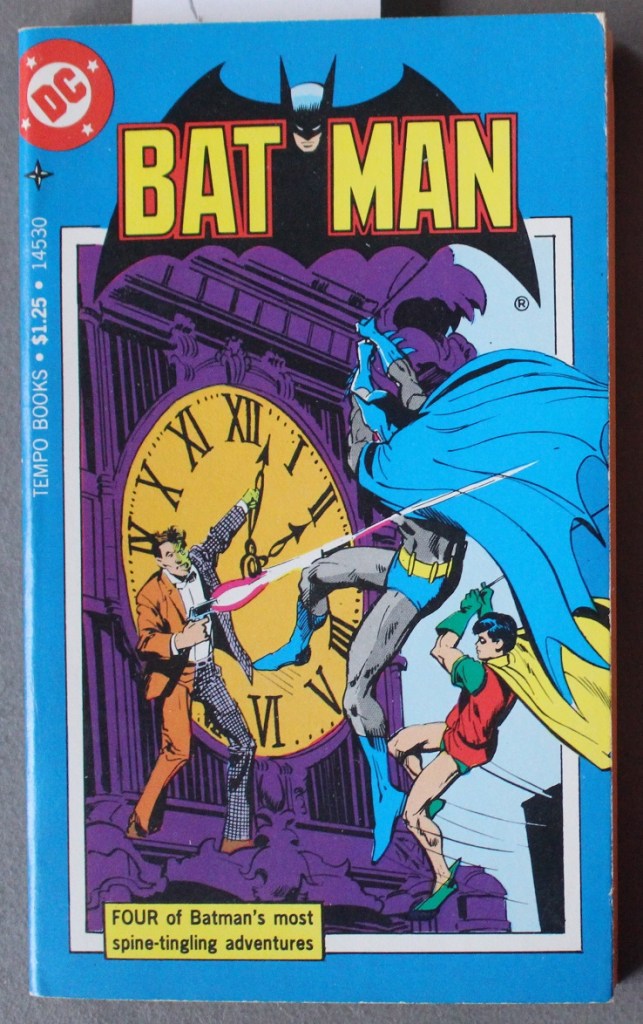
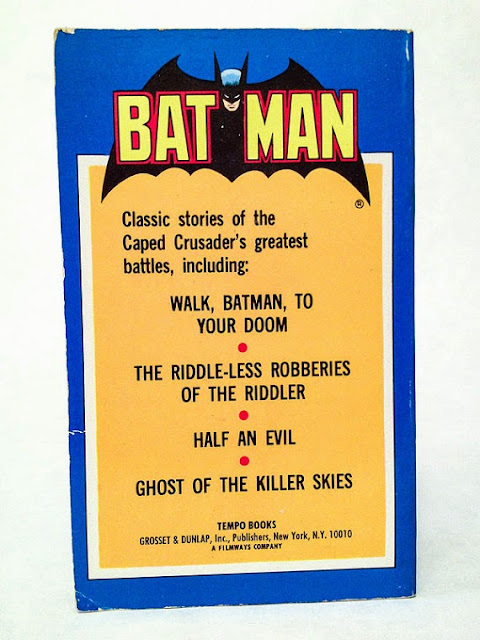
At around this time, I wound up buying a number of Tempo paperback editions dedicated to assorted DC characters. These were DC’s answer to the Marvel Pocket Books format, and they released six volumes through Grosset & Dunlap’s Tempo imprint all at once. I wound up owning four of those six, starting with this BATMAN edition. That’s a really odd image to choose for the front cover, given that the Caped Crusader is seen almost entirely from the back on it. But there wasn’t a whole lot else to choose from in terms of the four stories reprinted in this edition, particularly if you were looking to showcase a more modern Neal Adams-style Batman rather than the character’s earlier 1960s self.
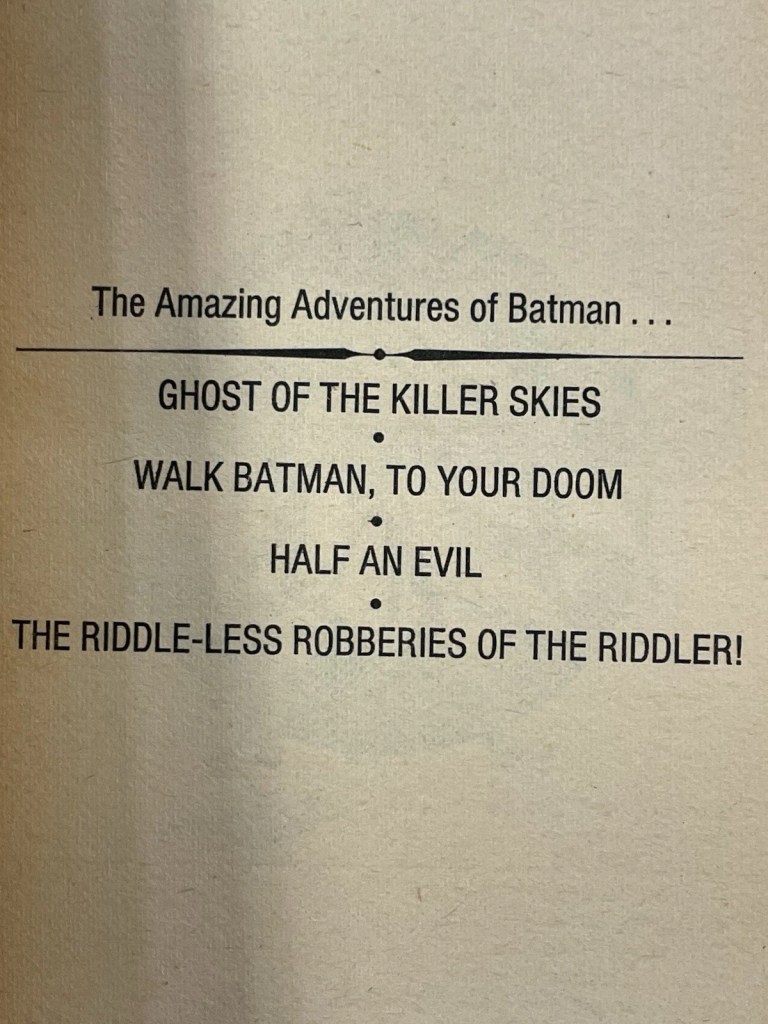
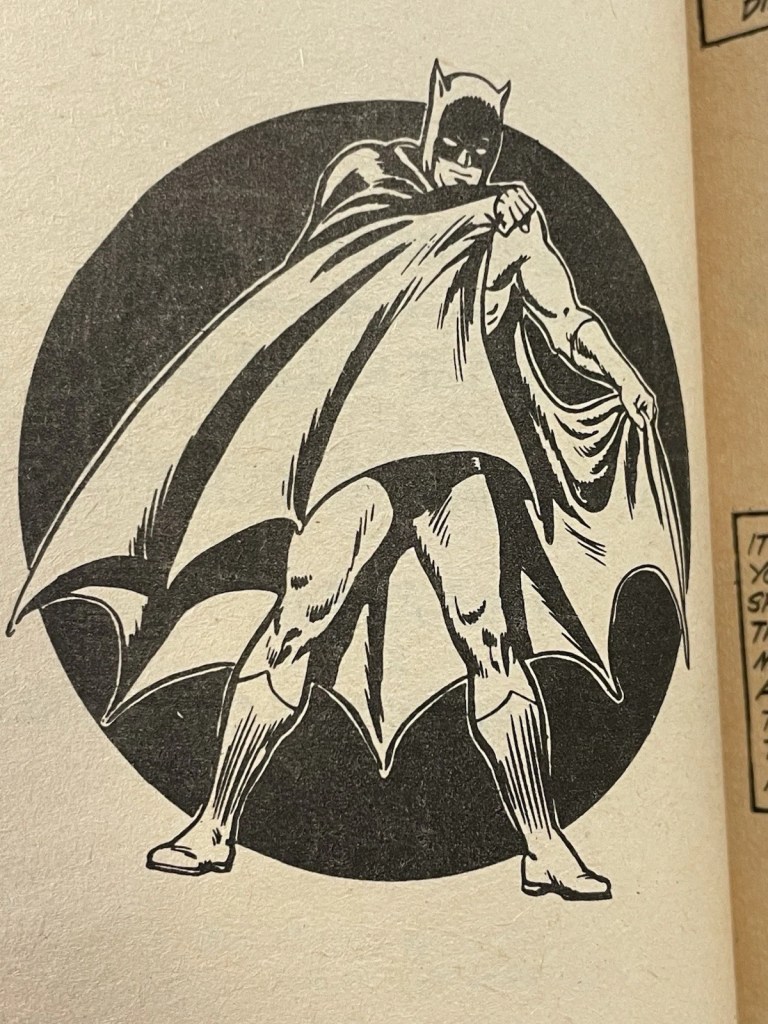
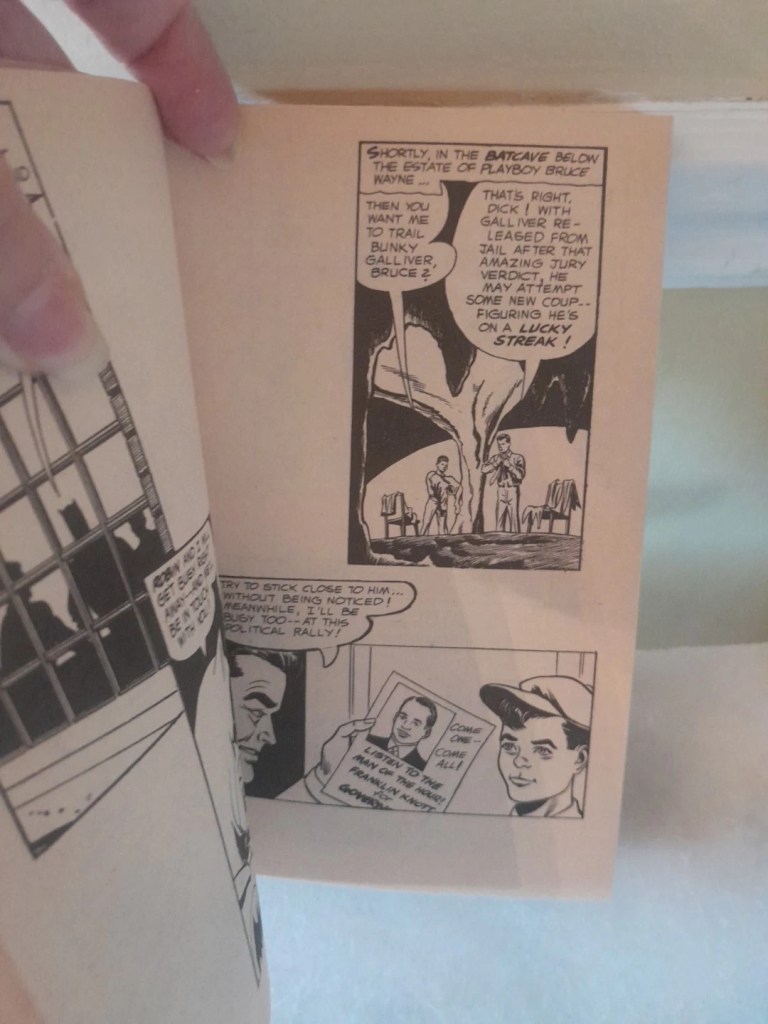
These volumes were cheaper than their Marvel counterparts, but for good reason: while the Marvel books printed their stories in full color, the DC volumes remained in black and white. That alone wouldn’t have been a deal-breaker for me, but these books also took the same tack that had been used on the 1966 Marvel volumes and other collections of comics: rather than printing entire pages as a single unit as the Marvel books did–which, admittedly, tended to make the lettering really small–these volumes cut up the stories, running a panel or two on each page. This inevitably led to some awkward cuts and adjustments, as the original story pages, in particular the Neal Adams ones, weren’t designed to do this. I never liked this approach as a kid, and so I tended to try to avoid volumes that presented the work in this manner.
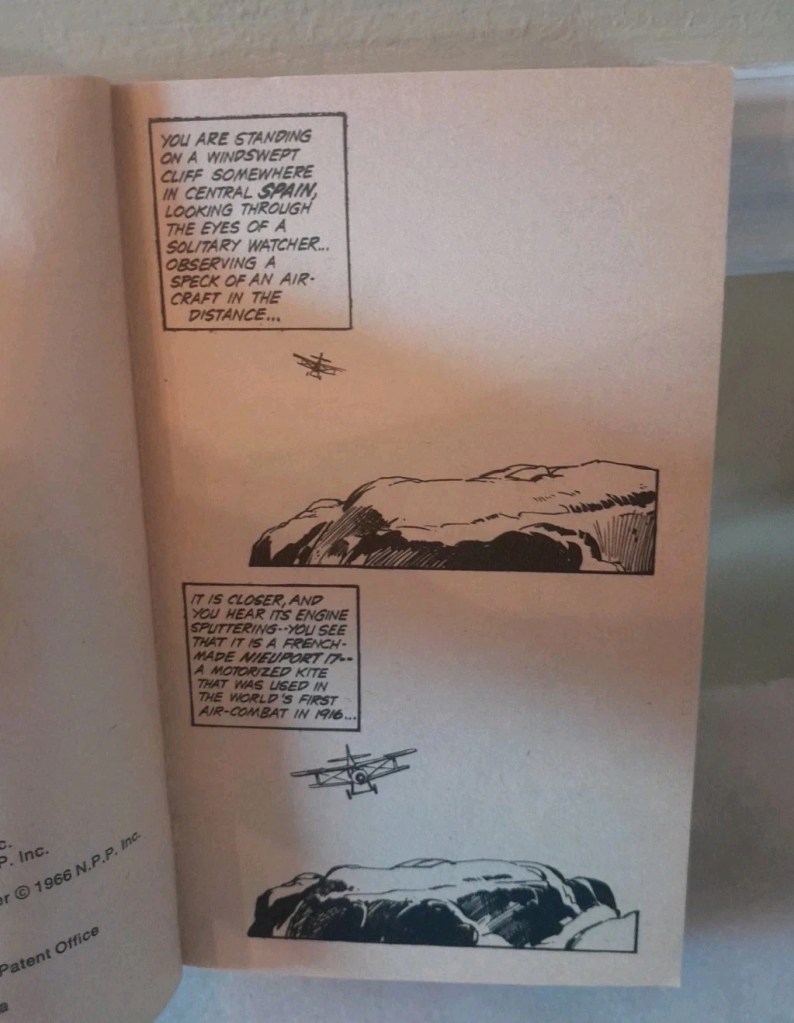
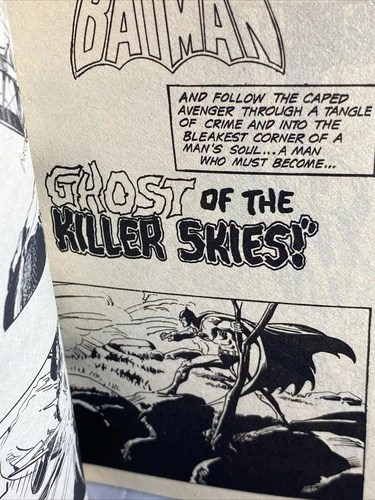
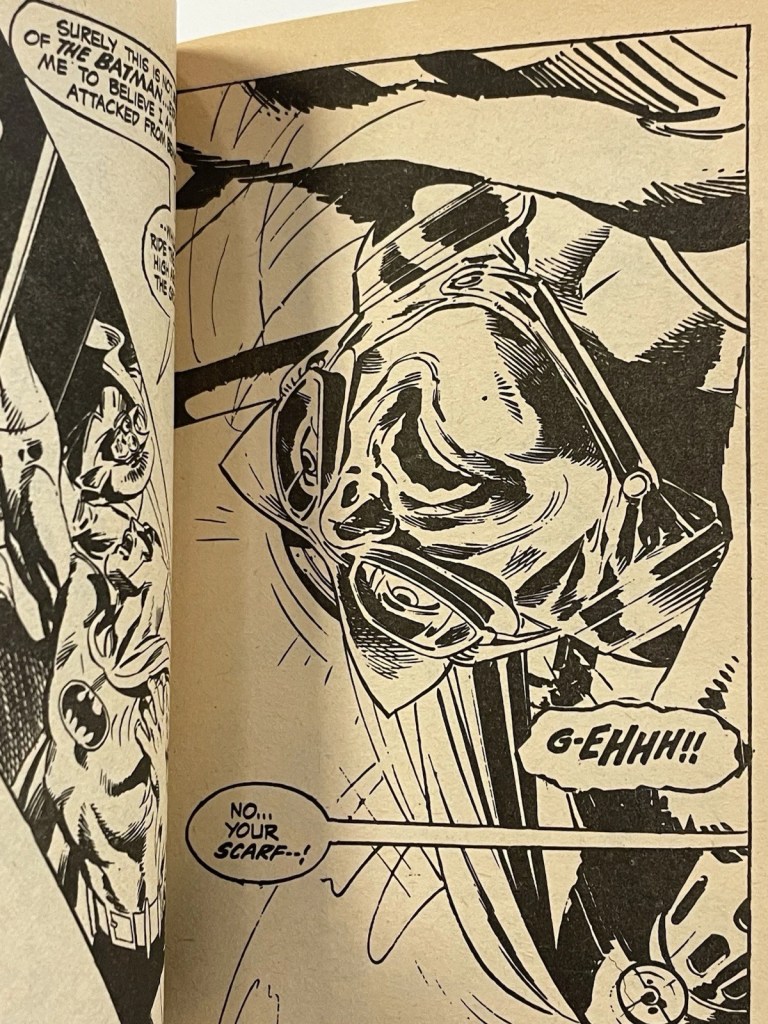
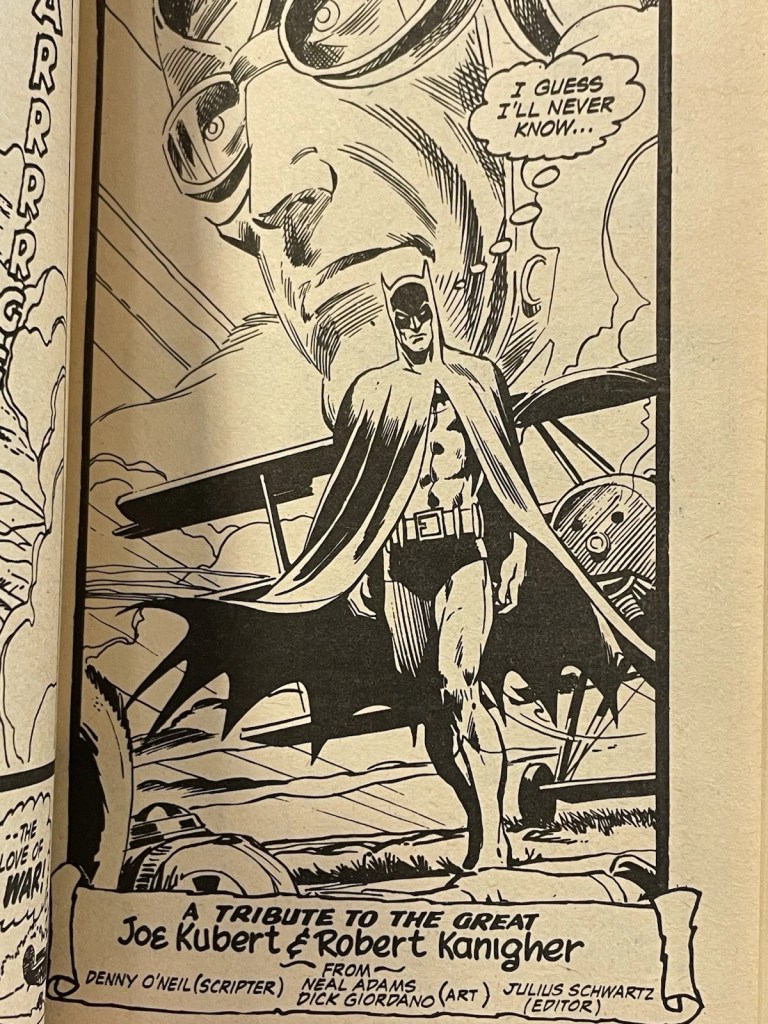
What’s fascinating to me about this little volume is the editorial choice that was made concerning its contents. It is a schizophrenic collection comprised of four stories: two of them more modern Batman epics by Denny O’Neil and Neal Adams, in which the Masked Manhunter is a chilling creature of the night, and two stories pulled from the mid-1960s, right around the time when the BATMAN television series was premiering, that take a decidedly lighter and campier approach to costumed crime-fighting. That said, having digested my share of 100-Page Super-Spectaculars that would feature modern day new Batman stories nestled up against older ones, I didn’t have any sense of dislocation. But I can only imagine what the average reader thought about this.
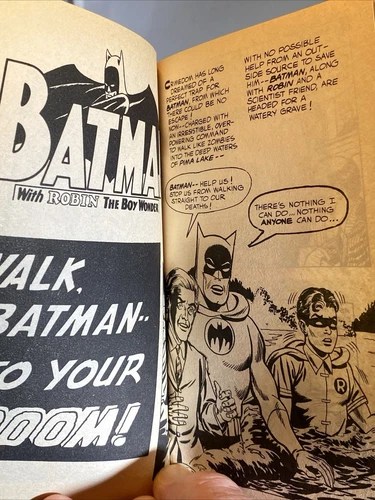
The first story in this book I had already read years before in a Treasury Edition, although I no longer owned a copy of it.
This was Denny O’Neil and Neal Adams’ tribute to artist Joe Kubert and his and Bob Kanigher’s creation Enemy Ace. it involved Batman battling a modern day killer who modeled himself after WWI’s Hans Von Hammer. And it must be said, chopped up this way is a lousy manner in which to take in this great story. This was followed by “Walk, Batman–To Your Doom!” by John Broome and Sheldon Moldoff (operating under the Bob Kane byline.) Comparatively, this story was a lot more cartoony, both in premise and the artistic execution of that premise. The divide is so pronounced that one could be forgiven with thinking that these were entries in different series entirely.
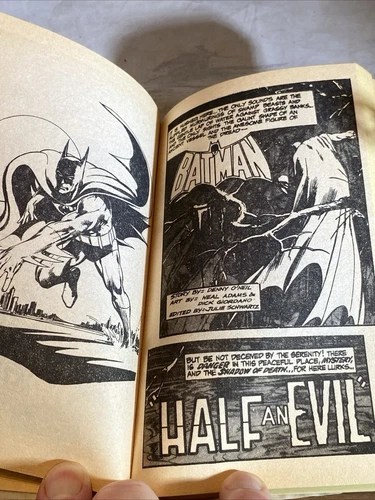
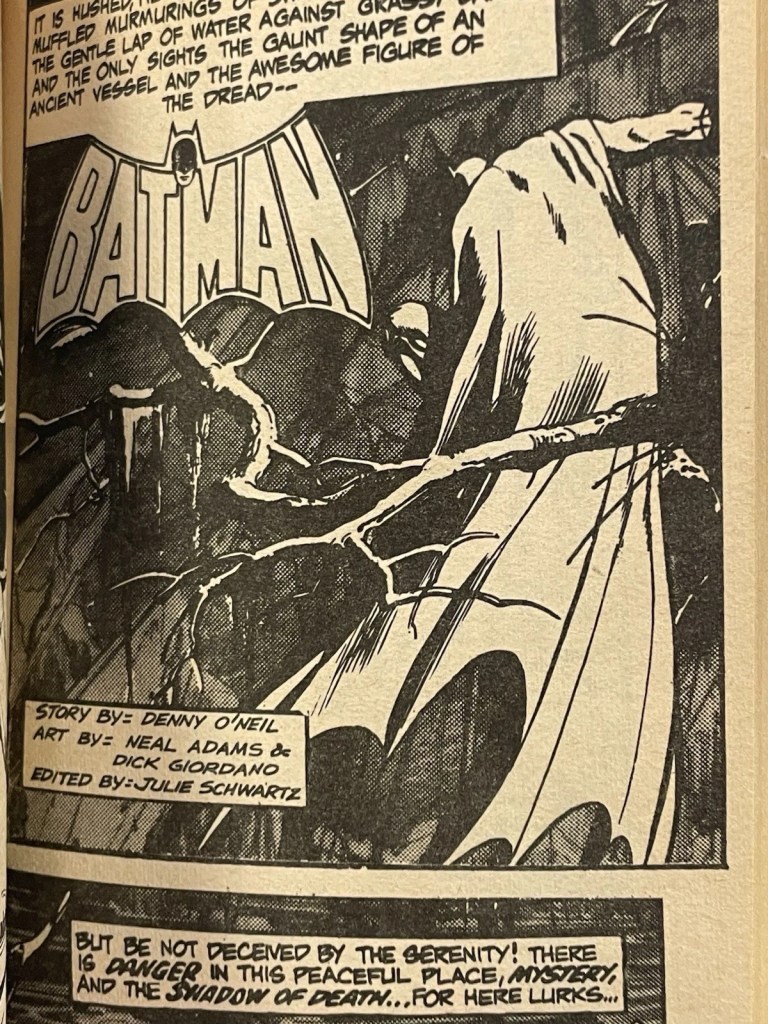
The next story was the one that stuck with me the most, even though, again, this was a terrible way in which to experience it for the first time. This was “Half An Evil” by Denny O’ Neil and Neal Adams, the story that brought back the villain Two-Face after an absence of close to twenty years and set him up to become one of the most memorable members of Batman’s gallery of villains. The artwork and flow of this tale are positively slaughtered by the small size, the choppy reproduction and the fact that the pages have been cut apart into individual panels . The zip-a-tone that inker Dick Giordano used on the evocative splash page closed up enough at this smaller size that much of the image became illegible.
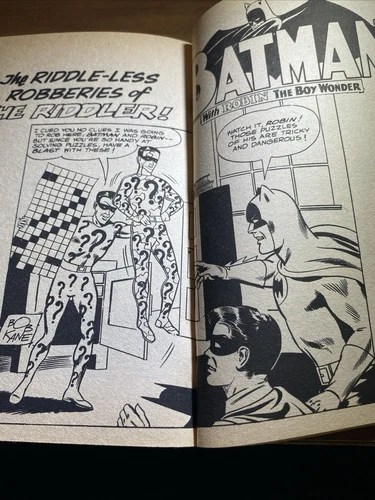
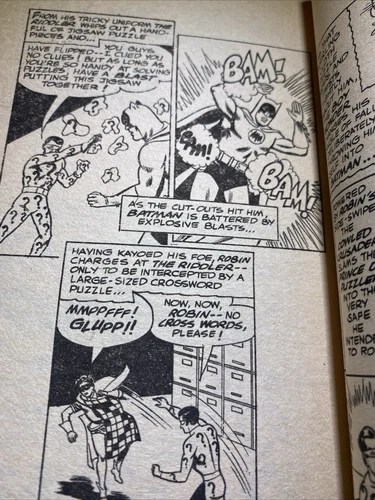
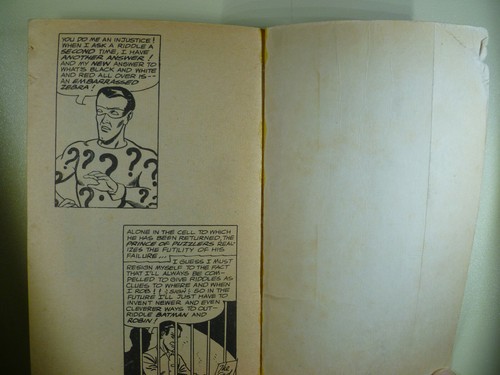
And then, like a ping-pong ball, the final story was “The Riddle-Less Robberies of the Riddler” by Gardner Fox and Sheldon Moldoff, which was produced just as BATMAN ’66 was making its debut. It’s overt in its emulation of that classic television show, a production that popularized the villainous Riddler, as played by the great Frank Gorshin. This is overtly the campiest of the four stories in this volume, and it’s virtually impossible to reconcile this Batman with the guy who was engaged in a genuine life-and-death struggle with Two-Face just a couple of pages earlier.
I think this paperback is indicative of how schizophrenic DC was in the 1970s in terms of their handling of Batman in civilian-facing endeavors. They were aware that they had pivoted the character into darker and more serious directions, and seemed to be proud of that fact. However, the shadow of the live action television program, which was still airing in reruns every afternoon, as well as the animated incarnations of the Caped Crusader in SUPER FRIENDS and THE NEW ADVENTURES OF BATMAN on Saturday mornings caused them to simultaneously want to meet the expectations of audience members who encountered the character first in those places. Consequently, it really wasn’t until the twin punch of Frank Miller’s THE DARK KNIGHT RETURNS and then the 1989 BATMAN feature film that DC went all in on the darker image of Batman.
 The Tom Brevoort Experience
I actually picked this book up for the two “New Look” era stories, since I’d already read the Neal Adams ones. As a lover of bad puns and wordplay, I was always on the lookout for Riddler stories I hadn’t seen before. I think this was the first story to posit that the Riddler’s love of riddles was a genuine psychological compulsion, rather than just showmanship, which was an interesting angle.
The juxtaposition of two Adams stories and two by Moldoff is pretty weird, though.
LikeLike
You are correct, this is where the riddles went from gimmick to compulsion.
LikeLike
I had this Batman Tempo paperback, as well as the Superman and World’s Finest volumes, which I found in the paperback spinner rack that stood next to the comic book spinner rack at my neighborhood drug store. Since then, I’ve seen online images of the Wonder Woman, Legion of Super-Heroes, and Justice League Tempo books produced at the same time but never found them in the wild.
LikeLike
Would there be Cockrum art in the Legion one?
LikeLike
Some info on the contents of the Legion paperback here: The Legion of Super Bloggers! : Tempo Books Legion of Super-Heroes
LikeLiked by 1 person
I don’t recall reading these as a kid.
I do agree that there’s a let’s hit all bases approach where there would be a story or two that would appeal to most everyone.
I wonder if the stories were chosen, books were printed, and oh well that’s what you’ve got. In other words, no chance to choose another story due to poor reproduction.
LikeLike
I got all six of the Tempo paperbacks for Christmas. I’m sure my mom got them as a set in one of the Christmas catalogs.
I first encountered Two-Face on a Batman board game, and the Tempo paperback was the first time I read a Two-Face story.
LikeLike
I had this paperback once upon a time, not sure what happened to it. I have since purchased BATMAN 234(first appearance of “Half an Evil”) and whichever original issue had “The Riddle-less Robberies of the Riddler.”
LikeLike