

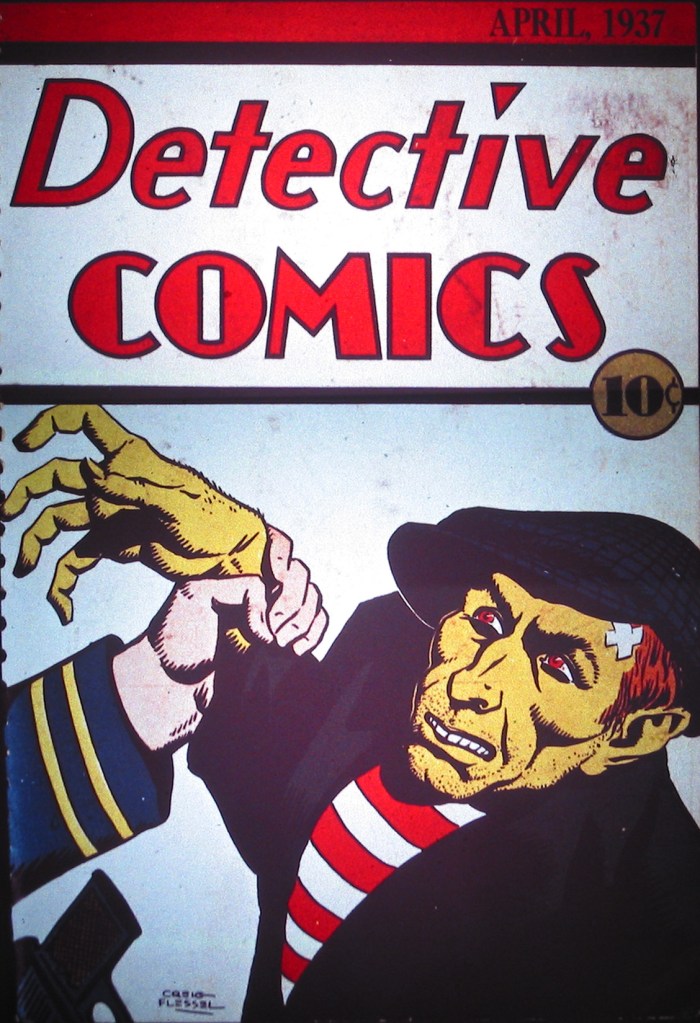
In the early pre-Superman days of comic books, the medium was trying to figure itself out. The young and often ill-trained creators who toiled in the early comic books were mostly talented novices with a desire to tell stories in pictures and put some food on the table. Accordingly, much of the common wisdom of the era was gleaned from successful newspaper strips. The earliest comic books had been nothing but strip compilations, and so even the new material that was produced for them tended to mimic the look of the Sunday funnies, with a series header atop every page and an ironclad rule that each page must contain at least 8 panels, typically of equal size.
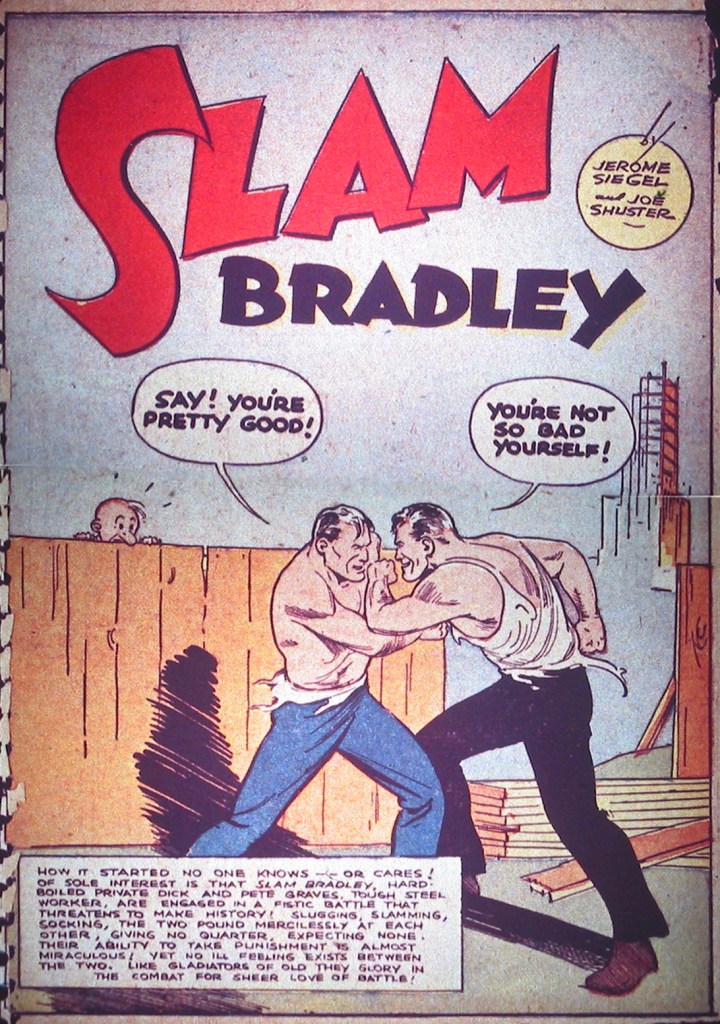
One team that often bent if not broke the rules–though whether this was a matter of innovation or simply expediency is anybody’s guess–was Jerry Siegel and Joe Shuster. The pair had experienced no luck in interesting any reputable publishers in their watershed character, Superman, though they continued to shop the strip around. So to make ends meet, the team created strips for publication in the comic magazines published by Major Malcolm Wheeler-Nicholson, an outfit that would eventually become DC Comics. The Major had given the team their first big break, featuring their work in his title NEW FUN. And when Nicholson was planning to add a new title to his line, he had an idea for a character that Siegel and Shuster might be able to develop.
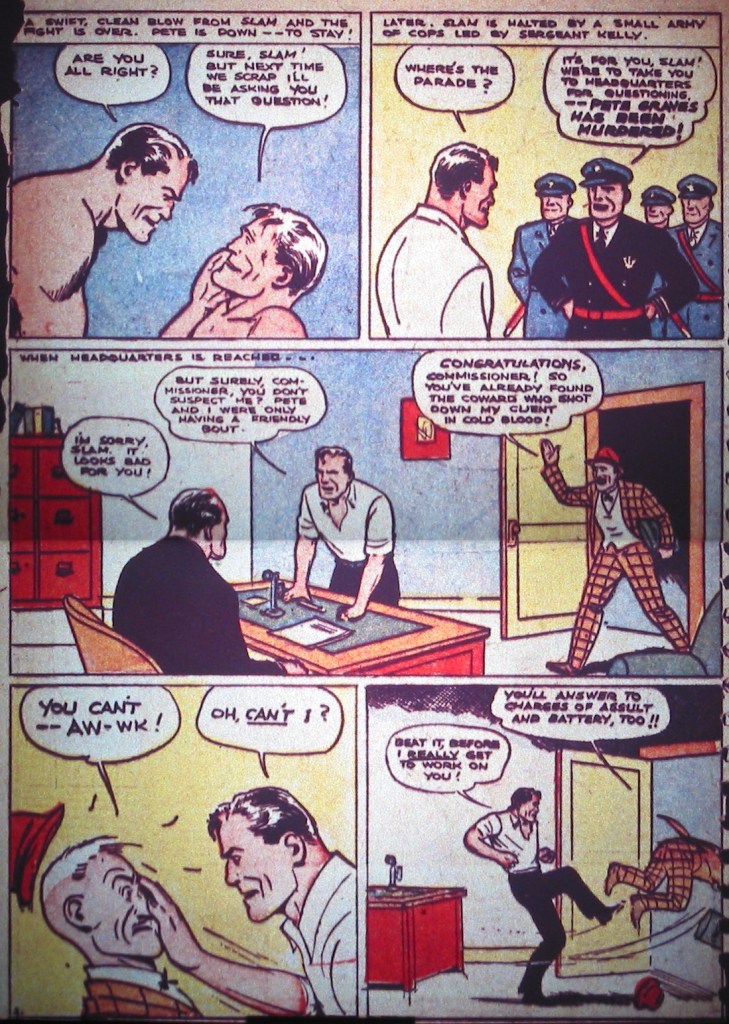
The result was Slam Bradley, who made his debut in the inaugural issue of DETECTIVE COMICS in 1937. Slam was a private eye, just a regular mortal human being, but tough as nails and with a fighting disposition in the manner of the blue-collar heroes of the day. In later years, Jerry Siegel admitted that he and Joe couldn’t help but to infuse the strip with some of the kind of action and energy that they intended to bring to Superman, and it shows in the final result. These early Slam Bradley stories are remarkably crude, but they also have a lot more life and animation to them than anything else being featured in DETECTIVE COMICS at the time.
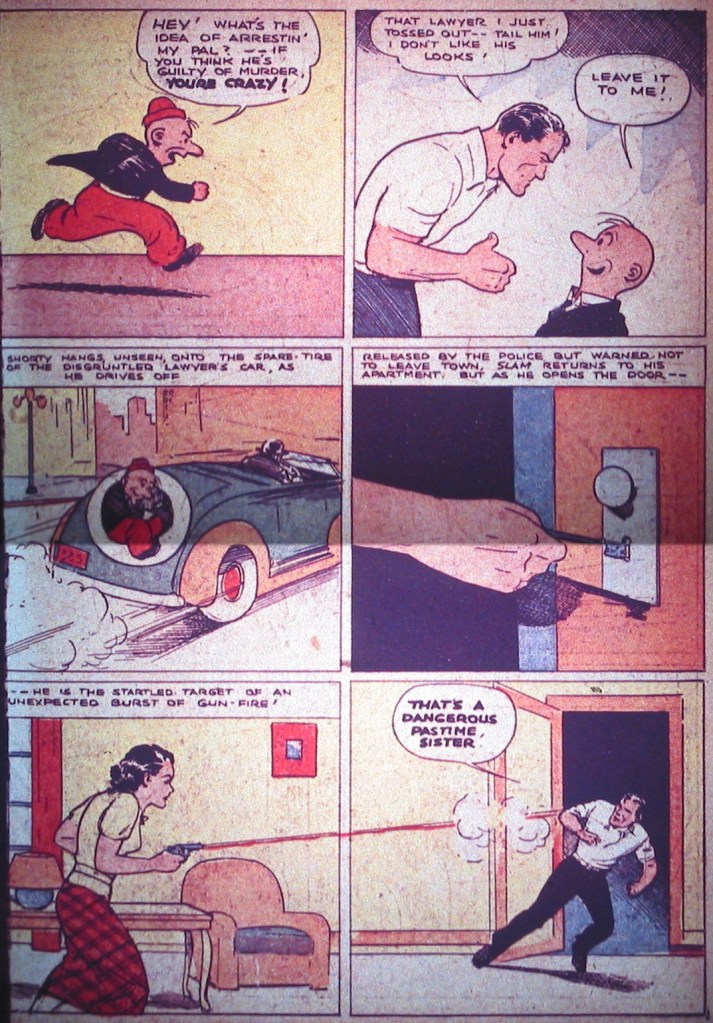
Once Wheeler-Nicholson was driven out of the business by his printer Harry Donenfeld, Donenfeld and his team, notably finance man Jack Liebowitz, gave Siegel and Shuster hell about turning in pages that contained fewer than 8 panels to a page. But as you can see in this second story, they had been going for larger panels and greater impact right from the jump. But you can also see Donenfeld and Liebowitz’s point, too. Pages like the one above were very open, even spartan in their details.
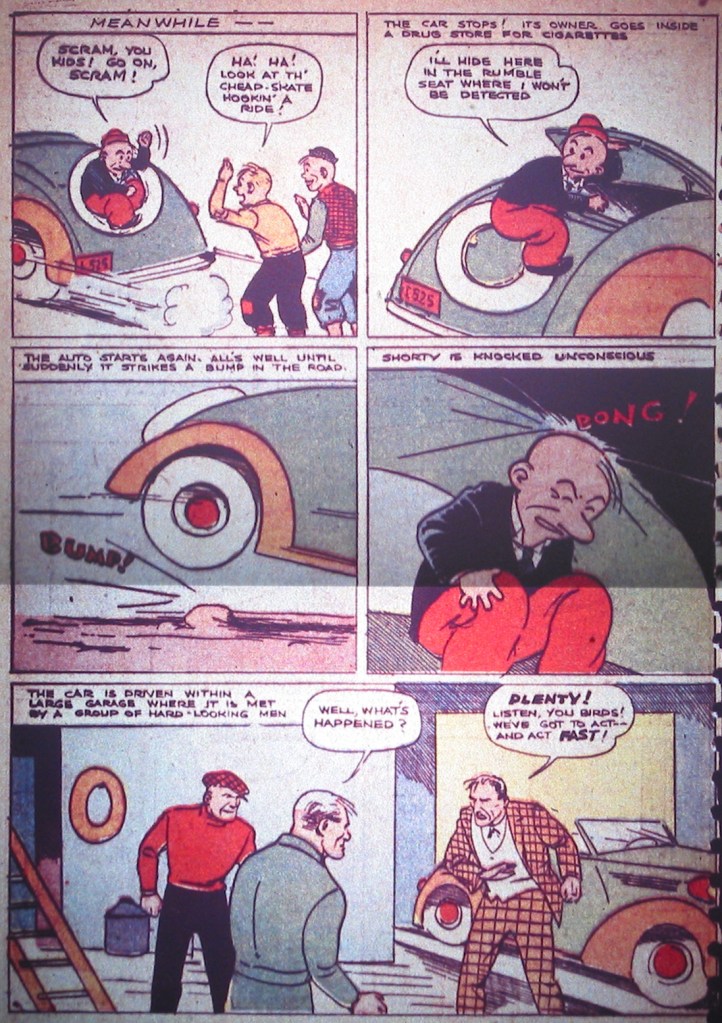
The team continued to produce Slam Bradley for a couple of years, until the runaway success of Superman meant that Shuster had to focus his efforts on that series and hand Slam over to other artists. Siegel continued to write it for some time (though at a lesser rate than what he was getting for Superman–Donenfeld and Liebowitz couldn’t understand why Jerry insisted in working on other lesser features rather than devoting all of his time to the Man of Steel) though other creators wound up script installments past a certain point.
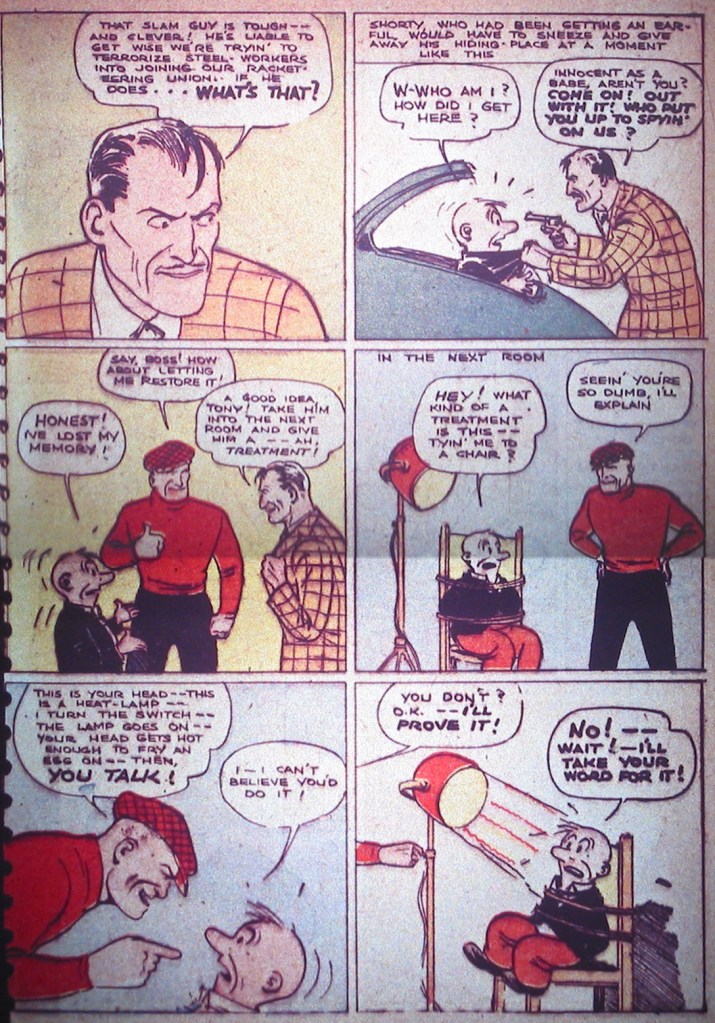
Slam Bradley made his last Golden Age appearance in DETECTIVE COMICS #152 in 1949, a very respectable twelve-year run. The character would be revived decades later, and virtually reinvented from the ground up–most modern day depictions of Slam Bradley have little in common with the original version of the character apart from the evocative name.
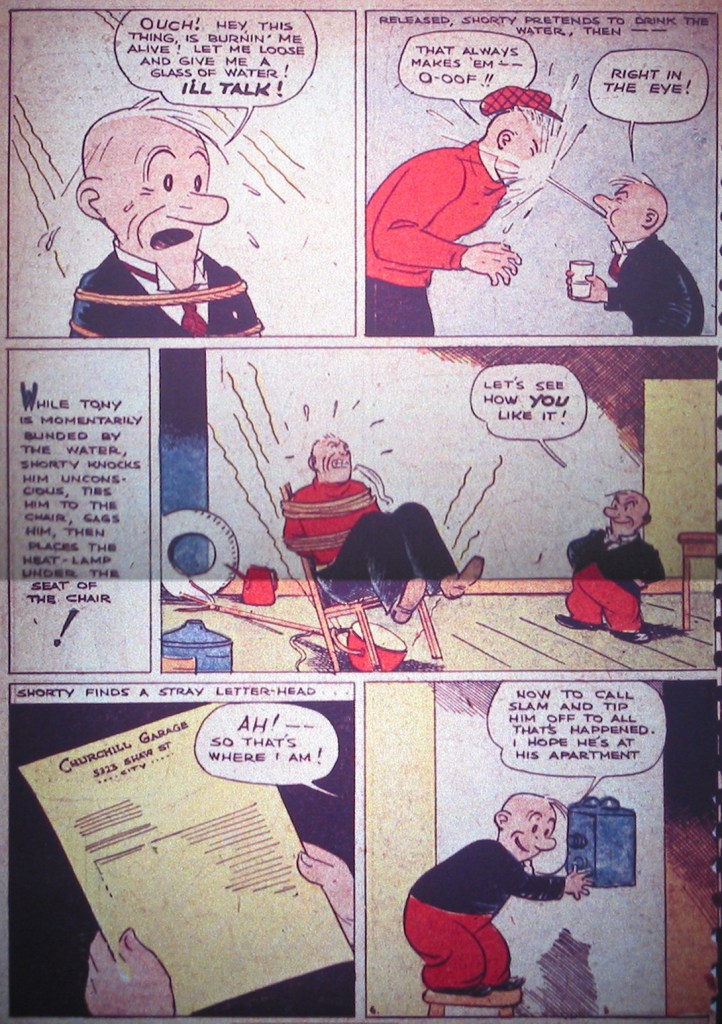
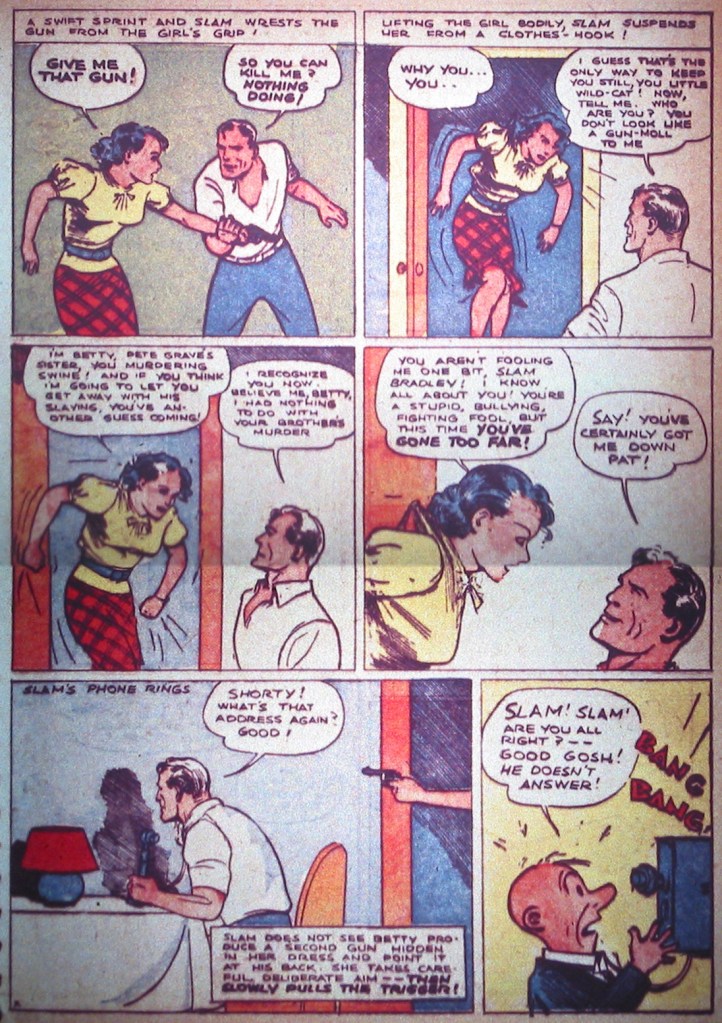
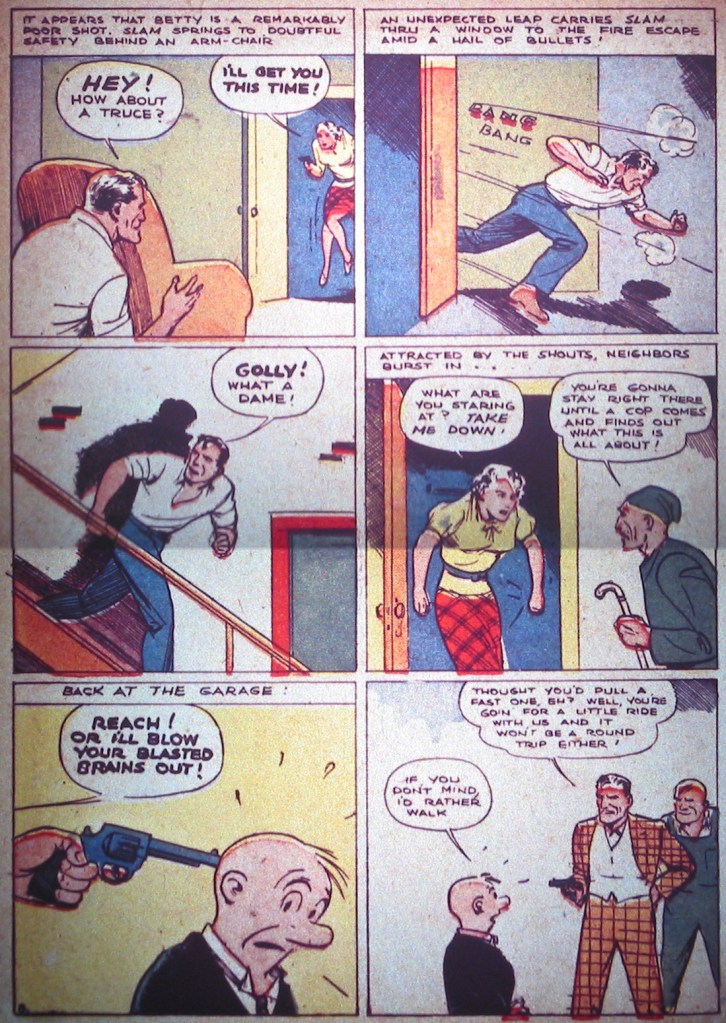
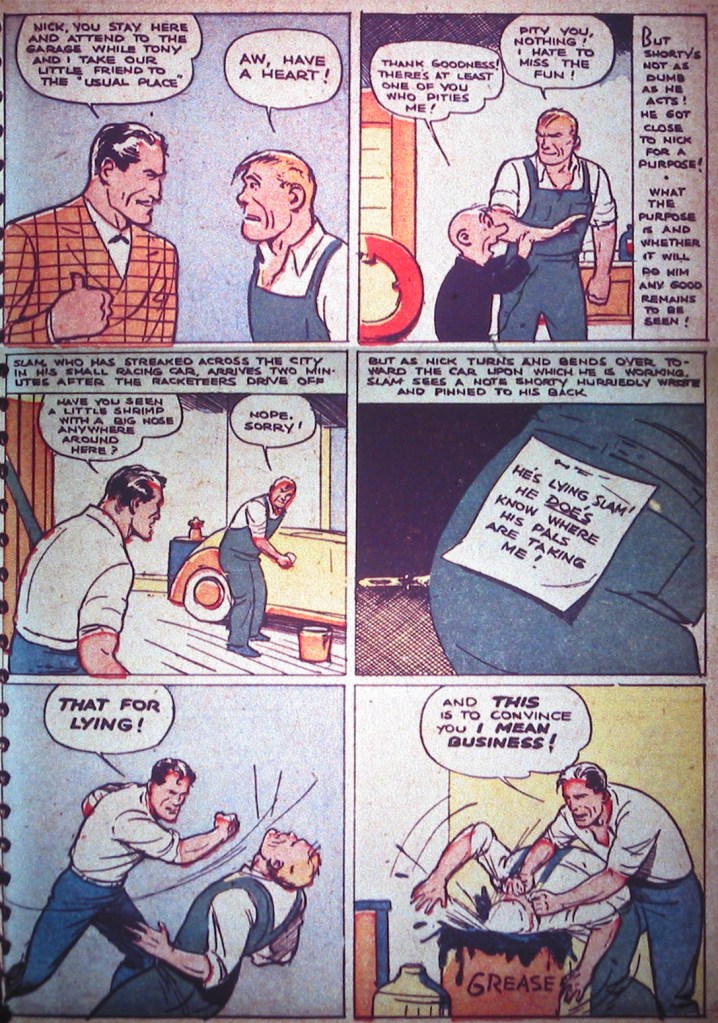
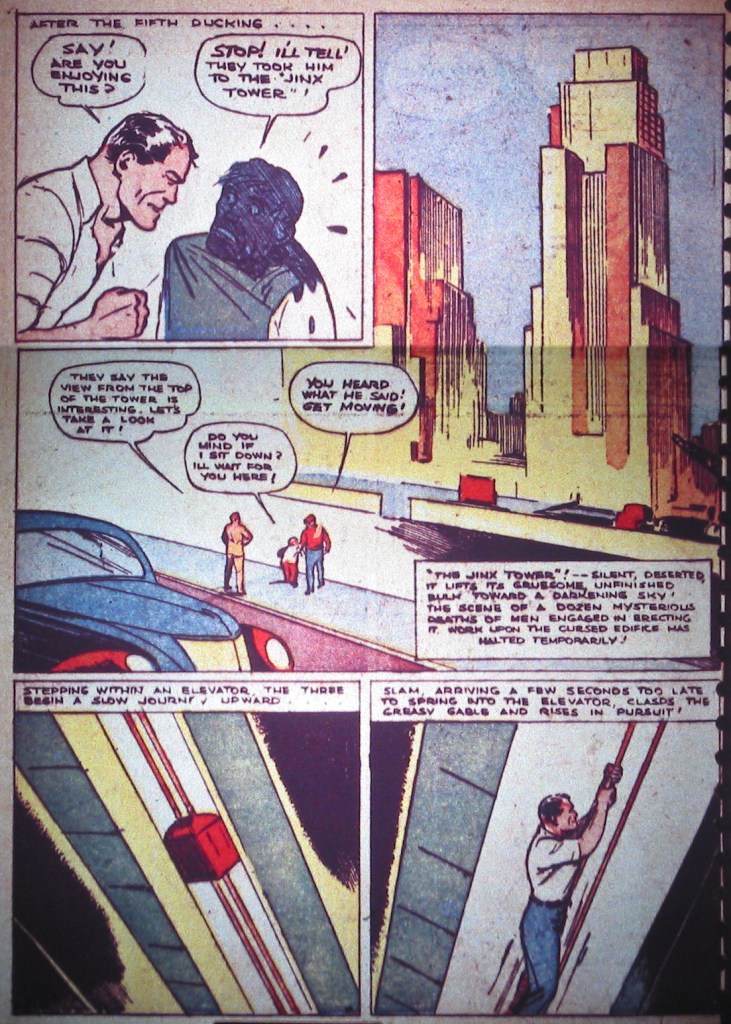
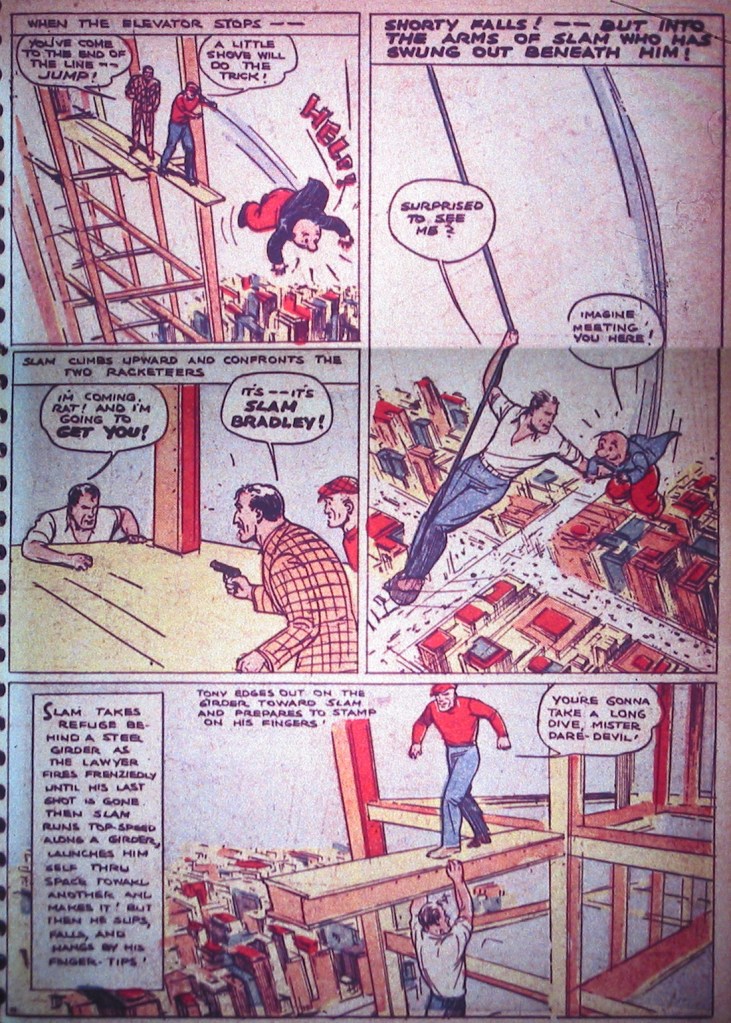
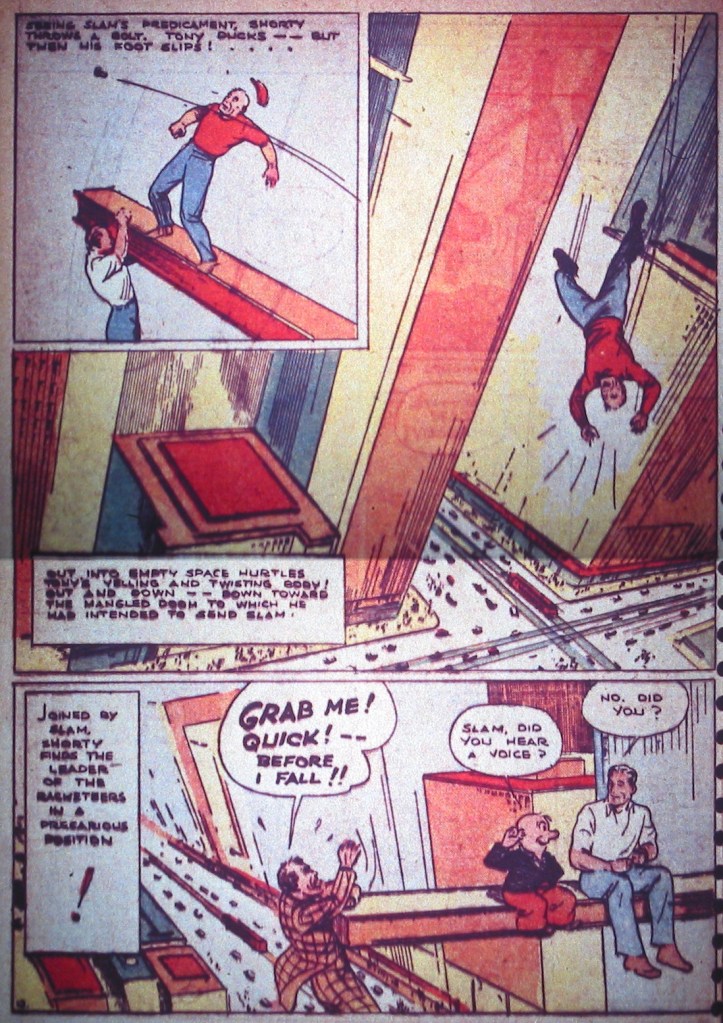
Across the preceding two pages, Siegel and Shuster don’t even manage eight panels between the both of them. This would seem like more of a dramatic choice if the artwork took more advantage of the space it was taking up with greater detail or scope. But panels like the second one on the page above feel suspiciously like the team stretching a point and trying to put one over.
 The Tom Brevoort Experience
Clearly, we needed a story where Slam had to double for Superman, and did so flawlessly.
LikeLike
The Slam Bradley Emergency Squad
LikeLike
Slam looks rather like both Superman and Dick Tracey . . . .
LikeLike
Not surprising. Joe Schuster was an artist of limited range. Most of his male characters resembled Superman and most of his women looked like Lois Lane.
LikeLike
Like the lady in the story . . . .
LikeLike
. . . and the bystanders look like George Taylor . . . .
LikeLike
Someone pointed out that Shorty Morgan resembles the 1940s Mr. Mxyztplk. Not sure I see it, but maybe . . . .
LikeLike
I don’t think Shorty resembles the 1940’s Mxy all that much. It’s only in that they’re both short bald guys in regular clothes. But for example, Mxy is significantly thinner, has a much smaller nose, and a bigger mouth. Someone definitely wouldn’t confuse one figure for the other, like Slam for Superman.
LikeLike
Who’s Who was the first time I saw Slam Bradley and the second time was in an actual comic book story [ Superman vol.2 #44 ( June 1990 ) as a Metropolis police detective after Intergang operative Blindspot ( uses invisibility equipment in his full body suit ) ]. I had thought he might have been in Crisis on Infinite Earths#11 with some of DC’s detectives ( Angel O’Day, Harvey Bullock, Jonny Double & Christopher Chance with new character Jonni Thunder — at a detective convention ) but he wasn’t, but I did discover that Peter Parker appeared in Crisis on Infinite Earths#5 ( dc.fandom.com ).
LikeLiked by 1 person
“But I did discover that Peter Parker appeared in Crisis on Infinite Earths #5.”
Page 14, 5th panel (or far right, 3rd panel down). “Peter’s” head is in the background, in between Earth-One’s Lois & Superman.
LikeLike
Yes, most Slam Bradley revivals I’ve seen treat him as a hardboiled PI without the roughneck brawler aspect.
LikeLike
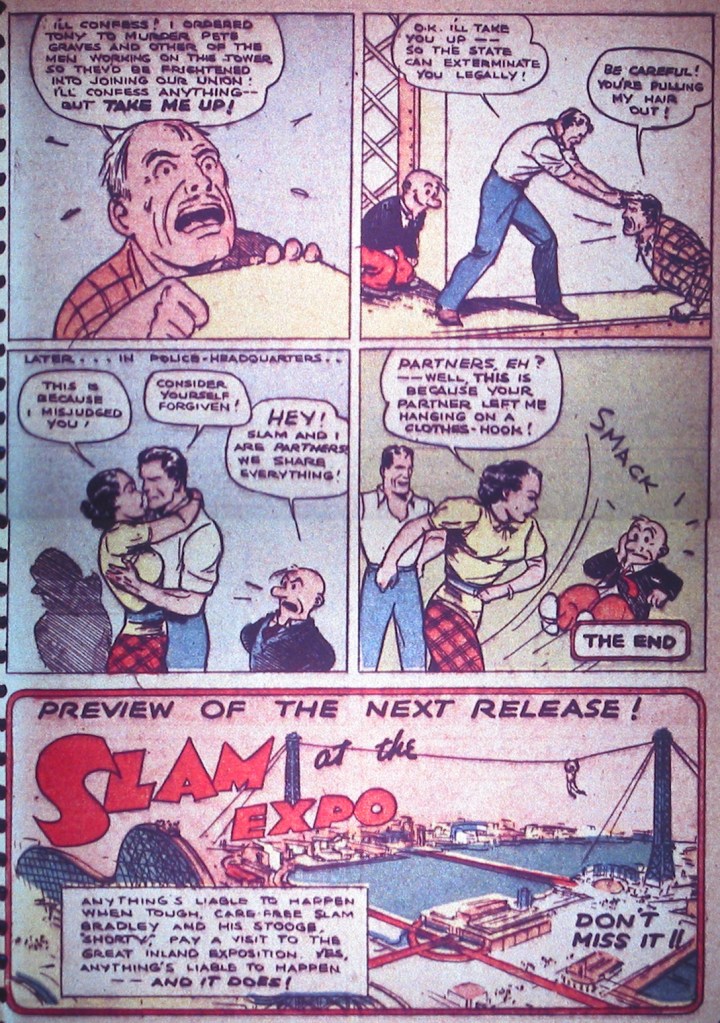
The pulp, it pulps! “Racketeering union”. Shorty gets tortured, then turns the tables and gleefully tortures the thug in return. A gun-wielding dame (and having a concealed second gun is good planning). The “mangled doom” of the thug on the tower.
Those last two panels read very badly today, even though I know it was intended to be comical back then. However, “we share everything” is not something a good guy would say nowadays. But inversely, Shorty seems poorly treated for someone who just got tortured and nearly killed.
Slam and Shorty kind of look like Mutt and Jeff (tall thin guy, short round guy). The latter pair was very popular at the time. I wonder if Jeff was a visual influence on the design of Shorty.
LikeLike
I liked what Ed Brubaker, Darwyn Cooke, & Cameron Stewart did with Slam 20-some years ago. Though he definitely couldn’t pass for Superman in their interpretations.
This is the 1st I’ve seen Shorty Morgan. I’d seen images of if Slam in Overstreet’s price guides in the 1980’s. And read about his existence in articles and letters pages. Years later I read the story where Superman meets “Slam Bradley, Jr.”
It’d be cool to me to see a story in which some of the older characters with catchy nicknames worked together. Slam Bradley, Speed Saunders, Neptune Perkins. Maybe as friendly rivals with different interpretations of other characters with “colorful” last names. Johnny Thunder. Dr. Occult (tho that likely wasn’t his “real” last name). Adam Strange. Cliff Steele.
LikeLike