

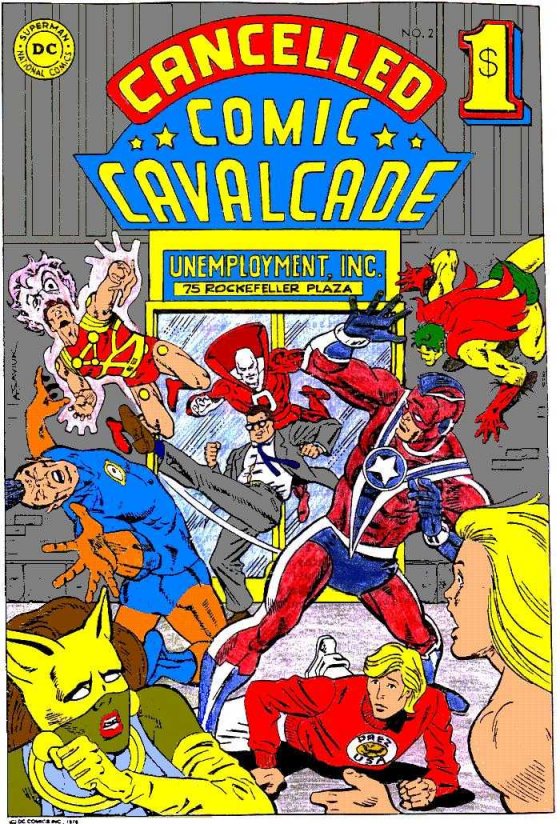
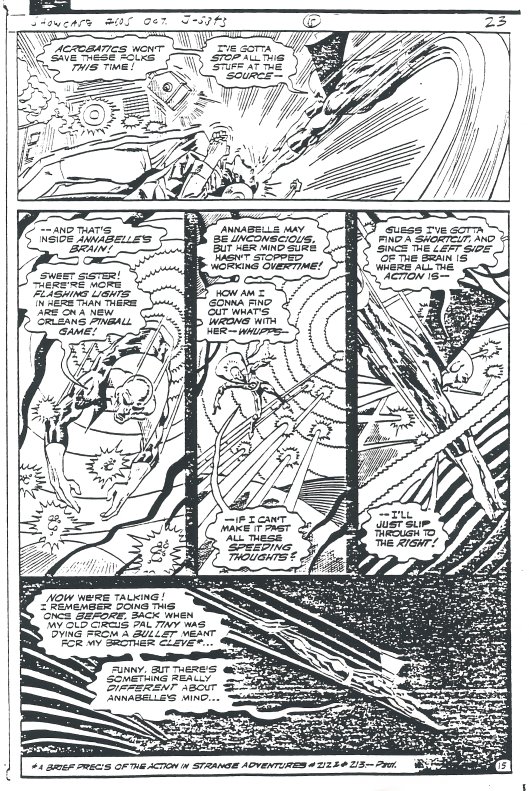
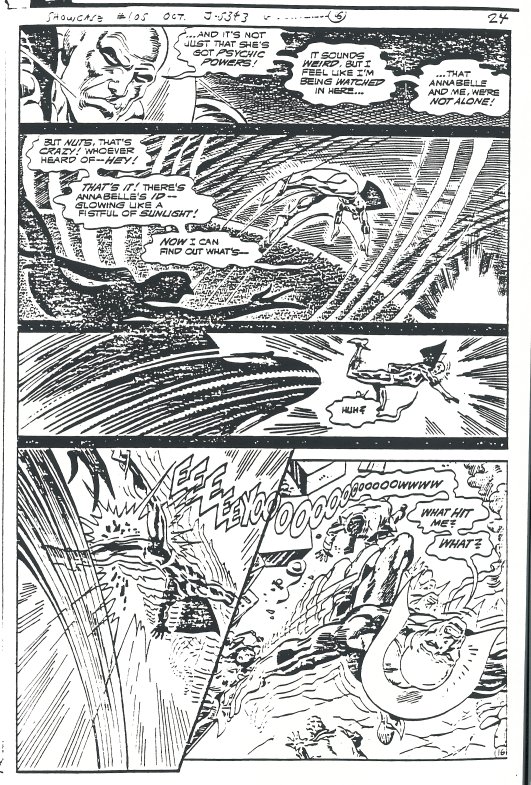
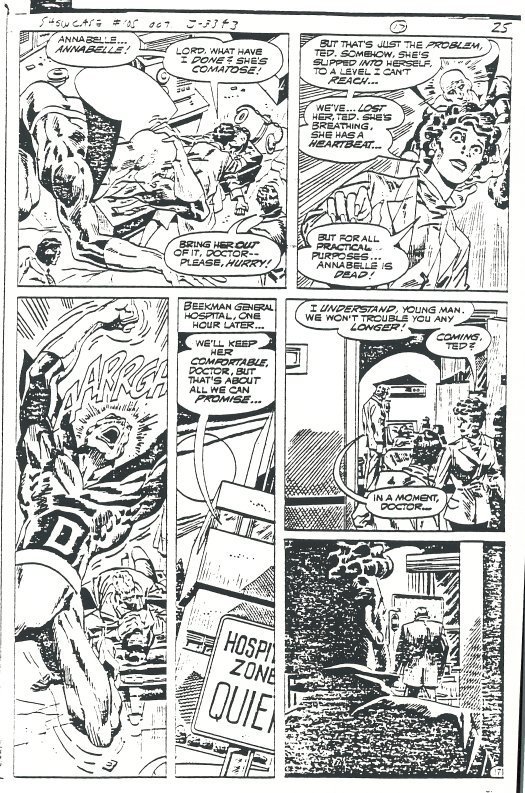
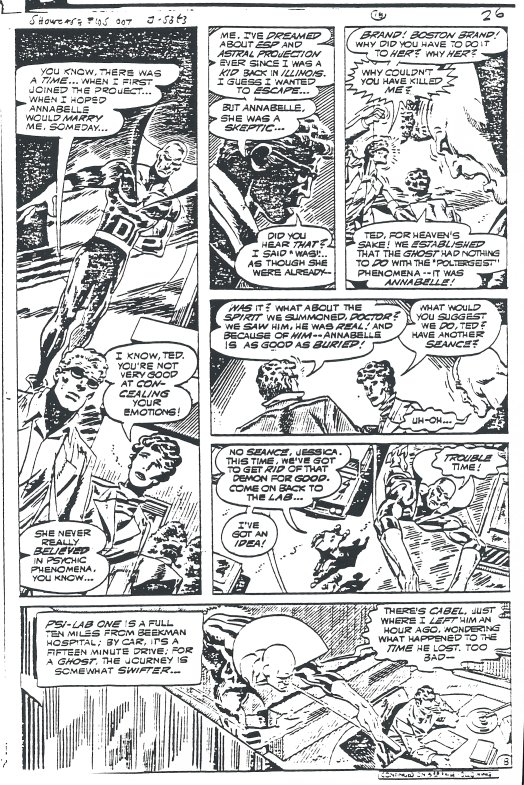
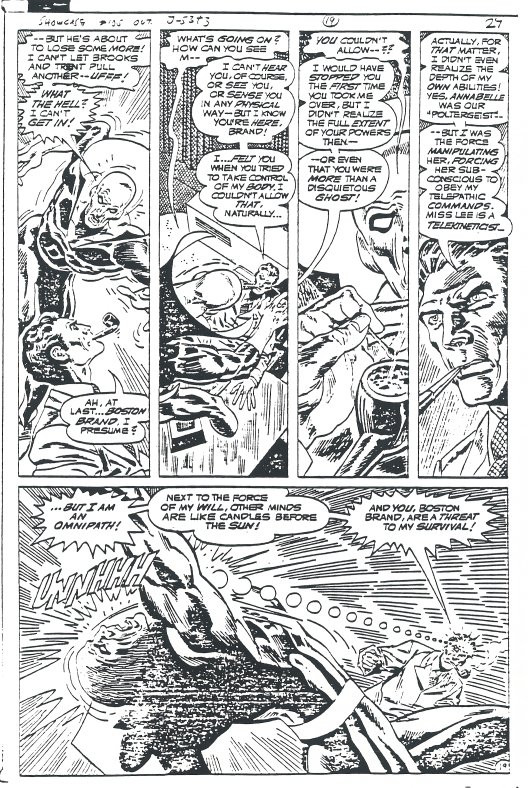
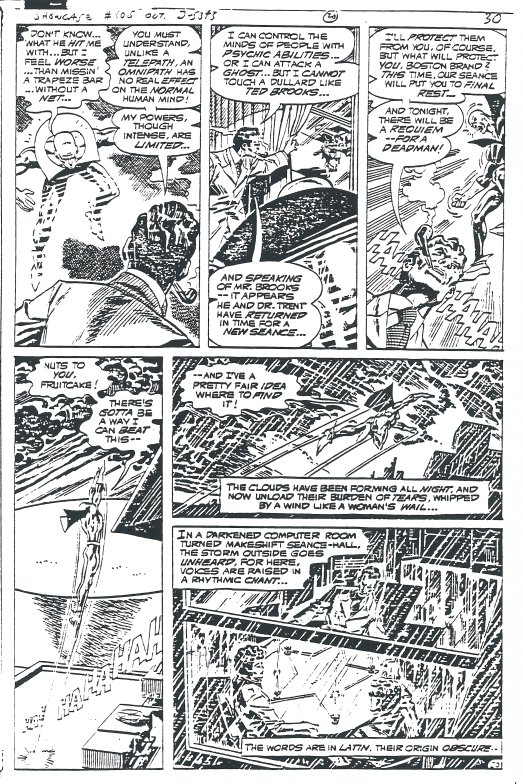
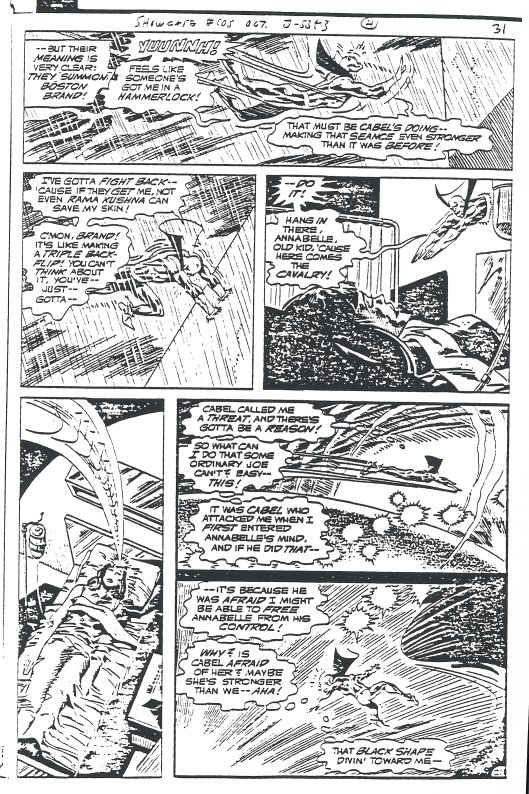
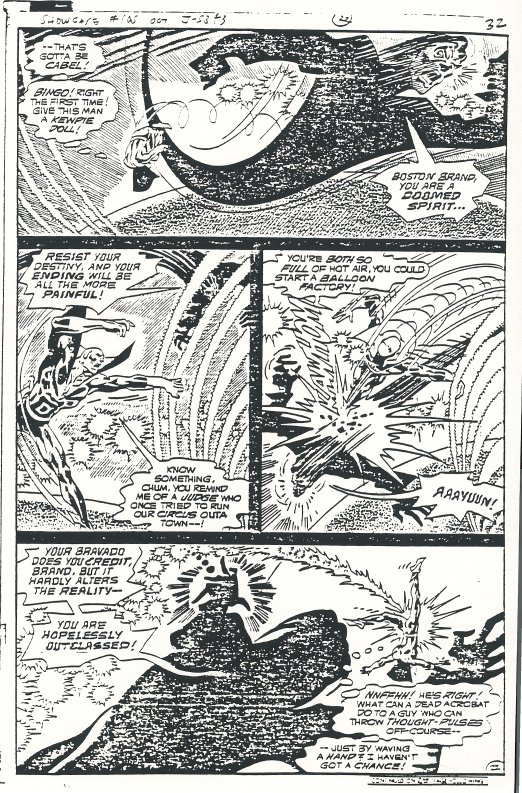
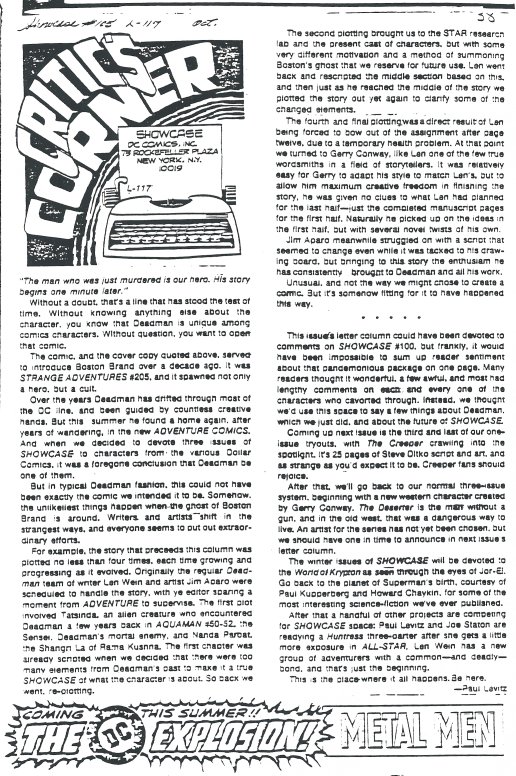
Continuing on in our survey of CANCELLED COMIC CAVALCADE #2, the hand-printed collection of material created by DC Comics and left unpublished in the aftermath of the business contraction known as the DC Implosion. A scant number of copies were made and provided to contributors as well as the Library of Congress so as to insure DC’s copyright to the work contained therein.
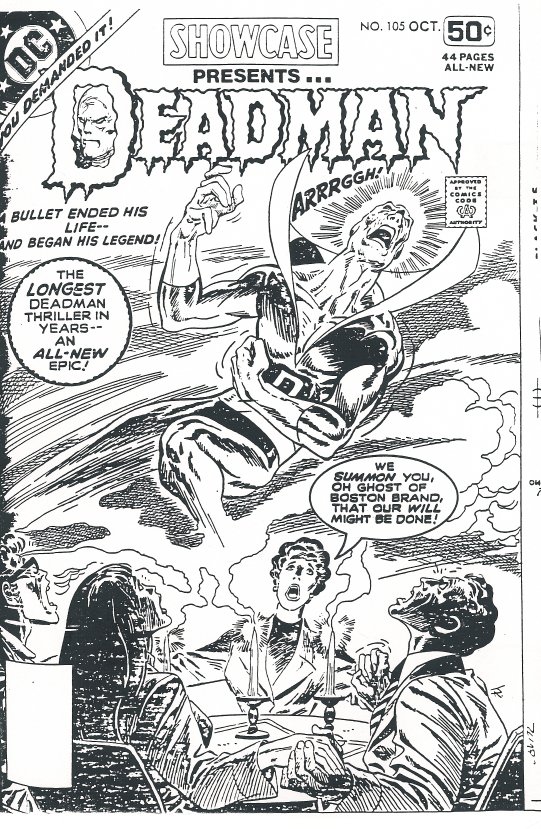
DC’s recent revival of SHOWCASE, its long-running series dedicated to testing out new characters and concepts, hadn’t met with the same level of success in its new iteration. None of the features that were previewed in its pages the second time out wound up graduating into their own titles, indicating that sales on the book were perhaps not great. Consequently, it became a casualty of the DC Implosion despite the fact that there were still a couple of issues in the pipeline, including this one.
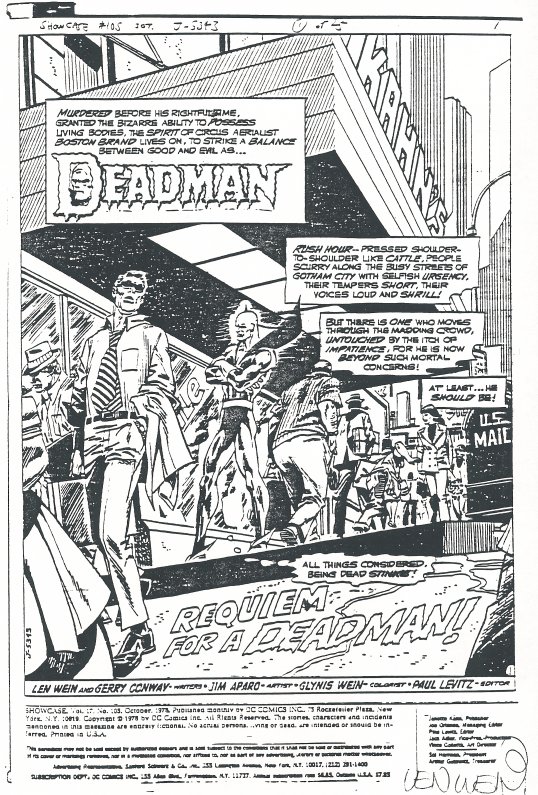
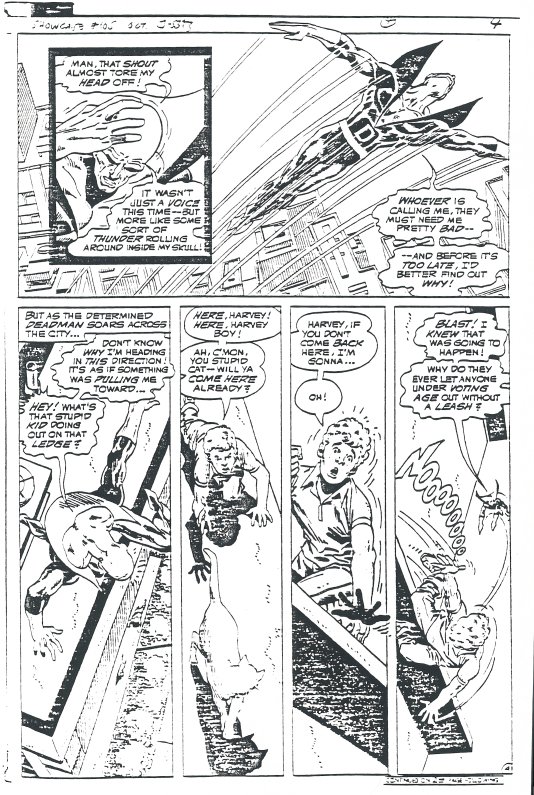
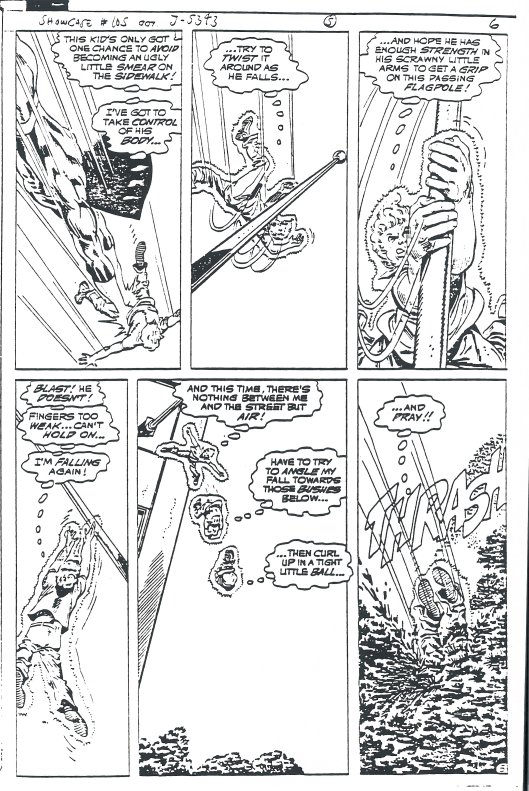
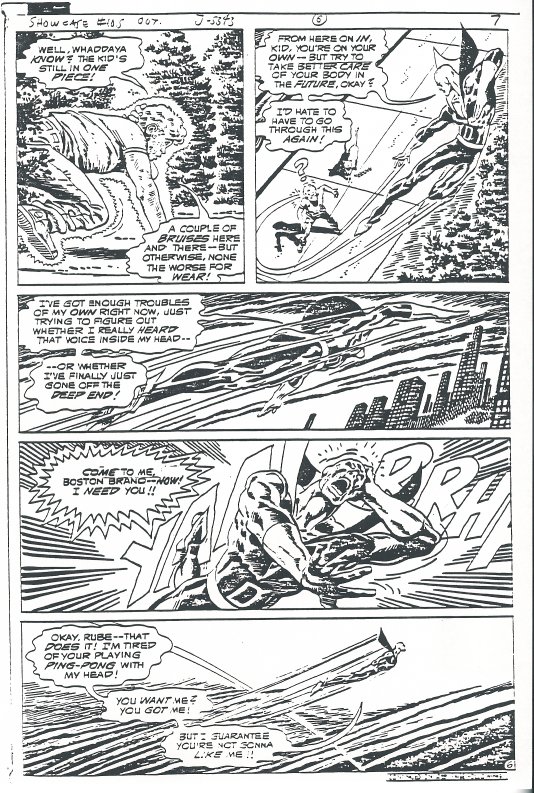
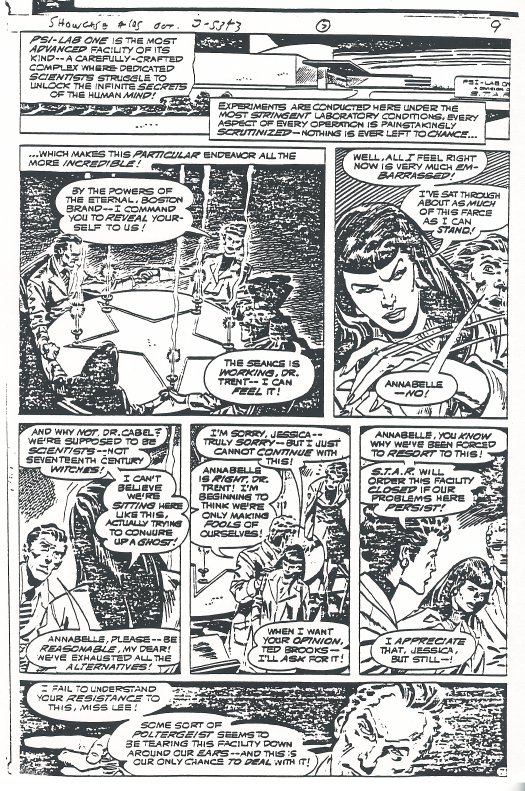
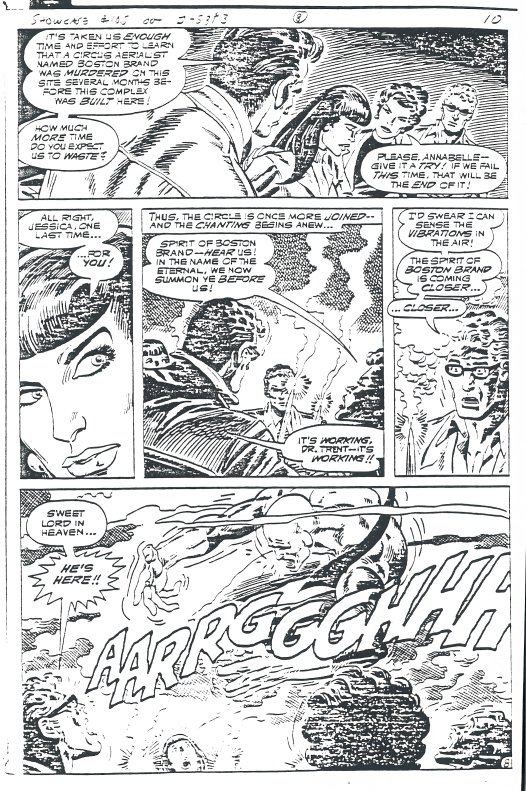
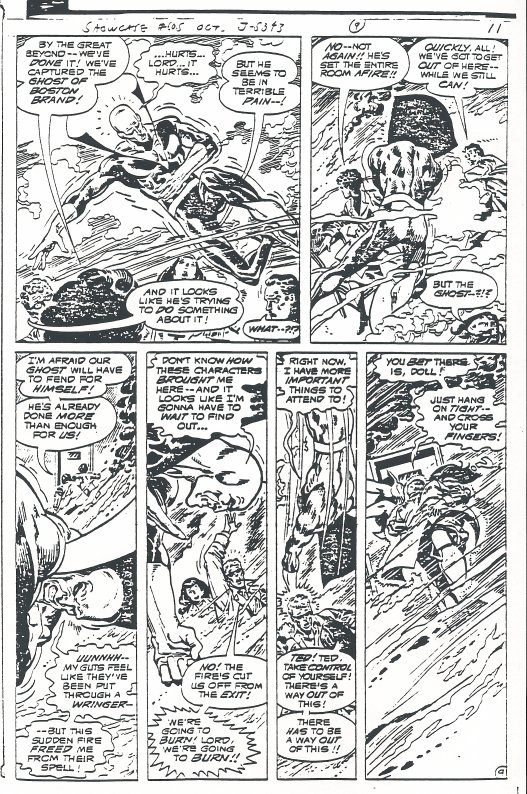
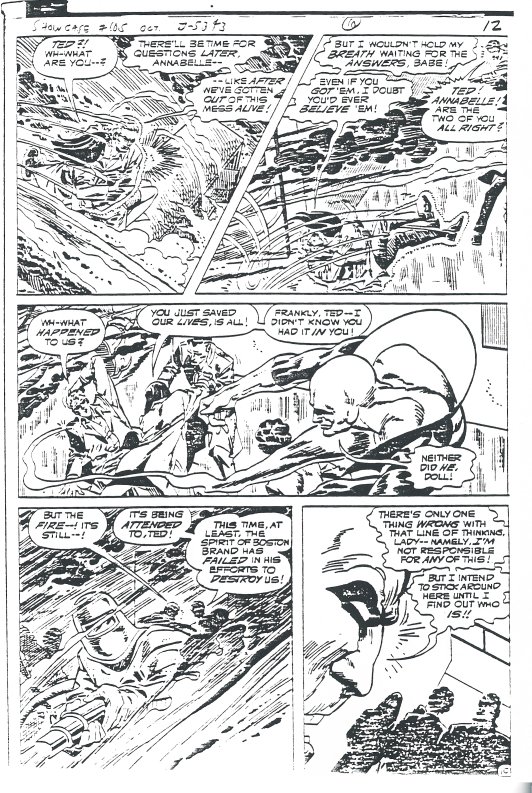
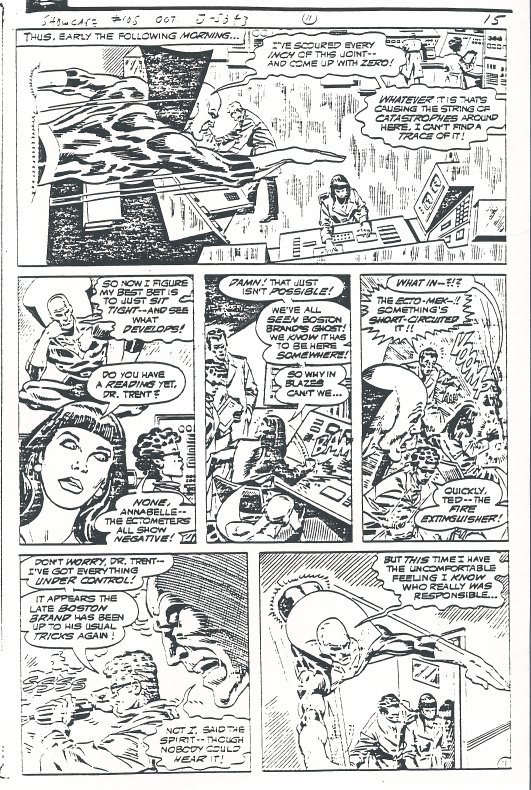
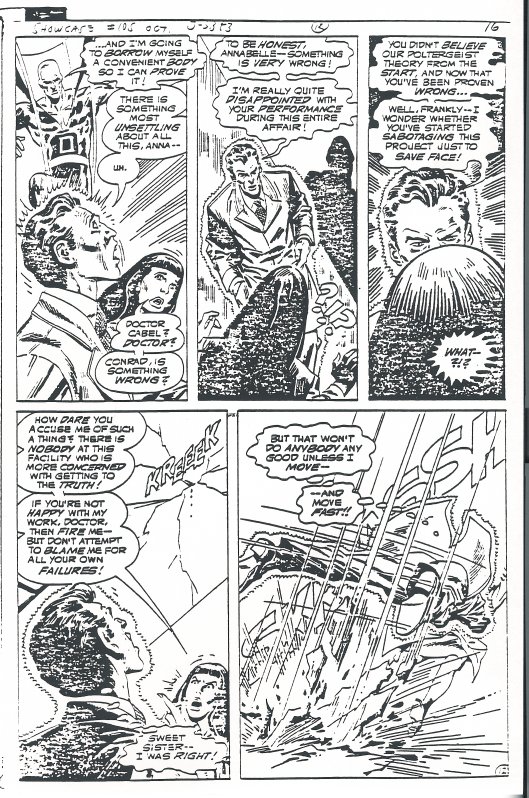
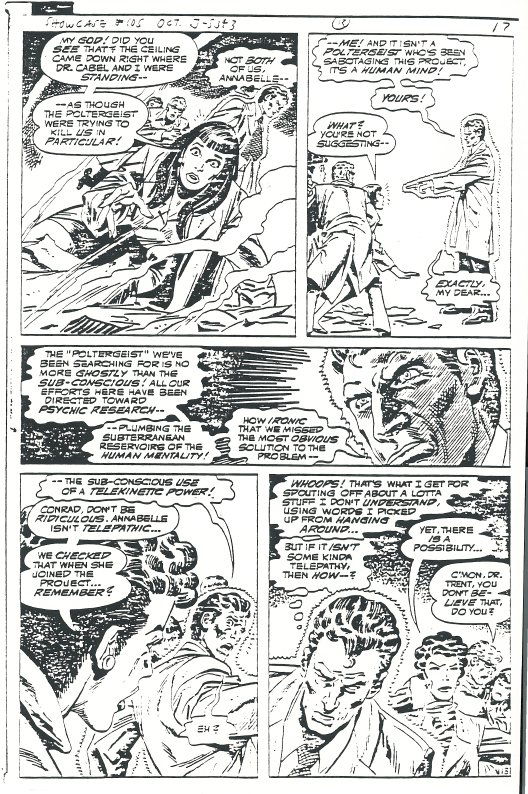
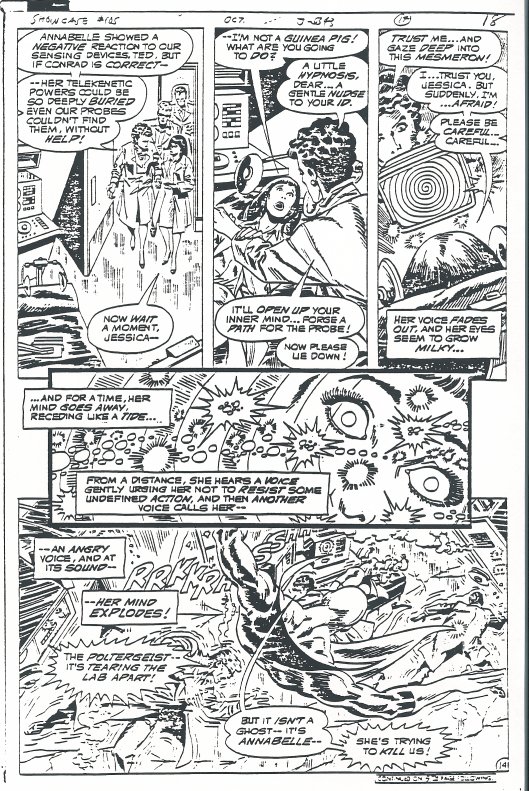
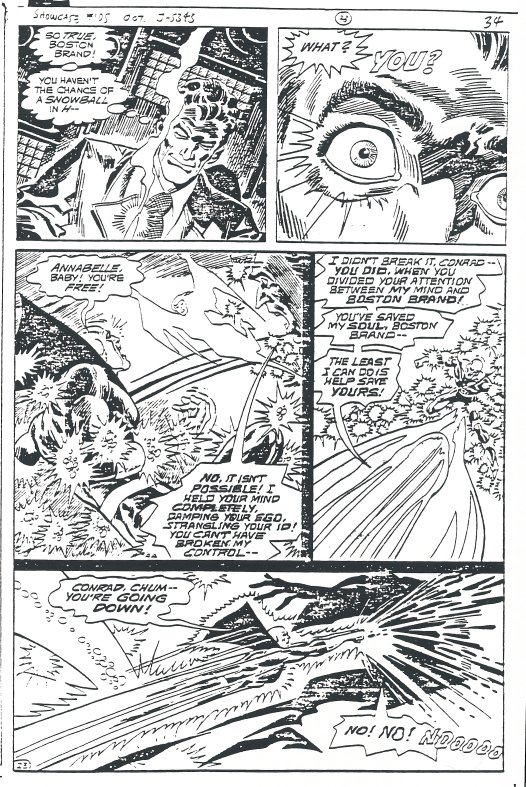
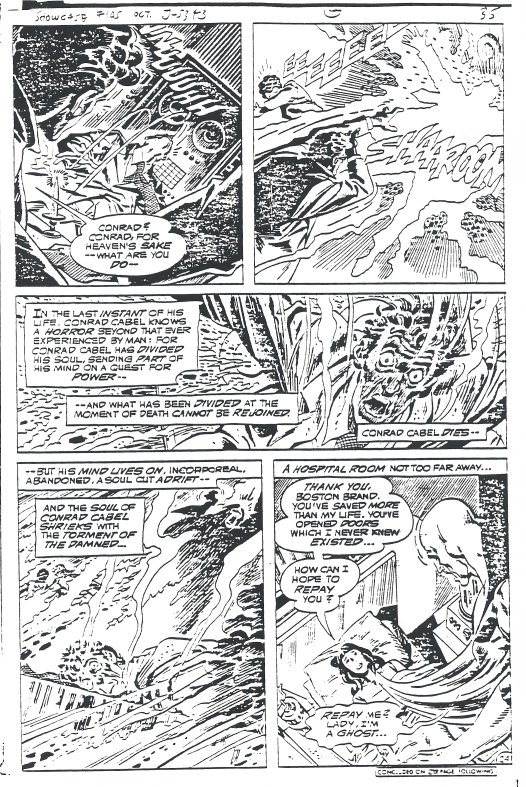
SHOWCASE #105 was intended to feature Deadman, a character with a strong fan following even though the strip had never sold especially well. What truly made Deadman memorable was the game-changing artwork on the feature by a young Neal Adams. Adams’ depiction of Deadman and his world was far more illustrative and realistic than most comic book artwork of the period, and it set off a renaissance in the field.
In this instance, it was writers Len Wein and Gerry Conway who were making the attempt to return the acrobatic apparition to his own series. They were aided in their efforts by artist Jim Aparo, who had worked with Wein on PHANTOM STRANGER some years earlier to good response. This seems like an attempt to tap into that same appeal.
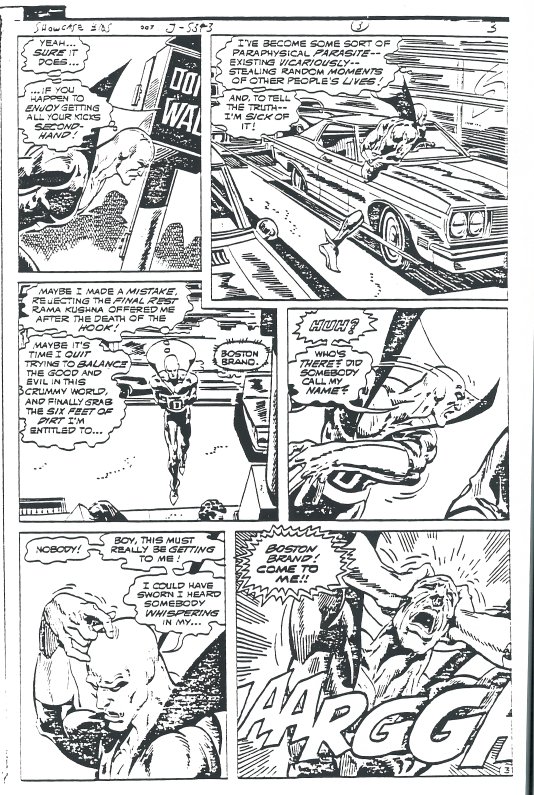
This story wound up seeing print relatively quickly, in the pages of ADVENTURE COMICS #464, which had been transitioned into an oversized Dollar Comic. Starting with that issue, Deadman became a recurring feature in ADVENTURE for the short while it remained in that format.
 The Tom Brevoort Experience
Tom, If/When you cover Steel #6 and would like to use clear perfect 1st gen scans, there is someone over at https://www.comicartfans.com who has scanned most of the original art. Simply search for “Steel 6”
LikeLike
direct link; https://www.comicartfans.com/searchresult.asp?PM=3&txtSearch=Steel+6&Order=&PI=18
LikeLike
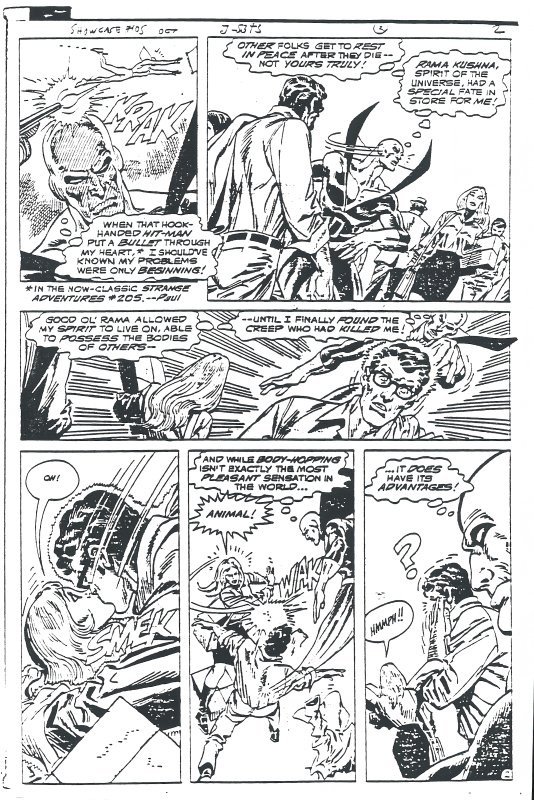
Wait, did Deadman use his powers of possession to commit sexual assault on page two of this story? Definitely not cool, Boston!
LikeLike
We don’t think about it since he’s in a superhero context, but Deadman’s possession power is what’s done by demonic spirits in horror stories. He’s the sort of entity that’s battled by exorcists. And as we see, at times, he’s not all that scrupulous about what he does to people with his power. Sometimes, objectively, he’s really uncomfortably close to being a malicious ghost.
I’ve always wondered why he didn’t just find someone who was brain-dead, and – crucially, with consent of their guardian – use their body as a skin-suit. There’s got to be many families in the DC universe who would be very willing to do such a thing. It could even be viewed as medically beneficial to the body being used, since it’s a whole lot better than lying in bed all the time on life-support. Or just rent from someone, it’s not like selling one’s body is unheard-of.
But it’s disquieting to me that many of his stories have him moping about being dead, while basically violating random people for “kicks” (he’s often regretful afterwards, but that’s pretty typical abuser behavior).
LikeLike
“I’ve always wondered why he didn’t just find someone who was brain-dead, and – crucially, with consent of their guardian – use their body as a skin-suit.”
That is clever.
I think they have had situation in the Deadman cannon where Deadman can’t possess (direct?) corpses.
I also think,, practically, the nervous system of someone who is in a Permanent Vegetative State (“PVS”) would be difficult to control, since all the involuntary stuff is also breaking down.
(And if they have been in that condition for a while, you won’t have fine muscle control, the bones might be brittle and the skin might have even degenerated),
LikeLike
John Minehan – In Batman #530-#532 (“The Deadman Connection”) he spends the entire story puppeting a corpse. It struck me as incredibly creepy, and pushing up against the dissonance that he’s really a horror character in a superhero universe.
The more I think about it, the more I’d say “ghost skin-suit” as a straight-up job would be considered very desirable by some people, a highly competitive position. The pay can be excellent, maybe networking opportunities with top mystics or heroes when “off-shift”, the work goes by fast and doesn’t need to be directly dangerous – you really could do a lot worse in terms of employment. It’s not for everyone, but I suspect he’d have a lot of applicants.
LikeLiked by 1 person
There was that mondo bizarro WORLD’S FINEST story where Batman finds out he has a brother his parents never told him about, institutionalized since childhood. The guy breaks out of the asylum and goes on a killing spree, and eventually Deadman decides to just take over his body for keeps. But it doesn’t last; in the sequel, Big Brother has a brief moment of lucidity, and sacrifices himself to save Batman’s life (WF #223, 227).
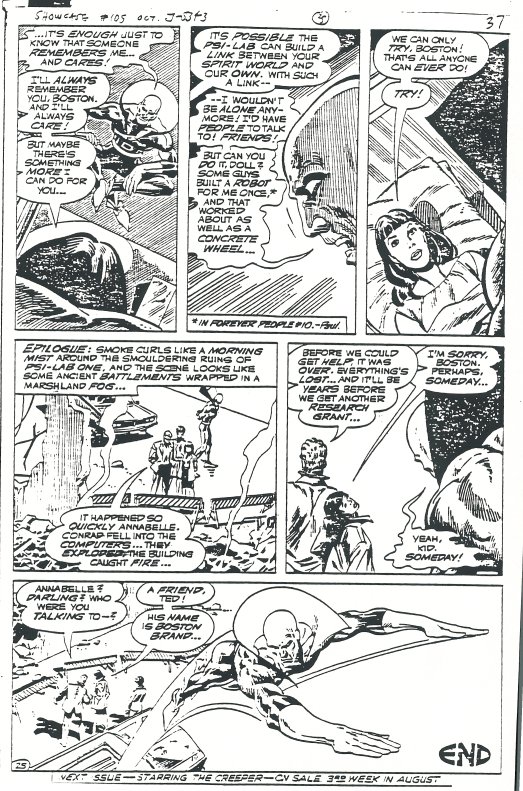
Then there was the artificial body that Deadman got from the Forever People. Everyone seemed to realize immediately what a bad idea that was, as it was never mentioned again (FP #9-10)
LikeLike
J. Kevin Carrier – He actually mentions that artificial body above, last page, panel 2: “Some guys built a robot for me once, and that worked about as well as a concrete wheel …”
I can buy that as an in-universe explanation for the rejected change. Sometimes new gear works fine initially, but breaks shortly thereafter. It was probably really hard to find a qualified mechanic or get spare parts.
I remember that brother story. Again, there’s a horror undercurrent if you think about it: Nice body you have, I think I’ll keep it.
LikeLike
I forgot all about this Marvel character: Magnus [ Spider-Woman#2 ( May 1978 ) ] is known for possessing other people’s bodies for long times ( old man in this issue to his last appearance in the series ) & Jessica Drew’s father Jonathan Drew [ The Avengers#187 ( September 1979 ) in flashback ] and as far as I know used them mostly for good. I guess DC had their reasons for not having Deadman possess someone ( even a criminal or terrorist or serial killer — someone who being possessed makes them less a threat to everyone else ).
LikeLike
Should have used Long Stretch for Magnus’ possessions and not ling times.
LikeLike
It seems like the Dollar run of ADVENTURE existed in order to use up various inventory or tie up loose ends — they wrapped up NEW GODS, ran this DEADMAN story, wrapped up JSA and then downsized back to standard format.
Gotta figure that he main reason Deadman was a regular in that run was so there’d be a reason to run this story. If so, I’m glad of it — this was the least of the Deadman stories in that run, but if it got us all the others, that’s well more than worth it.
LikeLike
Adventure Comics#461 ( January-February 1979 ) was the first time I saw a Deadman story and later I would picked up the Neal Adams drawn reprinted stories [ Deadman#1-7 ( May-November 1985 ) ]. In my I wish Marvel had a character like that still phase, there is Brother Voodoo/Doctor Voodoo’s brother ( Daniel Drumm ) [ Marvel Two-In-One#41 ( July 1978 ) ] & [ Doctor Strange#48 ( August 1981 ) ] but he wasn’t talking in those stories like he was when Doctor Voodoo was an Avenger.
LikeLike
Thanks for (re-)presenting this story, Tom! This was my first time seeing it! t’s not the best Deadman story I’ve ever read, but it does address what happened after Forever People #10, which was the worst Deadman story I’d ever read although it was in one of my all-time favorite comic book series. Gotta go read the rest of that run in Adventure Comics now!
LikeLike
Not being an Adams fan and loving Aparo’s art, this was a great treat when I bought the dollar comic it was in.
LikeLike
Kurt, interesting theory but ADVENTURE launched its Dollar size at the start of the Explosion(June 78), so it would have been planned before they knew the “Implosion” was imminent.
LikeLike
When it started. this had some interesting, slightly different things planned (e.g., a Cary Burkett/Joe Staton solo Green Lantern series and Wonder Woman plotted and drawn by Wally Wood (precluded by his declining health).
Some things did come in from series pruned prior to both the Explosion and the Implosion (the last two Conway/Adkins New Gods stories, for example). .
LikeLike
NEW GODS, at least, was canceled two months before the Implosion,
LikeLike
Whoops – that’s what you were pointing out.
LikeLike
The cover of Showcase no. 105 assumes that readers will be familiar with Spiritualist seances. Comics references to seances were common in the Golden and Silver Ages, but I wonder–at what point (if ever) did this stop? I can’t imagine that very many young people will have even seen a seance outside of horror movies.
LikeLike
Even in the 1970’s, seances were almost entirely a fictional event. I don’t mean to say they never happened anywhere, they certainly do even to this day. But they were long gone as something people would commonly do in reality. A quick check on the history indicates they died out around the 1950’s or so. But they’re embedded in popular horror culture by now, even if they basically don’t exist anymore.
However, what’s being done in this story is a lot closer to demon summoning than the traditional spiritualist seance. The cover makes that clear. And you’d better be very confident in your mystic skills, to drag in a possibly very angry spirit who specializes in bodily possession.
LikeLike
“And you’d better be very confident in your mystic skills, to drag in a possibly very angry spirit who specializes in bodily possession.”
As you pointed out above, that is sort of an operational definition of Boston Brand . . . .
I would guess that people call on religious practitioners to deal with this kind of thing. I’m kind of reminded of stories I have heard about the actress Elke Sommers and her husband, who had trouble with a house they were renting in the Hollywood Hills a couple pf years before this.
LikeLike
why was this needed to be printed to retain copyright? Surely DC owns the copyright because it paid for the work. Why hasn’t this happened since? Marvel and DC must have thousands of unpublished pages, do they own the copyright on these?
LikeLike
Up until 1978, copyright required publication in order to have federal copyright protection. Before then, unpublished work was subject to state copyright law, and those varied. And if that work got published somewhere without a copyright notice, it would be automatically in the public domain.
The change in the law took place as of January 1, 1978, so they didn’t technically need to do it, but they may not have been sure of that.
LikeLike
Thanks Kurt – I’ve always wondered!
LikeLike