

It cannot be overstated just what an enormous phenomenon Superman became almost instantly upon his first story being published in 1938. Within the span of only three years, the character would have his own self-titled magazine (something unheard of in the field before then) as well as his regular home in ACTION COMICS, a daily newspaper strip, a popular radio program and vibrant animated shorts that were drawing audiences into theaters. To say nothing of the initial wave of Superman-inspired merchandise. it wouldn’t be long until both DC Comics themselves and every other would-be publisher in comics attempted to stake out a portion of this newly-discovered market for themselves. But the person who got there first was Victor Fox
There are a number of stories about Victor Fox’s background, often contradictory ones. As such, it can become difficult to discern truth from fiction. So keeping things broad, here’s what we can say about the man. He was a bottom-feeding low-rent operator who’d been hustling his way from one scam to the next by the late 1930s. At some point, he had business dealings with the owners of DC, possibly in conjunction with their distribution company Independent News. There, he got a look at the massive sales being posted by ACTION COMICS and he immediately recognized what it took even DC’s management a bit longer to come around to: there was a fortune to be made in publishing Superman comics. Supposedly, Fox quit his current job and set up his own publishing firm in a separate office suite in the selfsame building as DC.
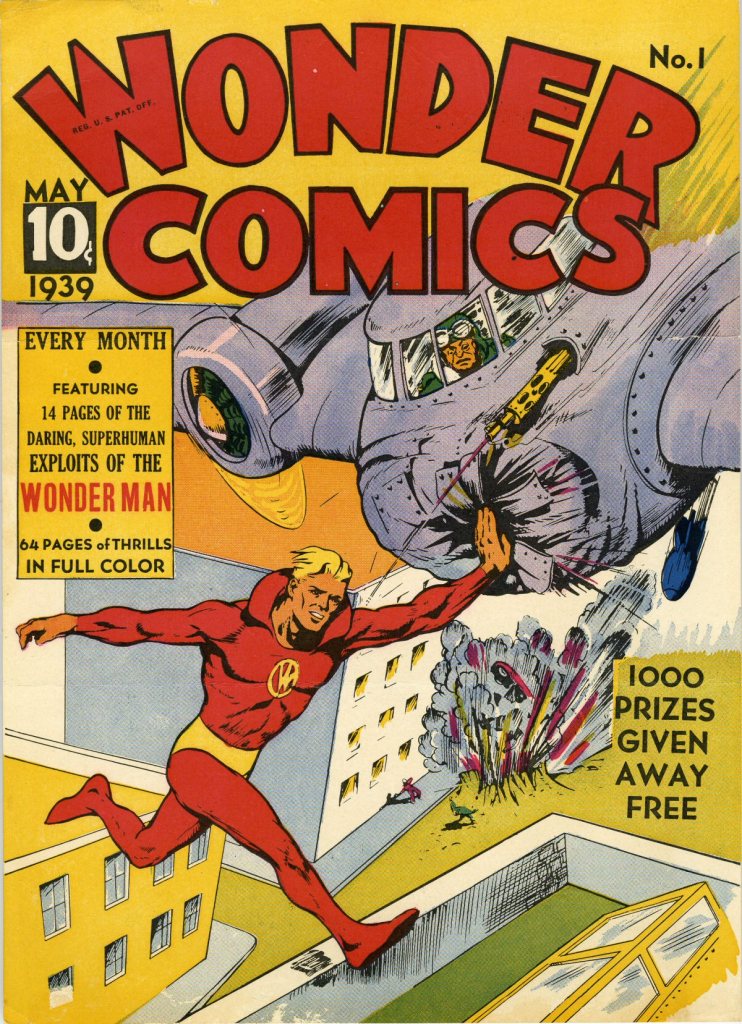
In lieu of hiring a staff to put out his magazines, Fox instead contracted the services of comic book packagers Eisner & Iger. The team had established a successful small business for themselves by providing art and editorial duties to the assorted new publishers who were trying to get into the field, providing them with camera-ready full comic books that they could print. In this case, Fox was very specific about what he was looking for: he wanted Eisner & Iger to create a copy of Superman for his new book, WONDER COMICS. The character would be called Wonder Man.
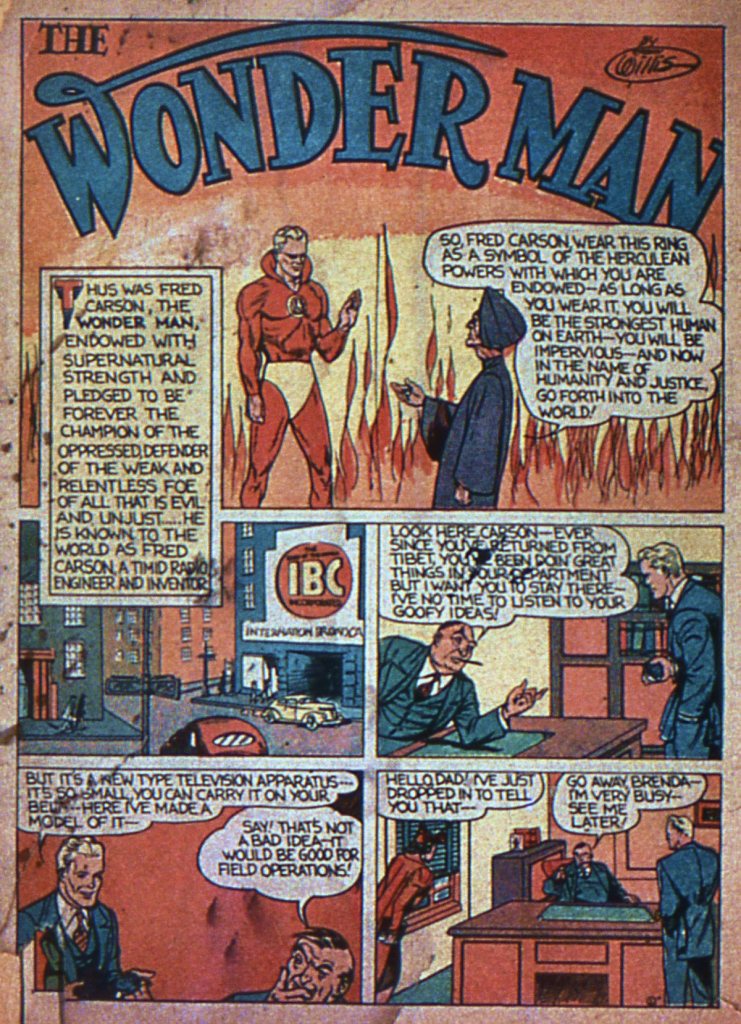
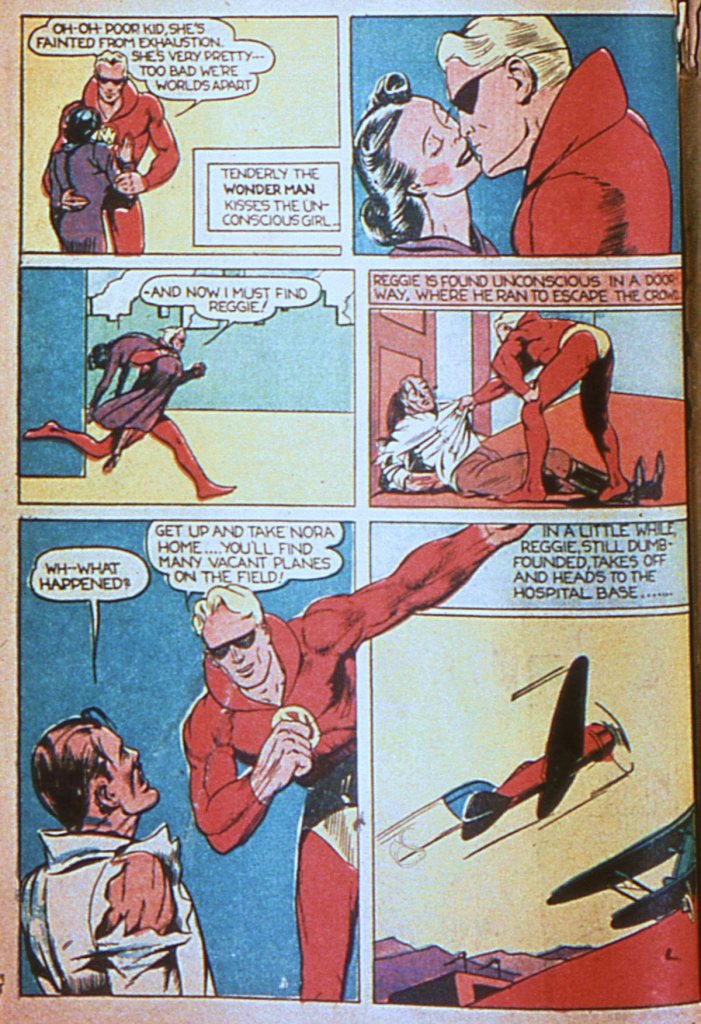
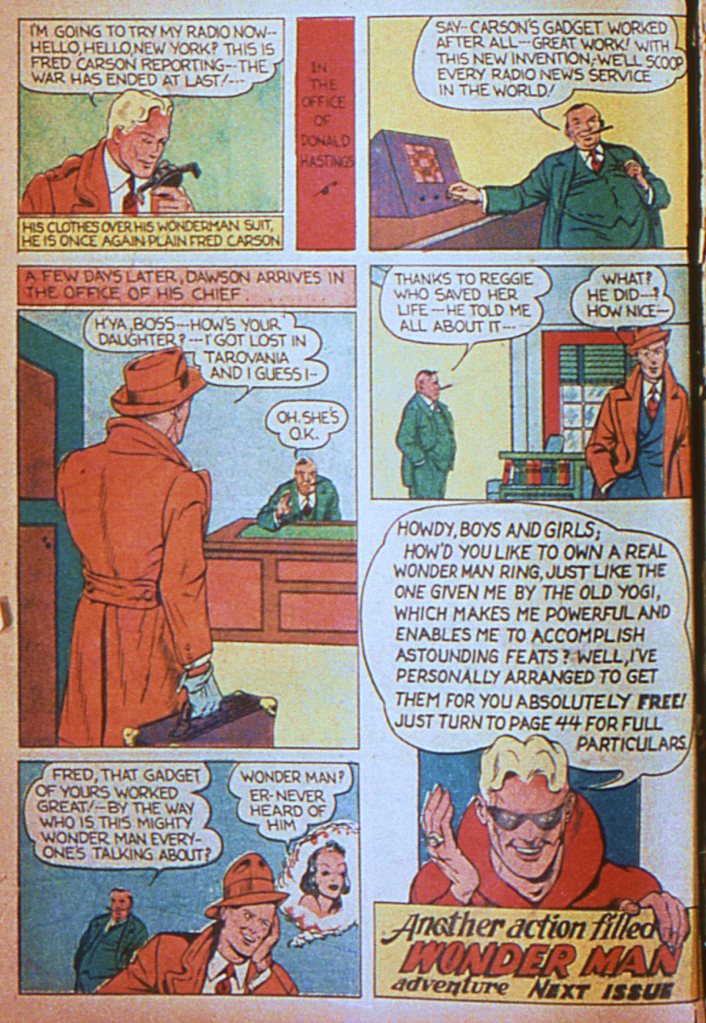
This was still the depression era, when money was tight, and so Eisner and Iger didn’t have any compunctions against doing what they were told to do–or if they did, they weren’t enough to prevent them from taking on the assignment. Eisner wrote and penciled the first Wonder Man story, a 14 page affair which introduced Fred Carson, a man who’d been given an enchanted ring while in Tibet that made him superhumanly strong and indestructible–Superman, basically. And now, clad in a red and gold costume, he’d turn those attributes to the fight for liberty and justice. Again, exactly like Superman.
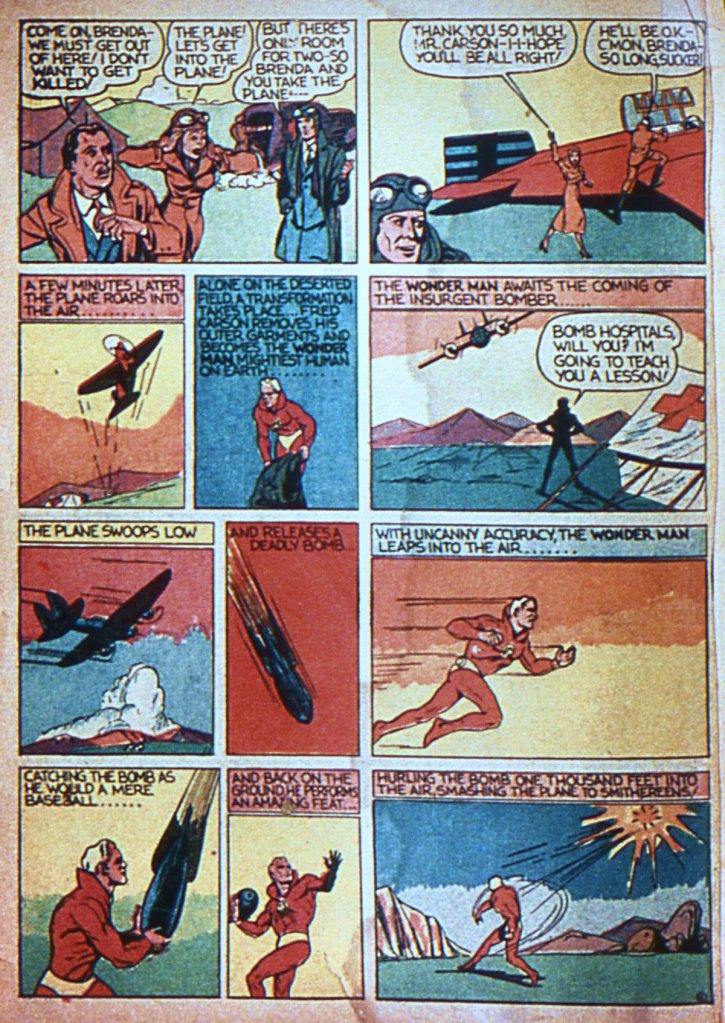
WONDER COMICS #1 came out on March 17, 1939. By way of comparison, ACTION COMICS #11 had been released only ten days earlier–at this point, there had only been fewer than a dozen Superman stories. As soon as they became aware of it, DC’s owners filed an immediate injunction against WONDER COMICS on the grounds of copyright and trademark infringement. The hearing was fast-tracked and the matter would be brought before the court on April 6, 1939
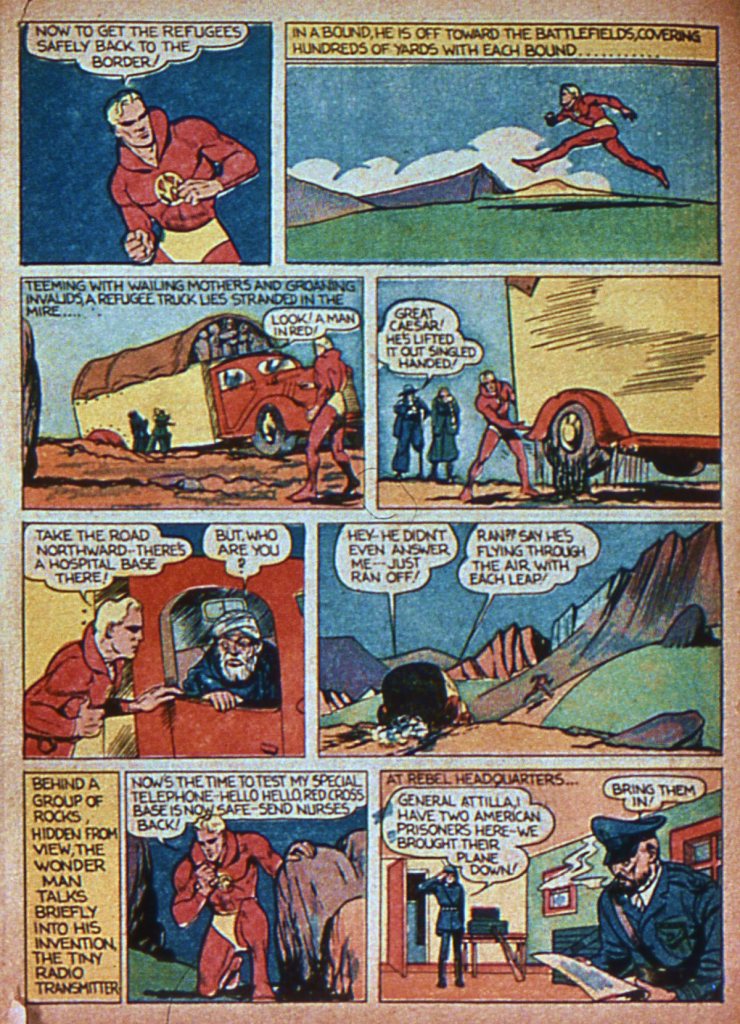
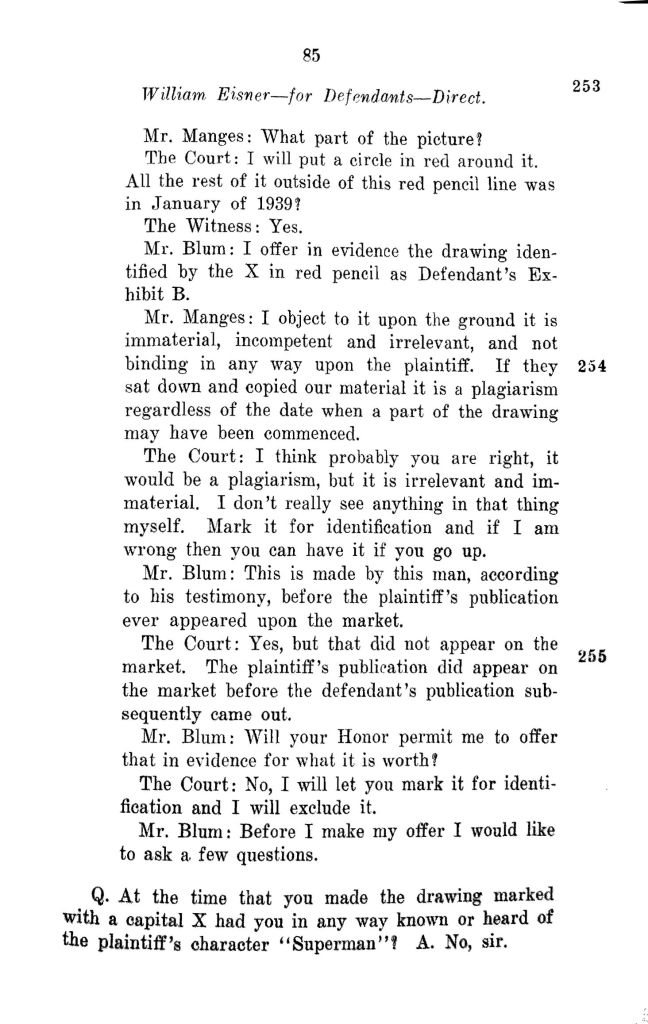
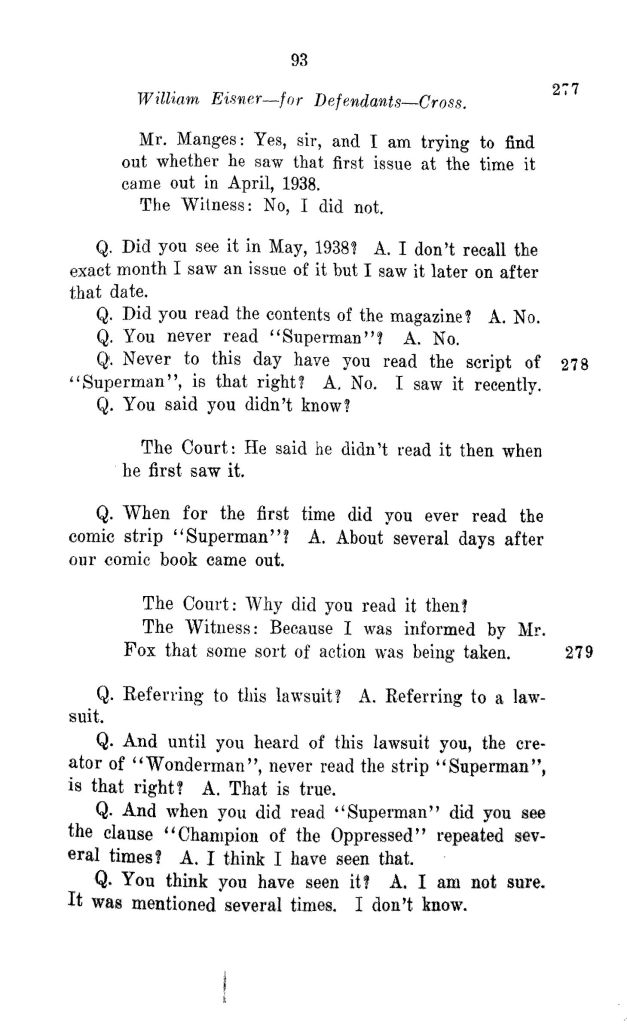
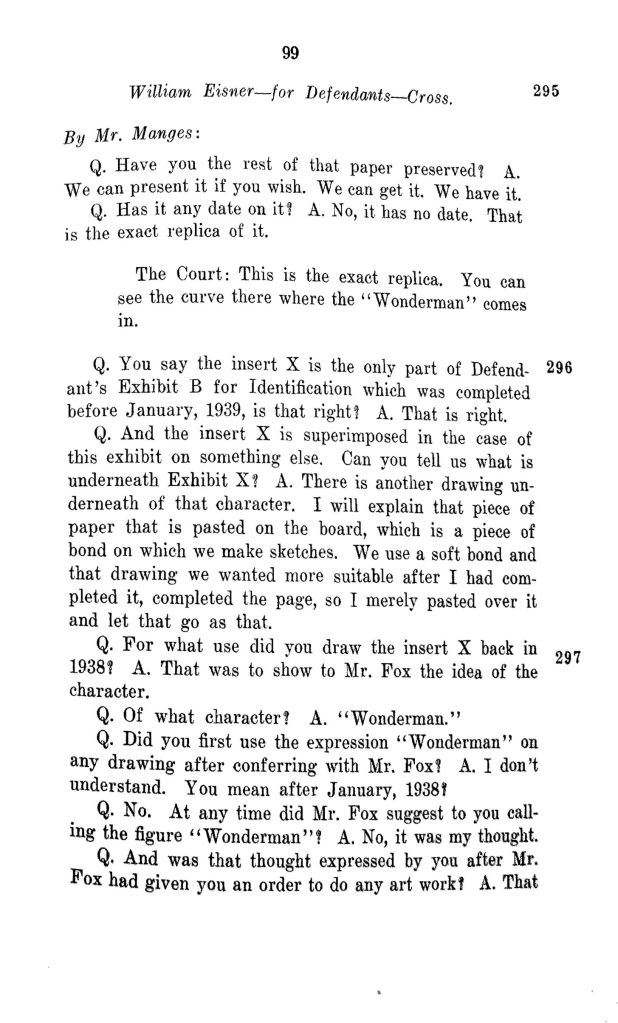
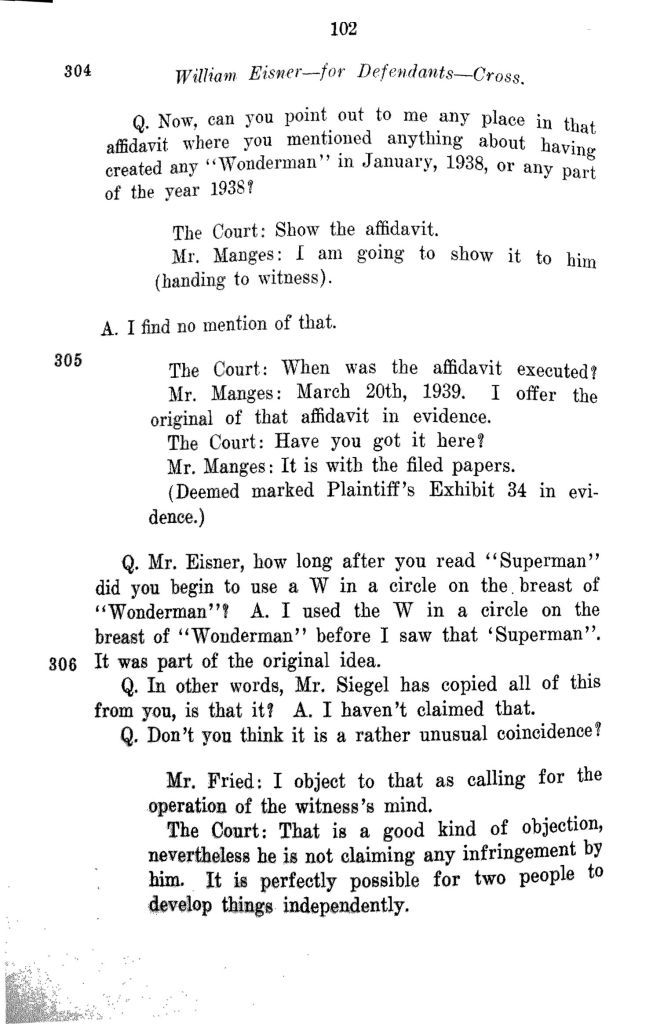
What happened next is one of the more covered up portions of this story. Before giving testimony, Victor Fox strong-armed Will Eisner and Jerry Iger, instructing them that they were to maintain that they’d come up with Wonder Man themselves years before, and that Fox had not instructed them to copy Superman. At the time, Fox’s Bruns Publications owed Eisner & Iger a couple thousand dollars in back pay, real money in those days, and Fox intimated that if the team didn’t do what he said, they’d never see a dime of that cash.
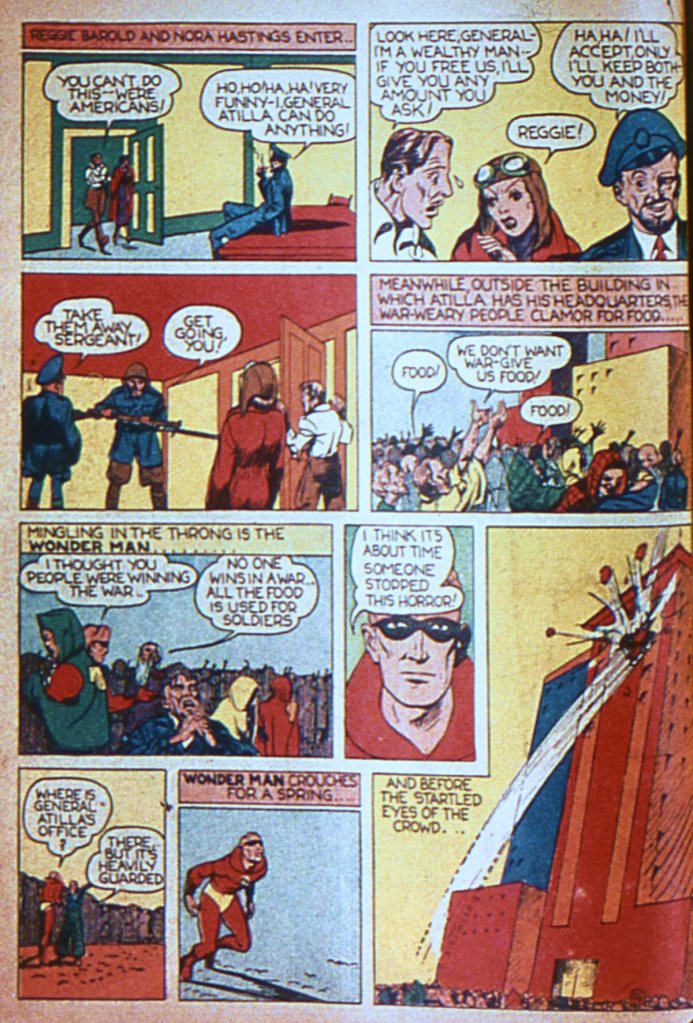
In later years, Eisner claimed that he went onto the stands and told the truth, undermining Fox’s claims and causing the court to find in favor of DC. Eisner even fictionalized an account of this event in his graphic novella roman a clef of the early comic book years, THE DREAMER,
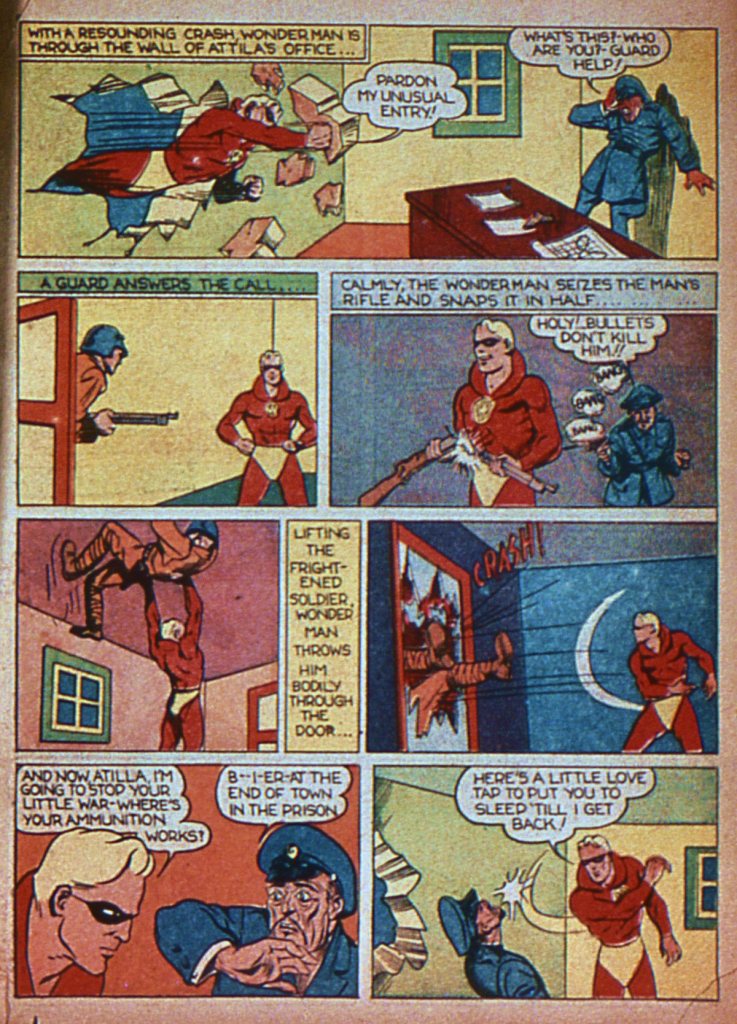
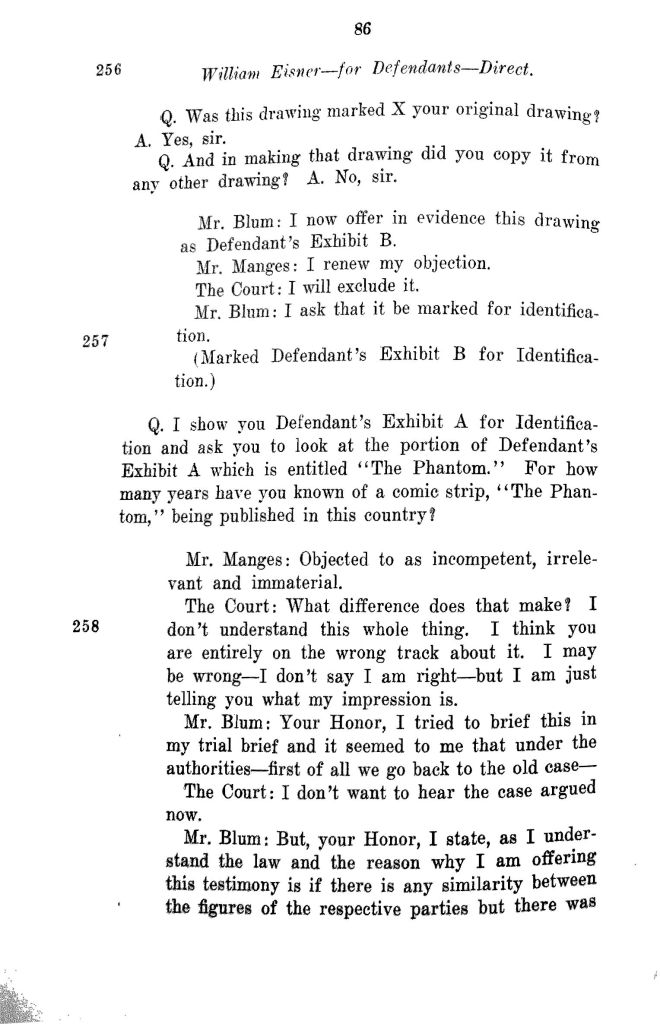
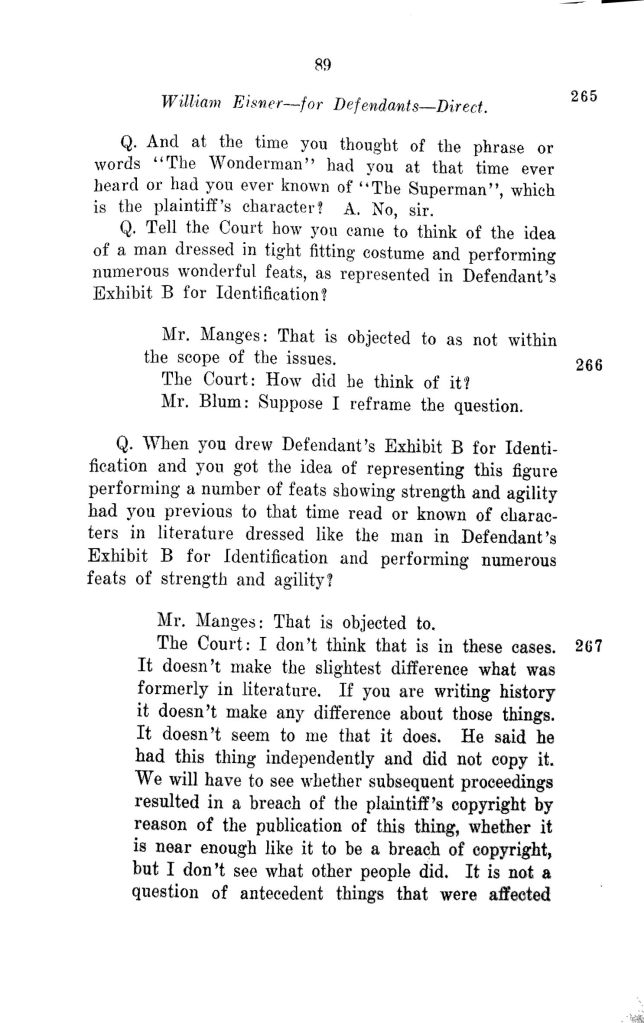
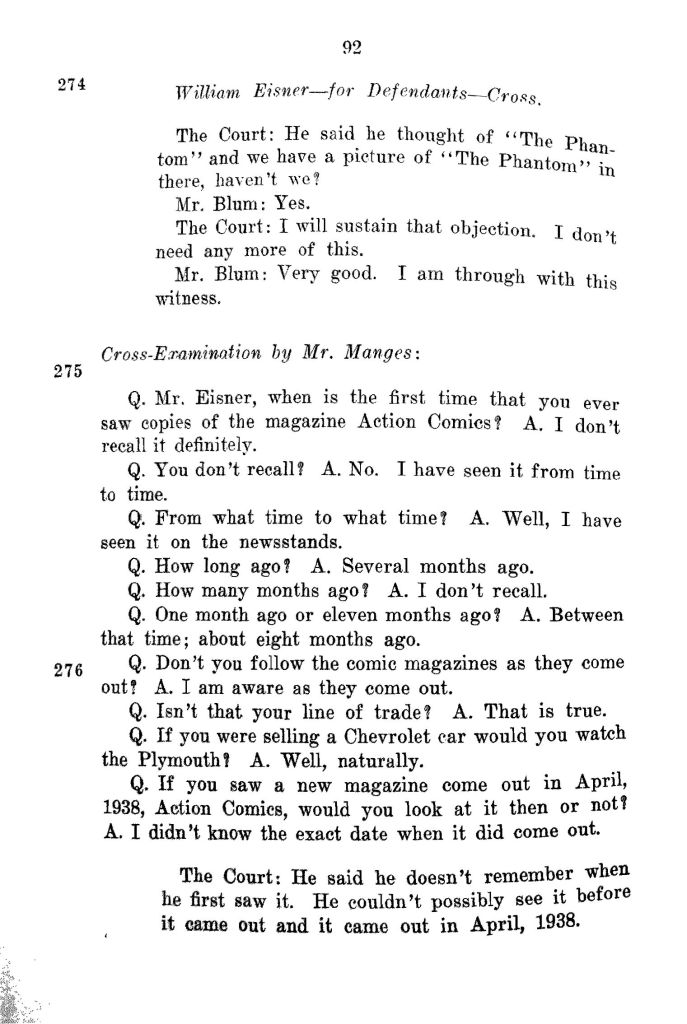
The problem with this is, it was all a lie. Many years later, after Eisner had passed on, transcripts from the trial were unearthed by diligent researchers. And what these transcripts revealed is that Eisner did as he was told and lied his ass of on the stands, committing perjury. Ironically, Bruns Publications still lost the case–summary judgment was handed down just a day later on April 7, 1939 indicating that Wonder Man was a clear infringement on Superman and ordering Fox to cease and desist any further activities and to make restitution. Eisner & Iger never did get their promised back-wages, and had to eat the loss. Eisner apparently felt guilty enough or embarrassed enough over what he’d done that he changed the events in his many retellings.
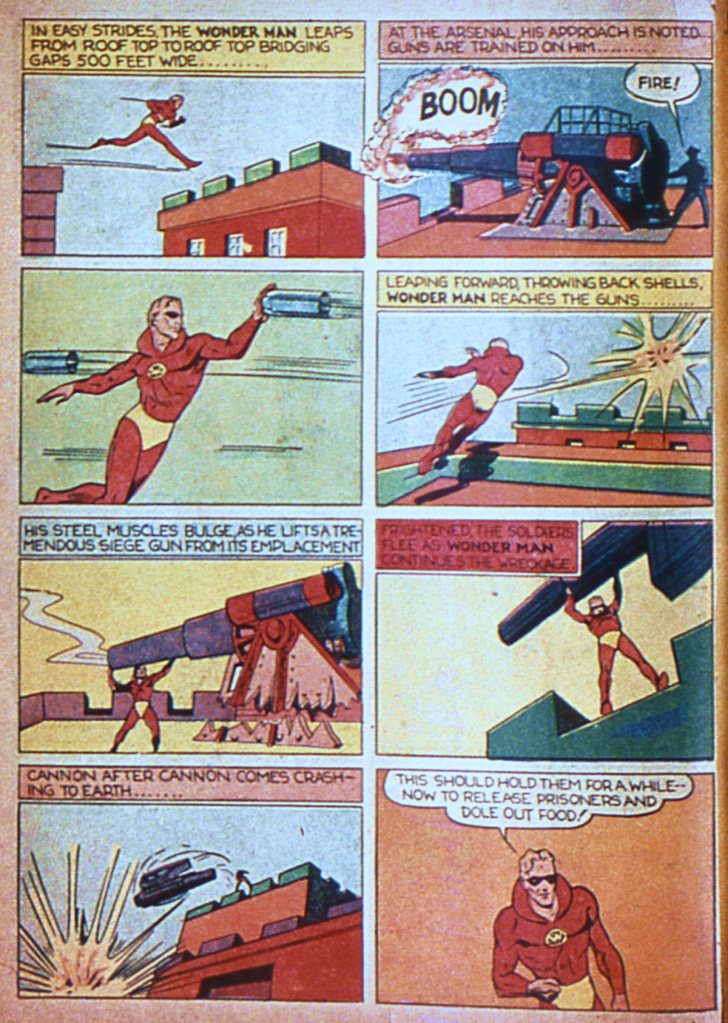
Fox continued to publish WONDER COMICS, but as of the second issue, the Wonder Man feature was gone, never to reappear. In time, the magazine changed its name to WONDERWORLD COMICS.
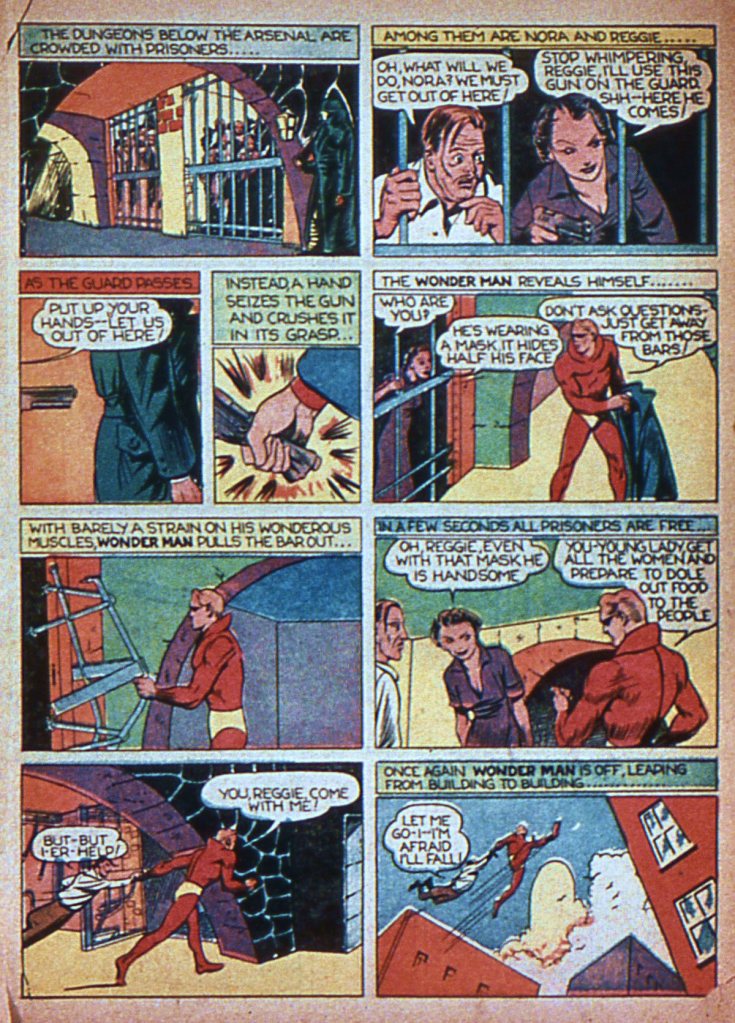
The success of this lawsuit emboldened DC’s owners to go after other similar Superman-derived characters such as Fawcett Publications’ Master Man who eventually debuted in MASTER COMICS. However, as DC began to expand its own roster of super heroes who were clearly derived from the Superman template, it became increasingly more difficult for them to argue on the ground of specific aspects of the character being sacrosanct and unavailable for use in other similar superhuman strips. Accordingly, they saved their legal dogs for only the most obvious and most egregious examples.
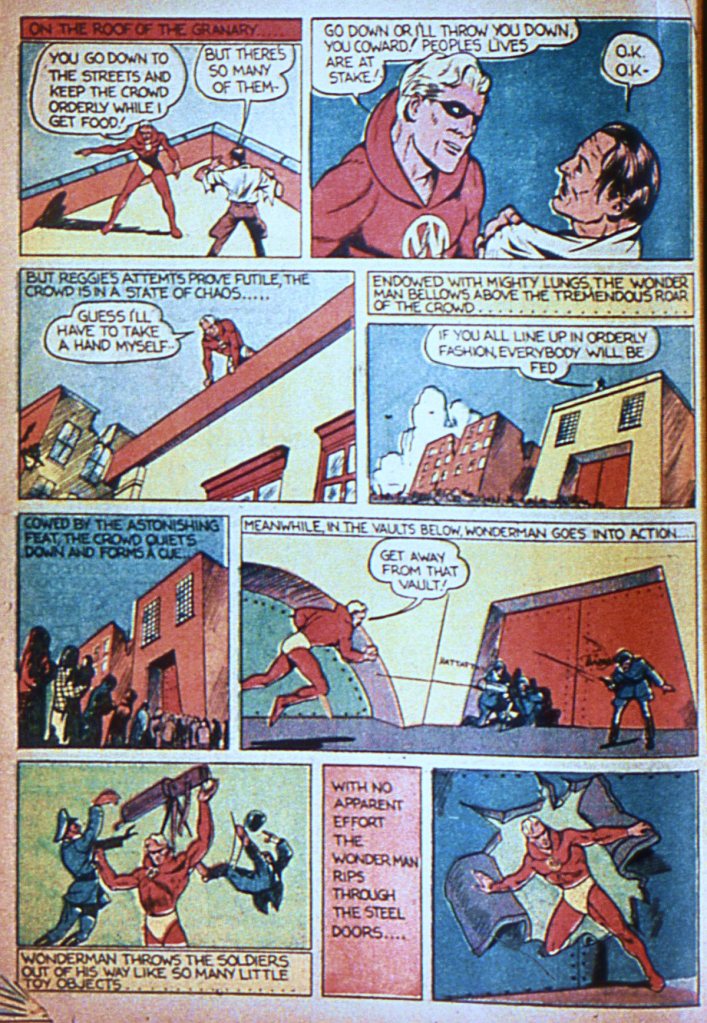
The big one, of course, was Fawcett Publications’ Captain Marvel, a character who would become even more popular than Superman himself, largely on the basis of the ADVENTURES OF CAPTAIN MARVEL movie serial that Republic Pictures released in 1941. It was the release of this project that caused DC to file suit against both Republic and Fawcett–earlier, Republic had attempted to negotiate for the rights to do a Superman serial, but were prevented due to the rights to produce the animated films having already been signed. Fawcett, seeing an opportunity, offered them the rights to Captain Marvel as a substitution.
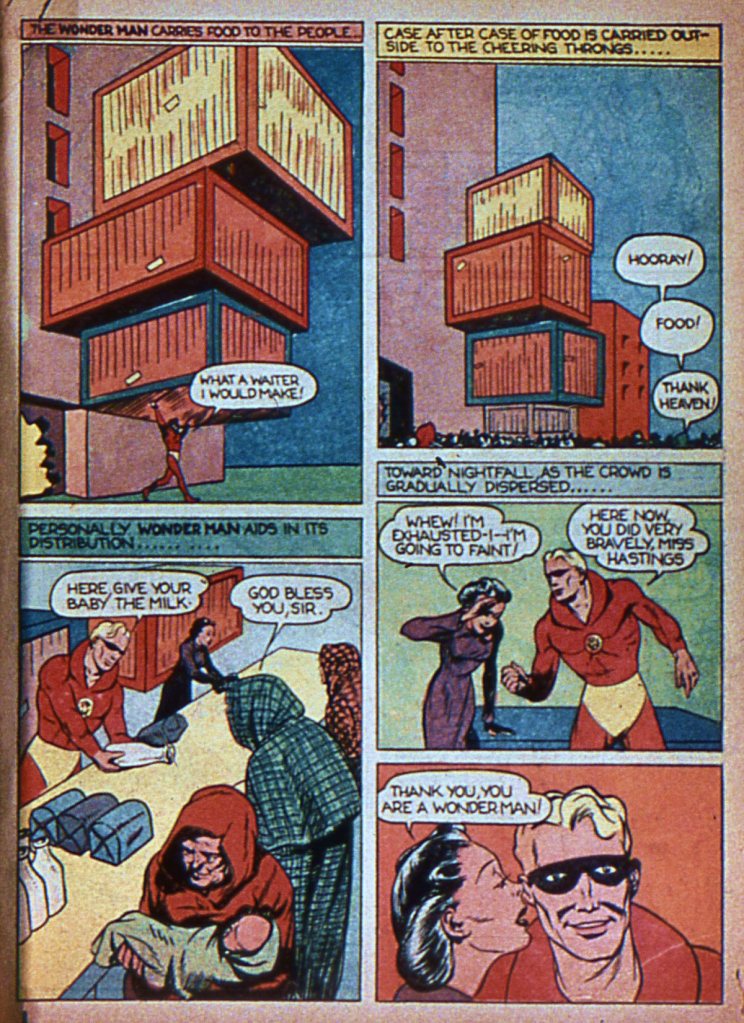
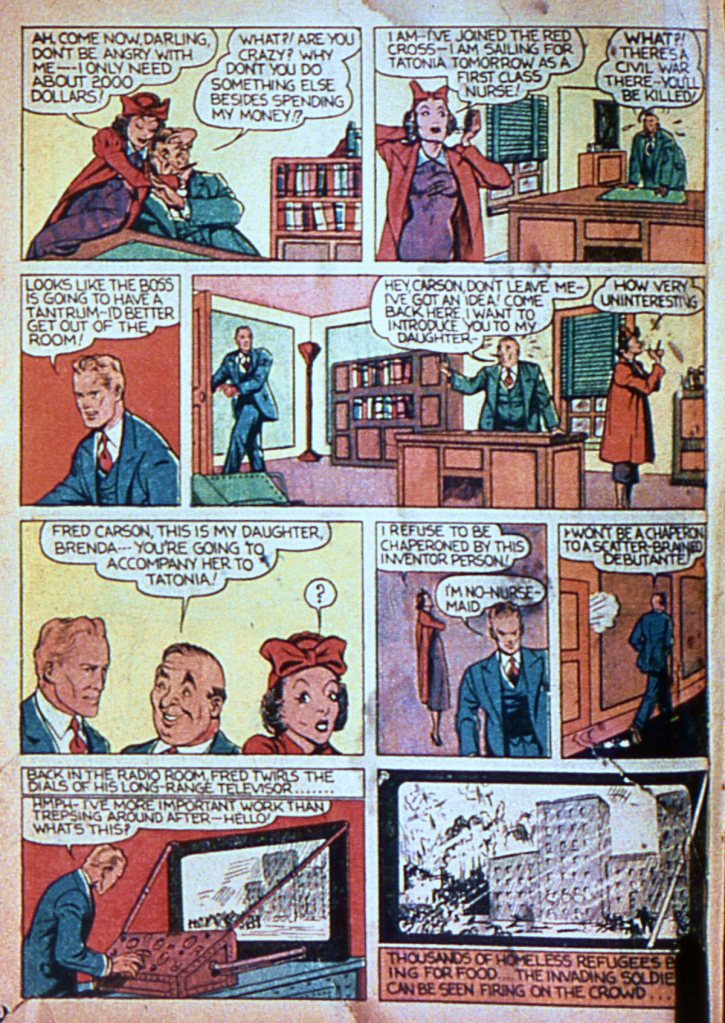
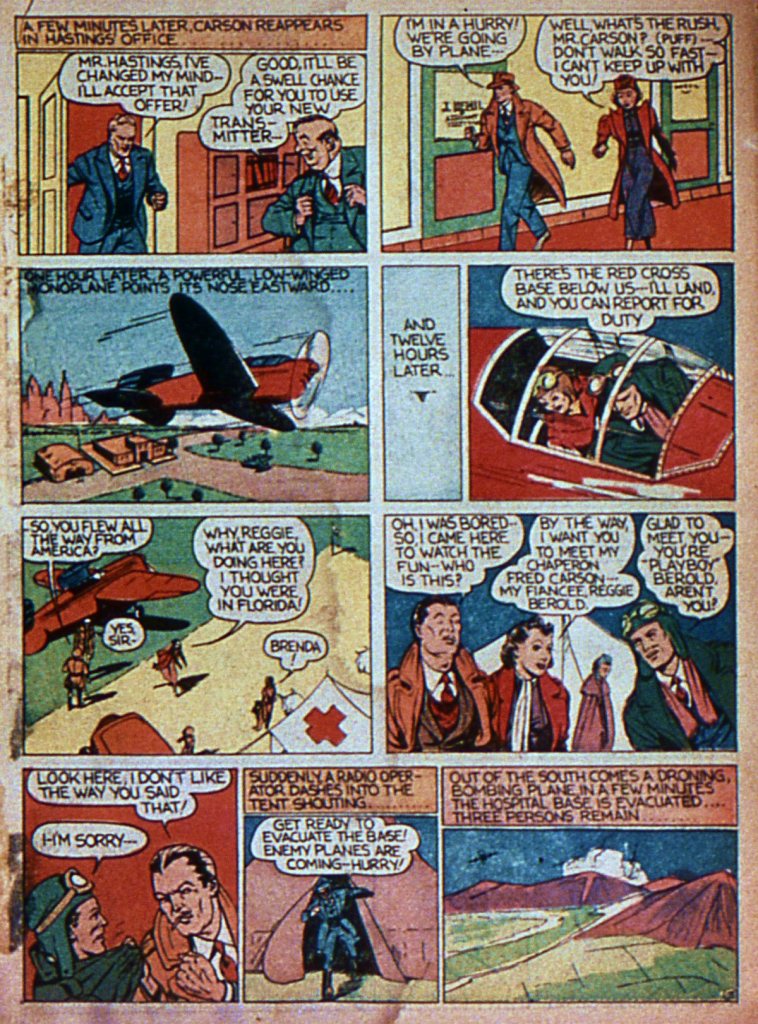
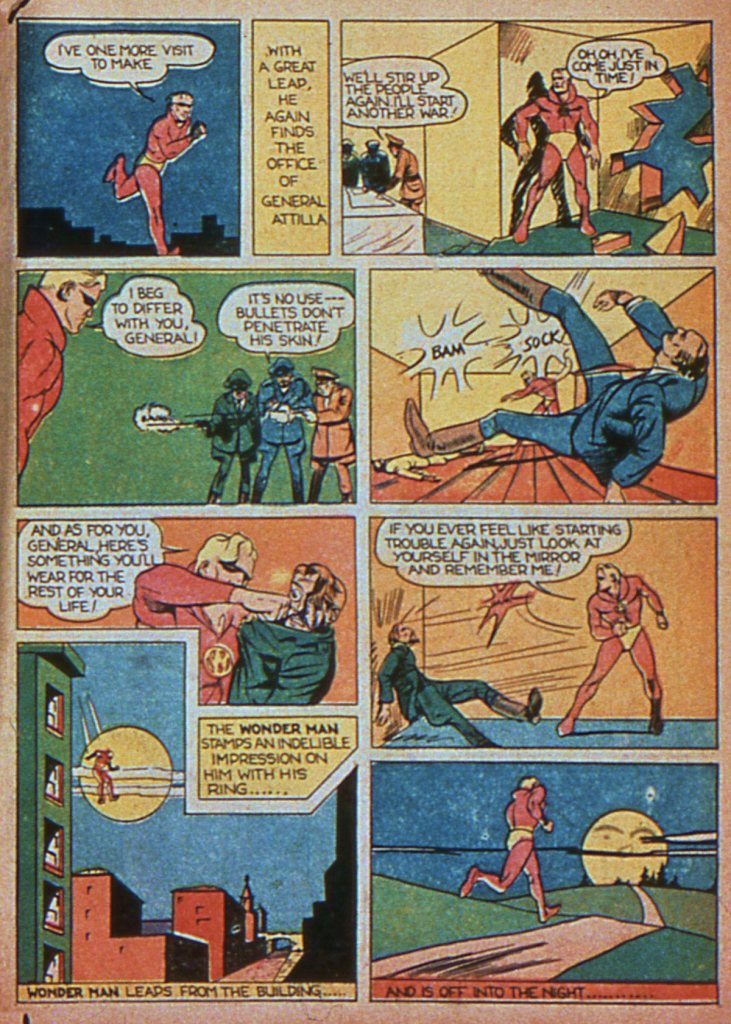
While it’s far from being high art, it must be said that Eisner’s Wonder Man was better drawn than Superman at this point, even if it wasn’t any more sophisticated in its handling of the material. And there really isn’t an original idea in it, everything is derived from both Superman and the adventure fiction of the time in general. Had the strip gone, and Wonder Man caught on in a big way, it’s possible that Eisner never would have had the opportunity to launch his signature character, The Spirit.
 The Tom Brevoort Experience
Wonder Man last appearance might be in the late 1930s but he next appears in Savage Dragon#141(November 2008 ) with other Golden Age Superheroes ( Captain Freedom, Daredevil ( Bart Hill ), Blue Bolt, Fighting Yank, Skyman, Minute Man, Clock, Black Owl, Captain Midnight, Samson, Thor, Phantom Lady, Eagle, Uncle Sam, Black Terror, Cat-Man, Doc Strange, Captain Triumph, Silver Streak, Grim Reaper, Flame, Pyroman, Hyper, Lash Lightning, Stardust, Shock Gibson, Owl, Major Victory & Green Lama ) who were all kidnapped by fake Golden Age Superhero but Superman Homage Solar Man ( not to be confused with Solarman [ Wham Comics#2 ( December 1940 ) Centaur Publications — Jess Nevins Encyclopedia of Golden Age Superheroes] ) to absorb their power ( This explained why his powers ( Like Superman’s ) increased over the decades ). Solar Man also had Solar Man robot duplicates — see imagecomics.fandom.com for Solar Man.
LikeLiked by 1 person
I thought foe a second I screwed up about wish Wonder Man was in Savage Dragon#141 but both Fred Carson and Wonderman ( Brad Spenser ) [ Complete Book of Comics and Funnies#1 ( 1944 ) Standard Publications — invulnerable ( as hard as steel ) and super-strength and uses a flame pistol to kill certain enemies — 14 appearances ] are in it ( Brad Spencer is on the cover too ).
LikeLiked by 1 person
There are several very fine figure drawings of Wonder Man on these pages. Shame how economics and financial necessities affect human ethics.
Wonder Man’s costume doesn’t appeal to me. I’ve seen this character before, but didn’t realize he wore a domino mask.
LikeLike
On the next-to-last page, there’s a direct swipe from The Phantom: “The Wonder Man stamps an indelible impression on him with his ring …” (ah, pulp roots – scarring opponents). I see The Phantom also comes up in the deposition.
Wonder Man likely killed a few people in this story, but it’s not made clear they died.
I wonder (pun unintended) what Eisner might have have come up with, if he was asked to create a Superman-like character, but not to make an obvious copy.
LikeLike
I was thinking to bad Will Eisner never amalgamated Wonder Man with The Shadow’s origin since he got his magic ring in Tibet and The Shadow learned his abilities in the Orient. Stay away from language that makes him sound like Superman but with another name, the same way an Alien ( Human – John Carter/Kryptonian- Kal-El/Superman ) gains super powers on an alien world ( Mars ( John Carter ) – Earth ( Superman ) ). Plus am I the only one to notice Superman knock-off Wonder Man wears a domino mask ( not on the cover ) like Marvel’s first Superman homage Hyperion?
LikeLiked by 1 person
I’d say Eisner comes across as ill at ease in the transcript. (I don’t know why he didn’t just reply that dozens of magazines were published every month and he could hardly remember or follow every one.)
LikeLike
The prosecution would have probably noted that this wasn’t true. The comics field didn’t hit “dozens” of releases per month until shortly after ACTION 1, and even so, less than a dozen were new material the month it came out.
It’s a reasonable supposition that an adventure cartoonist working in the comic book field would stay aware of what was happening in the fairly small number of adventure comic books out there.
That said, Eisner probably was ill at ease — he was testifying in a case where he (and his employers) were being accused of plagiarism, and he was committing perjury.
LikeLike
Back in 2009 Fantagraphics solicited a collection called Supermen featuring early superheroes from lesser/vanished publishers, but the main attraction was it was going to reprint those 2 Wonder Man stories but sadly for reason unrevealed to retailers or customers (and I was both) it shipped without them. A good collection, but I’m still mad.
https://www.fantagraphics.com/products/supermen-the-first-wave-of-comic-book-heroes-1936-1941?srsltid=AfmBOoq-PFxCxZR135vK8RKFDaG8kkdRA35LuuIrQaqnA_af8zBdfZIX
LikeLike
The only reason I can think of is that Fantagraphics may have decided the available images were not of a good enough quality to publish. The complete Wonder Comics #1 (not just the Wonder Man story) can be read at Digital Comic Museum and Comic Book Plus, but the images are taken from fiche, and while they’re readable, they’re not as good as scans. (I presume Tom got the images here from one of those two sites.)
LikeLike
IMHO I think DC may have thrown in the blackball. Much like no one could do Captain Marvel but them, I think that may have been the case here as well.
LikeLike
Nowadays. plagiarism. trademark and copyright infringement cases are usually handled by lawyers who practice fairly exclusively in that area. Since 1946 most Trademark issues fall under the Federal Lanham Act (15 USC Section’s 1051, et seq.),
Just reading the transcript, it seems: 1) no one (lawyers or judge) seems that familiar with the law (note paragraph 258 on page 86); and 2) the judge is almost begging to be “taken up” (having a party take an appeal) on his ruling on admissibility of evidence at paragraph 254 on page 85..
I wonder who the judge was and if this case was in NY County Supreme (the NY Trial Court for Manhattan) or if the case had been brought in the SDNY?
I also wonder why Fox didn’t take this up?
I never did trademark or copywrite law. but it does not seem like there is an overwhelming case here of a risk of creating confusion in the marketplace or infringement.
As the lawyer for Fox is trying to point out, there were costumed heroes before Superman (the Phantom as they state, or even Mandrake or The Shadow). At the time, circus and sideshow strongmen usually wore garish leotards, as both Superman and Wonderman do.
The trademarks and trade dress differs (the logos, packaging and costumes differ).
Wonderman’s alter ego is some kind of engineering executive, not a somewhat lowly reporter, His “leading lady: is his boss’s able (but somewhat flighty) daughter (who seems to be drawn to look like Joan Crawford), not a “sob sister.” Wonderman’s powers are based on eastern mysticism (like The Shadow) not alien science (like John Carter. as someone pointed out). Superman’s powers are intrinsic to him, Wonderman’s powers come from an artifact.
Oddly enough, Wonderman seems to anticipate Bill Everett’s Amazing Man from slightly later in 1939, who became the inspiration for Charlton’s Pete Cannon, Thunderbolt, Marvel’s Iron Fist and DC’s Amazing Man.
LikeLiked by 1 person
I wasn’t linking Wonder Man’s ring to alien technology, I was showing how both John Carter & Superman both gained powers on alien worlds that they were both alien to ( Yet managed to have zero lawsuits ). Eastern mysticism is why I suggested Eisner should have amalgamated Wonder Man with the Shadow to created greater differences to Superman, like Superman has with John Carter.
LikeLike