

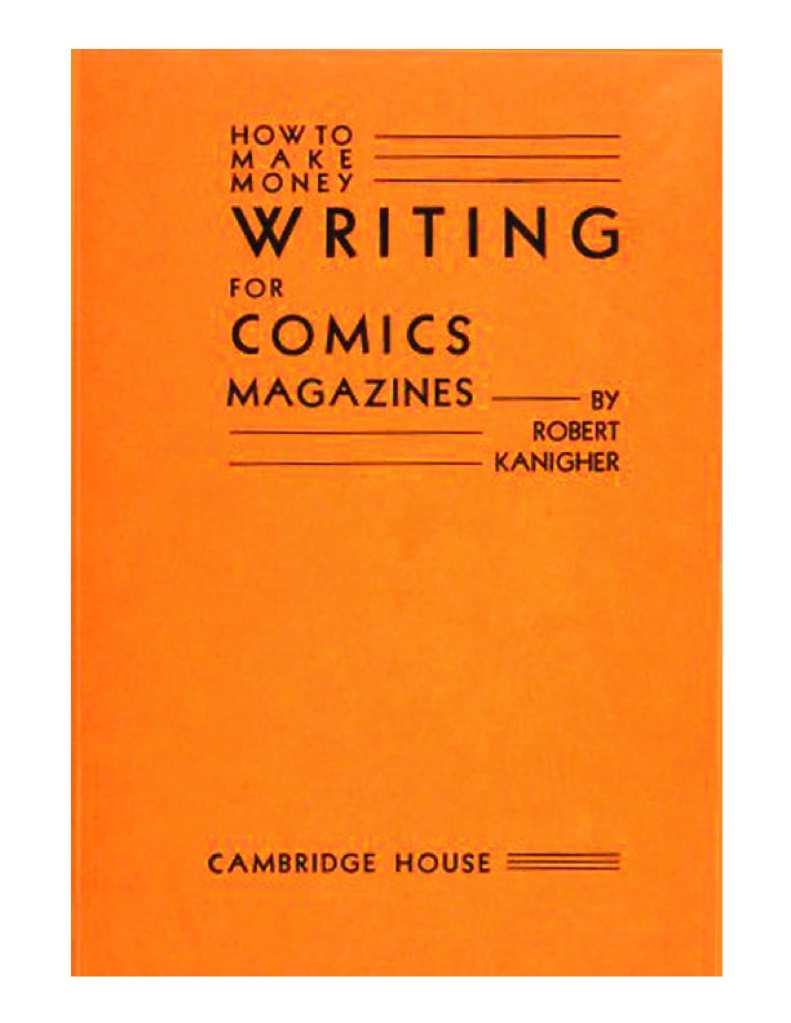
Even by the year 1943, writer Robert Kanigher considered himself a veteran of the comic book business. He’d been selling stories to various publishers beginning around 1940, and while he considered himself to be a bit too good for the medium he was working in, he was both prolific and always on the lookout for another opportunity to earn some coin. So it was that in 1943 Kanigher authored the very first book about creating material for comic books. This volume focuses primarily on writing. It’s been out of print for decades at this point, so we’re going to take a look at it.




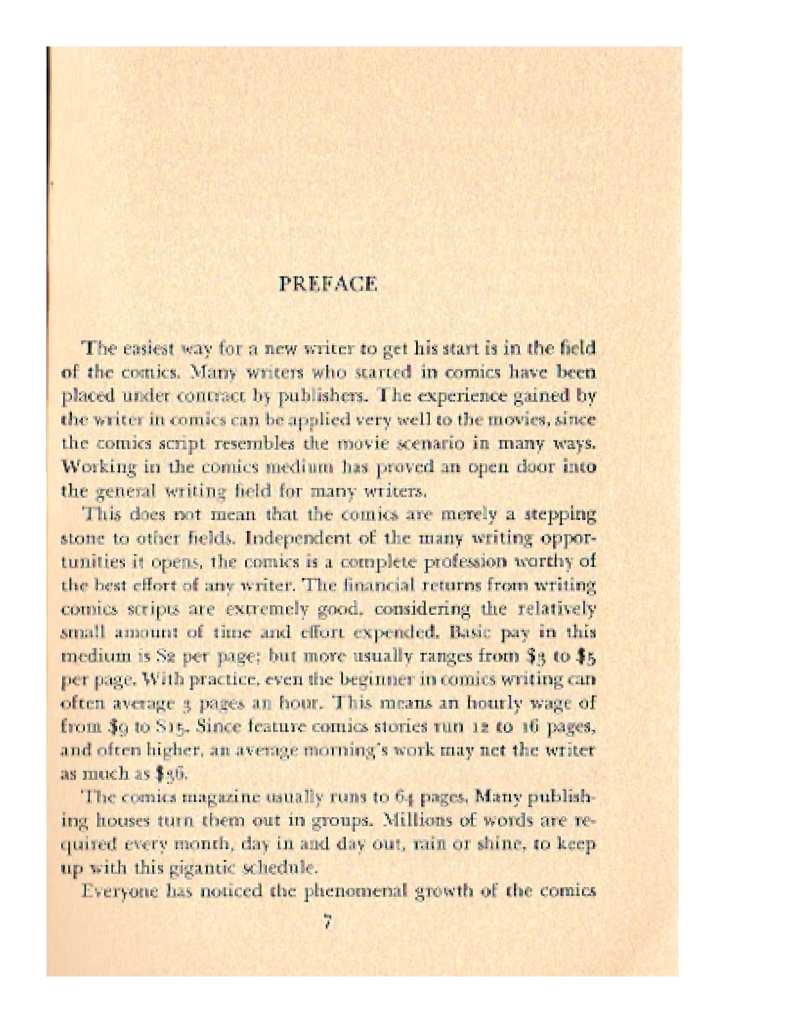
This gives us a handle on what writers were generally being paid in 1943: between $2.00 and $5.00 per page. Kanigher insists that most writers can crank out three pages an hour.


I assume that Pretty lines is meant here, although Petty isn’t far off for a bunch of the girlfriend characters in early hero comics. Kanigher disguises his point in florid language, but the point he make here that dialogue is preferable to narration and images are preferable to dialogue is still a good one to remember.

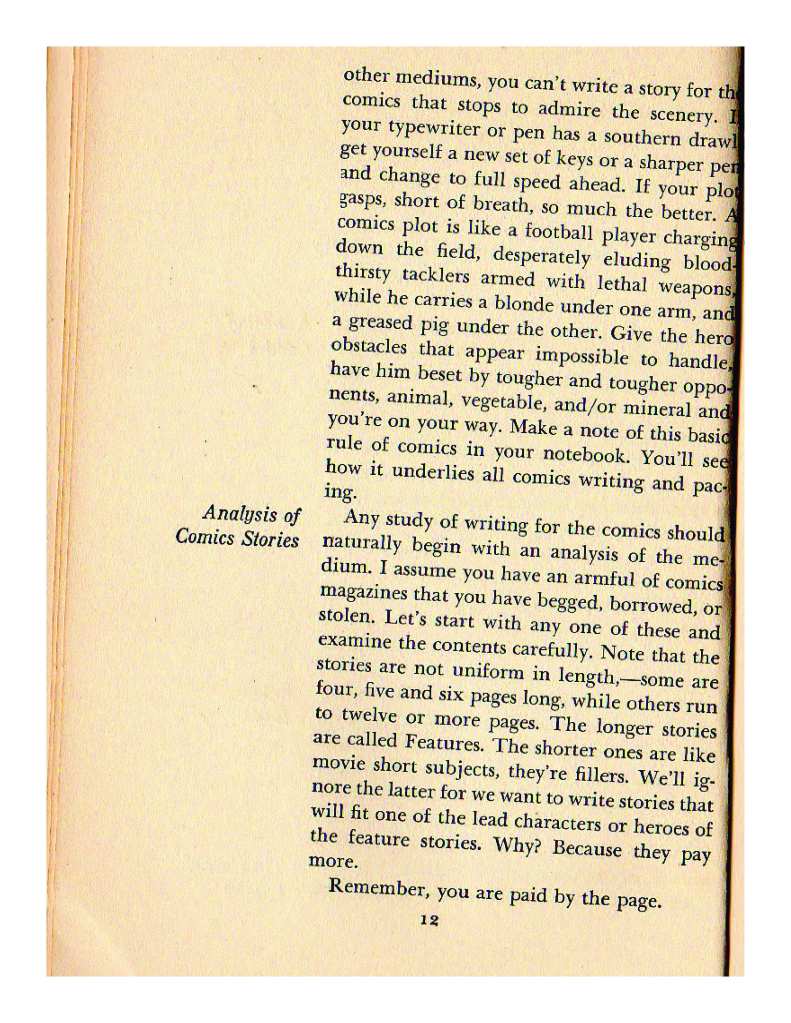
Remember, you are paid by the page.


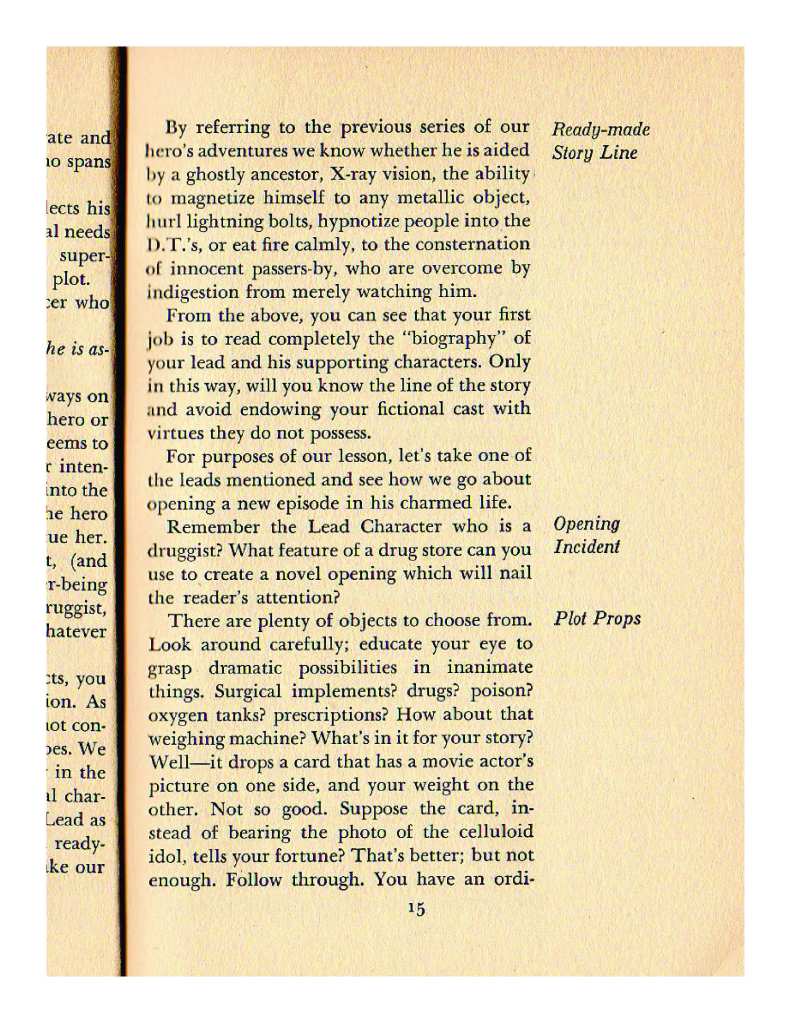
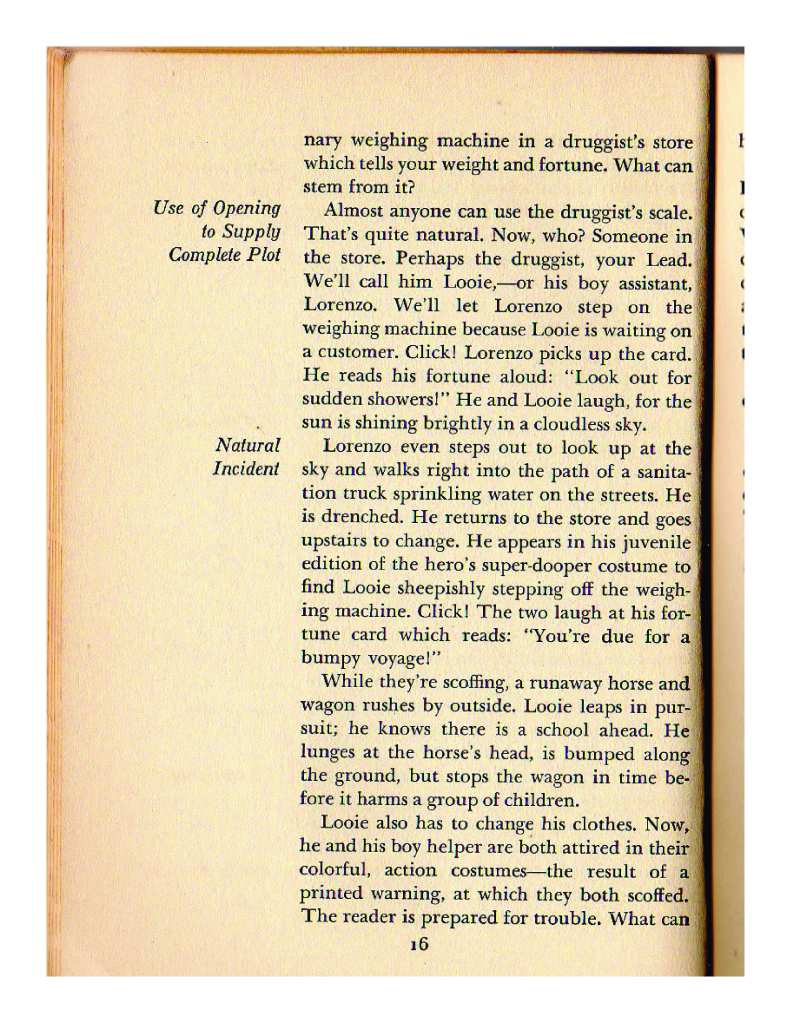
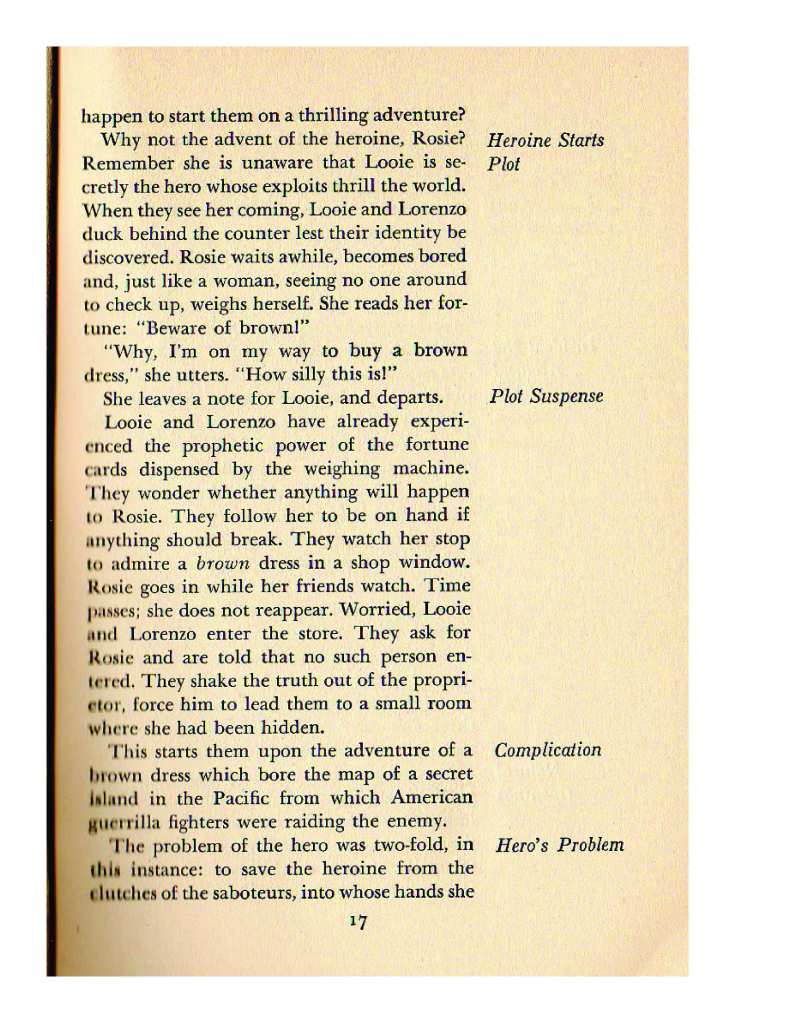

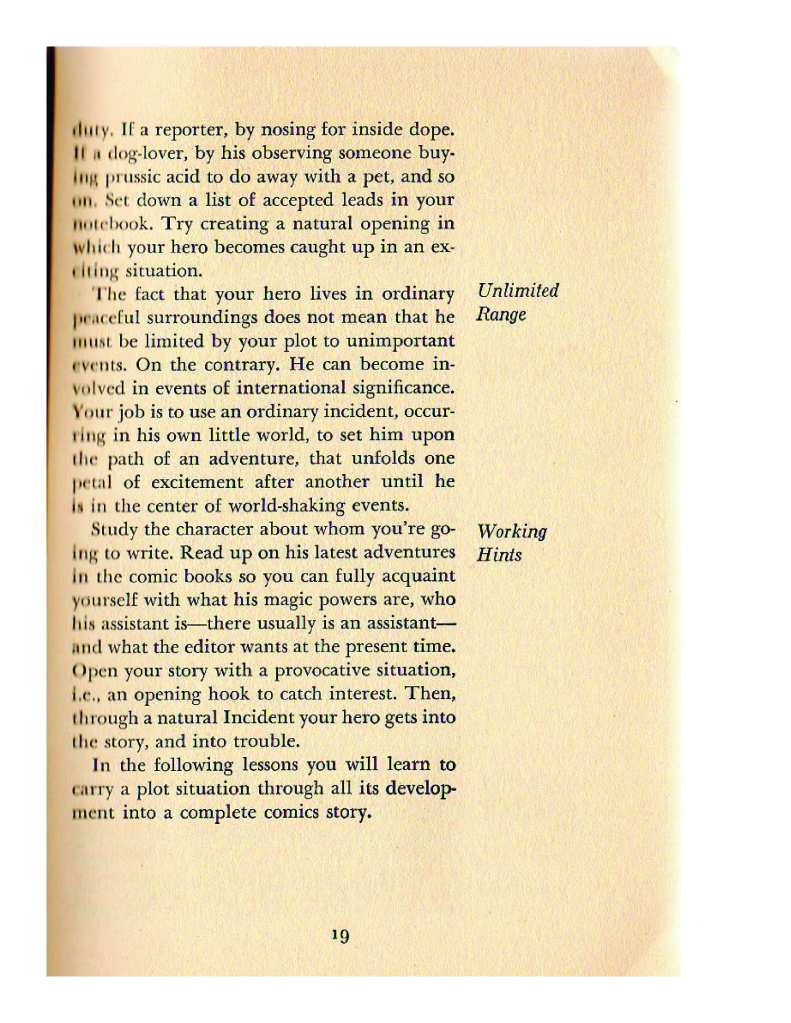
There’s more to come in the weeks ahead!
 The Tom Brevoort Experience
I think he meant George Petty – he drew sexy women like Vargas.
LikeLiked by 1 person
Good catch. I think you’re right.
LikeLiked by 1 person
Definitely. Vargas was probably too sexy for the comics, as a regular thing, but Petty’s pinup girls managed to be sexy and wholesome. And he’d been a steady, well-known illustrator for about ten years at this point, while Vargas was a relative newcomer.
LikeLiked by 1 person
While I’m not familiar with Petty, your description makes me think of Bob Oksner’s line about “I draw girls with Saturday night bodies and Sunday school faces.”
LikeLiked by 2 people
That’s a pretty good description of a whole school of American pinup art that definitely includes Petty.
And a fine description of Oksner’s work, too.
LikeLike
Stan Lee also wrote such a “How to” book, just after this.
Oddly, both served state-side in WWII.
LikeLike
Odd that he chooses to ignore the shorter-length stories, even though that’s more likely where the new writer will get a chance. Yes, you want the money, but you’re unlikely to break in writing Superman.
On the other hand, maybe he intends for the reader to discover that after they’ve paid for the book.
LikeLiked by 1 person
This description on page 14 is pretty funny: “Or he may be a druggist, who neglects his business, heedless of the pharmaceutical needs of the community, to spring with super-human qualities into an international plot”.
Black Terror? What did Kanigher have against that character? He makes it sound like the later storytelling formula of having the superheroics create widespread negative effects around the hero’s supporting cast.
LikeLiked by 1 person
I decided to go back and read the rest of this and I thought of The Black Terror too, plus Magno 1 [ Super-Mystery Comics#1 ( July 1940 ) ( Ace ) with 33 appearances vs. Magno II – Smash Comics#13 ( August 1940 ) (Quality ) with 9 Appearances ] & The Fighting Yank 1 ( Bruce Carter III ) [ Startling Comics#10 ( September 1941 ) ( Standard ) with 158 appearances — sometimes aided by his ancestor Bruce Carter I — don’t think he was talking about Captain Fearless II or Citizen Smith, Son of the Unknown Soldier ] and Captain Marvel. But he did leave out in Comic Magazine writing borrowing from Literature & Movies but with a twist: The Hound of the Baskervilles ( 1901-1902 ) –The Phantom Hound of Cardiff Moor ( The Hound ( Murdock ) & Phantom Hound ( his dog ) — Official Index To The Avengers, Thor & Captain America ) [ Captain America Comics#10 ( January 1942 ) 4th story ( Captain America ) ] & The Ghost of Ravenlock and his Hell-Hound [ Nick Fury, Agent of S.H.I.E.L.D. #3 ( August 1968 ) ], Bokk the Beast ( giant gorilla ) [ Sun Girl#3 ( December 1948 ) Sun Girl 1st story ] & Giant Science Created Gorilla & Jelly of Doom ( flesh-eating ooze ) [ Daring Mystery Comics#5 ( June 1940 ) Fiery Mask story — Doctor Dork: — Jelly Men ( Flesh-eating blob-like creatures created by Imperial Japanese scientist – Marvel Mystery Comics#31 ( May 1942 ) Vision story ] with King Kong ( 1933 ) & The Blob prototype [ Amazing Stories ( April 1931 ) “The Menace From Andromeda” by Arthur Leo Zagat and Nat Schachner — spores from space rain down on the sea, which forms a protoplasm which then rolls onto the land and starts absorbing not just living things but stone and metal too as it grows and spreads inland ]
LikeLike
I don’t want to disrespect an influential and impactful contributor to the industry and medium. A distinguished if not controversial career surpassed by only a few. So, I’ll keep my underinformed opinions to myself. 😉
LikeLike
Dude, that’s not how the internet works!
LikeLiked by 1 person
😂
LikeLike
🤣
LikeLike