

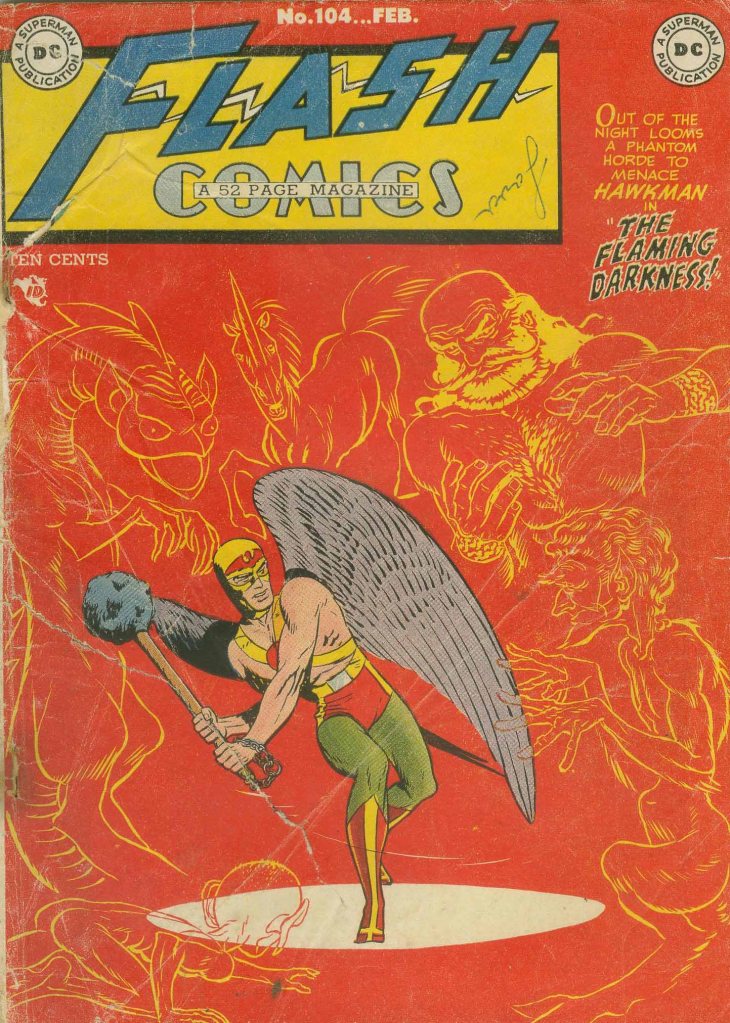
Just like her fellow heroes the Flash and the Hawkman (though not the Atom, as we’ve previously discovered), Black Canary also had her final solo outing of the Golden Age in the pages of FLASH COMICS #104. She’d continue to appear regularly in ALL-STAR COMICS as a member of the Justice Society of America for another year or so–but this was seemingly the end for her as a solo feature forever. Nobody who read this story at the time it was released would ever have thought that the character would be revived twenty years later, nor that she’d go on to have an even greater popularity in the Silver and Bronze and later ages than she had during the years of her inception.
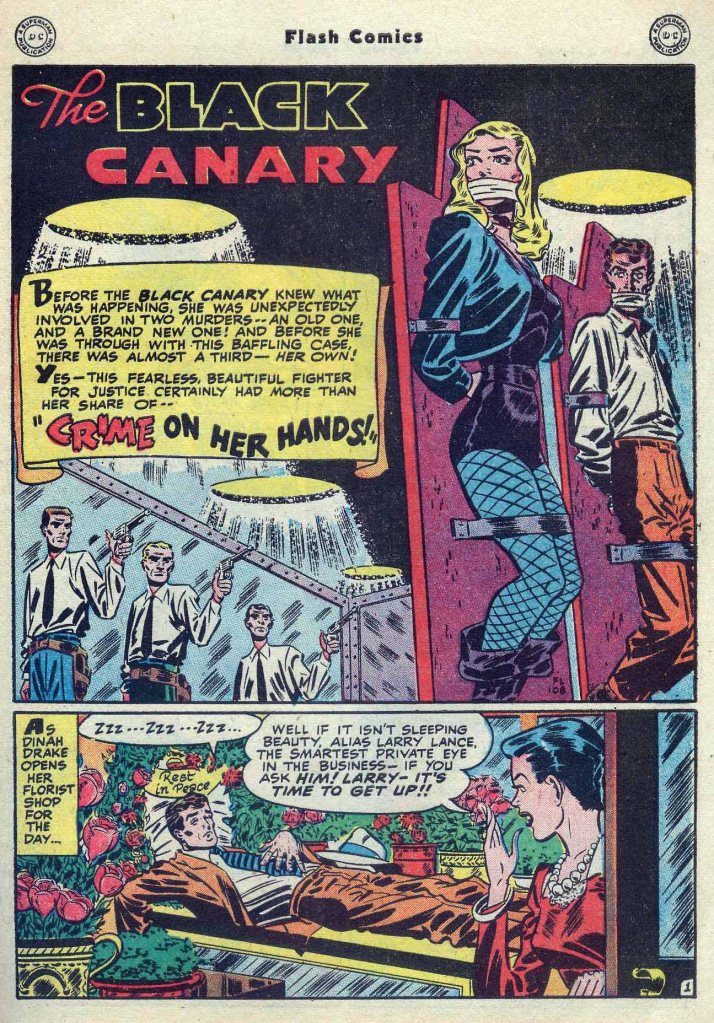
Black Canary was one of the late successes of the Golden Age. She was introduced in the postwar period in the Johnny Thunder strip as a femme fatale and a bit of a foil for Johnny. But she was instantly more popular than her host (or more of interest to her creator, writer Robert Kanigher) and so three issues later, she had taken over the feature completely, shuffling Johnny off into comic book limbo. There was something of an industry push for female-led series during this era that the Canary definitely fed into.
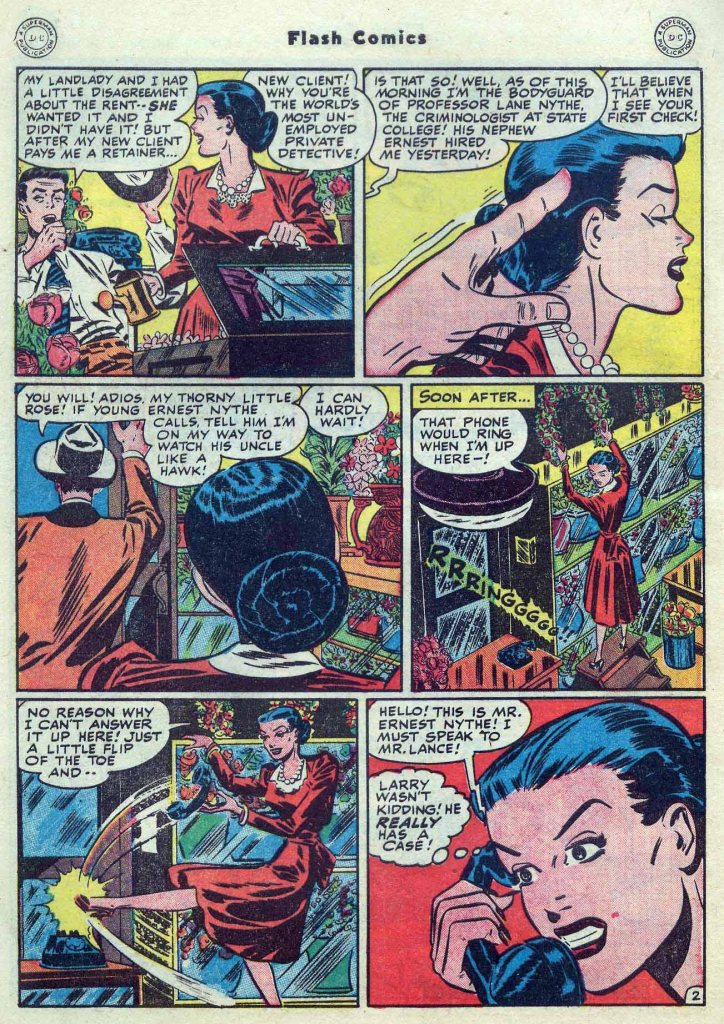
This final Black Canary story was written by Robert Kanigher and illustrated by Carmine Infantino. It’s been reprinted a couple of times in the past decade and a half, making it less obscure than the Hawkman or Atom entries.

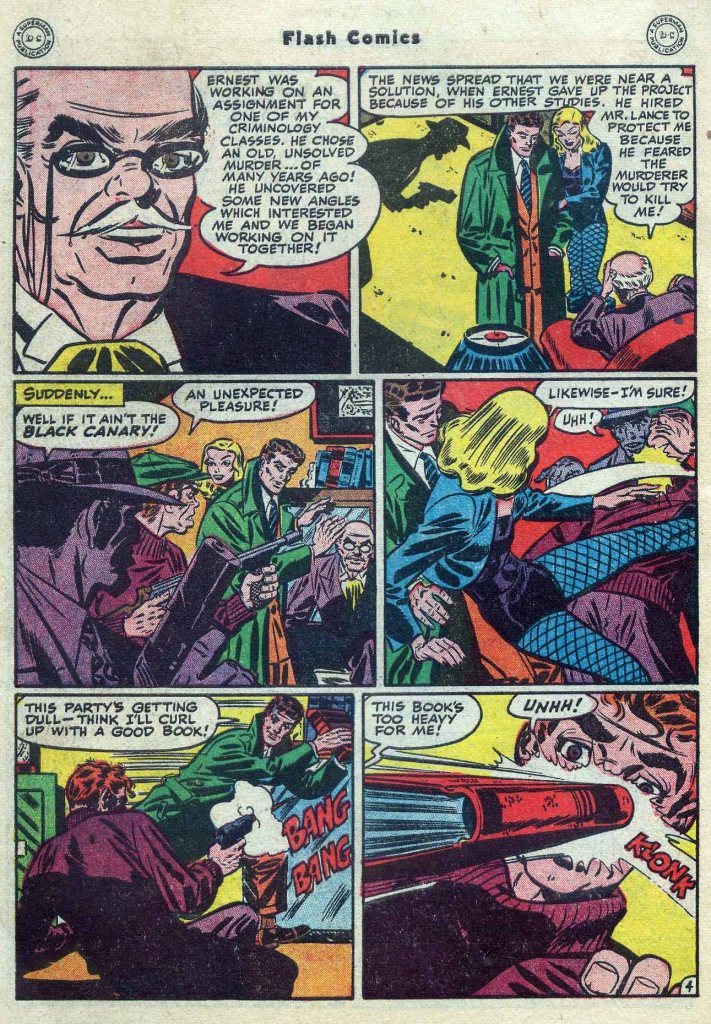
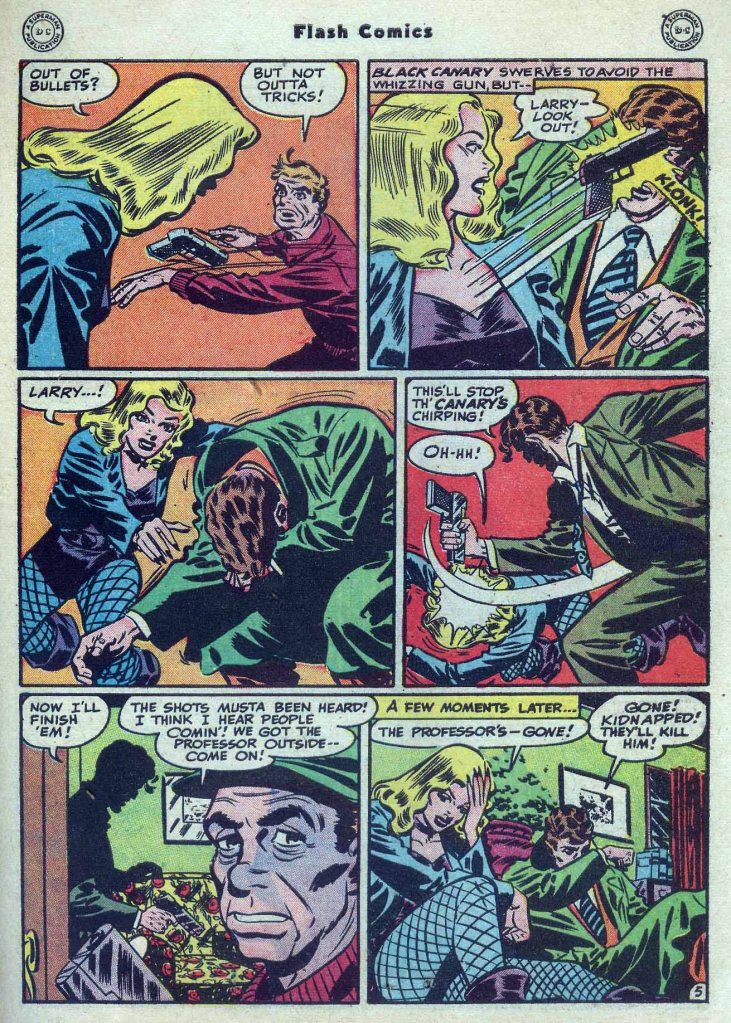
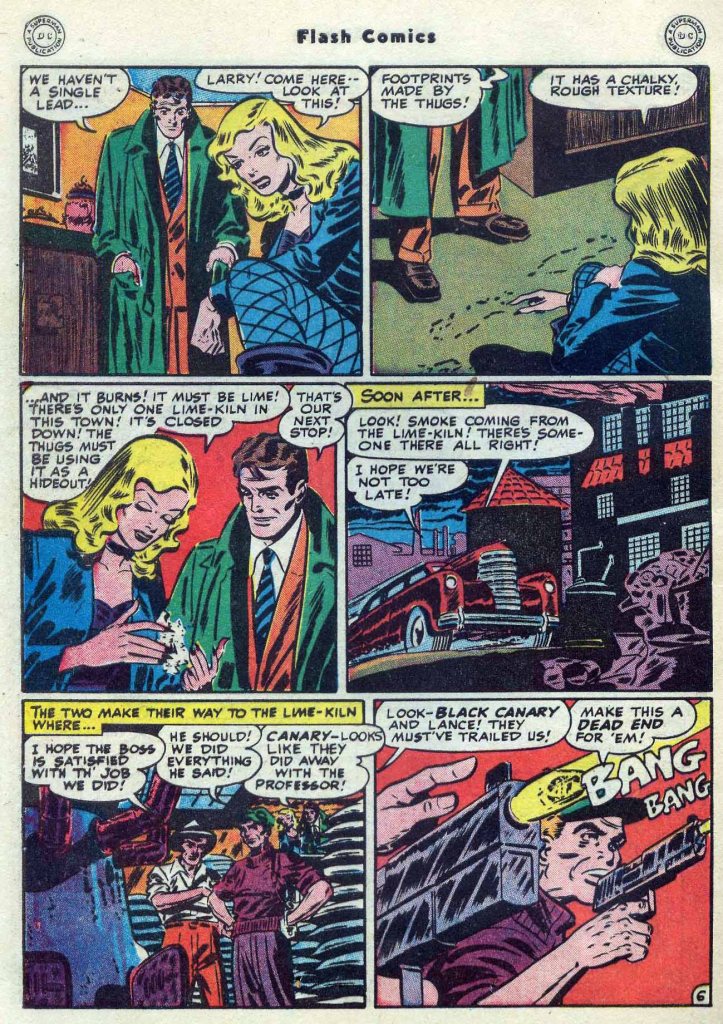
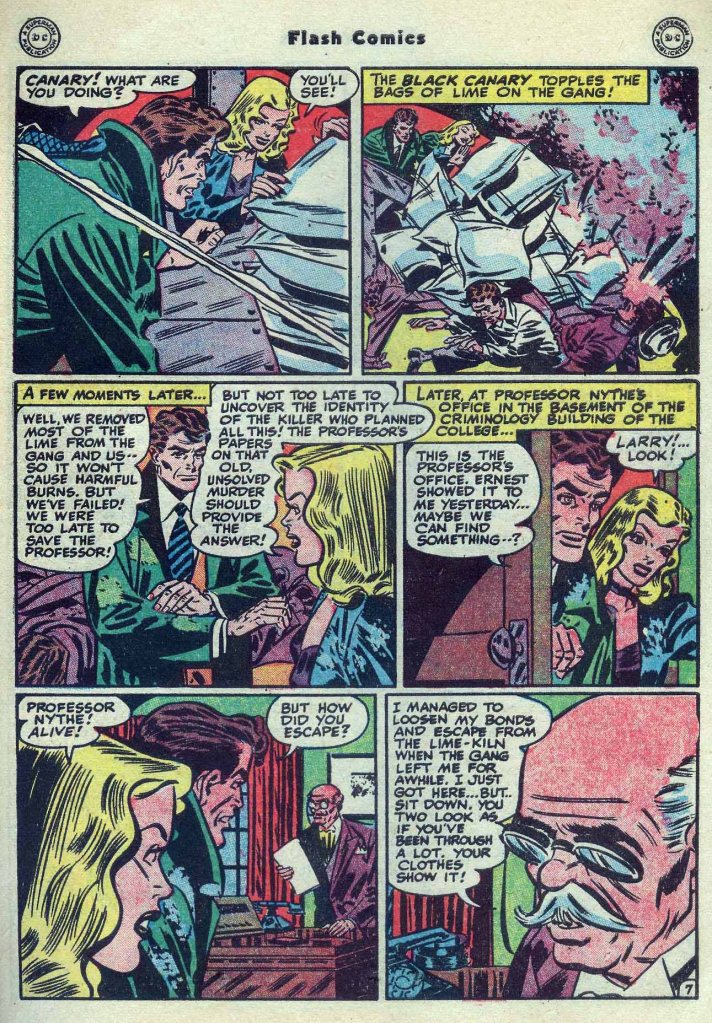
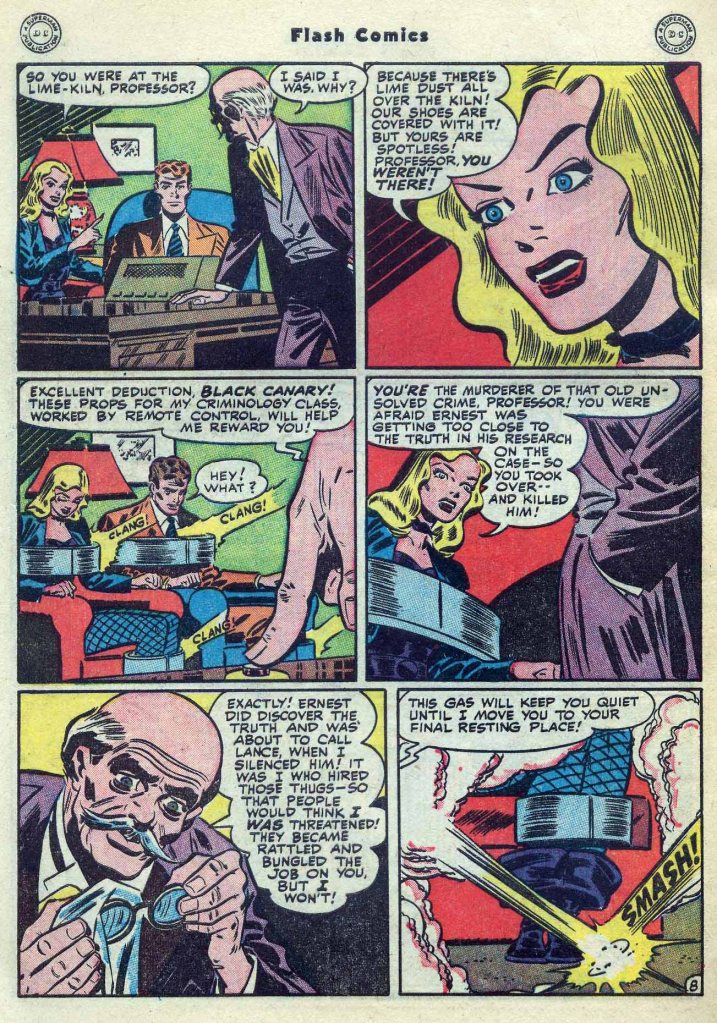
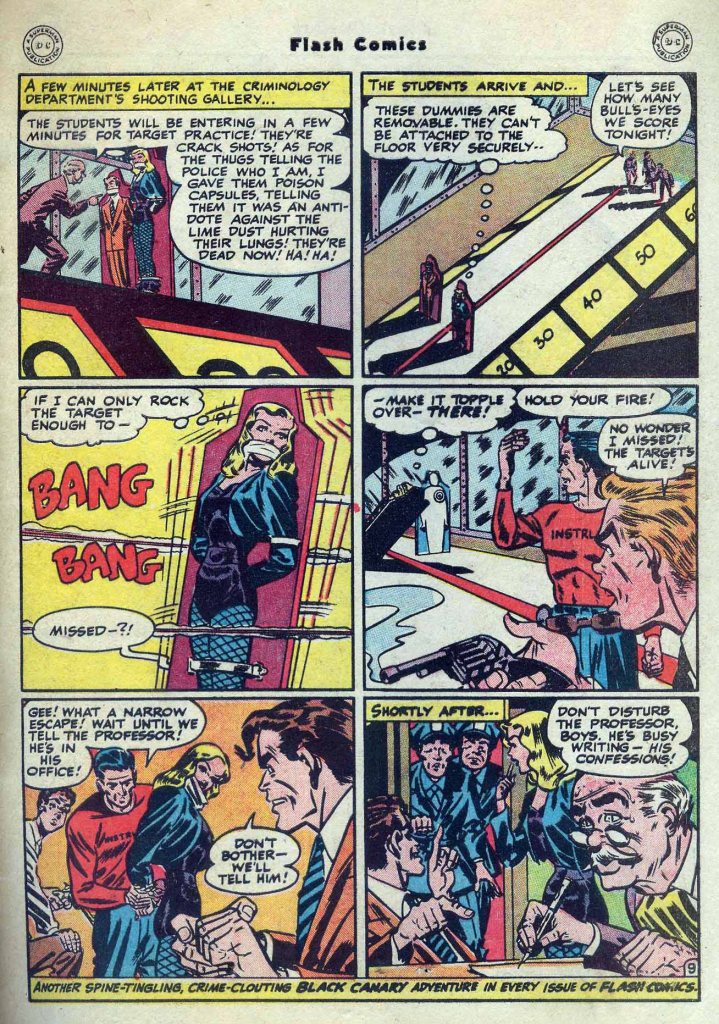
The pacing on this story is pretty weird. One gets the impression that Kanigher got to the trap laid out on the splash page late and then had to wrap everything up with pretty much a hand-wave. Not really an especially strong entry to go out on.
 The Tom Brevoort Experience
Not sure about your last pacing on the comment. My understanding from Julie is that when it came to writing, Kanigher would typically save the splash page or splash panel for the end, choosing it from whatever he felt was the strongest visual moment in the story. Doesn’t mean he did this every single time, but it’s not surprising.
LikeLike
The transition between those last two panels is pretty abrupt, but I suppose the Professor’s capture is a foregone conclusion by that point.
The idea of stringing the victims up behind the targets in a shooting gallery reminds me of a similar scene from the old ’66 Batman tv show. Surely a coincidence…unless there’s some even older story that they were both inspired by…?
LikeLike
The same shooting-gallery thing happens to the JSA in All-Star #46, shortly after this. The Black Canary must have had a real sense of deja vu. Apparently the source is “Sherlock Holmes and the Spider Woman”, from 1943.
LikeLiked by 1 person
In the 1943 film The Spider Woman ( also known as Sherlock Holmes and the Spider Woman and Spider Woman — starring Basil Rathbone and Nigel Bruce ) near the end of the movie Sherlock was tied behind a moving target in a shooting gallery, at which Inspector Lestrade and Watson take pot shots with a .22 rifle. However Holmes manages to escape. I only know this because I was looking up a different Spider ( pulp Spider 1 & 2 ) and was curious if the Spider Woman Sherlock Holmes went up against was a film ( I wonder if I saw it on TV since as a kid I watched a lot of those Basil Rathbone & Nigel Bruce – Holmes & Watson movies, not to forget the much later Jeremy Brett Sherlock Holmes TV series ).
LikeLike
Thought I checked to see if someone beat me to the The 1943 The Spider Woman movie, yet somehow I missed it.
LikeLike
Always fun to look at Infantino’s work during his Caniff period.
LikeLike
So first the Silver Scorpion [ Daring Mystery Comics#7 ( April 1941 ) private detective Dan Hurley ( hated he was killed off by Roy Thomas ) ] then the Blonde Phantom ( Louise Grant, secretary) ] All-Select Comics#11 ( Fall 1946 ) Mark Mason ( originally O.S.S. ) of the Mark Mason Detective Agency ] were teamed up with a private detective before the Black Canary ( Dinah Drake ) [ Flash Comics#86 ( August 1947 ) Johnny Thunder story ] did Larry Lance [ Flash Comics#92 ( February 1948 ) ]. Hey Tom, I discovered on The Encyclopedia of Pulp Heroes: The Online Edition by Jess Nevins that there is a pulp character that Jess Nevins classifies as a Lupin who like the Black Canary replaced the hero whose stories he was introduced in ( I can’t remember which character ). I like the Black Canary ( both versions ) and Mockingbird in her original costume [ Marvel Team-Up#95 ( July 1980 ) ].
LikeLiked by 1 person