


Well, not quite. For the members of the Justice Society of America, most of them made their final appearance of the Golden Age of Comics in the last JSA adventure, published in ALL-STAR COMICS #57 in December of 1950. But before that, many of the heroes’ home anthology series came to an end, and with it their solo exploits. Hawkman was no exception, having winged his way into adventure for the final time in FLASH COMICS #104 in December of 1948, a full two years before the Justice Society folded up their tent likewise.
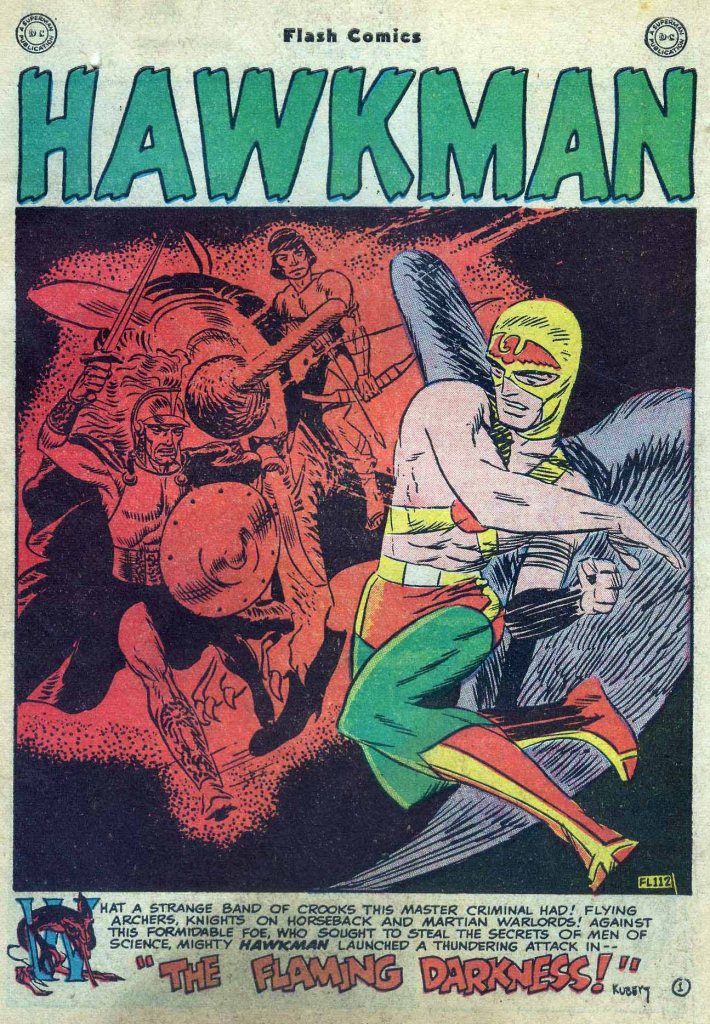
Hawkman is an interesting character, in that he was the most popular of the never-quite-got-there super heroes of the 1940s. Word is that a HAWKMAN solo series was posited at one point but that wartime paper regulations kept All-American Comics from moving forward with it. The Winged Wonder was appealing enough to audience, though, that he took the cover spot on every other issue of FLASH COMICS, displacing the Scarlet Speedster who was the series’ namesake.
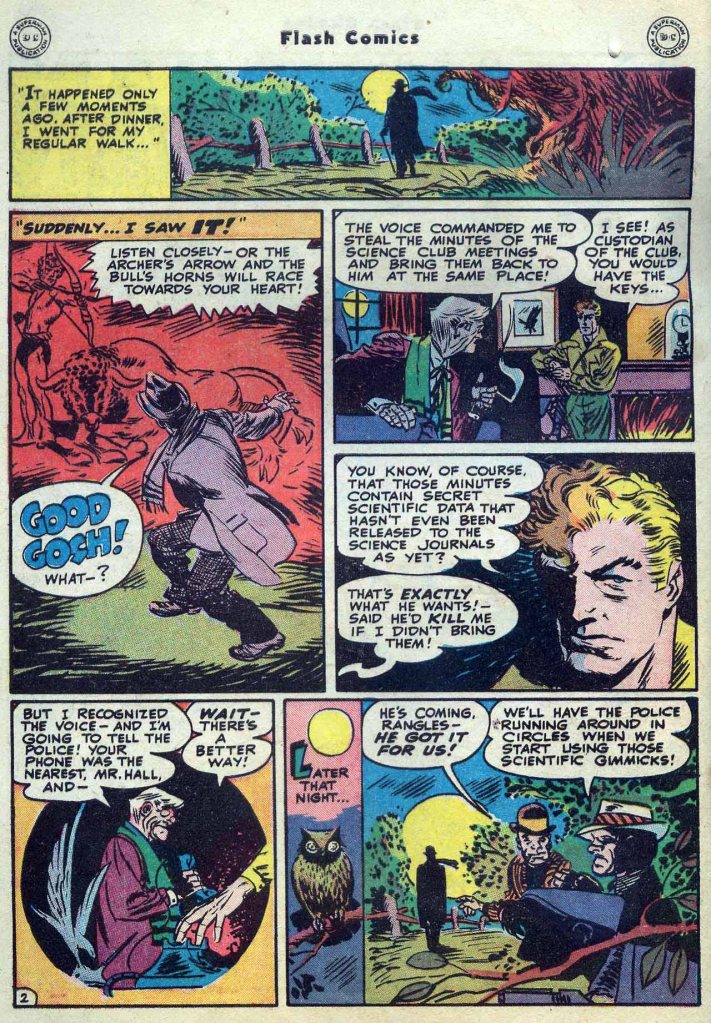
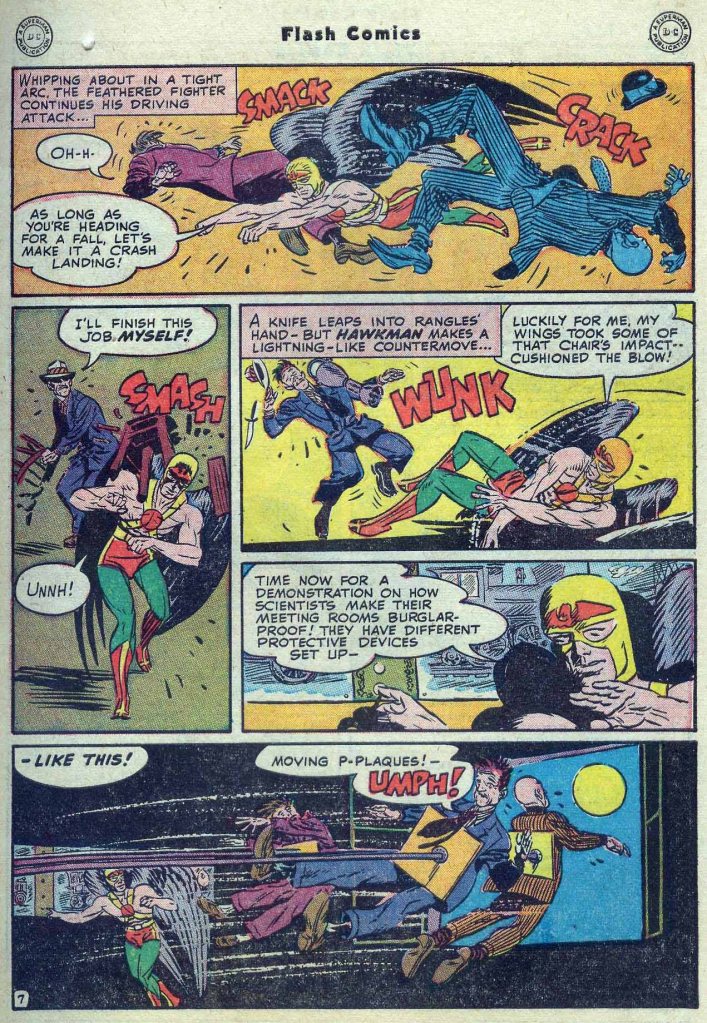
This final Hawkman adventure of the Golden Age was written by John Broome, illustrated by Joe Kubert and edited by Julie Schwartz–the man who would bring the character back close to fifteen years later. At the time, though, this appeared to be the final bow for Hawkman, and readers of the era, upon realizing that there wasn’t going to be a FLASH COMICS #105 and that ALL-STAR was breathing its last, were sure that this would be the last they’d ever see of their high-soaring hero.
In attempting to make Hawkman more appealing to the dwindling super hero audience of the day, editor Schwartz had had the character dispense with his birdlike helmet, replacing it with a more traditional super hero cowl adorned with an abstraction of his avian namesake. This wasn’t really an improvement–the fact that Hawkman was a little bit bizarre was a part of his appeal, so making him conform to the norm did him no benefit.
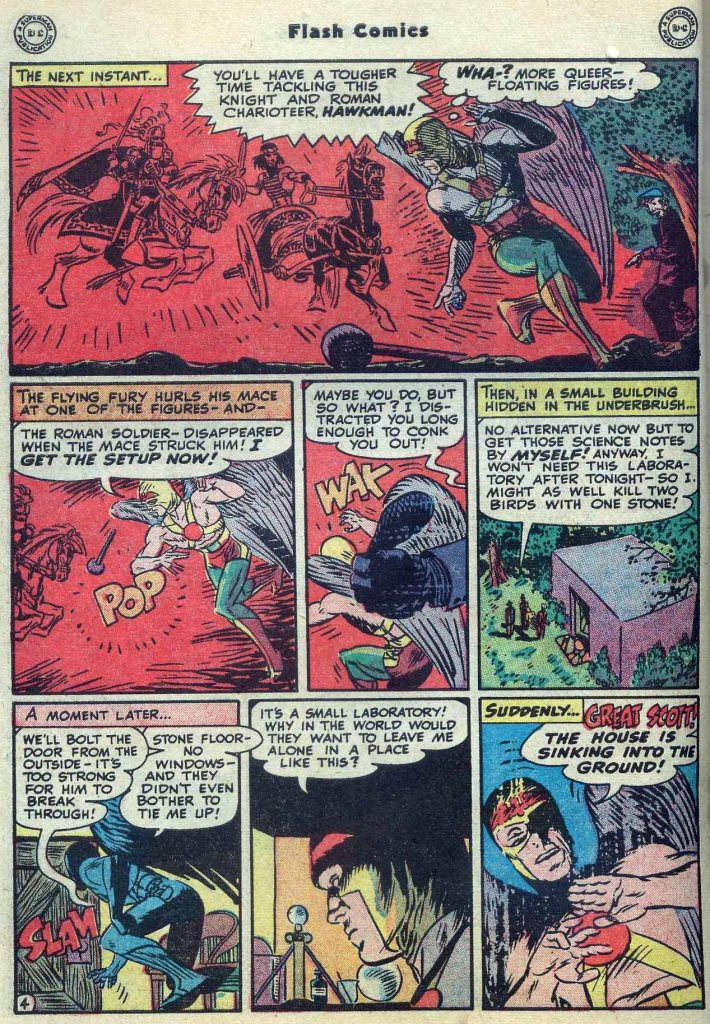
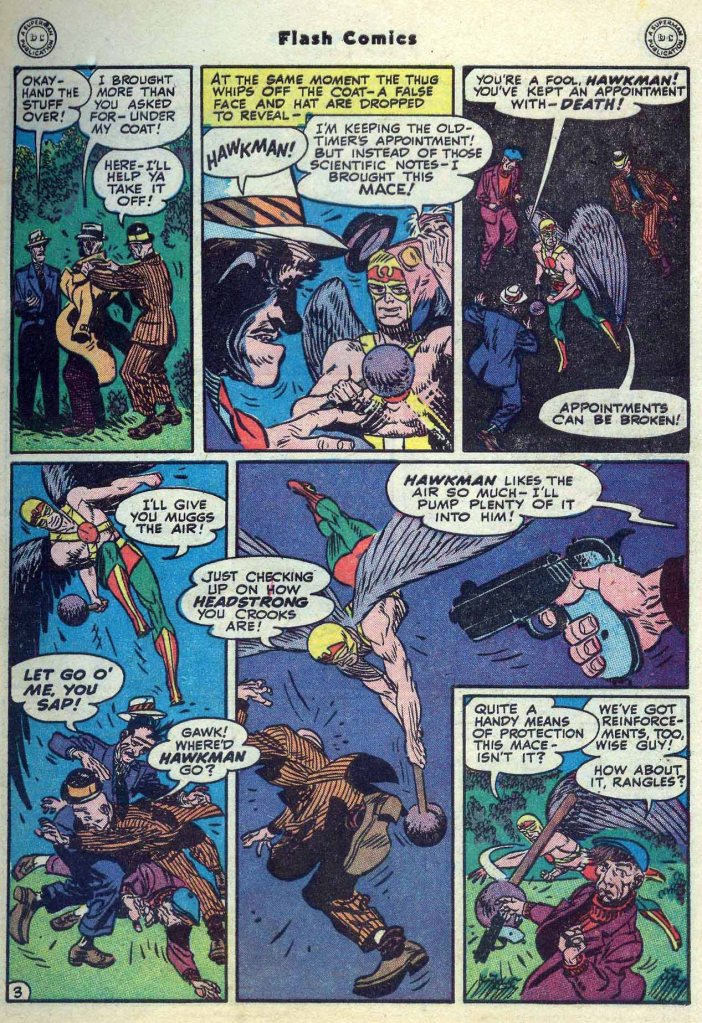
But I suspect the key appeal of the Hawkman strip during this time was the artwork of Joe Kubert. Kubert, too, would be around for the Hawkman revival to come in many years’ time, even though his approach would at that moment prevent the winged wonder from getting his own title. But in 1948, Kubert’s polished and emotive drawings were a cut above the norm, and really quite excellent.



 The Tom Brevoort Experience
The simpler are conveyed emotions so much better.
LikeLike
opps simpler art.
LikeLike
It’s funny how Hawkman was the one who got the strikingly different and superior artwork all the way through the golden age, with most of his adventures drawn by Sheldon Moldoff and then Joe Kubert. And half the time those would run alongside a Flash story drawn by Martin Naydel, who really struggled with serious superhero artwork…
LikeLike
I remember how impressed at Joe Kubert’s art I was when I collecting the first appearance of the golden age Hawkman foes The Monocle ( who’s monocle on his eye only projected energy on the splash panel & decades later in Justice League of America. His hand held monocle projected energy ) and The Ghost ( renamed in the silver age(?) The Gentleman Ghost ) on my USB. On the matter of this Hawkman story, maybe it is because I have never seen it the real world but would people really be fooled by a projected image that isn’t sci-fi holograms that move? Cause that was my thought in Captain America’s Black Witch story [ Captain America Comics#8 ( November 1941 ) ], plus a handful of other Timely Comics stories ( a second Captain America story ( Ghost Train – Phantom Engineer – CAC#29 ), Sub-Mariner story ( Phantom Fleet ), Challenger story ( Haunted House ) & Whizzer story ( Black Streak ( fake speedster ) – USA Comics#17 ).
LikeLiked by 1 person
Was Joe Kubert in his mid-20’s by then?. He was first published as a teen, I think. Gardner Fox had brought Hawkman to comics, influenced by the Hawkmen in “Flash Gordon”. And then there was Hawkmsn in “Flash Comics”. Written by soon to be Silver Age Sci-Fi legend John Broome. I know that everyone who worked during the Golden Age was not an all-time great, but many were, and there are three right there. Joe, Fox, & Broome.
Another all-time great, Alex Toth, also drew for National/All-American back then. But his raw early stuff was vastly improved on 15, 20 years on. I love Toth’s art. So it is no insult when I say I think he had more refining of his style to do, than Joe needed on his own. I look at these 1949 drawings, & it IS much better than Joe’s earliest work from a few years before. And it’s far from Joe’s peak, which lasted decades.
But in this issue of “Flash”, In see work almost on par with some of my recent faves of the last 20 years. Javier Pulido and even Marcos Martin. The solid, symmetrical figures; fluid lines; expressive and distinct faces. Dramatic lighting. Greats like Tony Salmons and Darwyn Cooke often had similar feels to their work as this.
I was lucky enough to meet Joe Kubert. The second time was maybe 12 years ago at a NYC comics show. It was brief. Polite, He was professionally friendly and gracious .Too much time and countless faces had gone between that day and our previous meeting for any recognition. But I’m glad I got to see him again and just say hello, and thank him for his great work, and how much I admired him.
The first time was in 1989. I sat for an interview with him for attending his school. Great guy. Generous with his time. Patient with someone who was more of a fan than a potential student. He answered more questions as he asked.
He was particularly interested in a letter he received from one of my coaches on my behalf. Not anything to do with athletics. But he referred to some personal remarks that my coach for three years is(who am was also my geometry teacher one of those years) had apparently made. He didn’t repeat them to me. But I think it was because of Joe’s reading that letter that a few weeks later, I got a call from Mike Chen for acceptance into the school.
I never went. But I have the letter somewhere. Anyway, I remained a Joe Kubert fan. And I’ve enjoyed reading about his career ever since. His meeting Alex Raymond while Joe was in high school. I think that was something Tom posted in an article Joe wrote for DC. His Sgt. Rick work with Azzarello, and then another that Joe wrote and drew. His old Tarzans.
Another great, Klaus Janson, said he ranked Joe in his personal top three American cartoonists. Easily deserved. He was an absolute comics master.
LikeLike
Kubert wasn’t the only artist to wow us in the Silver then Bronze Ages but he might be the one that was as good as he was during the Golden age.
LikeLiked by 1 person
I don’t get, as per Tom’s comment, why Kubert’s art would prevent Sixties Hawkman from getting his own comic.
LikeLiked by 2 people
Carter’s Christmas jumper at the end is terrific.
LikeLike