

The legend surrounding the origins of Superman has been codified into a sort of simplistic myth-version over the years, the story of two young friends who had a world-beater of an idea, pursued it over the course of half a decade, facing rejection and ridicule along the way, only for it to turn out to become teh hottest property of the era. In particular, the description of the partnership between writer Jerry Siegel and artist Joe Shuster is seldom depicted as anything other than an eternal ride-or-die friendship between the two men. But the truth is a lot more complicated than that.
After their failure to sell Superman to Humor Publishing Co. in 1933, Shuster had destroyed the originals for that prototypic version of the Man of Steel in a fit of anger and depression. Siegel, though, hadn’t given up on their brainchild–but he did some to think that maybe the problem with their pitch was his choice of artist. Siegel really saw Superman as his individual creation, and thought of his artist as a pair of hands with which to realize it in comic strip form. He approached a number of other artists with the proposition to team up and develop the concept with him, including Leo O’Mealia and Russell Keaton. While no examples of O’Mealia’s Superman samples have ever turned up, assuming that he got that far, there is a batch of material extant for the Siegel/Keaton version. And that’s what we’re going to look at today.
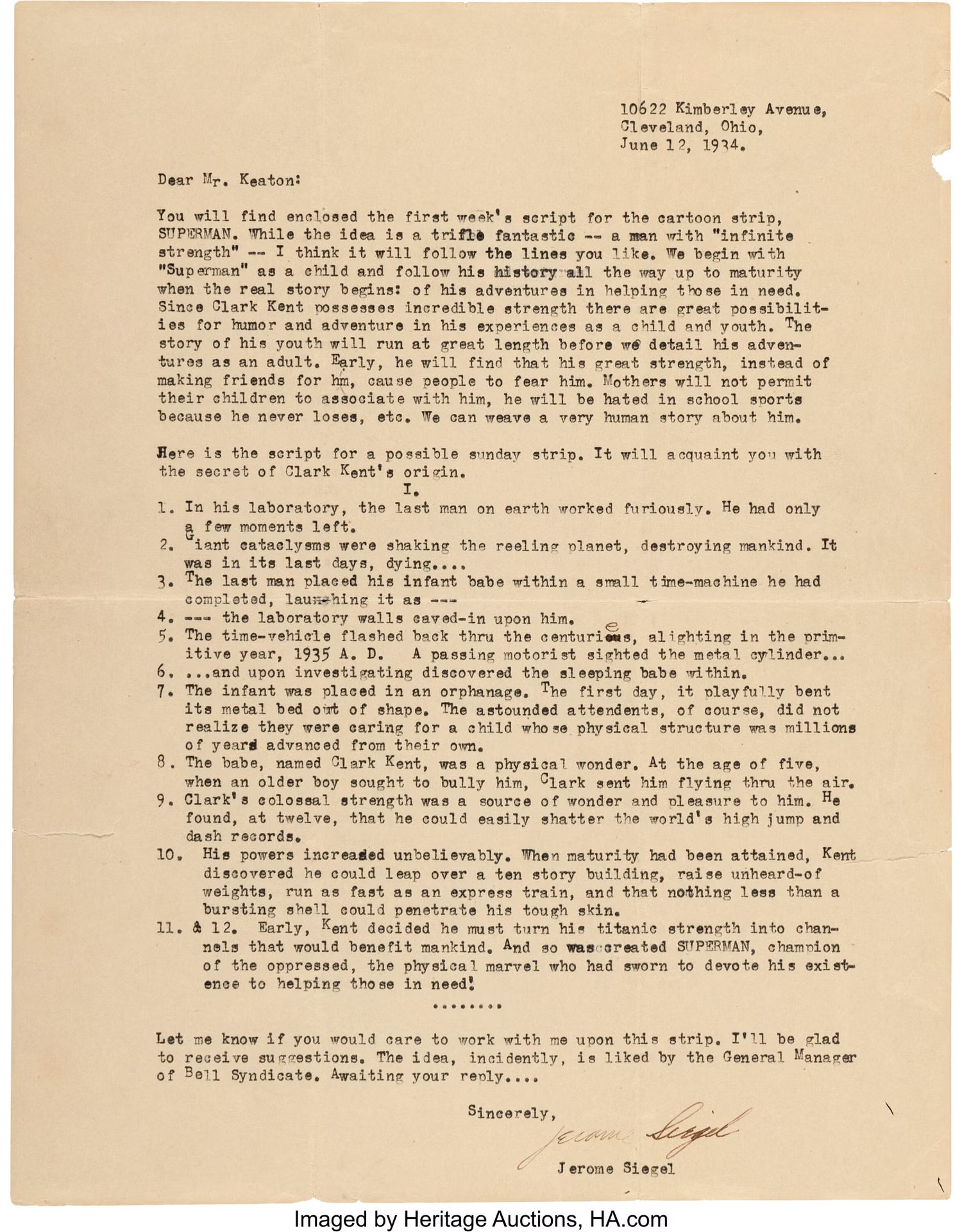
Russell Keaton was at this time the artist on the BUCK ROGERS newspaper strip, a favorite of Siegel’s for its science fiction themes. Siegel thought that Keaton would have an affinity for Superman, and the artist agreed to develop the property with him. Later, after this bid was unsuccessful, Keaton would originate his own solo newspaper strip, FLYING JENNY. He passed away in 1945.
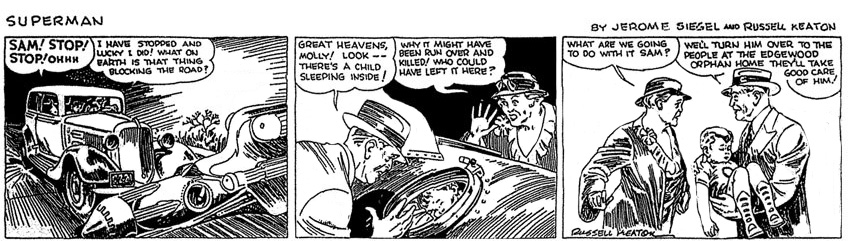
This prototypic version of Superman didn’t originate on another planet. Rather, he came from teh far-distant future, at a time when all of humanity had evolved into supermen such as himself. With the Earth facing destruction, the infant Superman’s father sent the child backwards in time via a time machine, to an era in which his physical prowess would make him godlike among the people of that era.
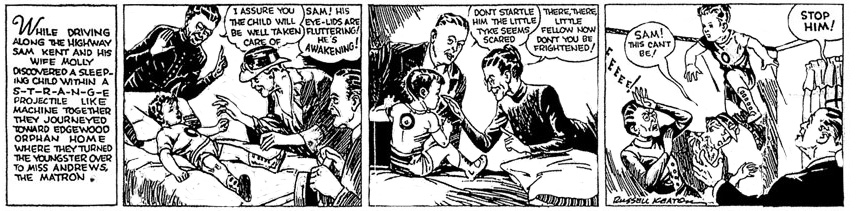
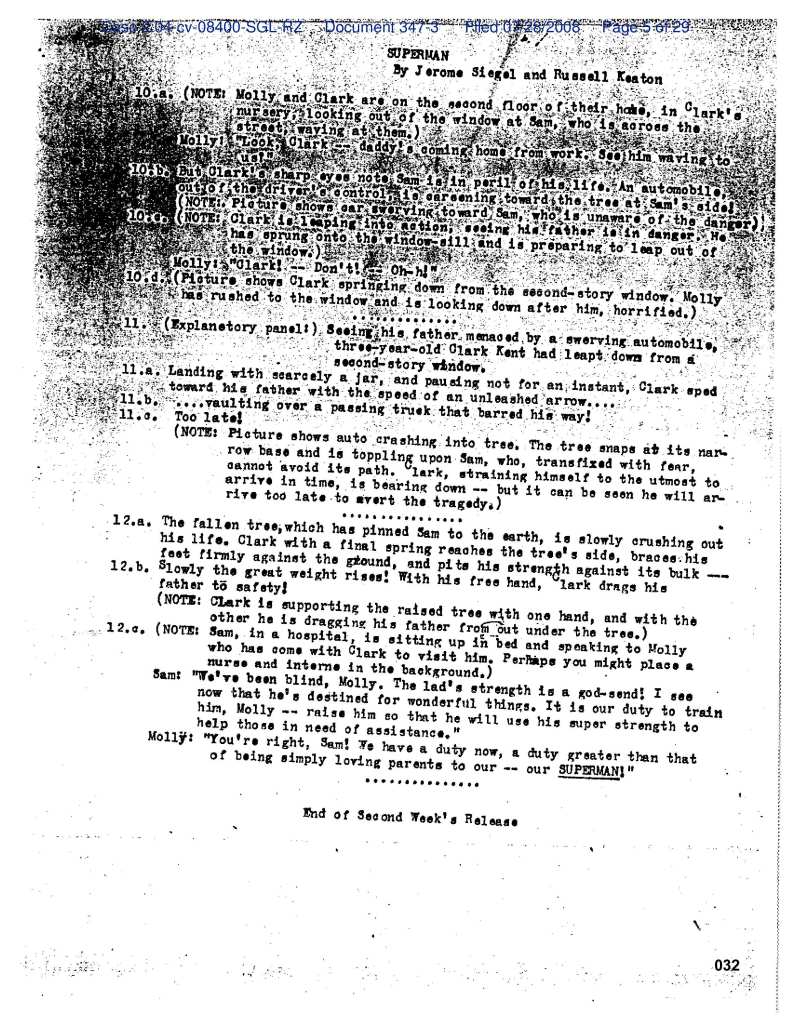
The sample strips that still exist for this run of SUPERMAN skip the set-up , opening instead with the time machine appearing in 1935 for the first time and being found by Sam Kent and his wife, Molly, who adopt the child.
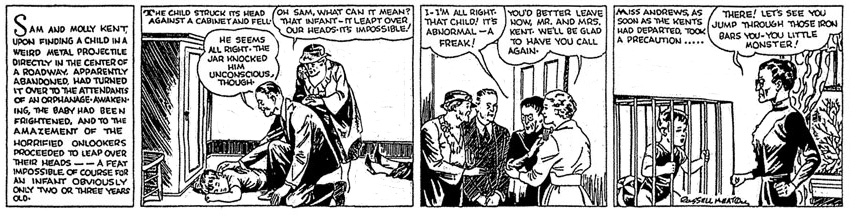
This version of SUPERMAN failed to sell as well, and Siegel took to heart the admonition from those rejecting it that he should start at a more exciting moment, that all of this backstory was tedious stuff. Taking these criticisms to heart, this is why the version of Superman that first appeared in ACTION COMICS #1 starts in the midst of an already-ongoing adventure.
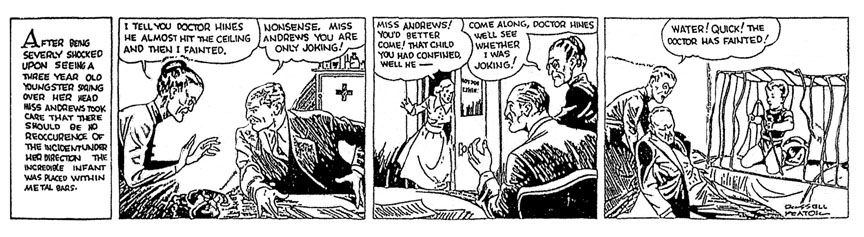
When Russell Keaton dropped out of the project after failing to garner any interest in SUPERMAN, with no other option left to him, Siegel went back to Joe Shuster and the pair began to develop yet another version of Superman to try to bring to market. This is the version that would eventually find purchase a few years later.
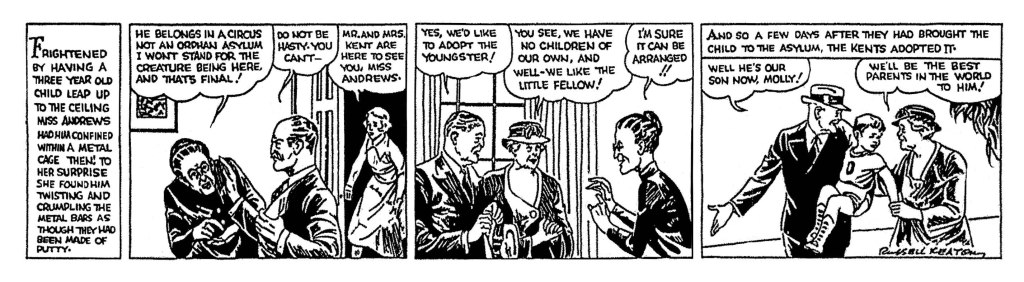
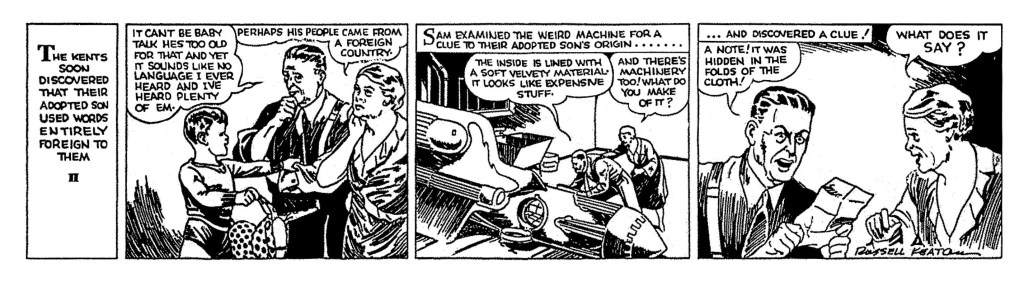

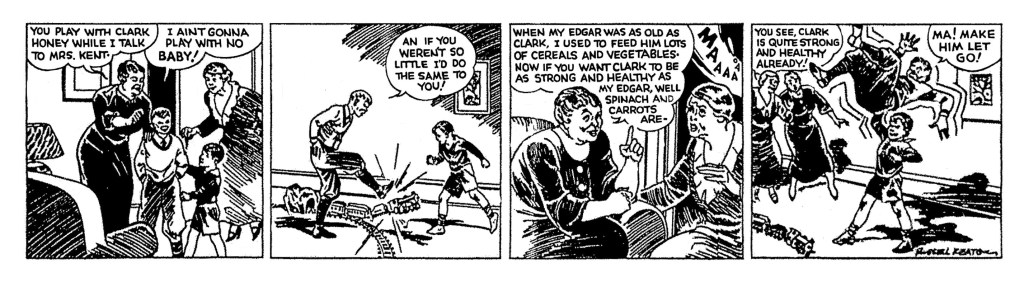
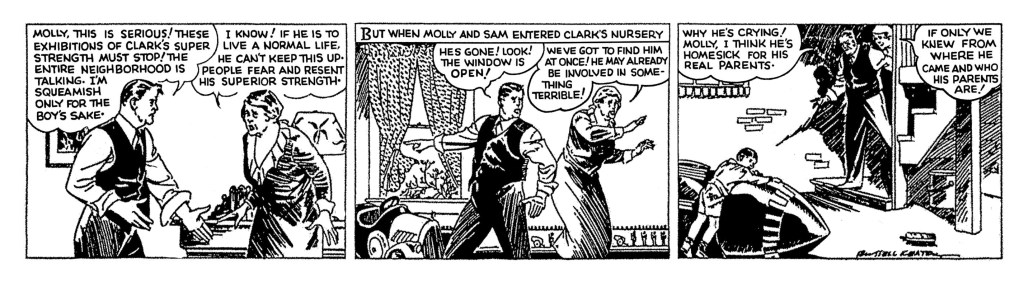
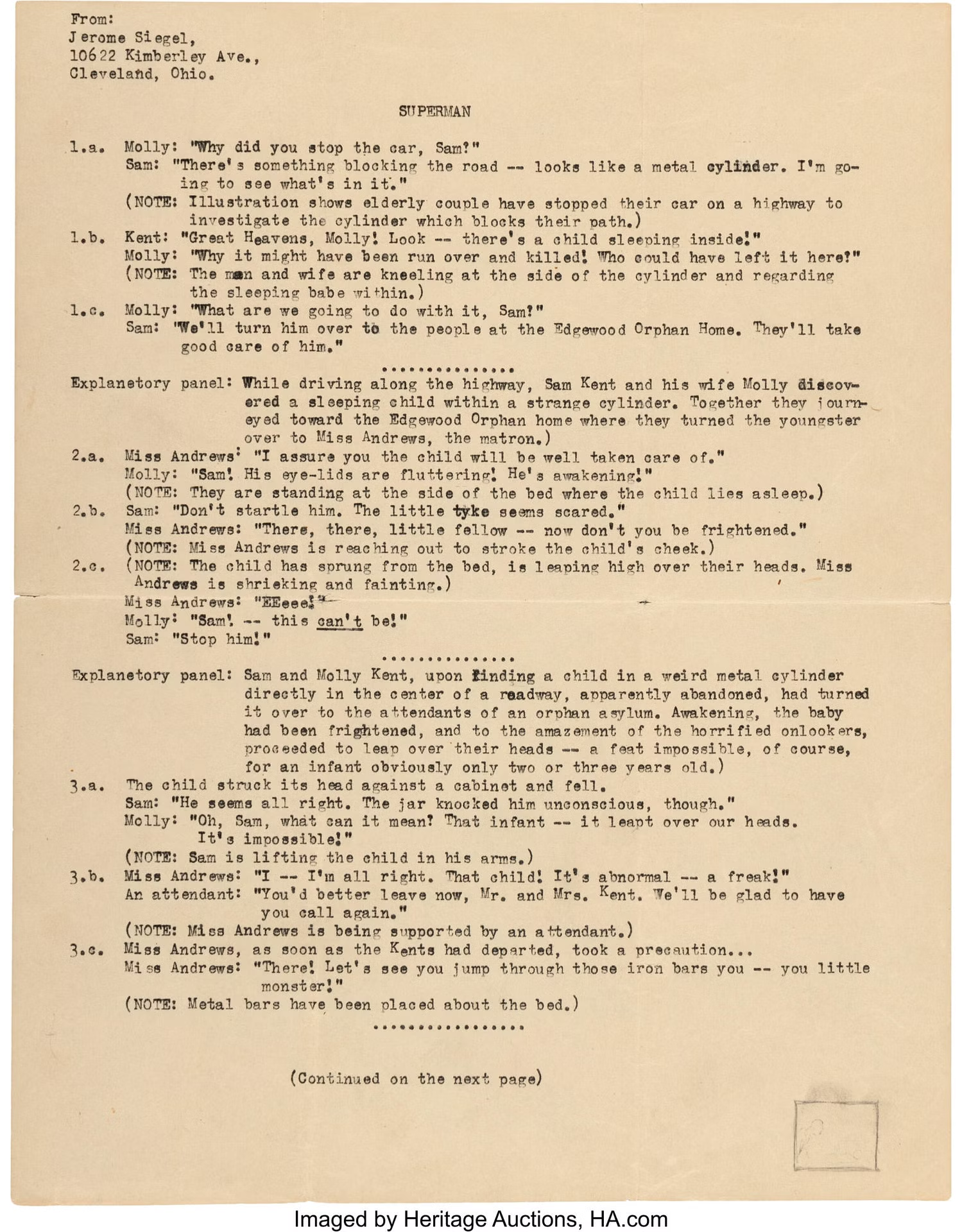
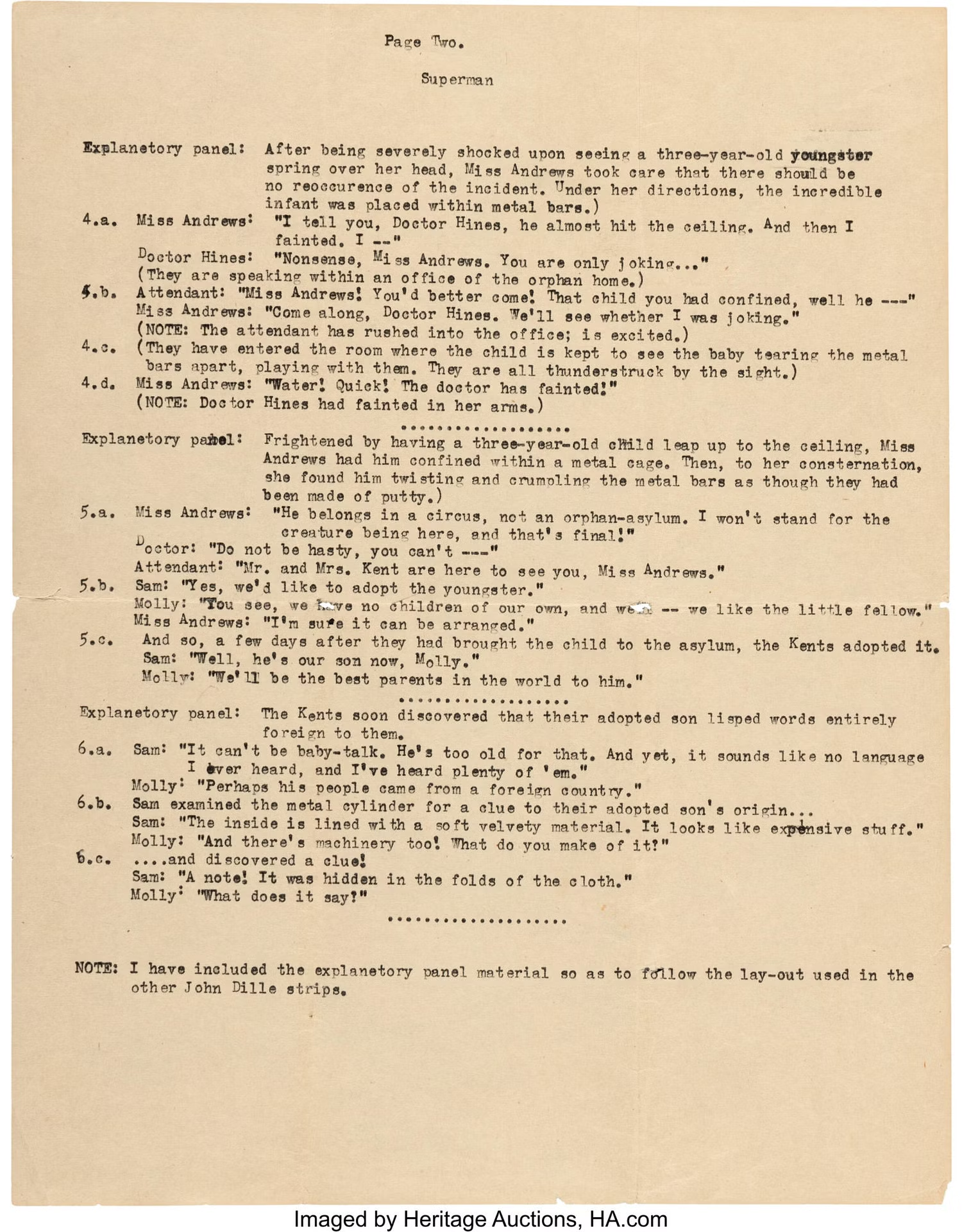
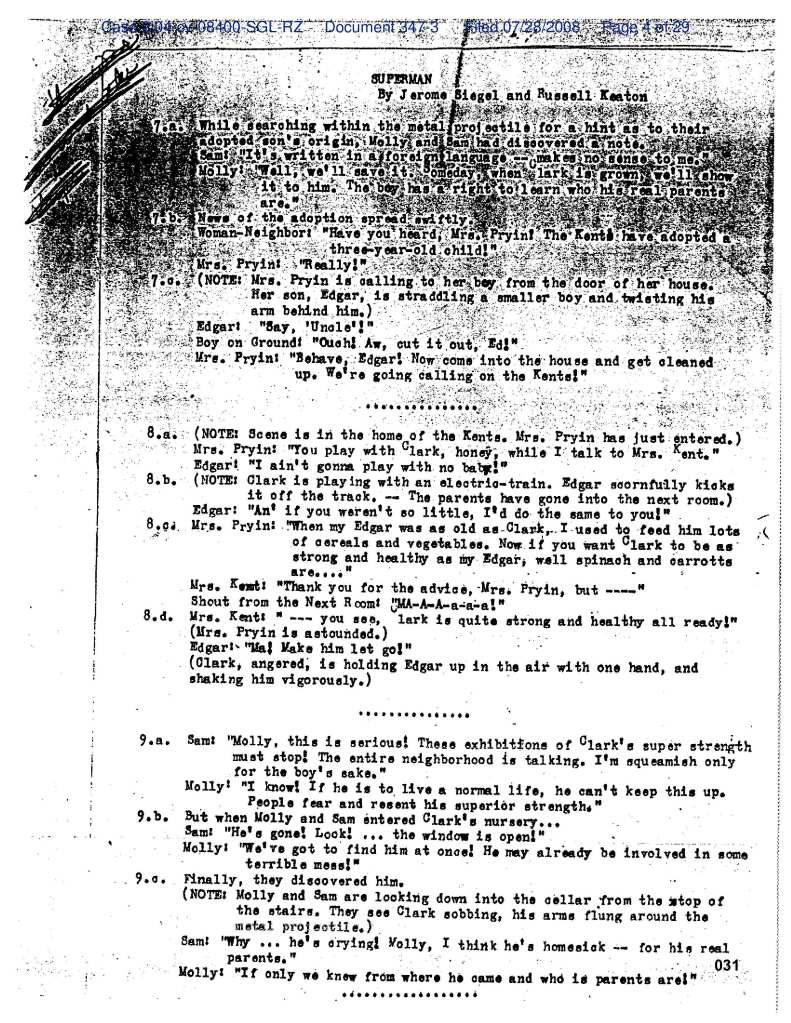
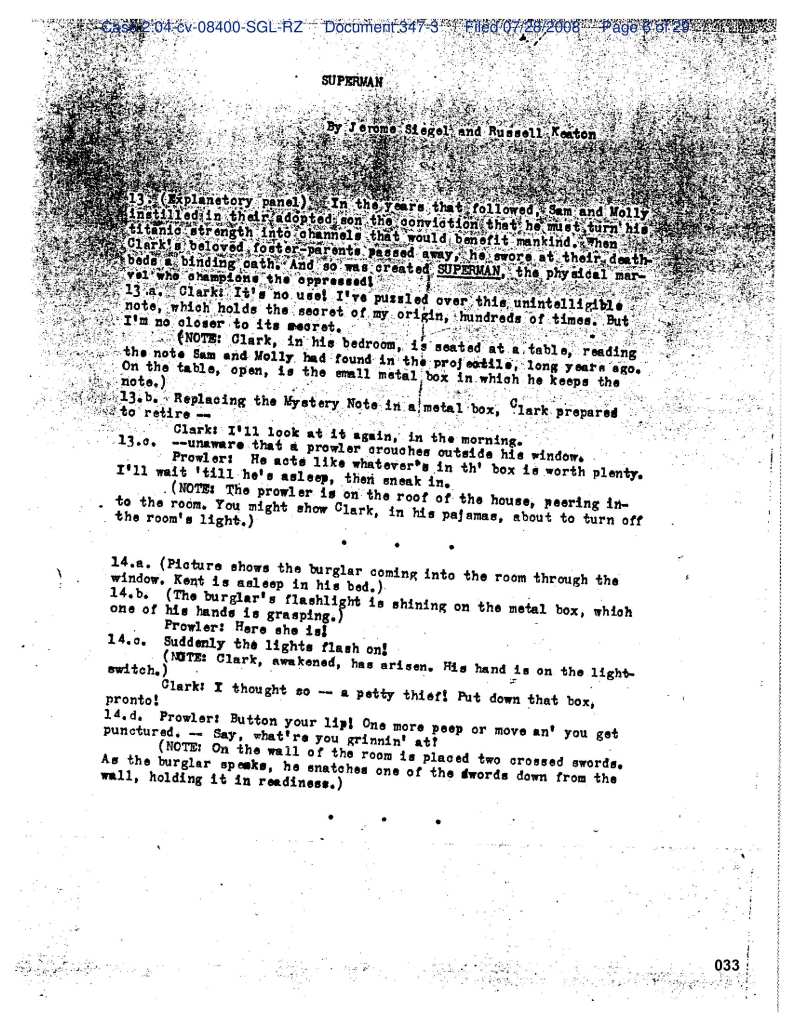
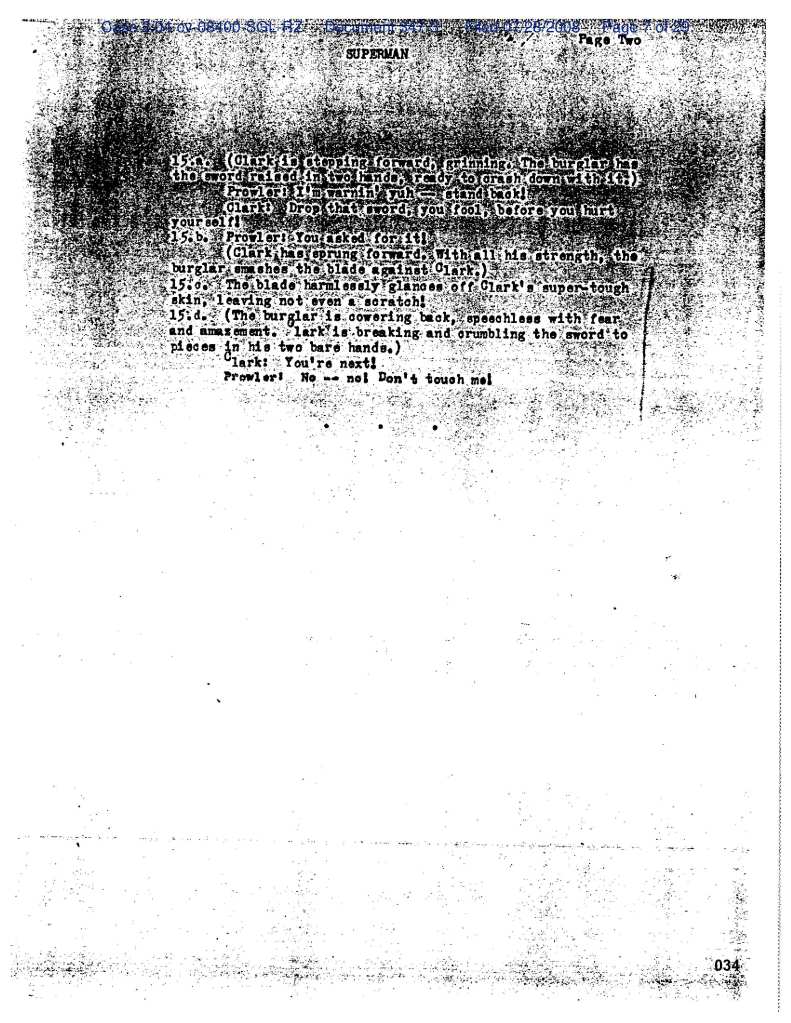
A bunch of Siegel’s script for these early SUPERMAN samples still exists as well, though these aged copies can in places be difficult to decipher.
 The Tom Brevoort Experience
My first reaction was that it would have been harder for future writers to use Kandor, Supergirl, and other future additions but then I remembered the Golden Age’s lack of continuity and logic. The Pha
LikeLiked by 1 person
ntom Zone is the only thing affected solely as it would have been harder to handwave the fact it would have been created by Jor-El in the far future.
LikeLiked by 1 person
I doubt that a Superman-from-the-future would have developed in a way that would have led to those ideas in the first place, but it’s not hard to reconcile them if you wanted. It’s fantasy — science fantasy, maybe, but still fantasy.
Kandor gets bottled up by the time-traveling Brainiac. Supergirl is also sent back to the past by her parents as Earth keeps dying. The Phantom Zone is a limbo-like place where time has no meaning, so once in it you exist outside time and thus can “see” whatever era you want, and enter or leave the Zone from any point in time.
Superhero-comics science is very, very elastic.
LikeLiked by 1 person
So one of Jerry Siegel’s Superman’s origin had him being sent back to 1930s from the far distant future as a child to grow to be a hero, which a Timely Comics writer would do a much more sinister version of that ( A General Zod from the Man of Steel movie version ) where Future Man [ All-Winners Comics#21 ( Winter 1946 – 47 ) ] travelled back in time to wipeout humanity for his “dying” future people ( who had powers too — psionic in nature and not physical ). Unless someone knows of an infant or a child from the future who grew up to be a hero in the present, I only can think of adults: Thundra, Bishop, Booster Gold. Cable is the reverse of this Superman, Cable came from the present and grew up in the future and went back to the present.
LikeLiked by 1 person
Heroes from the future living in the Present, I forgot Rachel Summers.
LikeLiked by 1 person
Thanks, this is fascinating. I wonder there’s anything here which sheds any light on the issue of how much, if at all, Philip Wylie’s novel Gladiator influenced the development of Superman. I’ve read Gladiator, which though now dated, I think is still a good book (and deserves to be better known). But I don’t see it at all in original Superman. What this early material argues to me, is that Siegel seems to have definitely thought of Superman as coming from “elsewhere”, rather than being born within contemporary America (and either a quasi-mutant or enhanced later).
LikeLike
I still see the possible influence Gladiator may have had on Superman. Toward the end of the novel, Hugo Danner takes part in an expedition to the Yucatan, led by professor Hardin. Hardin discovers Hugo’s abilities and Hugo tells him his story. Hardin gives Hugo the idea to create a race of people with his abilities, who would eventually take over the world. So, if something like that did happen, whether in the future of this world or on another world, the result is the same.
LikeLike
John Holstein: Appreciated, and neither of those sounds Gladiator-like either.
Marcus: Basically, is the _Gladiator_/Superman relationship more like Superman/Captain Marvel – where CM was very directly “inspired” by Supes? Or more like X-Men/Doom Patrol – where despite some surprisingly similar elements (e.g. both teams led by a man in a wheelchair), it’s probable that both were drawing on cultural trends and predecessors, and neither was “inspired” by the other. This sort of early material just seems to me that Siegel wasn’t thinking along the lines of “That _Gladiator_ guy, but as an adventure newspaper strip character”. Obviously I can’t prove it, and nobody knows for sure. But any similar aspects strike me as pretty common elements for the pulp SF genre even back then.
LikeLiked by 1 person
Actual Seth, according to Superman’s Wikipedia coming from the future or another world was not Superman’s first origin: Like Bill Dunn ( The first Superman from The Reign of the Superman ) the second prototype of Superman is given powers against his will by an unscrupulous scientist, but instead of psychic abilities ( mind-ring, mind-control and clairvoyance ), he acquires Superhuman Strength and Bullet-Proof Skin. Additionally, this new Superman was a crime-fighting hero instead of a villain.
LikeLike
This is the 3rd version of Superman’s origin, in the 2nd origin Superman is a “scientist-adventurer” from the far future when humanity has naturally evolved “superpowers”. Just before the Earth explodes. he escapes in a time-machine to the modern era, whereupon he immediately begins using his superpowers to fight crime ( Artist Leo O’Mealia produced a few strips — Wikipedia ).
LikeLike
When I read Superman’s original origin on Wikipedia about him gaining Super-Strength and Bullet-Proof Skin, my mind went to Luke Cage ( sure he volunteered to be experimented on but he didn’t volunteer for that racist-brutal prison guard Billy Bob Rackham trying to kill him by sabotaging the experiment – Hero for Hire#1 ( June 1972 ) ). Plus Superman’s second origin as a Scientist-Adventurer ( if you ignore him coming from the future ) sounds a little like DOC SAVAGE [ Doc Savage Magazine ( March 1933 ) by Street & Smith ].
LikeLike
It seems to me a pretty big coincidence that in the first Superman story, Siegel used ants and grasshoppers to explain his abilities, the very source of Hugo’s abilities.
A while back, over in CBR, Brian Cronin stated that in an unpublished autobiography Siegel did state that Gladiator was an influence. Cronin’s source was Tom Brevoort. So it seem that Gladiator was one of many influences in the creation of Superman.
Anyone wishing to read the novel can check it out on the Gutenberg.org website.
LikeLiked by 1 person
When I was going down a rabbit-hole a while back about Gladiator/Superman, I found some early-20th-century mentions of the “ants and grasshoppers” stuff, which indicated to me that it might have been a common pop-science idea back then. That is, the explanations could have come from the same background cultural source, not one copying the other (I wonder if in the early 1960’s there was some then very well-known genius in a wheelchair figure like Stephen Hawking, who inspired both Professor X and the Doom Patrol’s Chief).
There’s been a lot written about Siegel’s potential influences. But sometimes it’s unclear what’s legend and what’s verified. This is also complicated by a problem that for a time Siegel might not have wanted to say anything which would affect his copyright claims.
LikeLike
So that’s where the the plot point of coming from the future in SUPERMAN:RED SON comes from! It’s a shame the Russell Keaton art doesn’t show Superman in costume. I would’ve liked to have seen his version.
LikeLiked by 1 person
How odd that the Siegel/Keaton “time machine” still looks like a spaceship.
LikeLike
A fantastic piece, Tom. I had no idea that Siegel tried out other artists on Superman. I wonder how differently things might have gone if it had worked out as a newspaper strip back in the mid-30s.
LikeLike