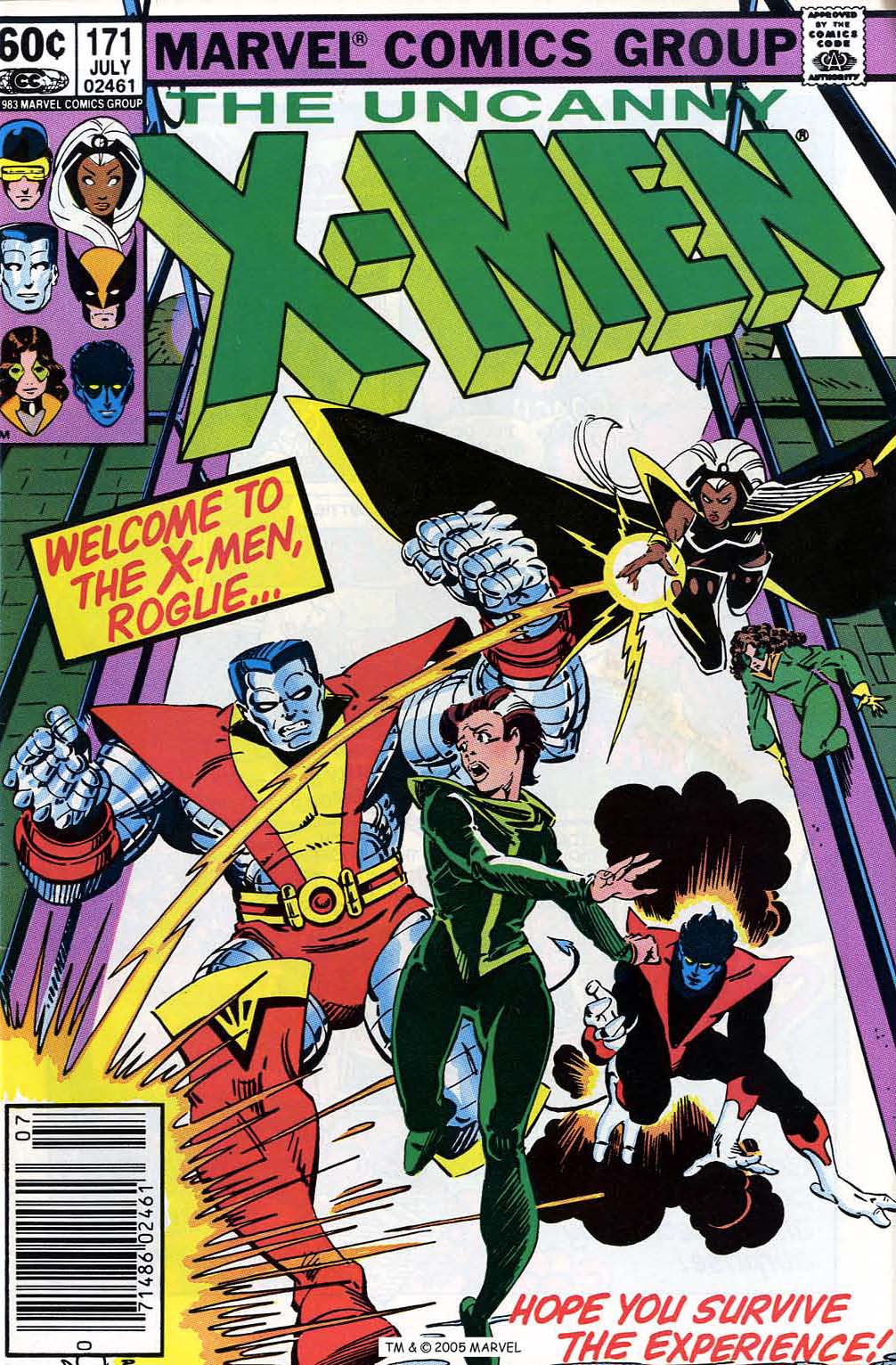


By 1982 when I was forced to pare back my comic book buying due to a lack of income, there was no more popular series in the land than UNCANNY X-MEN. Following the enormous reaction to the “Dark Phoenix Saga” by Chris Claremont and John Byrne a year or two earlier, the title simply exploded, especially in the fan-oriented Direct Sales market. But this growth also coincided with my growing progressively less enchanted with the series, which had been a favorite up to that point. Byrne’s departure changed the ethos of the book in some way, and I found that I was becoming less and less interested in the mutants and their struggles. So accordingly, i ceased buying it with this issue, #171.
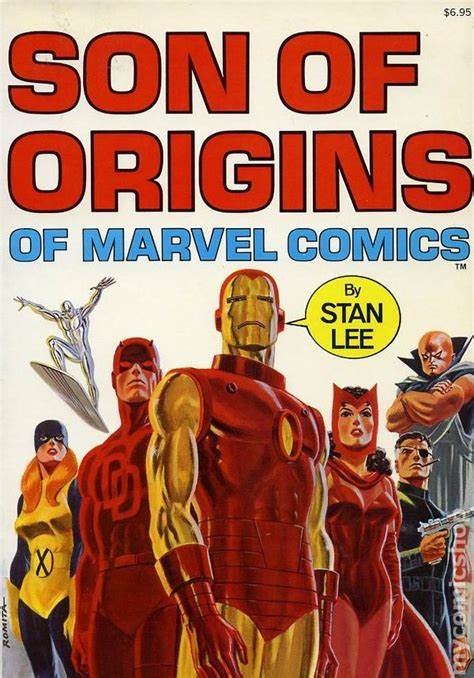
As I’ve related at the link above, my first encounter with the X-Men was in the pages of a copy of SON OF ORIGINS OF MARVEL COMICS that I borrowed from the Sachem Public Library. It was also my first real exposure to Iron Man, the Avengers, Daredevil and the Silver Surfer as well. I tended to gravitate to the Jack Kirby-illustrated material the best, and so I decided to check out the current issues of a number of these series.
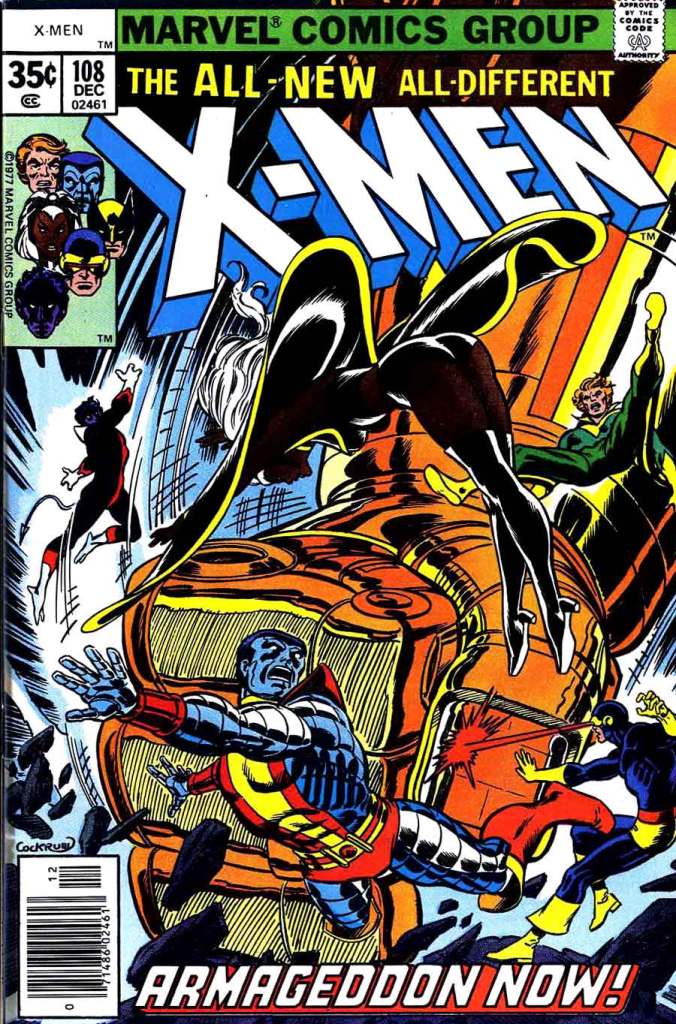
The place I came in was X-MEN #108, which was the concluding chapter to the first Phoenix storyline. And I was hopelessly lost. There were a mountain of characters in the issue, and it was impossible to even tell which were X-Men, which were Starjammers and which were Imperial Guardsmen. This is a good example of what Jim Shooter would talk about when he’d advocate that every issue needs to be welcoming to a new reader–this one certainly wasn’t. And yet, it was well-drawn and engaging, and the mystery intrigued me. So I kept on buying right along, eventually figuring out a lot of the stuff that had perplexed me. X-MEN was a really good book during this time, a testament t the creative tripod that was writer Chris Claremont, artist and co-plotter John Byrne and editor Roger Stern. These three creators all balanced one another’s strengths and weaknesses well, creating a series that was fun and exciting and unexpected and which carried a bit more depth than the typical Marvel title of the era.

By the time of UNCANNY X-MEN #171, two of the three were gone, with Claremont as the sole survivor. Byrne’s departure was a great loss, his visual treatment (and his co-potting skills) were essential to the appeal of X-MEN. But this was offset, it seemed, by the return of the title’s co-creator Dave Cockrum. I had loved the early Cockrum issues as I dug them out as back issues–in some ways, I liked them better than the Byrne ones. So I was ready for this change. Unfortunately, something just wasn’t right. Cockrum’s work seemed to have lost a lot of the power and sleekness it once had, constrained into pages with lots of tiny panels with lots of full figures in them, as was the preference of EIC Shooter. It likely also didn’t help that inker/finisher Joe Rubinstein wasn’t as slick an inker as the departed Terry Austin.
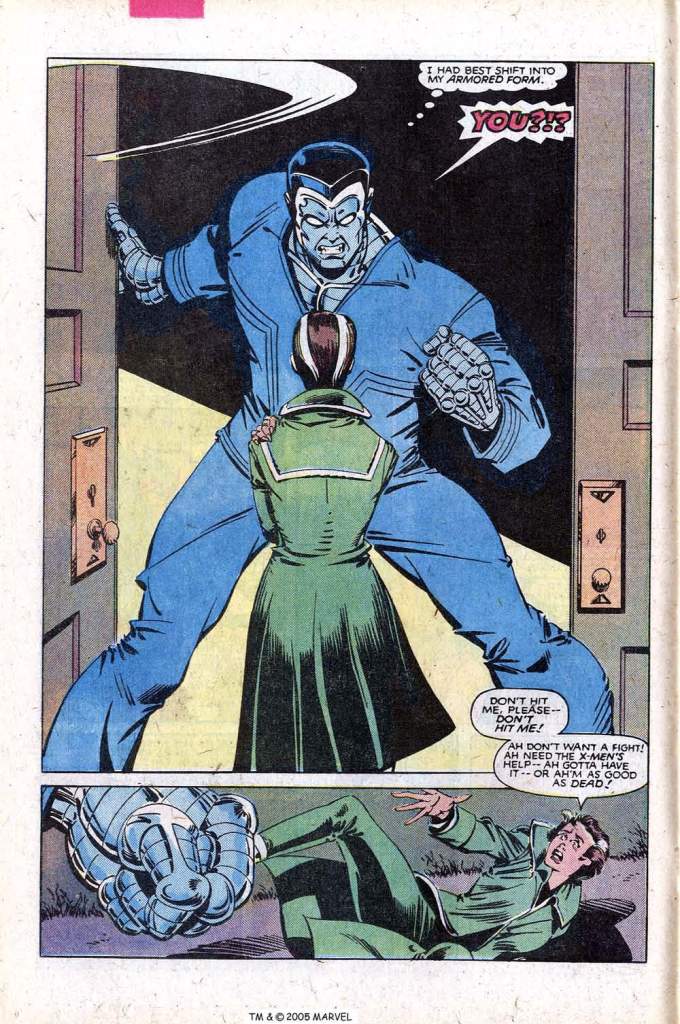
So I worked at liking Cockrum’s second era, but my heart just wasn’t in it the same way, even as fans all around me were discovering the book for the first time. The situation did improve a couple of years after that, when Paul Smith took over from Cockrum. Smith’s work was very open and lively and animated-looking, and it made for an appealing read. This is the point at which UNCANNY X-MEN became a top-selling title throughout the industry, not just within the Direct Market. I liked Smith’s work a lot. But there was still something off, and it was becoming more off as time went on. My impression today is that, rather than functioning as a counter-balance to Claremont’s most extravagant ideas in the way Cockrum and Byrne did, Smith was rather an instigator, pushing him to go further and crazier with developments.
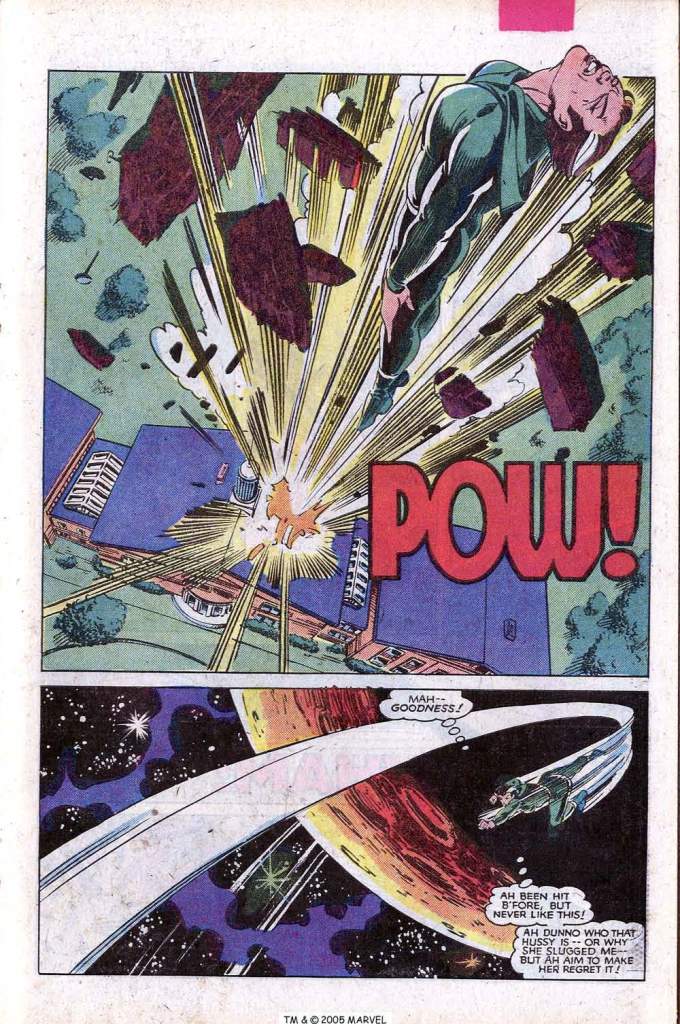
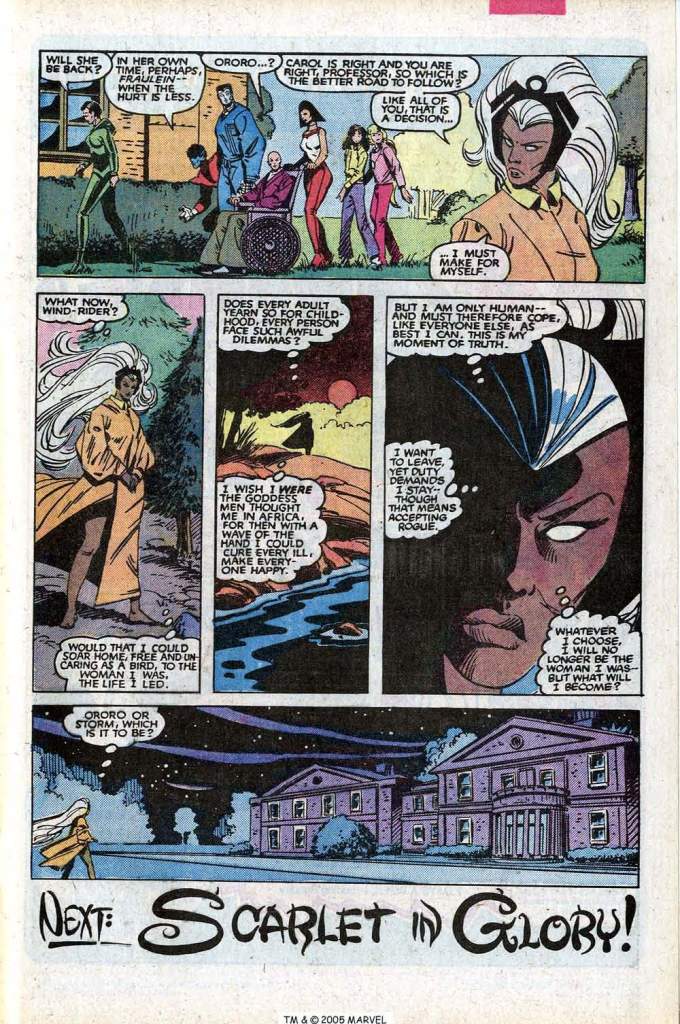
This is a period that is particularly beloved by a whole generation of X-MEN readers. But to me, it moved the series away from the aspects of it that I most liked and towards territory that I wasn’t as comfortable with. I was a typically conservative comic book reader who was averse to change, if you come right down to it. Also, the centerpoint of the series had shifted since Byrne’s departure. When I began reading the title, the pivot-point of the entire affair was the relationship between Cyclops and Phoenix. When Jean died and Cyclops left the book, Chris needed to find a new pivot-point. For a while, he tried to make it newcomer Kitty Pryde. But I found this just made her annoying to me–I had liked her in her earliest appearances, but when she became a genius girl and was the center of every storyline, it was too much too fast for me. Eventually, later on, Claremont would come to move Wolverine and the radically recreated version of Storm into the center square. But that didn’t feel right to me either.

So it all seemed strange, and it felt like it was maybe time to go. But ironically, I wound up still reading UNCANNY X-MEN for another year beyond this. You see, buoyed by a friend of his from school, right at this moment my younger brother Ken started reading the title regularly, which he’d wind up doing for almost a full year, up through #181. And so consequently, even though I wasn’t buying the issues myself, I was still reading them (and they wound up with me in the end.) But nothing in them galvanized me to make the transition back into a buyer, and when his interest ran its course, I didn’t continue purchasing the series.
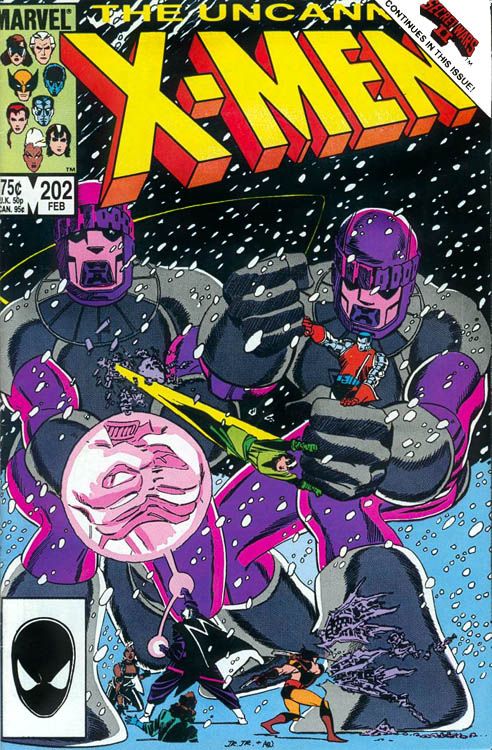
So what did bring me back? Peer pressure, ultimately. As I got older, I fell in with a bunch of fellow fans in the nascent anime community, several of whom were also into comics. And so we’d spend marathon sessions on the phone talking about the latest issues, the latest developments. And they were all reading X-MEN (and NEW MUTANTS as well) and so quite often I began to feel out of step with the conversation. And this drove me to take the leap at a certain point and start picking the series up again. My first issue back was #202, during SECRET WARS II, a dog of a company-wide crossover. I can’t say that I loved it, but it kept me plugged into the conversation, and that’s what I needed from it at that point.


Not much to recommend the JRJR era X-Men. As good as his art was elsewhere his X stuff just laid there.
LikeLike
I recently read 199-200 and then X-Men Annual 14 from around five years later. It was startling how much Claremont had slid down the rabbit hole of his mind-control/bondage tropes.
LikeLike
Haven’t read many of the X-Men issues since they came out, can hardly keep up with the new comics I buy. Little confused on Storm’s statements, unless she was being snarky when she said “the child repents and has been forgiven, behold our newest X-Man.” But in her next statement she says if she stays I’m leaving. Seemed a little contradictory but it all worked out in the end, I guess.
LikeLike
Yes, she’s absolutely being sarcastic.
LikeLiked by 1 person
Thanks, I love a snarky sarcastic Storm!
LikeLike
I loved Paul Smith’s work especially on Doctor Strange but it kind of lost something after his work on Nexus. Of course I enjoyed John Byrne’s work on the series and looking back Dave Cockrum’s early work on the series too. But I didn’t like Kitty Pryde for a much different reason — COLOSSUS. Chris Claremont making her and Colossus a thing, GROSS considering she was suppose to be 13 years old and Colossus use to go on double dates with Nightcrawler and his Flight Attendant girlfriend Amanda Sefton and her co-worker ( so unless she was dating a minor, then the whole Colossus/Kitty Pryde thing was gross ). After John Byrne & Paul Smith there weren’t memorable moments to me until Marc Silvestri & Jim Lee came along.
LikeLiked by 1 person
I wonder if the issue with Cockrum’s art had anything to do with diabetis-related impact on his eyesight? He died in 2005 or ’06 of complications from that disease.
He was a world-class artist, but I often thought he (like his mentor, Murphy Anderson) was most talented as an inker and (in Cockrum’s case) as a concept desugner.
LikeLike
I preferred Rogue as a villain and much older than a teen-ager as introduced. She was too much of a swiss army knife on the X-men… which is a syndrome that would only get worse as they kept adding characters over the years who could do anything regardless of the situation. Making the villains into friends was my least favorite Claremont tick.
I was bummed when Bryne left the book but I still loved Cockrum’s work. Likewise… I don’t think Rubinstein’s feathery inks were a good fit on Cockrum even though he was a solid inker.
LikeLiked by 1 person
Walk & Bob did a solid job on this issue. Walt’s Colossus was…colossal. I’m sorry that Tom didn’t stick around for one more issue. #172 is my fave of Smith’s short run. Maybe has my fave X-Men art ever. Paul needed more time to get his style at its best. So month to month you could see deterioration, rushes. Waly filled in on #171, and so Paul came roaring back on #172, the extra time resulting in an absolute crystallization of his slick, sleek, minimal, & modern take on the trend setting team. To me. Paul Smith finally brought the X-Men into the 1980’s w/ a visual update unseen by the previous artists who had defined the characters years before. Paul’s take was fresh & stunning. It was almost like fashion design.
That, I found JRJr’s lengthy UXM run more consistently satisfying, once he got warmed up and integrated. I can’t recall the #, but the issue which saw Kitty abducted to marry Caliban, & we see several X-Men in the street clothes, that looked nearly as cool as their X-costumes. Actually, Storm & Rogue were mostly wearing real-life clothing designs. JRJr’s Wolverine from then remains one of my very favorites. And the 2-part Kulan Gath, “Age Undreamed Of”/”Raiders of the Lost Temple”, story was a blast. Many of the Marvel super-heroes “Conan-ified”. And JRJR nailed it.
If I had to rank the regular artists on UXM in the 1980’s, x-cluding stellar guest artists like Simonson, Windsor-Smith, Art Adams, Rick Leonardi, Alan Davis, just going w/ the regularly monthly assigned artists, it’d go like this. Everyone’s list would likely vary. And this isn’t to say Mr. Cockrum wasn’t the brilliant artist that he was.
LikeLike
Interesting assertion that Paul Smith might have “instigated” some of the more off the wall plotlines during his tenure. If his influence included pumping up the presence of The Brood, that was the experiment that lost me: I dropped the book and didn’t buy it again with any regularity until the Grant Morrison run.
LikeLiked by 1 person
My first X-Men was #108, also. Not my first comic book, by any means, but the first that I became obsessed with. I think I was 11 or so. I read it over and over until it fell apart. I think it’s a great counter-argument to Jim Shooter’s edict of dumbing-down the content to appeal to new readers. Comics could also strive with every issue to make a new, obsessive fan, using a Lee/Kirby or Claremont/Byrne maximalist type of approach.
LikeLike
“[Paul Smith’s run is when] UNCANNY X-MEN became a top-selling title throughout the industry, not just within the Direct Market.”
John Byrne likes to say this, but he’s in error. I’m guessing that’s where you’re getting this. For some reason or another, he feels compelled to belittle the sales performance of X-Men during his run. One would never guess from what he says that his time on the series doubled its sales.
X-Men became the top-selling color comic-book series in North America during the 1980-1981 sales year. That year featured the final Byrne issues, most likely the last eight. It’s not clear if X-Men became the top book before or after Byrne left, but that’s when it happened. It was the number three color series the sales year before that.
A lot of people make the mistake that the Statement of Ownership forms reflect a title’s sales when the forms are published. They don’t. The information is from a sales year that ended with the issue published at least eight months earlier. (It took a good six months after publication before the final sales of an issue were known to the publisher.) The average per-issue sales of X-Men #136-147–that’s roughly the range of the 1980-1981 sales year–were 259,007. Amazing Spider-Man, the number-two color title, had average-per-issue sales that year of 242,781. The Statement of Ownership featuring the X-Men information was published in X-Men #156. It can be seen at the link.
https://www.comics.org/issue/36294/image/
LikeLike
And here’s the link to 1980-1981 sales-year information for Amazing Spider-Man.
https://www.comics.org/issue/36266/image/
LikeLike
I really liked Rubinstein´s inks over Cockrum´s art, then again I was a big fan of his inks since the Stern/Byrne/Rubinstein short Captain America run
LikeLiked by 1 person
I feel it’s unfortunate that Terry Austin never inked Dave Cockrum with any regularity. If Austin had remained on X-Men after John Byrne left and Cockrum returned, perhaps the art quality would have been more consistent, especially since, I believe, on his second run Cockrum was really doing breakdowns instead of full pencils.
LikeLiked by 1 person
I’m a huge fan of Chris Claremont, but I’ll be the first to admit that he did some of his best work when he had an editor who encouraged him to stay focused on a limited number of character & plotlines. As much as I love both Louise Jones / Simonson and Ann Nocenti, I feel they might have had a bit too light of an editorial hand, and they both failed to prevent the subplots from spinning out of control, as well as not stopping some of Claremont’s idiosyncrasies & pet fetishes from becoming so predominant.
LikeLiked by 1 person
I Think Eve Hewson as Jean Grey & Patrick Schwarzenegger as Cyclops/Scott Summers In MCU
LikeLike