

I first saw Rod Serling’s seminal television series THE TWILIGHT ZONE when I was a very young child of perhaps five or six years old. For a time, it ran at 7:30 in the evening on a local station, and I wound up watching it every night even though several episodes of it profoundly disturbed me. They made such an impression on me, in fact, that even years after the show was taken off the air and I didn’t even remember what the name of it was, there were images and moments that remained with me. Obviously, THE TWILIGHT ZONE is full of classic episodes, the ones that wind up on everybody’s Top-10 lists whenever the yearly marathons play around New Year’s. But the ones that stuck to my ribs weren’t always the ones that haunted everybody else, and so I want to talk a little bit about a couple such episodes here. The first being Season One’s entry “Mirror Image”
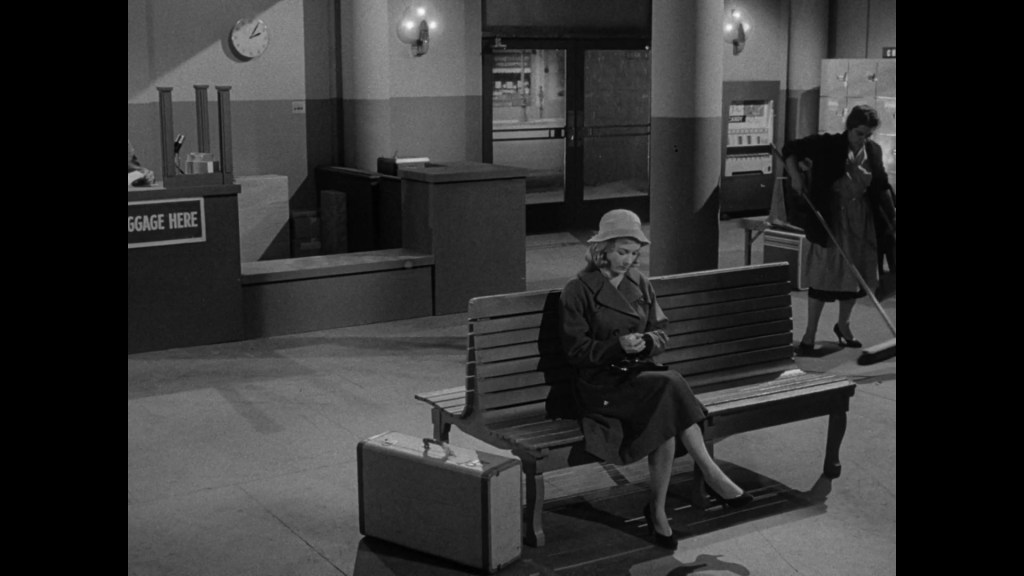
“Millicent Barnes, age twenty-five, young woman waiting for a bus on a rainy November night. Not a very imaginative type is Miss Barnes: not given to undue anxiety, or fears, or for that matter even the most temporal flights of fancy. Like most young career women, she has a generic classification as a, quote, girl with a head on her shoulders, end of quote. All of which is mentioned now because, in just a moment, the head on Miss Barnes’ shoulders will be put to a test. Circumstances will assault her sense of reality and a chain of nightmares will put her sanity on a block. Millicent Barnes, who, in one minute, will wonder if she’s going mad.”
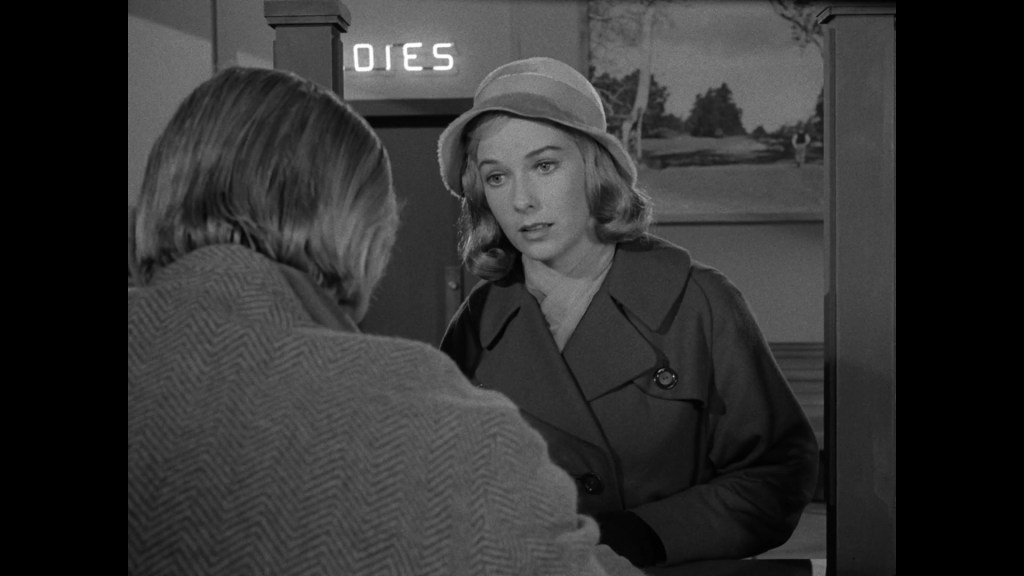
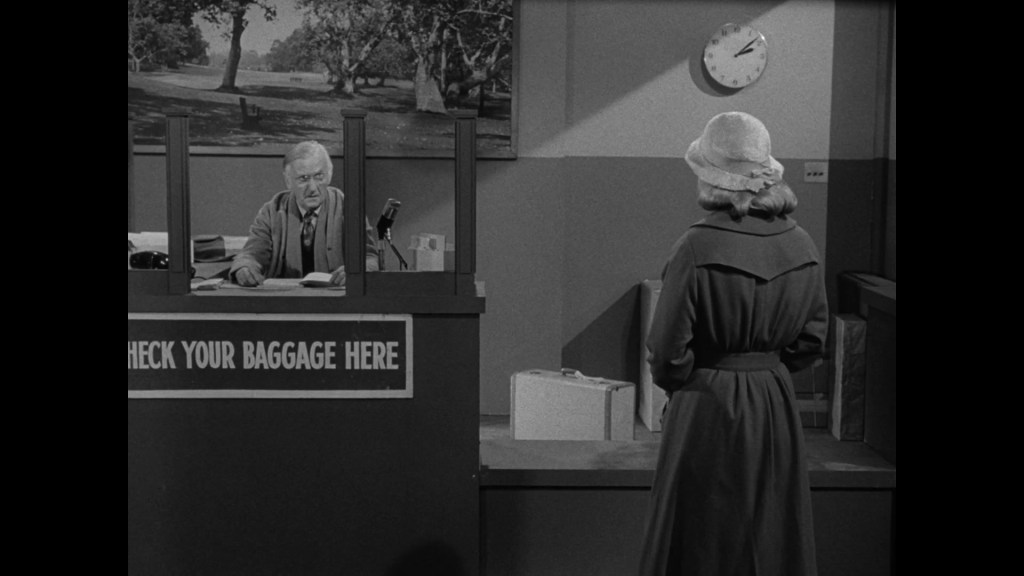
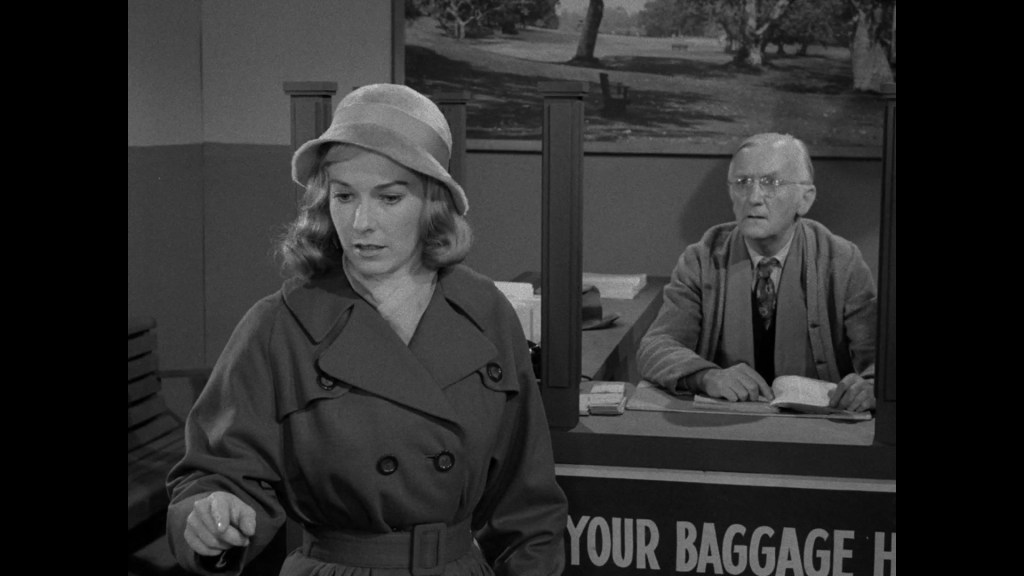
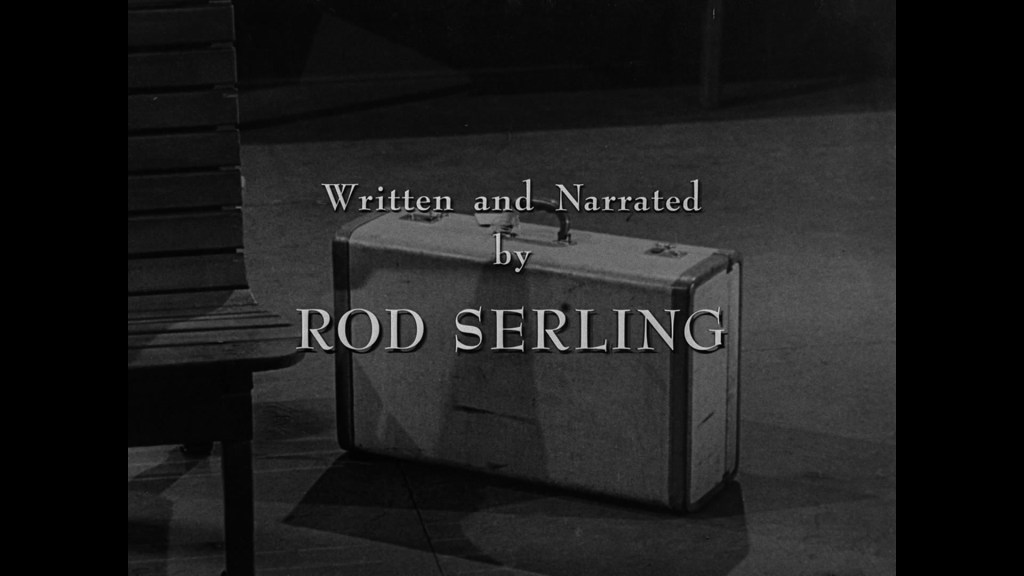
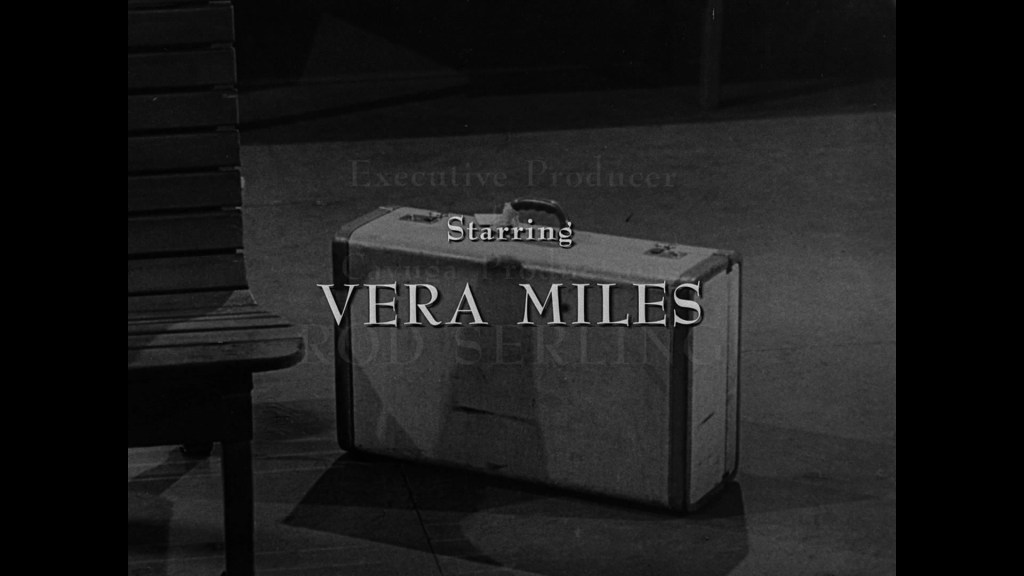
“Mirror Image” first aired on February 26, 1960 and it was the twenty-first episode of THE TWILIGHT ZONE’s inaugural season. And it can fairly be said that it terrified me more than any other, despite the fact that the story is almost entirely without action and all about building suspense and tension. Written by Rod Serling himself and built around an idea he got after seeing another person at a busy airport that looked very much like himself, the story centers on actress Vera Miles in the role of Millicent Barnes, a private secretary who is waiting in a lonely bus depot for the next bus to take her to the new job that is awaiting her in the city. In the gloom of the evening, strange things keep happening to Millicent: when she asks the counterman when the bus will arrive, he snaps at her, telling her that she asked that same question almost a moment ago. And when she sees a duplicate of her bag checked behind the counter, she’s surprised to find that her own bag has vanished, and the man tells her that she checked the bag a short while ago. Is she simply forgetting things, or is something creepier going on here? This is the TWILIGHT ZONE, so of course the answer is the latter.
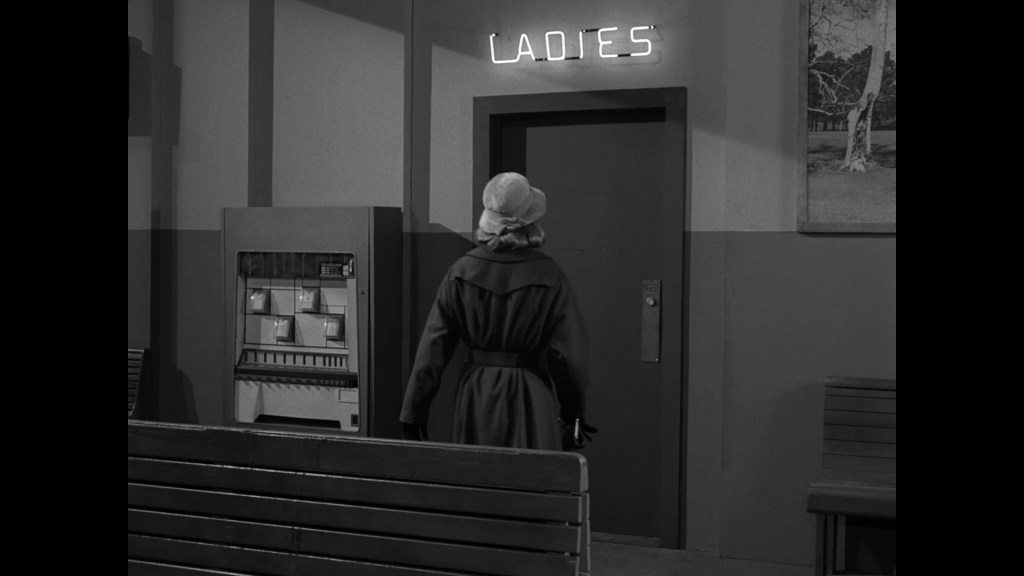
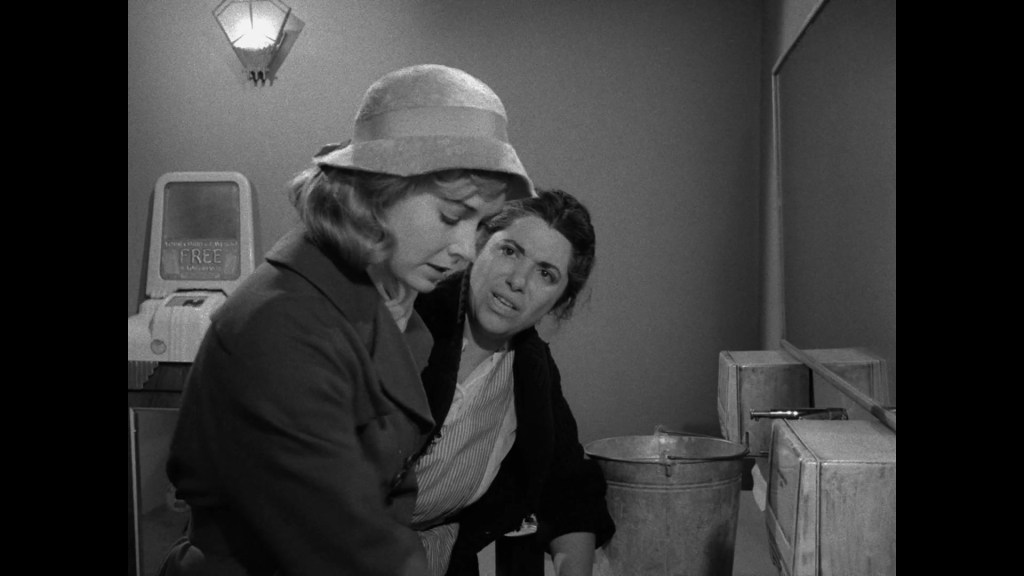
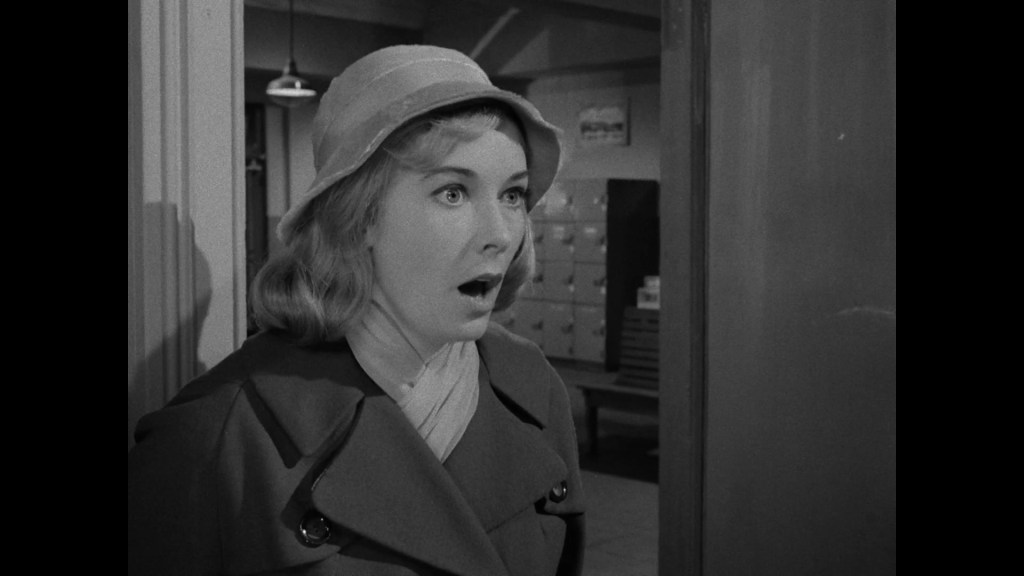
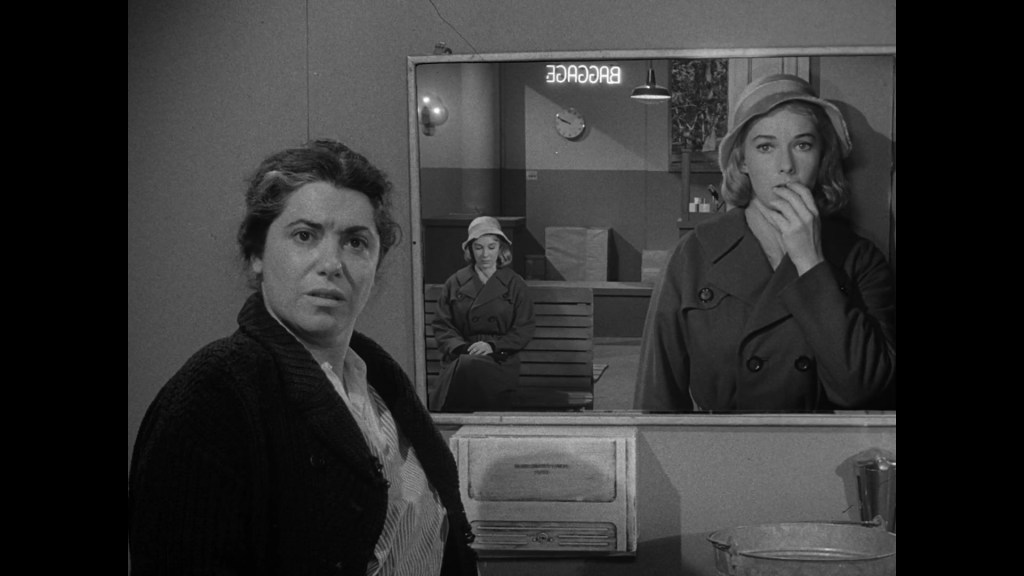
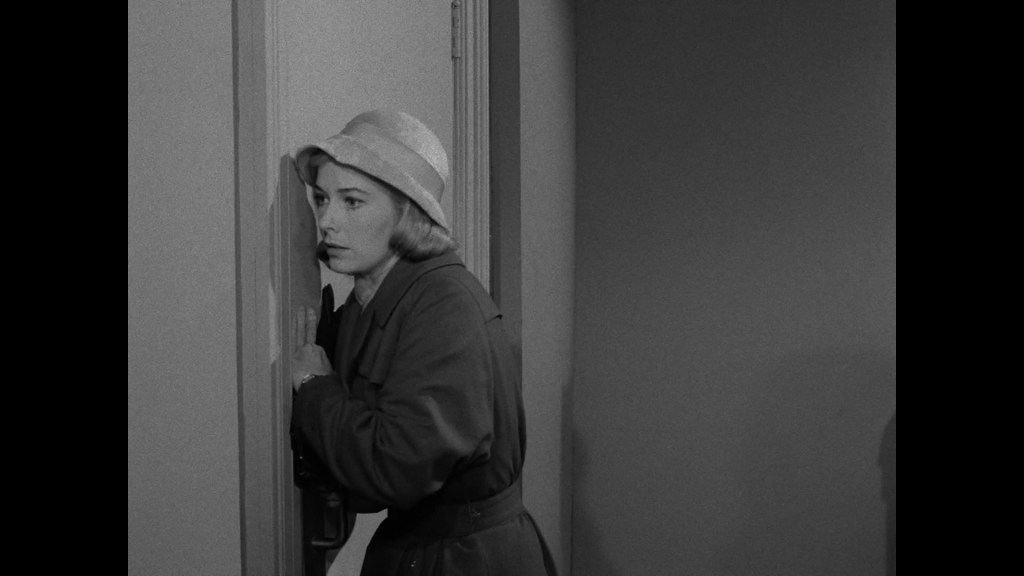
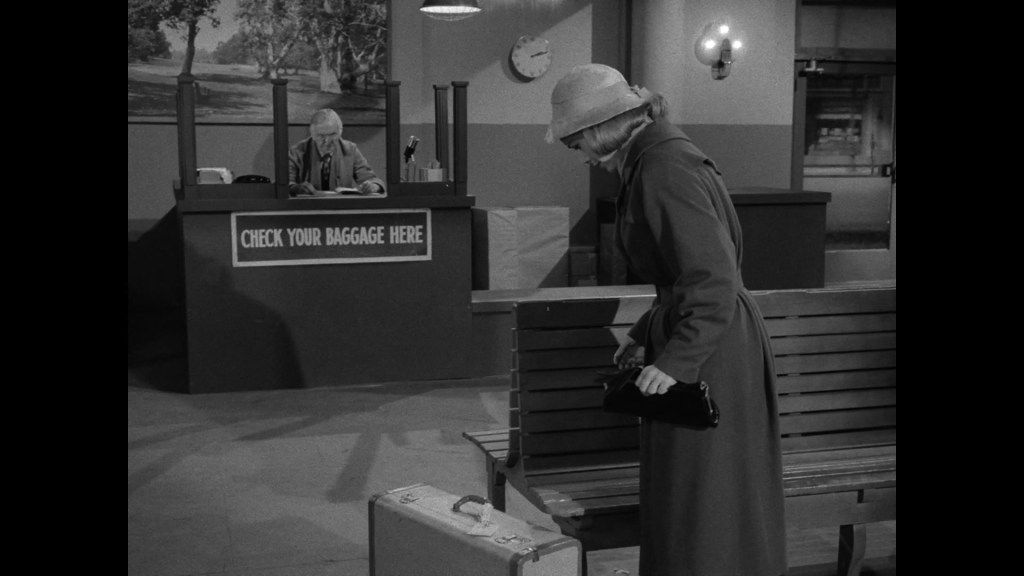
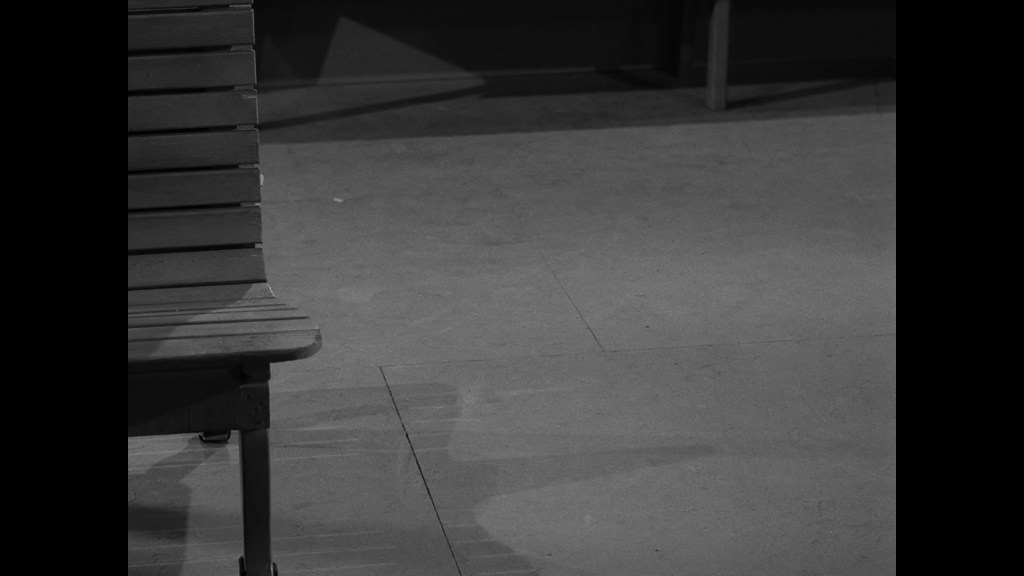
Troubled by what she’s been experiencing, Millicent goes into the ladies’ room to attempt to compose herself. When the cleaning lady asks her if she’s all right, it becomes apparent that she too believes that Millicent has been here before, even though she hasn’t. Angered by what she sees as some attempt to play a cruel joke on her, Millicent begins to stomp out of the restroom–then stops cold as she catches a glimpse of the waiting room in the mirror. In a wonderfully simple split screen shot, she sees herself on the bench outside, which causes her to freak out. A minute later, when she again opens the door to confront whomever is sitting in her spot, the bench is once again empty–but her bag is back to its place next to her seat. The ambiance and quietude of these scenes give them a creeping feeling of dread, and Miles sells Millicent’s stunned reactions to the unusual things taking place all around her.
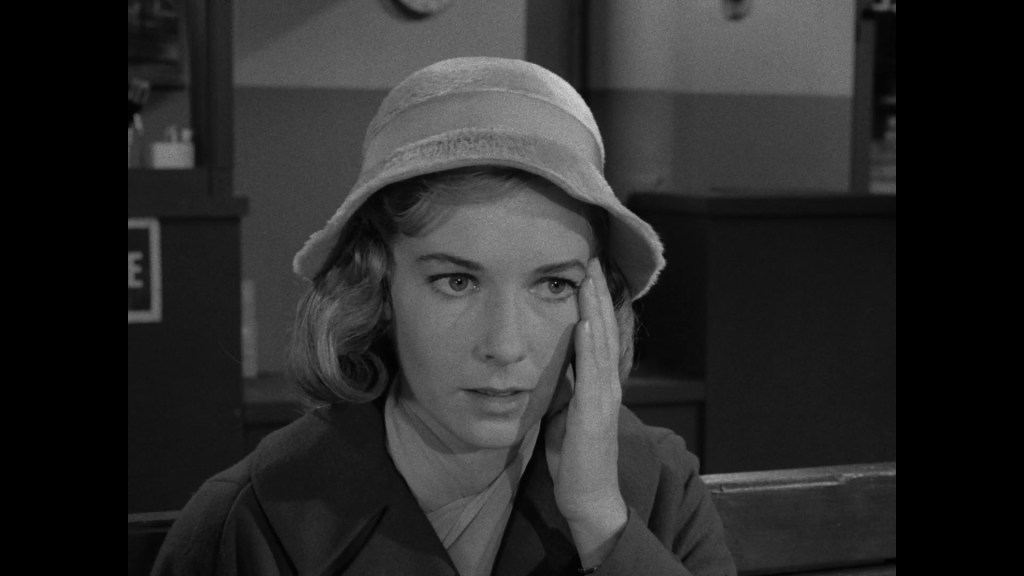
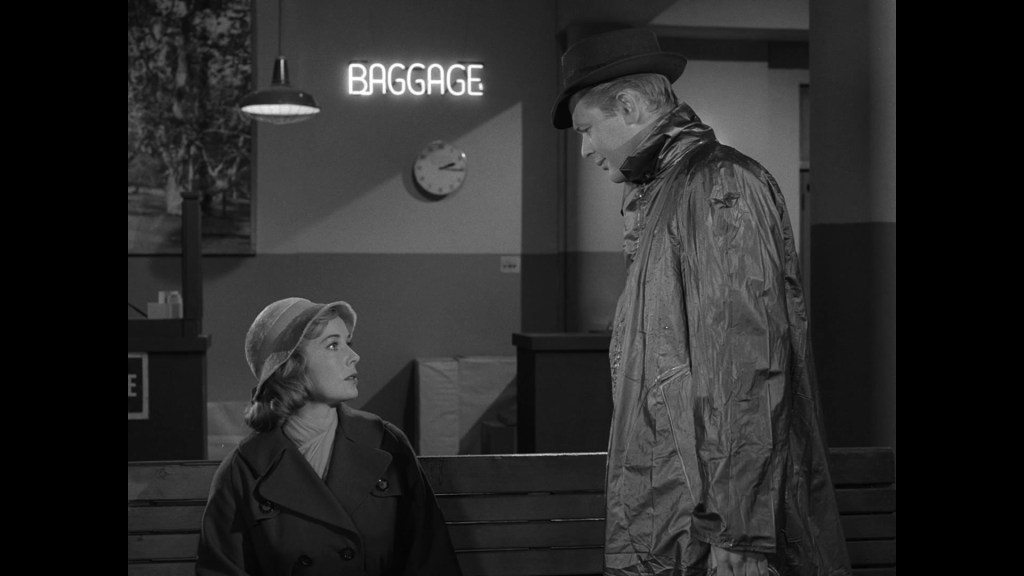
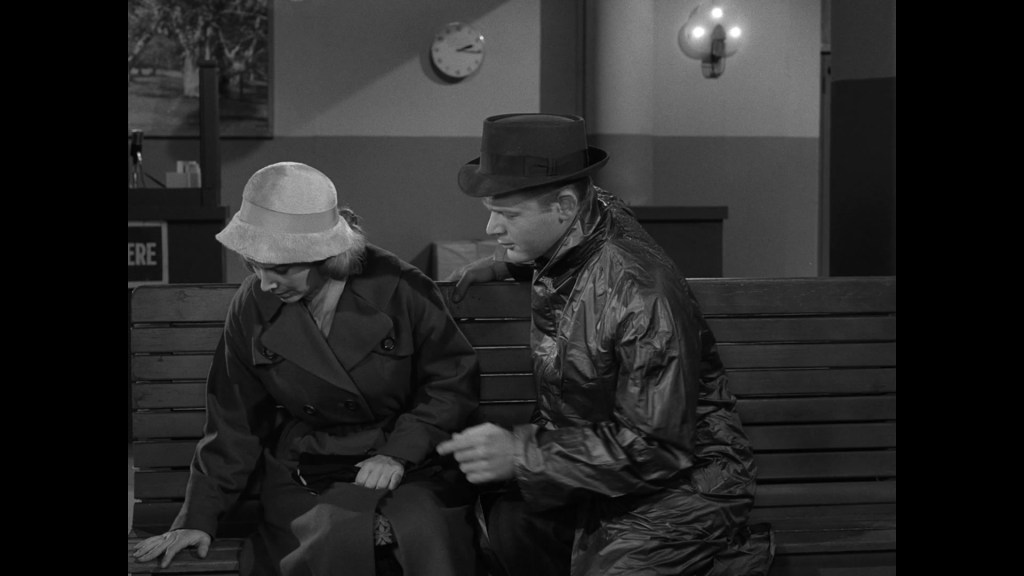
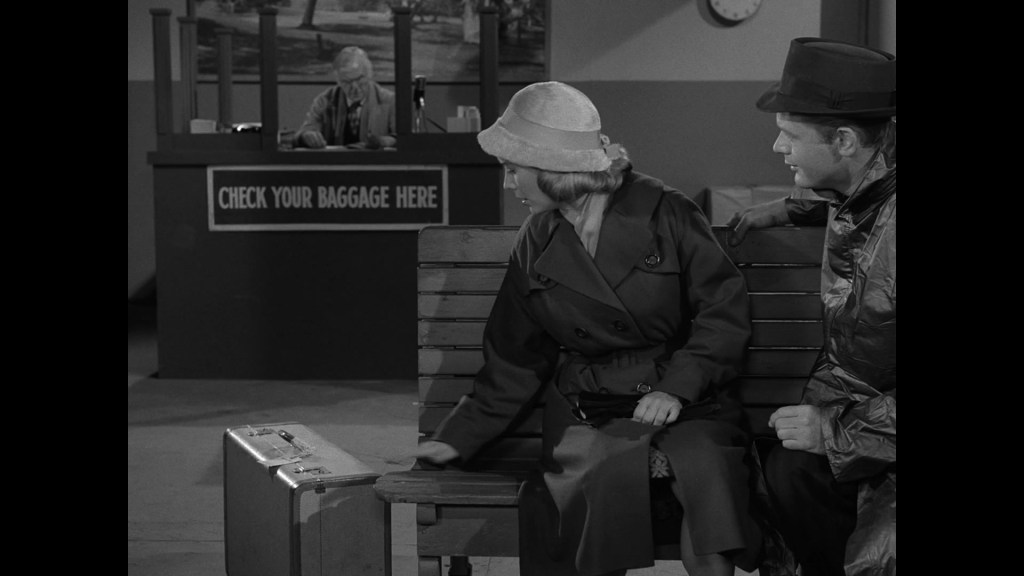
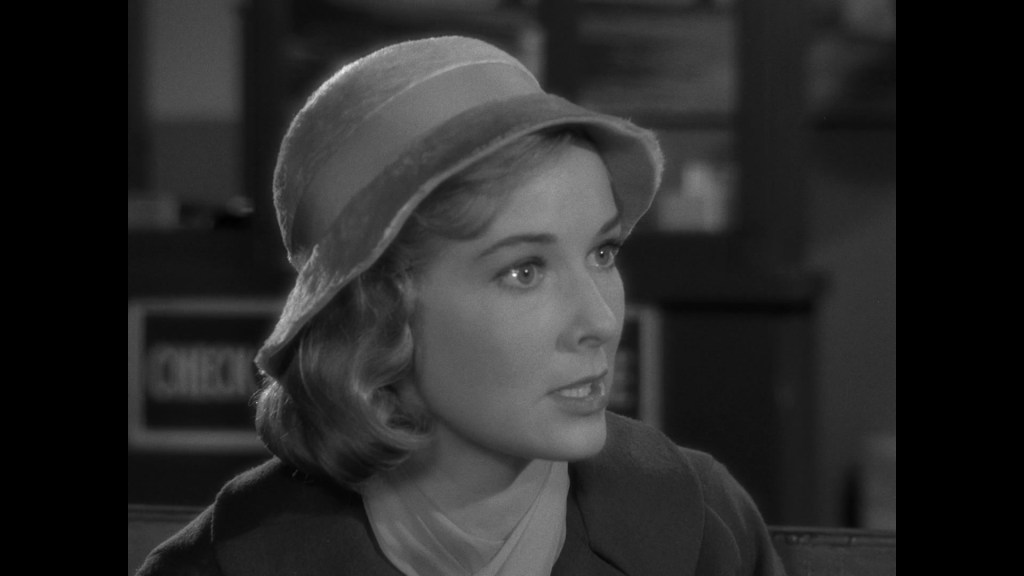
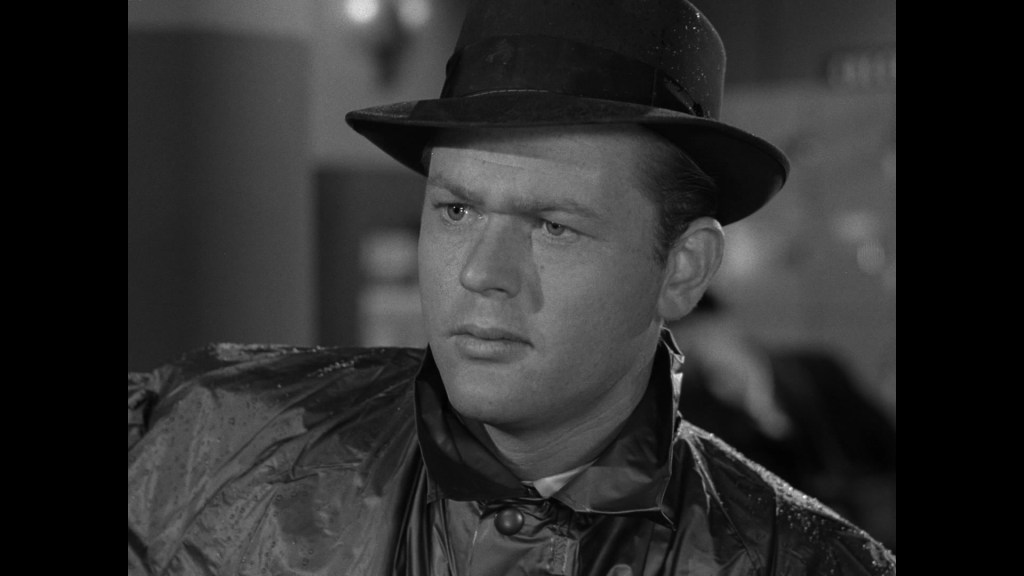
Millicent asks a couple slumbering on a nearby bench if they’ve happened to see anybody sitting in her spot, but the more she tries to explain, the more like a crazy person she appears to be. Her mind is reeling as she heads back to her seat. It’s at this point that the narrative introduces its final character, Paul Grinstead, played by Martin Milner (best remembered from ROUTE 66 and ADAM-12). He’s a fellow traveler who’s seen that Millicent is perturbed and comes over to see if he can offer any assistance., And he give her a sounding board to spin out her story to and to attempt to provide a logical explanation for what is happening. Grinstead is a kind fellow and he wants to help, but Millicent’s story sounds more and more fantastic the more she speaks about it, and as her tight control of her emotions begins to slip.
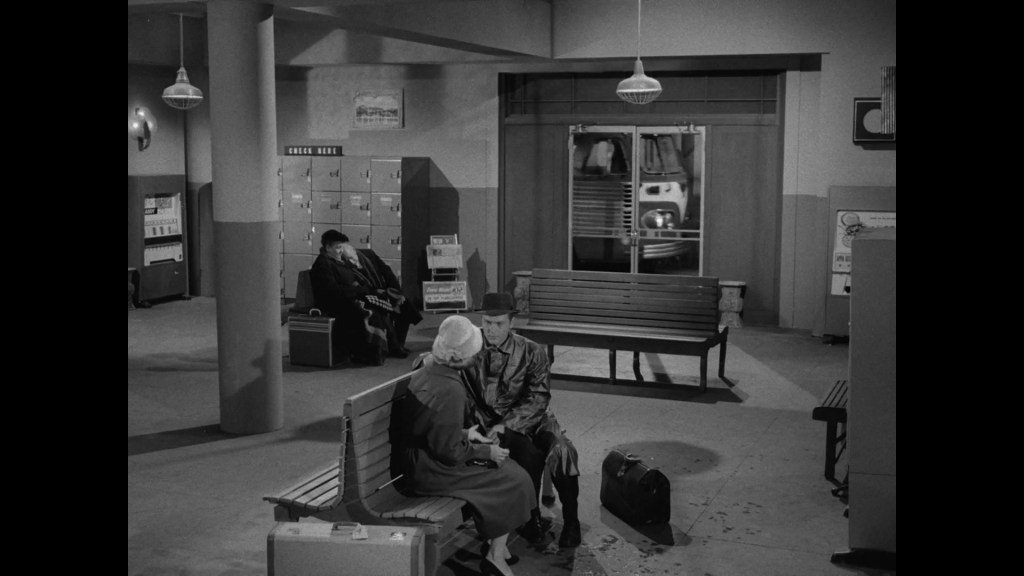
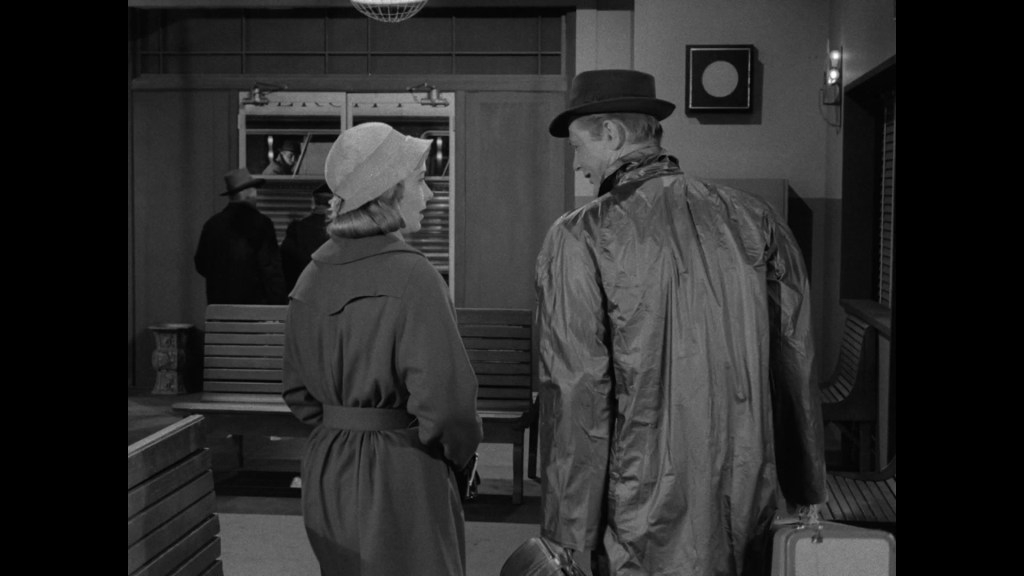
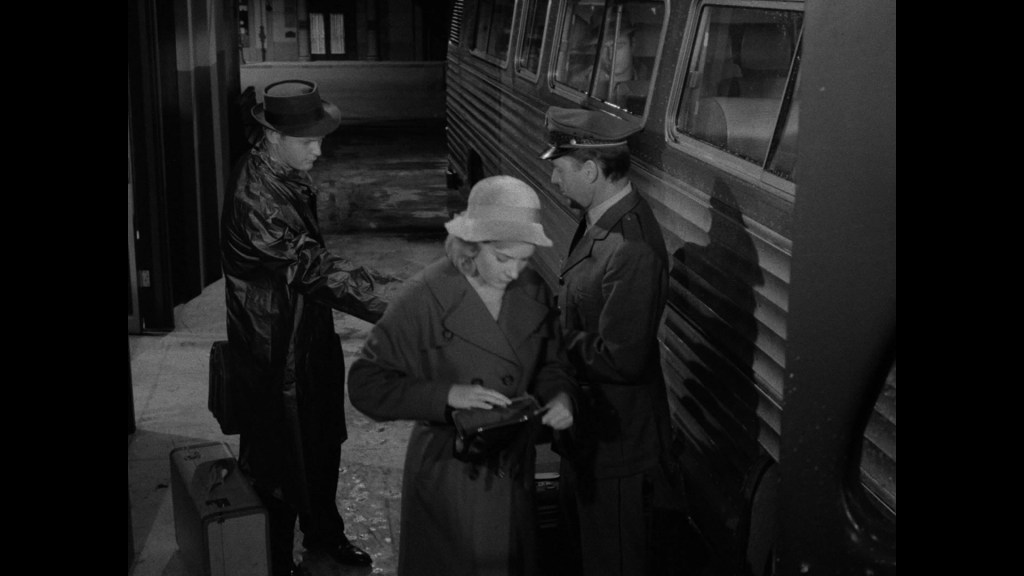
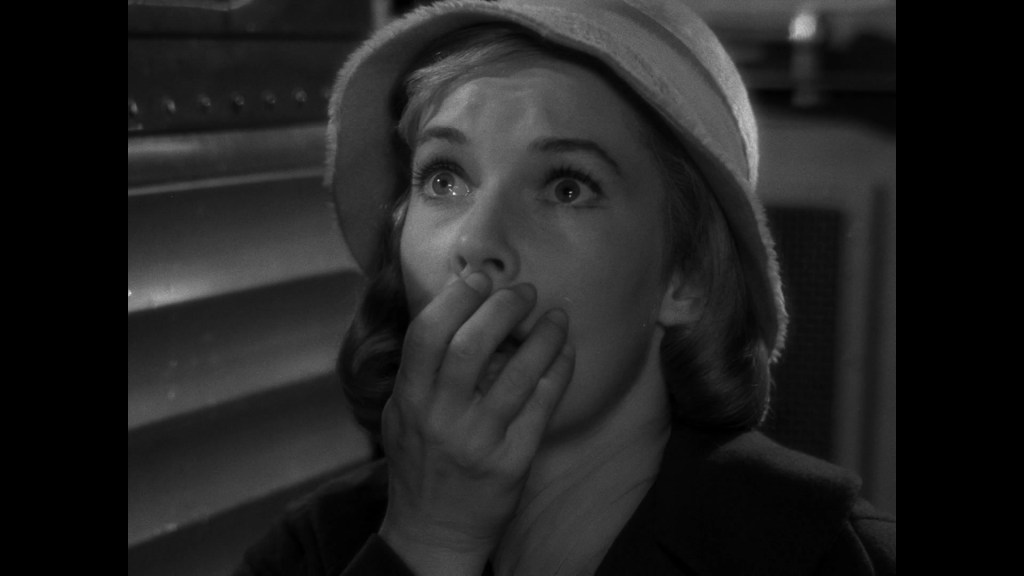
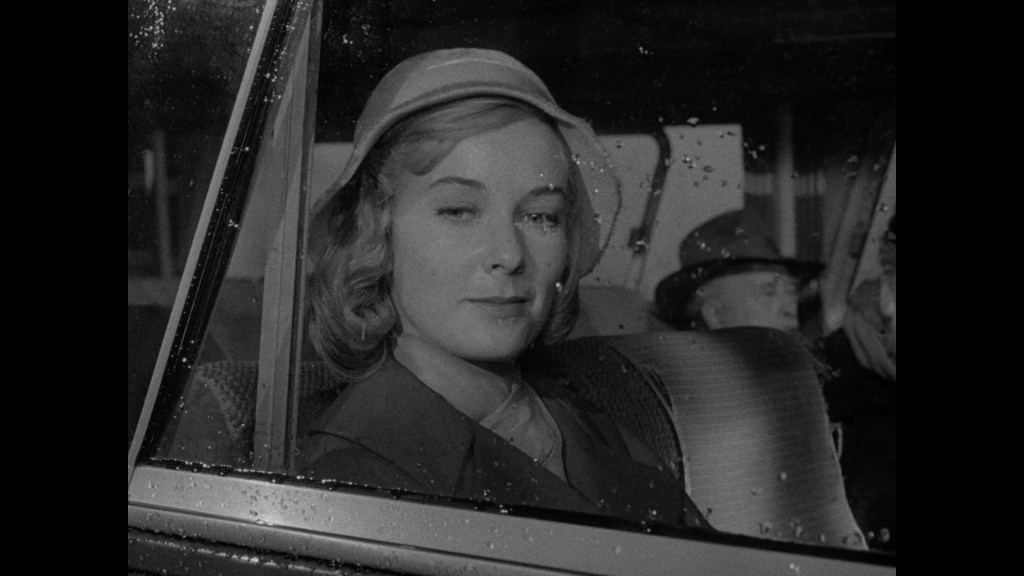
At this moment, the tension is eased by the arrival of the bus. Paul helps Millicent with her bag and the two move outside to board the vehicle. As her ticket is taken, Millicent looks upward–then gives a shriek of horror and dashes back inside the bus depot. Not quite sure what’s going on, Grinstead races in after her, and the camera whip-pans around to a window on the bus, through which we can see the spitting image of Millicent Barnes seated aboard, her expression hauntingly malevolent. This is the moment that stayed with me all those years–I thought for the longest time that this happened at the climax of the program, though it was only the midpoint commercial break. Once again here, this is a great little effect using the available technology of the period, and Miles is so spot-on perfect as the sinister Millicent in the window, wordlessly getting across an evil intent. It’s a creepy moment.
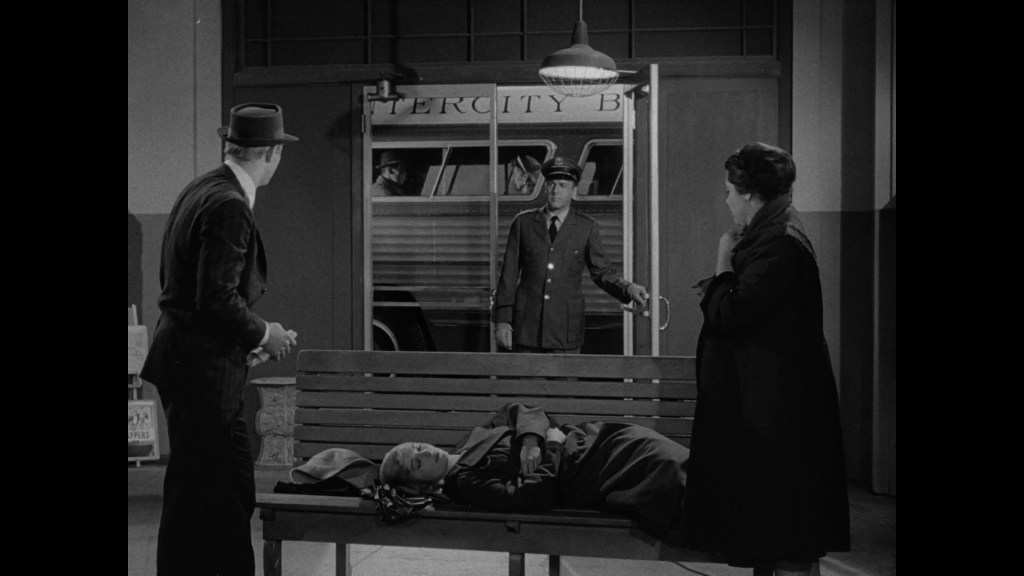
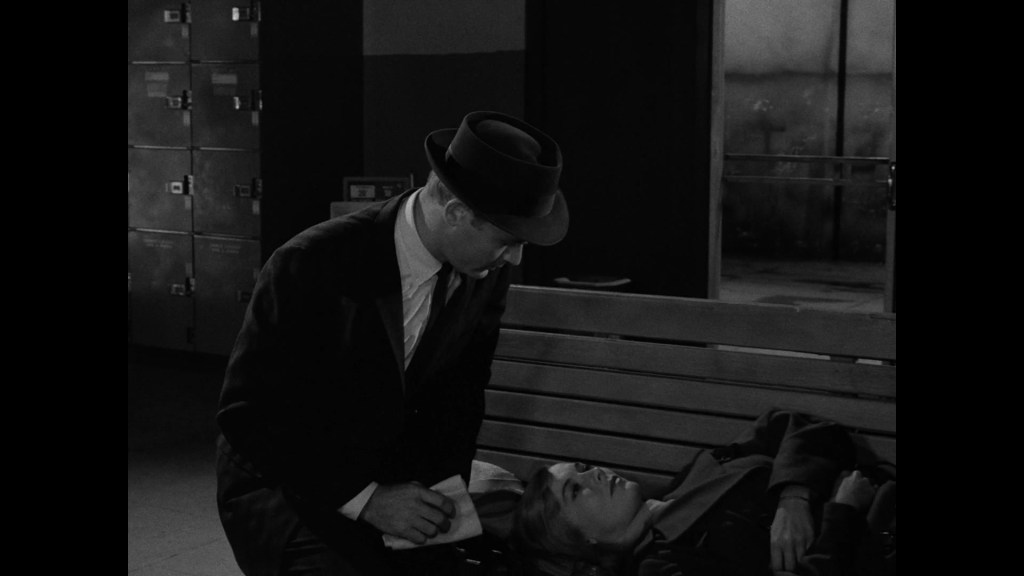
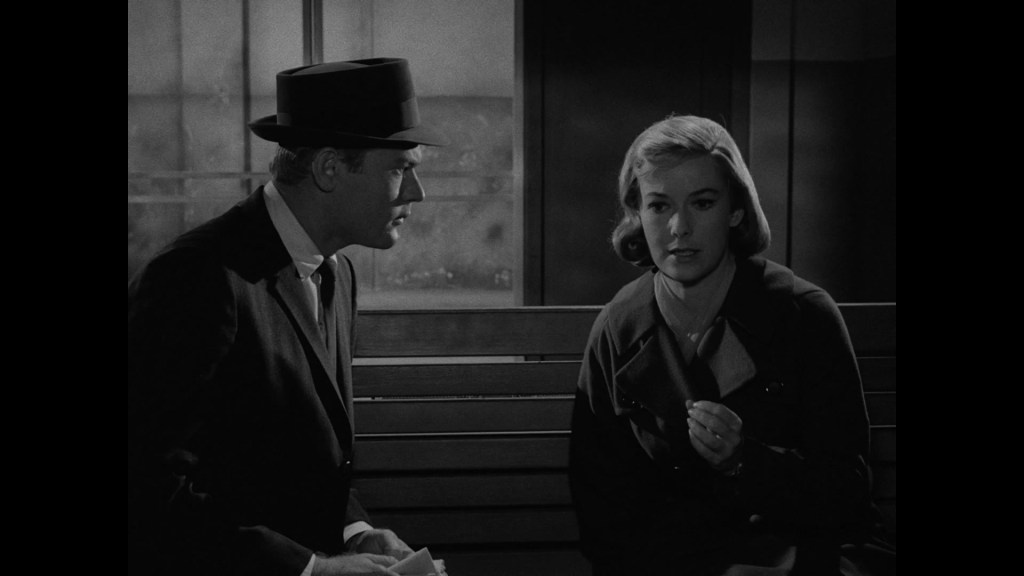
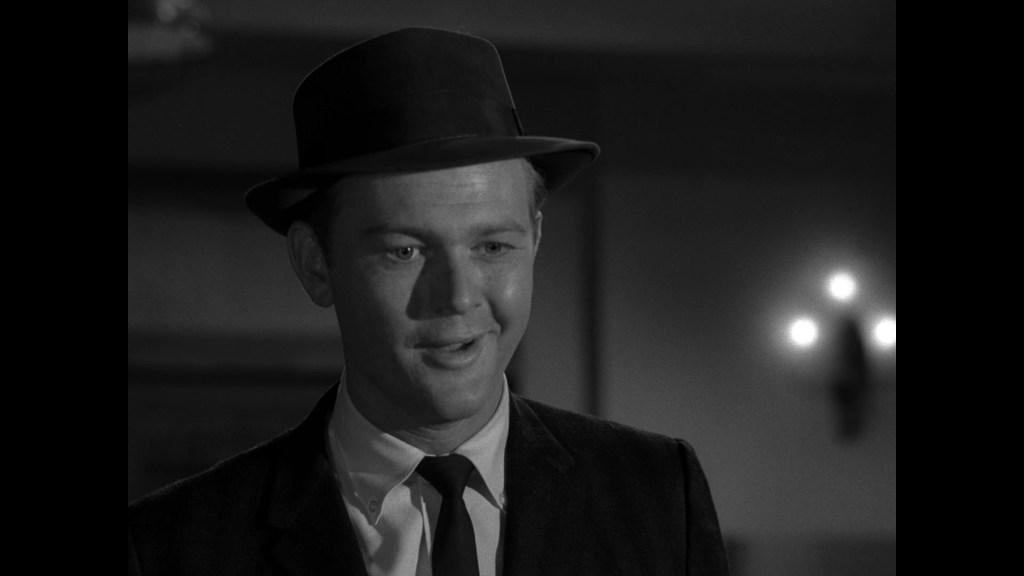
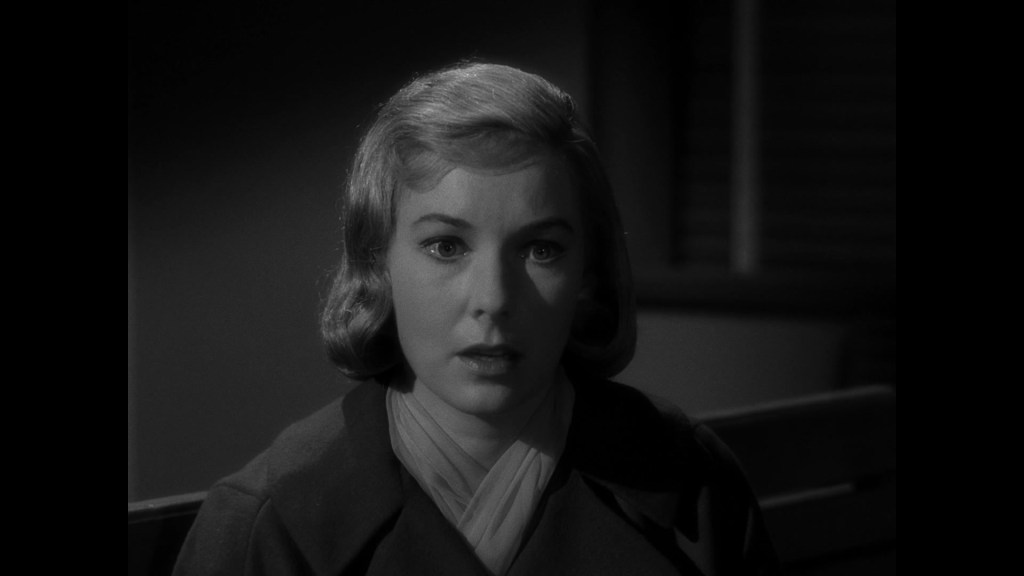
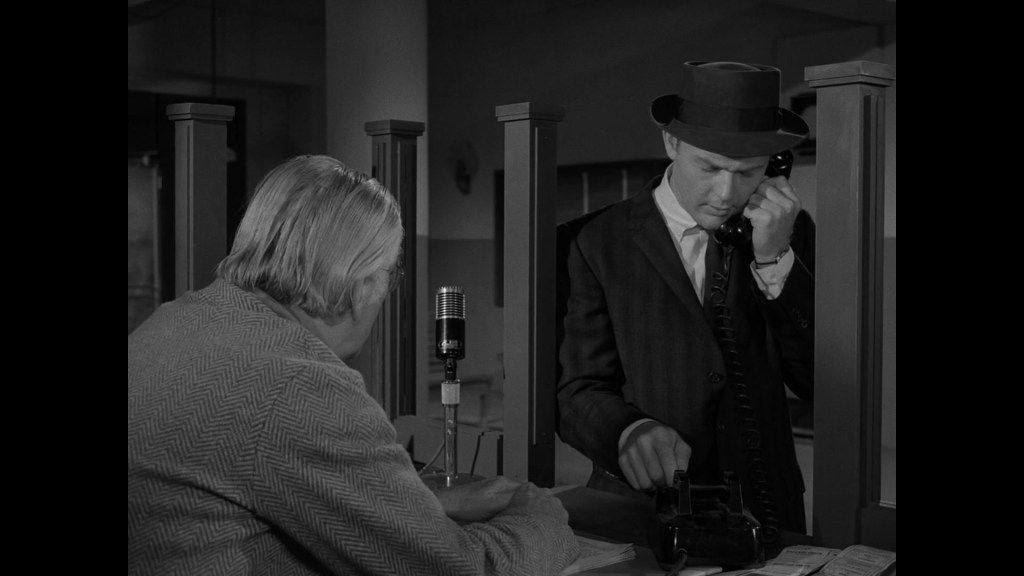
As we come back from the commercial break, Paul and the cleaning lady look after Millicent, who is passed out on a bench. Paul tells the bus driver to go on ahead, that they’ll catch the next bus in the morning. So now, Millicent and Paul are alone in the darkened waiting room–the cleaning lady heads home at this point, and the counterman retires to his desk. As Millicent recovers, she lays out the thesis for the episode to Paul, who has now taken up position as the central player in the drama. She tells him that she remembers reading about parallel planes of existence that can sometimes come into contact with one another. Every person has a counterpart in that other world, an identical twin. And on those occasions when the worlds intersect, those counterparts move to take over the lives of those in this world. Paul tries to be positive and tells Millicent that he’s got a friend in a nearby town who might be able to give them a lift to the city. She sits slack-jawed as he moves to the telephone at the counter, confiding to the counterman that there is no friend, that he’s concluded that Millicent is disturbed and in need of medical help. So he calls the police.
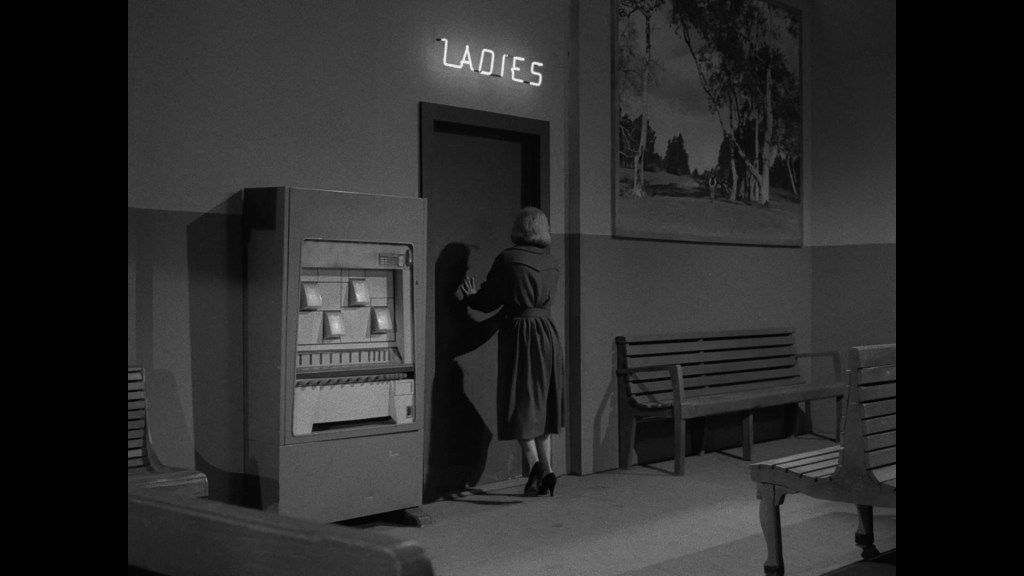
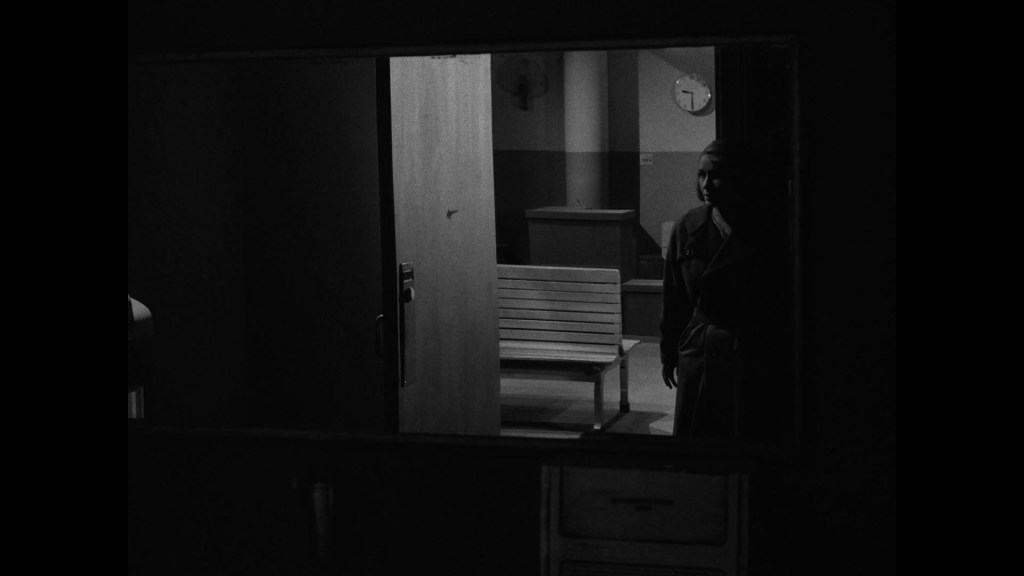
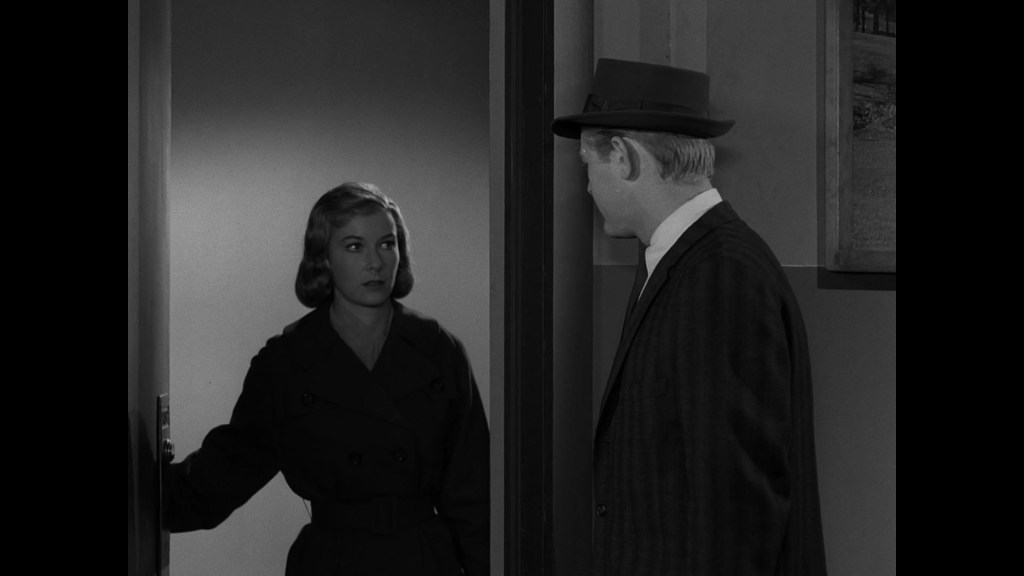
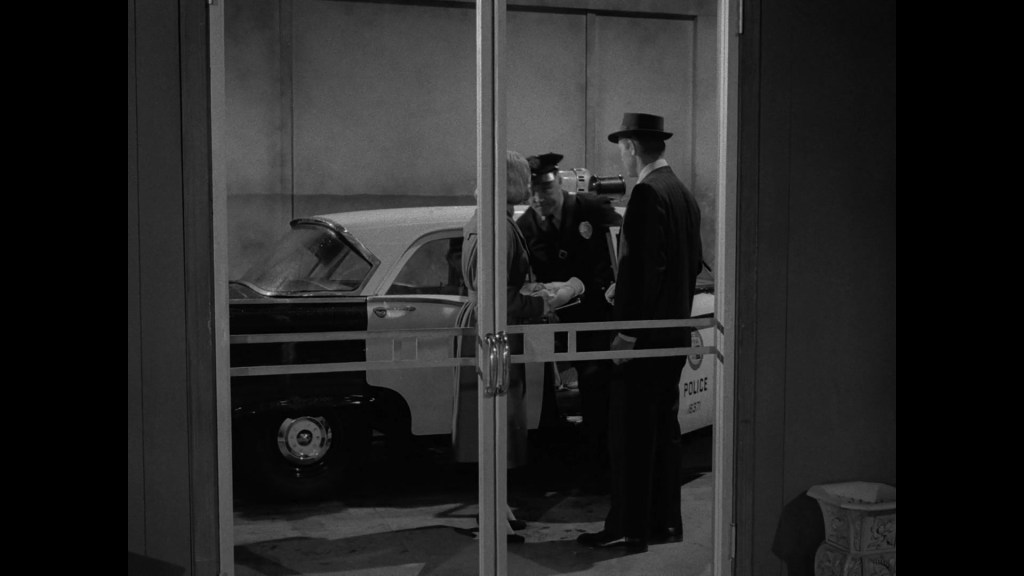
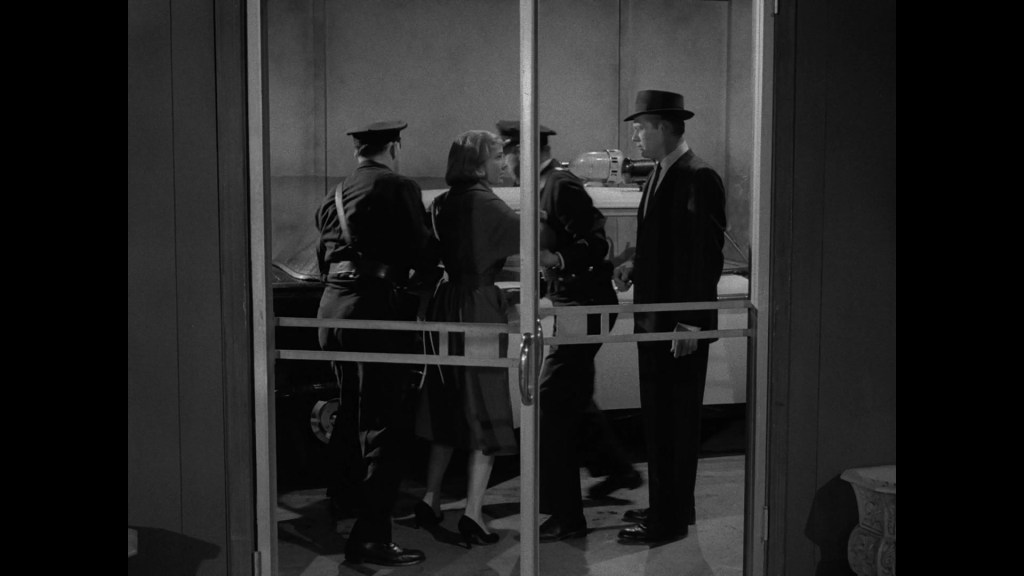
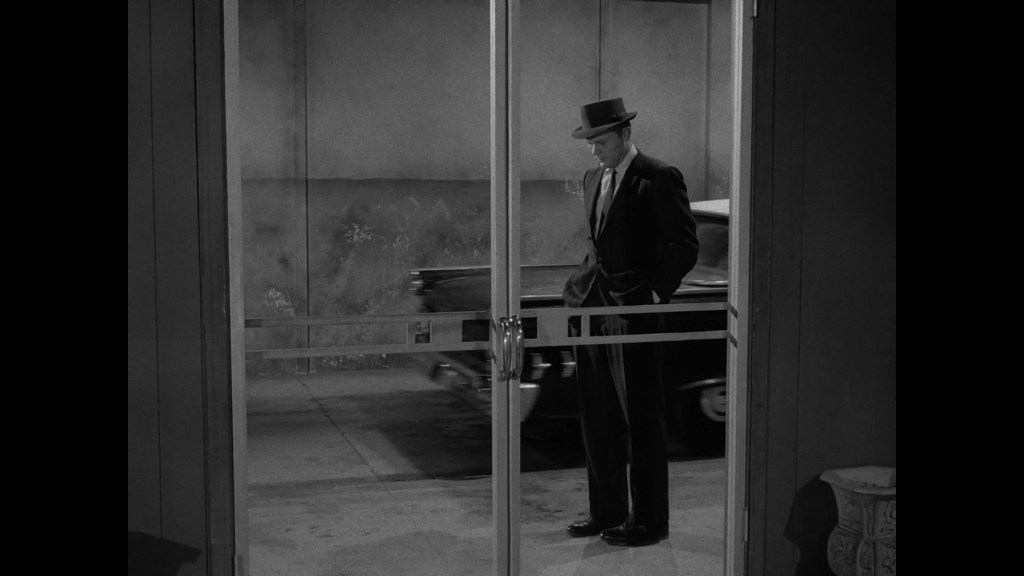
Left to herself, Millicent hesitantly approaches the Ladies’ Room again, entering it and calling out angrily for her twin to show itself. But there’s no response. Paul calls to her from out in the waiting room and she emerges, having gotten control of herself once more. But it’s too late. Paul suggests that they step outside for a breath of fresh air, and when they do, a police cruiser races up, cops jump out, grab Millicent and take her away for psychiatric evaluation. The sequence is largely silent, but the actors are good enough to convey Millicent’s heartbreak at being betrayed by the man she trusted in this fashion as well as Paul’s regret for doing what he thinks is best for her.
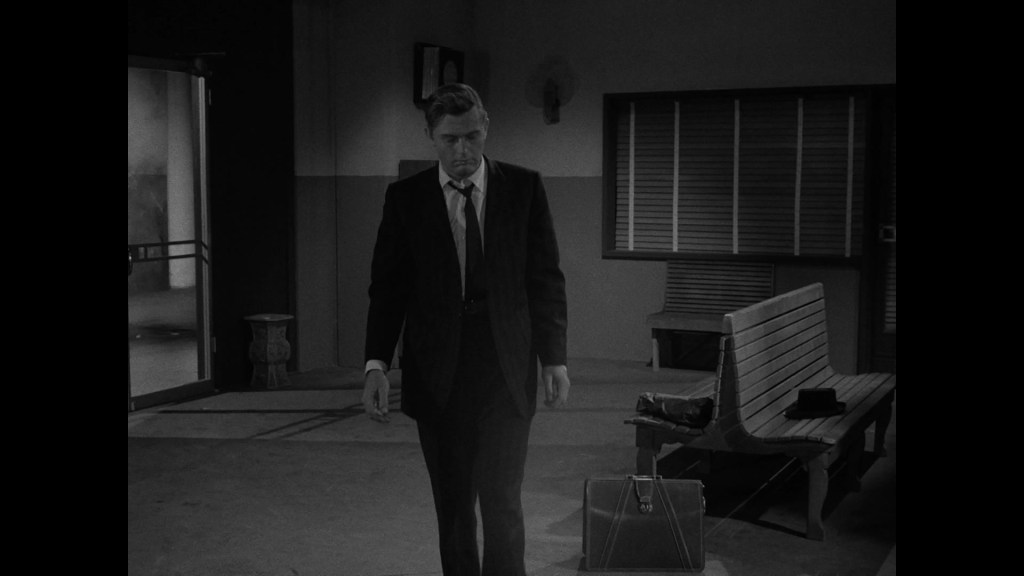
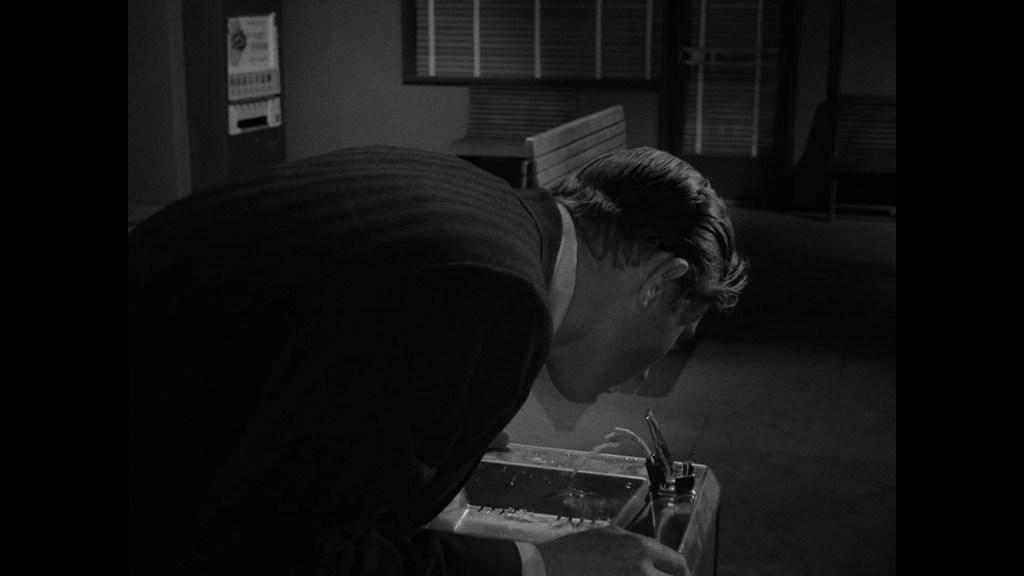
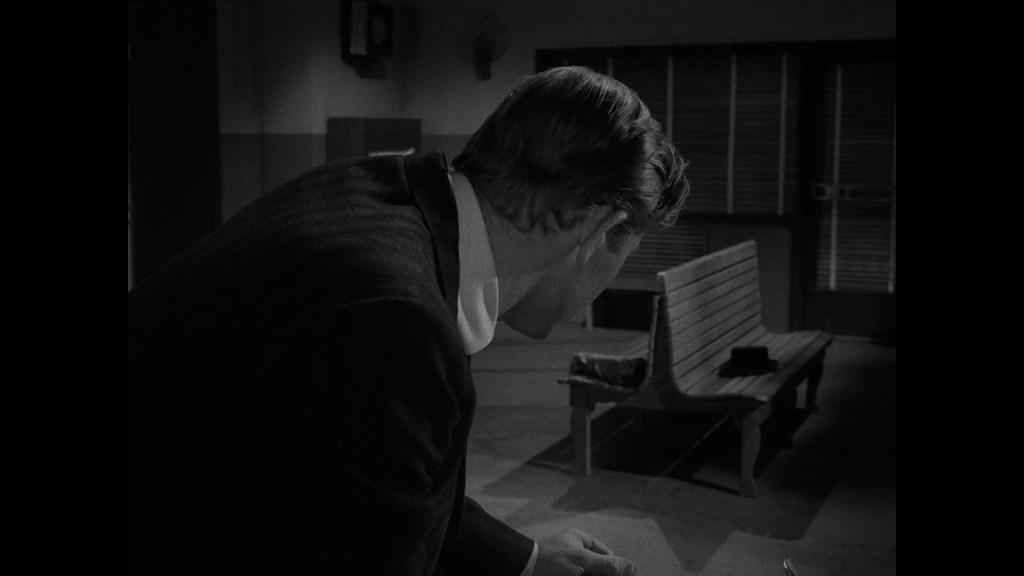
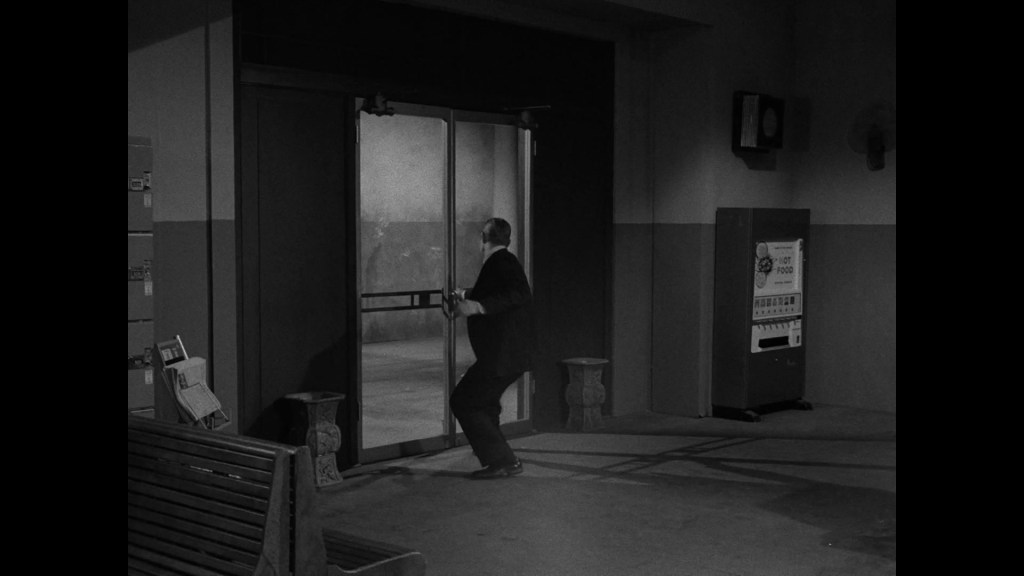
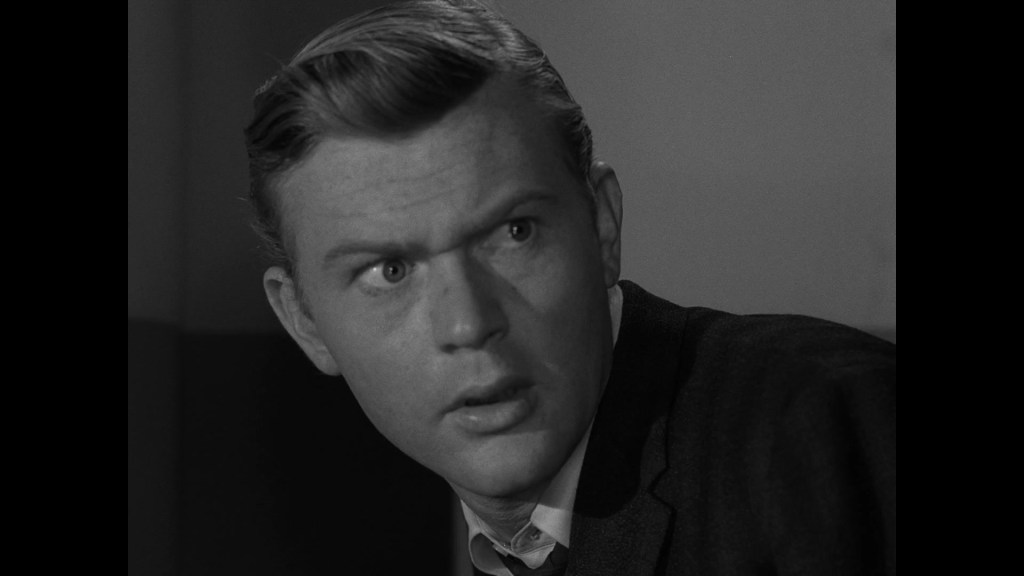
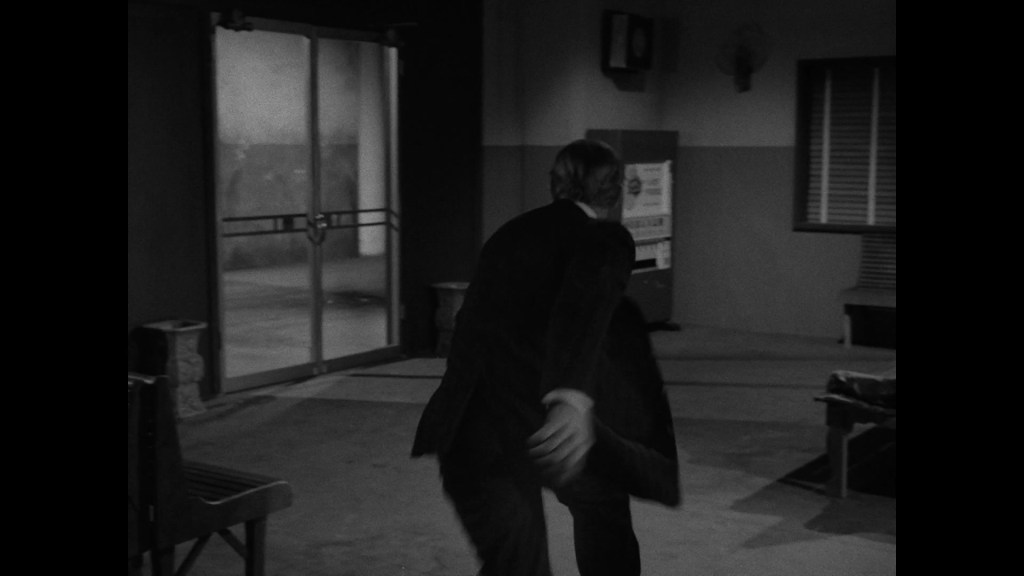
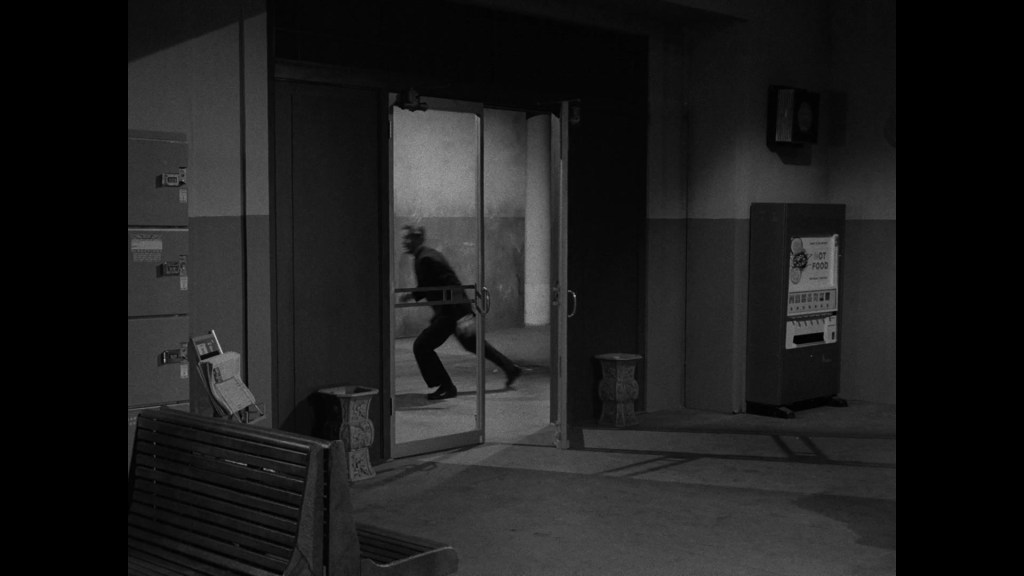
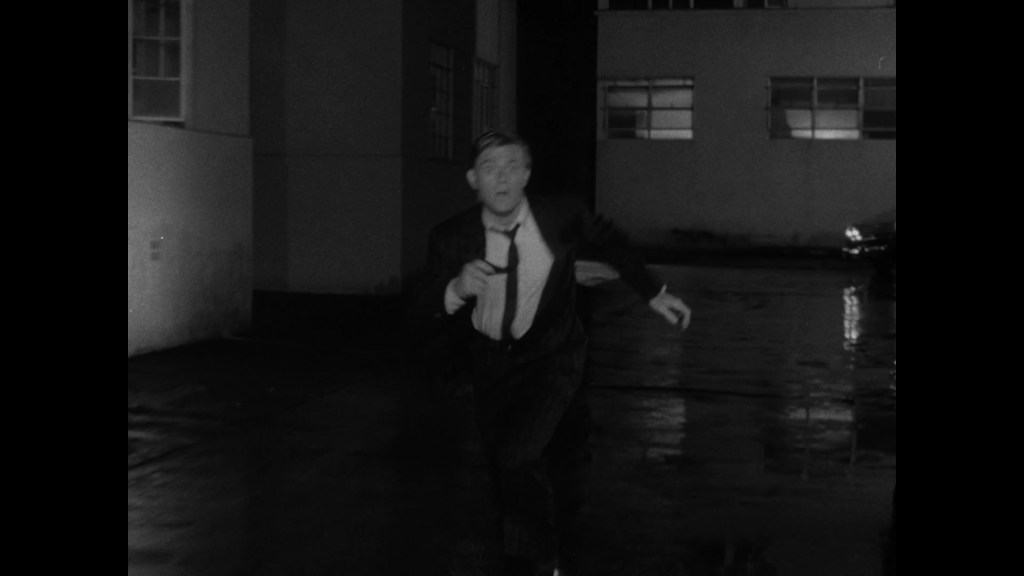
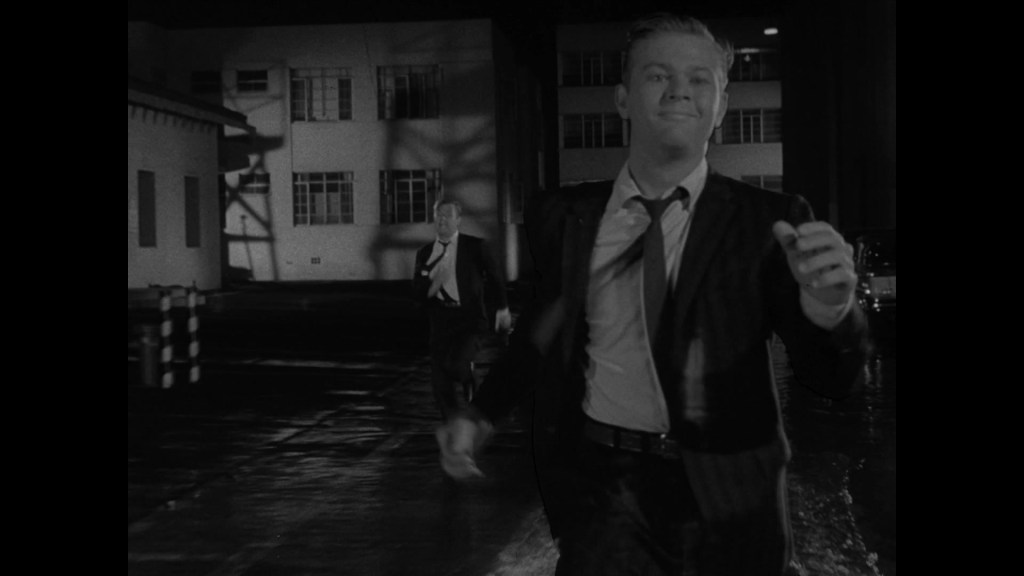
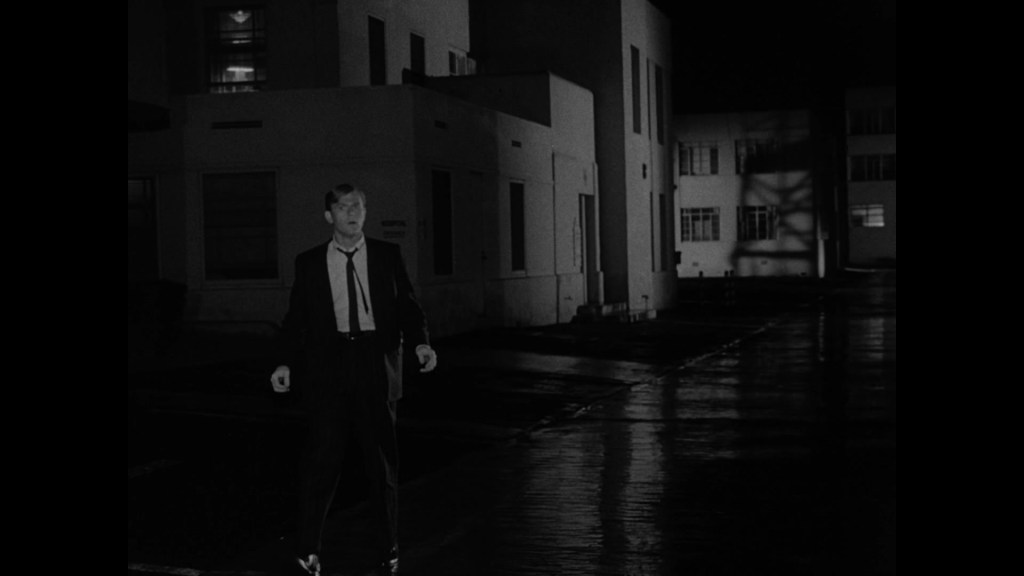
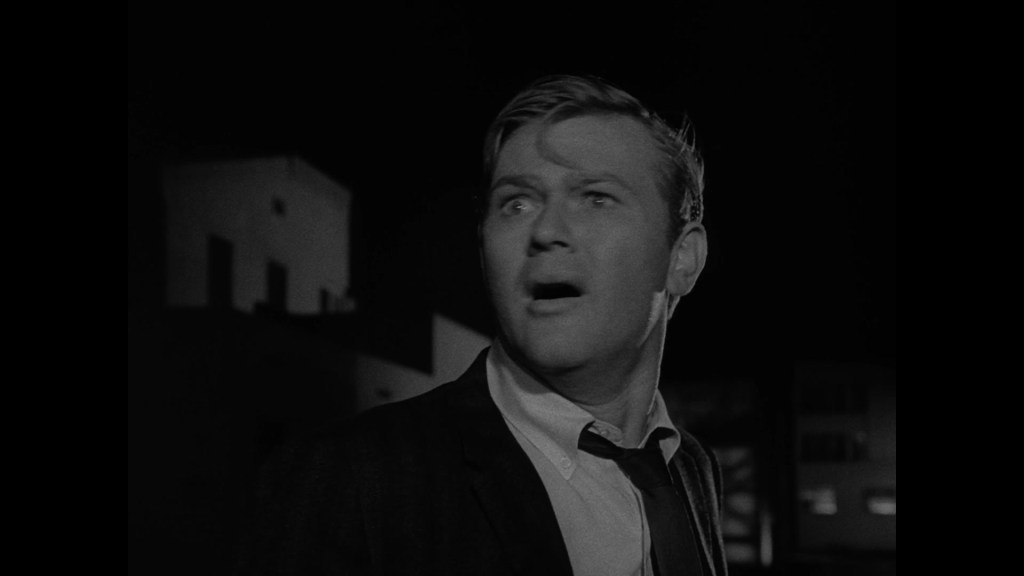
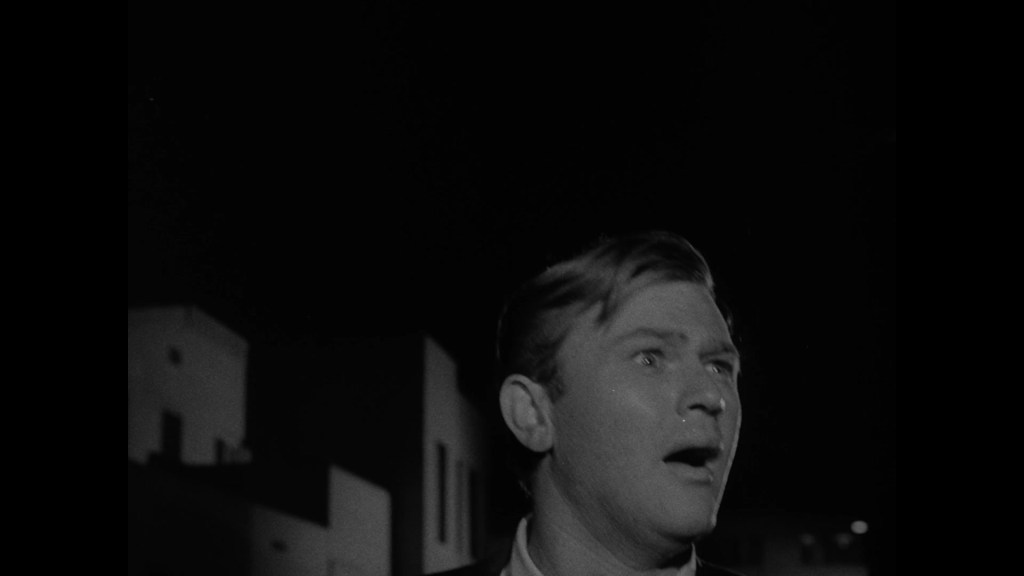
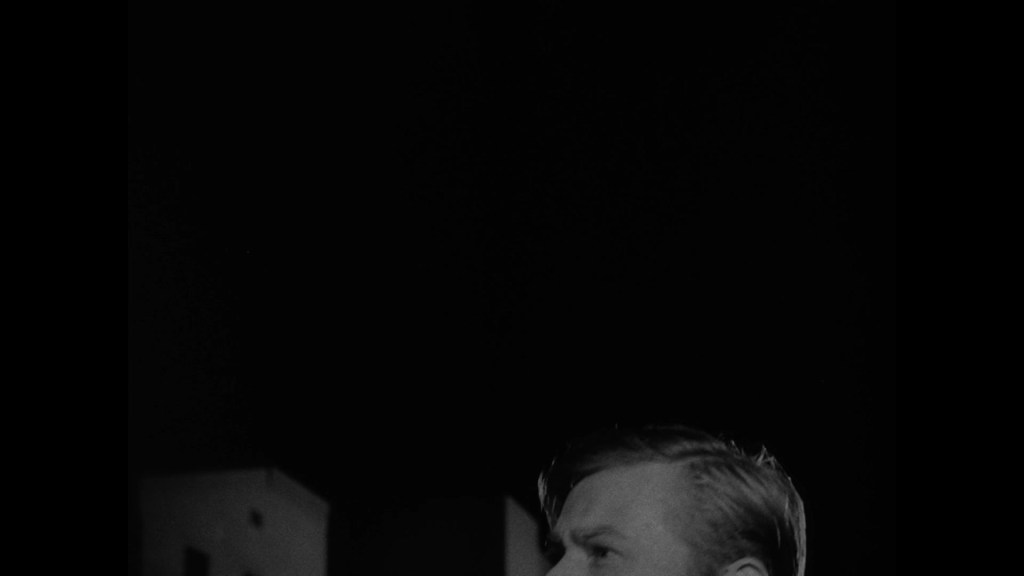

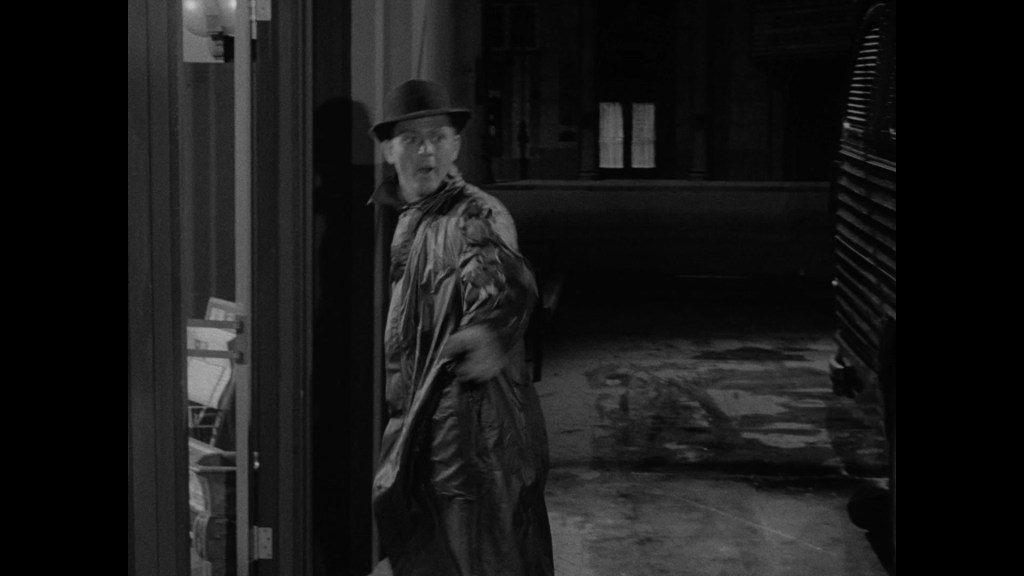
And then we come to the punchline. Left alone with hours until the next bus arrives, Paul puts down his own briefcase and heads over to the water fountain to refresh himself. And in a great single shot, in the time it takes for him to bend over and drink and then rise again, his briefcase in the background vanishes, just as Millicent’s had. Paul turns to see a figure resembling himself dash out of the bus depot, and he gives chase. Outside in the rain-slickened streets, he pursues the retreating, laughing figure, who looks back at him in mockery, his face identical to his own. A really terrific rear projection shot is used here to have Milner chase after himself, and he’s great at putting over the emotional intensity of both the pursuing Paul and the craftily mocking doppelganger version. As Paul loses sight of the man he’s chasing, turning all around and yelling “Where are you?” at the vanished apparition, the camera pans skyward and the episode closes out.
“Obscure and metaphysical explanation to cover a phenomenon. Reasons dredged out of the shadows to explain away that which cannot be explained. Call it ‘parallel planes’ or just ‘insanity’. Whatever it is, you’ll find it in the Twilight Zone.”
The idea of there being an exact double of myself out there somewhere who wanted to replace me and take over my life absolutely haunted me as a kid. In part this was due to the fact that, at much the same time as I had first seen this episode, I read a JUSTICE LEAGUE OF AMERICA story in which the titular heroes were attacked and replaced by a Super-Justice League created by Doctor Destiny from the stuff of their nightmares.
So the one-two punch of these similar stories took root in my mind. I began to imagine that upstairs in our unfinished attic there was a sinister double of myself who was waiting until I fell asleep that night so it could emerge and finish me off. This idea creeped me out for some time, and I spent days if not weeks avoiding the stairs to that attic space.
These were the episodes of TWILIGHT ZONE that I liked the best, the ones that dealt with psychological horror and suspense. Nothing especially dramatic or violent happens in the course of these thirty minutes, but two lives are irrevocably shattered by events outside of their control, and the underlying current of dread is palpable all throughout the episode. These were the ones that made an impact upon me–“Mirror Image” remains my favorite episode in the series and I watch it whenever I happen across it.
 The Tom Brevoort Experience
Yes, “Mirror Image” was a really good episode of the Twilight Zone. Unlike Tom, I did not see it until I was an adult, but even so it still creeped me out. It was one of the TZ entries I picked when I put together my “Five (or so) episodes of The Twilight Zone for Halloween” post a while back.
Five (or so) episodes of The Twilight Zone for Halloween – In My Not So Humble Opinion
LikeLike
One of my favorite episodes of the series. Extremely creepy. There was a film released in 2015 from one of my favorite Mexican directors Isaac Ezban called The Similars that borrows heavily from this episode. He also did a movie called The Incedent that plays with time loops that is very Twilight Zone-esque.
LikeLike
This entry is why I never watched more than a minute or two of any Twilight Zone episode. I was diagnosed with an anxiety disorder just past thirty years old and just an ad for this show would make me spiral. Heck, an ad for a DC weird sci fi comic had an image on it once (I was thirteenish?) that had me afraid of red traffic lights when not in the back seat of a car.
LikeLike
I guess like one of the four season 3 episodes ( The Jungle -S3 E12 ) on tonight Mirror Image didn’t stick with me ( the others did — Quality of Mercy ( Dean Stockwell ), Nothing in the Dark ( Robert Redford ) and One More Pallbearer )– I’ll have to catch Mirror Image the next time it comes around ( or try Tubi ). Of the 2 episodes that William Shatner did ( Nick of Time ( 1960 — had to look this one up. Newlyweds in a small town diner have their fortunes told by a machine with a devil’s head on it ) and Nightmare at 20,000 Feet ( 1963 ) the second one creeped me out as a kid. The Masks ( S5- E26 ), Time Enough at Last ( Burgess Meredith ) & The Odyssey of Flight 33 ( S2 -E18 ).
LikeLike
This stuck with me: Dead Man’s Shoes ( S3 -E18 — this episode bring to mind the saying, “If at first you don’t succeed try try again” — those poor host bodies ) and of the 4 that Jack Klugman did I remember 2 ( “A Passage for Trumpet” & “Death Ship” , but not “A Game of Pool” & “In Praise of Pip” )
LikeLike
To Serve Man ( I knew I should have looked up to see if it was Twilight Zone or Outer Limits last night ) is one of the 4 on tonight.
LikeLike
My favorite episode was the one that had a portal under the little girl’s bed that went to another dimension. When I was 16, and an avid comic book and fanzine collector (1966), I started a fanzine called The Twilight Zine. Issue number 1 featured a cover by the Texas Trio of the Destroyer. Mike McBride illustrated a story I wrote called The UFO Chasers. It was on spirit duplicator sheets (like our teachers used to give us tests back then) and it was in color. Unfortunately I was moving from Alabama to Houston at the time and I sent Mike all the material and it never got past the printing of the 1st issue. I since did collect all of the TZ books (with the original scripts) featuring all the shows. Even my parents loved the show and we all watched it together back in the very early 60’s. It always had a great moral at the end of each show. Serling’s daughter is still promoting her dad’s work on Facebook: https://www.facebook.com/AnneSerlingBooks
LikeLiked by 2 people
The SYFY channel marathoned a bunch of Twilight Zone episodes during the Christmas break and I got to watch several episodes I hadn’t seen before, including this one. It really has an amazing “feel” to the entire episode, and I’m glad I didn’t see it as a kid because I too would have been deeply disturbed by it.
LikeLiked by 1 person
Nice wrap around of two interesting tales. Thank you for the ride on the way back machine.
LikeLike
Nice wrap around of two interesting tales. Thank you for the ride on the way back machine.
LikeLike
This is one of my favorite episodes as well. I’m always fascinated by tales involving doppelgängers and identity.
LikeLike
The first episode I caught was “The Howling Man.” Nowhere near as good but when the seemingly unjustly imprisoned man turns out to be really Satan, OMG!
LikeLike
This (weirdly and ironically) reminds me f how much a 30 something Marty Milner looked like a 30 something Johnny Carson.
One of the last episodes of Route 66 in 1964 has Milner playing both Todd Styles and a look-alike hit man, which I found funny given that he looked like Carson, who had been a “house-hold face” since the Tonight Show with him as the host cane along in the Fall of 1962 . . . .
LikeLike
For anyone who likes this type of story, I recommend The Man Who Haunted Himself starring Roger Moore. It is a revelation for anyone who thinks Moore could only play himself. He’s great in it and the movie is pretty disturbing.
LikeLike