

Virtually everybody who is a fan of comic books knows the story of Jerry Siegel and Joe Shuster, the young creators who came up with a character that became world-famous and changed the destiny of the entire industry, Superman, but who largely didn’t get to profit from their own innovation. Most recountings of their story depict the team of Siegel and Shuster as two dyed-in-the-wool old friends working together, which isn’t entirely accurate. The truth is that their was a partnership of convenience, and early on Jerry Siegel had attempted to draft in other more established artistic hands to illustrate what he saw as his own brainchild, Superman. Still, the pair did work together for a long while, bound together by their common interest in the character they’d originated.

By 1954, the bloom was off the rose, though. Having made an unsuccessful bid in 1948 to regain ownership of Superman, and subsequently being fired by their publisher and had their byline removed from the strip, Siegel and Shuster attempted to repeat their triumph with a new character, Funnyman:
But FUNNYMAN was a flop, both as a comic book and as a newspaper strip, and so Siegel and Shuster mostly went their separate ways, each man attempting to eke out a living.

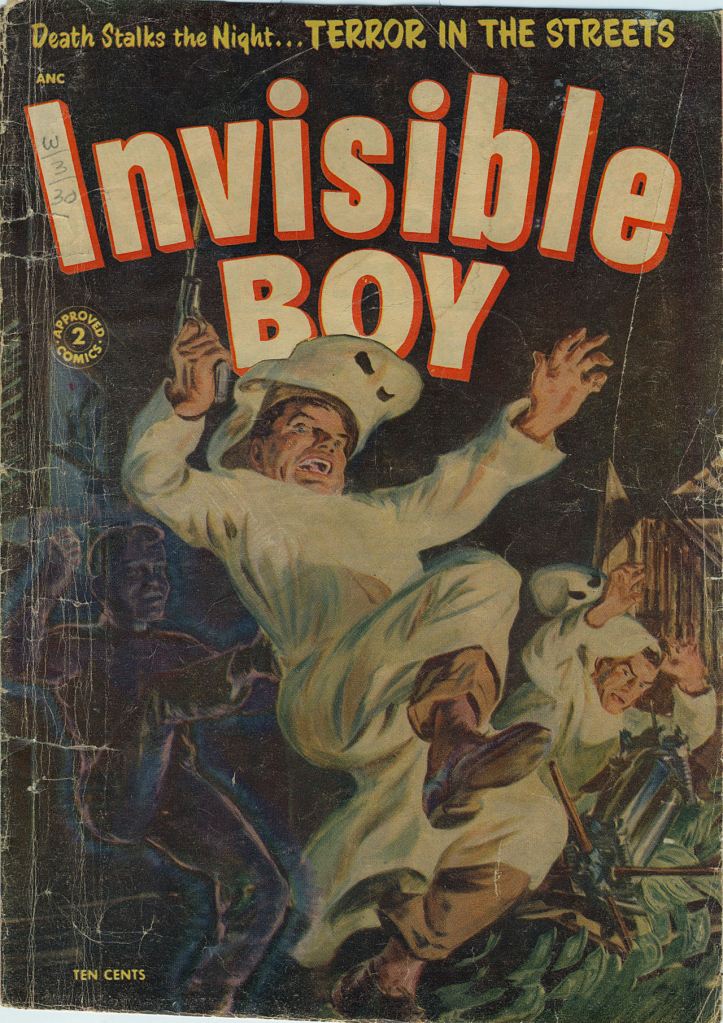
Siegel and Shuster only worked together on a strip again one more time, a forgotten character called Invisible Boy who appeared for the first and only time in St. John’s APPROVED COMICS #2. Danny Blake gains the ability to become invisible using a friendly professor’s vanishing formula, and he uses his newfound abilities as one did in the comic books: to battle criminals and get into adventures.
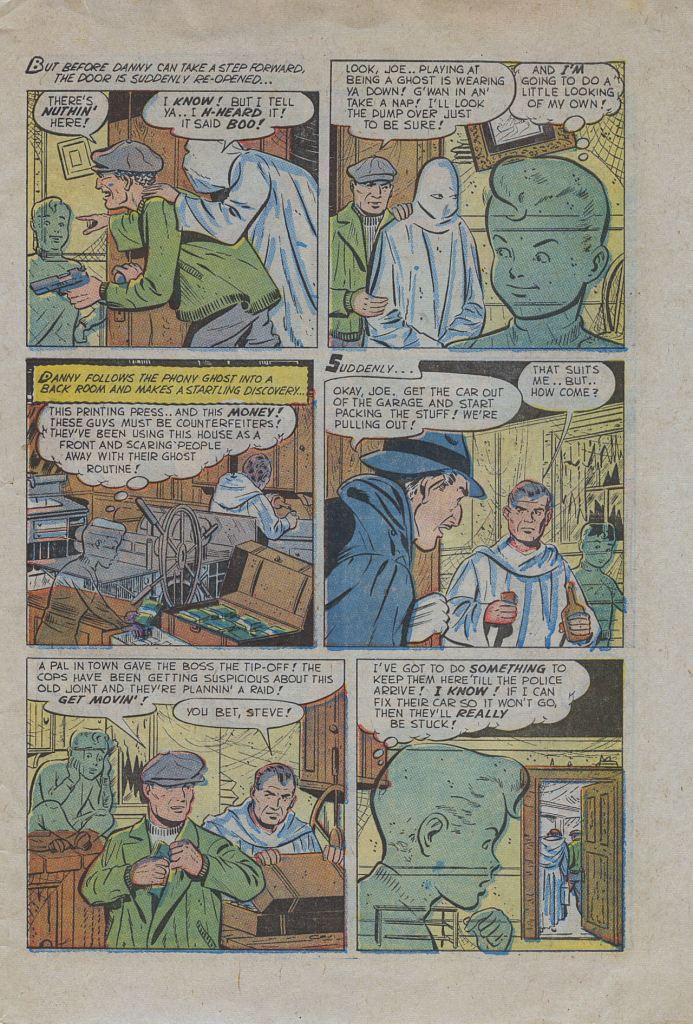
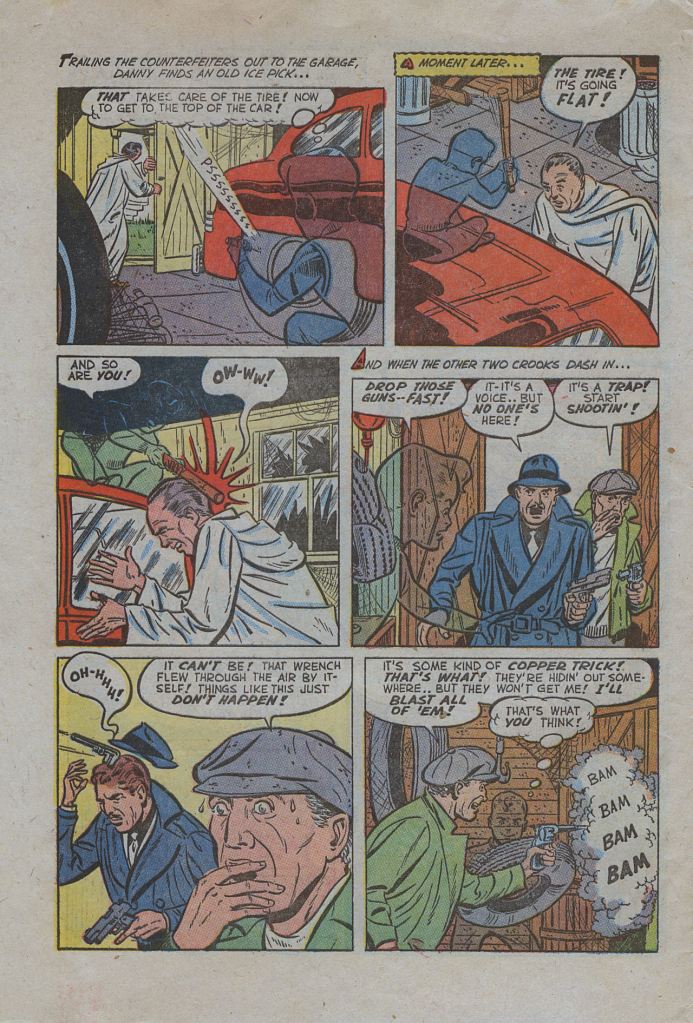
The issue included four short stories of Invisible Boy, the last of which is the one we’re looking at here. Joe Shuster illustrated these stories, likely with assistance from other hands. By this time, Shuster’s eyesight had deteriorated badly, but he still plied his trade wherever he could find work, including on unsavory and unofficial fetish comics. Invisible Boy appears to be the last strip that he worked on for a mainstream publisher.
The cover to the issue was painted by Norman Saunders, who would go on to have a notable career as an illustrator. He memorably painted the 1966 set of Batman trading cards that cashed in on the skyrocketing popularity of teh live action television series.
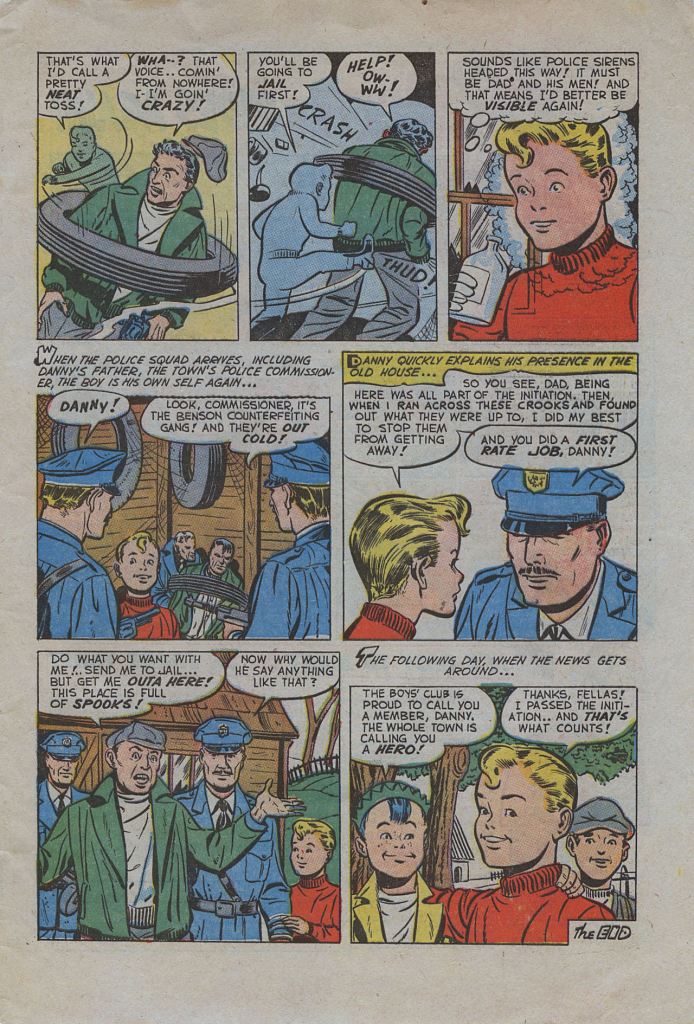
How and why Siegel and Shuster reunited for this one issue of APPROVED COMICS is a bit of a mystery, but it represented the final time that the duo would work together on a feature.
 The Tom Brevoort Experience
Actually Norman Saunders painted the Batman card set, not Norman Maurer. Oddly, you correctly tagged Saunders.
https://comicsalliance.com/the-amazing-1966-batman-trading-cards-by-norman-saunders/
LikeLike
Doesn’t look much like Shuster’s work, but I’m not familiar enough with his various ghosts/assistants to know who it might be. Doesn’t seem to match John Sikela’s work on “Funnyman” either, although that could be down to having a different inker…
LikeLike
“…but who largely didn’t get to profit from their own innovation.”
They were pretty well paid by the standards of the time, with their profit share on the Superman newspaper strip being quite lucrative, and they got settlements in some of their lawsuits (which did not stop them from suing again).
They didn’t profit anywhere near as much as they should have, certainly, and the persons they got in the 70s and the larger settlement that the Siegel family got more recently (and did the Shusters get one later?) were well deserved. But they did a lot better than most other creators back then.
LikeLike
That 1948 settlement would be worth $600,000 dollars each in today’s money
LikeLike
Invisible Boy eh? I never saw that one …
LikeLike
The art is clear though not as buoyant as Shusters’ earlier work, but the real problem is the story and bland characters with no real motivation. The kid with secret super powers within a kid gang/group is sort of novel though for the times.
Did the new code make Jerry or the publisher too nervous to throw in any kind of weird pulp angst, or was the CCA that strict in 54?
Siegel should have perhaps pivoted to TV animation in the 60’s. He had honest skills even if he could be somewhat corny, and this reads like Scooby Doo 15 years before it happened.
LikeLiked by 1 person
That makes a lot of sense.
LikeLike
Charming. Thanks for sharing. A note about the Batman cards: if I recall correctly, they were painted over Bob Powell’s pencil layouts.
LikeLike
The Batman trading cards were painted by Norman Saunders, not Norman Maurer. By the time those cards were done, Maurer was living in Los Angeles producing movies like WHO’S MINDING THE MINT?I don’t think Joe Shuster did very much of the art in the comic you posted. His main ghost in his last few years was Ray Osrin, though I’m not sure this is Osrin’s work.
LikeLike
Norman Maurer was Joe Kubert’s old friend from St. John’s Comics where they experimented with 3-D comics. is that why Maurer did those Medal of Honor stories for the DC War Books that Kubert was editing, circa 1971-’72?
Those were not badly written or drawn, which is laudable considering he had been out of the industry.
LikeLike