

Our recent piece on the Fifteen Best Doctor Who Episodes received a strong response asking for the most obvious follow-up: what would be my list of the fifteen best episodes of the original show? Well, you need wonder no longer.
A bit of a caveat to start out with. Unlike modern Doctor Who, which typically confines its stories to a single episode with rare two-parters and longer sequences, classic Doctor Who was entirely serialized. Therefore, I’ve chosen to focus on best stories rather than best episodes. It would have been too difficult to isolate those specific chapters and weigh them one against another.
The other big factor is that, as a program, Doctors Who changed and evolved all throughout its 26 year run. Which is to say that, while the general premise remained largely the same, the types of stories the show produced and how it went about telling them was very different from year to year. So on some level, this listing is a bit more arbitrary than most, reflecting my own tastes as a viewer. Nevertheless, I’ve attempted to be as objective in my thinking as possible. Still, it’s likely that some favorite popular stories will be missing from this countdown, and at least one Doctor (the hapless Colin Baker) will see his era entirely overlooked. Sorry about that, doesn’t mean that there aren’t any good stories in those years, simply that they didn’t appeal to me as much as many others.
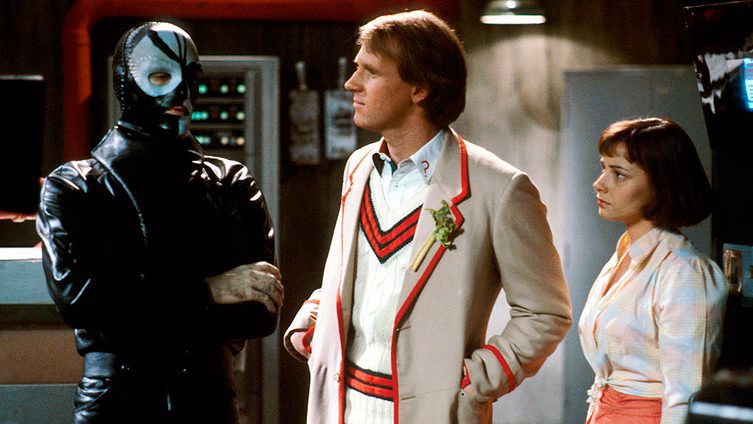
15: The Caves of Androzanni: Peter Davison’s final turn as the Fifth Doctor has proven to be one of the most popular episodes in the series’ original run, often scoring right at the top of fan polls. And it’s a good send-off for Davison, a story in which his Doctor takes more center stage than he typically did, his era being remembered for how many other characters shared his time in the Tardis with him. It’s a regeneration story as well (so Colin Baker gets to at least put in an appearance) and Davison goes out satisfyingly, sacrificing himself so that his newly-minted companion Peri Brown can survive deadly radiation poisoning. The plot is a shade too influenced by Phantom of the Opera, and the music score is aggressive in reminding you constantly that it’s there. But at four episodes, it’s a tight adventure and a fitting finale for Davison.
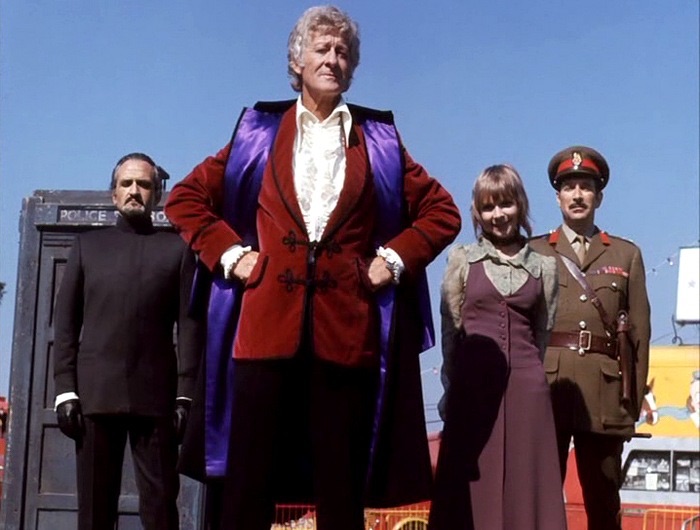
14: Terror of the Autons: There are those who adore Jon Pertwee’s inaugural season as the Third Doctor, but I’m really not one of them. Admittedly the show became a lot more adult-oriented and serious than it had been, but I found most of the stories to be overlong and a bit dry. But Terror takes Pertwee’s first story, which pitted him against the plastic-inhabiting Nestine Consciousness and improves upon it with an outing that is brisker and more delightful. This is also the introduction of two key characters for Pertwee’s era, his best companion the flighty and wacky Jo Grant and his post personal nemesis, the rogue Time Lord known as the Master. Pertwee is never better than when he is playing against the late Roger Delgado’s Master, and their continuing rivalry became such a fixture of the program that the villain appeared in every single story of the season, making him a de facto regular.
13: The War Games: There’s really no denying the fact that, at ten episodes in length, this story goes on for too long. And yet, it’s also just about the most key serial in the original show’s run, the one that pulled back the curtain on the Doctor’s mysterious origins and introduced his people, the mighty Time Lords. And the story does expertly evolve from what at the start appears to be a historical set during the First World War into something a lot more expansive and shocking. It’s also a grand farewell to the Second Doctor’s two best companions, Zoe and Jamie, who are returned to their points of origin by the Time Lords with all memory of their adventures with the Doctor erased from their minds. Troughton, as usual, is wonderful throughout, very much the template for the sort of Doctor who would follow after him. This one’s a regeneration story as well, though successor Jon Pertwee hadn’t yet been cast when it was filmed, so we’re robbed of an on-screen transformation. This was also the final story to be produced in black and white; with Pertwee’s arrival came color as well.
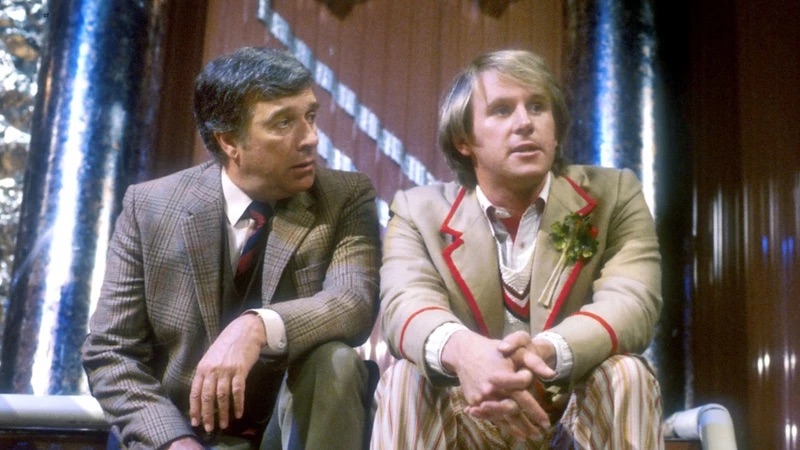
12: Mawdryn Undead: This is a story that rarely gets a lot of love, but I adore it. It’s tight, it’s lean, it has some fun time travel shenanigans at the heart of it, and it introduces the runner of companion Turlough, tasked by the Doctor’s enemy the Black Guardian to destroy the Time Lord. Mostly, though, it’s the return of former UNIT mainstay Brigadier Alistair Gordon Lethbridge-Stuart, playing a dual role as versions of the Brig from both 1977 and 1983 are simultaneously involved. (Initially, this story was conceived as a vehicle to bring back original companion Ian Chesterton, but that option fell through, which is why the Brig is working as a teacher during his retirement years.) This is one of the few times in the original series in which time travel is used as a plot element rather than as just a means of starting off a story, and there are just enough twists for the four-episode run time. And yes, the solution to the problem is a shade coincidental, but I’m willing to forgive that based on how well all of the pieces of the story fit together.
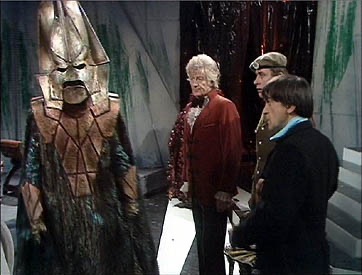
11: The Three Doctors: Another story that takes a lot of crap from fans but which is exactly what it was trying to be. Released for the show’s tenth anniversary (though well before the actual anniversary date) this adventure delivers the most obvious and requested event since the First Doctor unexpectedly turned into the Second: a full-on crossover uniting William Hartnell, Patrick Troughton and Jon Pertwee as the three incarnations up to that point of the titular character. As has happened every time this sort of thing has been attempted, there are problems; in this case, Hartnell’s health is poor enough that he can’t be a full participant in the story and is relegated to a series of drop-in video appearances filmed separately. But Troughton takes up the slack, relieved from the need to drive the action as the main character he can focus on being puckish and delightful, while Pertwee as the Doctor of the moment can continue to carry the plot. The interactions of the three Doctors are entirely spot-on and nostalgic without being entirely backwards-looking. And new villain Omega chews up the scenery with relish, seemingly needing to take his performance to a higher gear just to get a word in edgewise as the main feature is happening elsewhere on stage.
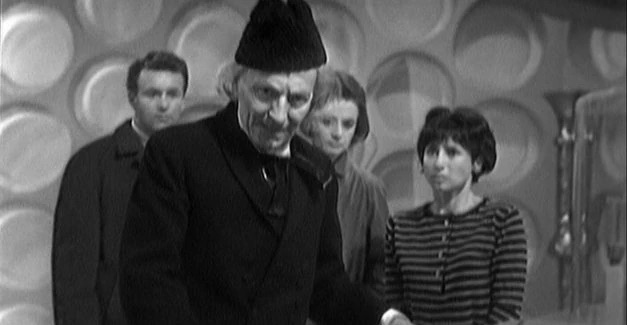
10: An Unearthly Child: Well, the first episode or two, anyway. Once things get rolling in the distant past with the Tribe of Gum, the story is a bit of a slog. But as Doctor Who’s very first episode, that initial 23 minutes are as spectacular and wonderful today as they ever were. A potent mix of creepy and otherworldly, you can see exactly why viewers would become captivated by the strangely-alien Susan Foreman, her two concerned Schoolteachers and her mysterious Grandfather who hangs around in an old junkyard. The transition from the ordinary Police Box in the yard to its spacious science fiction interior still holds a great sense of wonder and impossibility to it. And the Doctor as an unknown quantity is very compelling. Yes, they were still figuring the format out and would improve on these dynamics in the weeks and months ahead. But even here, for the first episode and much of the second, the span of the show’s potential shines through brightly. And William Hartnell is in fine form as the arrogant and prickly titular Doctor.
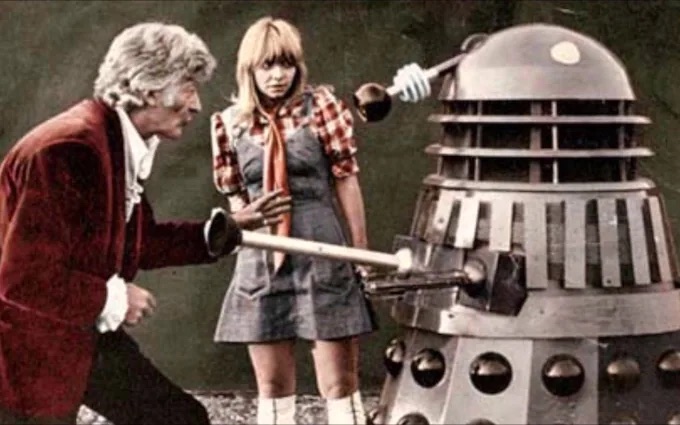
9: Day of the Daleks: This story was so strong that whole chunks of it were purloined for other more recent science fiction epics, notably both the Terminator films and the Days of Future Past sequence in X-Men. After an absence of several years, the Doctor’s most popular monsters returned in a major way, this time assisted by their apelike servants, the Ogrons. Having completely conquered the world in the future, the Daleks appear invincible. But a human resistance sends a team back 200 years into the distant past to prevent the Daleks from gaining a foothold on Earth, and the Doctor and Jo Grant wind up embroiled in the action. It’s a cracker of a story, one that restored much of the lethal pepper-pots’ sense of menace and inevitability after some earlier overuse. And both Pertwee and Katy Manning are in fine form, both having settled comfortably into their characters over the preceding year. Plus, with the Doctor still confined to exile on Earth, this story got him away from mundane reality and back into the heart of futuristic science fiction conflicts again.
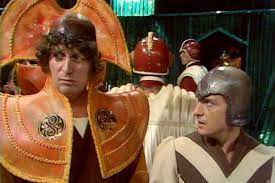
8: The Deadly Assassin: If I’m honest, I could have filled up this list with nothing but Tom Baker episodes, so strong was much of his tenure in the role right up to his final year. This story, though, is the one that almost brought the whole production to a halt as a cliffhanger in which the Doctor is being drowned caused an uproar among media watchdogs for being too violent. It’s the single story in which Tom Baker flies solo and the Doctor’s first return to his homeworld of Gallifray, which is painted in far more shades of grey than we might earlier have been led to believe. Having been absent since the death of Roger Delgado, the Master returns here as a desiccated walking corpse, and the mythology of the Time Lords only getting twelve regenerations is laid out for the first time. The special effects of the era aren’t quite up to the challenges of depicting the world inside the Matrix, but Baker is electrifying and magnetic throughout.
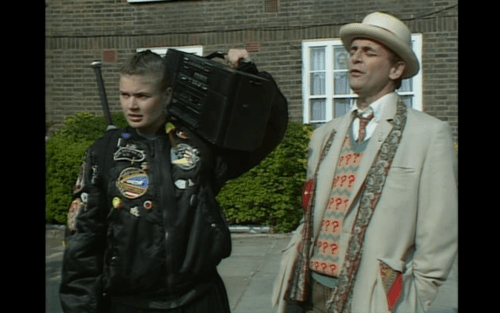
7: Remembrance of the Daleks: Doctor Who had fallen into quite a state during the 1980s, often becoming a sad, cheap, campy pantomime of itself. But right near the end, it suddenly righted itself. Too little too late, but the code had largely been broken for how to approach the show’s future, even though that would take another fifteen years or so. Paired up with his best companion, the firecracker Ace, Sylvester McCoy adds shades of menace and manipulation to his performance, becoming the most outwardly playful and inwardly sinister of all the Doctors. Set in the year 1963 just hours after the events of An Unearthly Child, this story mixes two rival factions of Daleks with a prototype UNIT team from before that organization had been born, and mixes in some welcome commentary on the racism of the era as well. It’s great, swift and sure (even if the music track is again a bit too aggressive for its own good.) Plus for the first time, the Daleks get to levitate their way up a flight of stairs, putting the lie to the oft-mocked limitation of those popular monsters and making an exciting cliffhanger to end the first chapter on.
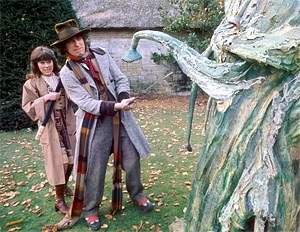
6: Seeds of Doom: This is less one great story than it is two, as the first half concerns the Doctor and the always-marvelous Sarah Jane Smith journeying to a remote arctic station where alien pods have been discovered in an attempt to keep them out of the wrong hands, and then a second half where the action moves back to London after the worst has happened and the alien Krynoid has become manifest. In particular, this story has a nasty, dark edge to it, manifested no more clearly than in the character of Skorby, a mercenary dispatched to retrieve the pod by any means necessary and who is a legitimately deadly threat to the Doctor and Sarah for the first half before changing circumstances force him to switch sides later on against the Krynoid and his Bond villain boss. In many ways, this is more like a Jon Pertwee story than a Tom Baker, but Baker and Sladen’s obvious chemistry makes it a charming and thrilling affair.
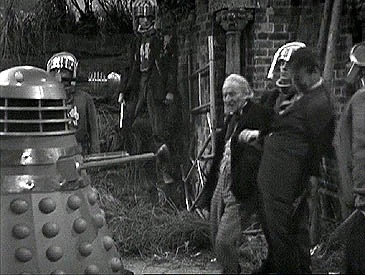
5: The Dalek Invasion of Earth: This one just immediately ups the stakes on everything that had made the Daleks such a sensation in their first appearance. Placing them in the familiar confines of future Earth made their menace more palpable and real. Their surprise appearance at the close of the first episode, rising up from the Themes, is an iconic moment. There’s a pervading sense of futility as our Tardis crew is split up and spends most of the adventure separated and on the run as the Daleks continue on inexorably towards their goals. The parallels to Occupied France are strong but not overwhelming, and the manner in which the Daleks transform their hapless prisoners into mindless Robomen is appropriately disturbing. And most of all, the surprising departure of Susan from the cast at the adventure’s end finishes the story off with a legitimately emotional sucker punch of an ending.
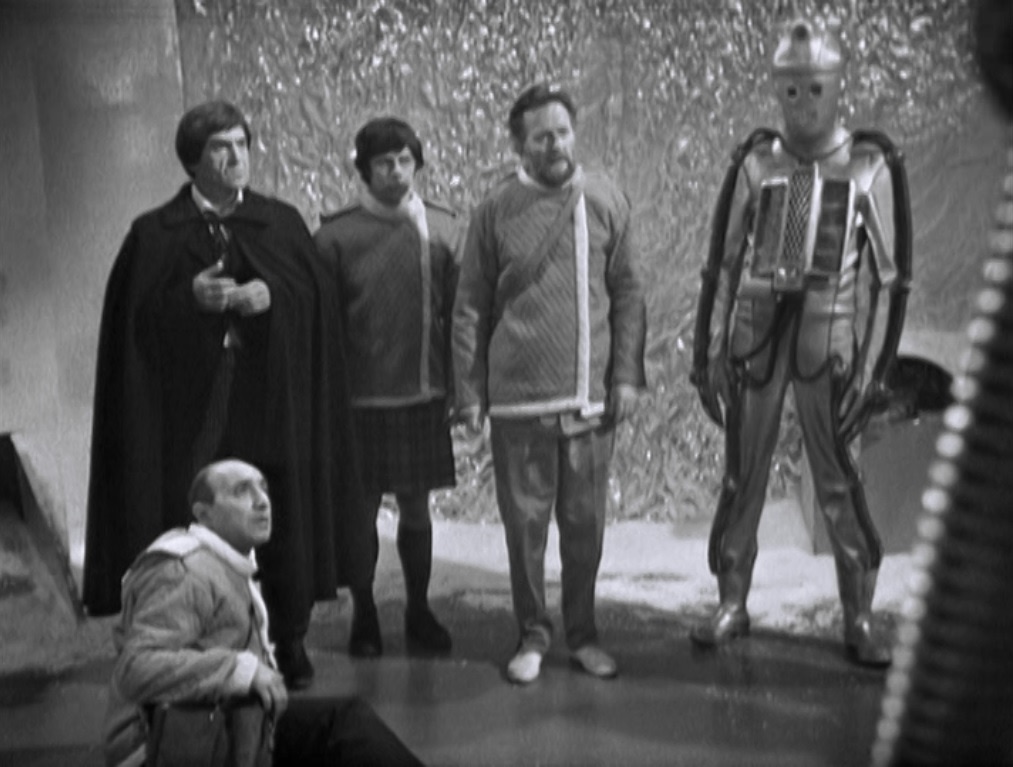
4: Tomb of the Cybermen: Patrick Troughton’s Second Doctor perfected what has become known as the “base under siege” story, in which a particular limited location is overrun with monsters and the Doctor must work to bring everybody through alive. Tomb, though, is an inversion of this formula, as the Doctor joins an expedition attempting to break into the tomb of his mechanized enemies, who are believed to have perished. The Cybermen here are such wonderful designs, and the plot of venturing into a creepy tomb so fits the black and white era of the show. The Doctor and Jamie are both in fine, funny form, and newcomer Victoria gets a few moments to shine (and to show just how far in over her head she really is.) There are sadly some elements of the story that have aged poorly, notably the racist depiction of the servant Toborman, but if you can overlook those lapses, this is a great showcase for Troughton and his most perennial enemies.
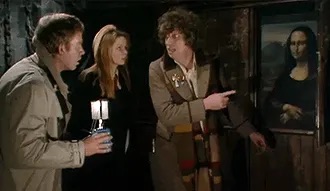
3: City of Death: Douglas Adams and Doctor Who seem like the perfect match, and so this story combines the chocolate of one with the peanut butter of the other in a way that maximizes both. Shot largely on location in Paris (the City of the title), the story cleverly turns the theft and forgery of the Mona Lisa into just a single element of a temporal plot dating back to the dawn of man. Baker is superbly matched by Lella Ward as Romana, a fellow Time Lady, and Julian Glover is memorable as the splendidly sinister Skaroth of the Jaggeroth (despite some shoddy make-up when his true alien nature is revealed. This serial also contains a number of the show’s wittiest and most memorable lines of dialogue, including, “I say, what a wonderful butler, he’s so violent!” and, ‘You’re a beautiful woman probably.” Of all of Classic Who, this is the best story to show a modern viewer in order to get them to appreciate it.
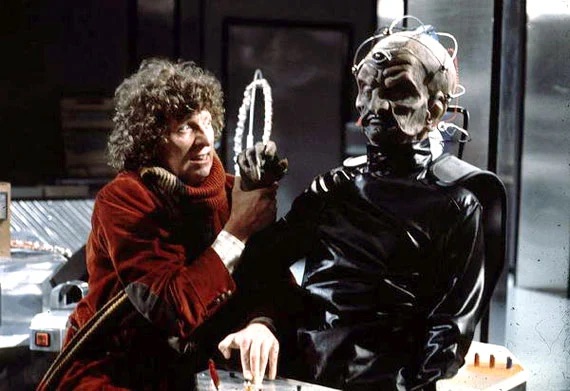
2: Genesis of the Daleks: This story is so good and so packed with ideas that any one of them (The Doctor steps on a land mine) could be broken out into a full modern episode. The Doctor and his companions Sarah Jane and Harry Sullivan are dispatched on a mission into the past by the Time Lords in order to prevent the creation of the Daleks and instead bear witness to those events. This story also introduces Davros, the creator of the Daleks and one of the show’s greatest villains, especially as depicted here. The moment when the Doctor must weigh the decision whether or not he has the right to commit genocide and wipe out the Daleks before they are born is a defining one for the Baker incarnation of the character. A masterpiece.
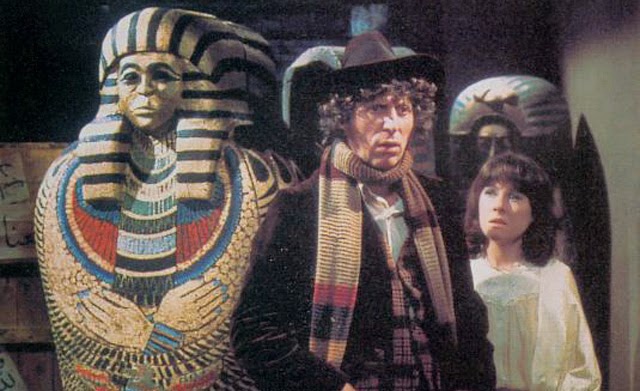
1: Pyramids of Mars: Hands down the best story of the original run, it’s fascinating that it took so long to bring back Sutekh in the modern series (and it didn’t cover itself in glory with his depiction.) This one combines creepiness and gothic horror with a sense of fatalism (a sequence in which the Doctor and Sarah abruptly quit the adventure and return to her present, which lies now in ruin because Sutekh was not stopped in the past was reprised by the modern show—and was here devised as a way of filling out a short episode’s run time.) and both Baker and Liz Sladen are great in it, with Sarah Jane coming across as extremely competent and formidable on her own in the manner of contemporary companions. Plus, nothing can beat that Egyptian iconography.
 The Tom Brevoort Experience
I would have included Earthshock and Power Of The Doctor (I still remember the way I came up with saving Adric after seeing Earthshock the first time) but I can’t think of any of yours to drop. I guess it’d have to be 17 Best then…
LikeLiked by 1 person
Good list. Notes:
Caves of Androzani: I’ll never forget a friend of mine pointing out the ending takes it as a given the Doctor knows how to milk a bat. It’s a fun one (though I never cared for Peri) and the guy who plays Sharaz Jhek is terrific.
2)Roger Delgado is still the definitive Master. I think Sarah was a better companion than Jo but I do like Jo.
3)Zoe’s fate in War Games is depressing. She joined the Doctor because she realized her life on the Wheel in Space was miserable and unsatisfying, now she’s stuck back at it with no idea it was ever different (from what I’ve read online, even the media tie-ins don’t improve things for it)
4)Mawdryn Undead deserves love.
5)Yes, the Deadly Assassin.
6)I’d probably pick Image of the Fendahl over Seeds of Doom but it’s a matter of points. I do think the man who plays Chase is amazing — it’s not easy to sound believable when you’re ranting about how bonsai violates plant rights, but he pulls it off
7)Dalek Invasion of Earth was my first serial. I love that in one scene Barbara references the town where I grew up.
8)City of Death is the only one I’d really argue with. And I do not care much for Lalla Ward (though we know Baker did).
9)Genesis and Pyramids, no argument. Sarah’s confidence and Elisabeth Sladen’s screen presence show what’s been missing with Ruby Sunday.
LikeLiked by 2 people
Doctor Who has the eeriest opening show music ever recorded for popular distribution. The magnificent weirdness of it had me twitching my toes as a child when I first heard it; it still affects me today, though not as strongly. Music’s nature is such that it effective sets the stage for plot, and this is particularly true in Doctor Who’s case…
Come visit my blog, and leave a few comments, if you like
http://www.dark.sport.blog
LikeLike
Lovely reminiscence. A couple here I haven’t seen that I will look up.
LikeLike
That’s a solid list. I’d probably add “The Mind Robber” from the Second Doctor’s tenure, but like Mr. McBeezlebub I’m not sure what serial to drop.
LikeLike
Fantastic piece, Tom. Have you considered doing this for other shows. Or even listing your favourite episodes for each iteration of The Doctor?
LikeLike
glad to see a good number of Pertwee and Davison episodes. Among those not listed, I’d prob put The Daemons high up on my personal favorites. Also Inferno, before alternate Earths were done to death. Also Horror at Fang Rock, Brian of Morbius, and the Davison historical episodes (kings demons, black orchid, visitation) are sometimes underrated favorites.
LikeLike
I mean, “The Doctor steps on a land mine” IS an entire modern episode. 🙂
LikeLike
And easily the best episode of the series!
LikeLike
Currently Tubi has a ton of classic Doctor Who available for viewing as single episodes, unlike Pluto, who merely play them in a continuous loop. Sadly, there are precious few Second Doctor serials available, despite the fact that many of the missing ones are been animated. Meanwhile, all but 2 of the First Doctor complete and animated ones are there.
LikeLike
My Top Five from the original series (if anyone really cares):
5) INFERNO (1970)…the parallel world was downright scary, and the music and weird sounds throughout its seven episodes added to its creepiness.
4) GENESIS OF THE DALEKS (1975)…a masterpiece, not in my top three because of my top three.
3) THE SEEDS OF DOOM (1975)…a pre-cursor to John Carpenter’s The Thing…a masterpiece of plot and characterization
2) PYRAMIDS OF MARS (1975)…Season 13 was quite an achievement…
1) THE CAVES OF ANDROZANI (1984)…By far my favorite…the characters in this one are superb (Jek, Stotz, Morgus, Krau Timmen)…only marred by the Magma Beast…
LikeLiked by 1 person
In December 2000, I wrote the following about my top 5 favorite “Doctor Who” stories:
“Spearhead from Space” (1970)
Jon Pertwee’s first appearance as the Doctor; also the first color episode of the series. The fact that the whole thing is shot on film (as opposed to videotape) greatly enhances it, making it feel like a movie. The Doctor discovers that he’s trapped on Earth for the time being (beginning the long earthbound U.N.I.T. adventures of Pertwee’s Doctor) and has to fight the menace of the Autons.
“Terror of the Autons” (1971)
The Autons make their second (and as far as I know, last) appearance in the series. This story marks the debut of the Doctor’s arch-foe The Master, played by Roger Delgado.
“Robot” (1974-75)
Tom Baker replaces Pertwee in the role of the Doctor. The Doctor helps U.N.I.T. and Sarah Jane Smith fight off an evil organization trying to destroy the world.
“Genesis of the Daleks” (1975)
First appearance of the Daleks’ creator, Davros. The Doctor and his companions are sent to the planet Skaro to try and prevent the creation of the Daleks. Davros’ S.S.-like soldiers foreshadow the Empire’s military in the movie “Star Wars.”
“The Seeds of Doom” (1976)
Another rare earthbound adventure with Tom Baker as the Doctor, and an appearance by U.N.I.T. at the end. A meteorite has been recovered which contains an alien form of plant life. That particular kind of plant absorbs everything in its way, including human creatures. But a fanatical plant collector insists on adding the deadly meteorite to his collection, by any means necessary, including murder. In the end, the giant plant creature has taken over the collector’s estate and is still growing. This one makes it look like working on the show was great fun, and the fun comes across.
“Kinda” (1982)
This is Peter Davison’s 3rd story as the Doctor (replacing Tom Baker in the role). The Doctor and his companions arrive on a wilderness planet inhabited by “primitive” natives (who turn out to be telepathic) and a small group of militaristic colonizers who keep disappearing in the woods. Very nicely directed episode and some great characters.
2025 update: I would today add “The Five Doctors” to my list of favorites. Flawed as it is, it’s still a lot of fun to see Troughton and Pertwee (and their companions) back in action.
LikeLike
I’d offer up The Horror of Fang Rock – just so atmospheric! It does a lot with not much to make a properly creepy haunted house type drama, all trapped in one place. One of my favourites.
LikeLike