

The revival series of DOCTOR WHO has been around now for close to two decades, and has produced any number of wonderful and thrilling episodes. It improves upon the formula of the original 1963-1989 series (while studiously maintaining a tangible connection with it) by putting its greatest emphasis on emotionalism. DOCTOR WHO, the modern version, is a romantic show, in all meanings of the word. It’s about exciting adventures, certainly, but what really makes it connect with people is its ability to forge an emotional connection with the audience, to make them feel something. This is a lot more difficult to do than it might seem, and few shows have done it with such clockwork consistency as DOCTOR WHO.
The show has managed 189 episodes so far, and can be relatively daunting for a new viewer to come into, for all that it regularly sets up entry points at the beginning of virtually every season. So people tend to ask a lot about where they ought to begin, and what the best episodes of the series are. And this is a very subjective thing–ask any ten fans and you’ll get ten very different lists. But this one is mine, after a bit of careful consideration. Here are my selections for the Fifteen Best Episodes of DOCTOR WHO. I’ve held my selections just to the modern series to make things easier.
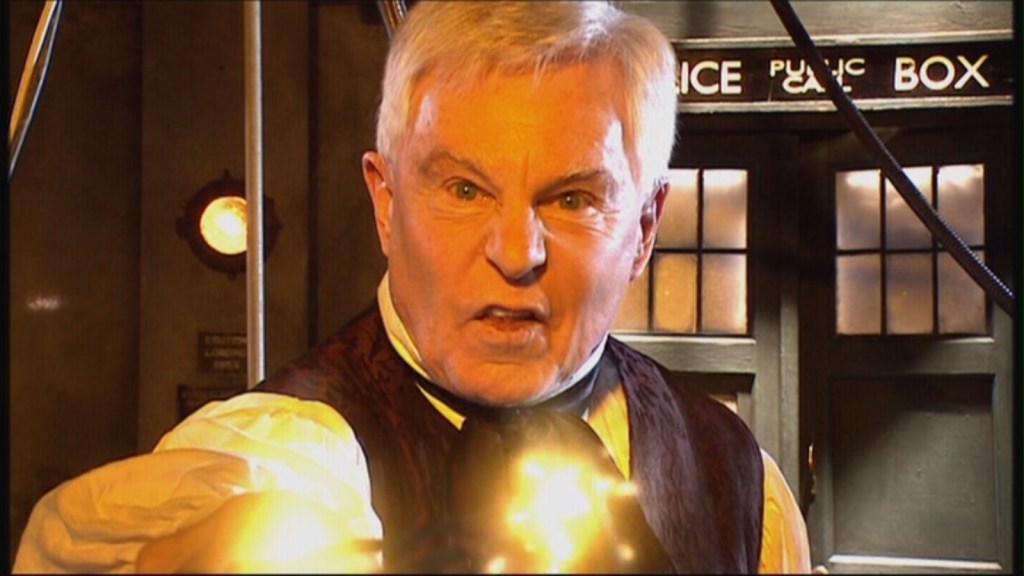
.15) Utopia (s3ep11): The lead-in chapter to the series finale two-parter, this episode delights in bringing the popular Captain Jack Harkness back and integrating his adventures in the spin-off series TORCHWOOD into the main show. It also pays off the cryptic final message of the Face of Boe earlier in the season: “You Are Not Alone.” Sir Derek Jacoby is marvelous as the Professor, and the eventual reveal of his true identity is a horrifying turn well performed. And John Simm comes off the blocks like a rocket as a new incarnation of the Master who can effortlessly stand toe-to-toe with David Tennant’s scene-stealing Doctor. It’s also got a tremendously good cliffhanger, undercut only slightly by the fact that the following episode pretty much throws away its resolution.
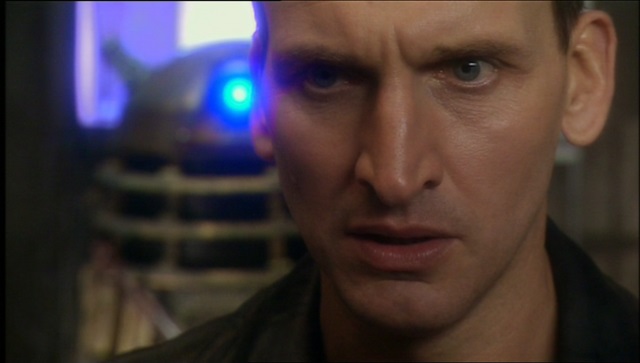
14) Dalek (s1ep6): Other episodes in this first season have proven to be more popular with fans, but I don’t think that any of them were better than this one, which reintroduced the Doctor’s most implacable enemies, the Daleks. Given their absurd retro-design, a classic 1963 innovation that remains entirely impractical to modern eyes, it would have been easy for the Daleks to have become the butt of a joke in the new series. (And occasionally, they have been.) But here, in their introduction, by holding the story down to just a single Dalek, the show is able to make it both incredibly powerful and terrifying. The Doctor’s almost out-of-character violent reaction when laying eyes on what he believes to be the last remaining member of the race that murdered his own is both shocking and effective. Christopher Eccleston, underrated and always terrific, is never better than here. And the episode’s classic “base under siege” struggle, as the Dalek journeys upwards from the depths of the Van Stratten underground vaults inexorably getting closer to liberation and further atrocities, makes for a compelling drama.
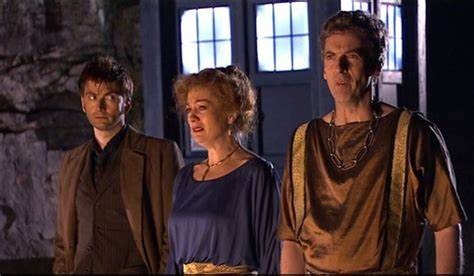
13) The Fires of Pompeii (s4ep2): This episode has become noteworthy in retrospect, having featured performances from both future companion Karen Gillan and future Doctor Peter Capaldi. But often overlooked is just what a crackerjack episode this is, introducing and grappling with the concept that there are certain historic events that even the Doctor cannot change–and, indeed, in this instance, he needs to take the responsibility for the horrors to come himself, to prevent a worse apocalypse. Through the eyes of new companion Donna Noble, we get an articulation of one of the prime principles of the show: “Just someone. Please. Not the whole town. Just save someone.” Apart from that, the episode is silly and funny and unexpectedly dark by the end.
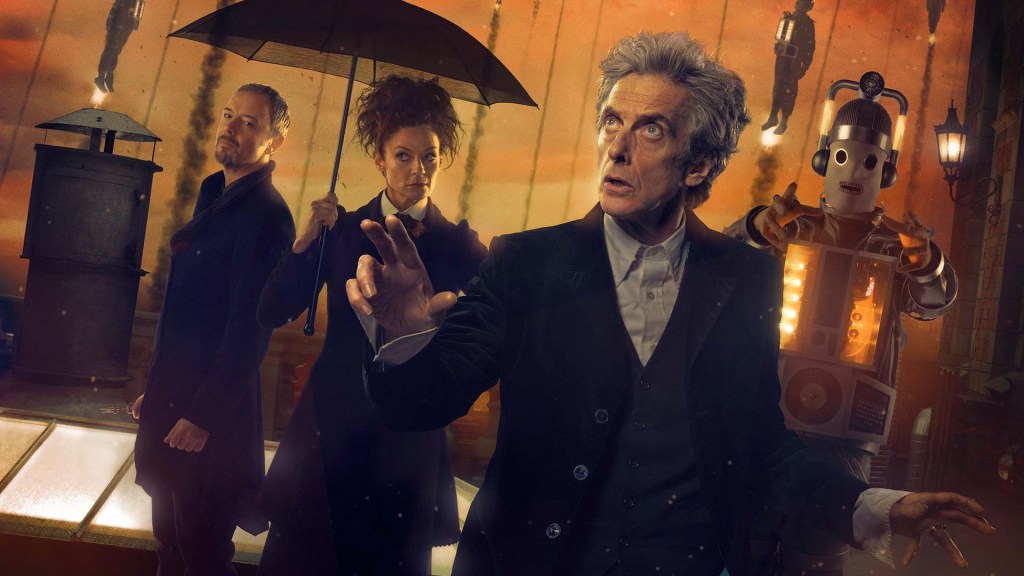
12) World Enough and Time (s10ep11): I’ve written at length about this particular episode:
But the gist bears repeating. This is a masterfully constructed episode, one that was largely done in by its own promotion. Because the marketing efforts for the season and for this episode in particular spoiled the two big revelations that drive this installment, as the Doctor takes Missy, whom he’s attempting to reform, to a spaceship-world that’s attempting to escape the gravity of a black hole. The episode is genius in misdirecting the viewer’s attention to the fate of poor companion Bill Potts, who suffers one of the darkest outcomes in the show’s canon, keeping it away from the other big surprise that’s hiding in plain sight. Having watched a few latter day reaction videos where the person viewing is unaware of all of the pre-release hype about this episode, it hits like a hammer, perfectly. And even knowing the surprises to come, it remains an inventive and horrifying journey.
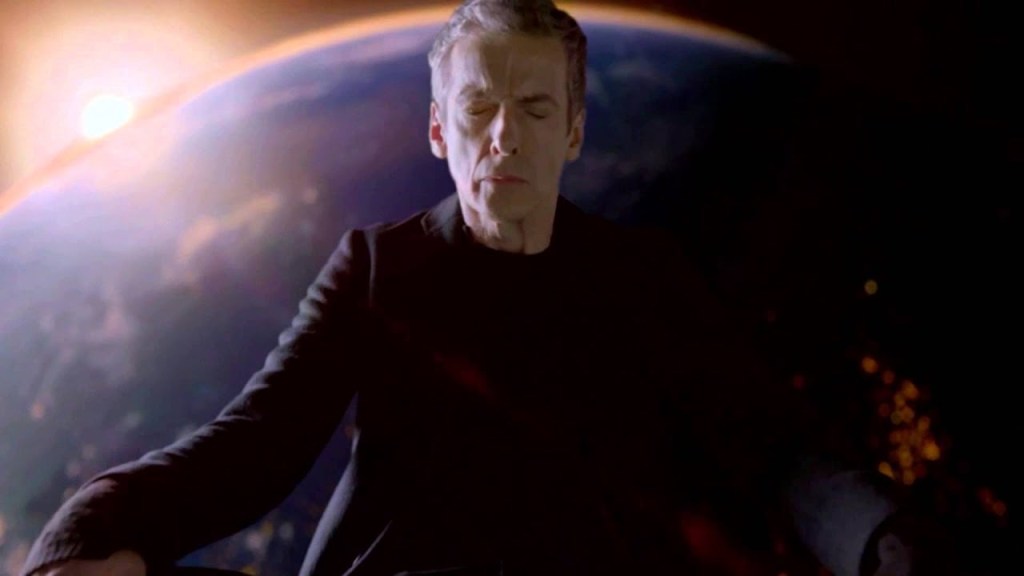
11) Listen (s8ep4): Peter Capaldi was a somewhat divisive Doctor, as he wasn’t cut in the same mold as his two immediate predecessors, David Tennant and Matt Smith. To make matters worse, it took a season for his writers to really capture how to get the best out of him and his character. That said, his first season has some stellar episodes, and this one is especially strong. It interweaves the histories of Clara Oswald, Danny Pink and the Doctor himself into a complex tapestry of events that reveals moments of exceptional power and feeling. The ultimate reveal, that the creature that the Doctor has been searching for all along may be nothing more than a manifestation of his own fears can be frustrating for some, but it speaks to something elemental about the character. Also, writer Steven Moffat gets to exercise his rom-com chops in this one as he develops the burgeoning relationship between Clara and Danny.
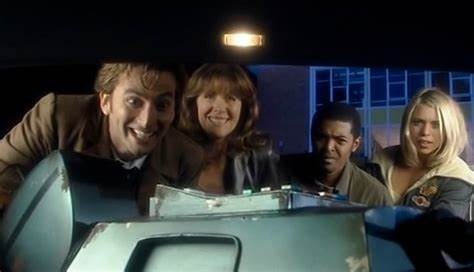
10) School Reunion (s2ep3): On the one hand, this episode is shameless fan service, featuring the return of the classic series’ most memorable companion Sarah Jane Smith. But even for those who have no grounding in classic WHO, this episode strikes gold by contrasting Sarah Jane’s path with that of Rose and the inevitable finality of that path that awaits in the future. The whole thing turns on an obvious problem that sits in plain sight but which has never been articulated before this moment: “You can spend the rest of your life with me. But I can’t spend the rest of mine with you. I have to live on.” Add to this an exceptional performance by Anthony Head as the villainous Mr. Finch–his confrontation with the Doctor around the gymnasium pool is legendary–and you’ve got the makings of a terrific episode
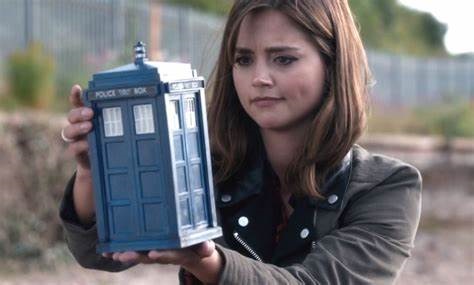
9) Flatline (s8ep9): Another entry from the first Capaldi season that hits its marks with precision, this episode is especially clever for how well it integrates the needs of the shooting schedule, sidelining Capaldi for much of the action. Its monster, the two-dimensional Boneless, are appropriately terrifying and well-realized even on the show’s limited budget. And Jenna Coleman ad Clara Oswald effortlessly holds the reins as the prime driver of the action–leaving just enough space for the Doctor’s eleventh hour appearance to take care of the problem in heroic fashion.
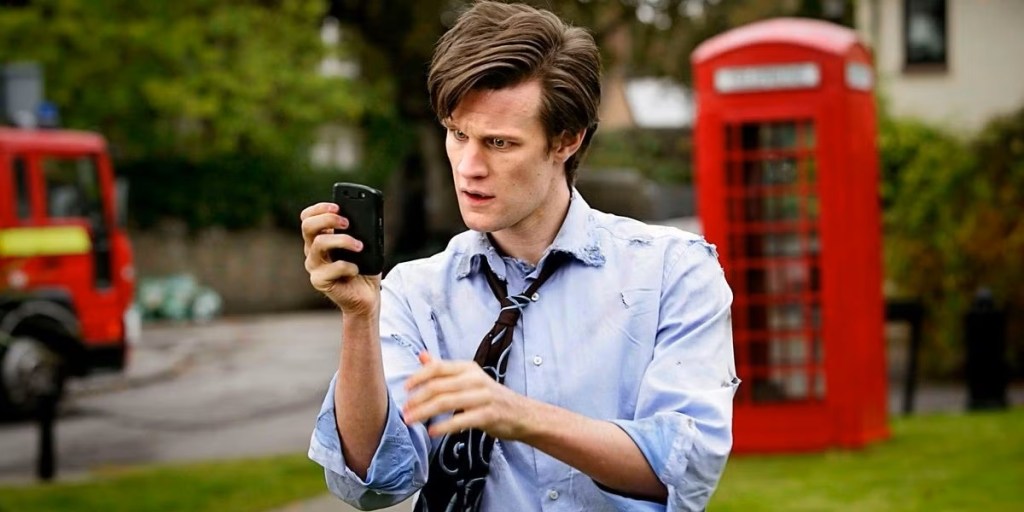
8) The Eleventh Hour (s5ep1): It’s worth remembering just how close DOCTOR WHO came to ending when star David Tennant decided it was time to move on. The common wisdom was that nobody else could ever be as popular and well-embraced in the role as Tennant, so what point was there even in trying? Fortunately, new lead Matt Smith and incoming showrunner Steven Moffat were up to that challenge, and in a single episode refute the argument entirely. From his first moment on screen here, Smith owns the episode and the role, and Moffat dazzles with a script that’s mythic, contemporary, finely-structured and emotional in all the right ways, and which packs in surprises all the way up to its final seconds. It’s a virtuoso performance all the way through, and tops even the excellent “The Christmas Invasion” as the best introductory outing for a new Doctor (and a new showrunner.)
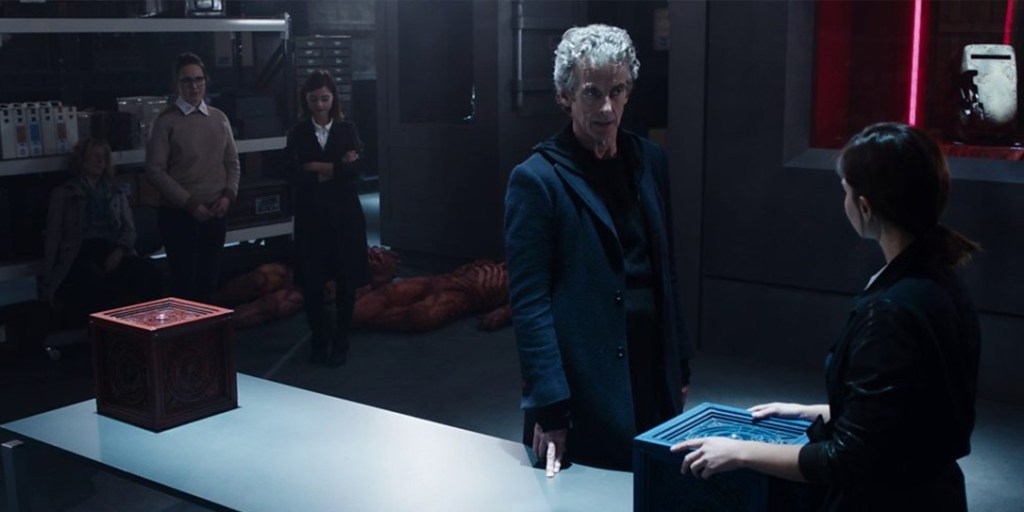
7) The Zygon Inversion (s9ep8): The second part of a two-parter (and I don’t mean to brush aside the first parts of the two-parters that are on this list. But it’s almost always in the second half that these stories achieve genius), this episode builds tension to a second half that’s a tour-de-force performance by Peter Capaldi, now having fully defined his approach to the character. The Doctor confronts the humans and the Zygons who appear only to happy to go to war with one another and he clearly spells out just what that means and just what the unintended consequences will be, in a way that defines this version of the Doctor: “No one else will ever have to feel this pain. Not on my watch.”
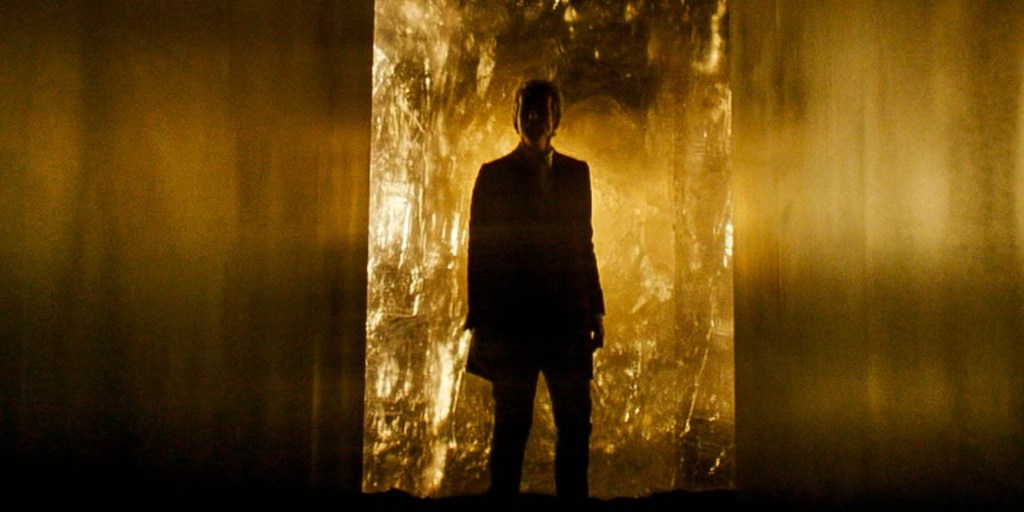
6) Heaven Sent (s9ep11): Only three episodes later, Capaldi is given the opportunity to better that performance by crafting an episode in which he is the only character, as the Doctor is trapped within his own “bespoke torture chamber” following the death of Clara Oswald, inexorably pursued by a creature whose touch will mean his demise, and forced to puzzle his way to a means of escape, no matter that it takes him billions of years and unendurable suffering. It’s a tremendous episode, one constructed in the same clockwork fashion as the prison the Doctor finds himself in, and its reveals fall solidly into place one by one in staggering fashion. It’s a terrific showcase for Capaldi, who carries the episode on his back all by himself.
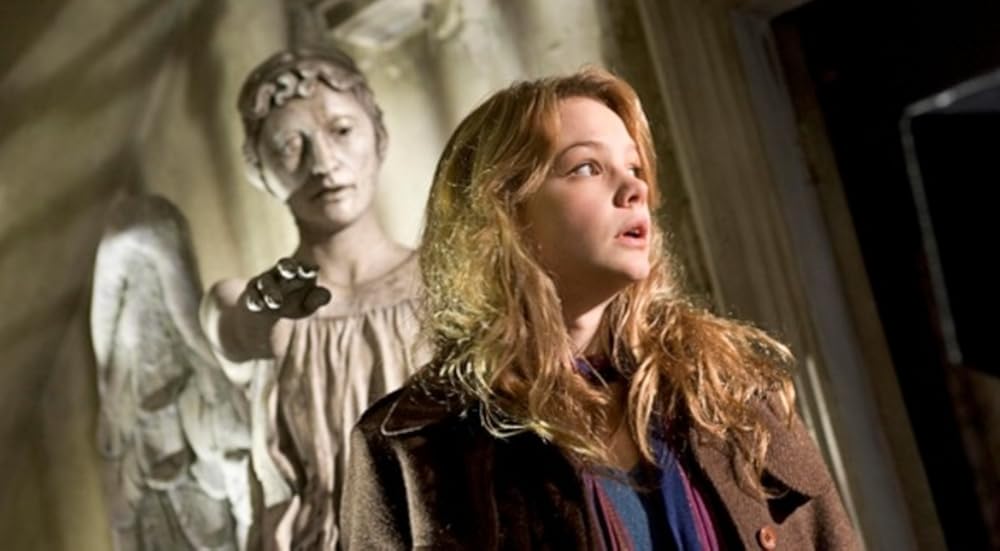
5) Blink (s3ep8): At a guess, this episode is the one most often cited by fans when asked by newcomers where they should start if they have an interest in DOCTOR WHO. And it’s a brilliantly-constructed little episode, introducing one of Steven Moffat’s most effective monsters, the Weeping Angels. But as good as the episode is, it’s only marginally an episode of DOCTOR WHO as, due to restrictions on the filming schedule, neither the Doctor nor Martha Jones are in it apart from a few minutes towards the end. Instead, events are carried by a young Carey Mulligan, back before her rise to prominence as a world-class actor. Carey as Sally Sparrow is an engaging protagonist, and the fact that she isn’t a headline character, and thus isn’t guaranteed to be as indestructible as the series regulars, gives this story a bit more suspense and jeopardy than usual, as the outcome isn’t pre-ordained.
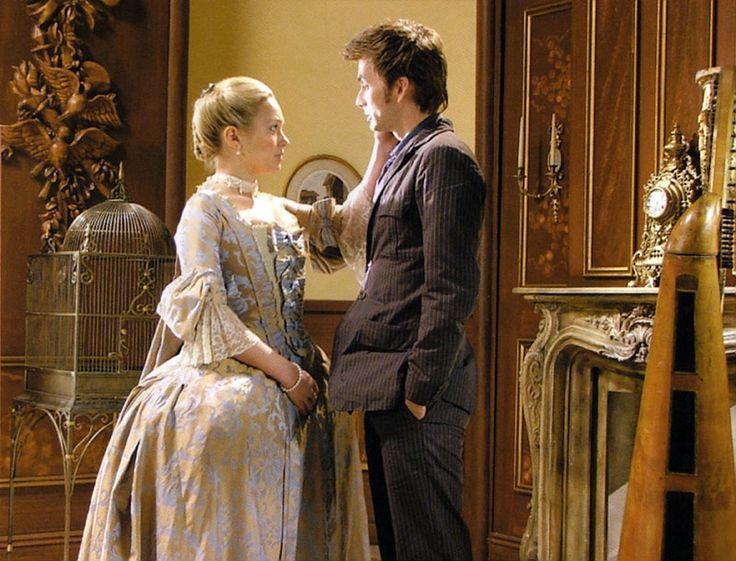
4) The Girl in the Fireplace (s2ep4): Very clearly inspired by Audrey Niffenegger’s book “The Time Traveler’s Wife” (a novel that writer Steven Moffat would eventually adapt into a television series himself in later years), this is perhaps the most overtly romantic episode in the series’ long run, as the Doctor finds himself communing from a 51st century starship to 18th Century France throughout the lifetime of historical figure Madame Du Pompadour, protecting her throughout her lifetime from this mysterious futuristic threat and forming a bond with her that only sees him getting his heart broken by the end of the episode. The central plot is clever, and the episode’s monsters, the clockwork Droids, are suitably cool and disquieting. But it’s a series of emotional punches that propel this episode into the upper echelons.
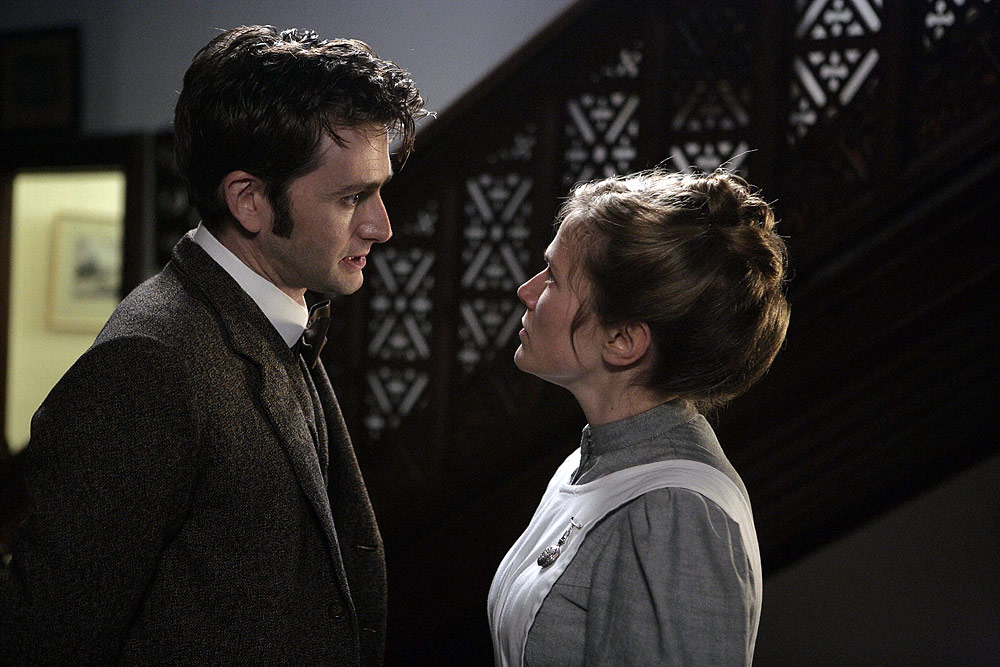
3) The Family of Blood (s3ep9): Another second part that expertly pulls together the threads set up in the first half, this episode succeeds in part because it has a lot to say on a variety of subject and nails its theses in each case. Apart from being a meditation on the cost of war among the young, the prime driver of this story is the Doctor having rewritten his biology to become human, in an effort to elude the titular pursuing enemies. Tennant is terrific as the Doctor’s human incarnation, John Smith, and he’s able to differentiate the two personas without effort. Again here, it’s the tragic love story that provides the emotional weight to the episode, as the Doctor is given no choice but to resume his Time Lord stature, consigning John Smith to an ill-earned death. His great fury in the aftermath is at once terrifying and yet feels well-earned–and his eventual rebuke from Smith’s love interest Joan Redfern, feels similarly justified.
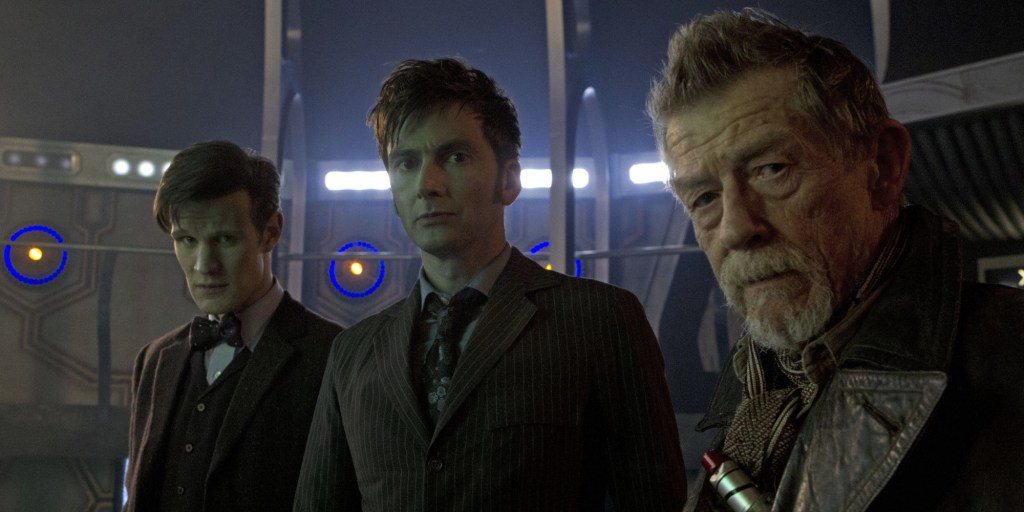
2) The Day of the Doctor(s7ep14*): This one almost feels like a cheat as it isn’t a typical episode at all, but rather the shows much-ballyhooed 50th Anniversary Special. Accordingly, it unites the two most popular modern Doctors, Smith and Tennant, while introducing a new lost incarnation for the character, as played by John Hurt. Honestly, the injection of Hurt’s Doctor into the canon really shouldn’t work–it’s clear that he’s there to fill in for the absent Christopher Eccleston, who declined to participate. But somehow, Steven Moffat’s cooked-to-perfection script makes it all palatable, and Hurt sells his legitimacy as the Doctor flawlessly. Bringing a resolution to the long-running Time War subplot and absolving the Doctor of any wrongdoing, the cherry on top of this episode’s sundae of delight is an unexpected cameo appearance by classic Doctor Tom Baker, here embodying “The Caretaker”, who may or may not be the Doctor himself. It’s probably gobbledygook to a novice viewer, but for anyone who has any fondness for the series up to this point, this episode is a grand slam home run.
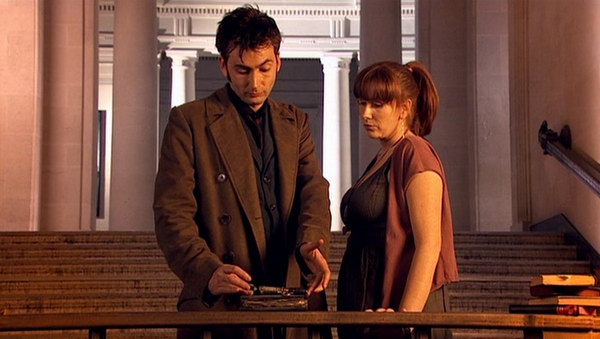
1) Forest of the Dead (s4ep9): The second half whose first part sets up the intriguing multiple mysteries of the empty Library, the little girl watching events transpire on her television, the apparent demise of companion Donna Noble and the arrival of archaeologist River Song, this outing pulls all of those strings together into a well-threaded whole that’s breathtaking to watch, and which retains its power no matter how many times it’s been viewed. The manner in which the ending expertly fakes at tragedy for several convincing minutes before reversing itself in the closing moments of the program is expertly done, and provides an emotional roller coaster for viewers who cannot help but grow invested in the relationship between the Doctor and the enigmatic River Song. The compelling menace of the Vashta Nerada, shadowy piranhas of the air, is one of the most effective monsters the show has ever featured (despite having no physical form to speak of), and the Doctor’s ability to broker a truce with them through the simple convenience of his reputation was the first use of what became a signature flourish of the program (before ,inevitably, becoming an overused and too-heavily-leaned-upon trope.) It’s an underdog selection for best episode, I expect, but between script, performances, music and direction, it’s astonishingly rock-solid.
As you can see, there aren’t any selections here from the past couple of years. And that’s because, while I still love the show, I feel like the quality of the writing has gone down overall. Seasons these days are fielding more misses than hits, and more telling–many more episodes that are simply “there”; neither particularly good nor particularly bad. Still, there is always hope for the next season, as DOCTOR WHO is a show that by its nature reinvents itself constantly. So hopefully, there are new additions to this list waiting at some point in the future. (It is perhaps telling that four of the top five episodes listed here were all written by the same person.)
 The Tom Brevoort Experience
I’d add one Chibnall Era episode, Fugitive Of The Judoon, the one where we meet the Fugitive Doctor. Whitaker’s run was almost hampered by bad writing and having too many companions to give any character enough time to gain depth, the Doctor especially, but this one stands up to most on the list above. Jo Martin was a delight first as Ruth Clayton but that served also to lull the viewer into never expecting the woman to turn out to be another unknown incarnation of the Doctor and Martin’s portrayal of Ruth’s true self dominated the screen. Later revelations of an unknown past for the Doctor were weaker and much less well received than Martin’s Doctor (whom I insist on calling Doctor Ruth because of her disguise) but this one was additive and epic at the same time.
LikeLike
Fugitive was a good episode, though a bit marred by the fact that all of the promise it set up was largely squandered thereafter. That said, it does work pretty well–though I wouldn’t rate it as highly as any of the episodes on my list.
LikeLiked by 1 person
Tom, great list; however, I’d put Utopia and Dalek at the top two. The return of the Master is one of the revival’s signature moments, and the return of the Daleks cemented the fact that the series’ new producers weren’t screwing around, IMHO
LikeLike
Everybody’s list is going to be slightly different, I think.
LikeLike
So. Speaking as someone who has seen very little Dr. Who (with the exception of the last season, because I’m a fan of Ncuti Gatwa)— do you think I could watch your 15 best episodes and enjoy them out-of-context? Or are they really only best enjoyed (and understood) in their proper place in continuity? (With the understanding that when you listed the second half of a two-parter as one of your favorites, I’d watch Part 1 also.)
LikeLike
Especially as you’ve seen teh most current season and so know the essential set-up of the series, most of these episodes ought to be accessible enough for them to work for you without needing to see everything else in-between.
LikeLike
I’ve never understood the enthusiasm (yours is widely shared) for Family of Blood. At no point do the villains seem formidable enough for the Doctor to go to the lengths he does to escape.
LikeLike
the whole point of the story was that they had a short life span, if they could get the Doctors’ they would live long enough to destroy the world. He was hiding from them hoping they died out, because he was giving them a chance to escape his punishment. The very end says it all, they wanted to live forever, the Doctor made sure they did …in punishment. The Doctor hiding was him trying to be merciful, giving them a chance to die out before they needed to be dealt with.
it’s one of my favorites
LikeLiked by 1 person
I liked Christopher Eccleston, David Tennant, Matt Smith, Peter Capaldi, Jodie Whittaker ( Her Doctor was hyper like Tennant’s ) and I’m still waiting to see more of Ncuti Gatwa’s Doctor ( who is more laid-back like Eccleston & Capaldi’s Doctor ). I remember and loved The Day of the Doctor ( which I looked up on Wikipedia because I remembered there being an avatar of Rose Tyler in it and wanted to check — wasn’t Bad Wolf being said by different characters leading up to this & and in this too? I remember the doomsday weapon The Moment/Rose Tyler avatar giving the Doctor hints to another option and saying it out loud as if the characters could hear me or my impatience that the Doctor hasn’t got there yet ), I remember most of these episodes ( The Forest of the Dead ( with River Song – liked her ), The Girl In The Fireplace ( not the bad guys ), Blink, The Eleventh Hour, The Fires of Pompeii, Dalek but not clearly. I know I never missed any Capaldi, Smith & Eccleston seasons.
LikeLiked by 1 person
It isn’t on Tom’s list but I like THE BIG BANG ( Matt Smith’s Doctor – June 26, 2010 the 13th and final episode of the 5th series and second part of the two-part series finale, the first part -“THE PANDORICA OPENS” – June 19, 2010 – which I also liked )- The 2-Part story won the 2011 Hugo Award for Best Dramatic Presentation, Short Form ( source Wikipedia ).
LikeLike
I was a big fan of midnight because it reminded me of The Twilight Zone…sometimes the biggest threat is fear and how quickly humans can turn on each other. It was also an episode where the Dr is questioned about his presence and isn’t accepted as helping but a potential threat.
LikeLike
Yeah, for ne Midnight was the most surprising omission from this list.
LikeLike
Great episode!
LikeLike
I’d have Midnight and The Empty Child/The Doctor Dances in my top five. Midnight was claustrophobic small Doctor at its best, and “Are You My Mummy” to this day rings through my mind more powerfully than any other line in Modern Who. Agree Dalek is superb and would have Heaven Sent even higher.
LikeLike
I think Parting of the Ways, Vincent and the Doctor and Midnight should be added
LikeLike
my favorite thing about Forest of the Dead is the villain being from S1 of Scooby Doo, Where Are You.
The episode at the time I liked was The Doctor Dances, when I thought “everyone lives” was a novel concept and not an idea that the series would use to cheapen deaths for shock value, not unlike modern comics.
Tom, id love to see you do a similar list for the classic series.
LikeLike
I’d like to read him expounding on the best classic companions too. I know my faves were Ace, Adric, Jamie, Leelah, Sarah Jane, and Tegan but it’s also good to learn what someone more articulate thinks.
LikeLike
as a teen, it was Leela, Tegan and Peri for me (unsurprisingly).
Now, I love Liz Shaw, in a small part due to her brief tenure, so she didn’t stick around too long and wear out her welcome, like some companions.
LikeLike
Liz was great and would make an expanded list for me. Peri? How bad she was at that accent turned me off and the honor of not only having one of the worst send offs but that it was supplanted by one just as bad!
LikeLike
I actually got to met Nicola in one of those early Who conventions outside Philly in like 86 or 87, so that probably went a long way to mitigating the material that both she and Colin had to deal with at the time. Like many people of the era, the characters have been rehabilitated by their Big Finish work.
LikeLiked by 1 person
All excellent choices! I just wanted to add, when I taught my course on Doctor Who to a room full of kids who were mainly there because a) they liked me as a teacher and/or b) they heard it was a “TV class,” “Dalek” was the first episode no one asked to go to the bathroom during! This was a huge win as it was the class right before lunch and the kids had been in class all morning. Also, I’ve always loved how “School Reunion” and “The Girl in the Fireplace” feel like companion pieces – the first showing what it’s like to travel with the Doctor, as they will always go on without you, and the second showing what it’s like to be the Doctor, having to go on after those you love die. I get chills! Okay, I could go on and on (and on!) but I’ll leave it there :).
LikeLike
(Sir) John Hurt, not William Hurt, played the “War” incarnation of the Doctor in “The Day of the Doctor.”
LikeLike
I myself have to beware of getting them confused.
LikeLike
My favorite Doctor Who writer is Steven Moffat and I noticed most of the episodes on your list were written by him. I was pleased to see that Flatline is on your list – I think it’s actually the moment at the end where Capaldi’s Doctor embraces his role as a hero. My list would have to include “Vincent and the Doctor”, “The Lodger”, “The Doctor’s Wife”, and “Twice Upon a Time”.
LikeLike