

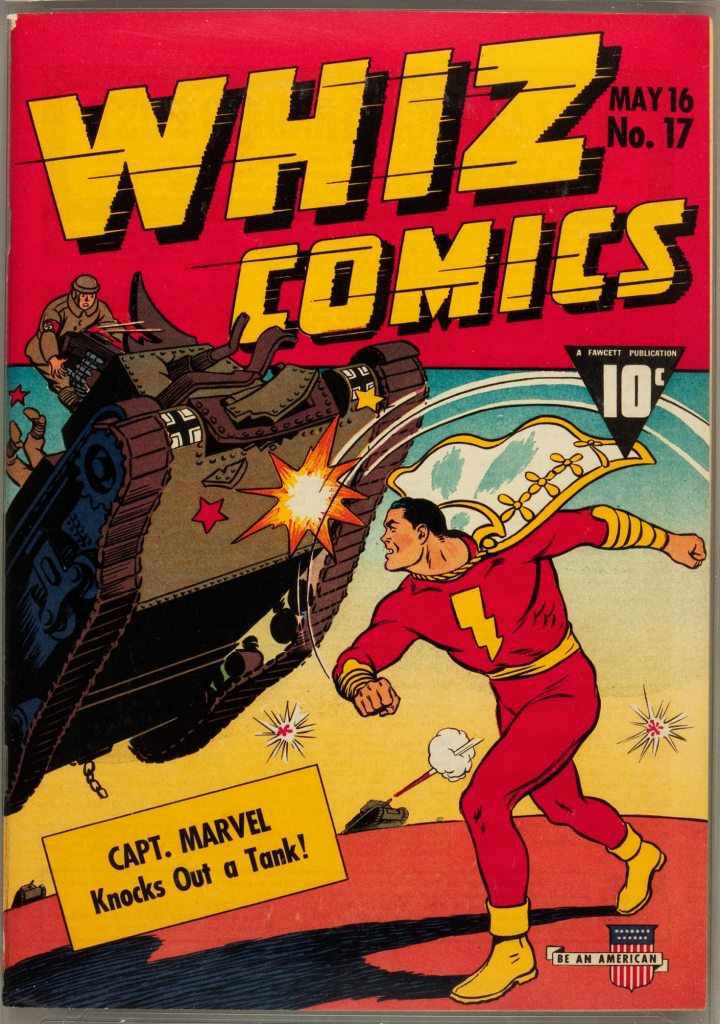
Continued stories weren’t really a big thing during the Golden Age of Comics. They got experimented with a bit, but in general the common wisdom seemed to be that the young audience for comic books couldn’t be depended upon to reliably come back for the next installment, and that instead giving them a great and complete experience in a single issue was the way to build brand loyalty. One firm that bucked that trend somewhat was Fawcett, and so the conflict between Captain Marvel and Spy Smasher ran for multiple issues. The earlier battle between the Sub-Mariner and the Human Torch had been set up in one issue, had two parallel stories the next issue, had the actual meeting and battle in the third, and then ran a single-page finale in the fourth. Continued, but not in the same way. So this multi-issue Captain Marvel/Spy Smasher storyline was something relatively unique for the time.

As before, the author of these stories remains unknown. But the artwork on this Captain Marvel chapter was produced by C.C. Beck and Pete Costanza.

Kind of weird that Billy buys a suit in Captain marvel’s size and then transforms into the Captain afterwards. Plus, wouldn’t the clothes switch out with him, as his regular attire does? Comics!


Why Captain Marvel doesn’t immediately go after Spy Smasher in the sky is one of those prevailing mysteries of plotting that comic book stories of this era were rife with. Surely that would have been a lot easier, right?
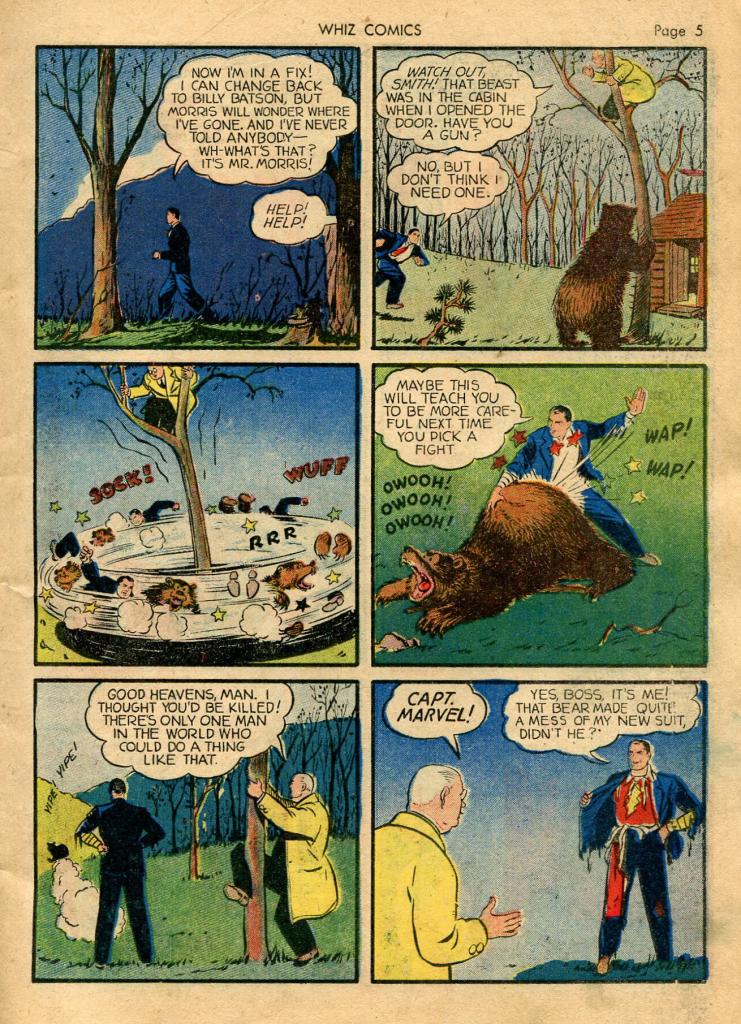
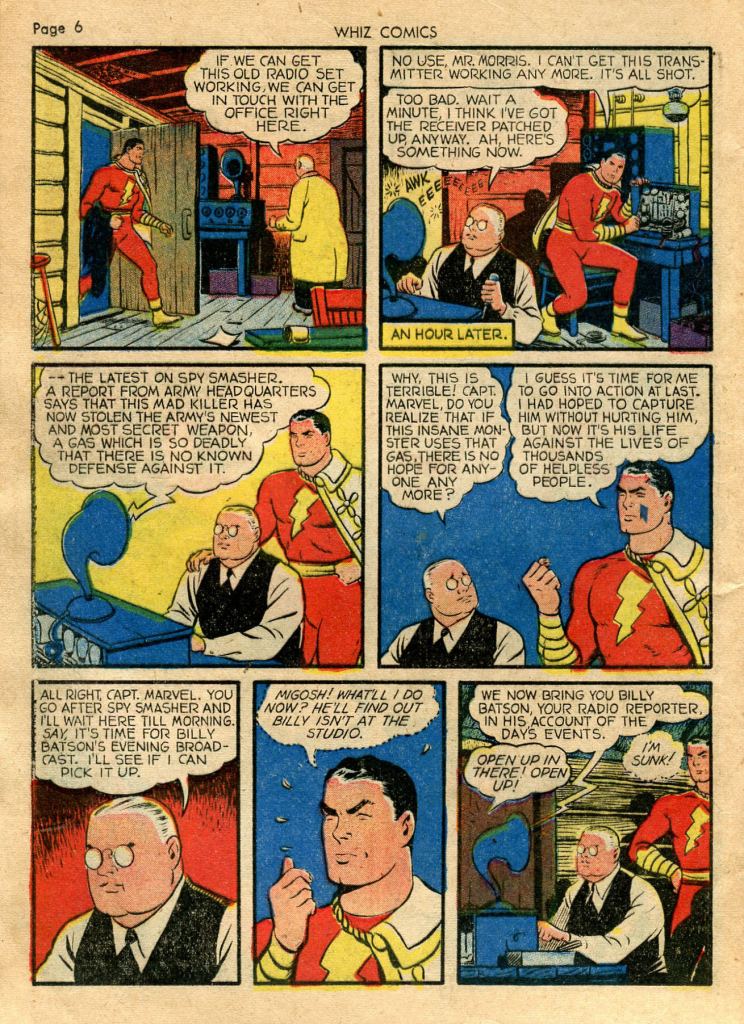
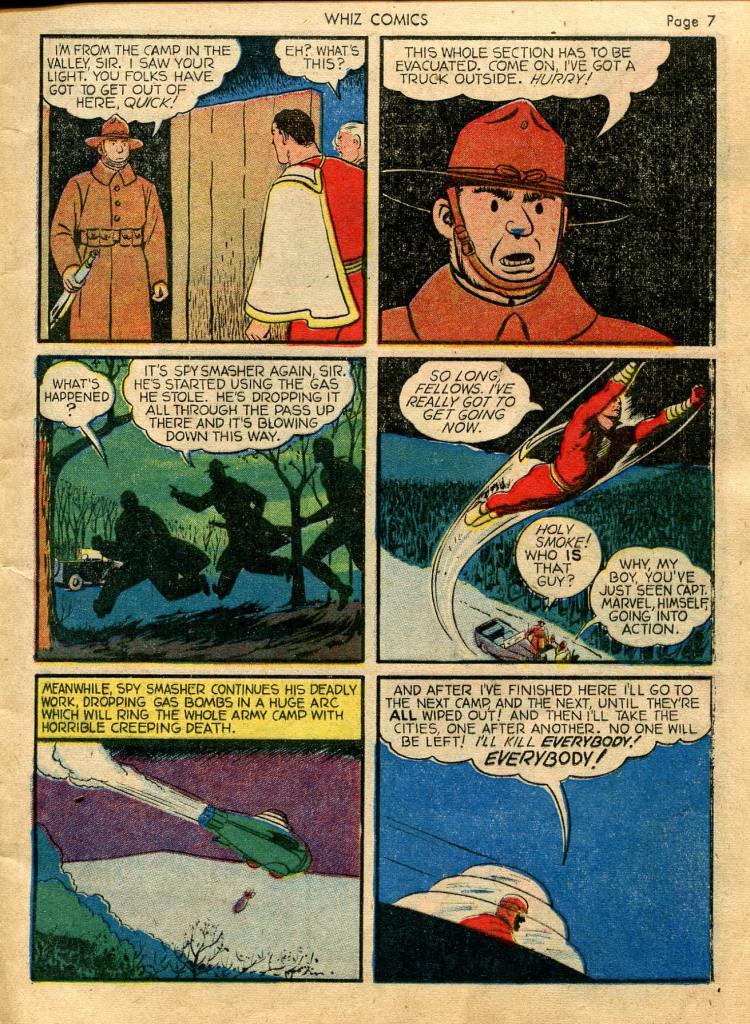
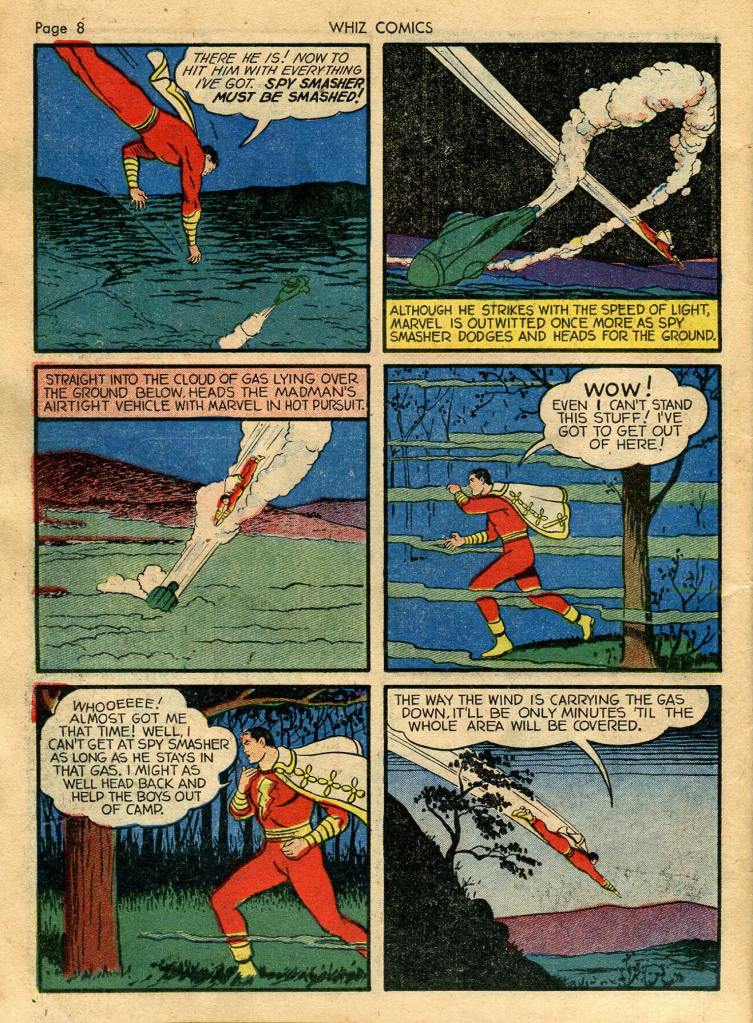
Captain Marvel’s vulnerability to the deadly gas is another convenient way to keep this story from instantly ending, though both he and Superman could sometimes be overcome in this manner in their early period.

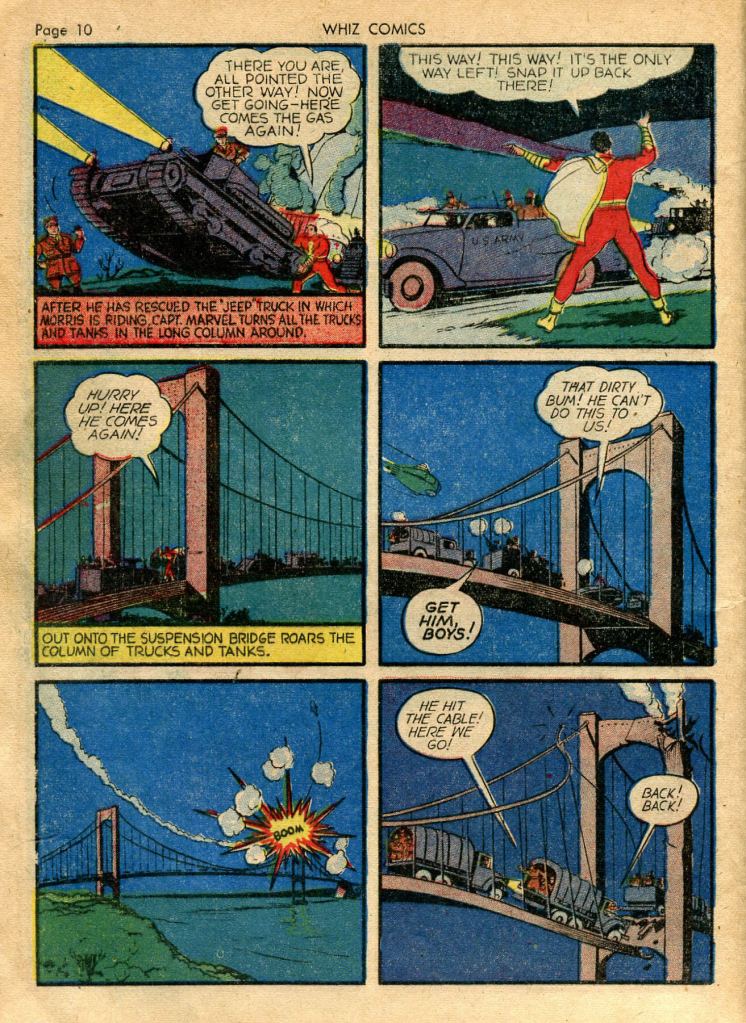

And that’s it for this chapter. We don’t really see all that much of Spy Smasher in it, and he and captain Marvel never meet directly–which is likely fortunate for Spy Smasher. But the Spy smasher story in this issue picked up from where this adventure left off.

Again, the writer’s name has been lost to history, but the artwork on this chapter was composed by Charles Sultan.


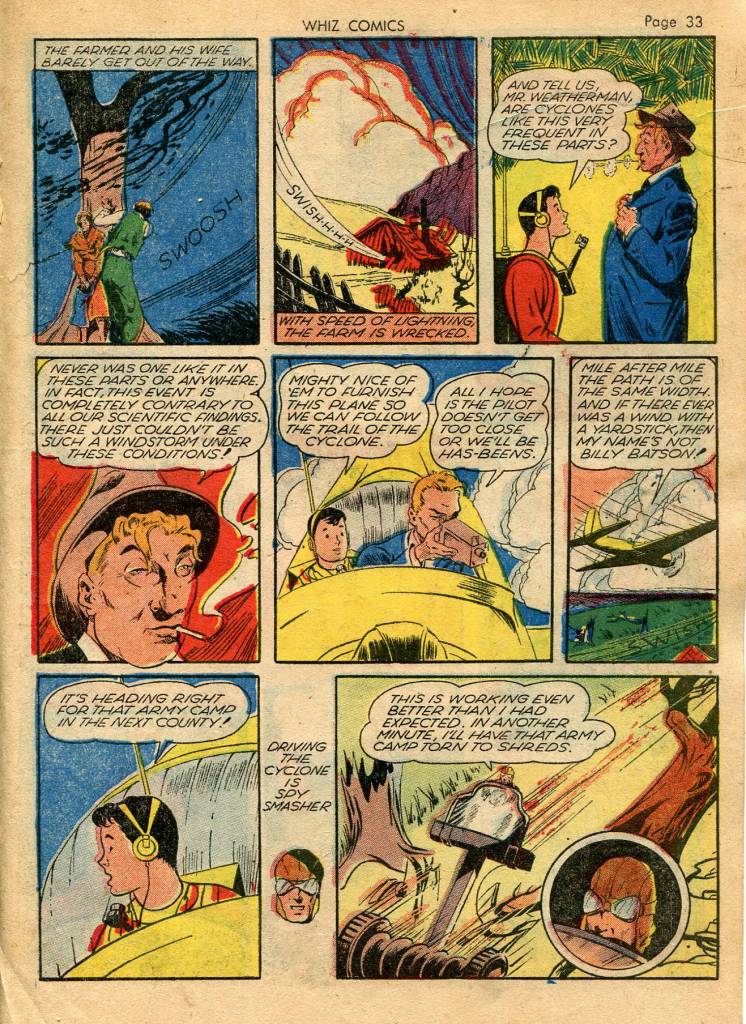


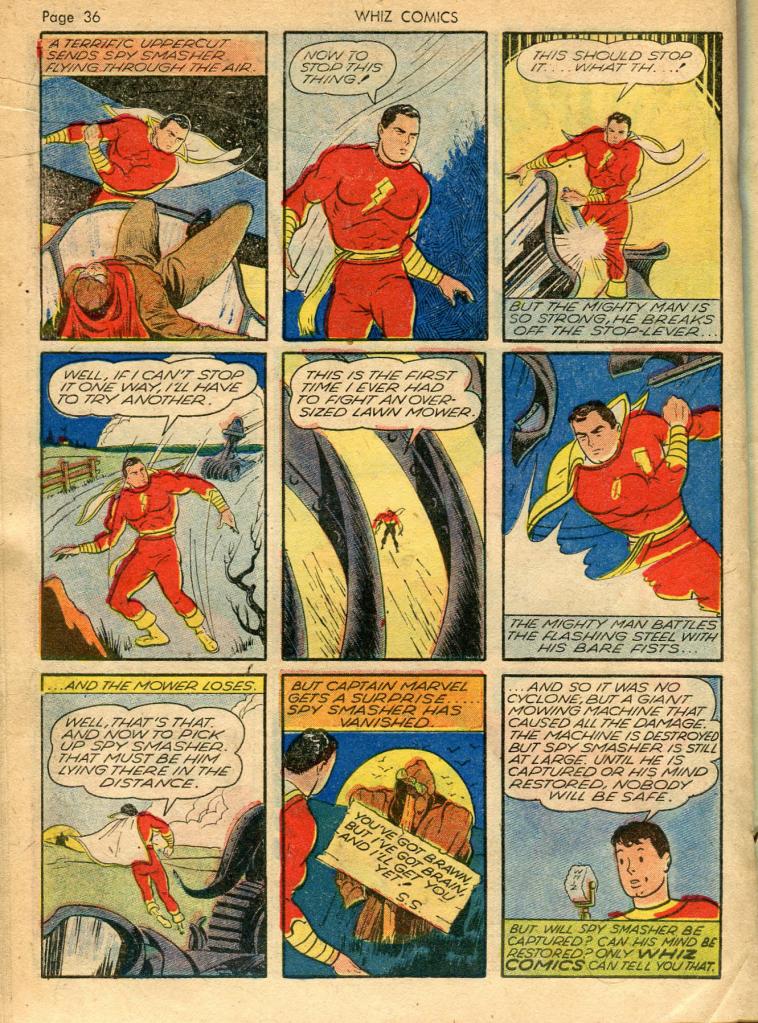
Captain Marvel really gets very little page time in this story, and while he does get to wallop Spy smasher, the master spy-fighter eludes him at the end once again. So this story is going to be continued into yet another issue next month!
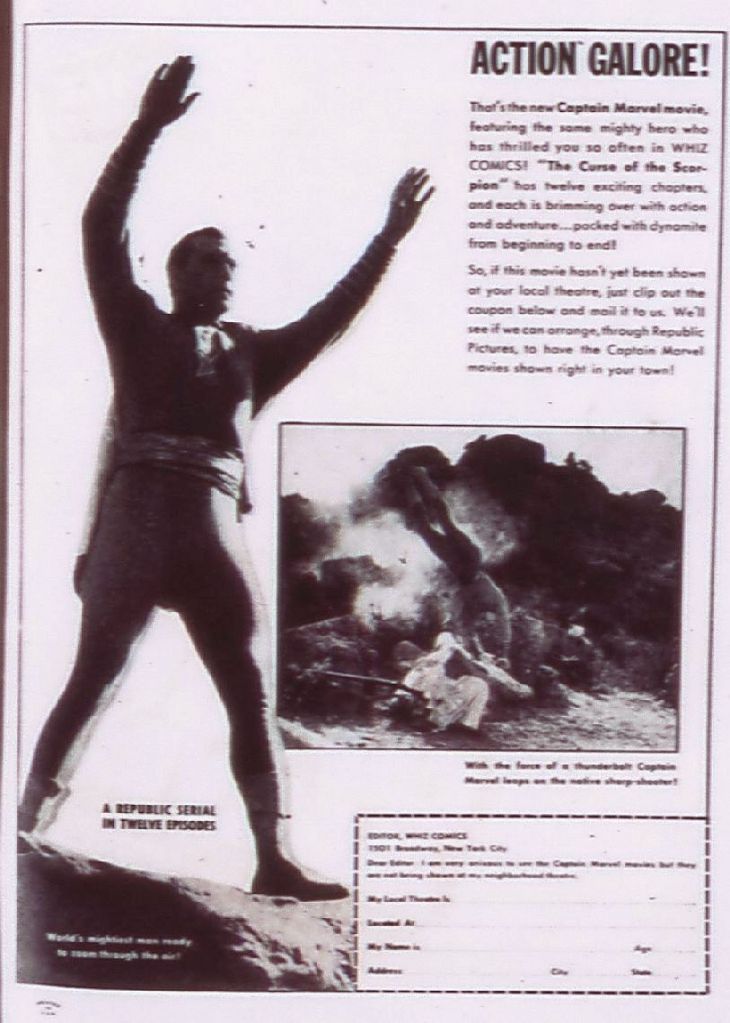
As last time, the inside back cover of this issue also includes a promotional advertisement for the forthcoming ADVENTURES OF CAPTAIN MARVEL serial, with a few blurry photographs of Ton Tyler in the starring role.

And the entirety of the back cover promotes it as well, with a particularly amateurish drawing of the Big Red Cheese.
 The Tom Brevoort Experience
I guess it would be decades later when Marvel does it multi-issue brainwashed Thing storyline [ Fantastic Four#68 – 71 ( November- February 1967-1968 ) By the Thinker ] to equal this epic
LikeLike
No lightning bolt on that back cover, even.
LikeLiked by 1 person
The embroidered quatrefoils on the cape are missing, too.
LikeLike
Hmm, does the transformation support fine-grained effects like regular clothing to costume, but approximate-fit suit to well-fitting suit? (what was he going to do if it turned out to be too tight somewhere?).
I’ve never been able to figure out how the clothes/costume part of the transformation is supposed to work. Let’s say in this story Morris gets mauled by the bear – not killed, but he’s bleeding heavily. Then Cap takes off his cape, wraps Morris in it to help keep him warm from shock, and flies him to a hospital. Morris – still in the cape – is getting emergency attention, with many people around him. Cap wants to transform back to Billy, and does it some distance from Morris and the cape. What happens to the cape? Does it suddenly disappear? Or not, and does Billy end up wearing a shirt with a big hole in the back? But wouldn’t that imply he could create a lot of capes (and costumes?) by repeating the process?
I know, it’s hardly the biggest plot hole in this story. But it is a notable powers-rules issue.
LikeLike
Page 7, panel 4’s one for the ages. I got a Hal Foster chill. My fave drawing out of al of them. That dramatic lighting, lending some volume to his well balanced figure.
Both opening splashes, each featuring one of the two title characters, are pretty impressive.
Mr. Morris appears to be wearing an official replica Dick Tracey yellow trench coat.
Was this story conceived on a dairy farm, because they sure are MILKING it… 😉
LikeLiked by 1 person
Sgt Herron is presumably a nod to France Herron, who’d joined Fawcett the year before as a scriptwriter (who knows, he may have even had a major hand in the tale currently under examination)
LikeLike