


By 1953, the furor about the content of comic books was reaching an absolute peak. For a decade, pretty well ever since the medium had displayed mass appeal, there had been articles expressing concern for the books’ assumed young audience. And as time had gone on and the content of most comics had become more lurid–especially with the huge growth of Horror and Crime comics following WWII–this outcry became more pointed and more circulated. The person who became the figurehead of much of this controversy, and who benefitted from it in terms of his notoriety, was Dr. Frederic Wertham. Wertham would go on to author the seminal book SEDUCTION OF THE INNOCENT, which supposedly blew the lid off of the secret and not-so-secret corruptive elements present in virtually every comic book published.
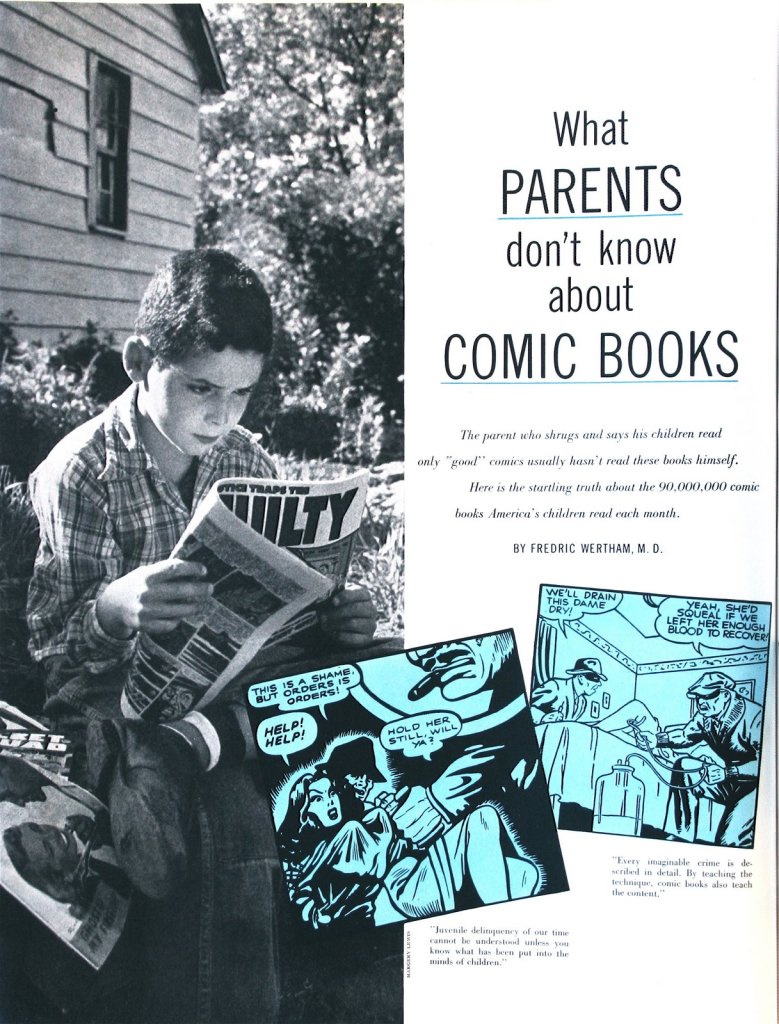
Wertham’s crusade came from a good place–not simply an opportunist, he was genuinely concerned with the welfare of the young patients he’d seen and attempted to help. But that concern did lead him to skew all of the data he assembled for SEDUCTION OF THE INNOCENT in favor of his case, making his analysis bogus at best. But that didn’t stop him from making the rounds in newspapers and magazines and on radio interviews on what was almost a one-man crusade against the hated comic books.
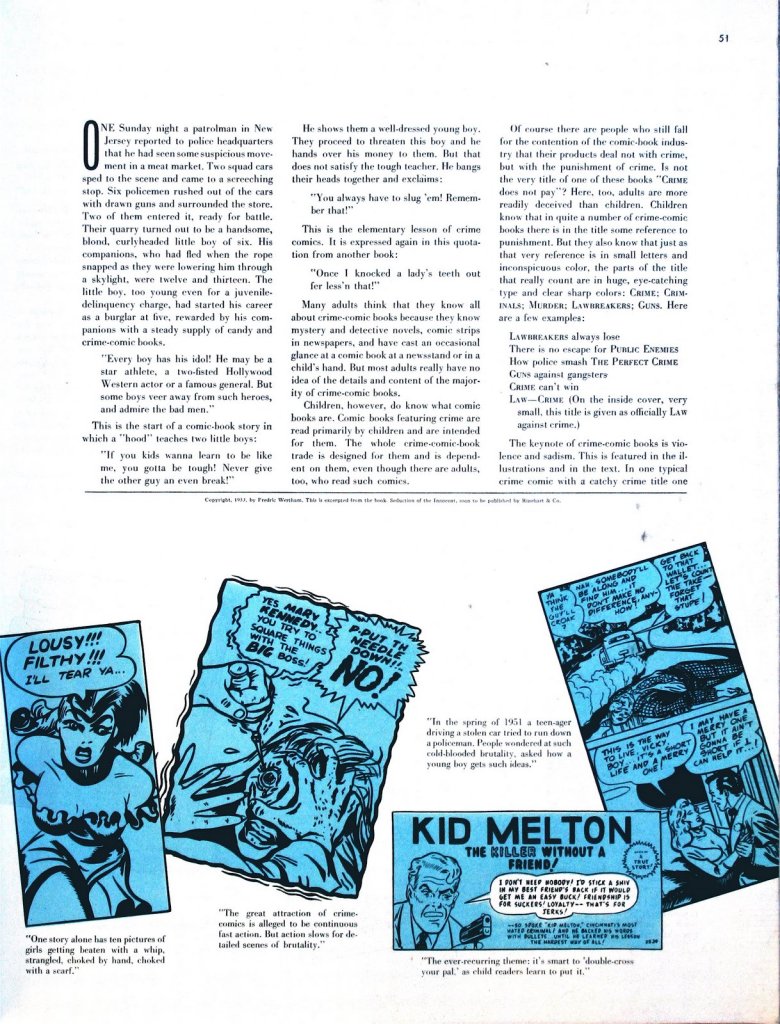
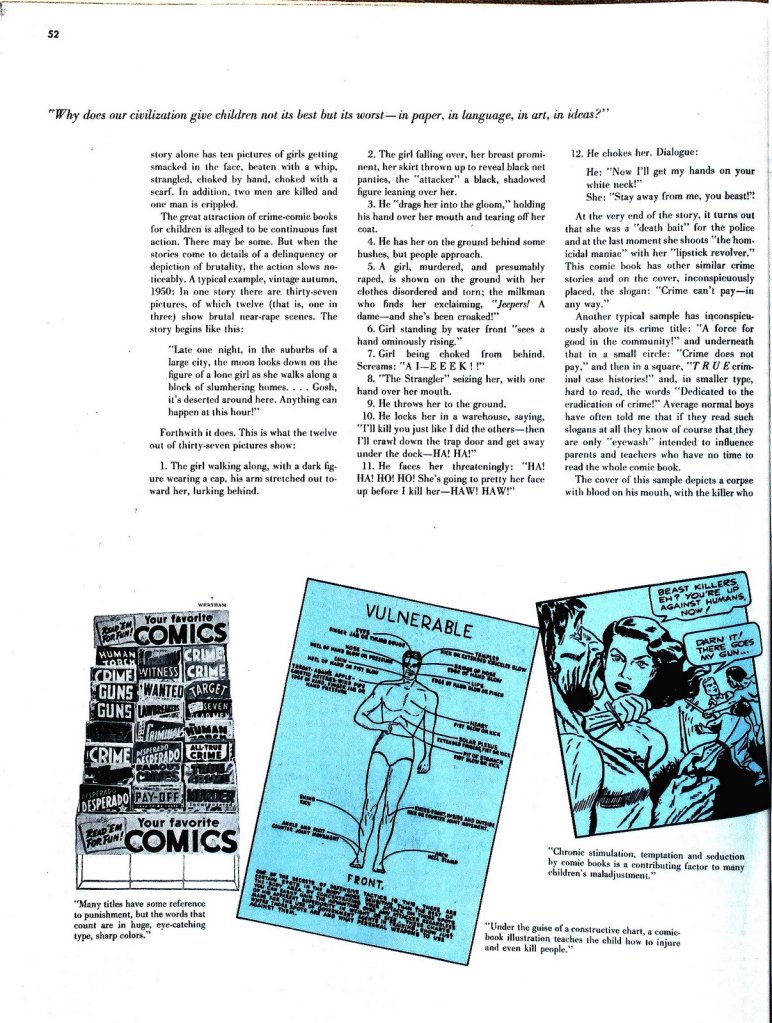
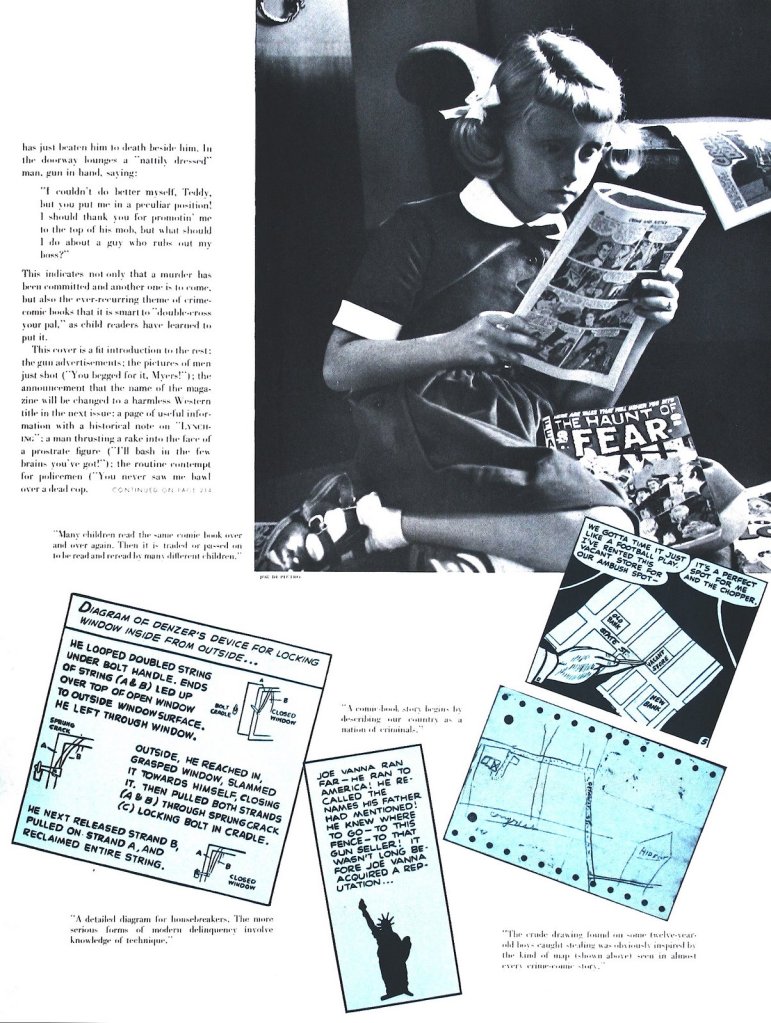
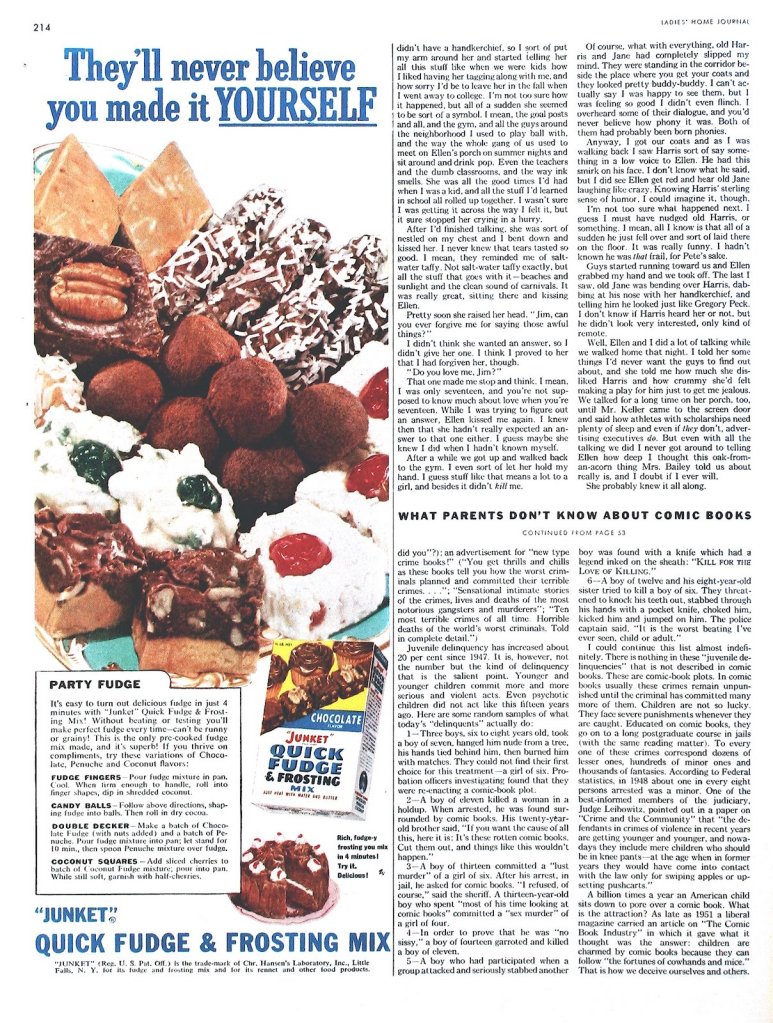
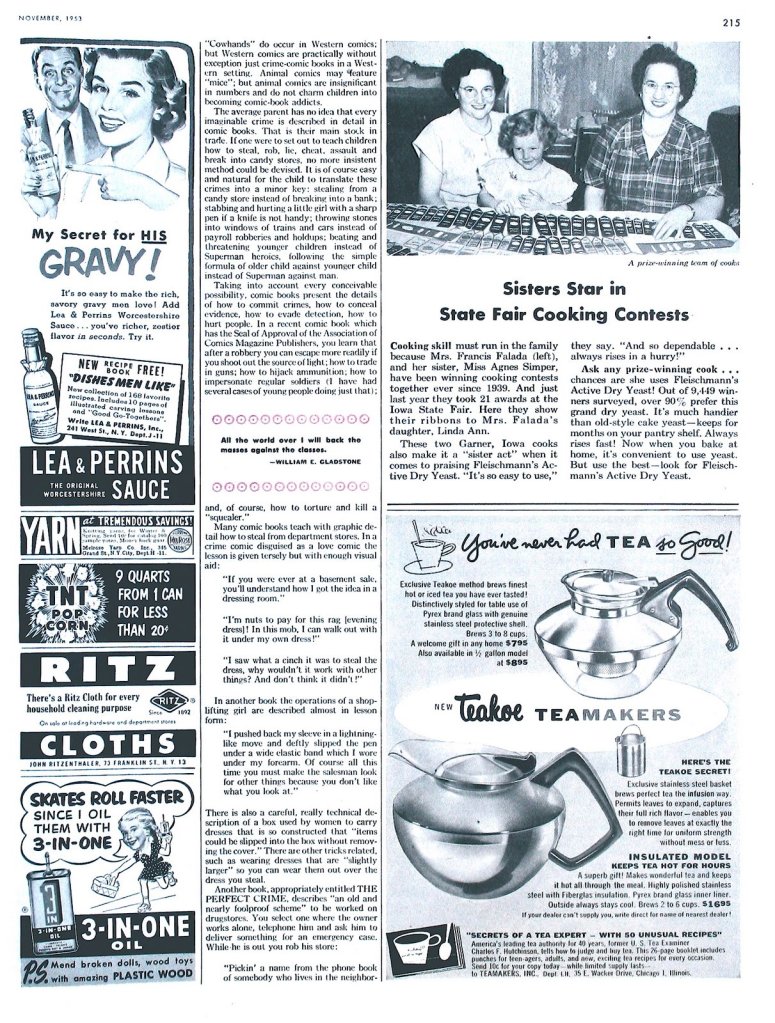
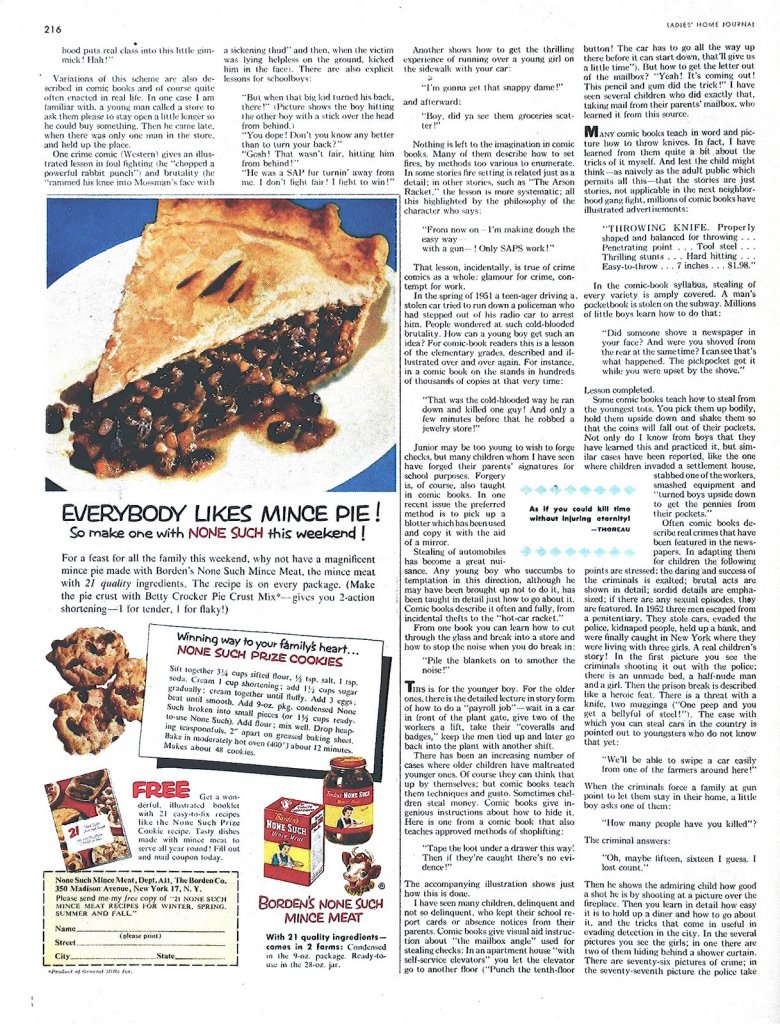
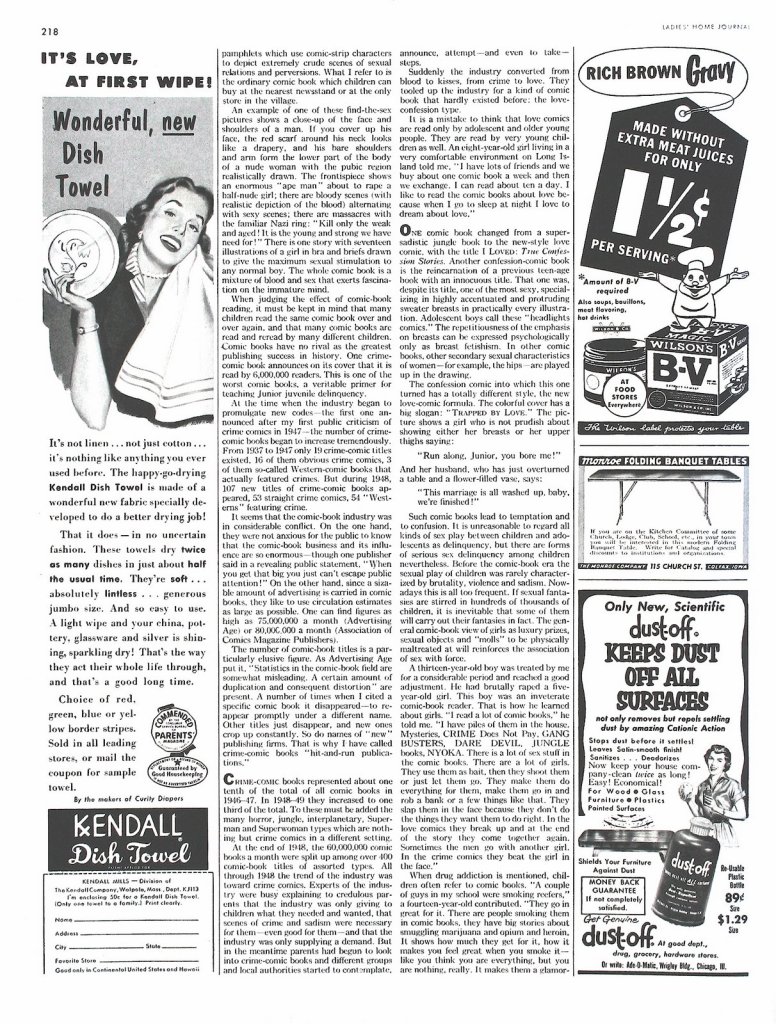
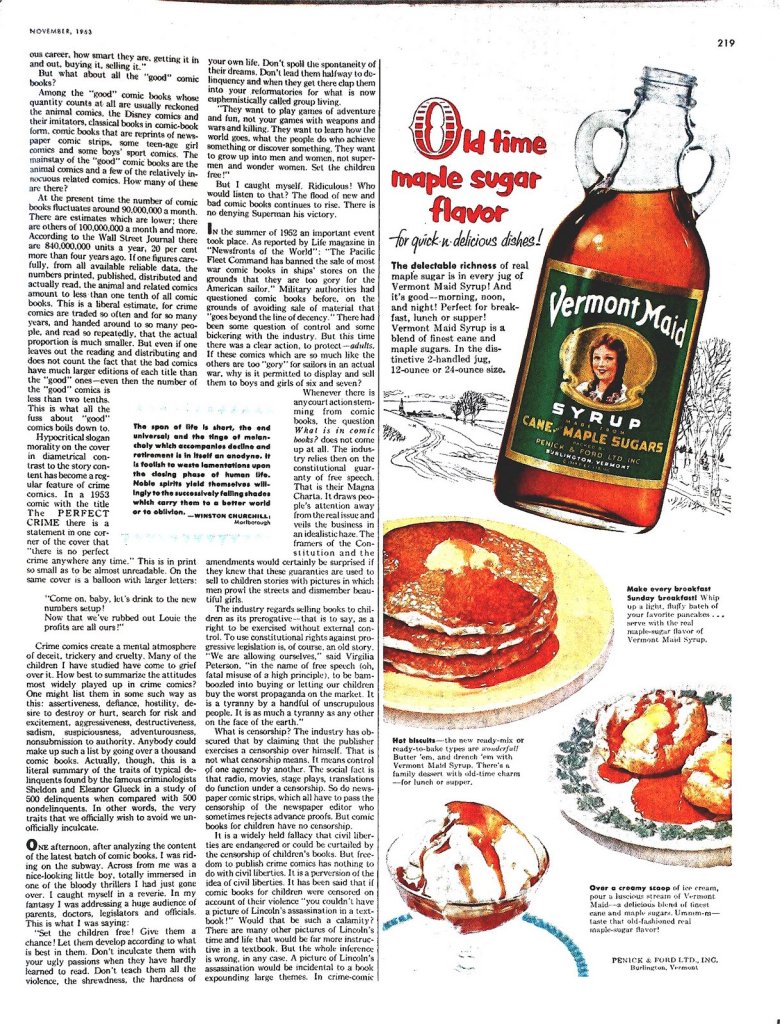
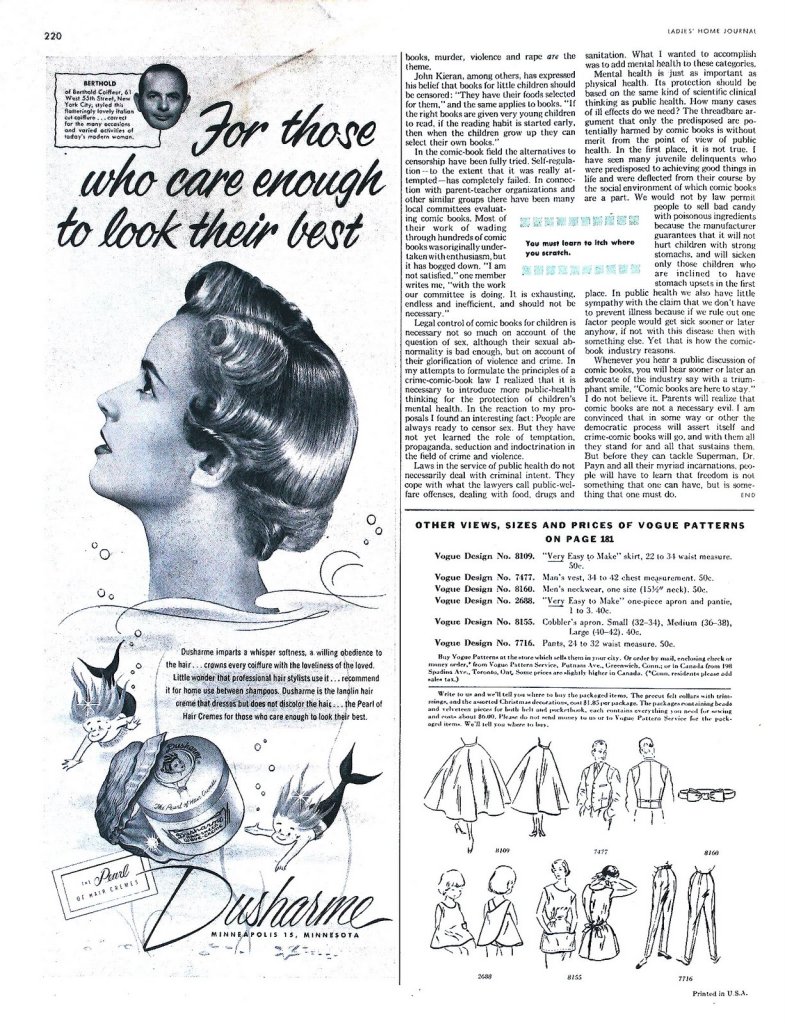
This piece by Wertham from the November 1953 issue of the LADIES’ HOME JOURNAL is a good example of the sort of material that Wertham peddled and how he peddled it. His articles were invariably lurid, and thus able to capture the attention of the reading public. They were also alarmist, and his cherry-picking (and even slanting) of images made it appear that his point was easily proven.
In the end, of course, following a string of televised congressional hearings into the connection between comic book reading and juvenile delinquency, the main comic book publishers put together and adopted the Comics Code Authority, an outside regulatory body that would work to self-censor their material. The Code was especially strict in its first years and helped to put dozens of publishers out of business. Most retail outlets wouldn’t carry any comic books that didn’t carry the Code seal.
Wertham, though, was unsatisfied by this result. He didn’t think it addressed the problem at all. But at that point, the zeitgeist moved on–with television becoming the new cause of any ills developing within the next generation, and so Wertham’s moment in the spotlight passed.

 The Tom Brevoort Experience
The excellent “Ten Cent Plague” on the comics censorship movement points out how flimsy Wertham’s arguments were. Ignoring that lots of law abiding kids read comics. Arguing that “this kid committed a horrible violent act” was self-evident proof they’d been warped by crime comics.
There’s a book, “Cycle of Outrage,” about the juvenile delinquency panic of the 1950s (not the first, nor the last) that says a lot of liberal reformers were shocked that in WW II’s aftermath people were turning to light popular entertainment instead of reading Social Realist novels about Serious Issues. I wonder if that wasn’t part of Wertham’s hostility to comics.
LikeLike
I think, more simply, that Wertham knew his stuff and knew how to communicate to masses, and put this proficiency to sell books and gain credibility, political at least, if not academical. And he perfectly succeeded for quite a long time: besides, this technique works great in our days as well, exploiting social media and stuff. Everybody needs to make a living…
LikeLike
Ten Cent Plague made a similar conclusion.
LikeLike
Whatever else, these pages look great. What a cool visual time capsule. Your brother Joe would love some of the vintage ad imagery and letter types. I remember the old metal ad signs he had hung on his kitchen walls, like “Nee-Hi Cola”. The tea pot ad’s font made me think of Saul Bass. Joe’s gotta see these. The cartoon “exhibit” pics laid out across the text pages in the article may not seem spectacular to anyone used to doing it with computer clicks. But all of these had to be cut and pasted by hand.
These pages are the molds that digital designers still follow. The colors still pop. Amazing. Fudge frosting. I think I’ve seen boxes of Carolina Rice on store shelves, but maybe not River Rice. I don’t even like syrup, but that bottle and those pancakes look good! 😉
Tom, this article’s photos of kids reading comics rival your “comics in the wild”. DAMMIT!
The examples of oppressive influence are there, too. “For those who care enough to look their best.” Jeez. Arm twister or guilt inducer. “My secret for HIS gravy.” Where’s Wertham’s inuendo accusation for these “wholesome” ads? 😉 The lady holding the “wonderful new dish towel”. OK, Mrs. Cleaver. There is at least one blatant lie in this: Not “EVERYBODY LIKES MINCE PIE!” “NONE SUCH”! From Bordens! (I’ve heard of them.)
LikeLike