

If there’s a moment that truly crystalized the Direct Sales marketplace and helped to forge it into a meaningful distribution pipeline for comics, it was with the release of X-MEN #137 in which creators Chris Claremont and John Byrne wrapped up what is today known as “The Dark Phoenix Saga” in a double-sized issue that sent shockwaves throughout fandom. As we’ve spoken about at length in this article
and this article
and this article
the climax had a troubled birthing process, one in which Claremont and Byrne’s original ending was thrown out at the behest of Editor in Chief Jim Shooter and replaced with a new climax in which Jean Grey met her maker. To say that this was shocking to readers is an understatement–fans, especially fans plugged into the new network of comic book specialty stores, went crazy. Back issue prices on X-MEN books skyrocketed. For that particular generation, this was their “Death of Gwen Stacy” moment, the moment at which a comic book affected them deeply on an emotional level. While Jean and Phoenix were now gone, their shadow remained over X-MEN from that moment onward.
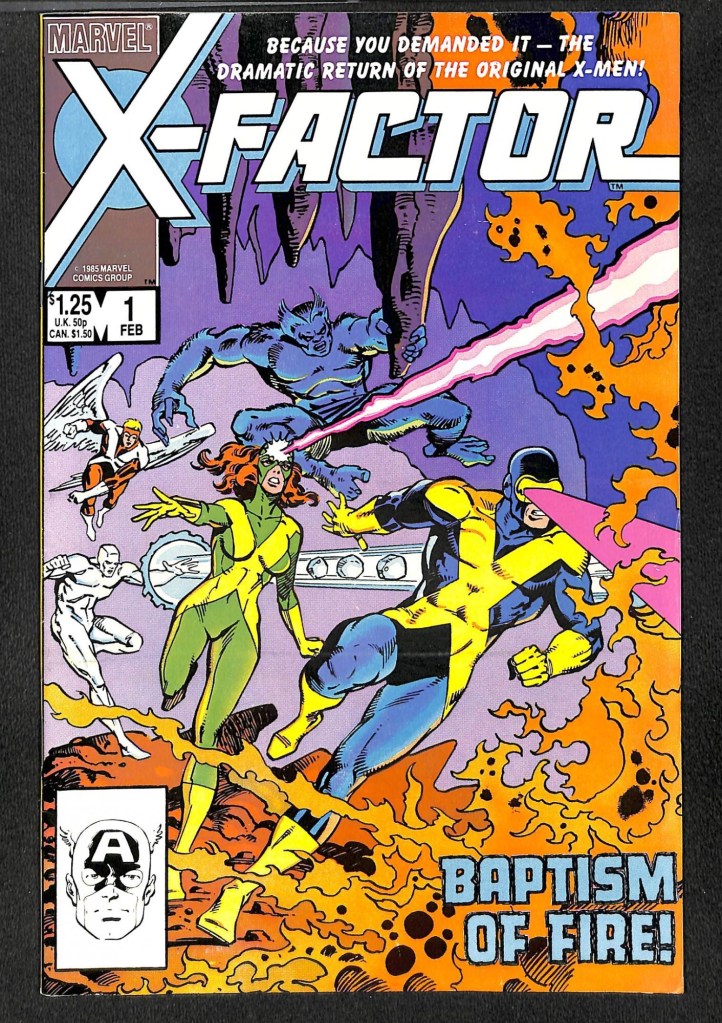
If things had remained this way, while that story had proven to be controversial, everything would have been fine. But X-MEN was red-hot, in a way that no other comic book series had ever been, and for an extended period of time. And in not too much time, other creators began to think about ways that they and Marvel could cash in on this energy. The first person to begin talking about this was likely Mark Gruenwald, who was hoping to reunite the disparate original X-Men who were no longer on the main team into a sort of “X-Men West”. This didn’t wind up happening–X-Men editor Louise Simonson was able to block it. But sometime thereafter, as the furor surrounding Jean Grey’s death refused to subside, Bob Layton pitched a project to Editor in Chief Jim Shooter that would reunite the original X-Men in a new status quo inspired heavily by the popular Ghostbusters movie. In this take, the original X-Men would pose as “mutant exterminators”, being called in by private citizens or the authorities to “bust” any mutants that might turn up, but secretly recruiting them and training them how to use their powers safely and constructively in the furtherance of Professor X’s teachings.
If X-MEN #137 was a troubled birth, the launch of X-FACTOR was even more difficult. And it revolved around a simple idea. Initially, the thought had been to replace the now-dead Jean Grey on the X-Factor squad with the Dazzler, a mutant who had just lost her own series. And in fact, the BEAUTY AND THE BEAST limited series ends with Dazzler going off with Hank McCoy to become a part of the new X-Factor group. But such was not to be. Because at some point, somebody–accounts seem to differ as to whether this was Shooter, Layton himself, John Byrne or one of a few other people, suggested resurrecting Jean Grey instead. In particular, Kurt Busiek, who was freelancing for the house promotional magazine MARVEL AGE at the time, had always been a fan of the original X-Men. At some point in the past, purely as a plotting exercise, he came up with a methodology to bring Jean Grey back to life–essentially, revealing that the Phoenix/Dark Phoenix was actually a separate entity from space, and that the real Jean was still in suspended animation at the bottom of the Jamaica Bay where the shuttle she had piloted during her transformation into Phoenix had come to rest. Busiek had told his idea to Roger Stern, who in turn had relayed it to John Byrne. Byrne had never been happy with having to kill Jean off, and so he would be happy to use it to bring her back and rectify that error.
One person who was in no way happy about any of this was Chris Claremont. While Claremont had been coerced into killing off Jean by Shooter, the response to that story had lit a creative fire under him, one that helped propel X-MEN to stardom. He felt (correctly as far as I’m concerned) that bringing back Jean, especially so soon after the death had taken place, would make a mockery of that initial storyline. Claremont tried to negotiate, brainstorming a way in which Jean’s already-established sister Sara grey might become her replacement on the X-FACTOR team–but shooter overruled both him and X-MEN editor Louise Simonson. It’s only conjecture at this point, but at the time, in the wake of the success of MARVEL SUPER HEROES SECRET WARS, Shooter had become more controlling and micro-managing, and there had been a sense that perhaps Claremont had been accruing too much power and pull on his own, had become too central to the success of X-MEN. So Shooter set X-FACTOR up in a separate editorial office, one helmed by newly-promoted editor Mike Carlin. It would be years before the X-Characters all once more shared an editorial office (not until after Shooter’s departure from the company.)
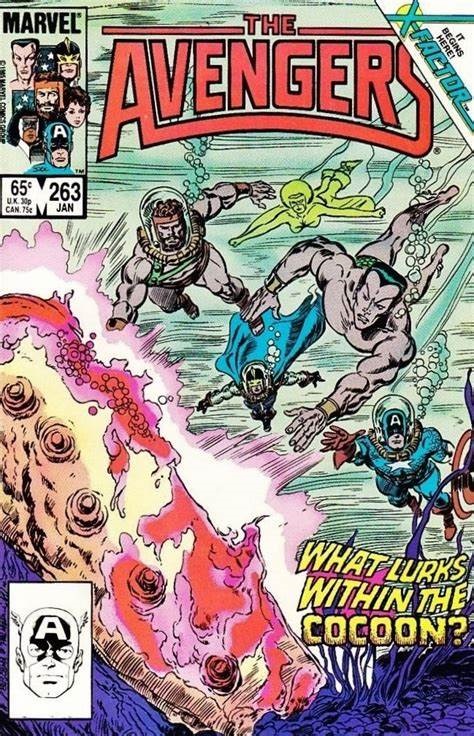
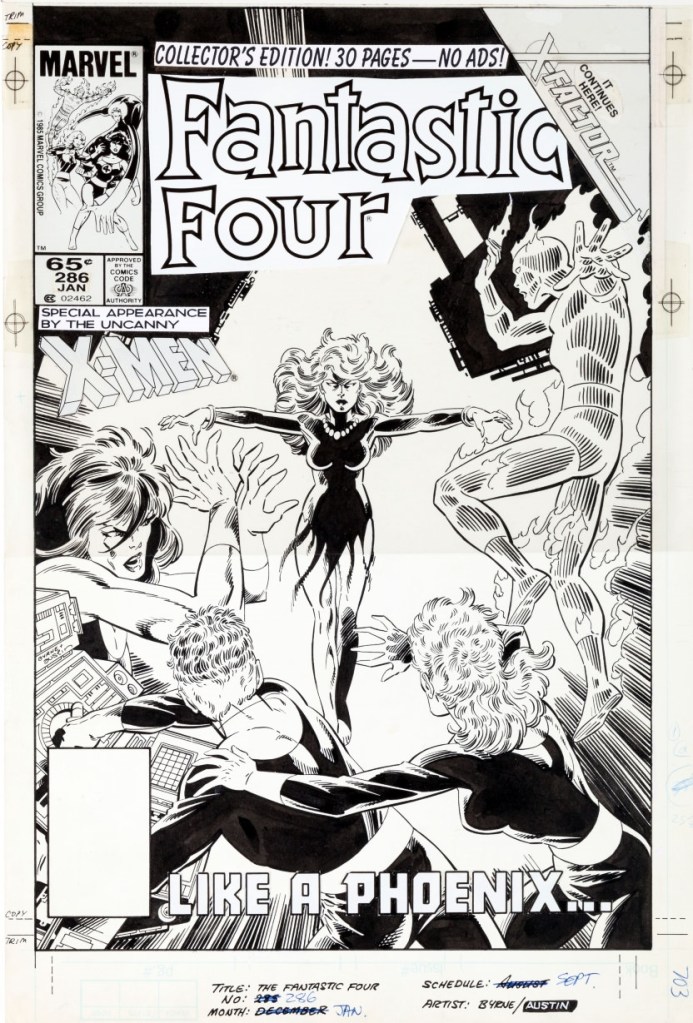
The roll-out of X-FACTOR was planned to snake through a number of Marvel titles. Since the X-Office was dead set against any of this happening, the tale was designed to begin in AVENGERS, move into FANTASTIC FOUR where Byrne, who was writing and penciling, could reveal how Jean had survived, thus giving the event legitimacy, and then would carry on into X-FACTOR #1 which would unite the new-old team. (At the same time, NEW DEFENDERS where Angel, Iceman and the Beast had been appearing, was cancelled, with all of the non-mutant members of the group killed off.) Terry Austin was recruited to ink this issue of FANTASTIC FOUR as well, again to give it even more of an obvious connection to the story it was overturning.
Unfortunately, the problems didn’t stop there.
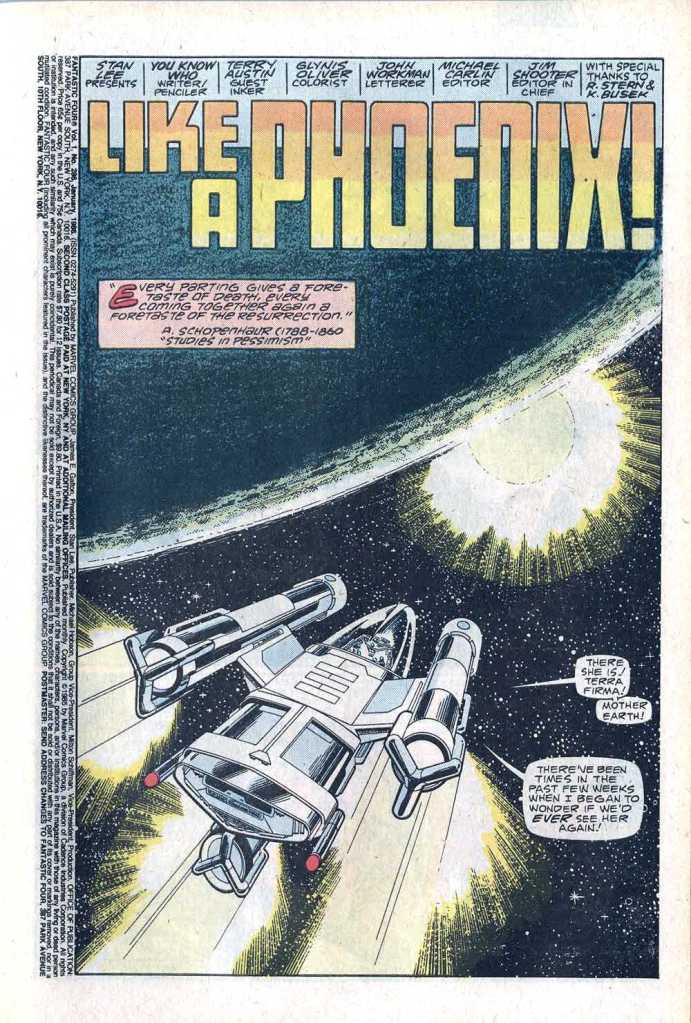
Byrne wrote and penciled the oversized issue, laying out the events as he’d agreed. But at the eleventh hour, as he had done on X-MEN #137 previously, Shooter decided that he had problems with what Byrne had done. In this instance, Shooter took it upon himself to rewrite certain sequences himself. He also drafted in artist Jackson Guice (who was penciling the new X-FACTOR series) to ghost-illustrate some new pages and panels which would replace some of what Byrne had done. In protest, Bryne had his name removed from the issue–he is credited only as “You Know Who” (Kurt Busiek’s special thanks credit was also misspelled, some have claimed deliberately.)
This appears to be an attempt on Shooter’s part at striking a compromise and placating Claremont and Simonson somewhat. Byrne’s version indicates that the Phoenix/Dark Phoenix was in no way Jean Grey. But Claremont preferred the version that Shooter amended, in which the Phoenix/Dark Phoenix was still Jean Grey in essence.
So there’s a bunch of stuff here to take a look at–and this doesn’t even get into all of the evidence of rewriting there is on earlier pages for which the unaltered versions no longer seem to be extant.
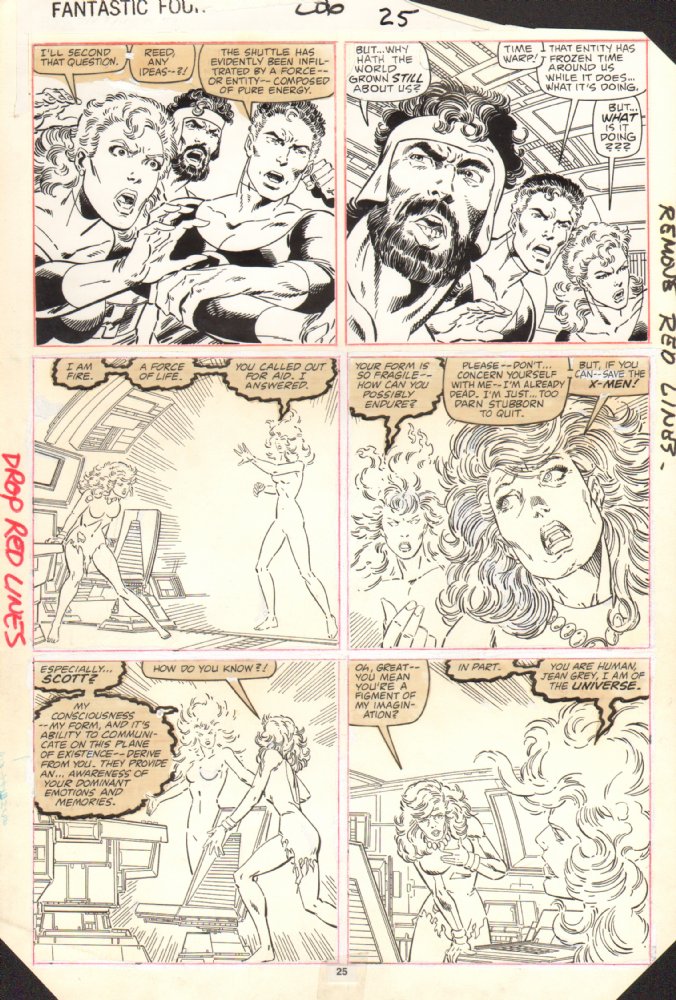
Both the printed book and Byrne’s version begin with an extended flashback to the events of X-MEN #100. Byrne has drawn the panel borders in red line so that they will be removed during the printing process, giving the panels a more ethereal feeling.
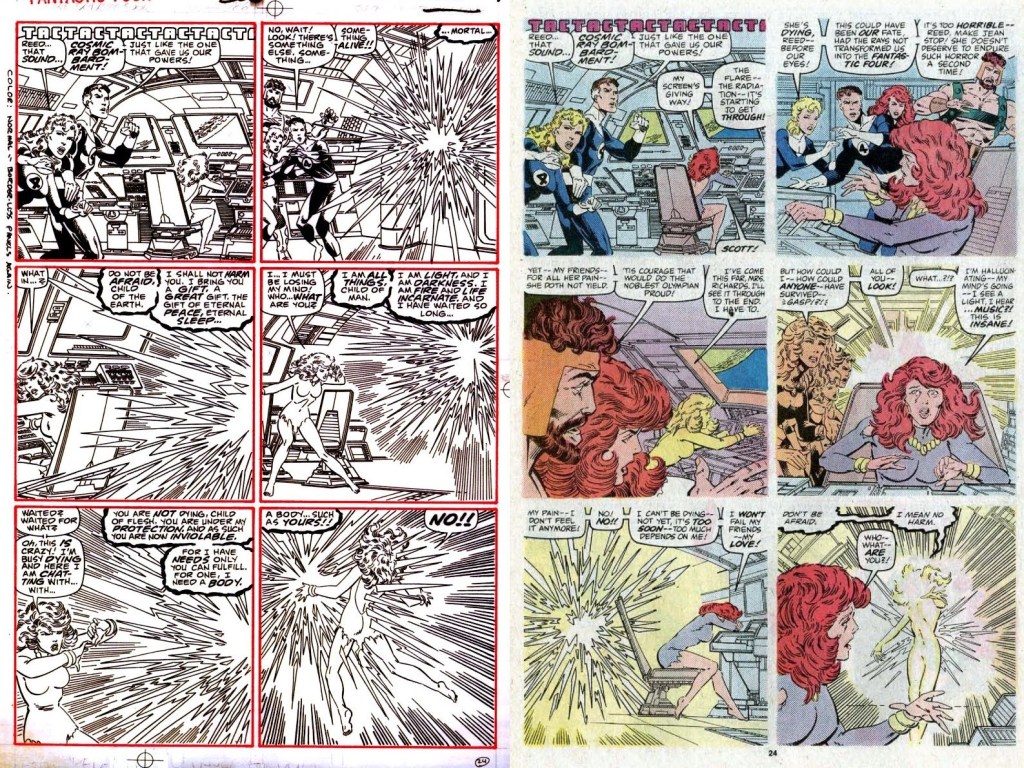
Changes begin on the very next page. Byrne’s first panel is maintained (but with a pair of new balloons added to it) but the remainder of the page is repenciled by Jackson Guice at Shooter’s behest.
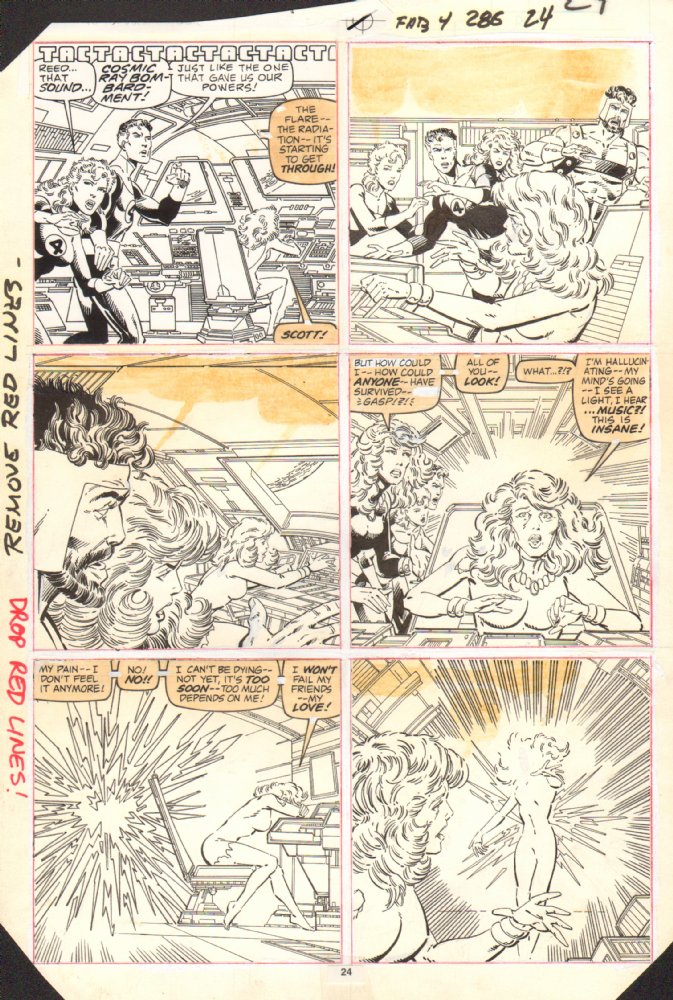
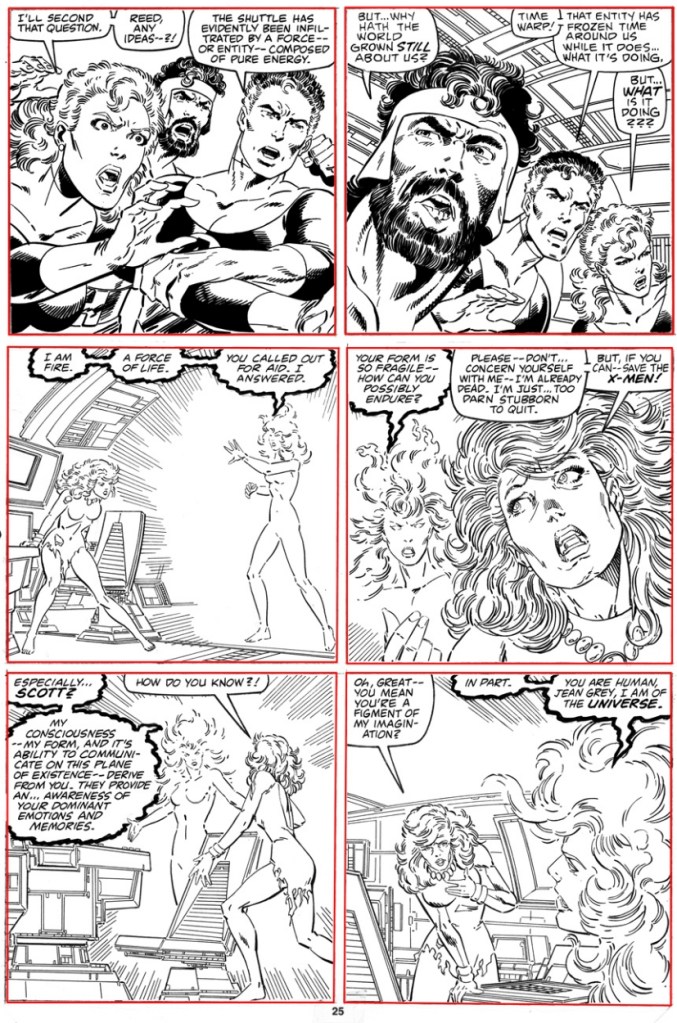
This next page of the printed issue is likewise entirely penciled by Jackson Guice and continues with Shooter’s altered version of events.
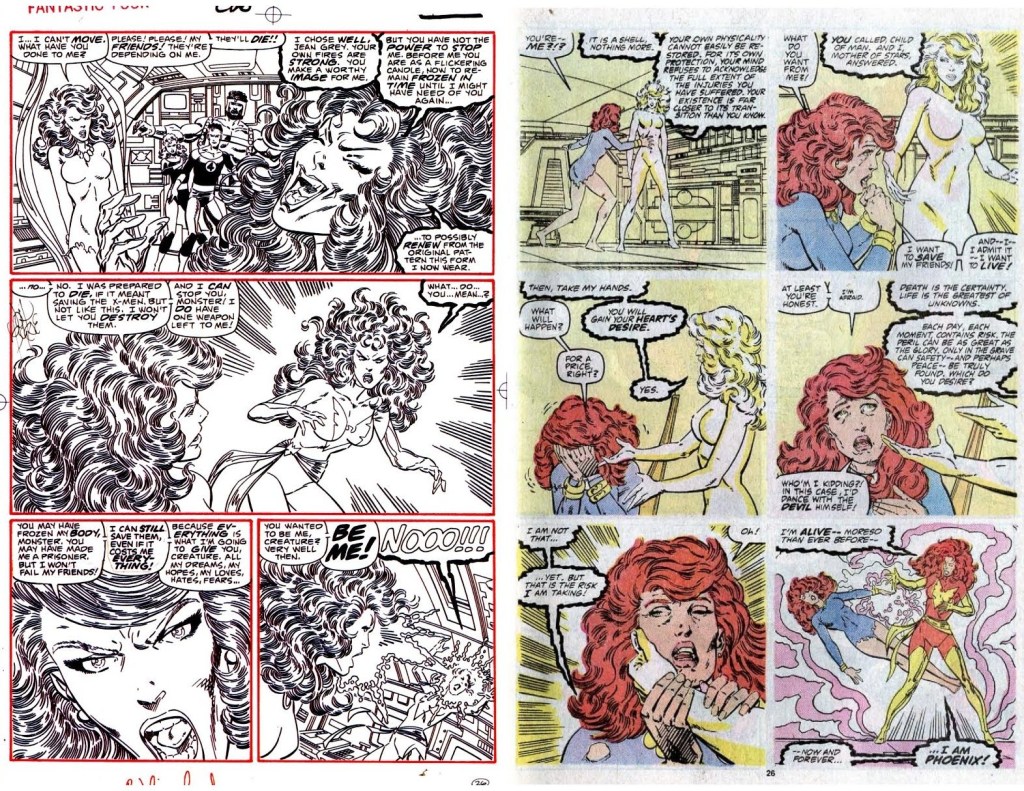
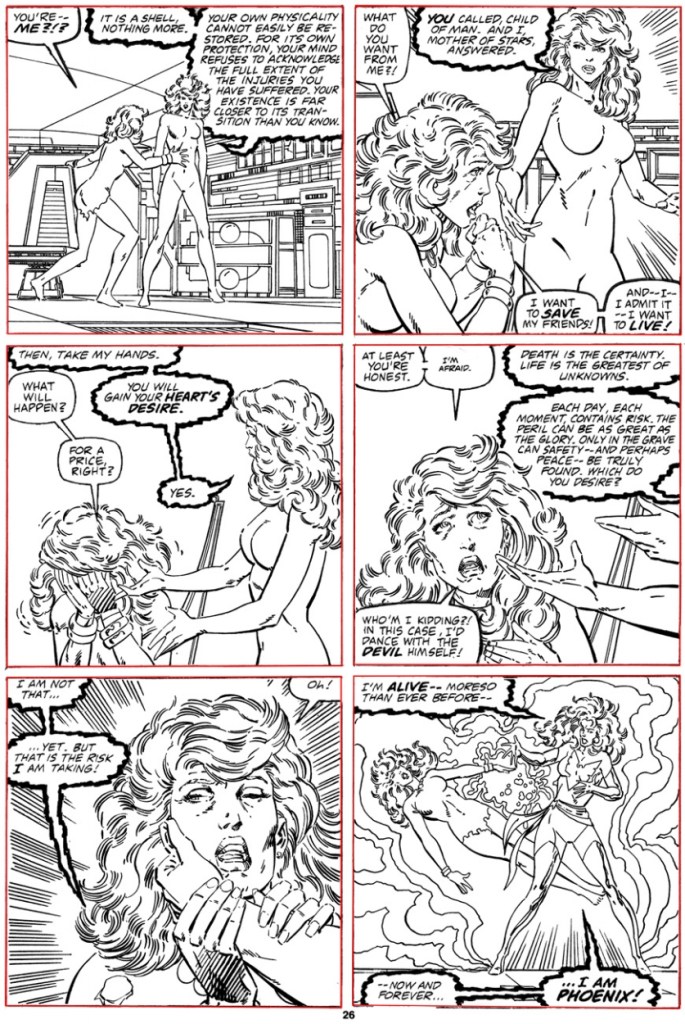
This entire Byrne page is discarded in favor of a replacement penciled by Guice.

And this page uses Byrne’s artwork but makes extensive revisions to the copy.
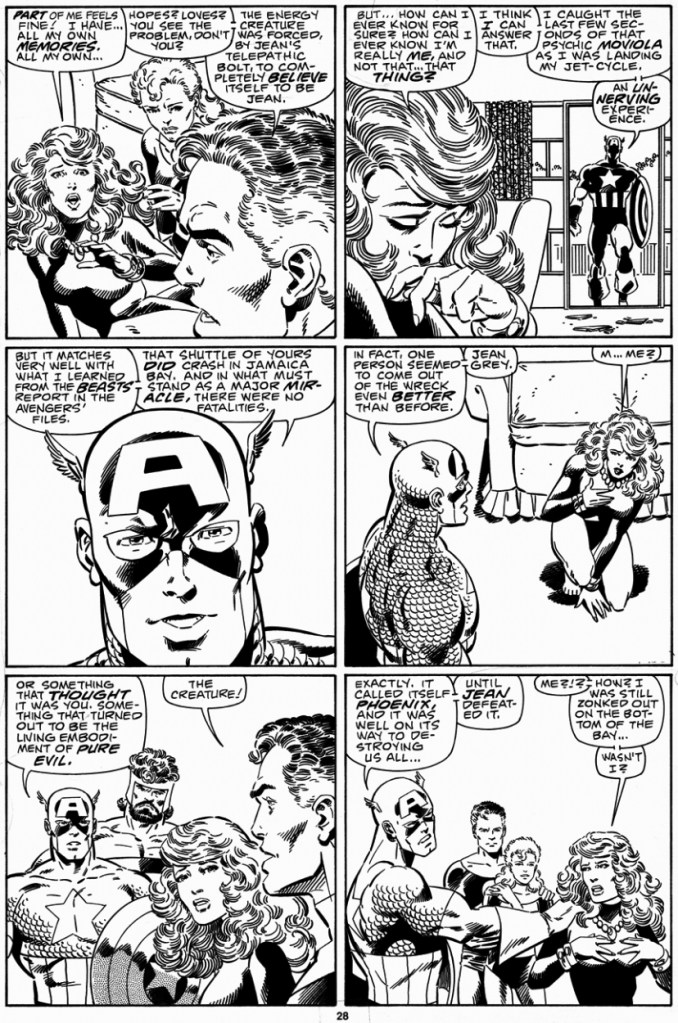
A Byrne page, albeit one on which there’s some weirdness. In particular, Captain America’s head in that last panel is angled such that his neck appears to be broken, and the Jean Grey head in that same panel is equally weird. So other hands, not necessarily Guice’s, may have made some adjustments on this page prior to inking.
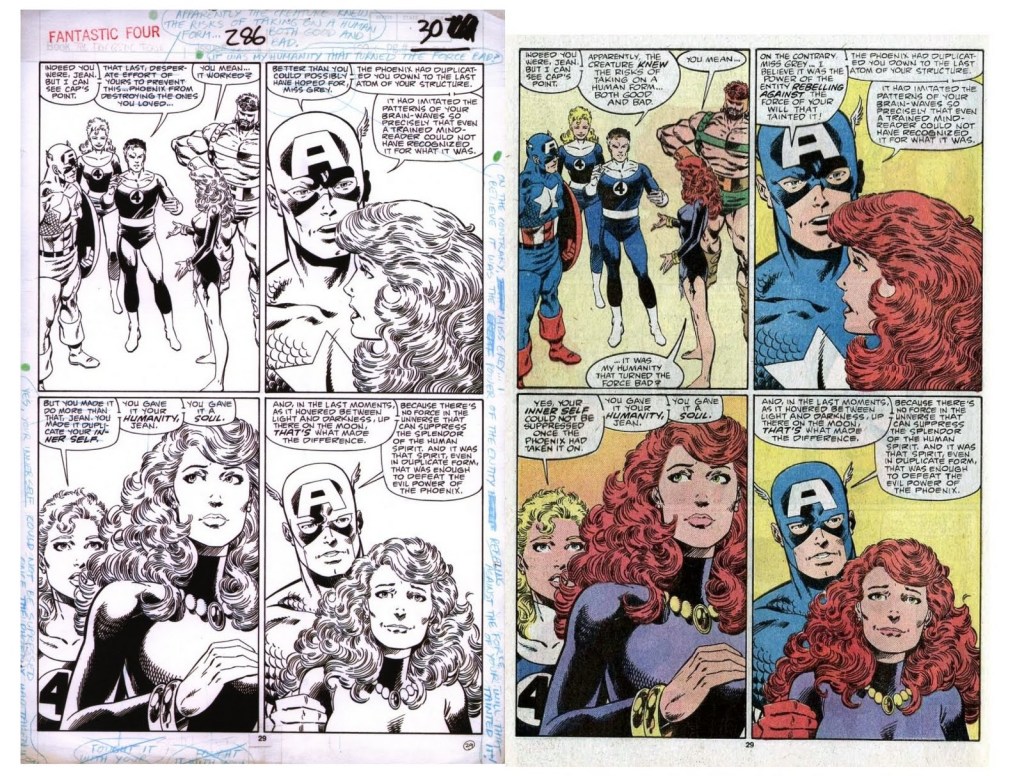
And here, a bunch of additional rewriting from Shooter.
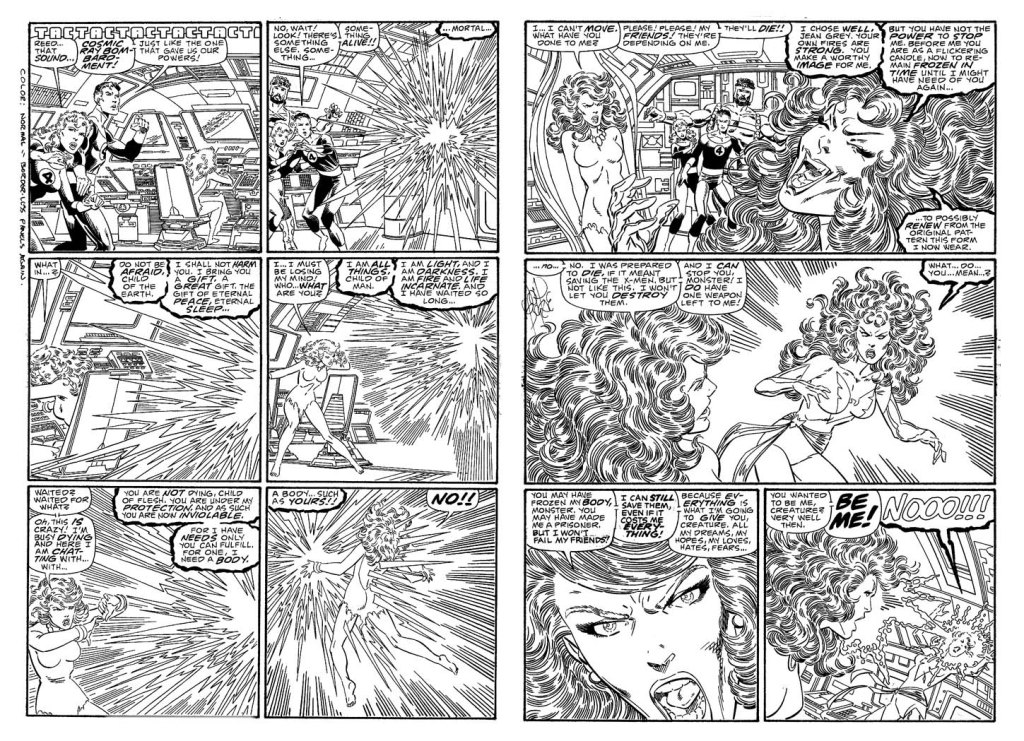
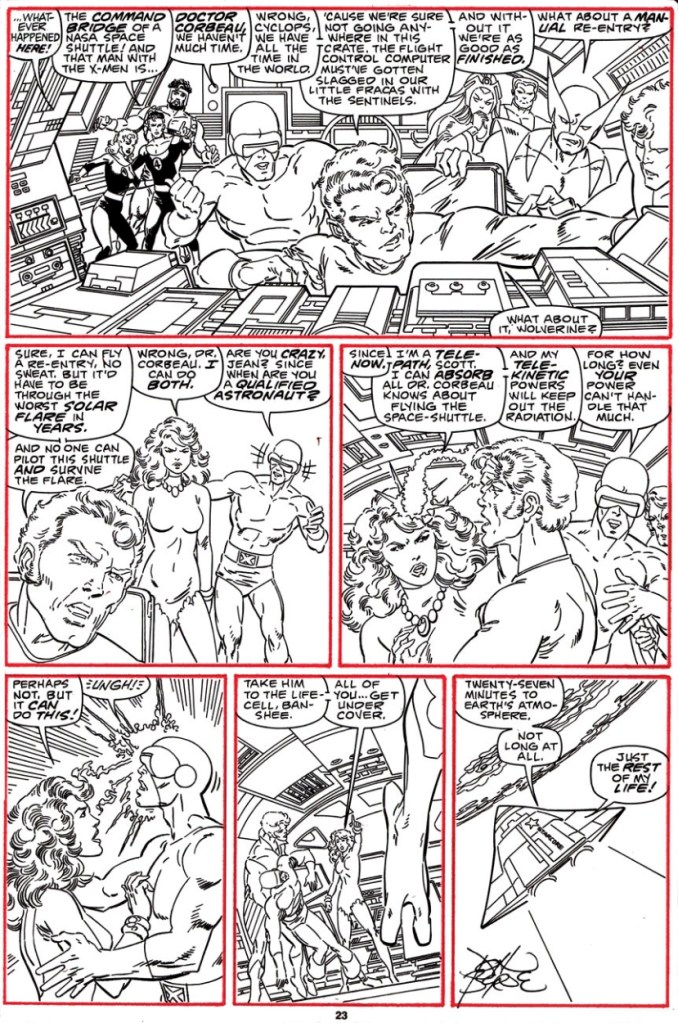
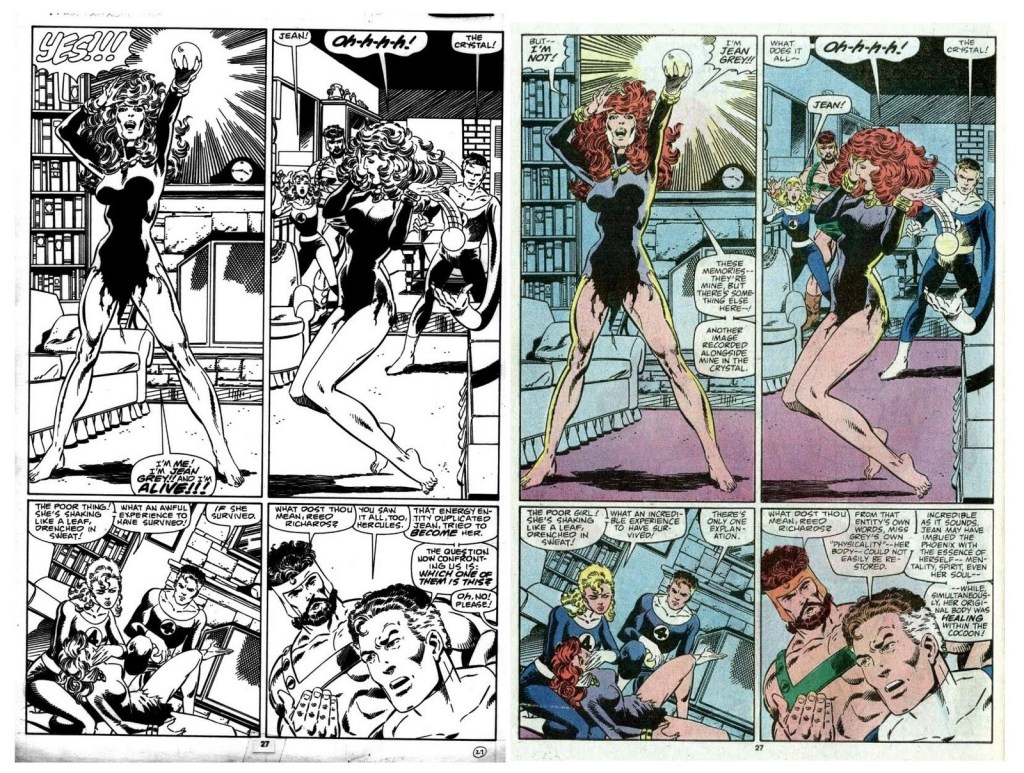
For ease of reading, here are Byrne’s original two pages, which were dropped and expanded into three pages in the finished book.
This wasn’t the end of things by any means, as X-FACTOR #1 went through an endless series of revisions as well, as covers were created and discarded, costumes were designed and redesigned after pages had been drawn, and copy was written and rewritten again and again. In the end, the situation on X-FACTOR #1 cost editor Mike Carlin his job, but he was swiftly thereafter hired by DC at the suggestion of Byrne to take over the SUPERMAN titles.
As for Claremont, he remained unhappy with the existence of X-FACTOR throughout its first year. It was only once Shooter was off staff, the title was moved into the X-Office proper and was then being written by Louise Simonson that he was able to embrace it and factor Jean Grey’s return meaningfully into his own planning.
That all having been said, this entire storyline and series was probably a mistake in the first place, and did lasting damage to X-MEN–though not to the title’s sales, which remained remarkably strong throughout the next several decades. And so, my aesthetic dislike for it notwithstanding, it seems to have worked for the majority of readers (or wasn’t enough to get them to stop following the books.)
 The Tom Brevoort Experience
To add briefly to this:
>> In particular, Kurt Busiek, who was freelancing for the house promotional magazine MARVEL AGE at the time, had always been a fan of the original X-Men. At some point in the past, purely as a plotting exercise, he came up with a methodology to bring Jean Grey back to life–essentially, revealing that the Phoenix/Dark Phoenix was actually a separate entity from space, and that the real Jean was still in suspended animation at the bottom of the Jamaica Bay where the shuttle she had piloted during her transformation into Phoenix had come to rest.>>
I came up with that idea in…June 1980, maybe? It was before X-MEN 137 was even finished, I think.
I was back from college for the summer, but I spent that summer in California, working for Ivy Ratafia’s family. In between coming home and going to CA, my friends Richard Howell and Carol Kalish heard through the grapevine (the grapevine in question being Peter Sanderson) that Jean was going to be killed, and they told me.
We also heard about Jim Shooter’s rule that she could not be brought back unless it could be done in a way that meant she was not guilty of genocide. So since we all liked Jean, we decided to come up with ways to do that — I learned about it while visiting them one week, and we gave ourselves a week to come up with a solution.
The Jamaica Bay Tylenol Capsule was my solution. Richard and Carol came up with another, that involved that holo-empathic crystal.
Then I went off to CA, and was there when 137 came out.
>> Busiek had told his idea to Roger Stern, who in turn had relayed it to John Byrne.>>
I told Roger the idea in 1983 at an Ithaca where he and Carmela put me up for the show. We’d been talking about what comics we liked, and we wound up talking about how much we liked the original X-Men (and we liked the new ones, too, but we both had liked the originals a lot). Roger said it was a pity they could never be reunited, and I said, “Well, there’s always a way.”
He told me about Jim’s rule, and I said yeah, I knew about that and had already come up with a way around it. I told him my solution, and he liked it. And that was the end of it, I thought.
I don’t know when he passed it on to John, but I think even then it was just conversation.
>> Byrne had never been happy with having to kill Jean off, and so he would be happy to use it to bring her back and rectify that error. >>
When John heard about X-FACTOR, he called Bob and told him the idea. He and Bob pitched it to Jim, and the whole AVENGERS/FF/X-FACTOR crossover kickoff was devised.
I first heard about it in the Bullpen, where I was pasting up MARVEL AGE pages, and Bob Layton came up to me and said, “I hear I have you to thank for having Jean back.”
I didn’t know who Bob was or what he was talking about, since I hadn’t thought about any of this for ever two years, so I think I said “Huh?”
I never really thought my idea was particularly revolutionary — not only is “The dead character didn’t really die, someone who was impersonating them died!” a concept that had been used many times before, but this wasn’t even the first time it had happened in X-MEN. That was the explanation used for the resurrection of Professor X back in X-MEN 65.
But such are the ways of comics.
LikeLiked by 2 people
I agree with you Tom, the resurrection was a bad idea. For that matter X-Factor’s “Hey, let’s run ads telling everyone mutants are evil and we’ll help kill them!” is a really, really dumb idea they eventually had to explain.
It got even more ridiculous when Galactus, who commits more genocide than Jean on a daily basis, got spared and they had to struggle to explain no, it’s good that Reed saved him to kill more people!
LikeLiked by 3 people
In the comic they explain it much better than that. XD
LikeLike
No, they really didn’t.
LikeLike
Tom, are you sure it was Shooter who rewrote the pages? In the FAQ on Byrne’s website, he believes Claremont did the rewriting (“a good third of it had to be redrawn by Jackson Guice and rewritten by Chris Claremont”), and the changes sound like Claremont to me, unless Shooter did a good Claremont impression.
LikeLike
My understanding is that Shooter did the changes, although it isn’t impossible that Chris took a pass at it and then Shooter finessed what he’d done.
LikeLike
Yes that sounds plausible. There’s some lines that I’m sure have to be Claremont. But I guess some other parts might have come from Shooter. Thanks.
LikeLike
I had always heard it was Chris, too. If Shooter was trying to do it inconspicuously, he’d have tried to emulate Byrne’s scripting. If he wasn’t, he’d have just written it like himself.
But I have zero inside information.
LikeLike
Aha, at least Byrne talks about it there.
LikeLike
Jim Shooter was the best thing that ever happened to Marvel after the 1960s.
LikeLike
This is an argument with a lot of solidity behind it.
On the other hand, a DC executive told me once that Jim was also the best thing that happened to DC in the 1980s, too, since he got them Roy Thomas, Marv Wolfman, George Pérez, Gene Colan, Doug Moench, Denny O’Neil, John Byrne and others.
That argument’s got a lot of solidity too, and it could be they’re both true.
kdb
LikeLiked by 2 people
It’s a dynamic system, with forces and counter-forces apparently,
By the time he was removed as President by the Marvel Board in April of 2987. a tipping point had been reached..
The Death of the Phoenix in the Summer of 1980 probably to Secret Wars was probably his “Highwater Mark.” (In terms of sales and reputation, it is a good one, indeed.)
But, people like Wolfman and Thomas, Colan and Moench and Byrrns left. The “New Universe (the “Shooterverse”) was not a success. Things built up and the Board acted.
There would probably be a great bussiness book in this. Sean Hower did a great job with this in his Marvel book but Shooter had similarly meteoric careers at Valient and Defiant.
LikeLike
I remember reading this issue when it came out, and I had no idea that any of it wasn’t Byrne. Jackson Guice did an amazing job of imitating Byrne’s art style. I definitely think that the rewritten dialog was Chris Claremont, to me it reads a lot like him and very little like Jim Shooter.
LikeLiked by 1 person
Thank you for sharing these pages! I really enjoy getting a look or two at the “behind the scenes” parts of comic creating.
LikeLiked by 1 person
Was bringing back Jean Grey a mistake? No. Not if you were reading the X-Men at the time. Jean had gotten a raw deal since she became Phoenix. Mark Gruenwald said she was the only female character who was an equal to her teammates. How did Chris Claremont have her described? Claremont had Cyclops call her the weakest X-Men. So he was fixed a character who didn’t need to be fixed.
So let’s move to time of X-Factor. Death of Phoenix happened and Phoenix returned in a variety of ways. Right before X-Factor. Cyclops was married to a Jean lookalike who was the sole survivor of a plane crash… which killed everyone on board, but Madelyne wasn’t scratched. Then you had Rachel who attained the Phoenix power, which would have been great to have during the Days of the Future past. And Claremont was retiring the old X-Men who were between 21-25 years old. Claremont also shipped Cyclops to Alaska saying a visit to the Defenders was a fate worse than death. His return to the X-Men was written as “you can’t go home.”
Even Xavier was kicked out of the book.
So the originals had gotten a raw deal, too. Now the original X-Men’s top bad guy, Magneto was the pillar of the concept. Both new and old struggled with sales, but when the New X-men were saved, they were allowed to go monthly. The old got reprints.
So with Jean comic back, the original X-Men finally became a success… without Wolverine. And with the luck of the draw, Jim Lee wanted the originals back in their own title. And when Jim Lee’s X-Men number 1 came around, the originals and Xavier were back in their original title. 3 of the originals were prominently featured in the Cartoon.
Was the Death of Phoenix ruined? No. In fact, the death doesn’t actually work, Claremont and Byrne made it work.
Go back to X-Men 101. Instead of Jean being a Cosmic powered Mutant, she said, “Hear me X-men, I am no longer the Woman you knew.” And Cyclops took that to heart… She was the same, but different. No one in the story asked what did she mean… but the fans did. After Jean saved the Universe, she has some power issues. So she gave herself psychic circuit breakers, which meant Magneto could beat her. Also the death of Cyclops couldn’t release the full Phoenix powers. Claremont introduced Phoenix as an evil entity, an age old ravager of world, which explained why she said, she’s no longer the woman they knew and Cyclops’ doubts of her being Jean. But.. Xavier created new Psychic Circuit breakers which don’t hold?
As Terry Austin said, the Death of Phoenix was a better story than the original, but all parties involved knew if the death happened in X-Men 150, it would have been a better moment for Jean.
Was Claremont wronged? No. He rewrote Fantastic Four 286. He was a part of bring Jean back and retconning the Phoenix. You can’t claim being screwed over when he already started retconning a Jean and Wolverine love affair with her return and also expanded on Jean’s return in Classic X-Men
LikeLiked by 1 person
Bringing back Jean made Cyclops an adulterer or at least a wife deserter and a deadbeat dad so it wasn’t done well at all. It also led to Madeline being treated as pure evil for accepting powers in what she believed was a dream and very indirectly to the way too complicated origin of Cable. The Phoenix Force being created was left too nebulous and vague so has been used poorly more than it has been done well. Heck, in current comics Scott should have stayed with Emma since he now has an absentee wife whose book feels nothing like an X-Title with a character that only vaguely resembles Jean. Heck, if they had put more plot into Madeline and the baby then ‘oh, they disappeared’, like they were already separated the worst could have been avoided.
LikeLike
“Bringing back Jean made Cyclops an adulterer or at least a wife deserter and a deadbeat dad…”
No, it didn’t. Those were separate choices. Having Cyclops leave his wife was not required by the return of Jean.
There were other ways to handle things, and that was bad character writing.
LikeLike
Yeah, I should have said that more clearly. They should have thought about more than reviving Jean and forming X-Factor. The attempt to revert Hank to his old look soon after was a misfire too. It felt like moving backwards to move backwards rather than something that benefited story.
LikeLike
He didn’t cheat on his wife or knowingly cheat on his wife. Scott was forced to leave his wife because of Office Politics.
So if you read X-Factor, he didn’t leave his wife for good. He went to see his former girlfriend who he thought was killed and the X-Men office wouldn’t allow Bob Layton to deal with Madelyne… but Layton wasn’t planning on breaking up Scott and Madelyne. His plan was putting Angel and Jean together. So Issue 2 of X-Factor, Madelyne is gone. Then Louise Simonson played that up, that Madelyne left town with no return address and Scott was still trying to locate her.
Again, Scott had a Girlfriend when he was messing around with Madelyne. Done right, Madelyne would have probably returned with Scott, since she knew she looked exactly like Jean! She went with him to Wolverine’s wedding after meeting her a couple of week ago then to space with Scott. But… we know that would have made the Madelyne and Scott look ridiculous. I would have pointed out how silly him marrying a Jean lookalike was. Anyway, Layton wasn’t allow to use her besides Cyclops exiting.
You can’t blame Jean for Madelyne becoming evil. Inferno shouldn’t have been about the Goblin Queen… I should have been about Magik!!!! The Madelyne subplot was ramped up for a maximim profit from the meeting of X-Men and X-factor.
If the X-office really cared about Scott leaving his wife, they would have released Madelyine to X-Factor and Jean’s parents, but they said she couldn’t leave the X-Men.
LikeLiked by 1 person
Yeah. Like, like you said, they were already gone and Cyclops helped by the others started looking for them. It could have been a better starting point and not a fix when Simonson arrived.
LikeLike
“Heck, in current comics Scott should have stayed with Emma since he now has an absentee wife whose book feels nothing like an X-Title with a character that only vaguely resembles Jean.”
Scott left Emma a long time ago, of his own volition. Emma has benefited being away from him.
Characters being married doesn’t mean they have to be attached at the hip.
LikeLike
There’s plenty of room between ‘attached at the hip’ and ‘separated by galaxies’. I preferred Emma too. Modern Jean and Scott aren’t ever shown as partners like he and Emma were. Aside saccharine dialog about their love, Jean and Scott are more like he’s her near useless sidekick.
LikeLike
I never understood what Scott liked about Emma or what she liked about him, it always felt very false to me, so I have to disagree. I’m glad the current comics moved away from that, Emma is much more likeable on her own, rather than pushed into the Lady MacBeth figure for a man.
LikeLike
There might be an argument for bringing Jean back. But undoing an acknowledged classic like The Death of Phoenix just to set up a crummy cash-grab like “X-Factor” felt like a slap in the face. That’s like tearing down the Sistine Chapel to make room for a Starbucks.
LikeLiked by 1 person
The Death of Phoenix was classic, but the X-Men were retreating over all of their classic stuff at that point.
Mastermind as Dark Phoenix in X-Men 175. Then with the return of Rachel Summer in X-men 184, Past of the Future Days with the X-Men’s dark future meeting the present. X-Men 193, a throwback to the death of Thunderbird, where James Proudstar wanted revenge against the two people who tried to save his brother. And the return of Phoenix as a regular member of the team, drawing Phoenix power from the entity’s ashes.
So all of the X-Men classic stories were being reused with no care for the damage to the original ones.
So if Phoenix came back and was corrupted immediately, Jean died for nothing anyway.
Claremont did his best to make sure Fantastic Four didn’t work in continuity either. So it actually fit in with all of the X-Men stories of the time.
LikeLike
I was reading X-Men at the time and yes, it was a mistake.
LikeLike
Phoenix was back already. So Jean died for nothing. Rachel was kind of a twofer. With her around, we got Days of Future Past stuff and Phoenix stuff and none of it was as good as those original stories. It was a bad time for the X-Men, but it was still super successful monetarily.
LikeLike
Well put. To add to that, Rachel and the Phoenix were already back, so that already damaged the ending.
LikeLike
Ruined! Shooter didn’t rewrite those pages. Claremont did.
Claremont retconned a retcon. The revised pages don’t fit into the Dark Phoenix saga similar to Classic X-Men.
LikeLike
Maybe, but maybe, since Jean was supposed to survive initially, they created the character of Rachel for that reason? Well, anyway, doing random historical revisionism on that period by calling it ugly… the number 193 is mentioned, but obviously without going into the details of the plot which is not so simple. Now I laugh about these things. Anyway interesting, because I have never heard of this story and neither Claremont nor Byrne have ever spoken about it I think.😳 Also because, as said, Claremont put a patch on it on “Classic X men”.🤔
LikeLike
John Byrne’s FANTASTIC FOUR #286, like “The Untold Tale of the Phoenix”, perhaps there Marvel must published a “special edition” of this issue restored to what intended it to be by John Byrne.
LikeLike